hannah anderson

42.1K posts

hannah anderson banner
hannah anderson

hannah anderson

@sometimesalight

Seeking all that's true, good, and beautiful https://t.co/WQpqQmnbYT https://t.co/eCcOF1MQRx @DukeDivinity '25

Virginia 가입일 Ekim 2011
3.5K 팔로잉23.2K 팔로워
고정된 트윗
hannah anderson
hannah anderson@sometimesalight·
Looks like we're going to have some new folks around here. Here's what you can expect: 1) general disapproval of modernity 2) endearing vignettes of bickering w/ my 17yo son about Napoleon 3) love of Appalachia 4) deeply protective of working class 5) probably too ecumenical
English
16
4
171
73.9K
hannah anderson
hannah anderson@sometimesalight·
The last few years have been rough ones but I spent them embedded in a church choir w/ practice at least once a week & performing on Sunday… I knew instinctually that choir was getting me thru some of the roughest spots but apparently there’s more truth to that than I understood
Anish Moonka@AnishA_Moonka

Researchers at UC Irvine took saliva samples from a choir before and after performing Beethoven. One antibody, the most abundant in your entire body, spiked 240%. That antibody is called secretory immunoglobulin A. Mouthful of a name, but it does a simple job: it coats your throat, gut, and airways and acts as your body’s first barrier against every cold, flu, and respiratory virus you breathe in. Your body makes more of it than all other antibody types combined. The 2000 study found this antibody rose 150% during rehearsals and 240% during the live performance. A separate 2004 study from the University of Frankfurt tested what happens when choir members just listen to the same music instead of singing it. The antibody barely moved. And their mood actually got worse. Marathon runners show the exact opposite. A study of 98 competitive runners found this same antibody dropped 21 to 31% after the race. 17% came down with colds or throat infections within two weeks. Cross-country runners tracked over a full season saw it fall to 40% of their starting level by November. Running was suppressing the same antibody that singing was tripling. It works through the vagus nerve, the longest nerve in your body. It runs from your brain down through your chest to your gut and controls your “rest and digest” mode. When you sing, your vocal cords physically vibrate against it where it wraps around your voice box. You’re also breathing from deep in your belly with long, slow exhales, which tells your nervous system to calm down. Your stress hormones drop. Your immune system responds. A 2016 study from the Royal College of Music and Imperial College London tested 193 cancer patients and carers across five choirs in South Wales. One hour of group singing lowered cortisol (the body’s main stress hormone) and raised five different immune signaling proteins. The people with the worst depression scores improved the most. You don’t need to be good at it. The boost comes from the physical act, the vibration and the breathing, not the melody. Trained soprano or shower singer, your body responds the same way. One caveat: that 240% number came from a live performance, where adrenaline and emotional intensity were at their peak. Singing along to the radio probably produces a smaller spike. And these are temporary boosts, not permanent changes. But the 193 cancer patients in the 2016 study weren’t performing Beethoven on stage. They were just singing together for an hour in community choirs.

English
4
1
70
9.1K
hannah anderson
hannah anderson@sometimesalight·
And how are you using your vacation? 😁
Tom Ruby@bgcts

This morning @scratchyjohnson tweeted an important factoid. Squanto, the Indian who spoke English and helped the pilgrims survive, was sold by John Smith to a Spaniards and the deed exists in the city we're in for Excursion. Rather than rolling our eyes, Alan, Gavin & I went to the state archives in Málaga to see if we can find said recorded deed of 20 Indians sold by John Smith to Juan Bautista Reales. We get to the Archives (see Alan's picture below), and a small genial white lab coat wearing gentleman who speaks no English says this is impossible to find. His new boss, the head archivist, Carmen, comes in and says it certainly exists but may be difficult to find. If you only had the year. We tell her it was 1614. She pulls up a list of the books from 29 notaries whose work they have from 1614. She asks who the notary was. We have no idea. They say they can't go through 29 archives to look for it. Also it's all in old Spanish which nobody speaks and it'll be hard to locate even if they know the Notary. So Alan and Gavin get to work. Gavin finds an article in the internet archive that seems to have a partial picture of the document. Carmen and the other archivist decipher the name after 15 min. They find that name in their cross reference. Carmen goes to the vault to look while the lab coat gentleman asks for my life history, driver's licence number and a lien on my grandchildren. Totally worth it. Carmen comes back to say she found the volume. It is tremendously delicate. Opening it may break some pages. Does it have to be today because if so the answer will be no. We ask her if this is interesting to them. Both very seriously nod their heads. We tell them this is very important to the United States and many of our friends. Carmen tells us she will find it but that it takes time. White linen gloves and patience. We tell her to take her time. She says she will take a picture and email it to me. So here's why all this is important: after Squanto was sold by an Englishman to a Spaniard names Reales, said Spaniard brought Squanto and 19 other "inios" to Málaga. He recorded the deed in the state archives. Then a Franciscan priest ransomed Squanto. Squanto became Catholic. Was baptized and confirmed in Málaga. He then made his way to England where he worked and learned English. He paid his passage back across the ocean and found his Wampanoag tribesmen. Then when the Pilgrims landed they found a Catholic English-speaking native who helped them survive their first winter. It is entirely possible that but for a Franciscan priest who ransomed Squanto, the Pilgrims may not have survived their first winter in New England. That's history. American history. And the record of it is in Málaga. In a book. One of 29 books kept by notaries in Málaga in 1614. That are still searchable. This image, when it comes, belongs in the US National Archive. This is Cultural Debris. x.com/i/status/20349… cc: @alancornett @gwbled @Gonnassaurius_ @wrathofgnon

English
2
0
21
3.6K
Tom Ruby
Tom Ruby@bgcts·
This morning @scratchyjohnson tweeted an important factoid. Squanto, the Indian who spoke English and helped the pilgrims survive, was sold by John Smith to a Spaniards and the deed exists in the city we're in for Excursion. Rather than rolling our eyes, Alan, Gavin & I went to the state archives in Málaga to see if we can find said recorded deed of 20 Indians sold by John Smith to Juan Bautista Reales. We get to the Archives (see Alan's picture below), and a small genial white lab coat wearing gentleman who speaks no English says this is impossible to find. His new boss, the head archivist, Carmen, comes in and says it certainly exists but may be difficult to find. If you only had the year. We tell her it was 1614. She pulls up a list of the books from 29 notaries whose work they have from 1614. She asks who the notary was. We have no idea. They say they can't go through 29 archives to look for it. Also it's all in old Spanish which nobody speaks and it'll be hard to locate even if they know the Notary. So Alan and Gavin get to work. Gavin finds an article in the internet archive that seems to have a partial picture of the document. Carmen and the other archivist decipher the name after 15 min. They find that name in their cross reference. Carmen goes to the vault to look while the lab coat gentleman asks for my life history, driver's licence number and a lien on my grandchildren. Totally worth it. Carmen comes back to say she found the volume. It is tremendously delicate. Opening it may break some pages. Does it have to be today because if so the answer will be no. We ask her if this is interesting to them. Both very seriously nod their heads. We tell them this is very important to the United States and many of our friends. Carmen tells us she will find it but that it takes time. White linen gloves and patience. We tell her to take her time. She says she will take a picture and email it to me. So here's why all this is important: after Squanto was sold by an Englishman to a Spaniard names Reales, said Spaniard brought Squanto and 19 other "inios" to Málaga. He recorded the deed in the state archives. Then a Franciscan priest ransomed Squanto. Squanto became Catholic. Was baptized and confirmed in Málaga. He then made his way to England where he worked and learned English. He paid his passage back across the ocean and found his Wampanoag tribesmen. Then when the Pilgrims landed they found a Catholic English-speaking native who helped them survive their first winter. It is entirely possible that but for a Franciscan priest who ransomed Squanto, the Pilgrims may not have survived their first winter in New England. That's history. American history. And the record of it is in Málaga. In a book. One of 29 books kept by notaries in Málaga in 1614. That are still searchable. This image, when it comes, belongs in the US National Archive. This is Cultural Debris. x.com/i/status/20349… cc: @alancornett @gwbled @Gonnassaurius_ @wrathofgnon
Alan Cornett@alancornett

Currently on an unexpected treasure hunt.

English
117
1.1K
6K
254.5K
hannah anderson
hannah anderson@sometimesalight·
“Peter Thiel but make him look like an IFB preacher who travels around in a fifth wheel holding week-long prophecy conferences…”
hannah anderson tweet media
English
1
0
10
990
hannah anderson 리트윗함
pagliacci the hated 🌝
pagliacci the hated 🌝@Slatzism·
there’s a classically trained opera baritone currently working at a Chrysler dealership in Cocoa, Florida and he makes advertisements for the cars in the style of different arias and I just had to share that with everybody because he’s my favorite person in the world rn
English
327
3K
22.2K
738.5K
hannah anderson 리트윗함
Nicki 🫧🪷
Nicki 🫧🪷@nickimoraa·
It's always "you have ADHD" and never "thank you for telling me 14 stories in 3 mins"
English
103
8.4K
60.5K
1.4M
hannah anderson 리트윗함
Dave
Dave@tufdave·
Me: What did you do at school today? 5-year old: Leraned about dragons Me: Your class learned about dragons? 5: I learned about dragons. I don’t know what everybody else was doing.
English
82
735
20.1K
200.9K
hannah anderson 리트윗함
Medieval Military Medicine
Medieval Military Medicine@MedMilMedicine·
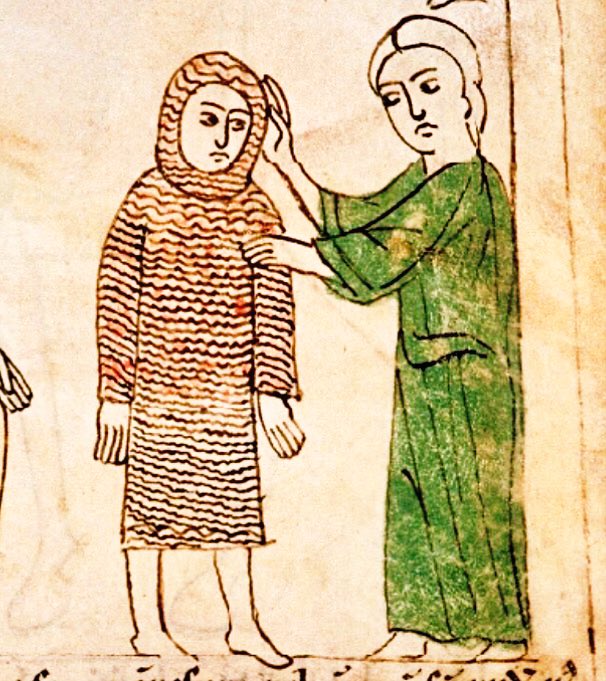
Sadly for Robert, his mother wouldn’t let him wear real mail to school like the cool kids, insisting that this knitted replica would look just as good - 12th century, Bibliothèques d'Amiens Métropole, Ms. 108, f. 85r
Medieval Military Medicine tweet media
English
33
300
1.9K
29.7K
hannah anderson
hannah anderson@sometimesalight·
When they tell you they are eugenists, believe them…
hannah anderson tweet media
English
0
0
4
993
hannah anderson 리트윗함
Plantagenet
Plantagenet@Plantagenet1455·
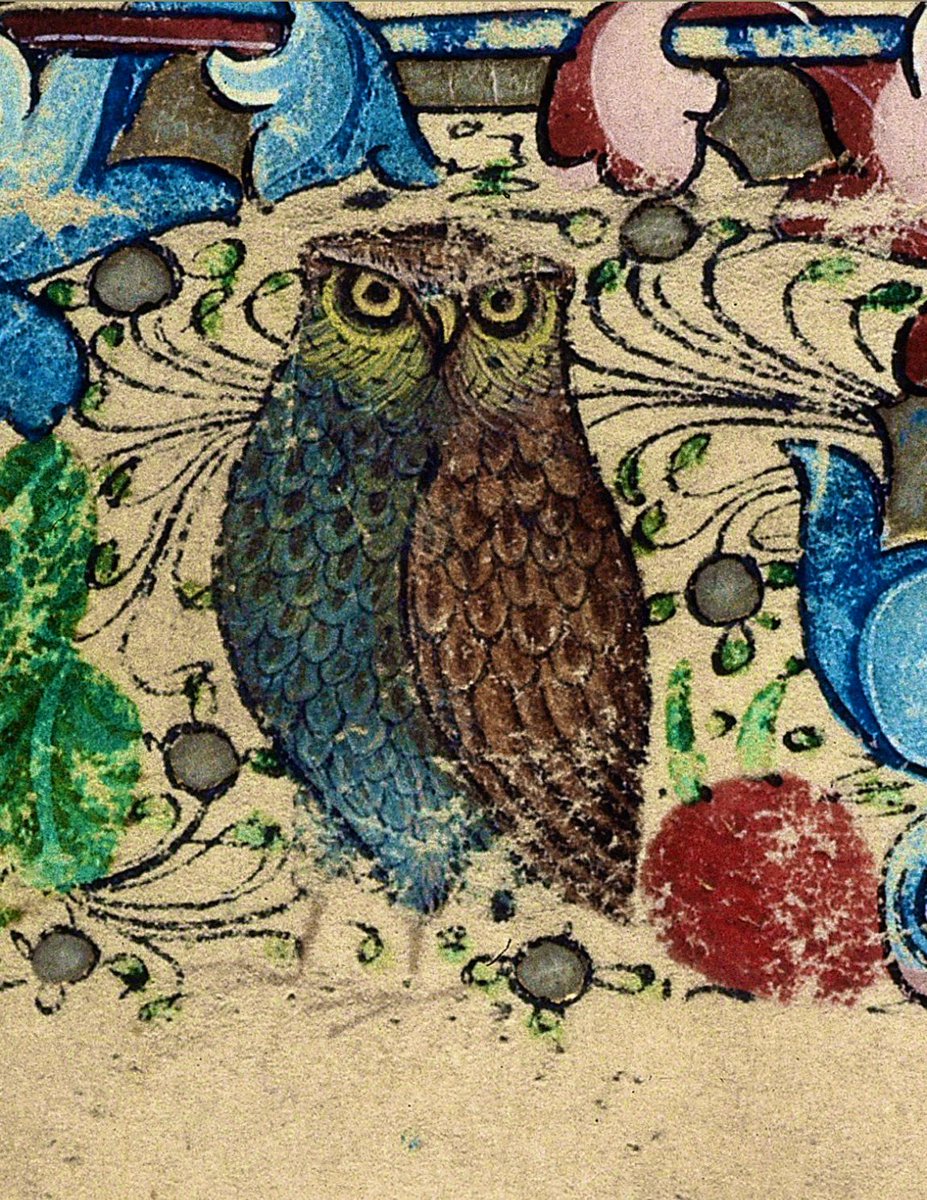
Owl from the Book of Hours of the Earl of Ormond, English, 15th century.
Plantagenet tweet media
English
5
232
1.1K
17.1K
hannah anderson
hannah anderson@sometimesalight·
@REmilianoZapata Or to riff off Eric Liddell: “I believe God made me for a purpose, but He also made me intellectual. And when I think, I feel his pleasure.” 😊
English
0
0
3
30
hannah anderson
hannah anderson@sometimesalight·
@REmilianoZapata And St. Thomas Aquinas would be baffled as to why you feel need to separate your intellect from your spirituality in the first place lol
English
1
0
1
37
hannah anderson
hannah anderson@sometimesalight·
there are folks who are spiritual but not religious... gotta be honest, tho, I'm more concerned by the ones who are religious but not spiritual
English
14
10
91
4.6K
hannah anderson
hannah anderson@sometimesalight·
@lagerandgospel2 Fair enough as they probably carry different meaning for different people. I’m thinking of spiritual as contra solely materialistic view of reality & religious as formalized communal faith practices. I think ideally religion would simply be structured spiritual practices.
English
0
0
2
36
hannah anderson
hannah anderson@sometimesalight·
@Loyal2tGo17 Yeah, totally… I do think there’s a difference btwn “existential threat to our WAY of life”and “existential threat to our lives”
English
0
0
6
190
hannah anderson
hannah anderson@sometimesalight·
Okay, if we give you “empathy is sin” & “immigrants represent an existential threat to our way of life,” can you do “love your enemies” & “if your enemy is hungry, feed him; if he is thirsty, give him something to drink”?
English
16
7
79
4K
hannah anderson
hannah anderson@sometimesalight·
@ChristianityOn @AuDHDSage We may perceive such practices in today’s context as “religious not spiritual” but historically, they were absolutely understood as spiritual or holy b/c they set the individual apart in some really profound ways.
English
0
0
0
28
hannah anderson
hannah anderson@sometimesalight·
@ChristianityOn @AuDHDSage This kind of life was more likely to bear fruit of ecstatic awareness of the Other/Divine but not in the terms we think of today as if the Other were “out there.” Some forms of ancient prayer involve bodily practices very similar to stimming w/ goal of *internal* awareness.
English
1
0
0
34