고정된 트윗
TimeDecay
299 posts


TimeDecay 리트윗함

AI is the first technology in history where more customers makes you POORER.
Every tech company in history got cheaper as it scaled.
More users meant lower costs per user. That's the entire model.
That's why Microsoft prints money. That's why Google prints money. That's why Meta prints money.
Software has near-zero marginal cost. Build it once. Sell it a billion times. The 100 millionth user costs basically nothing to serve.
This is the single most important rule in tech economics.
But AI completely broke it.
Every single query costs real compute. Every interaction burns real electricity. Every response depreciates real hardware.
There is no "build once, sell forever." There is only "burn money every time someone asks a question."
And the numbers prove it:
OpenAI hit $20 billion in annualized revenue. Losses? $14 billion.
For every dollar they earn, they spend $1.69 delivering it. Their losses TRIPLED as their revenue grew.
Not because they're bad at business, but simply because the model itself is broken.
Anthropic crossed $30 billion in annualized revenue. Still burning billions. Still not profitable. Still raising tens of billions just to keep the lights on.
xAI is burning $1 billion every single month.
Perplexity spent 164% of its revenue on compute costs from AWS, They literally spent more on running the AI than they made from selling it.
This is not how technology is supposed to work.
Google once estimated that adding AI to every search query would require 500,000 A100 servers. The cost of answering a single AI query is 10x MORE than a traditional search result.
Traditional software: Serving 1 million users costs roughly the same as serving 100,000. The marginal cost is basically zero.
AI: Serving 1 million users can cost 10 times what 100,000 costs. Every new user is a new expense. Every new query is a new dollar burned.
This is reverse economics. The more successful you become, the faster you die.
And nobody in the industry wants to talk about it because the entire narrative depends on you believing AI companies work like software companies.
But they don't. They NEVER will.
Software scales to infinity. AI scales to bankruptcy.
HSBC ran the numbers on OpenAI specifically.
Their conclusion:
Even after every funding round, every investment, every deal, OpenAI still faces a $207 BILLION shortfall to reach profitability.
The industry response has been to raise prices.
ChatGPT went from free to $20 to $200 for the Pro plan. And it's still not enough because the cost of running these models grows FASTER than any price increase consumers will accept.
Meanwhile 966 AI startups died in 2024. A 25.6% jump from the year before.
AI startups burn cash twice as fast as non-AI tech companies. And the ones building on TOP of OpenAI and Anthropic are in even worse shape.
Every wrapper app. Every "AI-powered" SaaS tool. Every startup whose entire product is someone else's model with a different skin on it.
They're all margin-negative. Every single one.
And these are the companies about to IPO.
SpaceX, OpenAI, Anthropic, and Cerebras. $240 billion in combined raises planned for 2026.
They're asking you to invest in an industry where the fundamental unit economics don't work. Where the MORE customers you get, the MORE money you lose. Where no company has figured out how to make the math positive.
The dot-com bubble had the same pitch: "Revenue is growing. Profitability comes later."
For most of them, later never came.
The question isn't whether AI will change the world. It will.
The question is whether it can do it without going broke first.
And right now, every single number literally says no.
How can they become profitable?
English
TimeDecay 리트윗함

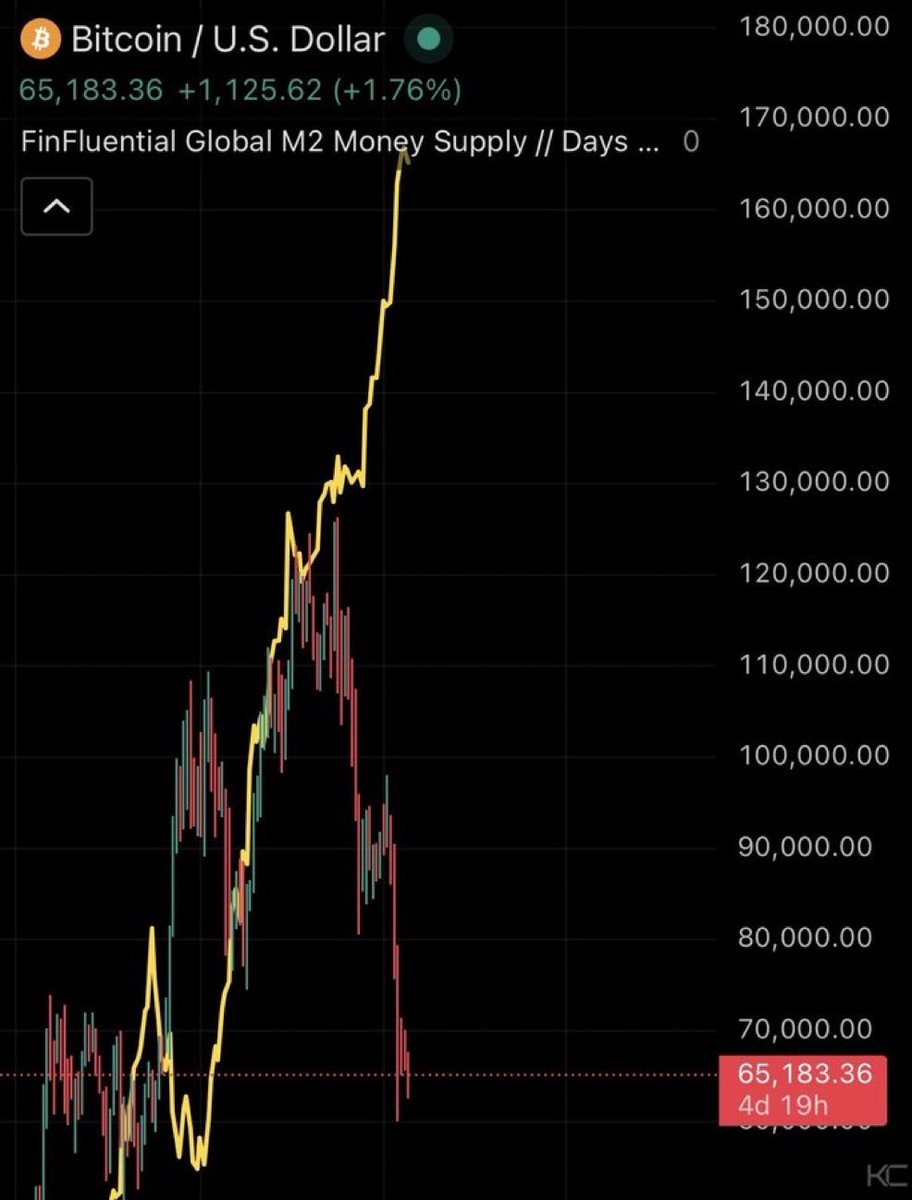
Crypto is no longer an attractive investment.
There are better opportunities elsewhere.
That’s the harsh reality.
Don’t expect anything like previous cycles.
English
@Breedlove22 Fantastic book should be mandatory for everyone in this country. Your next book is ridiculous though = bitcoin isn't the solution...it's exactly the same thing from Jekyll Island.
English

I've read roughly a book a week for 20 years.
These 5 changed how I think about money, freedom, and what it means to be alive:
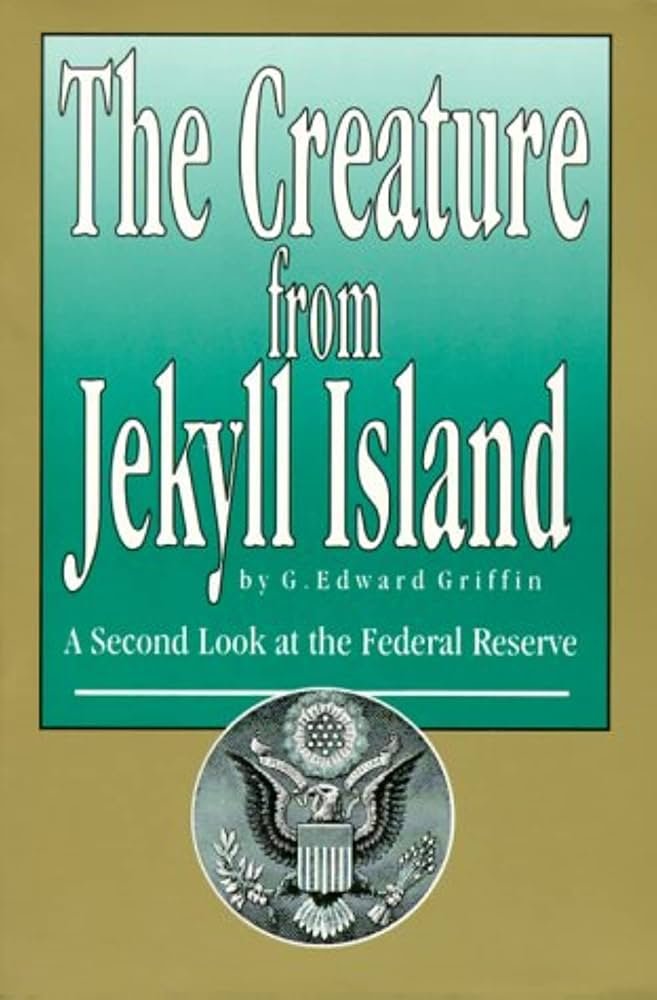
1. The Creature from Jekyll Island (G. Edward Griffin)
English

I recently did a migration from a Salesforce solution to a custom one just recently.
I can tell you that integrating with
Salesforce can't be vibecoded, the docs are bad, the APIs keep changing, they have their own SOQL language (that doesn't have joins!), and way more hurdles. It's for that that Twilio is charging $15 per seat/month.
Add to that the many edge cases that Twilio's integration can handle and you can see it will not be a simple nice UI to replace Twilio's integration with Salesforce.
Also, the average Salesforce customer is already paying A LOT of money, so the $15 per seat pricing will be just the cost of doing business.
Remember also after integration you need to keep developing to update the integration with the newest API or your integration will start breaking.
Don't get me wrong, I know AI can do a lot and it can replace simple SaaS features, but there are three reasons why it's not economically feasible enough to cause a dent in these corps:
1- The cost of tokens is going up for frontier models, I had a single prompt that cost me $12 with Opus 4.6. Imagine paying $2000 to $6000 for tokens alone to fully replace only the features you care about from your $20 per month SaaS. Add to that, the person who is prompting will be paid way more in an hour than what you pay a SaaS a month
2- The continuous cost of hosting + continuous token usage to update your solution as needed will be huge.
3- The hassle and fear of things breaking in production is what drives people to go to SaaS in the first place, not having to care about securing the SaaS. This specifically matters with Enterprise clients who hate custom solutions because of that, not even vibecoded ones.
Also, remember you could have always gotten a fullstack dev on Upwork and replaced your SaaS. And some did do that. But most didn't because of the reasons above (just replace token usage with dev hourly price)
I think AI will replace SaaS for bootstrapped founders and early-stage startups, though. Those who can do with a much more stripped-down version of the SaaS they need than the more mature solutions available right now.
English

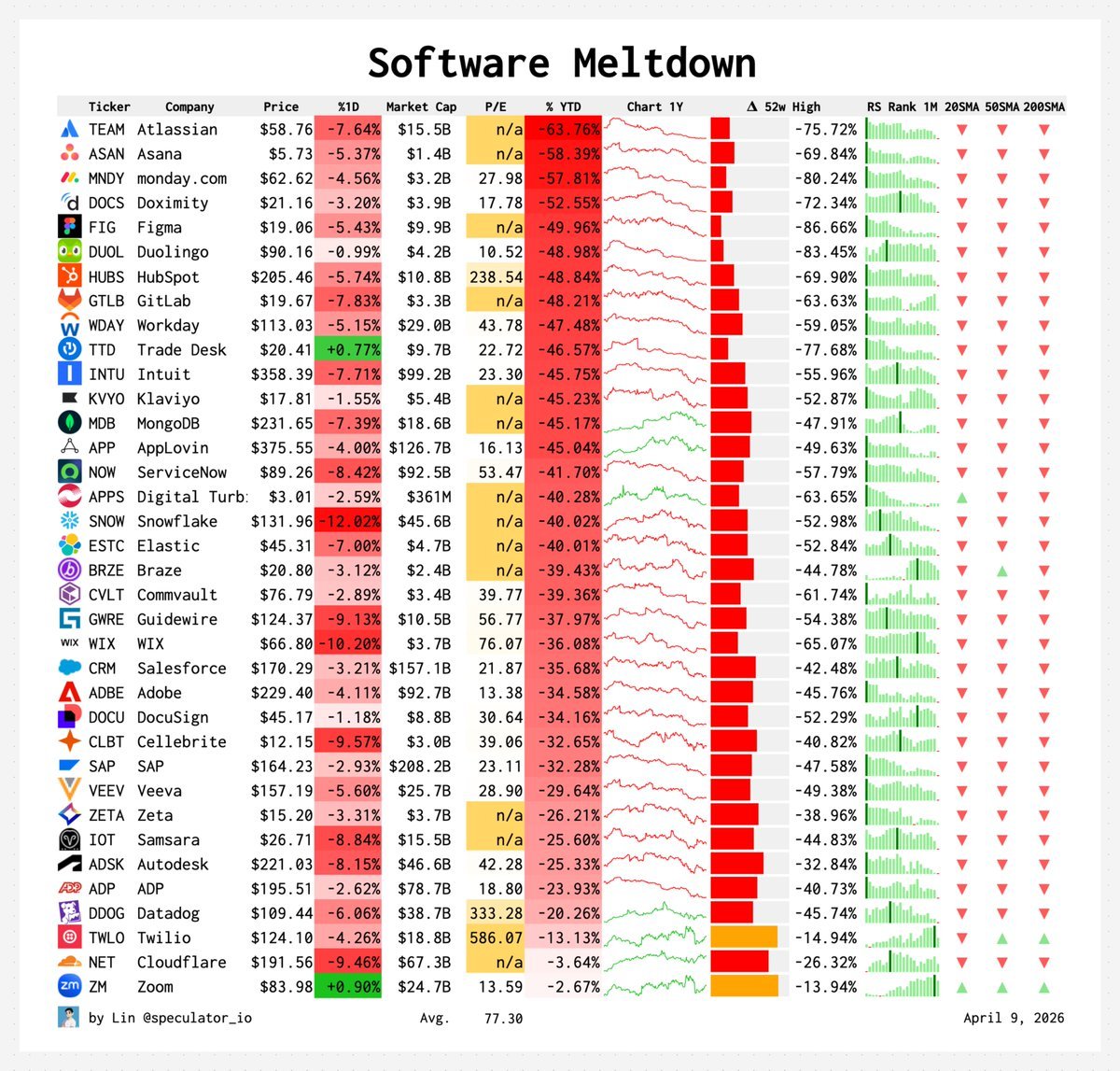
bro was right.
Atlassian down 75%. HubSpot down 69%. Figma down 86%.
Almost all of them down 30–70% from their 52-week highs.
AI is literally eating software alive and repricing every company in real time.
SaaS is cooked fr 😭
Naval@naval
Software was eaten by AI.
English
TimeDecay 리트윗함

BREAKING: Google research reveals quantum computers may be able to crack Bitcoin's private keys in just 9 minutes.
English
TimeDecay 리트윗함

Saying $4 gas isn’t especially high on an inflation-adjusted basis is incredibly tone-deaf, but is also true.

English
TimeDecay 리트윗함

A new study shows that over 6.7 million Bitcoin are currently held in addresses susceptible to quantum attacks. This is insane.
These attacks, which are expected to become a real threat within the next couple of years at minimum, will completely crack private keys in a matter of minutes.
Many Bitcoiners are panicking. They believe the code can be tweaked to make it quantum-proof, but that is definitely not the case.
Roughly $600 billion worth of BTC cannot be migrated by their owners. The freeze-or-not-freeze debate around Satoshi’s coins alone will become the hardest governance call in Bitcoin’s history.
Bitcoin’s days are numbered, and experts are aware of this. You can already see many top insiders, whales, and institutions reversing their stance on Bitcoin and offloading in recent months. Don’t ignore that.
Retail sheep are being left as the last bag holders, drawn in by the false idea that Bitcoin is the most secure asset ever. Ironically, that belief will end up being its downfall.

English
TimeDecay 리트윗함

Remember Tom Lee?
Remember $ETH was supposed to hit $62,000 latest in December?
Lmaaooo
English
TimeDecay 리트윗함

Die absurde Schieflage bei Bitcoin⚖️📉
(Siehe Grafik)
Käufer: MicroStrategy (Saylor) macht 98-99% des Volumens aus.
Verkäufer: Der komplette Rest (Bhutan, Mara, GameStop).
Mara verkauft für $1 Mrd.
Das ist ein Schneeballsystem, das implodieren wird.
Bist du raus? 👇
Deutsch
TimeDecay 리트윗함

Uncomfortable truth:
Most Bitcoiners don’t actually believe in Bitcoin…
They believe in the price going up.
English
TimeDecay 리트윗함


TimeDecay 리트윗함

TimeDecay 리트윗함


TimeDecay 리트윗함
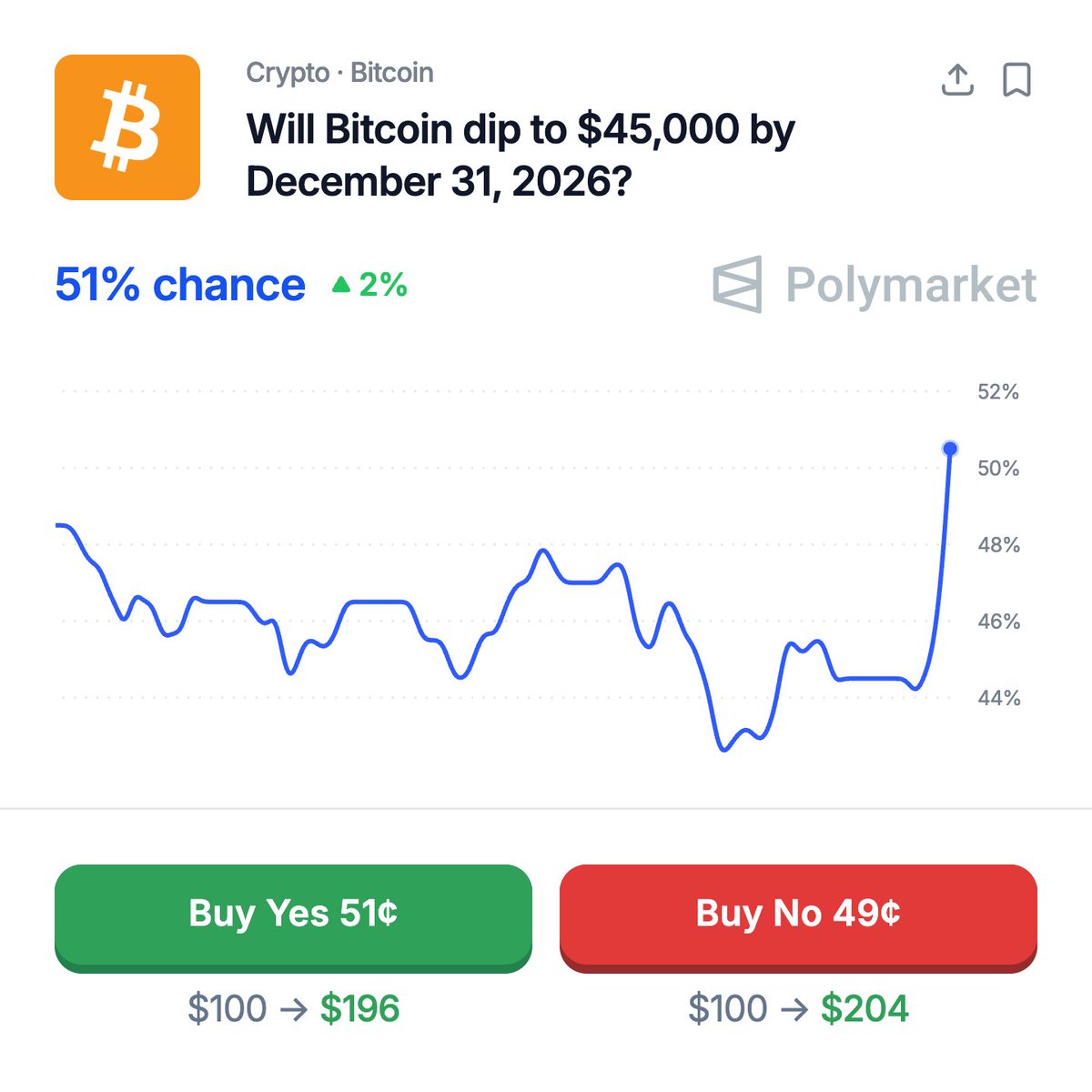
BREAKING: Bitcoin is now projected to crash below $45,000 by the end of this year.
51% chance.
English
TimeDecay 리트윗함

Saylor describes @strategy when trying to explain what a ponzi is (excluding the promise of returns)
Michael Saylor@saylor
@BorisJohnson Bitcoin is not a Ponzi scheme. A Ponzi requires a central operator promising returns and paying early investors with funds from later ones. Bitcoin has no issuer, no promoter, and no guaranteed return—just an open, decentralized monetary network driven by code and market demand.
English
TimeDecay 리트윗함
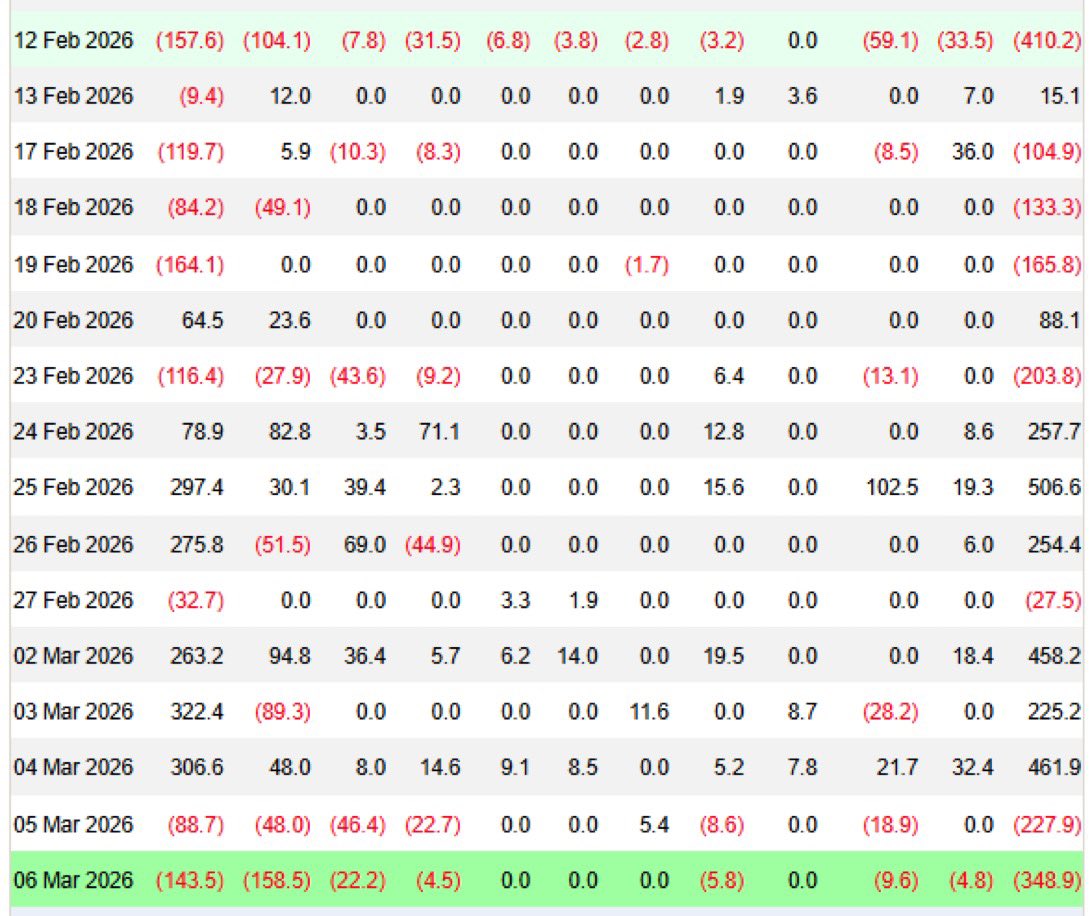
We’re witnessing the complete collapse of Bitcoin ETFs, which were once the most talked-about topic.
ETF outflows are accelerating, reaching -$348.9M, the largest outflow in several weeks.
Fidelity led with -$158.5M, followed by BlackRock with -$143.5M.
What goes up must come down. Investors are realizing the mirage around Bitcoin is over.
English
TimeDecay 리트윗함

BREAKING: 🇺🇸 RAY DALIO JUST DROPPED A MASSIVE WARNING AGAINST BITCOIN:
“BITCOIN DOES NOT HAVE PRIVACY. ANY TRANSACTION CAN BE MONITORED.”
“CENTRAL BANKS DON’T WANT TO BUY BITCOIN.”
“AND THERE ARE ALSO QUANTUM COMPUTING ISSUES.”
“IT’S A RELATIVELY SMALL AND CONTROLLED MARKET.”
English
TimeDecay 리트윗함