Teha Nicolai

3.1K posts

Teha Nicolai banner
Teha Nicolai

Teha Nicolai

@tholanico

Hat die Weltgeschichte einen Sinn?

Berlin, Germany 가입일 Ağustos 2013
5.1K 팔로잉591 팔로워
고정된 트윗
Teha Nicolai
Teha Nicolai@tholanico·
@LinksfraktionB @SebCzaja Als hätte es in Bln und Rest der Welt noch nie soz. Wohnungsbau gegeben, Ergebnis immer das gleiche: Günstlingswirtschaft, Fehlbelegung, Lock-in, steigende Mieten, Verschleudern im Nachfragetief. "Aber es hat doch 'sozial' im Namen, dann muss es gut sein." bloombergquint.com/view/2018/01/1…
Deutsch
1
4
53
0
Teha Nicolai 리트윗함
Creative Deduction
Creative Deduction@CreativeDeduct·
The great feat of capitalism has been lifting billions out of poverty, but the modern left barely talks about it. Instead, they're obsessed with something else: inequality. Thomas Piketty and Gabriel Zucman have become the rock stars of modern economics by sounding a single alarm: capitalism is producing dangerous and unjust levels of wealth inequality. Their books and policy proposals - heavy wealth taxes, global tax coordination and aggressive redistribution - are presented as moral necessities. But their framework is deeply flawed. They fixate on relative inequality (Gini coefficients, top 1% shares, etc.) while downplaying the explosion in absolute living standards. The bottom half of society today enjoys access to healthcare, technology, sanitation and consumer goods that would have been unimaginable to the middle class of previous generations. Capitalism’s great achievement is not that the rich got richer – it’s that the poor became dramatically less poor. Their historical narratives often cherry-pick data and project trends that ignore economic dynamism, mobility, and the role of innovation. Much of the wealth at the top comes from value-creating entrepreneurs, not inherited privilege or “rent-seeking”. Their proposed solutions are even more problematic. Wealth taxes are notoriously difficult to administer, encourage capital flight and punish the very saving and investment that drive long-term growth. History is littered with examples of high-tax redistributionist policies that slowed progress without meaningfully reducing poverty. Rather than focusing on absolute poverty or lack of opportunity, activist economists like Piketty and Zucman treat inequality as the central moral failing of our time, creating the mindset that has led politicians to sacrifice growth, freedom and human flourishing in pursuit of enforced equality of outcome. When capitalism proved it could solve need, the left pivoted to focus on inequality. The inequality economists would have us sacrifice progress on the altar of envy dressed up as science.
Creative Deduction tweet media
English
43
144
409
8.7K
Teha Nicolai 리트윗함
Nate Friedman
Nate Friedman@NateFriedman97·
I asked a DSA leader to pitch you socialism. This is the elevator pitch that he used to convert 1000s of voters into socialists and he did it door to door. The DSA got 3 socialist congressional candidates to win their primaries, so I would listen. If you would want to see who the DSA really are and what they stand for like abolishing prisons then I'd recommend the YouTube video in the comments.
English
595
935
4.6K
525.6K
Teha Nicolai 리트윗함
Philip Karrenstein
Man muss sich das vor Augen führen: Der Unternehmer soll peinlichst genau Belege abheften und 15 Jahre aufbewahren, da ihn anderenfalls Beweislastregeln noch nach 15 Jahren für 15 Jahre hinter Gitter bringen könnten, weil der Staat - und das ist der eigentliche Grund - mit seinen auf Kosten der Unternehmer höchstalimentierten Beamten nicht dazu in der Lage ist, die Sachverhalte angemessen zügig zu prüfen. Dabei bedeutet - wohlgemerkt - für den Unternehmer schon die wenig verspätete Umsatzsteuer-Voranmeldung oder der verspätete Jahresabschluss, dass eine Steuerverkürzung vorliegt, die künftig dann wohl als Verbrechen geahndet wird. Hier läuft alles komplett aus dem Ruder.
Deutsch
81
399
2.8K
65.9K
Teha Nicolai 리트윗함
Rock Chartrand
Rock Chartrand@RockChartrand·
The moral obscenity is treating productive people as chattel whose purpose is to finance endless government failures. Healthcare spending is already multiple broken promises deep beyond what was supposedly required. Businesses that fail suffer the consequences. Governments that fail send everyone else the bill.
English
3
38
647
10.9K
Teha Nicolai 리트윗함
Yugoslavian Visuals
Yugoslavian Visuals@YugoslavVisuals·
Two women and a dog sit in front of the destroyed Hotel Neretva in Mostar, Bosnia and Herzegovina, 1990s.
Yugoslavian Visuals tweet media
English
2
74
673
16.8K
Teha Nicolai 리트윗함
Roberto Rios
Roberto Rios@peruvian_bull·
FINANCIAL GRAVITY: If we divide the S&P 500 by the fed’s balance sheet, the line is basically flat since 2008. The correlation coefficient between central bank quantitative easing and the price of stock indexes is nearly 1. The money printed by the Fed, because of the structure of the Open Market Operations, is plugged directly into the Treasury markets, and from there, flows into equities and derivatives. This has served to primarily enrich the asset owners, financial institutions, and wealthy elites who own the majority of the stock market anyways. The entire rally has been an illusion, financed by the Fed and maintained through QE.
Roberto Rios tweet media
Fugitive Caesar@ThomBrady5

The redpill on this is: America never recovered from 2008 and it's been 18 years of economic stagnation. Everyone wants to make this more complicated than it is, but it's exactly that simple. Dead zombie economy.

English
302
1.6K
8.3K
1.1M
Teha Nicolai 리트윗함
Department of State
Department of State@StateDept·
SECRETARY RUBIO: "This is a distinctive and unique evil. It has always been driven by a hatred, above all else, for civilization itself."
English
1.2K
5.1K
25.8K
6.2M
Teha Nicolai 리트윗함
Handre
Handre@Handre·
Sweden got rich under laissez-faire and nearly wrecked itself trying to forget it. Between 1870 and 1970, Sweden ran one of the freest economies in Europe: low taxes, open trade, sound money, and entrepreneurs like the Wallenbergs and Ingvar Kamprad building world-class firms. By 1970 Sweden ranked fourth in OECD per capita income. Then the social democrats decided prosperity was automatic and started spending it. You know what happened next if you understand incentives. Government spending blew past 60 percent of GDP by the late 1980s. Marginal tax rates crossed 85 percent. In 1976 Astrid Lindgren, the children's author, calculated her effective marginal rate at 102 percent and wrote a satirical fairy tale about it in Expressen. She paid the state more than she earned. Not a single new net private-sector job appeared between 1950 and 1990. Every job added came from the public payroll. Capital fled, IKEA's ownership moved offshore, and by 1993 Sweden had slid to roughly 14th in the OECD income rankings. The 1991-93 crisis forced honesty. The krona collapsed, interest rates briefly hit 500 percent, and the political class ran out of other people's money in real time. What followed was one of the sharpest market-oriented turnarounds in modern history. Carl Bildt's government introduced universal school vouchers in 1992, letting for-profit schools compete for every student. Sweden partially privatized pensions in 1998 with individual investment accounts. It deregulated taxis, rail, telecom, postal services, and electricity. It abolished the inheritance tax in 2004 and the wealth tax in 2007. Corporate tax fell from 52 percent to 20.6 percent. Spending dropped nearly 20 points of GDP. Notice what you never hear from the "democratic socialism" crowd: Sweden's welfare state produced stagnation. Its recovery came from cutting, privatizing, and deregulating. Bernie Sanders praises a country that killed its estate tax while he campaigns to raise yours. The lesson free market economists have taught for a century holds here perfectly. Wealth comes from capital accumulation and voluntary exchange. Redistribution consumes it. Sweden ran the experiment twice, in both directions, on live television. The Swedes learned. The question is whether you will before your own government runs the same experiment.
Handre tweet media
English
91
1K
2.9K
91.9K
Teha Nicolai 리트윗함
Students For Liberty
Students For Liberty@sfliberty·
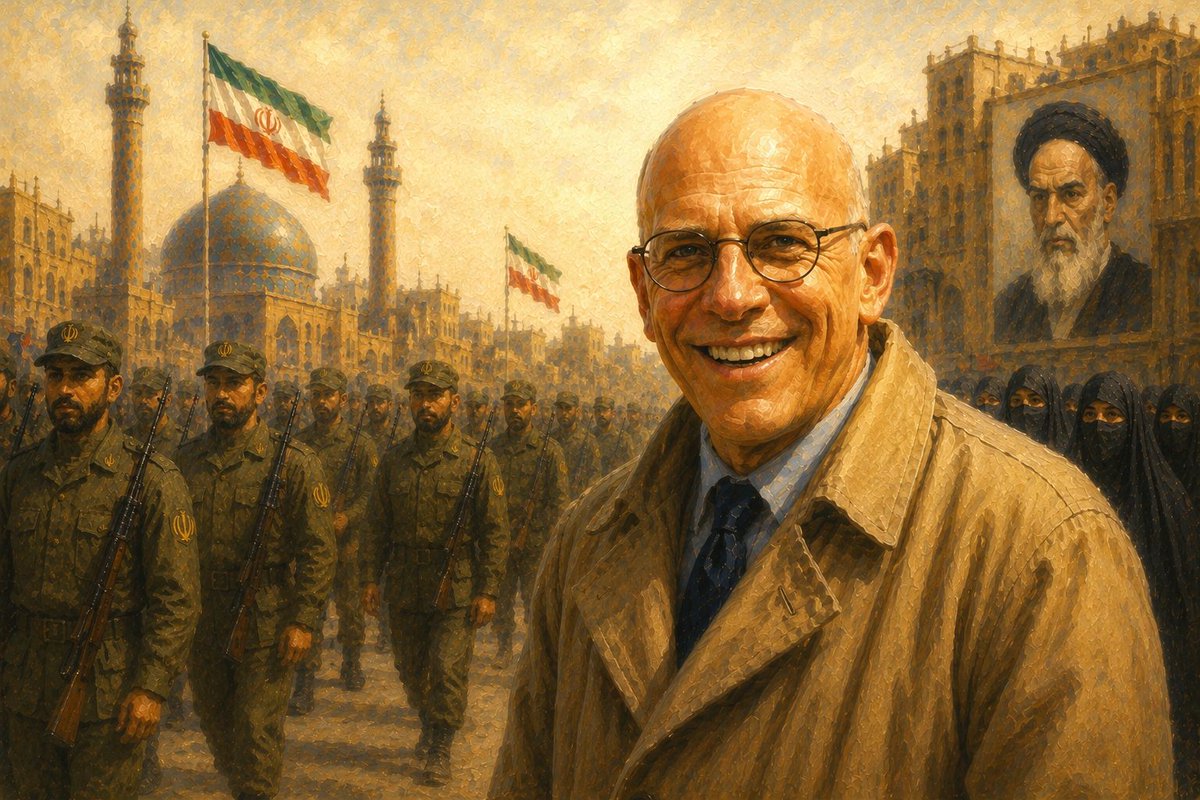
Europe's most famous theorist of modern power went to Tehran in 1978 and came back praising the Ayatollah. Michel Foucault had spent his life analyzing surveillance, discipline, and how power reshapes people. Then he watched a police state being born and called it liberation. 🧵
Students For Liberty tweet media
English
33
180
749
29.9K
Teha Nicolai 리트윗함
Lina Seiche
Lina Seiche@LinaSeiche·
The “Rule of Law” is a myth. Actually, it’s worse.
English
49
318
1.4K
30.8K
Teha Nicolai 리트윗함
Amit Segal
Amit Segal@AmitSegal·
Israel had a problem, and Germany had a solution. Israel needs more manufacturing capacity for Iron Dome components. Volkswagen, having failed to establish itself as a leader in electric vehicles and bleeding market share to Chinese imports, has capacity to spare. So the two problems found each other: Volkswagen’s management board green-lit converting a production line to defense manufacturing under a deal with Israel’s Rafael, saving thousands of German jobs in the process. A win-win. Until the Qataris intervened and sank the deal. Why do the Qataris have a say in what German factories build? Because, according to Bild, the Qatari sovereign wealth fund holds 10.4 percent of Volkswagen’s shares and 17 percent of its voting rights—and it vetoed the deal for one reason: the company slated to manufacture at the plant is Israeli. Qatar spent years funding Israel’s enemies and is now spending its equity blocking Israel from intercepting the missiles it paid for. Volkswagen confirmed that its Qatari shareholders vetoed the cooperation at the Osnabrück plant but said it would keep seeking partnerships to save the site. Good luck to the 2,300 workers employed there—all facing layoffs by the end of 2027. The Qataris had help, of course. Peace activists and opposition parties had criticized the conversion from the start, insisting Volkswagen manufacture only for the civilian market—never mind that everyone in Germany has understood for over a year that tens of thousands of jobs are gone without exactly this kind of reform. The protests intensified once the partner turned out to be Israeli, with radical left-wing activists, backed by the Left Party, declaring it “a deal that the German public cannot accept” given Netanyahu’s military activity across the Middle East. And this is not just about Volkswagen. According to Bild, the $4.2 billion deal for German shipping giant Hapag-Lloyd to acquire Israel’s Zim is also apparently collapsing—and here too, senior Israeli sources point to Gulf money inside the German corporation: the Qatari sovereign wealth fund holds 12.3 percent of Hapag-Lloyd, the Saudi fund another 10.2 percent. Nor is the creeping problem exclusive to Germany. As FDD’s Natalie Ecanow has documented, the state of 330,000 citizens, half the size of New Jersey, has invested some 400 billion dollars in the United States—roughly 1.2 million dollars per Qatari citizen. From defense and energy to basic infrastructure and manufacturing, the Qatari octopus has slipped its tentacles into countless sectors of the U.S. economy. As the Volkswagen case demonstrates, these investments can pay more than one kind of dividend.
Amit Segal tweet media
English
229
1.4K
4.4K
360.1K
Teha Nicolai 리트윗함
Rothmus 🏴
Rothmus 🏴@Rothmus·
Your median professor sits so far left that AOC, Sanders, and Warren would count as moderates in any faculty lounge. Faculty from 55 elite universities form one towering blue spike of ideology far out on the left, density exploding past 6, with virtually nothing on the conservative side. This was built through decades of selective hiring, social enforcement, and the systematic purge of dissent. And because they credential the people who run media, law, government, and tech, the monoculture leaks into every elite institution downstream.
Rothmus 🏴 tweet media
English
460
2.9K
11.1K
1.4M
Teha Nicolai 리트윗함
Handre
Handre@Handre·
Angola sits on some of the richest oil reserves in sub-Saharan Africa, pumping over 1.1 million barrels per day at its peak, and managed to keep the majority of its population in grinding poverty for decades. This is a policy outcome, not an accident. The MPLA took power in 1975 and immediately began doing what Marxist-Leninist governments do: nationalizing industry, collectivizing agriculture, and funneling resource wealth into the state apparatus rather than allowing it to circulate through voluntary exchange. Sonangol, the state oil company created in 1976, became the regime's personal treasury. By the 2000s, with oil prices surging, Angola was posting GDP growth above 15% annually. The average Angolan saw almost none of it. Isabel dos Santos, daughter of longtime president José Eduardo dos Santos, accumulated a personal fortune estimated at $2.2 billion while overseeing state enterprises. Socialism operates exactly as designed: concentrate control, and the controllers enrich themselves. The coercion is the point. When you strip away the revolutionary language and the five-year plans, the state is an institution that extracts wealth from some people by threatening violence against others. Angola's ruling class did not stumble into predation; they organized around it deliberately, and the MPLA's ideological scaffolding gave them moral cover to call it liberation. Free market economists have explained the resource curse clearly enough: oil wealth flows to whoever controls the state, and that control becomes worth fighting over, so you get civil war (27 years of it, ending in 2002), institutional decay, and zero incentive to build the legal and economic infrastructure that actually produces broad prosperity. Diversification never happens. Manufacturing never develops. Farming collapses after collectivization destroys price signals and private incentive simultaneously. Angola began modest liberalization after 2002, and private sector activity did grow. But the MPLA never surrendered structural control over the commanding heights of the economy. The lesson the regime drew from the Soviet collapse was not that central planning fails: it was that you need better PR and a sovereign wealth fund to quiet foreign critics. Current poverty rates above 40% are the tuition fee ordinary Angolans pay for that lesson.
Handre tweet media
English
23
201
603
17.6K
Teha Nicolai 리트윗함
Creative Deduction
Creative Deduction@CreativeDeduct·
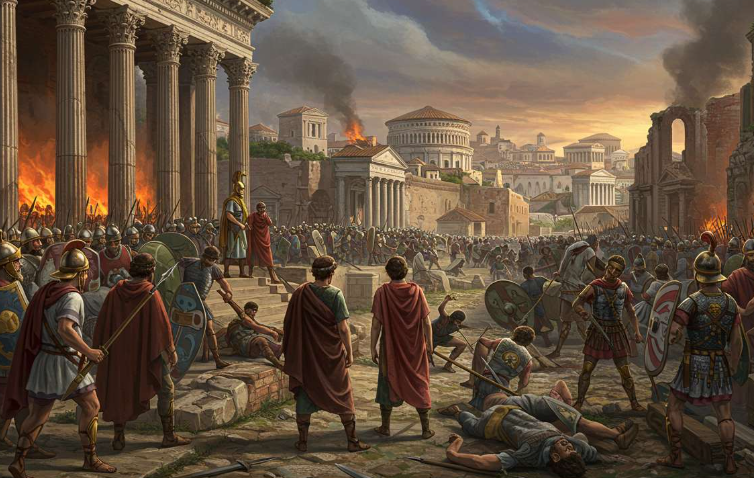
Why did Rome fall? The conventional explanation focuses on imperial overstretch, barbarian invasions, corrupt emperors and moral decay. Johan Norberg offers a different perspective: the empire collapsed due to currency debasement, entitlement spending and a retreat towards protectionism. In his book "Peak Human" (2025), he argues that Rome collapsed because it gradually abandoned the institutions that had made it prosperous in the first place. At its height, the Roman Empire thrived on relatively secure property rights, extensive trade, openness to foreign ideas and a sophisticated division of labour. Merchants moved goods across continents, cities specialised in production, and prosperity spread through voluntary exchange rather than constant conquest. Over time, however, the state became increasingly interventionist. Taxes rose to finance an ever-growing bureaucracy, military and “bread and circuses” entitlement spending. Price controls distorted markets. Inflation followed repeated debasement of the currency. Occupational restrictions reduced labour mobility, while commerce gave way to political patronage. As the state expanded, private enterprise contracted. Rome failed because political power gradually crowded out the institutions that generated the wealth that underpinned its success. When prosperity is treated as something to be redistributed rather than created, economic dynamism inevitably suffers. The lesson is as relevant today as it was 1,500 years ago. Civilisations are not destroyed overnight by invading armies. More often, they weaken slowly as governments undermine the incentives that encourage innovation, investment and voluntary exchange. The erosion begins long before the collapse becomes visible.
Creative Deduction tweet media
English
12
57
122
3.9K
Teha Nicolai 리트윗함
Pavel Durov
Pavel Durov@durov·
@BuddyBearOnTON Yes, Telegram won’t scan your private messages, no matter what banana-republic tricks the EU uses.
English
802
7.4K
34.4K
1.3M
Teha Nicolai 리트윗함
Margaret Thatcher
Margaret Thatcher@realmrsthatcher·
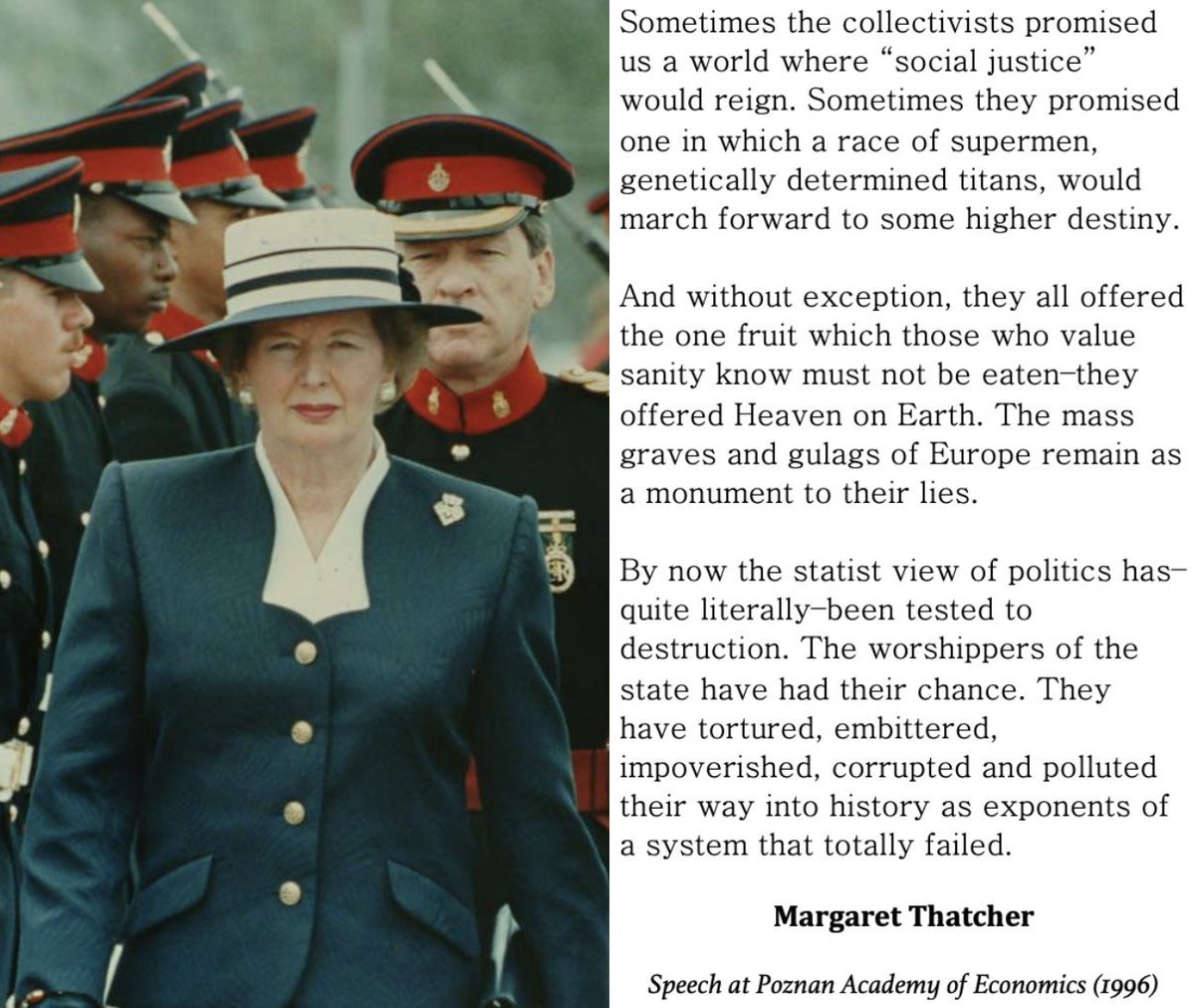
Sometimes the collectivists promised us a world where “social justice” would reign ... And without exception, they all offered the one fruit which those who value sanity know must not be eaten: they offered Heaven on Earth. The mass graves and gulags of Europe remain as a monument to their lies. By now the statist view of politics has—quite literally—been tested to destruction. The worshippers of the state have had their chance. They have tortured, embittered, impoverished, corrupted and polluted their way into history as exponents of a system that totally failed.
Margaret Thatcher tweet media
English
3
68
234
6.8K
Teha Nicolai 리트윗함
Hasnain Kazim
Hasnain Kazim@HasnainKazim·
Mehreren Jüdinnen und Juden, deren Vorfahren von den Nationalsozialisten verfolgt oder ermordet wurden, ist in New York auf dem Segelschulschiff „Gorch Fock“ die deutsche Einbürgerungsurkunde überreicht worden. Für viele von ihnen schloss sich damit ein Kreis, indem sie die deutsche Staatsbürgerschaft zurückerhielten. Ich finde das einfach nur schön.
Deutsch
43
177
1.9K
31.3K