

Tim Fouracre
1.3K posts

Tim Fouracre
@timfouracre
Founder @TinyTaxUK @CountingupHQ @ClearBooks
London 가입일 Mayıs 2009
37 팔로잉1K 팔로워

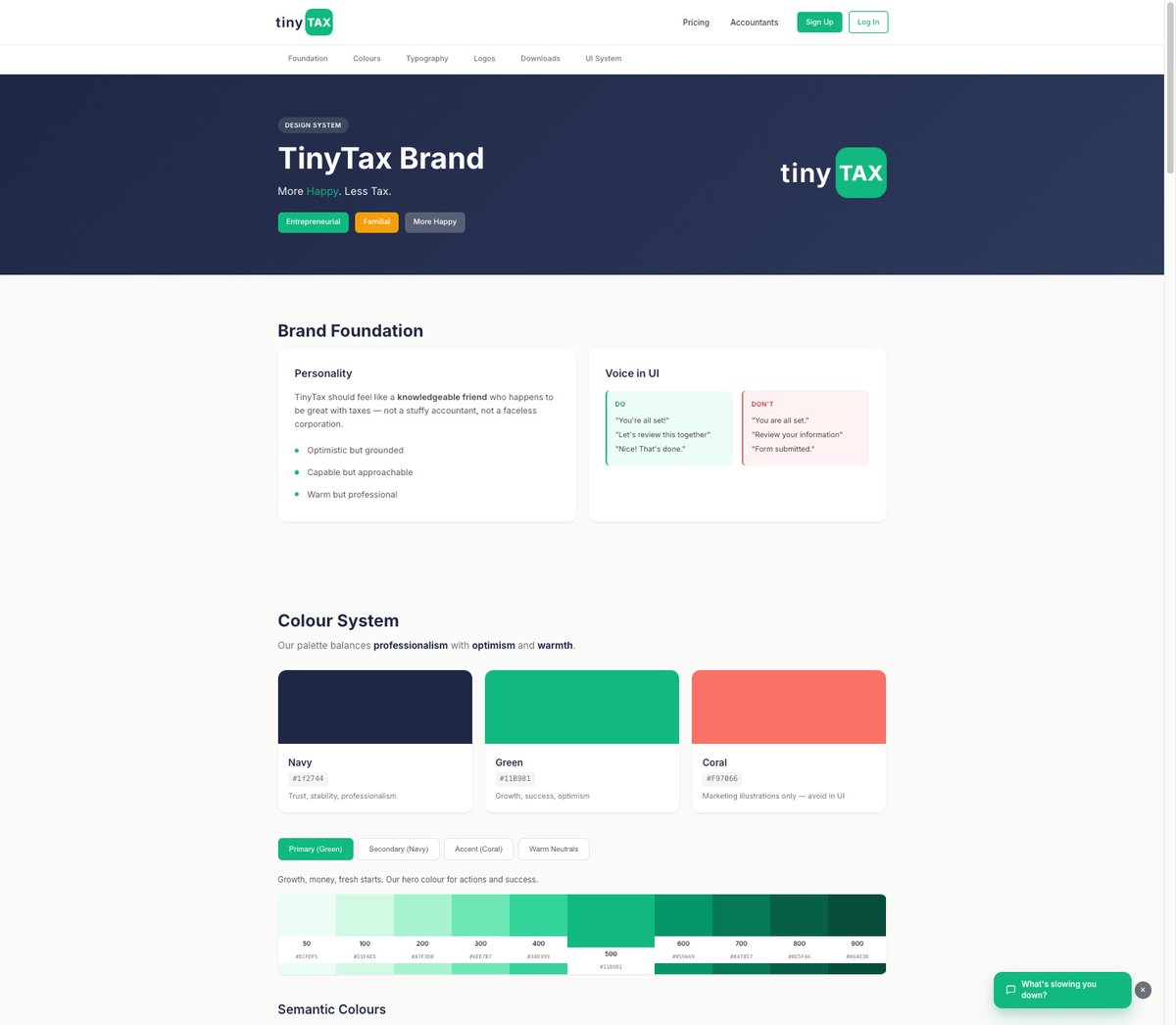
Tim’s Tiny Take #3: Building the Beginnings of a Brand, Fast timfouracre.co.uk/tims-tiny-take…
English
Tim's Tiny Take #2: Shipping NPS & Auto-Tweets Before Breakfast timfouracre.co.uk/tims-tiny-take…
English
Thanks @AccountingWEBuk for the TinyTax write-up.
Early days, but momentum is building.
tinytax@tinytaxuk
Thanks to @AccountingWEBuk for featuring TinyTax. Micro-entities will soon need software to file accounts and CT600s as free government filing ends from April 2026. We’re building the simplest way to do it. accountingweb.co.uk/tech/accountin…
English
TinyTax milestone 🎉 We’ve just hit 300 successful filings.
Our little community experiment is taking off too — 50 posts already and growing fast.
Building in public… and enjoying every minute. 🚀
timfouracre.co.uk/tims-tiny-take…

English
tinytax.co.uk now supports non-England & Wales filings to Companies House e.g. SC, NI, OC etc.
English

@timfouracre ChatCPT gave me this recommendation when I asked it the best way for me to file accounts and CT600. Looking forward to trying it out in the next few weeks.
English
TinyTax.co.uk has just added support for LLP end of year accounts filing to Companies House
English
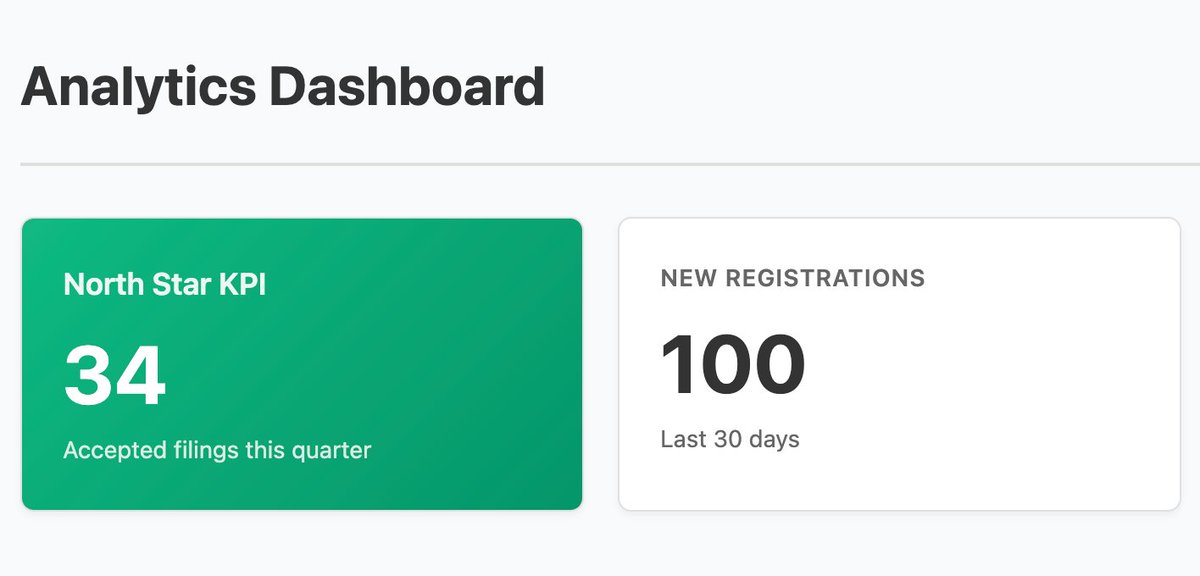
A new milestone for TinyTax.co.uk 🚀
100 sign-ups of companies wanting to file their CT600s and accounts online.
Just getting started. #startup #taxtech
English
I've been quietly building TinyTax — simple online filing for company accounts and CT600.
Now in beta. tinytax.co.uk
English
@levie @paulg The winnner of productivity gains is always the consumer - as Charlie Munger would tell you history has told you. As prices inevitably come down (consumer wins) you won’t have the increased margin to afford those extra hires you predict those productivity gains will afford you 🤪
English

One of the most common concerns about AI is the risk that it takes a meaningful portion of jobs that humans currently do, leading to major economic dislocation. Often these headlines come out of economic studies that look at various job functions and estimate the impact that AI could have on these roles, and then extrapolates the resulting labor impact. What these reports generally get wrong is the analysis is done in a vacuum, explicitly ignoring the decisions that companies actually make when presented with productivity gains introduced by a new technology -- especially given the competitive nature of most industries.
The thinking generally goes that if a company could, say, be 50% more productive in a particular function, it would mean a commensurate reduction of jobs in that area. For instance, if a certain function (like engineering or sales) required 10 units of labor before, then with a 50% gain in productivity, in the future that same function would now only need ~7 units of labor. The challenge with this type of thinking is that it assumes that companies have maximized the amount of labor they wish they had for a particular function, when in reality many functions are only staffed at the level the company can afford. Further, it assumes that a company is not in a competitive field, and that the company would be complacent and happy about generating the same output as before, just with less costs. Finally, it ignores the fact that productivity gains in a market will lead to increased response from competition, which companies equally have to respond to with more productivity not necessarily more profit. Time and time again this is the type of flawed thinking that we tend to get out of broad economic studies on the labor needs in the economy.
To break this down and make it practical, I thought I'd illustrate the point with the example of an engineering function -- one that already is seeing the benefits of AI starting to roll out. The numbers will all be kept simple, but you can change almost any variable and the point will remain the same. The key to thinking through job impacts is to think through what happens a step or two *after* the productivity gain of AI is experienced.
So, imagine you're a software company that can afford to employee 10 engineers based on your current revenue. By default, those 10 engineers produce a certain amount of output of product that you then sell to customers. If you're like almost any company on the planet, the list of things your customers want from your product far exceeds your ability to deliver those features any time soon with those 10 engineers. But the challenge, again, is that you can only afford those 10 engineers at today's revenue level. So, you decide to implement AI, and the absolute best case scenario happens: each engineer becomes magically 50% more productive. Overnight, you now have the equivalent of 15 engineers working in your company, for the previous cost of 10.
Finally, you can now build the next set of things on your product roadmap that your customers have been asking for. We can't assume it will be 50% more because there are new points of friction and coordination tax that emerge as you have 15 equivalent engineers, but let's say your output goes up meaningfully. Assuming you're acting in your best interests as a company, the features you build make your product that much more compelling, which means at some point (sooner or later) they should result in an incremental gain in revenue. Let's be somewhat conservative on what impact these new features will have on your product, but let's say they generate an incremental 10% of revenue over time or keep customers retained at a 10% greater rate (roughly the same financial benefit).
Now let's assess the downstream impact. Firstly, any growth of revenue will often lead to some functions in the business growing as well to support these new customers, which will directly create new jobs. But further, the company now has to decide whether it remains satisfied with its 10 engineers that have the output of 15, or with their incremental revenue should they hire even more engineers to build the *next* set of features that will make them even more compelling to customers. Unless this company is in some rare monopoly position, they likely will want to build the next set of features even faster than the last set to grow even more quickly. This then means AI has caused the company --counterintuitively-- to hire more engineers than before, because the productivity of each engineer is much higher, allowing them to generate more return per engineer, and thus more revenue.
What's interesting is this analogy works similarly for most functions in a business. In sales, if you could make sales reps 10% more productive (i.e. they sell 10% more of your products/services for the same cost), almost every company in the world would prefer to hire even more sales reps, instead of merely banking the incremental profit. That incremental sales productivity again would lead to downstream implications, like the need to deliver more features to customers, and thus more R&D hiring! Even back-office functions that don't as directly tie to revenue growth, often are a bottleneck to growth . If you can reduce the bottleneck -- say lawyers reviewing contracts, or people processing invoices-- cycle time in businesses accelerates, which almost always lets you serve more customers faster or grow more quickly, again letting a company reinvest those dollars.
In the end, when you step out of the vacuum of just the specific productivity gain of a particular job function, and look at how the whole system will adapt and improve due to that productivity gain, a very different picture of AI's impact on jobs will emerge. Yes there will absolutely be changes to what jobs become more or less in demand in the future, but the competitive nature of companies inevitably ensures that across the whole system companies will be focused on leveraging AI to become more productive.
English
Tim Fouracre 리트윗함

Watch as the US economy switches from General Electric, Exxon, AT&T, and Coca-Cola to Apple, Microsoft, Google and Amazon. The trend is so clear and so dramatic.
americanbusinesshistory.org/americas-most-…
English
Tim Fouracre 리트윗함


Tim Fouracre 리트윗함

I watched every single Jeff Bezos interview.
He says the same word 100s of times.
And it’s the only obsession that matters:
English
Tim Fouracre 리트윗함
This essay has more in it than the median book.
writings.stephenwolfram.com/2023/02/what-i…
English
Tim Fouracre 리트윗함

🎺We are thrilled to announce we have been shortlisted among the #Finalists at @TCPAwards 2023, together with our clients @pockid_money, @joinekko_earth & @CountingupHQ - Congrats to all the finalists! 💫✨ #TCPA #poweredbyPPS #awards

English
@BMW_UK I'm having a terrible BMW customer service experience. Spent >2hrs round the houses on phone to head office (twice), repairs & services, breakdown & recovery, emergency service, and BMW dealership manager where we bought the car. Please DM to help resolve!
English
Tim Fouracre 리트윗함

🚀🎉 Countingup is # 9 in BusinessCloud's Top 100 Fintech Disruptors. businesscloud.co.uk/100-fintech-di…
English
Tim Fouracre 리트윗함
🚀It's official - we're one of London’s best startups to work for🚀
Thank you @tempo_uk🙌
#londonstartups #hiring
heytempo.com/london-top-sta…
English