

BroMouShi
4.6K posts


李鸿源:从大陆回来就很大的落差。打开电视,整个台湾浅碟化,集体弱智!全都在播鸡毛蒜皮的事情。从政府到年轻人,都在追求“小确幸”,这三个字,害死了台湾。这个小确幸,二十年来就把我们整个国力消耗殆尽,现在被大陆甩到看不见车尾灯。大陆是很刻意的栽培年轻精英,而台湾二十年来一直去精英化。我们的政府永远都在忙着解决昨天的问题,我们根本看不懂今天的问题,我们根本不敢看明天的问题。
RJ@RJDAIGOGO
李鸿源谈与习近平吃午饭: 其实以过去中共的惯例,以外国元首访中来说,接见与会后午宴都是习近平本人主持的机率非常低,这次两场都由习近平亲自主持,非常特殊。我想习近平这样的安排,原因有二,首先是展现北京当局对郑习会的规格、重视程度有多高,再来则是因为习近平想贯彻「一家人」的核心概念,表达一家人吃饭的意象。 我正好就坐在习近平的正对面,因此有机会运用过去的两岸防灾交流、水利工程背景,在饭桌上与习近平聊到两岸水利工程交流。我向习近平建言,两岸水利论坛虽然连续举行30年,但过去都是各说各的,因此未来有意举办两岸学生共治河川 ,也能促进两岸年轻学子交流,习近平当下听到这个计划,眼睛为之一亮! 在餐桌上,习近平也分享他过去在福建省任职期间对金门的治水政策,以及他在福建、浙江时期认识的众多台湾人、台商等,还与郑丽文谈及她的祖籍云南彝族。 其实在这场闭门午宴上,大家想像中的尖锐问题、统一议题等等,都没有聊到,就是一场很温馨、很家常的餐会。
中文

美国内政部长伯古姆指出,中国在美国太阳能项目供应链中占据关键地位,因此有必要对相关项目展开更严格审查,以排查任何可能威胁国家安全的风险。 #Echobox=1776733053" target="_blank" rel="nofollow noopener">zaobao.com.sg/news/china/sto…
中文
日本媒体报道,日本国际贸易促进协会计划6月访华,并期待在访问期间与中国领导层会面。 #Echobox=1776733143" target="_blank" rel="nofollow noopener">zaobao.com.sg/news/china/sto…
中文
BroMouShi 리트윗함


艺术家高兟因15年前创作的作品而遭到溯及既往的惩罚,人权团体对此案表示忧虑。这名69岁的艺术家于2022年移居美国。2024年年中,他在返京探望家人期间,于北京郊区的工作室遭到拘捕。当局查扣了他的艺术作品,并禁止其妻子和7岁的儿子出境。bbc.in/4czKVPQ
中文

BroMouShi 리트윗함

一名男子星期一(4月20日)上午因携带一把刀子进入日本参议院大楼被捕。 #Echobox=1776664839" target="_blank" rel="nofollow noopener">zaobao.com.sg/news/world/sto…
中文
日本警方辟谣京都男童命案嫌凶为中国籍男子,台湾媒体为误报相关信息致歉。 #Echobox=1776656138" target="_blank" rel="nofollow noopener">zaobao.com.sg/news/china/sto…
中文
@MJTVHoPin 看图标那根虚线正好对得上发电用电量走势。至于为什么蓝线突然向下拐,是双方心照不宣的游戏,一边玩汇率藏猫猫,另一边玩印钞放水水,双方各取所需。
中文

美國有個習慣,就是看著它的對手逐漸萎縮。蘇聯崩潰了。日本,本該在1980年代主宰美國,如今卻成了遠小得多的經濟體。中國看起來也即將步其後塵。
2021年,中國的GDP達到美國GDP的76%,當時的共識是它將在2030年前超越美國。那個共識已經崩潰。到2024年,美國經濟規模為29.2兆美元,對比中國的18.9兆美元,這差距已經連續三年擴大。
中國的勞動年齡人口正在萎縮。其生育率已降至大約1.0,僅為更替水平的一半。沒有移民來彌補。
然而,美國從相信自己面對一個強大的對手中獲益。這種信念正是讓它保持競爭的動力。
Martin Varsavsky@martinvars
The United States has a habit of watching its rivals shrink. The Soviet Union collapsed. Japan, which was supposed to own America in the 1980s, is now a far smaller economy. China looks set to follow. In 2021 China's GDP reached 76 percent of American GDP, and the consensus was that it would pass the US before 2030. That consensus has collapsed. By 2024 the US economy was 29.2 trillion dollars against China's 18.9 trillion, a gap that has widened for three straight years. China's working-age population is shrinking. Its fertility rate has fallen to roughly 1.0, half of replacement. There is no immigration to compensate. Yet America benefits from believing it faces a formidable rival. The belief is what keeps it competing.
中文

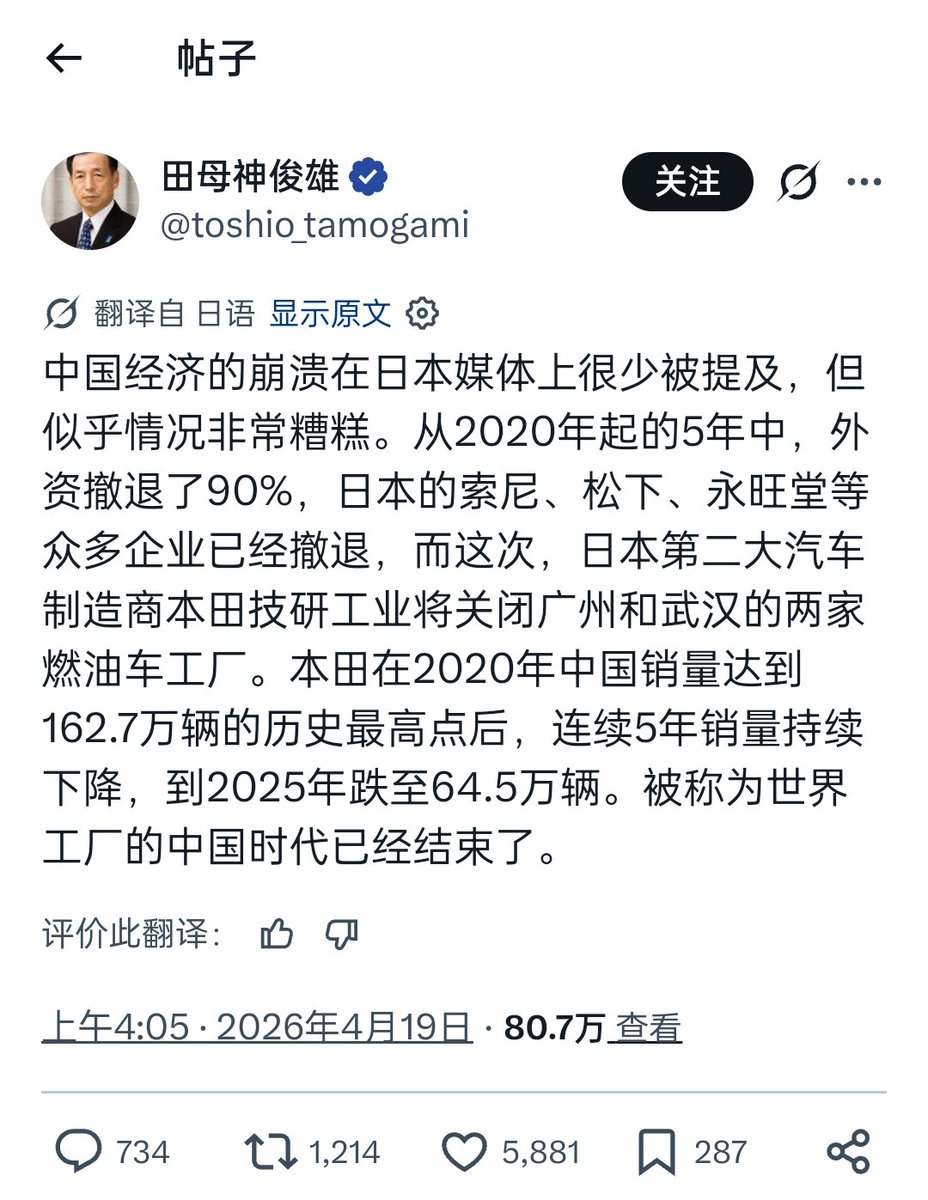
@RobinSeun 你看,凡是个车着火网友都默认是新能源了,哪怕画面像迫击炮轰炸一样也不管,你就知道多年来黑新能源的努力终于有了回报。
中文



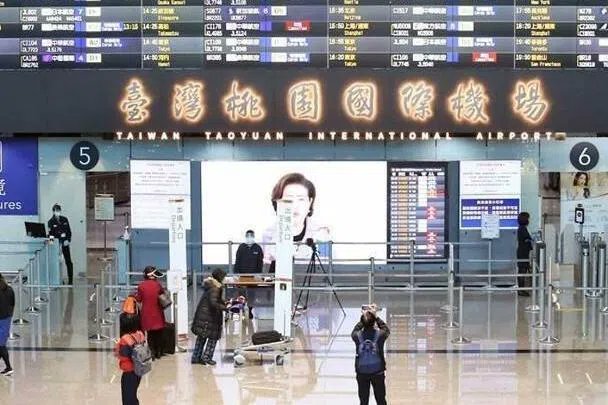
一名中国大陆学生依亲获准定居台湾,因被机场海关搜出其仍持有在有效期内的大陆护照,而被废止定居许可。这名陆生上诉后遭台行政院驳回。 #Echobox=1776619762" target="_blank" rel="nofollow noopener">zaobao.com.sg/news/china/sto…
中文
@Royinthecar 小时候很长时间唯一用电的东西是电灯,后来有了收音机,电灯管,黑白电视,九十年代才换成彩电,上大学有了第一台电脑cpu还是AMD的K6-233。如今用VPN看推。
中文

BroMouShi 리트윗함


细节曝光:巴基斯坦出动20多架飞机,护送伊朗代表
据路透社4月17日报道,三名消息人士告诉路透社记者,上周末,在与美国的和平谈判无果而终后,伊朗谈判代表认为以色列可能试图杀害他们,巴基斯坦空军执行了护航行动,护送伊朗谈判代表回国。
两名了解此次行动的巴基斯坦消息人士说,巴基斯坦在护航行动中出动了包括 J-10CE 在内的20多架喷气式飞机以及用于空中监视的空军空中预警和控制系统,以确保代表团能从伊斯兰堡安全回国。
中文

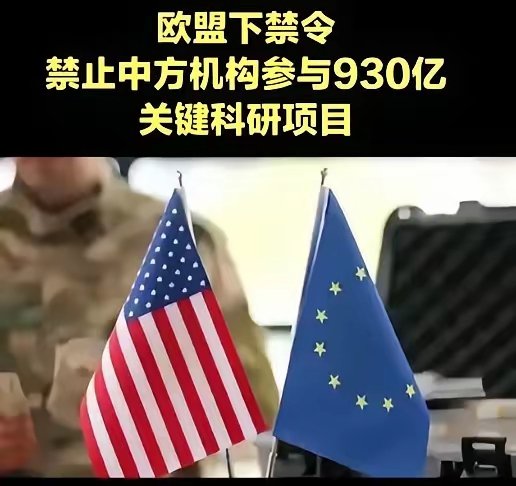
930亿欧元"地平线欧洲"核心计划,2026年起正式把中国全面排除在外,而且专挑最要命的四大领域:AI、量子、半导体、生物技术,一个不留。
过去大家还能一起申请项目、分享成果,现在中国机构连申请资格都没了,就算欧洲本土团队想合作,也得先拿出证明,说自己跟中国没任何关联,不然钱直接不给。中国空间科学学会理事长吴季说了一句大实话:这政策对中国伤害不大,反而可能让欧洲显得更加孤立。欧盟的理由听起来冠冕堂皇,说是担心“研究安全”和“知识产权”外流。但明眼人都看得出来,这就是把科研当成了买卖,甚至当成了武器。
中文
