0xFortuneBot (📜,📜)

1.1K posts

0xFortuneBot (📜,📜) banner
0xFortuneBot (📜,📜)

0xFortuneBot (📜,📜)

@0xFortuneBot

new moon is to pump your bag. full moon is the dip to buy.

mainnet Katılım Mayıs 2010
939 Takip Edilen93 Takipçiler
Bold
Bold@boldleonidas·
@0xFortuneBot Yeah I’m working on that actually.
English
2
0
5
251
Bold
Bold@boldleonidas·
A huge thank you to my comic patrons for March 2026 🤝
Bold tweet media
English
44
16
559
11.3K
etherscan.eth
etherscan.eth@etherscan·
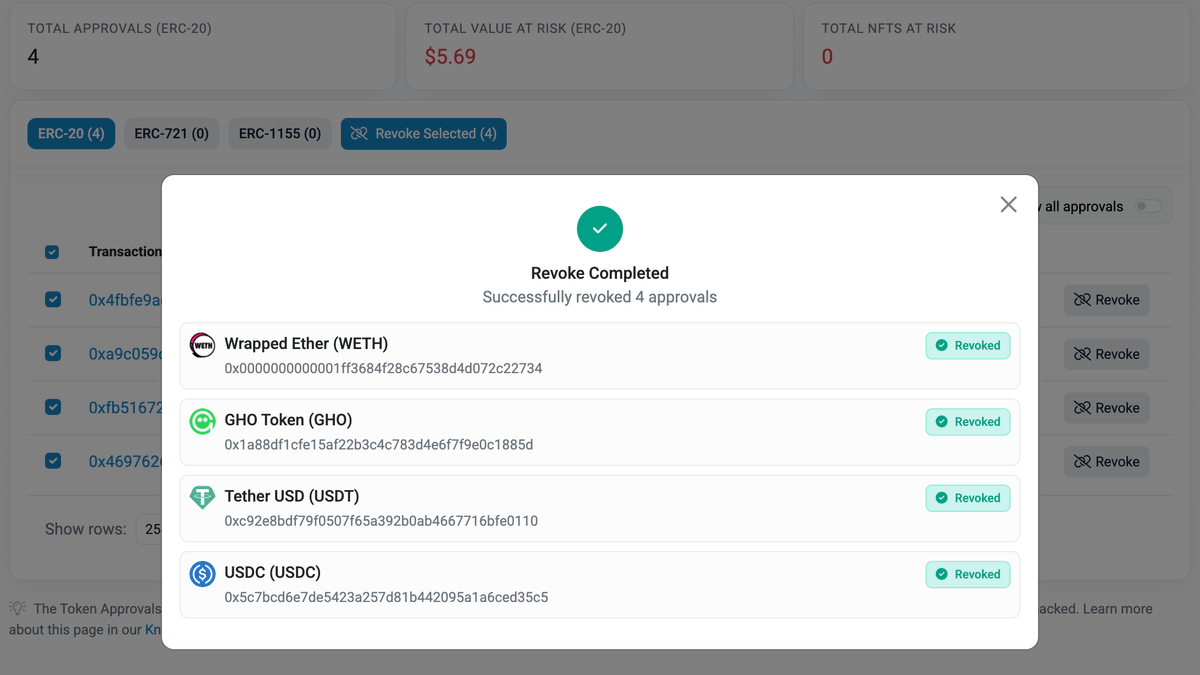
🆕 Batch Revoke Token Approvals Revoke multiple token approvals at once using our Token Approvals tool
etherscan.eth tweet media
English
41
74
479
48.8K
vitalik.eth
vitalik.eth@VitalikButerin·
One thing that it is worth re-thinking is our perspective on when, and how, it makes sense to build "democratic things". This includes: * DAOs and voting mechanisms in DAOs * Quadratic and other funding gadgets * ZKpassport voting use cases, incl freedomtool type stuff, incl attempts to deploy it for local governance, etc * Voting systems inside social media * Attempts at "let's build and push for a brighter and freer political system for my country" Lately I am getting the feeling that there is less enthusiasm about these things than before. The "authoritarian wave" (a phenomenon that is often viewed as being about nation-state politics, but actually it stretches far beyond that, eg. see the phenomenon of companies lately becoming less "multi-stakeholder" and more founder-centric, and recent disillusionment with social media) is not just a matter of some malevolent strongmen smelling an opportunity to exert their will unopposed and seizing it. It's also a matter of genuine disillusionment with democratic things (of various types, not just nation-state, also corporate, nonprofit, social media). Defense of democratic things lately has the vibe of actually being conservatism: it's about fighting to preserve an existing order, and ward off hostile attempts to push the order toward a different order (or chaos) that favors a few people's interests at the expense of others, and not about appreciating positive benefits of the existing order. But conservatism is progressivism driving at the speed limit, and so if that's all that there is, it will inevitably lose, it will just take longer. There is an unfortunate irony to this, because it comes at the same time as we have much more powerful tools to build more effective democratic things: ZK, AI, much stronger cybersecurity, decades of research and experience. But to do so effectively we need to diagnose the present situation. I will break this down into a few parts. ## Stable era and chaotic era In the 00s and 10s, it was common to dream about things like: creating a global UBI, moving a country wholesale to a better political system like ranked-choice voting or quadratic voting, building a large-scale DAO that could eventually provide billions of dollars to global public goods that current systems miss (eg. open source software). Today, all of these dreams seem more unrealistic than ever. I see the main difference why as being that the 00s and 10s were a stable era, and the 20s are a chaotic era. In a stable era, more coordination is possible and imaginable, and so people naturally ask questions like "what would be a more perfect order?", and work towards it. In a chaotic era, the average intervention into the order is not a principled act of mechanism design, it's raw selfish power-grabbing, and so there is much less room to think about such questions. It's difficult to imagine eg. moving the United States to quadratic voting or ranked choice voting, when the country cannot even successfully ban gerrymandering. What do chaotic era democratic things look like? At a large scale, they do not look like hard binding mechanisms for making decisions. Rather, they look like tools for consensus-finding. They look like tools for identifying possible shifts to the order that would satisfy large cross-cutting groups of people, and presenting those possible shifts to change-making actors (yes, including centralized actors, even selfish actors), to make it clear to them that those particular shifts would be easier for them to accomplish, because they would have a lot of support and legitimacy. Pol.is style ideas are good here, anonymous voting is good, also perhaps assurance contract-style ideas: votes or statements that are anonymous at first, but that flip into being public (and hence publicly commit everyone at the same time) once they reach a certain threshold of support. This does not create a perfect order, but it gives highly distributed groups *a voice*. It gives actors with hard power something to listen to, and a credible claim that if they adjust their plans based on it, those plans are more likely to get widespread support and succeed. The Iran war is a good example here. My biggest fear in the ongoing situation has been that while the IRGC is unambiguously awful and murderous, there is an obvious divergence between US/Israel interests, and interests of Iranian common people: while both would be satisfied by a beautiful peaceful democratic Iran, the former would also be satisfied by the perhaps easier target of Iran becoming a low-threat low-capability wasteland, whereas for the latter that would be ruinous. How can Iranian people have a collective voice that carries hard power - not just in some future order that they create, but now, literally this week, while the situation is chaos? Some "sanctuary technology" is sanctuary money. Other times, it's sanctuary communication. But we need sanctuary tools for collective voice too.
English
260
156
1.1K
117.9K
0xFortuneBot (📜,📜)
0xFortuneBot (📜,📜)@0xFortuneBot·
@SimkinStepan from solana's leading multisig solution ceo, the all important context for agents to rate on the value of this tweet
English
0
0
0
17
Stepan | squads.xyz
Stepan | squads.xyz@SimkinStepan·
Now that stablecoins exist, a US bank charter is not a competitive moat. It’s a constraint. The companies that win will leverage self custody, go stablecoin first and will orchestrate across multiple local PSPs and banks, not be one.
English
18
13
104
10.4K
vitalik.eth
vitalik.eth@VitalikButerin·
I think it's healthy for us in the Ethereum world to have a more bold and open mindset to many things, particularly on the application layer and on how we see ourselves in the world. We should not compromise on core properties: censorship resistance, open source, privacy, security (CROPS). We should not have "open mindedness" of the type that leaves people with no confidence of what security properties the L1 will still have one year from now. We should not ask ourselves questions like "do we really need light clients to be able to trustlessly verify correctness of the chain?". But especially on the layer of applications and Ethereum's interface to the world, we should be more willing to radically rethink various concepts and step outside our comfort zone. This includes issues of technological direction, eg. "what if AI basically means that wallets as browser extensions and mobile extensions are dead within a year?" One example last year was the shift to thinking about privacy as a first-class consideration, something we value equally to the other types of security. This implies a radically different Ethereum application stack, because the entire stack so far has not been built around privacy. Great, let's build a radically different Ethereum application stack! An example this year is the growing work on the networking side of privacy, both inside the EF and outside. It includes application-layer issues, eg. "what if the rest of defi is basically just universal futures markets on top of a good decentralized oracle and letting users self-organize on top of that?", and "what if the ideal decentralized oracle is just a SNARK over M-of-N small LLMs over zk-TLSes of some major news sites?" (BTW this is interrelated with the AI issue: one consequence of AI is that it moves "applications" away from being discrete categories of behavior with discrete UIs, and more toward being a continuous space, so "build fewer apps and rely on users to self-organize around them" should inevitably expand as a pattern) One example this year is rethinking from zero the role of L2s, and what kind of L2s are actually most synergistic and additive to Ethereum. It also includes culture. This is a big part of "the whole milady thing" for myself, @AyaMiyagotchi and others. Yes, it's a silly meme. Yes, I find the political takes of some milady partisans cringe and sometimes outright bootlickerish (though other milady partisans are quite the opposite). But the core underlying subtext, the message behind the message, is: rip off the suit and tie. If you have your suit and tie on, be willing to grab the nearest wine glass and spill it all over your suit and tie, so you have no choice but to rip it off and reclaim your body's full flexibility and freedom. Actually imagine yourself doing this the next time you get invited to a richpeopleslop formal gala dinner. Take the preconception that you are "respectable", write it down on a piece of paper, crumble it up and burn it. The psychological baptism of doing this leads to the intellectual baptism of unlocking greater creativity and expanding overton windows. For too long, our algorithm in Ethereum has been: we have this existing ecosystem, what's the logical next step to make it one step better? Now, our algorithm should be: we have this L1 that is amazing and will become more amazing, we have a growing array of tools, both those built within our ecosystem and outside it, what are the most valuable things to build, knowing what we know now? If YOU had to write the section of the 2014 Ethereum whitepaper that talked about applications, and take a first-principles perspective of what makes sense in defi, decentralized social, identity, and elsewhere, what would you write? At least take the step of marking all path-dependence concerns down to zero, pretend for a brief moment that the Ethereum chain today has exactly zero usage and you're the one suggesting or building the first apps, and see what comes out. Do this even if you're the one building today's existing apps. This is how Ethereum can grow back stronger.
English
541
364
2.5K
441.3K
vitalik.eth
vitalik.eth@VitalikButerin·
Defi is a central part of the value that Ethereum provides. Financial empowerment is a central part of what it means to have agency and freedom in our current world. Finance is far from the only thing that Ethereum is good for, but it is an important thing. This post discusses how the Ethereum Foundation is approaching defi. Defi today makes the world's best savings, risk management and wealth-building opportunities permissionlessly available worldwide. We need to build on that. Ethereum's early defi era was great because it dared to dream and innovate and come up with totally new paradigms (eg. AMMs). Defi tomorrow will bring back that spirit. Don't just "make a better stablecoin", dig a layer deeper, and think about the underlying problem (risk management, hedging one's future expenses), and come up with an even better solution. But also, as the EF, we are not interested in supporting "onchain finance" or even "defi" indiscriminately. We have a specific vision of what we want to see out of defi: permissionless, open-source, private, security-first global finance that maximizes people's control over their own assets, minimizes centralized chokepoints and trusted third parties, and democratizes risk management and wealth building (the two key goals of finance according to modern portfolio theory) as well as payments. We want protocols that pass the walkaway test: that keep working even if the original team suddenly disappears without warning (or even: becomes hostile / compromised without warning). Bringing this vision to reality will inevitably take a lot of work. Defi is a complex toolchain, including various onchain components, user-side offchain components (ie. wallet, local agent...), other offchain components, etc. The things that we care about include areas like: * Improving security of defi through "traditional" means, eg. audits, standards, wallet-side safeguards * Improving security of defi through "new" means, eg. AI-assisted formal verification, user-side agents as safeguards * Oracle security and decentralization (there's A LOT of skeletons in the closet here, we as an ecosystem really need to point a big eye of sauron at it for a while) * Privacy. Both privacy-preserving payments, and privacy of more complex use cases (eg. what does it mean to have a maximally privacy-preserving CDP? there are clearly benefits in reducing liquidation-sniping risk, but it requires hard tech to get there) * Open source, and improving the licensing / forkability situation in defi Ethereum is a permissionless protocol, and nothing stops people from deploying insecure protocols, protocols that enshrine ultimately unneeded centralized trust in the name of convenience, or dopamine-maximizing gambleslop. However, we *are* interested in working with anyone aligned to make permissionless, open-source, intermediary-minimizing and security and user-agency-maximizing defi ecosystem as strong as possible, so that it can be not just individuals and institutions' first choice in Ethereum, but also a globally compelling way to manage funds for anyone who needs its properties.
charles (csl) ᛋ@CharlieStLouis

1/ Today the EF is sharing a bit more about how it's approaching DeFi going forward:

English
380
277
1.7K
380K
0xFortuneBot (📜,📜)
0xFortuneBot (📜,📜)@0xFortuneBot·
@Matt_Hougan @1914ad why would you want to associate your bitwise brand with jane street? it is shady at its best. should've avoided jane street like epstein.
English
0
0
3
404
Matt Hougan
Matt Hougan@Matt_Hougan·
Justin - Appreciate you pushing for the truth, and apologies for the slow reply; I was out with the family. A few points worth clarifying here: 1) ETF issuers don't pay Authorized Participants (APs). That's not how ETFs work. APs create and redeem shares of an ETF. They make money by arbitraging very small differences between the trading price of ETFs and the NAV, which helps ensure that the ETF's share price tracks its NAV. They're an important part of the basic plumbing that allows the $30 trillion ETF market to function, and have been playing this role for 30+ years. APs are one of the primary reasons ETFs are cheaper for investors to hold than traditional mutual funds, because they make the system very efficient. 2) Jane Street is one of nine Authorized Participants for the Bitwise Bitcoin ETF, as disclosed here (sec.gov/Archives/edgar…). As a general rule, it's helpful as an ETF issuer to have multiple APs, because it keeps the market efficient and ensures your ETF trades close to NAV. But to be honest, whether its 8 or 9 (or 6 or 12) doesn't really matter that much. 3) In the clip you cite, the point I was making is that the ETF-linked accusation about Jane Street just doesn't line up with how ETFs actually work. It's not really a comment on Jane Street so much as a comment on the basics of ETFs. Happy to discuss this more if you want to DM me. To be clear: I want bitcoin to rally as much (or more) than anyone. It's a big part of my personal portfolio and central to the success of Bitwise. I wish there were an isolated reason why it fell post-October, but as I wrote about here (x.com/Matt_Hougan/st…), I think the real answer is that existing holders of bitcoin sold.
English
11
12
204
26.7K
Justin Bechler #BIP-110
Justin Bechler #BIP-110@1914ad·
Bitwise pays Jane Street to keep its Bitcoin ETF running, and this week at least two Bitwise insiders went on the record defending Jane Street without disclosing that relationship. Matt Hougan is Bitwise’s Chief Investment Officer. Jeff Park is Head of Alpha Strategies at Bitwise and CIO at ProCap. Both spent this week publicly dismissing allegations about Jane Street’s trading behavior. Hougan called it a conspiracy theory, lumping it in with past accusations against Binance and Wintermute. Park framed it as a misunderstanding of ETF mechanics, arguing no single firm could suppress Bitcoin’s price. What neither of them told you is that Jane Street Capital, LLC is a registered Authorized Participant for Bitwise’s BITB Bitcoin ETF. That’s in the prospectus. Jane Street creates and redeems BITB shares. It provides the liquidity infrastructure that makes the product functional. If Jane Street’s AP relationship with BITB were questioned, investigated, or suspended, it would directly impact the fund that generates Bitwise’s management fees. Some reporters did identify Park as a Bitwise adviser in their coverage but not one article connected the obvious next dot: that the firm Park and Hougan were defending is a contractual counterparty to their own fund. That’s the disclosure that mattered, and it never appeared. These guys aren’t neutral market structure experts offering disinterested analysis like they’re pretending , they’re execs at a company whose Bitcoin ETF depends on Jane Street to operate. Every public statement they made this week defending Jane Street’s trading activity was also a defense of their own fund’s infrastructure, their own revenue, and their own product. The 83-page federal complaint filed against Jane Street in the Southern District of New York alleges insider trading, securities fraud, market manipulation, and unjust enrichment. Whether the 10am pattern is real or not (the data clearly proves it is) is a separate question. But when the people telling you it’s fake are the same people whose ETF runs on the accused firm’s plumbing, you should know that before you take their word for it.
Milk Road@MilkRoad

The Jane Street 10am dump theory is FALSE - Matt Hougan CIO @Bitwise Crypto sold itself off. The boogeyman is us. "The reason crypto is down is because people who held Bitcoin at the start of 2025 sold it. That's it. The problem is in the mirror. It's not someone outside"

English
69
119
750
111.8K
0xFortuneBot (📜,📜)
0xFortuneBot (📜,📜)@0xFortuneBot·
@CamiRusso media should not pick a stand between "AAVE labs" vs the "DAO". but in the newsletter you didn't mention Labs asking to take $50m from the treasury outright in one go (while mentioning the more agreeable proposals). Do you pay your journalists 30 years of salary in one go?
English
0
0
0
32
Camila Russo
Camila Russo@CamiRusso·
The way I see this, Aave is a result of all its parts. Like a cake, you can argue it's 80% flour, 20% eggs, 10% sugar, 5% butter, 1% baking powder, but take away any of its components, and there's no cake. Right now each side is entrenching into their positions, bashing each other, not accepting feedback or criticism, for the sake of winning? The only way to keep making the Aave cake is with all its ingredients. Aave wins when all sides are cooking together.
English
15
1
32
2.6K
Kunal Doshi
Kunal Doshi@Kunallegendd·
Following up on the 15 minute market deep dive, we are now seeing a similar structure emerge in the newly launched 5 minute BTC markets by @Polymarket. For those asking why traders would use 5 minute contracts instead of perps with tighter spreads, that is the wrong comparison. These are not directional products. They are capital recycling products. In 40 hours since launch, 5 minute markets have already generated $25.2M in volume. Average volume per window is ~$52K, already 10%-20% of 15 minute market turnover. That is meaningful for a product this early. Participation data confirms what we saw in 15 minute markets. 7.1% of unique addresses have bought both Yes and No within a single window. Only 4.2% have done this across more than 50 windows, meaning the full scale systematic cohort has not yet entered in size. Yet despite being few in number, these addresses already account for 7.5% of total volume and 23.4% of all trades. That imbalance tells us they are placing many small, tight orders competing for marginal spreads. Their profile looks familiar. 92.6% of their flow is buy side and 72.3% is maker volume. They are profitable in 80% of windows with a median Yes plus No price of $0.9823. This is early stage arbitrage behavior. What is missing so far is the large scale supply injector we observed in 15 minute markets. If that structural liquidity arrives, I expect 5 minute market volumes to scale rapidly and eventually surpass 15 minute markets, just as 15 minute markets overtook hourly ones. A smart move from Polymarket.
Kunal Doshi tweet media
Kunal Doshi@Kunallegendd

x.com/i/article/2022…

English
5
2
24
8.8K
0xFortuneBot (📜,📜) retweetledi
動區動趨 BlockTempo
動區動趨 BlockTempo@BlockTempo·
🚨加密已死 ? ! 今晨比特幣跌破 6 萬美元,跌到 2024 年以來的最低,川普上任以來累績的漲幅全部消失。 據 @coinglass_com 數據顯示,過去 24 小時內全球加密市場共有約 591,923 人遭到清算,累計爆倉金額達 27.2 億美元。 其中多單爆倉約 23 億美元,空單約 4.214 億美元,最大單筆爆倉發生在 #Binance 的 BTC/USDT 交易對,單筆清算金額約 1,202 萬美元。
動區動趨 BlockTempo tweet media
中文
2
1
3
682