Exim 4.99.3 is out, patching CVE-2026-45185, a critical RCE found by XBOW! Check out our post linked in the reply; I'll summarize some details in this thread.
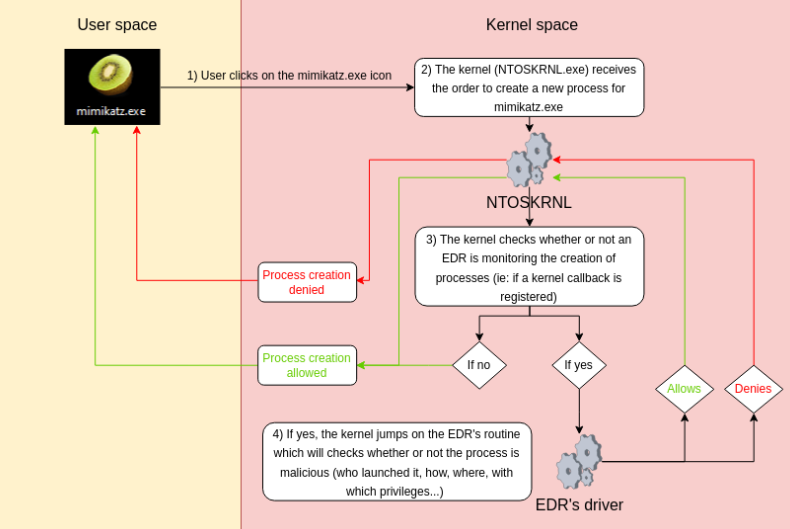
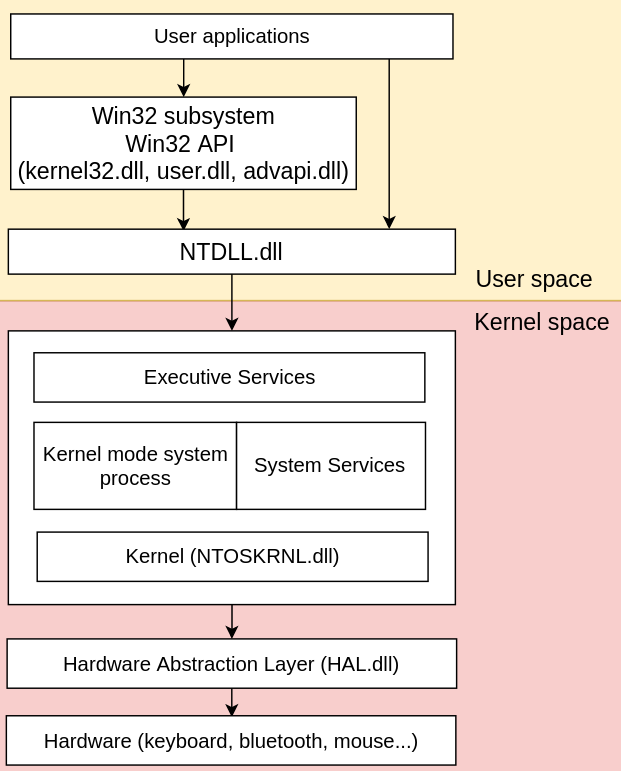
From Windows drivers to a almost fully working EDR.
TL;DR: This blog will take a look at the history of anti viruse, why they relied on kernel driver then how to create a custom kernel driver and finally how to turn it into a almost fully working EDR.
blog.whiteflag.io/blog/from-wind…
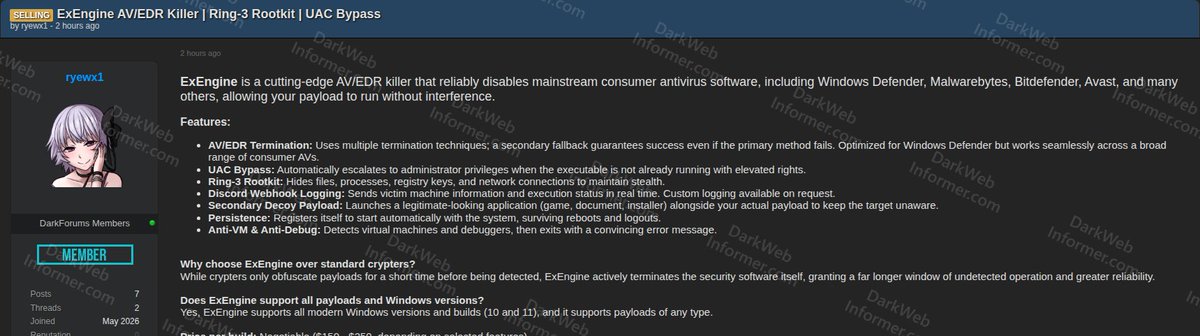
⚠️ A defense evasion tool called ExEngine is being sold as a service, marketed as an AV/EDR killer that disables mainstream consumer security software including Windows Defender, Malwarebytes, Bitdefender, and Avast. The tool combines AV termination with a Ring-3 rootkit, UAC bypass, and decoy payload delivery to support stealthy initial access operations.
⠀
‣ Threat Actor: ryewx1
‣ Category: Defense Evasion Tool / Killer
‣ Offering: ExEngine AV/EDR Killer
‣ Industry: Malware Tooling
⠀
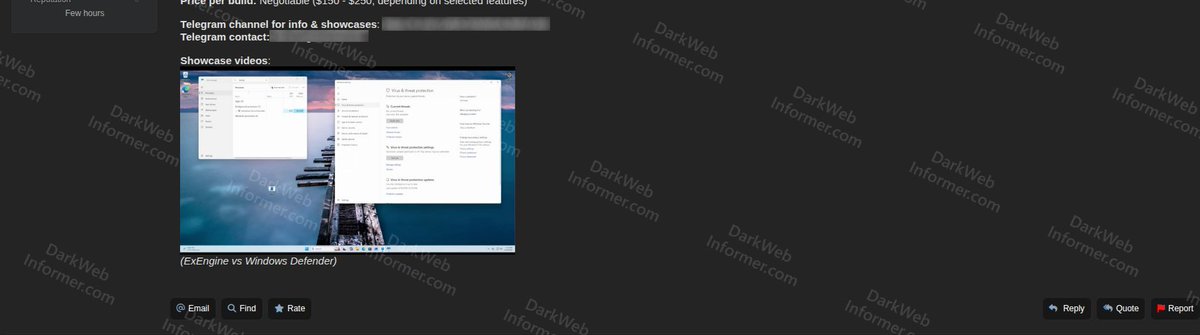
The seller claims ExEngine actively terminates security software rather than only obfuscating payloads, granting attackers a longer window of undetected operation. The tool supports Windows 10 and 11 builds and is sold per-build at $150 to $250.
⠀
Advertised capabilities:
⠀
▪️ AV/EDR termination with primary and fallback techniques
▪️ UAC bypass with automatic privilege escalation
▪️ Ring-3 rootkit functionality to hide files, processes, registry keys, and network connections
▪️ Discord webhook logging for victim machine info and execution status
▪️ Secondary decoy payload (game/document/installer) to keep targets unaware
▪️ Persistence across reboots and logouts
▪️ Anti-VM and anti-debug detection with fake error message exit
▪️ Universal Windows 10/11 support, all payload types
⠀
Risk to defenders:
⠀
▪️ Active termination of consumer AV products including Windows Defender means traditional endpoint protections cannot be relied on once ExEngine executes successfully
▪️ Decoy payload pattern is designed to delay user-driven incident reporting, lengthening attacker dwell time
▪️ Ring-3 rootkit hiding of files, processes, and network connections complicates incident response triage on compromised hosts
▪️ Discord webhook telemetry indicates the operator is targeting consumer and SMB victims at scale rather than running individual targeted campaigns
▪️ Sold per-build at low cost ($150 to $250), making it accessible to low-skill operators who can pair it with commodity stealers, RATs, or loaders
🚨 Bug Bounty / Red Team Tip
CVE-2026-21643 — Critical Pre-Auth SQL Injection (CVSS 9.1) in FortiClient EMS 7.4.4 (multi-tenant mode only)
Unauthenticated attackers can inject arbitrary SQL via the Site HTTP header to the public endpoint /api/v1/init_consts (or login endpoint). This happens before authentication and hits the PostgreSQL backend with superuser-level access in many setups → full DB dump, schema extraction, or RCE (via PostgreSQL features like COPY FROM PROGRAM).
- Affected: Only FortiClient EMS 7.4.4 (multi-tenant/Sites feature enabled)
- Not affected: 7.2.x, 8.0.x, single-site deployments
- Fixed: Upgrade to 7.4.5 or later
- Status: Actively exploited in the wild + public PoCs available
Main Detail Article (Highly Recommended):
Bishop Fox deep-dive with exploitation paths, payloads (e.g., pg_sleep(5) for blind testing), and lab results →
bishopfox.com/blog/cve-2026-…
Public PoC (GitHub):
github.com/0xBlackash/CVE…
Useful Google/Shodan Dorks:
- http.title:"FortiClient EMS" "7.4.4"
- http.html:"FortiClient Enterprise Management Server"
- http.favicon.hash: -specific-hash (or search for EMS login page)
- Shodan: "Model: FCTEMS" or "FortiClient EMS"
Quick Check:
If your EMS login page is internet-facing and running 7.4.4 with multi-tenant enabled → patch ASAP or block public access. Thousands of instances are exposed (Shadowserver ~2k+, Shodan ~1k+).
High-value target for hunters. Patch or restrict immediately!
#BugBounty#RedTeam#Fortinet#CVE202621643#SQLi