Bakuchi | Napier

4.4K posts

Bakuchi | Napier banner
Bakuchi | Napier

Bakuchi | Napier

@0xbakuchi

dev / @NapierFinance

The net is vast and infinity Katılım Nisan 2019
743 Takip Edilen718 Takipçiler
Bakuchi | Napier retweetledi
banteg
banteg@banteg·
claude boys, ralph boys, it's your time to shine and prove me wrong create a new repo, copy just the two C files from here. they are about 14 days of work worth, they contain the full game decompiled and mapped out, with all the gameplay related functions correctly typed and renamed. you don't have to do the hard part in this assignment. your task is to rewrite the game from scratch from these two files in any other language and engine of your choice and ideally make it run in a browser. share your result, ideally with a writeup of what you have learned and an open source repo. this is a serious peace offering and im genuinely interested. github.com/banteg/crimson…
English
34
20
435
82K
Bakuchi | Napier
Bakuchi | Napier@0xbakuchi·
groqのAPIはVPNをブロックしてきて使いづらいとしか言いようが無い
日本語
0
0
0
189
Bakuchi | Napier
Bakuchi | Napier@0xbakuchi·
Ethereum Advent Calendarは覚えてる限り毎年あったけど、去年は枠がスカスカだった。とうとう今年はないようだ
日本語
0
0
0
158
Bakuchi | Napier retweetledi
kaden.eth
kaden.eth@0xKaden·
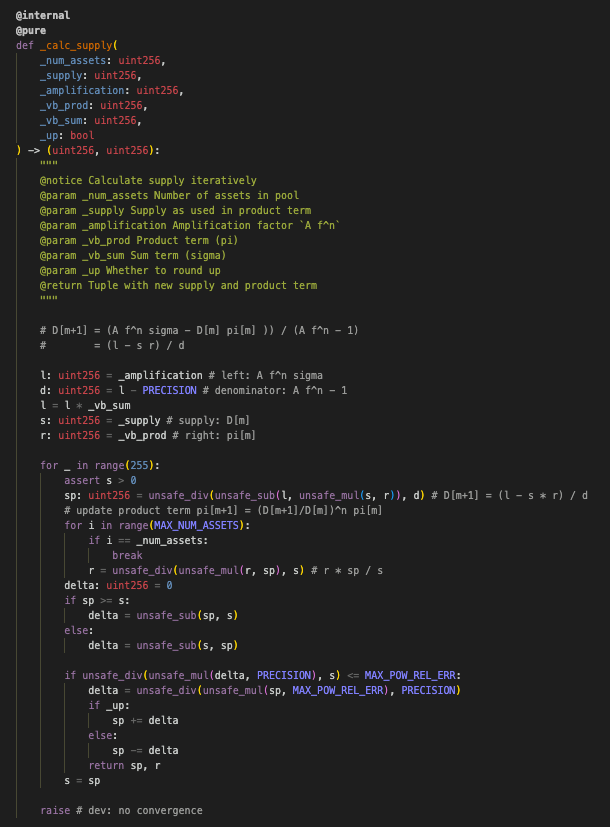
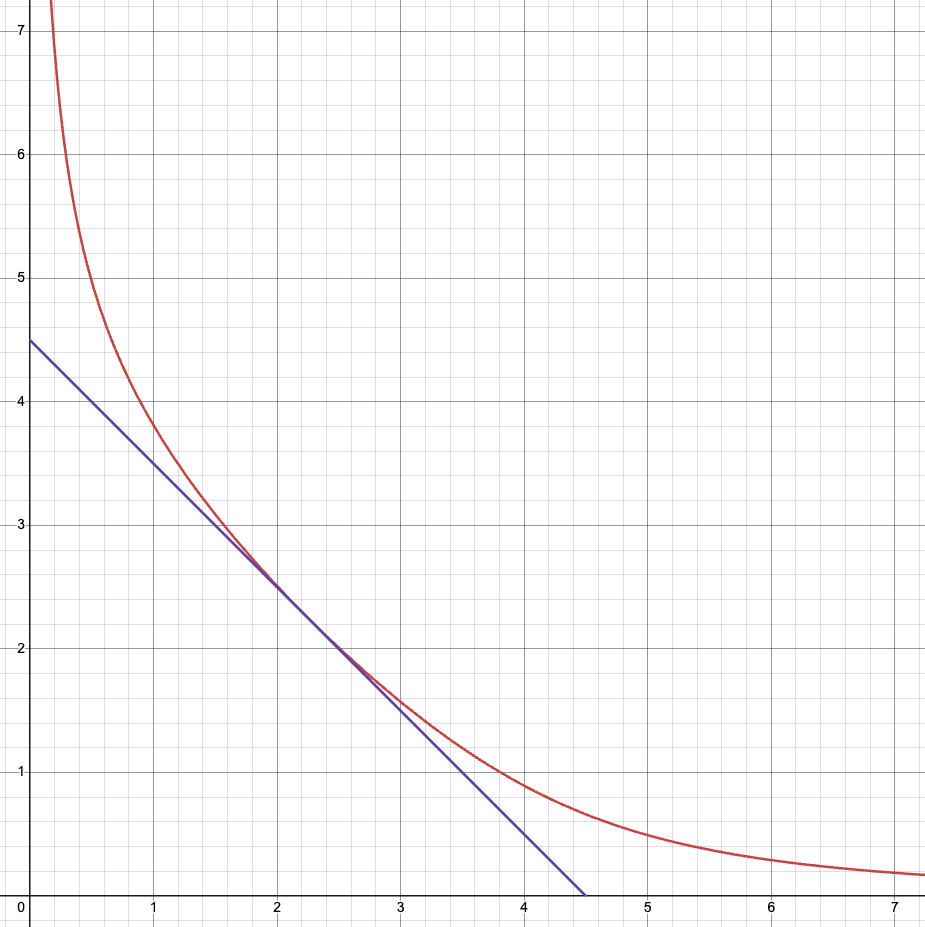
yETH Exploit Deep Dive After spending some time exploring the recent yETH exploit, I quickly realized that it's easily one of the most sophisticated attacks I've ever seen. In fact, it was so complicated that every writeup I read misunderstood at least some part of the attack. This complexity provides for some serious alpha to developers and security researchers who can thoroughly understand the attack, so don't just bookmark this, let's dive in. Hybrid AMM Curve To understand this exploit, we first need to understand the underlying mechanism of the protocol. The yETH pool uses an invariant which is a hybrid between constant product and constant sum. If you're familiar with the inner workings of Uniswap, you should be familiar with the constant product behavior, essentially it just adjusts the price according to the reserves. Whereas constant sum results in a constant price between the tokens, regardless of reserves. The yETH hybrid curve behaves like a constant sum when the token reserves are balanced, keeping the price constant, and behaves like a constant product curve when the reserves are imbalanced. This behavior is valuable for pools of assets which have the same value due to the fact that the price is much less sensitive to reserve changes. Below we have a graph [1] of these different curves. Red: constant product, green: constant sum, blue: hybrid used by the yETH pool. The First Bug: Breaking The Invariant Let's zoom in on the `_calc_supply` function. This function uses an iterative approximation to converge to a new supply and constant product term at each iteration, ending the loop once sufficient precision is achieved. The constant product term (r) is recomputed at each iteration as the current value multiplied by the new supply, divided by the previous supply (`r * sp / s`). Effectively, it scales at the same rate as the supply. The bug: if the decrease in supply of any given iteration of the solver is large enough, the constant product term can round down to zero. There is no revert to handle this case and once it occurs, each following iteration will remain zero since `0 * x / y = 0`. Now that we have a zero constant product term, we no longer have a hybrid constant product/constant sum curve, instead we effectively just have a constant sum curve. To understand why this is a problem we have to go back and look at the curves. In the below graph [2], we have the intended curve (red) and the constant sum curve (purple) which is the result of the zero product term. As we adjust the supply (see desmos graph [2] linked in reply) of these two curves (D), we can see that the reserves increase by the same amount in the middle, where the reserves are balanced, but by different amounts on the outside, where the reserves are imbalanced. This means that as we add/remove liquidity with imbalanced reserves, these two curves will mint/burn a different amount of LP tokens. Understanding this behavior, the attacker systemically switched between these curves by triggering the zero constant product term when adding liquidity with unbalanced reserves to receive more LP tokens than intended. They then resolved the constant product term back to normal during liquidity removal to receive the correct amount of tokens provided for burning the inflated amount of LP tokens they received. This allowed the attacker to withdraw more tokens than they deposited, which they repeated until the pool was drained of its reserves for a profit of about ~$8m. The Second Bug: Unexpected Underflow You thought we were done? Nope, there's yet another bug that the attacker exploited to steal even more funds after already completely draining the pool. Now that the pool is empty, and variables used for accounting are in such an unusual state, there is a significant side effect which occurs when we attempt to deposit certain dust amounts. Again, looking in the `_calc_supply` function, when we iteratively recompute the supply, we compute it with the following line (`(l - s * r) / d`): Since we use unchecked math here and the accounting is in a highly irregular state, it's unexpectedly possible for `s * r > l`, resulting in the computed supply underflowing. The attacker exploits this underflow by depositing the following amounts: `[1, 1, 1, 1, 1, 1, 1, 9]`, resulting in them being minted `~2.6*10^56` yETH LP tokens. The attacker then makes a swap on the curve yETH/WETH pool, draining the pool of its WETH, for a profit of ~$1m. Conclusion Not only did this attack include a highly sophisticated AMM invariant exploit, but it also exploited an underflow which is likely only possible due to the existence of the invariant exploit. This combination of exploits allowed the attacker to not only drain the yETH pool, but also another pool containing the LP token. Both attacks, and even tornado cash deposits were all made in the same transaction, preventing any chance at rescue. In my research, every writeup I came across misunderstood this attack in some way. Clearly, it's extremely rare to understand such a sophisticated exploit, providing for some serious alpha to developers and security researchers to fully wrap their heads around this.
kaden.eth tweet mediakaden.eth tweet mediakaden.eth tweet mediakaden.eth tweet media
English
40
101
637
54.8K
Bakuchi | Napier retweetledi
vectorized.eth
vectorized.eth@optimizoor·
Log10 before and after fusaka:
vectorized.eth tweet media
English
151
22
342
17.1K
Bakuchi | Napier retweetledi
ZaK3939.eth 🦄
ZaK3939.eth 🦄@ZacK_3939·
Phiは、昨日からユーザーのオンチェーン実績を活用した新しいコイン発行プラットフォームになっています。 ここではUniswap を最大限活用し、v4Hookを2段階で活用し、Lendingの金利と動的な取引手数料を発生させ、クリエイターに還元するようになってます。 例えば、Morphoを選択して、自分のcreatorETHが2ETHの流通をしていたら、その分のMorphoトークンとEthの金利が獲得できます。
ZaK3939.eth 🦄 tweet media
日本語
2
10
55
6K
Bakuchi | Napier retweetledi
evmtools.xyz
evmtools.xyz@evmtools_xyz·
Introducing the newest member of our tool suite, evmcast.xyz
evmtools.xyz tweet media
English
3
9
126
7.1K
Bakuchi | Napier
Bakuchi | Napier@0xbakuchi·
Claudeポンコツになりすぎ
日本語
0
0
0
186
Bakuchi | Napier
Bakuchi | Napier@0xbakuchi·
@ZacK_3939 その両者にはかなり手こずりました。ぜひソースコード公開したら見てください
日本語
0
0
4
106
ZaK3939.eth 🦄
ZaK3939.eth 🦄@ZacK_3939·
流石、@0xbakuchi 、これを綺麗に書けるsolidityの書き手は世界に少ないはず。この設計で、stack too deepとコントラクトサイズを回避するのは、手練れしか無理よ。aiには無理。
Napier@NapierFinance

1/ Today, we unveil Napier AMM. A liquidity network optimized for yield trading featuring concentrated liquidity, JIT liquidity, rehypothecation, time-adaptive curves. Designed to liberate the potential of yield tokenization.

日本語
2
4
41
3.6K
Bakuchi | Napier
Bakuchi | Napier@0xbakuchi·
solidityのinternal関数とかでstructを初手で無駄にzeroizeしてくるのやめてほしいです
日本語
0
0
1
239
Bakuchi | Napier
Bakuchi | Napier@0xbakuchi·
Using an external library is a pain if you wanna deploy its contract deterministically.
English
0
0
1
237
Bakuchi | Napier retweetledi
karma
karma@0xkarmacoma·
halmos v0.3.0 release highlights! (quick reminder: halmos is a symbolic testing tool for EVM bytecode which interfaces nicely with foundry projects and supports multiple SMT solvers) 1. we (finally) added support for stateful invariant testing
karma tweet media
English
7
21
144
25.5K
Bakuchi | Napier
Bakuchi | Napier@0xbakuchi·
solidity stack too deep error多すぎて、コード書くっていうレベルじゃねえぞ
日本語
0
0
2
166
Bakuchi | Napier
Bakuchi | Napier@0xbakuchi·
hhkbの英語配列、矢印が絡むショートカットを使おうとするとクレイジーなことにならない?
日本語
0
0
0
236
Bakuchi | Napier
Bakuchi | Napier@0xbakuchi·
HyperEVMのeth_callはstate override optionつけると全く機能しない
日本語
0
0
2
228
Bakuchi | Napier
Bakuchi | Napier@0xbakuchi·
@ZacK_3939 worst caseですが仮に、90%がaaveで全損したら、早い者勝ちでflETHの供給量の10%までは1:1でETH引き出せるってことなので、結構重要な仕様ですね
日本語
0
0
1
84
ZaK3939.eth 🦄
ZaK3939.eth 🦄@ZacK_3939·
@0xbakuchi flaunchでは預かったethの90%をaaveに貸し出してます。fleth-memeのmemeトークンはaaveのaethが毀損するとその分下がるでしょうね。aaveのプールが完全に抜かれると1/10になるでしょうか。これはbunniでも同じようになるかと。
日本語
1
0
3
217
Bakuchi | Napier
Bakuchi | Napier@0xbakuchi·
flaunchのflETHはETHに対して1対1で常に発行償還しているので、AaveのWETHに損失できた時、償還できないflETH出てきませんか? cc @ZacK_3939
日本語
1
0
1
409
Bakuchi | Napier
Bakuchi | Napier@0xbakuchi·
@ZacK_3939 言葉レベルでは分かるんですけど、コードまで落とせないんですよね。このときのERC6909claimとdeltaの扱いがピンとこず
日本語
2
0
0
98
ZaK3939.eth 🦄
ZaK3939.eth 🦄@ZacK_3939·
それぞれ用意したけど、コードレベルのこの解説ニッチすぎないか。日本だと3、4人ぐらいしか興味ない気がする。」 Active range自動追尾bot github.com/ZaK3939/uniswa… v4 hook 1:1 rehypothecasion github.com/ZaK3939/hook-s…
ZaK3939.eth 🦄@ZacK_3939

uniswap v4 hookの解説向けに、aave貸し出しカスタムカーブhookのsolidityと sdk v4を使ってリワード狙いで流動性をなろーレンジに突っ込むコードを作ったので、来週のどこかそれぞれのライブラリとか諸々解説したい。
日本語
1
4
47
6.2K