
Sabitlenmiş Tweet
10102
291 posts


10102
@10102_io
- Forever Digital - The legacy of digital assets
Katılım Şubat 2022
59 Takip Edilen113 Takipçiler
This week's Crypto recap:
1⃣Ethereum doubled down on its “sanctuary tech” vision, prioritizing privacy, censorship resistance, and security across apps and infrastructure.
2⃣ BlackRock and Fidelity continue expanding crypto ETF exposure, signaling deeper institutional adoption and long-term confidence.
3⃣U.S. Securities and Exchange Commission increased scrutiny on custody rules, emphasizing secure asset storage and investor protection.
4⃣Coinbase pushed further into global markets while advocating for clearer U.S. regulation amid ongoing enforcement pressure.
5⃣Stablecoins remain a focal point, with policymakers exploring stricter frameworks as usage in payments and DeFi grows.
#Crypto #DeFi #Web3 #Blockchain #CryptoNews #CryptoUpdate
Visit us for more resources: 10102.io
English
@brian_armstrong This is how you actually bridge crypto into real-world use. #support
English

Great to see more banks leaning into crypto and stablecoins.
English
Ethereum Foundation’s latest commitment to DeFi reinforces what’s always set Ethereum apart: open access, credible neutrality, and infrastructure that anyone can build on.
This is how you build a system that lasts.
#ETH #Decentralization #OnChain
#Blockchain #OpenFinance
blog.ethereum.org/2026/02/23/com…
English
10102 retweetledi

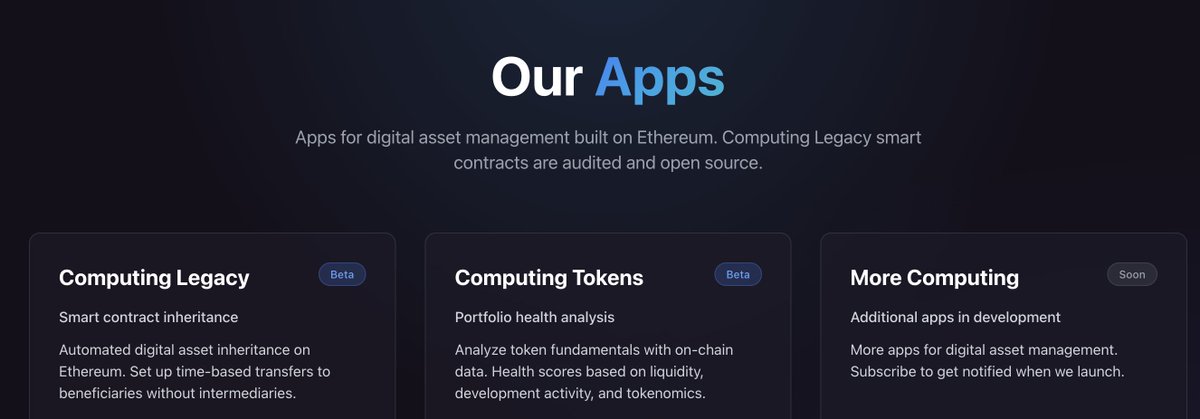
Crypto intelligence digital legacy built to outlast... if you don't know us, you should.
🔗10102.io
#DeFI #DigitalAssets
English
Qubic 2026.
From Dogecoin mining in April, to 2nd halving in August, and huge native beta game release in between (MLM)
#whats-coming" target="_blank" rel="nofollow noopener">10102.io/resources/inve…
Qubic@_Qubic_
Last year, Qubic went from under 2% of Monero’s hashrate to demonstrating 51%+ dominance in a live takeover event that made headlines across CoinDesk, The Block, and Decrypt. Along the way, the network earned $3.5M+ in total mining revenue, found over 26000 XMR blocks, and proved that a decentralized AI compute network could outcompete an established Proof of Work chain through better economic incentives. Now we're doing it again…this time with Dogecoin. But here’s what most people are missing. DOGE produces roughly 14.4 million coins per day. At current prices, that’s approximately $1.44M in daily emission, roughly 10x what Monero was producing. The same playbook. A much bigger target.
English

10102 retweetledi

"Ethereum is a unique object and has a unique role in the world. Its role is to be a sanctuary technology, to preserve technological self-sovereignty"
We extends that vision by ensuring that sovereignty persists over time through secure, user-controlled digital inheritance and custody.
This is the future of the industry.
#SanctuaryTech #Vitalik #CROPS
vitalik.eth@VitalikButerin
This is the new EF Mandate. For many of you, the contents should be no surprise, and a clarification along the lines that we have been going and thinking for the past few months. But the clarification is nevertheless worth making. Ethereum is a unique object and has a unique role in the world. Its role is to be a sanctuary technology, to preserve technological self-sovereignty, to enable cooperation without coercion, domination or rugpulling, and to provide an escape hatch, to ensure that no single person, organization or ideology's victory in cyberspace can be total. The Ethereum Foundation is a steward of Ethereum - the original steward, and today, the steward specifically dedicated to preserving and expanding the above aspects of Ethereum. This means a heavy emphasis on CROPS (censorship and capture resistance, open source, privacy, security), both at the protocol layer, and at the access layer, user-facing applications and tools that we create or contribute to. There are things that we do in Ethereum because we believe that they are valuable for the underlying goals that we have for Ethereum. There are things that we do not do because from the perspective of our values we find them uninteresting (or worse, harmful). But there are also things that we do not do because while they are useful, they are not our role. At the Ethereum protocol layer, we focus on decentralization, verifiability, inclusion guarantees, protocol liveness, security and privacy first and foremost. We also value capabilities (eg. L1 scale, account abstraction, perhaps some forms of in-protocol aggregation), particularly because improvements in these capabilities better enable users to properly benefit from Ethereum's CROPS properties and displace the need for higher-layer intermediaries that might weaken the extent to which Ethereum's properties carry over into the full stack. We also believe that the Ethereum protocol must strive to pass the walkaway test. "We do X to specialize to serve the use cases of today, if more use cases appear later, we will continue to keep adding more EIPs for them later" is logic fit for many other blockchains whose names you hear often on this forum, but we do not believe it is logic fit for a decentralization-first blockchain like Ethereum. At the application layer, we focus on making "the zero option" - user experience that goes hard on ensuring security and privacy, avoiding dependence on intermediaries, and respecting the user's agency - as high quality as possible. We see this as complementary to work in the Ethereum ecosystem that "goes broad", starting from the world that it exists, and brings it onchain and improves its properties over time. Such work has its natural home outside the EF. We intend to be supportive of such efforts. We believe that the two are complementary: tools that are developed within the EF can be adopted by anyone, including partially, and even partial adoption that improves people's security, privacy and agency is a good thing. But the form of user experience that is more heavily insistent on CROPS properties is where we want the EF to develop its center of expertise. This does not mean shrinking from the hard questions. We believe in a vision of self-sovereignty that protects users, and does not leave users in the cold to face environments where they lose their life savings if they make a mistake, and click "yes" on a confirmation screen by accident two seconds after. But such protection must be designed based on a philosophical baseline of empowering the user, not empowering centralized organizations that claim to act in the user's name. This quadrant of design space - caring about users' (including non-experts') well-being and safety, and yet insistent on doing this in a way compatible with their agency and freedom, is underserved (not just in crypto, but in the world). We wish to use Ethereum as a platform to build out and showcase this quadrant, and ideally work with others to expand its reach over time. This is also a new chapter in how we see our position in the world. We must see ourselves not just as the Ethereum community, but also as maintainers of the Ethereum tool within what you might call the CROPS community or the sanctuary tech community, or a dozen of other words that have for a long time been used by people with similar values to us but far outside Ethereum. This means open-mindedness to new conceptions of what things in the world are our natural allies. Ethereum is not the world. Ethereum is a specific object in the world that is here to have specific properties. The Ethereum Foundation is a specific organization within Ethereum - one steward, not the sole one. I encourage all to read the mandate in detail; it includes concrete examples of how we intend to deal with the challenges and nuances of these ideas. We are doubling down on Ethereum and are excited about its next chapter.
English
@VitalikButerin At 10102, we see our role as extending that self-sovereignty beyond access into ownership and continuity #sanctuarytech #crops
English

This is the new EF Mandate.
For many of you, the contents should be no surprise, and a clarification along the lines that we have been going and thinking for the past few months. But the clarification is nevertheless worth making.
Ethereum is a unique object and has a unique role in the world. Its role is to be a sanctuary technology, to preserve technological self-sovereignty, to enable cooperation without coercion, domination or rugpulling, and to provide an escape hatch, to ensure that no single person, organization or ideology's victory in cyberspace can be total.
The Ethereum Foundation is a steward of Ethereum - the original steward, and today, the steward specifically dedicated to preserving and expanding the above aspects of Ethereum. This means a heavy emphasis on CROPS (censorship and capture resistance, open source, privacy, security), both at the protocol layer, and at the access layer, user-facing applications and tools that we create or contribute to.
There are things that we do in Ethereum because we believe that they are valuable for the underlying goals that we have for Ethereum. There are things that we do not do because from the perspective of our values we find them uninteresting (or worse, harmful). But there are also things that we do not do because while they are useful, they are not our role.
At the Ethereum protocol layer, we focus on decentralization, verifiability, inclusion guarantees, protocol liveness, security and privacy first and foremost. We also value capabilities (eg. L1 scale, account abstraction, perhaps some forms of in-protocol aggregation), particularly because improvements in these capabilities better enable users to properly benefit from Ethereum's CROPS properties and displace the need for higher-layer intermediaries that might weaken the extent to which Ethereum's properties carry over into the full stack.
We also believe that the Ethereum protocol must strive to pass the walkaway test. "We do X to specialize to serve the use cases of today, if more use cases appear later, we will continue to keep adding more EIPs for them later" is logic fit for many other blockchains whose names you hear often on this forum, but we do not believe it is logic fit for a decentralization-first blockchain like Ethereum.
At the application layer, we focus on making "the zero option" - user experience that goes hard on ensuring security and privacy, avoiding dependence on intermediaries, and respecting the user's agency - as high quality as possible. We see this as complementary to work in the Ethereum ecosystem that "goes broad", starting from the world that it exists, and brings it onchain and improves its properties over time. Such work has its natural home outside the EF. We intend to be supportive of such efforts. We believe that the two are complementary: tools that are developed within the EF can be adopted by anyone, including partially, and even partial adoption that improves people's security, privacy and agency is a good thing.
But the form of user experience that is more heavily insistent on CROPS properties is where we want the EF to develop its center of expertise. This does not mean shrinking from the hard questions. We believe in a vision of self-sovereignty that protects users, and does not leave users in the cold to face environments where they lose their life savings if they make a mistake, and click "yes" on a confirmation screen by accident two seconds after. But such protection must be designed based on a philosophical baseline of empowering the user, not empowering centralized organizations that claim to act in the user's name. This quadrant of design space - caring about users' (including non-experts') well-being and safety, and yet insistent on doing this in a way compatible with their agency and freedom, is underserved (not just in crypto, but in the world). We wish to use Ethereum as a platform to build out and showcase this quadrant, and ideally work with others to expand its reach over time.
This is also a new chapter in how we see our position in the world. We must see ourselves not just as the Ethereum community, but also as maintainers of the Ethereum tool within what you might call the CROPS community or the sanctuary tech community, or a dozen of other words that have for a long time been used by people with similar values to us but far outside Ethereum. This means open-mindedness to new conceptions of what things in the world are our natural allies.
Ethereum is not the world. Ethereum is a specific object in the world that is here to have specific properties. The Ethereum Foundation is a specific organization within Ethereum - one steward, not the sole one.
I encourage all to read the mandate in detail; it includes concrete examples of how we intend to deal with the challenges and nuances of these ideas. We are doubling down on Ethereum and are excited about its next chapter.
Ethereum Foundation@ethereumfndn
Today, the Foundation’s Board released the EF Mandate. This document, which was first intended for EF members, reaffirms the promise of Ethereum, and the role of EF within this ecosystem.
English
@_Qubic_ isn’t trying to be another Ethereum.
Built from bare metal — no virtual machine, no OS — it uses a meritocratic consensus where only the highest-performing nodes validate the network.
Created by Sergey Ivancheglo (founder of NXT and co-founder of @iota ), the vision for Qubic dates back over a decade, with roots in Useful Proof-of-Work from 2002.
At 10102, we keep our hand on the pulse around ecosystems like Qubic shaping the future of decentralized computing and digital assets.
Learn more:
10102.io/resources/inve…
English
10102 has always been a strong supporter of @_Qubic_.
Did you know we did a deep dive on Qubic as part of our crypto intelligence? Check it out:
10102.io/resources/inve…
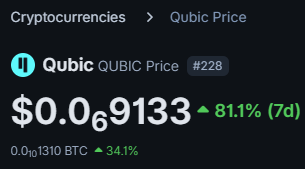
PS: $150M FDV is still a small cap
English
Be ready for @AskVenice to create your Ethereum legacy contract directly from our app. Days away
M1K4@mksala
Venice is great. I've been using it personally for a while, and I'm happy to announce that @10102_io will officially use it for its digital legacy guidance in the next release (ETA for production: 2 weeks).
English