

28AV
17.5K posts
28AV
@28AvOfficial
Beyond the firmament…
Seattle, WA Katılım Mayıs 2009
625 Takip Edilen6.4K Takipçiler
28AV retweetledi

Man. David Benavidez is just different.
Absolutely broke Zurdo down. Brutal shots throughout. Power clearly not an issue, and the speed was there all night.
English
A lot of ppl sell their soul and compromise their artistic creativity for money and “status”. I’m cool. I’ll earn my money a different way. I’m not gonna dumb down my creative livelihood and dumb my shit down to fit a trend
This shit has always been my passion, my therapy.
🎱
English
28AV retweetledi

Deonay Wilder says "I'm sorry... I love you" to Derek Chisora before landing a punch on him 😭😭😭
English
And they tried to have my guy a three to one underdog!!! Elbows, and knees from hell! Nak Muay! @LanceFearlessJr 🔥🔥🔥🔥🔥
Championship Rounds@ChampRDS
LANCE GIBSON JR. FINISHES CHASE HOOPER! #UFCSeattle
English
28AV retweetledi

28AV retweetledi

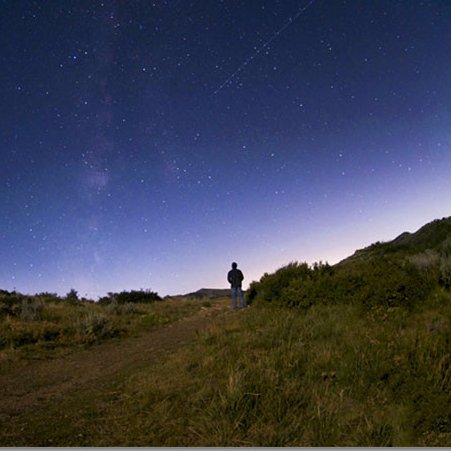
While you slept last night, completely still in your bed, our galaxy moved millions of kilometers through the cosmos. You woke up in the same room, on the same planet, yet unimaginably far from where you were the night before.
The Milky Way is not drifting quietly through the universe. It is racing through space at around 600 kilometers per second, carrying billions of stars, planets, and everything on them along for the ride.
It is a good reminder that even when life feels motionless, you are always in motion.
Stay connected,
Follow Gandalv @Microinteracti1
English
28AV retweetledi
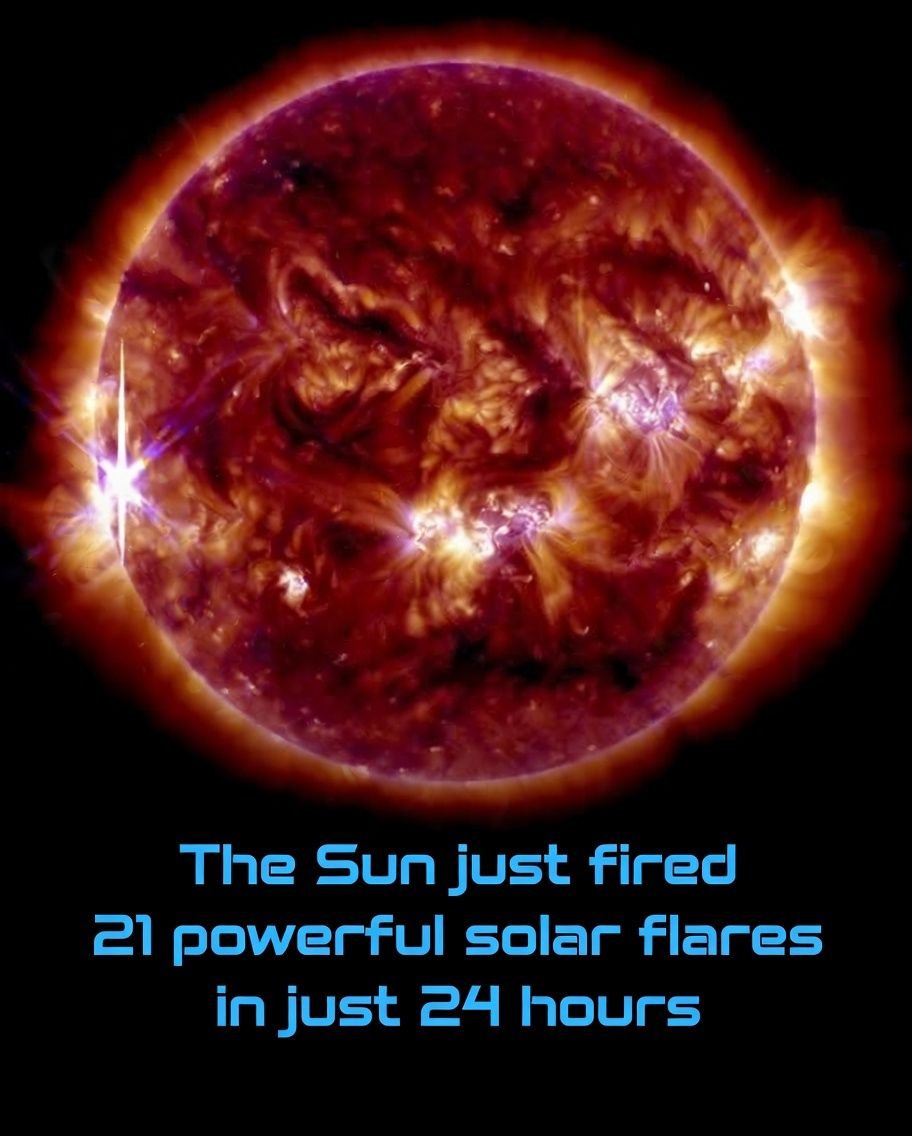
The Sun just unleashed its strongest flare of 2026 — in a barrage of eruptions.
During a 24-hour span starting late on February 1, the fast-growing sunspot AR4366 unleashed a remarkable barrage of activity: 18 M-class solar flares and 3 X-class flares. Among them, an X8.3 flare stood out as the most powerful solar eruption recorded in 2026 so far.
Solar flares are classified on a scale from A to X, with each class representing a tenfold jump in energy. X-class flares mark the Sun’s most intense explosions, and the number after the “X” indicates the precise strength. An X8.3 event is exceptionally rare — one of the strongest seen during the current solar cycle.
The impact was immediate and real: the X8.3 flare sent a powerful surge of X-ray and ultraviolet radiation that ionized Earth’s upper atmosphere, causing strong R3-level radio blackouts. High-frequency shortwave communications were disrupted, particularly over eastern Australia and New Zealand, where signals temporarily dropped out.
Attention has now turned to the possibility of an associated coronal mass ejection (CME) — a massive cloud of solar plasma that can follow major flares and potentially trigger geomagnetic storms. Preliminary models indicate that most of the ejected material will likely miss Earth, though a glancing impact cannot be ruled out around February 5. Should that occur, it could lead to elevated geomagnetic activity and visible auroras at higher latitudes.
Sunspot AR4366 continues to rotate toward a more direct Earth-facing position and remains magnetically complex, raising the likelihood of additional flares in the near term. NOAA space weather forecasters classify the region as highly active and caution that further strong flares — and possibly more CMEs — are probable in the coming days.
Even from 93 million miles away, the Sun’s outbursts demonstrate how quickly and directly its behavior can influence Earth’s atmosphere, radio systems, and night skies.
English
28AV retweetledi

These rappers are blending classical Russian instruments with old Gucci Mane type beats and it is amazing 🇷🇺
Music blends across all cultures 🔮
English
28AV retweetledi

Sacrificed the natty to win the Super Bowl.. I’ll take it
Cougar Sports Network@CougSportsNet
Maybe UW isn’t so bad?
English