

72 & Amsterdam.
6K posts

72 & Amsterdam.
@2Naveganta
Señora empastillada. Optimist.
Katılım Ekim 2022
369 Takip Edilen69 Takipçiler
@carlosguardiola En el repaso que ando haciendo de la historia de la empresa, destaco varias enfermedades clave sucesivas, pero de todas ellas meter el diseño a la estrategia es con diferencia la multiplicación de pajas mentales más grande.
Y sí, el DT y Ideo fue el comienzo de todo esto.
Español
Ahora que la tecnología está democratizando y reduciendo tiempos de acceso al diseño de producto...
Pronostico la inmensa riada de diseñadores/publicistas/marketeros que se dedicaban a producto, y van a querer realizar diseño estratégico.
Y no, no es una buena noticia.
Español

The Khrushchev ThawIn in the late 1950s wanted to show the world that he was less of an iron-fisted leader than Stalin so he offered greater access to western culture. This was a visit to Moscow by the House of Dior in 1959.
life.com/arts-entertain…
English
@SPAINSIKMOLAHP @voz_populi @josesanchezrec Ojalá! Sin embargo cada día que pasa pienso que estamos en un régimen, y esto no va a caer.
Español

@voz_populi @josesanchezrec Los que venían a terminar con la corrupción y a regenerar la democracia,han liquidado en 48 horas a la juez de enlace que colaboró con las autoridades europeas, y al máximo responsable policial de las investigaciones en el caso Zapatero.
Si cae Marlaska, cae toda la banda.
Español

Marlaska impondrá un nuevo mando de la UDEF en plena investigación a Zapatero
Lo cuenta José Sánchez (@josesanchezrec)
#Echobox=1779516557" target="_blank" rel="nofollow noopener">vozpopuli.com/espana/marlask…
Español
@illativefaith Correction: it was released in 1602 and the sentence was recited by Falstaff.
English
@illativefaith "Let the sky rain potatoes" from Shakespeare's comedy The Merry Wives of Windsor (Act 5, Scene 5) was released 26 December 1606.
Potato back then was considered a sexual stimulant.
English

I wonder if Cook was familiar with Tsar Peter the Great? Decades earlier he promoted potatoes (which the peasants called “devil’s apples”) by planting crops under armed guard — but he also instructed the guards to be lax and inattentive. Onlookers, seeing something valuable enough to be guarded, assumed it must be worth stealing, pilfered the potatoes, planted their own, and transformed Russia’s economy.
Dr. M.F. Khan@Dr_TheHistories
Captain Cook loaded 7,860 pounds of sauerkraut onto the HMS Endeavour in 1768. His crew refused to eat it, so he served it exclusively to the officers and made sure they ate it visibly in front of the crew every single day until the sailors decided they wanted some too. Not one man died of scurvy on the entire three-year voyage. Cook circumnavigated the world on his first voyage without losing a single man to scurvy and the Royal Society of London awarded him the Copley Medal on his return, one of the most prestigious scientific honours in Britain, specifically for his methods of preserving the health of his crew. The achievement was genuinely extraordinary. Scurvy had been killing sailors on long voyages for centuries, with some estimates suggesting it killed more sailors than enemy action, storms and all other causes of death combined. Cook solved it with fermented cabbage and a very specific understanding of human psychology. A typical daily menu aboard the Endeavour consisted of breakfast with boiled wheat and sugar, a midday dinner of salted beef stew and vegetables, and an evening meal of soup with ship's biscuits so hard they had to be broken up with a marlin spike. The ship carried approximately 5,500 litres of beer, 7,300 litres of spirits, 16 tonnes of bread, 2 tonnes of salted beef and over 3 tonnes of sauerkraut. The sailors ate approximately 5,000 calories a day to sustain the physical demands of running an 18th century sailing ship. Cook also carried portable broth made from cattle offal, forty bushels of malt, vinegar, mustard and concentrated citrus juice as additional anti-scurvy measures. He was running what was effectively the first controlled nutritional experiment in naval history across three years and 40,000 miles of ocean. The sauerkraut psychology is the detail that stay with me in this story. Cook noticed that Dutch sailors suffered far less from scurvy than their British counterparts and observed that they carried barrels of sauerkraut. He ordered his ships to do the same but his British sailors refused the unfamiliar foreign food entirely. His solution was to serve it only to the officers while making sure they ate it visibly in front of the crew. Within weeks the sailors were demanding their share, and Cook understood that sailors suspicious of an unfamiliar food would eat it the moment they believed someone of higher status was being given something they were not. © Eats History #drthehistories
English
@El_Universal_Mx A gag order for Ms. Sheinbaum shall be in order.
English
@El_Universal_Mx Always jabberin' on bullshit full on non stop 24/7.
Sort of a Psychopath Chaman in my book. No mention she's Pills up to the bone.
English

🔴 “¿Qué sentido tiene que acusen en este momento a una persona por algo que hizo hace 30 años?”, cuestionó Claudia Sheinbaum sobre la imputación de EU contra Raúl Castro por un ataque ocurrido en 1996.
“No se nos puede olvidar que hay otra intención también en lo que hacen”.
Español
72 & Amsterdam. retweetledi

This strange stone was once Newcastle’s public “mounting block” — a set of worn steps used to climb onto horseback.
Known as the Lowping-on Stone, it stood for centuries outside the Golden Lion Inn in Newcastle’s Bigg Market. Riders climbed its worn steps before “lowping” — a local word for leaping — into the saddle.
The inns behind it were demolished in the early 1880s, but the stone was saved and later placed beside Newcastle Castle Keep, where it still survives today.

English
72 & Amsterdam. retweetledi

At the University of Göttingen, Germany, one of physicist Max Born’s young students, an American named Robert Oppenheimer, is making quite a ruckus.
He completely takes over discussions and will not quiet down. One of his classmates, Maria Goeppert, is circulating a petition wherein signatories are threatening not to come to class unless Oppenheimer shuts up.

English
Used cars: Vehicle AI uses AI image recognition to identify vehicles - useful for investigators working with footage or images where plates aren't visible.
The OSINT Newsletter@osintnewsletter
Upload a photo of a car, get the make, model, and generation back. 🚗 Vehicle AI uses AI image recognition to identify vehicles - useful for investigators working with footage or images where plates aren't visible. Learn more: tools.osintnewsletter.com/osint-tools/ve…
English
72 & Amsterdam. retweetledi

No se puede leer entero este post de Chris Ferguson pero en lo que se lee nos cuenta que vivimos rodeados de una industria del miedo que genera beneficios económicos manteniendo a la gente constantemente preocupada y ansiosa. Según él, hay todo un ecosistema formado por medios de comunicación, investigadores, universidades y empresas que se benefician de vendernos miedo: los medios publican titulares alarmistas porque generan más clics, los investigadores exageran sus conclusiones para conseguir atención y financiación, y las empresas venden productos “saludables”, “naturales” o protectores como solución a esos supuestos peligros.
Ferguson explica que este fenómeno no es nuevo, pero se ha intensificado mucho con internet y las redes sociales, donde la competencia por la atención es brutal. Pone ejemplos de noticias exageradas o absurdas que aparecen casi a diario sobre comida, tecnología, contaminación o salud. Su argumento principal es que gran parte de estos miedos están inflados o directamente infundados, pero resultan muy rentables para quienes los promueven.
api.omarshehata.me/substack-proxy…
Español
72 & Amsterdam. retweetledi


72 & Amsterdam. retweetledi
Se preguntaba un anónimo escoliasta de los Scholia vetera de la Odisea, en 10.19, qué necesidad tendría Eolo de encerrar todos los vientos adversos en un odre para asegurar la buena vuelta de Odiseo. El único viento que mandó a soplar fue el Céfiro. ¿No habría podido, simplemente, contener a los demás, puesto que suya era la potestad de incitarlos o reprimirlos? ¿A qué lo del odre? Y es que si uno lee la Odisea (y la poesía en general) con escuadra y cartabón, o con una tabla de Excel, corre el riesgo de volverse loco. Pero he aquí que nuestro lejano amigo acaba rindiéndose al final de su escolio, y nos regala una frase que merecería estar detrás de la felicidad de todo lector: ἀνεύθυνα τὰ τῶν μύθων, 'los mitos no rinden cuentas'. Así que no se las pidamos a los mitos, ni mucho menos a Homero.
El odre de los vientos es una imagen poética bellísima, pero también el catalizador de la catástrofe que vendría después. Cuando Eolo pone en manos de Odiseo un odre que encierra a los vientos adversos, le está regalando la garantía de su regreso. Será después la tripulación, cuando Odiseo haya quedado dormido presa de la fatiga, la que abra el odre como una caja de Pandora y arruine ese regreso. Precisamente cuando ya tenían a la vista Ítaca y las hogueras que hacían en la costa. Los vientos liberados desbaratarán esa promesa repentina, y no por obra de los dioses precisamente. La Odisea continúa.
Un vídeo donde leo el pasaje de Eolo en mi traducción de la Odisea (La Oficina 2024). Música de fondo: Philip Glass: Cuarteto de cuerda n. 3, "Mishima".
Español
72 & Amsterdam. retweetledi

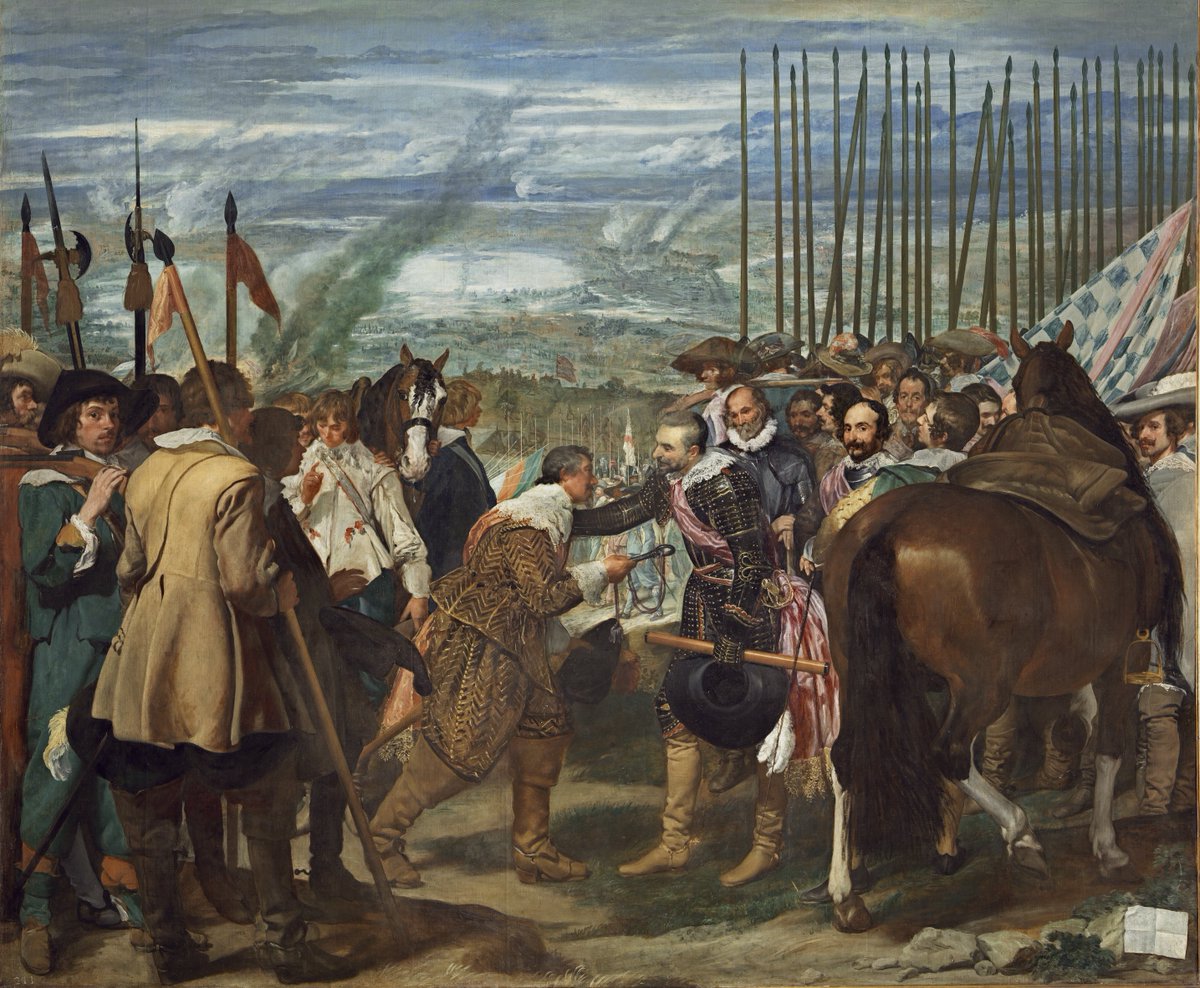
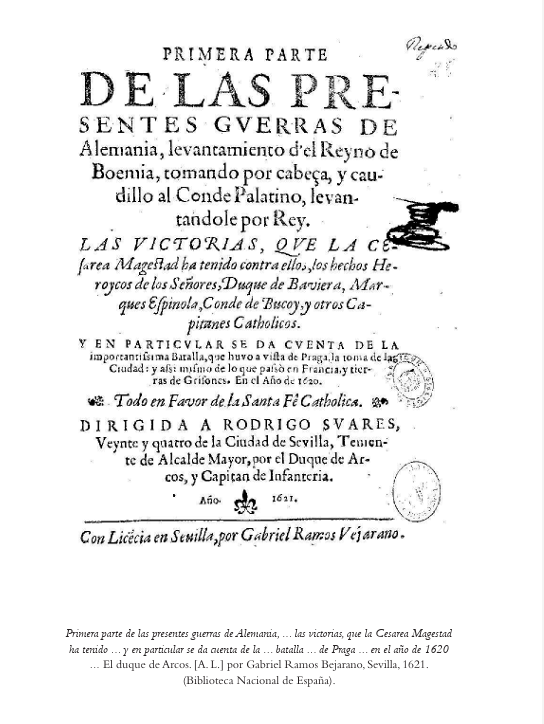
Se suele decir que uno de los grandes fallos de España es que nunca supo hacer propaganda y que los protestantes fueron «maestros» en ello. Pero ¿y si no fue así?, ¿y si la propaganda nació en el contexto católico y España tuvo en ello un papel central? Esto merece un hilo:
Español
72 & Amsterdam. retweetledi
Hablamos, pues, de panfletos, grabados, hojas volanderas, relaciones impresas… todas las potencias los usan. Porque entonces, como ocurre hoy, la guerra no se libraba sólo con ejércitos, también se empleaban otros medios como el papel, la tinta, o las imágenes y relatos.
Español
72 & Amsterdam. retweetledi
El libro de Darío Fernández Ruiz, "La invención de Bayreuth", de Fórcola, es uno de los libros que mejor ayuda a comprender lo sucedido desde Wagner hasta el ascenso de los nazis al poder. wp.me/p9fWSA-cEQ @Forcola

Español
72 & Amsterdam. retweetledi

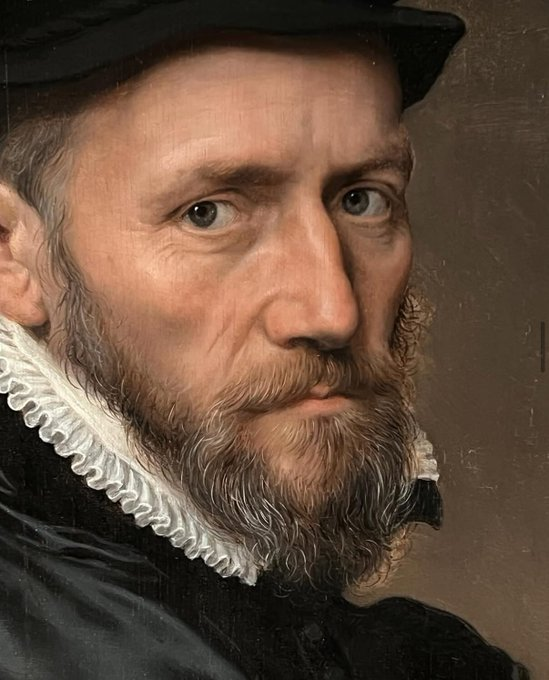
One of the most shockingly underrated masterpieces of the Renaissance is Anthonis Mor’s portrait of Sir Thomas Gresham (c. 1560), now in the Rijksmuseum in Amsterdam.
When people see it today, especially in high-resolution pics, they often mistake it for a 19th-century photograph or even a hyper-realistic AI generation.
The skin texture, the eyes, the subtle sheen on the black fabric, make it feel almost disturbingly modern.
Yet this painting, created over 460 years ago, barely registers in the mainstream conversation about great art.
It deserves far more recognition.
English