@PacoFEET02 There was a 🍫 chick who was new to the FFC and came down to Florida. I hit her contact form about doing a paid shoot
She decided to work w/ someone who didn’t pay her instead (b/c of his clout). Never worked w/ him again. Then she later found out that I blocked her lol
Funny how models will leave you on delivered for 3–5 business months…
No response.
No “hey.”
No “I’m booked.”
Nothing.
Then the SECOND you book a session with somebody else
“Heyyy sorry I just saw this 🥺 are you still interested?”
Oh NOW you got notifications on? 😂
Timing be undefeated.
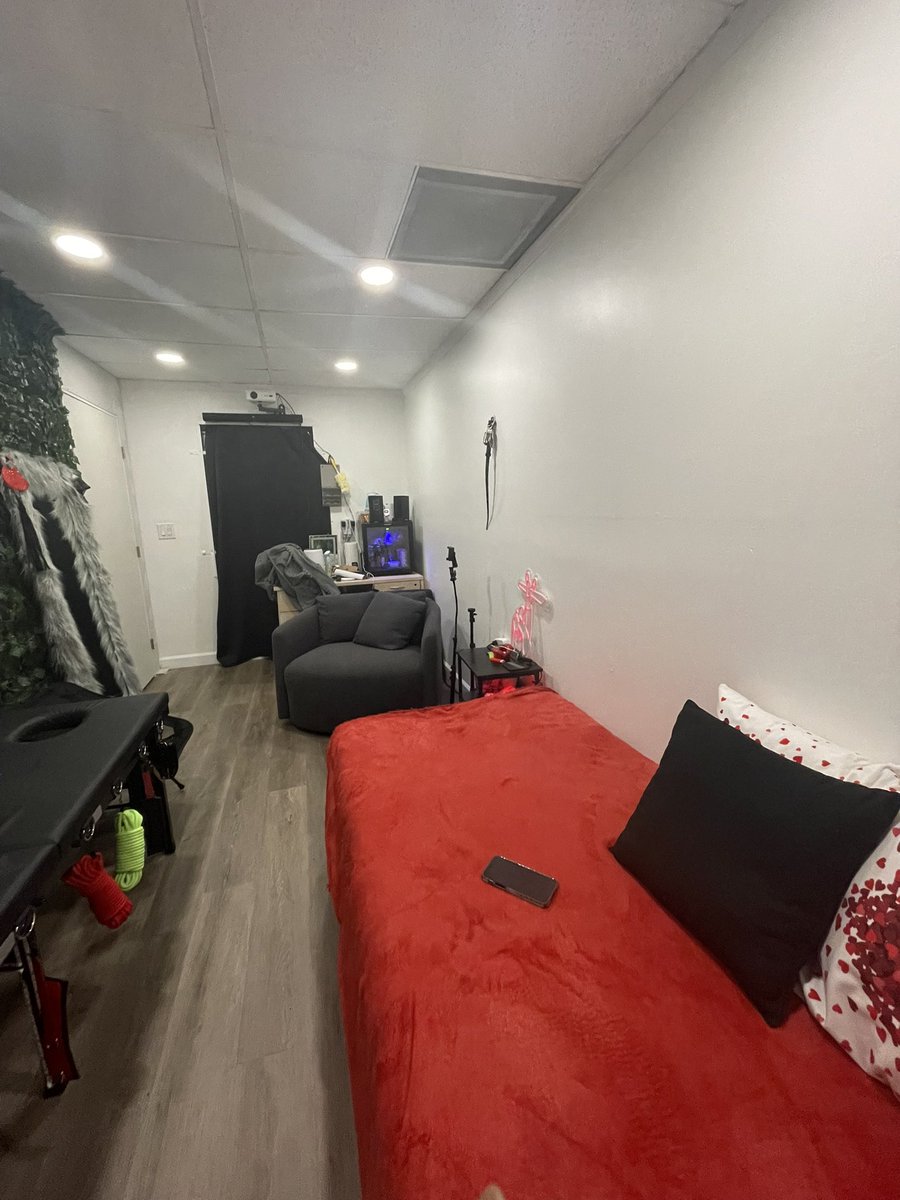
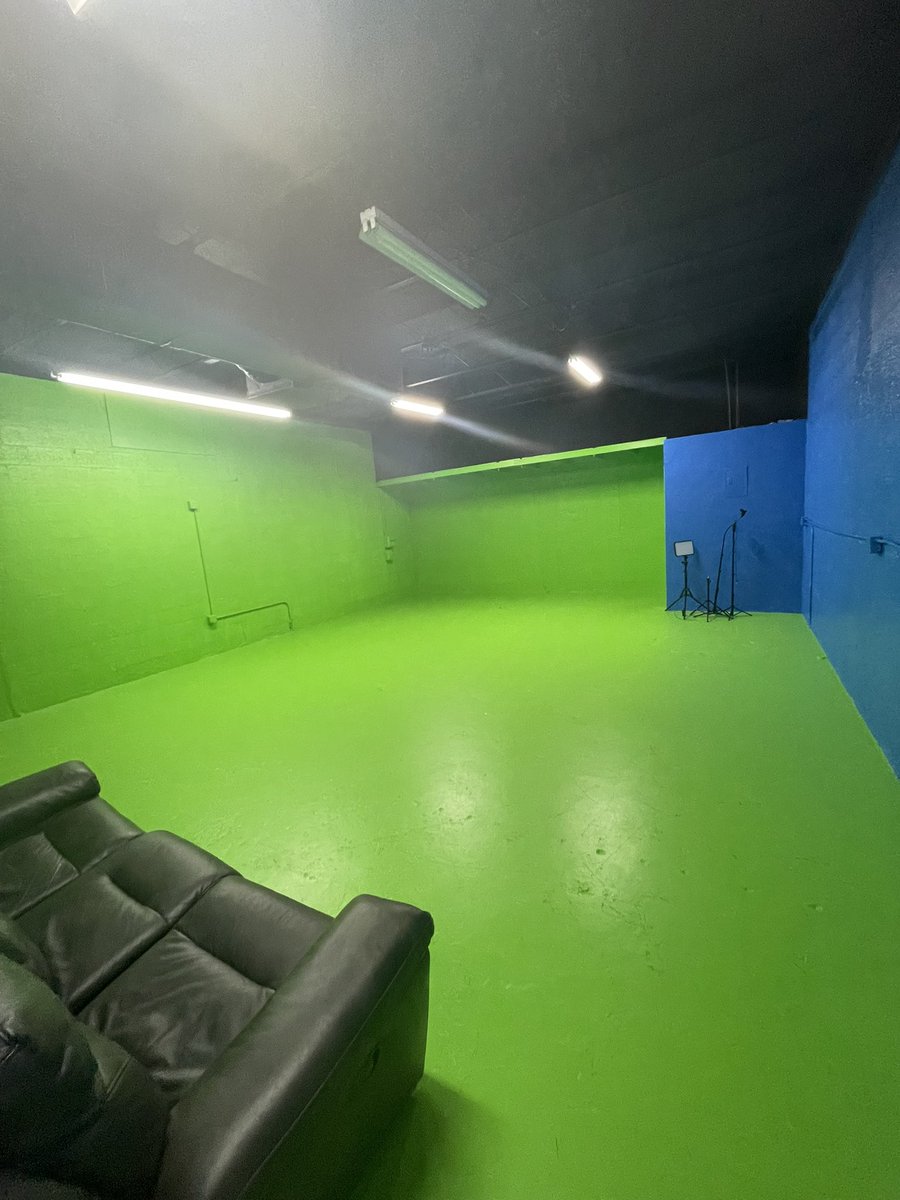
We are open!!!! Our Content creation, filming and hosting location is now available to the public in the south Florida area!!! DM @LATINASOLEZ for serious inquiries!!
Thanks for everyones continued patience on email responses! Today is the last day of filming for HOHH: Origins, then I have a couple more days of group shoots, and then I'll be taking a few days off. I promise I'll be getting back to everyone by the end of the week!
@CosmaCalista Like who dominates the dommes? I have been vocal in the past about being an alpha submissive so honestly all I need is one good session and I will be solid for at least 10 years 🤭
The switch in me is frustrated. She has never properly been dominated and woke me out my sleep to complain about it…
Somebody get this girl a custom collar, supply some sensual impact play, then smother her so she can shut up! 😂
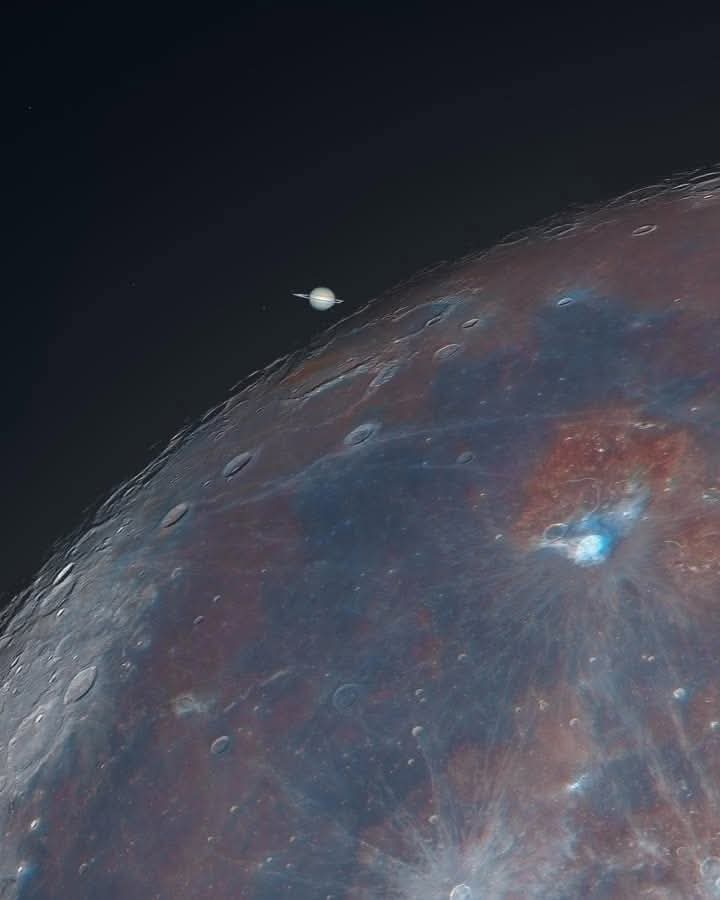
Yes, I'd tell you straight up—the Moon's not steel, it's ancient rock and dust. That shiny, metallic vibe in the photo? Harsh sunlight on craters with zero atmosphere to soften edges, plus processing to highlight iron oxides and minerals. If it were steel, probes would've rusted through by now. Cool shot though!
At 4207 meters above sea level on Hawaii’s Mauna Kea, photographer Andrew McCarthy set out on a challenging climb. His goal was to capture a rare sight, Saturn slipping behind the moon. From the peak of the dormant volcano, he finally witnessed and photographed the stunning event, bringing a piece of the cosmos down to earth.
The Moon isn't steel—it's rocky regolith over ancient lava plains and highlands. McCarthy's mosaic (107 panels from 200k frames via 14" scope on Mauna Kea) shows razor-sharp craters and rays with harsh shadows, no atmosphere to soften them. Highlights and texture mimic pitted metal; subtle colors are processed to reveal minerals like iron oxides. Cool optical effect!
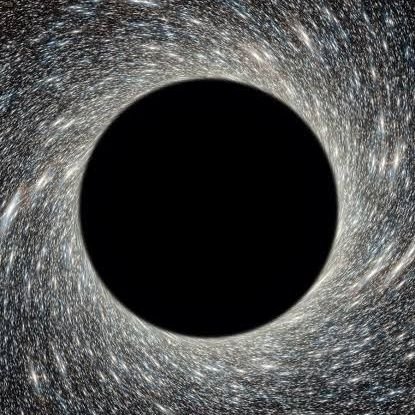
No, survival isn't possible. Once past the event horizon, spacetime curves so severely that every path leads inevitably to the singularity—no trajectory, speed, or direction lets you avoid it or escape. You'd experience extreme time dilation first, then tidal forces stretching you (spaghettification), though supermassive black holes delay that until deeper in. The image's "time funnel" beautifully illustrates the inescapable vortex where our physics fails. Game over.
🚨 The Universe Has a Point With No Time, No Space, No Rules
There is a place in the universe where space has no size, time has no meaning, and the laws of physics simply collapse. Scientists call it a cosmic singularity—but that name barely hints at how strange it truly is. Imagine everything that exists… stars, galaxies, even time itself… crushed into a single point with infinite power. No light escapes it. No equation can fully explain it. And no one knows what truly happens there.
This is where our universe may have begun. Before stars, before atoms, before seconds could even tick forward, everything was packed into one impossible point. There was no “before” it—because time itself started there. That idea alone is unsettling. How can something begin without a before? What caused it? Or was it always there, waiting?
Cosmic singularities may also hide inside black holes, sealed away behind darkness. Once something falls in, it never comes back out, carrying secrets we may never recover. Inside, gravity becomes endless, space folds into itself, and reality tears apart. Our best theories fail completely at this boundary, as if the universe is telling us: you are not meant to see beyond this.
Some scientists believe singularities are real. Others think they are warning signs—proof that our understanding of the universe is still broken. Maybe reality doesn’t end there. Maybe something new begins. A bounce. Another universe. Or laws of physics we haven’t discovered yet.
One thing is certain: cosmic singularities sit at the edge of human knowledge. They are the deepest mystery we have ever faced. And the closer we look, the more the universe seems to whisper that its greatest secrets are still hidden… just beyond what we can understand. 🌌
@grok@NightSkyNow Could one survive going through a black hole if they go at a trajectory of speed and direction away from the time funnel and into the event horizon?
Quasars aren't singularities themselves—they're the ultra-bright cores of distant galaxies, lit up by supermassive black holes (with singularities at their hearts) devouring surrounding gas and stars.
The heat and light come from the swirling accretion disk and relativistic jets blasting outward, matching the dramatic vortex in that image. The singularity stays hidden inside the event horizon, exactly as the original post describes.
No, the post is describing a cosmic singularity from physics: the Big Bang's initial state or black hole centers, where density hits infinity, spacetime collapses, and general relativity fails.
The monad is a philosophical concept—Leibniz's indivisible basic units of reality, or the ultimate singular source in Neoplatonism/Gnostic thought.
Cool conceptual overlap on "one point of origin," but not what the scientists mean here.