American Association of Caregiving Youth (AACY)

5.8K posts

American Association of Caregiving Youth (AACY) banner
American Association of Caregiving Youth (AACY)

American Association of Caregiving Youth (AACY)

@AACYorg

The American Association of Caregiving Youth® is the only organization in the United States dedicated solely to addressing Caregiving Youth issues/solutions.

Boca Raton, FL Katılım Nisan 2011
5.5K Takip Edilen2.6K Takipçiler
Sabitlenmiş Tweet
American Association of Caregiving Youth (AACY)
Caregiving Youth Shine on NBC’s TODAY Show with Maria Shriver: A National Spotlight Ignites Hope for Change | The American Association of Caregiving Youth (AACY) & @CampKesem teamed up for this appearance. A big win for Caregiving Youth recognition and advocacy. #CaregivingYouth
TODAY@TODAYshow

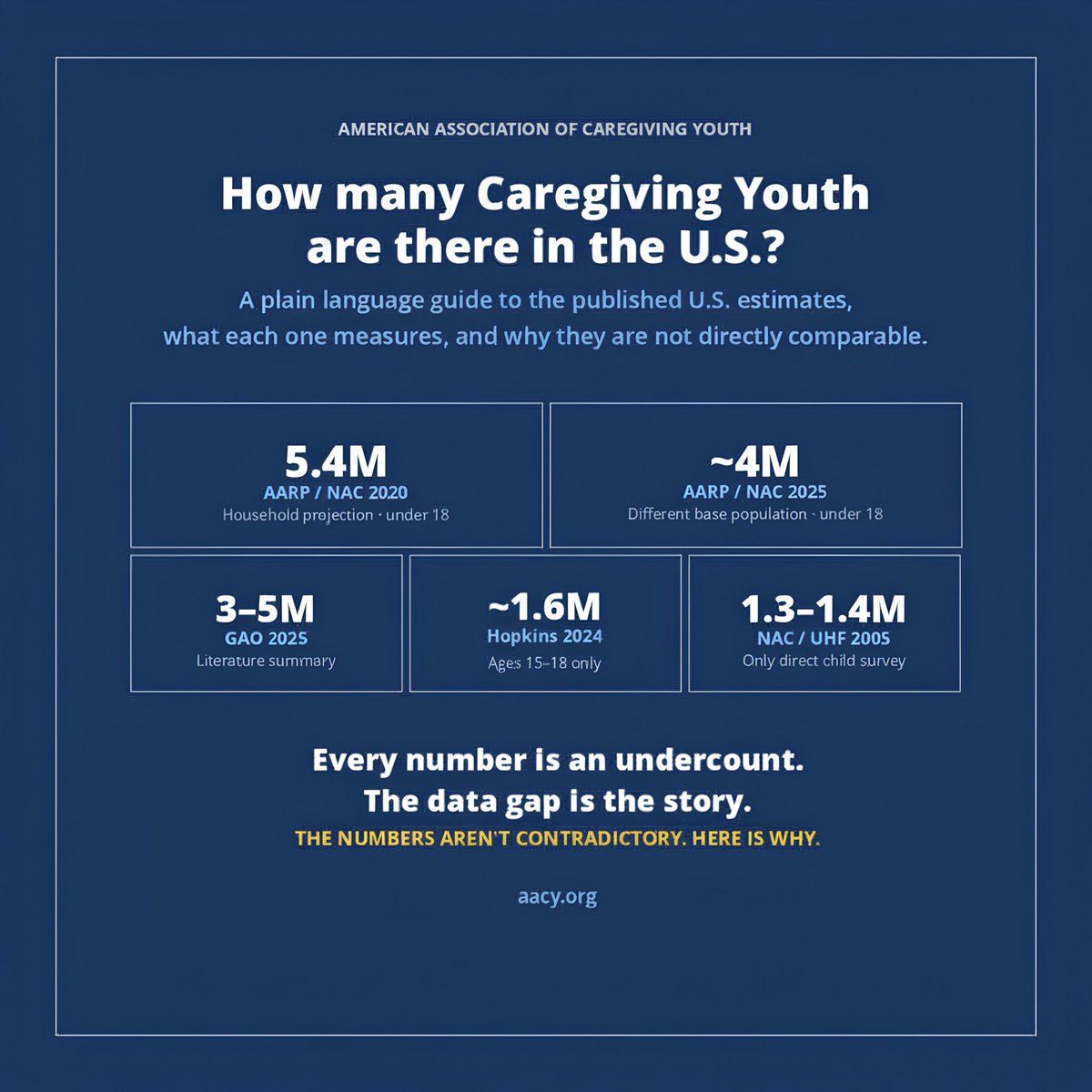
An estimated 5.4 million children aged 18 and under care for loved one who is sick or disabled. Students Jacob Gutierrez and Rocco Fernandez sit down with @mariashriver on TODAY to share their experience juggling school while caregiving for their sick parents.

English
0
8
24
3.3K
American Association of Caregiving Youth (AACY) retweetledi
Carers Trust
Carers Trust@CarersTrust·
Missing a test or exam can have a lasting impact on a young person's future. For young carers, it's a reality that needs to change. A Young Carers Lead in every school means young carers are supported so their education doesn't have to suffer. Find out more: carers.org/ycad #YoungCarersActionDay
Carers Trust tweet media
English
0
8
15
272
American Association of Caregiving Youth (AACY) retweetledi
KidsAreCaregiversToo
KidsAreCaregiversToo@KidsCaregiveToo·
A Kid Crisis in the United States These statements are derived from The Social Policy Report - "The United States should recognize and support caregiving youth" Emma Armstrong-Carter, Catherine Johnson, Julia Belkowitz, Connie Siskowski, Elizabeth Olson The Society for Research in Child Development reports that in the United States, more than 5.4 million children and adolescents aged 18 years and under provide care for family or household members who are aging or have a chronic illness, disability, or other health conditions that require assistance; The term Caregiving Youth is the common terminology in the United States when referencing this population of children and adolescents who provide care; Florida was the first state ever to acknowledge Caregiving Youth by allowing one question on the 2019 Florida Youth Risk Behavior Survey (YRBS). "During an average week, on how many days do you provide care for someone in your family or household who is chronically ill (lasts three months or more), elderly, or disabled with activities they would have difficulty doing on their own?" Results indicate that 15.04% of high schoolers and 22.23% of middle schoolers provide care during the week, proving that more than 290,000 youth are caregiving in Florida. (The number is probably much higher, this survey didn't include private or home-schooled children) Caregiving Youth are distinct from other at-risk youth populations because they care specifically for a loved one who has a medical condition(s) (e.g., chronic physical or mental illness, disability) or functional decline requiring care and support to undertake everyday activities; Caregiving duties range from assisting with personal care such as dressing, bathing, eating, toileting, or assisting with mobility to managing medical equipment, administering medications, caring for a wound, preparing meals, translating language in medical settings, and more – all of which would typically be the responsibility of an adult; Many Caregiving Youth also provide significant, ongoing emotional support, particularly when a family member is struggling with a terminal or chronic illness; The dual role of Caregiving Youth as students and caregivers puts them at risk and, without support, compromises the performance of their academic, social, and emotional well-being because of the inherent challenges, demands, and stressors of providing care for an ill or disabled family member; *Racial minority groups and families who are financially insecure and without the disposable income to hire help at home are over-represented among the Caregiving Youth population; Caregiving Youth, compared to non-caregiver peers, disproportionately experience anxiety and depression, as well as physical health problems along with academic underachievement and/or are at a greater risk of school dropout as well as reduced educational options during transitions to adulthood and throughout the life course; In 2012, $8.5 billion was the estimated economic value of the contribution of the unpaid labor of Caregiving Youth in the U.S.; today, the monetary value is much higher; The numbers of Caregiving Youth are increasing due to an aging population, more multi-generation households, the opioid epidemic, lack of homecare insurance and services, advances in technology allowing for complex care at home (including for Veterans), more single parent/grandparent households, and the COVID-19 pandemic; Studies suggest that Caregiving Youth gain confidence, empathy, and practical skills, which promote resilience over time and also report both satisfaction and burden, including missing childhood, associated with their caregiving activities; Who would provide care if not for the children who fill a crucial role in caregiving services for family and household members? Some children have no choice. They are the only ones in single-parent or grandparent homes, and another family is not around or available to assist regularly. Others are assigned. They, too, have little choice. Yet others willingly step up to the plate to relieve another family member; they want to help or find pleasure and purpose in taking on these responsibilities. On the positive side, Caregiving Youth tend to mature more quickly and can be more compassionate than their non-caregiving peers, and they tend to be more altruistic humans. These unselfish kids have great potential to grow into generous, caring adults. They could help solve many of the problems they've already experienced in their young lives, like healthcare issues, caregiving, poverty, legal issues, medicine, etc., if recognized and given support; ​ There is evidence demonstrating that when Caregiving Youth are recognized and supported, many of the challenges they experience are mitigated, resulting in academic and personal success;
KidsAreCaregiversToo tweet media
English
0
1
2
229
American Association of Caregiving Youth (AACY) retweetledi
KidsAreCaregiversToo
KidsAreCaregiversToo@KidsCaregiveToo·
A new MUST READ article in The Guardian examines the reality that millions of children help care for ill or disabled family members. Read the article: theguardian.com/us-news/2026/m… Written by Feylyn Lewis, PhD, @DrFeylynLewis
KidsAreCaregiversToo tweet media
English
0
2
3
52
American Association of Caregiving Youth (AACY) retweetledi
Carers Trust
Carers Trust@CarersTrust·
Ahead of #YoungCarersActionDay, hear from teachers and education professionals on why a Young Carers Lead in every school matters. Every young carer deserves a trusted adult in their corner - someone to listen, support and make sure no young carer goes without the help they need.
English
0
8
6
287
American Association of Caregiving Youth (AACY) retweetledi
Carers Trust
Carers Trust@CarersTrust·
"Everyone deserves a bit of a break and happiness." - Thomas, young carer, aged 11 Young carers like Thomas carry a lot. A break isn't a luxury - it's vital for their mental health and wellbeing, helping them return refreshed and ready to take on education and life alongside their peers. On 11th March, join us for #YoungCarersActionDay and stand up for a Fair Future for Young Carers.
English
1
11
21
598
American Association of Caregiving Youth (AACY)
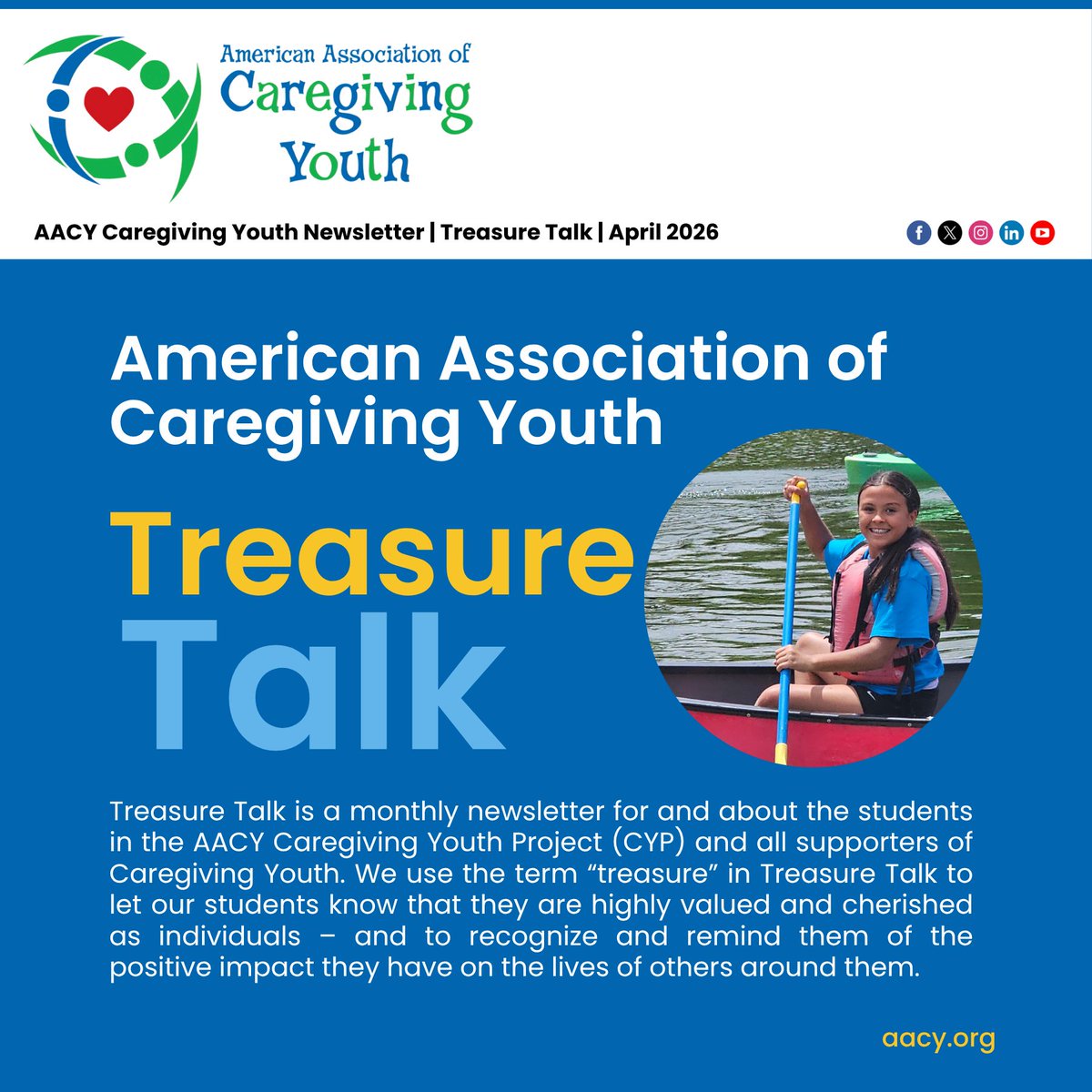
These are a few of the faces of the students whose lives have been positively changed by AACY. Without this safety net, many would navigate school and family caregiving alone. Across the United States, most do. Help us help kids: aacy.org/donate/
American Association of Caregiving Youth (AACY) tweet media
English
0
1
2
60
American Association of Caregiving Youth (AACY)
A CYP Family Specialist w. one of her students. Caregiving Youth often begin their day helping a loved one before school starts. CYP provides support & advocacy at school and at home. This work happens every day in @pbcsd. It exists because people choose to stand behind it.
American Association of Caregiving Youth (AACY) tweet media
English
0
1
1
82
American Association of Caregiving Youth (AACY)
At 17, Ella wakes up early to feed, dress & ready her legally blind, nonverbal little sister for school. After school she does it again—then homework.She's a hero filling where systems fail.CYP support keeps her on track & not alone.Story via @WPTV : #CaregivingYouth" target="_blank" rel="nofollow noopener">wptv.com/news/region-s-…
English
0
2
3
84
American Association of Caregiving Youth (AACY)
Valentine’s Day = two kinds of love. Caregiving Youth, caring for family members every day while keeping up with school. And you, our donors, volunteers, educators, partners, and team, who make sure they are seen and supported. We see the love in their actions and yours.
American Association of Caregiving Youth (AACY) tweet media
English
0
1
3
73
American Association of Caregiving Youth (AACY) retweetledi
Carers Trust
Carers Trust@CarersTrust·
#YoungCarersActionDay is one month away 🚨 This year, we're pushing for Fair Futures for Young Carers - a call to ensure every young carer has the same chances to learn, grow, and thrive as their peers. Get involved: carers.org/ycad
Carers Trust tweet media
English
0
13
19
356
American Association of Caregiving Youth (AACY) retweetledi
KidsAreCaregiversToo
KidsAreCaregiversToo@KidsCaregiveToo·
Federal law now clarifies that caregivers under 18 are eligible for respite services through the Lifespan Respite Care Program. While not legislation created specifically for Caregiving Youth, this recognition increases visibility, expands access to support, and helps acknowledge the realities of millions of young people balancing school and family care at home. A meaningful step forward for Caregiving Youth. Details Here: aacy.org/federal-lifesp… #KidsAreCaregiversToo #AwareTheyCare #CaregivingYouth #Respite
KidsAreCaregiversToo tweet media
English
1
1
3
74
American Association of Caregiving Youth (AACY) retweetledi
Kingdom Charitable Trust
Kingdom Charitable Trust@kingdomct·
The @AACYorg is committed to uplifting and advocating for young people who provide care for chronically ill, injured, elderly, or disabled family members—often taking on responsibilities far beyond their years. 🌱💪
English
1
1
2
26
American Association of Caregiving Youth (AACY)
For Caregiving Youth, even a few hours of swimming and respite can feel life-changing. Time to relax, laugh, and just be kids helps them return home stronger, more rested, and better able to care for the people who depend on them. We stand with kids who take care of others.
American Association of Caregiving Youth (AACY) tweet media
English
0
2
6
72
American Association of Caregiving Youth (AACY) retweetledi
Carers Trust
Carers Trust@CarersTrust·
The House of Lords' amendment tonight to the mobile phone ban risks making support for young carers in schools worse, not better. carers.org/news-and-media…
English
0
2
11
279
American Association of Caregiving Youth (AACY) retweetledi
Carers Trust
Carers Trust@CarersTrust·
The House of Lords has backed a school phone ban. This risks inadvertently making support for young carers in schools worse, not better. That's because many young carers will feel great anxiety for the person they care for at home if they are not able to speak to them when necessary. We are calling for young carers to be included within any exemptions from this ban. ➡️ bit.ly/4bzpFv1
Carers Trust tweet media
English
0
14
20
538