Anne Grete Hagby
19.6K posts

Anne Grete Hagby
@AHagby
😊Tweet about the scenery surrounding me. Creativity is my drive. I do neither reply to DM nor chat😊
Katılım Mart 2014
5K Takip Edilen9K Takipçiler




GråVærOgRegnPlask med notering av 6varme utfor VindusGlugga med StorFint besøk i det UnderTegnede har behov for ToStykkMørke VåknOppKaffe og TåleMod før dagen er igangsatt på sitt UnormaleNormaleVis og ønsker alle en VakkerOgNyVasket KristiHimmelFartTorsdag ☕️

Norsk


@NinaZanninna Tusen takk. Frost her i natt. Ha en flott dag. Det er lov med kake🥰
Norsk
ViErOppStåtte og noterer 7varme utfor VindusGlugga hvor det er GråSkyet og intet nytt under SkyDekket der Kneipp og Zylfide sonderer omgivelsene ute mens MatMor nyter en GloHeit VåknOppKaffe inne akkompagnert av NRK-NyhetsMorgen og et MorellBlomstBilde fra i går. GodOnsdag ☕️

Norsk


Godmorgen 😃 Idag har fineste datteren bursdag, 45 år siden hun meldte sin ankomst ❤️ Beste datteren nån kan få, glad og stolt over at hu er mi ❤️ Ønsker alle følgere en strålende mandag 🥰 #Mondaymorning
Dansk

Good morning peeps thank you for you best wishes and kindness I am feeling a bit better I will be back shortly you all look after yourselfs 🥰
English


Rainshows and Mountain Selhornet. Enjoy your new week ahead 💕😋🌼

English



In 1858, a young doctor named John Langdon Down accepted a job that no ambitious physician wanted.
He was being sent to run the Royal Earlswood Asylum in Surrey — a place where people with intellectual disabilities were warehoused rather than cared for. The floors were filthy. The staff was brutal. Physical punishment was routine. The residents were dressed in rags, fed poorly, and treated as problems to be contained rather than people to be known.
Down was 30 years old. He could have managed the place from a distance, filed his reports, and moved on to a more prestigious posting.
Instead, he walked the wards every day. He learned his patients' names. And he saw something that apparently no one else had bothered to look for — people.
His first acts weren't medical. He fired abusive staff. He banned physical punishment entirely. He ordered proper food, clean clothes, and fresh air. Then he told his colleagues something that would have sounded almost absurd in 1858: that a doctor's primary duty was to be a friend to their patient, and that their happiness mattered as much as their health.
After years of careful, meticulous observation, Down published a landmark paper in 1866 describing a specific pattern of physical and developmental characteristics he had identified in some of his patients. His original terminology reflected the racial theories of his era and was later rightfully abandoned. But his clinical observations were so precise and so thorough that nearly a century later, the medical community honored him by naming the condition he had described. We know it today as Down syndrome.
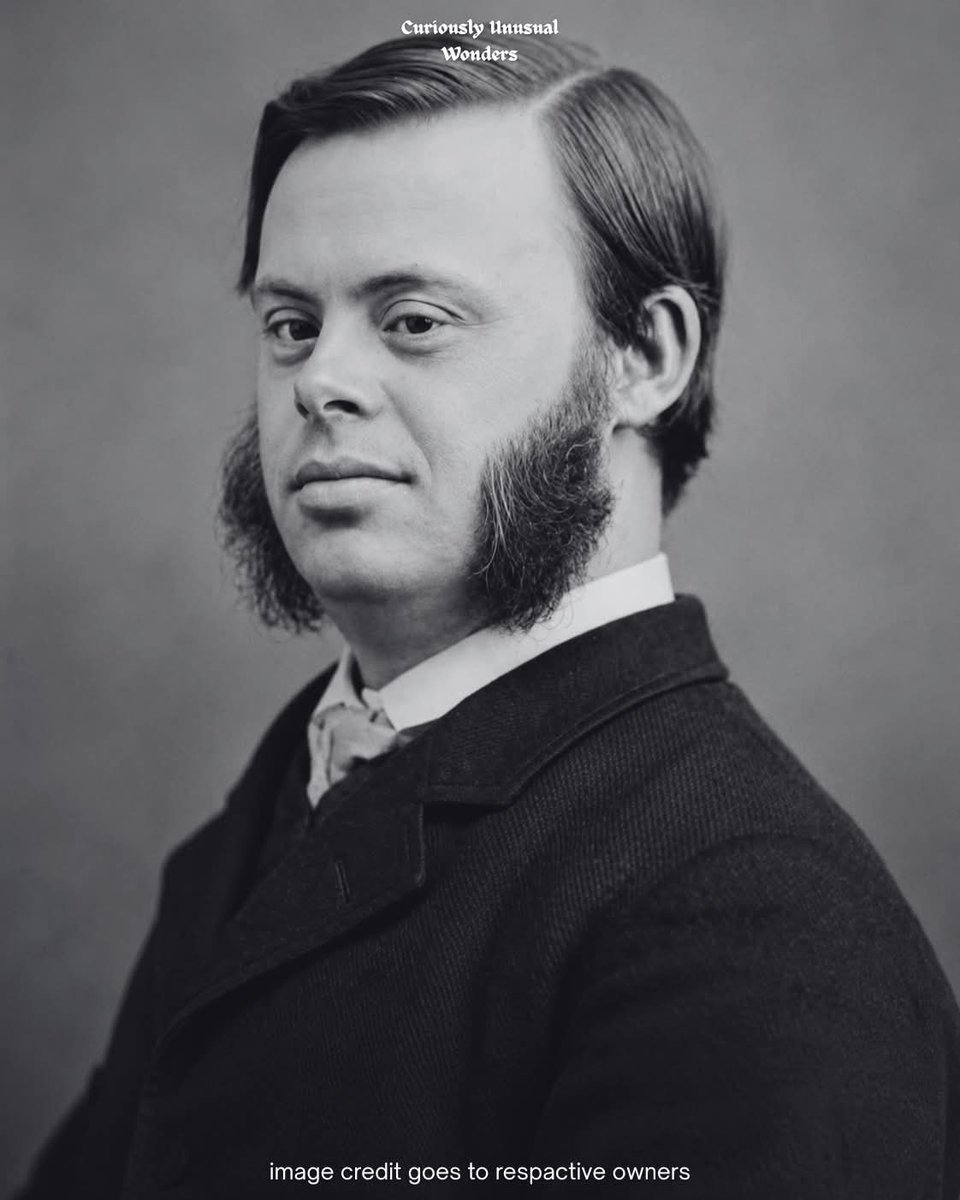
He also began photographing his patients — not as clinical specimens, but as individuals. He dressed them in their finest clothes. He gave them dignity in a frame. In an age when such people were deliberately hidden from society, that simple act of portraiture was quietly radical.
By 1868, Down had grown frustrated with the asylum's governors. When they refused to fund an exhibition of artwork created by the residents, he made a decision that would define the rest of his life. He resigned.
He and his wife Mary purchased a large home in Teddington and turned it into something the world had never quite seen before. They called it Normansfield — and it was not a hospital. It was a home.
Residents grew food in gardens Down planted himself. They learned trades. They were taught to read and write whenever possible. They were given structure, fresh air, and the revolutionary expectation that they were capable of growth.
Then, in 1879, Down built something that still stops people when they first hear about it.
A theater.
A full, proper theater — with a stage, real seating, and proper acoustics — on the grounds of a care facility for people society had written off as uneducable.
Why? Because Down believed that art, music, and performance weren't luxuries. They were necessities. They were part of what it meant to be human — and his patients, he insisted, were fully human.
Every week, residents took that stage. They performed plays. They sang. They stood in the spotlight and received applause.
For many of them, it was the first time anyone had ever clapped for them.
Normansfield flourished for over a century. Families who had been told their children had no future began seeing something they had nearly stopped believing in — progress, joy, and a life worth living. By 1876, the community was home to around 160 residents.
When Down died in 1896, his sons carried the work forward. Normansfield remained a home until 1997.
Today, the site houses the Langdon Down Museum of Learning Disability and serves as headquarters for the Down's Syndrome Association in the United Kingdom.
The theater he built in 1879 still stands. Beautifully restored. Still hosting performances more than 140 years later.
John Langdon Down advanced medical knowledge — but that may not have been his greatest contribution. What he really did was challenge a foundational assumption of his age: that some lives were worth less than others.
He proved, through daily practice and stubborn conviction, that every person has something to offer — and that the right environment, offered with patience and genuine respect, can reveal it.
The world he was born into locked its most vulnerable people away in darkness.
The world he left behind had, in some small but permanent way, begun to let the light in.
English