@kotakneosupport is Kotak Neo CDSL or NSDL? I wanted to open acct with Neo & transfer holdings from Dhan which is CDSL. Wanted to know procedure, timelines & transfer charges?
English
Amit Jadhav
533 posts

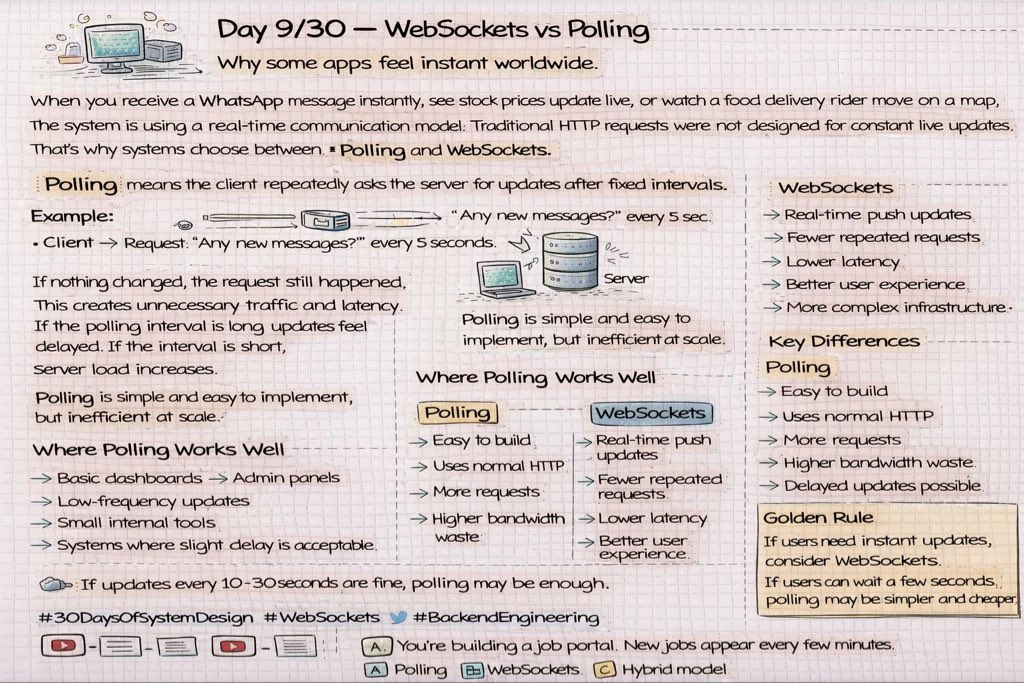
🧵 Day 8/30 Of #SystemDesignSeries CDN (Content Delivery Network): Why some apps feel instant worldwide A fast backend alone doesn’t guarantee a fast user experience. If your server is in one country and users are spread globally, physical distance creates latency. Every image, CSS file, JS bundle, and video request must travel farther, which slows load times. That’s why modern systems use a CDN. A CDN is a distributed network of edge servers placed across the world. Instead of every request going to your main origin server, users fetch cached content from the nearest edge location. This drastically reduces latency and improves speed. Example: If your server is in India and a user opens your site from London, without CDN the request travels to India and back. With CDN, London users can get static assets directly from a nearby UK edge node. What CDNs usually cache: → Images → Videos → CSS / JS files → Fonts → PDFs → Static pages → Downloadable assets Why CDNs matter: → Faster page loads globally → Lower load on origin server → Reduced bandwidth costs → Better scalability during spikes → Improved uptime → Stronger DDoS protection → Better SEO (speed impacts ranking) Important concepts: Cache Hit = file already available on edge server Cache Miss = CDN fetches from origin then stores it TTL = how long content remains cached Invalidation = removing outdated cached files after updates Real companies using CDN layers: → Netflix for content delivery → Amazon for product assets → GitHub for static resources → Shopify for global storefront speed → YouTube for distributed media delivery #30DaysOfSystemDesign #CDN #BackendEngineering




I am sitting on 25050 with slight bullish bias(currently).. Kya mera Bali lega market..??