
Alfred Ndahiro
3.6K posts

Kigali Set to Become East Africa’s Premier Luxury Destination with New Best Western Premier Hotel Opening in 2027 travelandtourworld.com/news/article/k…
English
Alfred Ndahiro retweetledi
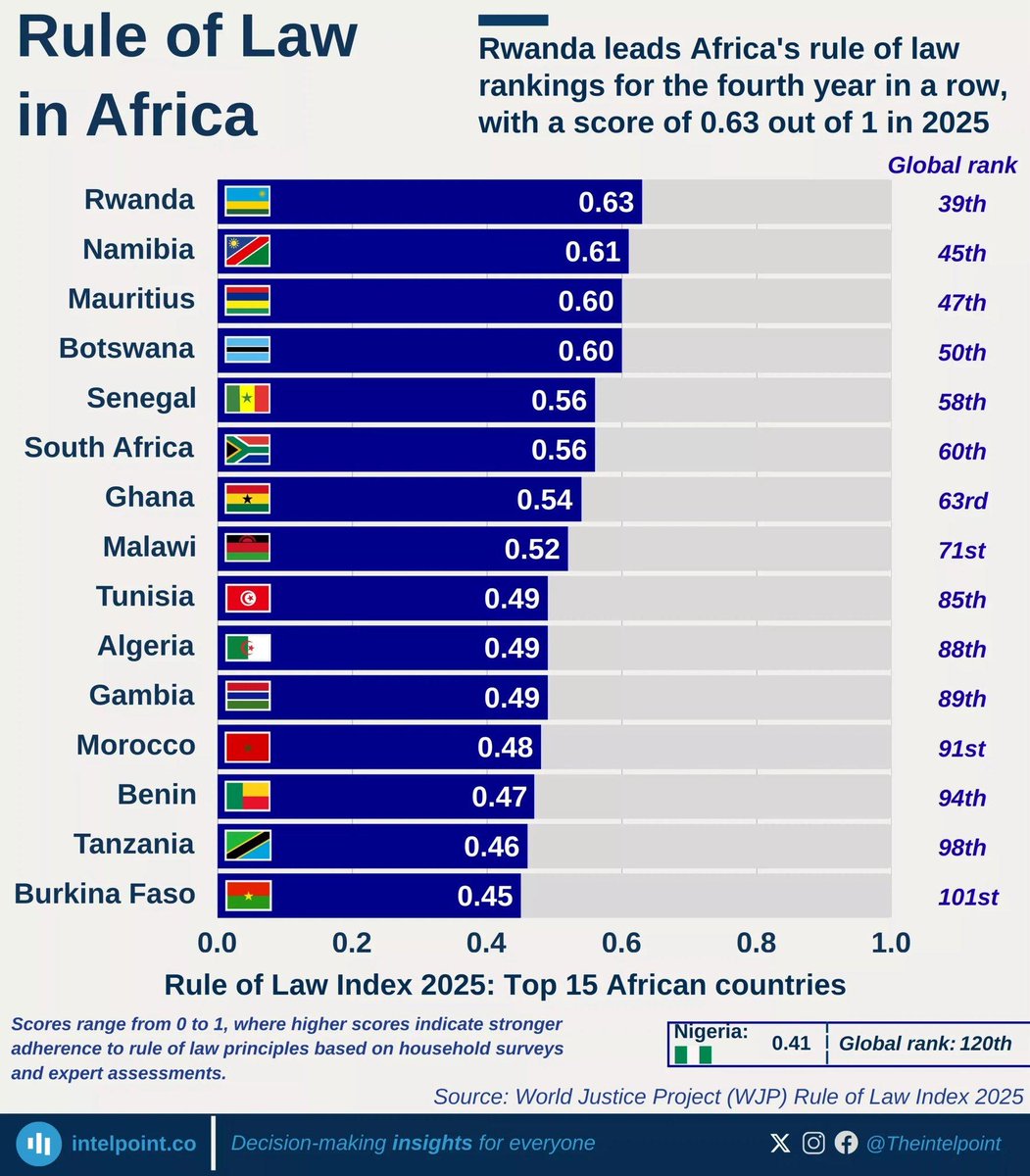
10 least corrupt African countries, according to latest ranking africa.businessinsider.com/local/lifestyl…
English
Rwanda and Oman will host the next two ICCA Congresses cimbusinessevents.com.au/rwanda-and-oma… via @CIM
English
"Rwanda aims to eliminate cervical cancer by 2027, three years ahead of the World Health Organisation’s global target of 2030."
gazettengr.com/rwanda-records…
English
"Kigali Set to Become East Africa’s Premier Luxury Destination with New Best Western Premier Hotel Opening in 2027"
travelandtourworld.com/news/article/k…
English
Alfred Ndahiro retweetledi

Well said ,many still blame colonialism and foreign influence as if thy are on gunpoint , one African leader so far whose I will not say ,built his nation from ruins to greatness from 1995 onwards but for economies like Nigeria and likes with huge resources are busy wasting resources selfishly without their people in mind
English
Rwanda has received strong backing from major international development partners in its bid to graduate from the United Nations’ Least Developed Countries (LDC) category by 2027, with more than $105 million committed to support the transition.
ktpress.rw/2025/12/develo….
English
Alfred Ndahiro retweetledi
Why Rwanda’s future is a “Right Now” project
At the End of Year Party at the Kigali Convention Center yesterday the 29th of December 2025 hosted by the President, President Kagame addressed the youth directly and set the tone for 2026 and beyond. “To you the youth who are here, you are the majority of Rwanda’s population. Having 75 percent of the population under 30 is an immense source of strength. We have to ensure that strength is anchored in our values and meaningful work that enable you to build yourself and your country. You cannot build Rwanda without building yourself first. That is what I ask of you and that is my wish for you.” The message was simple: Rwanda’s demographic power is not a statistic. It is a strategic resource, and if it remains dormant, it becomes a liability.
Ten days earlier, this message was echoed in real time inside the 17th RPF General Assembly held on 19 December 2025. It felt less like a meeting and more like a high-stakes strategy room. Under the theme “Securing Rwanda’s Future,” a heavyweight panel including Jean Guy (CEO of RDB), Minister of State Yves Iradukunda (MINICT), Minister of State Tesi Rusagara (MINECOFIN), and a duo of gritty entrepreneurs dissected a truth we can no longer ignore, you cannot secure a future you are not building in the present. Rwanda cannot speak of Vision 2050 if the institutions of 2025 are not structurally fit, financially agile, and culturally aligned to deliver it.
The consensus was clear, if we want to anchor Rwanda’s leadership, economy, and social fabric for the next fifty years, we must stop treating “the youth” like a distant demographic and start treating them like the primary shareholders they already are. We often say, “youth are the leaders of tomorrow,” which is a polite way of procrastinating on their needs today. Tomorrow is not a self-cleaning oven. It demands inputs. It demands agency.
President Kagame did not mince words. Accountability is not a suggestion, it is a requirement. “You need to deliver for the people, or they will demand their rights by force.” The RPF itself was born from such demands. Then came the reminder: “In our time as youth, we played our role.” The elders secured the land. The youth must now secure the ledger. The battlefield has shifted from armed struggle to economic competition, institutional performance, and the Olympic-level discipline of turning a policy paper into a paycheck.
For 23 years, i have worked and interacted with young Rwandans. The progress is real, but incremental progress is the enemy of exponential results. Take our Youth Centers. After visiting 32 of them, it is clear that while the spirit is alive, the hardware is often vintage. Only a few, like Rubavu, Musanze and Nyarugenge, are vibing at the frequency the economy demands. Too many operate like quiet libraries instead of noisy engines of innovation. A Youth Center should not be a building where people sit. It should be a catalytic hub. If a young person enters, they should leave knowing how to prototype a business, pitch an investor, or at the very least use digital tools from this decade. We need mentors with business scars, not administrators with filing systems.
Then there is the elephant in the bank, financing. Many SMEs are wrestling with interest rates between 16 and 19 percent. At those rates, you are not running a business, you are running a marathon while carrying the bank on your back. Reinvestment becomes mythology. Job creation becomes a miracle. If entrepreneurship is a national talent pipeline, not a gambling table, then a strategic shift to a single-digit rate around 9 percent for SMEs becomes the most catalytic policy lever the Central Bank and Ministry of Finance could pull. One strong entrepreneur does not just survive. They hire thirty people. That is the math Rwanda needs. Now that with effect from 31st of December 2025 the Business Development Fund (BDF) will be merged with Development Bank of Rwanda (BRD) , let there be a department that is specifically for SME's targeting job creation irrespective of the business idea. As longer as the business will at least provide or create jobs to more than 50 young people.
Our TVET architecture needs the same courage. We must stop training for jobs that do not exist. If Nyabihu needs greenhouse specialists and Bugesera needs industrial logistics technicians, why teach generic theory? The goal should be a classroom-to-company pipeline with a post-TVET enterprise fund that recognizes ideas as collateral. A diploma is great, but a deed to a startup is better.
Money and technology alone are not enough. Economic growth without values is a house of cards. Waking up early, delivering on promises, and practicing fierce integrity are not personality traits. They are development strategies. A company collapses when a founder treats the business account like a personal wallet. A nation stalls when civic duty becomes optional. Civic maturity must be the operating system that runs our innovation.
This is not theory. We see evidence everywhere. In Burera, youth cooperatives are turning idle land into horticultural assets. In Musanze, digital creatives are building animation ventures that would make Pixar do a double take. In Kayonza, former boda-boda riders are roasting and packaging coffee. These are not miracles. They are signals. They prove that when you stop wishing for a better tomorrow and start investing in a better Tuesday afternoon, the country moves.
Securing Rwanda’s future will not happen through comfortable decisions or flowery speeches. It happens through systems. It happens when we equip youth centers with tools, lower the cost of capital, expand the talent pipeline, and insist on a culture of discipline. Rwanda’s youth are ready. They are not waiting for the future. They are building right now. The only question is whether our institutions are ready to keep pace with them. Happy new year 2026!
linkedin.com/pulse/why-rwan…
English
RPF, despite the mudslinging, be consistent and continue to do what is right. We should have the capacity and resilience to withstand all sorts of political earthquakes and this resilience should permeate all our systems and reach all our members. President Paul Kagame
English
Rwandan leaders should think individually and independently but act collectively in order to achieve what is expected of us: delivery of what we owe our citizens and the development of our country. President Paul Kagame
English
We are not too small for anything. That is our belief. We believe in what we can do and especially what we can do with our friends and partners, and building on what we we already have: the will and some capacity to pull off some big projects. President Paul Kagame
English
We are not too small for anything. That is our belief. We believe in what we can do and especially what we can do with our friends and partners, and building on what we we already have: the will and some capacity to pull off some big projects.
English
Azerbaijani Parliament set to approve air transport agreement with Rwanda trend.az/azerbaijan/pol…
English