
ALTIS

35K posts

ALTIS banner
ALTIS

ALTIS

@ALTIS

120 Olympians coached to 57 Olympic Medals | Coach & Athlete Education | Speed | Track & Field | Power | Strength | Endurance | Team Sports.

Phoenix, AZ Katılım Ocak 2013
10.4K Takip Edilen37.5K Takipçiler
ALTIS
ALTIS@ALTIS·
Many sprint debates break down at the same point. Coaches chase a single technical model, then wonder why athletes respond differently. In 'From Categorizing to Coaching', Stuart McMillan lays out a clearer way forward. This free ebook explores how sprint technique exists on a continuum, shaped by individual biases, constraints, and coordination strategies. You will learn: • How push, pull, drive, bounce, and climb describe movement tendencies rather than labels • Why ground contact and flight time vary meaningfully across elite performers • How categorization improves cueing, decision-making, and athlete buy-in • Where races are often won or lost during the transition phase • How to coach technique without forcing athletes into rigid models This is a framework for coaches who want better questions, cleaner observation, and more precise instruction. Download the free ebook and refine how you see sprinting. loom.ly/3n7yiLI
English
0
2
41
4.1K
ALTIS
ALTIS@ALTIS·
A simple coaching check that saves a lot of frustration. If an athlete shows clean shapes, solid angles, and consistent intent in a three-point, walk-in, or falling start, those qualities should carry into the blocks. When they disappear, that contrast matters. As Coach Dan Pfaff points out, a breakdown in the blocks often signals a setup issue rather than a capability issue. Foot spacing, shin angles, hand position, and balance demands can quietly push athletes into positions they cannot express well, especially with younger or less developed athletes. Use alternative starts as a reference point. Compare shapes. Compare angles. Let what they already do well guide how you build the block setup. Small adjustments upstream often clean up the picture downstream. This clip comes from Live Immersion 2 of The Coaching Eye, where real movement problems get unpacked in real time. Want to learn more about Block Starts - check out Coach Pfaff's 5* rated course - Coaching the Short Sprints. 🔗 loom.ly/k9eAzPE
English
0
0
14
2.3K
ALTIS
ALTIS@ALTIS·
Speed at the highest level has a differentiator. As Stu McMillan explains, the fastest sprinters separate themselves through how precisely they organize ground contact. Strike. Contact. Release. The athletes who coordinate that moment best tend to run the fastest and stay healthier over time. From a performance and durability lens, the foot-to-ground interaction pattern carries enormous weight. Yet most training time drifts toward hip flexion patterns because they feel easier to see, control, and predict. Elite sprinting rewards something different: intuitive coordination at the moment force meets the ground. 📽️ Learn more about this pattern and drive deeper into elite sprinting - watch Stu's full presentation 'Hip Extension & Acceleration - Part 1' for FREE on ALTIS Connect - the biggest and best sports performance video library around. Head here to start your free trial and watch Stu's full presentation: loom.ly/xtFVemY
English
0
8
81
6.5K
ALTIS
ALTIS@ALTIS·
Speed. Mechanics. Health. Sprint mechanics sit at the intersection of performance and durability. How an athlete moves shapes how force is produced, absorbed, and repeated over time. When mechanics drift, speed stalls and injury risk rises. When mechanics organize well, performance and health tend to travel together. That relationship is the focus of our free ebook Speed, Mechanics, & Health: Why Mechanics Matter. Inside, we break down: ⚡ Why sprint mechanics influence both output and injury risk 🔄 How kinematics and kinetics interact as a single system 🧠 Where current sport science debates miss applied coaching realities 🧩 Why mechanical models still guide sound development, monitoring, and return-to-play decisions 👀 How experienced coaches interpret movement when data, context, and constraints collide If you coach speed, manage load, or support athletes moving back toward full performance, this is must read. Download free: Comment SMH below and head to your DMs. loom.ly/x2qhiFk Save it. Share it 👍
ALTIS tweet media
English
1
1
1
1.2K
ALTIS
ALTIS@ALTIS·
Last night Coach Pfaff held Live Immersion Session 2 of the current Coaching Eye program, bringing coaches from a range of sports and locations together for a deep, practical look at how movement actually unfolds in real time. The session centered on acceleration analysis. Coaches worked through sprint footage frame by frame, learning how to zoom out to judge overall effectiveness, then zoom in to assess posture, segment timing, contact strategy, and force direction. The goal was to understand why athletes choose certain solutions and what those choices reveal. Key themes from the session: 👀 How shin roll, knee drop, and toe drag show up in early acceleration and what they cost. 👀 Why effective movement and efficient movement often look different. 👀 How the same acceleration principles apply across block starts, rolling starts, walk-ins, and field sport starts. 👀 How injury history and strength profiles shape movement strategies. 👀 Why lasting progress starts with whole-system observation, not isolated fixes. The session reinforced a core Coaching Eye idea: better coaching starts with better questions. The eye is trained through structure, repetition, and honest analysis, not shortcuts. If you want to develop a clearer process for seeing movement, making sense of complexity, and connecting observation to action, the next Coaching Eye cohort begins May 2026, with registration opening this week. 👀 Interested in being part of Coach Pfaff's next group? 👉 Head here to learn more and register your interest: loom.ly/qtcqnio 👉 Bonus - grab your free video guide on MJ Rudiment here: loom.ly/7INl9H0
English
0
5
74
6.2K
ALTIS
ALTIS@ALTIS·
What actually changes when endurance athletes run faster? In this free eBook, elite endurance Coach - Danny Mackey - lays out a clear, coach-first framework for understanding how running mechanics evolve across speed and distance, and how those changes should guide what you coach. Making Strides focuses on helping coaches move past surface-level cues toward better mechanical reasoning for endurance events, helping you improve health, performance, and consistency. Inside the eBook, you’ll find: 👍A clear breakdown of walking, running, striding, and sprinting gait 👍How mechanics shift as velocity increases, including ground contact and flight time 👍The real relationship between stride length and stride frequency 👍Why different athletes solve the same speed problem in different ways 👍The biomechanical “rules” that show up consistently in effective endurance running 👍A practical framework for observing, interpreting, and coaching gait without forcing a single model 📽️ As well as free bonus video resources. This is a concise, applied resource for coaches who want stronger clarity when watching athletes move, and better logic behind the decisions they make on the track. 🌐 loom.ly/rr4LbjY
English
1
0
3
1.1K
ALTIS
ALTIS@ALTIS·
What if speed training has been missing the connective piece this whole time? Most coaches train muscles, tendons, and patterns with care. Far fewer pause to ask how those pieces are actually linked, how force travels through the body, and why some athletes move with fluid speed while others struggle to hold it together. This free Fast Fascia eBook explores that question head-on. Inside, we unpack why fascia has moved from the margins of anatomy textbooks to the center of modern performance thinking. You’ll see how an integrated, neuromyofascial lens changes how we think about sprinting, coordination, strain tolerance, and resilience, without adding complexity for the sake of it. The emphasis stays practical, grounded in speed, and rooted in how elite coaches actually work. If you’ve ever felt that traditional strength and speed models explain part of the picture, but not all of it, this will give you a clearer framework to think from 📥 Download the free Fast Fascia eBook, free! 🌐 loom.ly/Mo6vmcI
ALTIS tweet media
English
0
1
3
1.2K
ALTIS
ALTIS@ALTIS·
🎽 A YEAR OF SPRINT TRAINING. FULLY LAID OUT. Coaches often ask what a complete season actually looks like when theory meets the track. This free eBook walks through the exact annual program used to guide an ALTIS female sprinter to personal bests of 11.17 and 22.46. The structure, the sequencing, and the decision-making are all there, organized in clear 2-week and 3-week training cycles across a full competitive year. Explore real programming from start to finish, built to handle performance, fatigue, and progression over time. 📲 Download the free eBook: 🌐 loom.ly/CuBaduE
English
0
1
24
2.5K
ALTIS
ALTIS@ALTIS·
Inside a Team Speed coaching session. Filmed live. Unfiltered. In this clip, Les Spellman breaks down one of the most common breakdowns in change of direction and deceleration. The problem shows up in the very first step. When the initial deceleration contact stays light, athletes carry too much speed into the turn. The final step becomes overloaded, and momentum wins. Les walks coaches through why effective change of direction starts with an aggressive first braking action that creates space to redirect. This clip comes from fly-on-the-wall footage filmed during Team Speed Cayman, with coaches on the floor and teaching happening in real time. It’s part of a free three-part video series that offers a narrow window into how speed, deceleration, and change of direction are actually coached in live environments. That same coaching logic becomes the foundation of the upcoming Team Speed Coach Certification, launching this spring showcasing a complete professional pathway for coaches working in team sport. When you register your interest for this new certification, you’ll receive free access to the full three-part Team Speed Cayman video series, where you’ll see: • How warm-ups are organized around locomotion priorities • Why hip extension, foot–ground interaction, and spinal coordination anchor acceleration • How change of direction is coached through braking, vector change, and reacceleration • Why the first deceleration step shapes what follows • How weight room work reinforces the same movement themes trained on the field 🔗 Register your interest: loom.ly/cZIwGjA #TeamSpeedCoachCertification #ALTIS #ChangeOfDirection #Deceleration #SpeedEducation
English
0
0
10
2.8K
ALTIS
ALTIS@ALTIS·
See movement through the lens of Structure, Function, and Technique — FREE DOWNLOAD 📩 Rethink athletic movement with the SFT Movement Framework ebook, authored by Stu McMillan. By breaking down the interplay among an athlete’s structural foundations, functional abilities, and technical skills, you’ll learn to: ➡️Understand the layered relationship between capacity and coordination ➡️Identify if a problem is rooted in the athlete’s physical build, their ability to generate and control force, or their technique ➡️Apply a structured approach to deciding when to correct movement issues and how to do so efficiently ➡️Integrate your insights into real-world coaching scenarios—improving results without overcomplicating your methods 📘 Get your free copy today — loom.ly/8LDaI3o
English
0
0
2
927
ALTIS
ALTIS@ALTIS·
Every planning model began with a coach trying to solve a problem. That’s the thread Stu McMillan pulls on in this new eBook - Periodization: A Historical Story. If you don’t know Stu: he’s our CEO at ALTIS, a coach of multiple Olympic and World Championship medalists, and someone who has spent decades studying how athletes adapt and how training ideas evolve. In this eBook, he tells the story of periodization through the problems each era faced: 🐂 Milo lifting a calf that grew heavier every day 🏭 Taylor breaking work into pieces to make industry more efficient 🧪 Selye searching for a biological explanation for stress and adaptation 📅 Matveev organising thousands of athletes across a national system 🏋️‍♂️ Verkhoshansky responding to the realities of explosive event training 🎯 Bondarchuk following what actually transferred to performance instead of what theory predicted Piece by piece, you see how ideas shifted long before they became “models.” This ebook will help you understand why these concepts emerged and why the load–response relationship still sits at the centre of effective coaching. Any coach wanting a clearer sense of how planning really took shape, and how this can inform their decision-making will find this a valuable read. Download free: loom.ly/szcdejU
English
0
0
6
839
ALTIS
ALTIS@ALTIS·
DID YOU KNOW? From European football to the NFL, NHL, NBA, MLS, and MLB, ALTIS coaches work alongside professional teams across the world. Track and field remains our foundation. However, sprinting exposes the core problems every team sport faces: speed, mechanics, robustness, and repeatability. That is why the dialogue with team sport coaches continues to deepen. The learning moves both ways. What began as a track-focused organization now spends the majority of its education and consulting time in team sport environments, while still coaching professional sprinters. Being based in Arizona means regular time with baseball organizations training here. The conversations are constant. Recently, for example, @fingermash spent a full day with the Cincinnati Reds S and C staff. With topics ranging from Programming, to Biomechanics, to Transfer of training we work with coaches across all sports on the daily problems coaches solve. Different sports. Shared questions. Good conversations. ➡️ Want in? Join our network for weekly insights into everything Sport Performance. 🔗 loom.ly/ACCPXuo
English
0
0
12
1.9K
ALTIS
ALTIS@ALTIS·
When progress stalls, the answer often lives somewhere you have not looked yet. In this Apprentice Coach Program (ACP) moment, Dan Pfaff walks through a case that reshaped how an athlete was understood. A world-class sprinter spent two years chasing an Achilles problem across Europe. Injections. Surgeries. Endless rehab. No return to training. The turning point came from asking better questions. Injury history. Early sport exposure. A shoulder dislocation at 14 that never received real care. Fourteen years later, restoring function and input at the shoulder changed the system. Within a month, the Achilles issue resolved. This is the thinking behind the ALTIS mantra: 'what else, where else?' The Apprentice Coach Program brings you inside that process. Live training. Therapy rooms. In-depth conversations where coaches reason through problems in real time, without shortcuts. 📍 Phoenix, Arizona 🗓 February 23–26 or June 15–18, 2026 🎓 Four days of applied learning with ALTIS faculty and guest coaches Join us in person and see how experienced coaches connect history, movement, and performance into clearer decisions. Secure your place: loom.ly/osA7Ekg
English
2
3
5
2K
ALTIS
ALTIS@ALTIS·
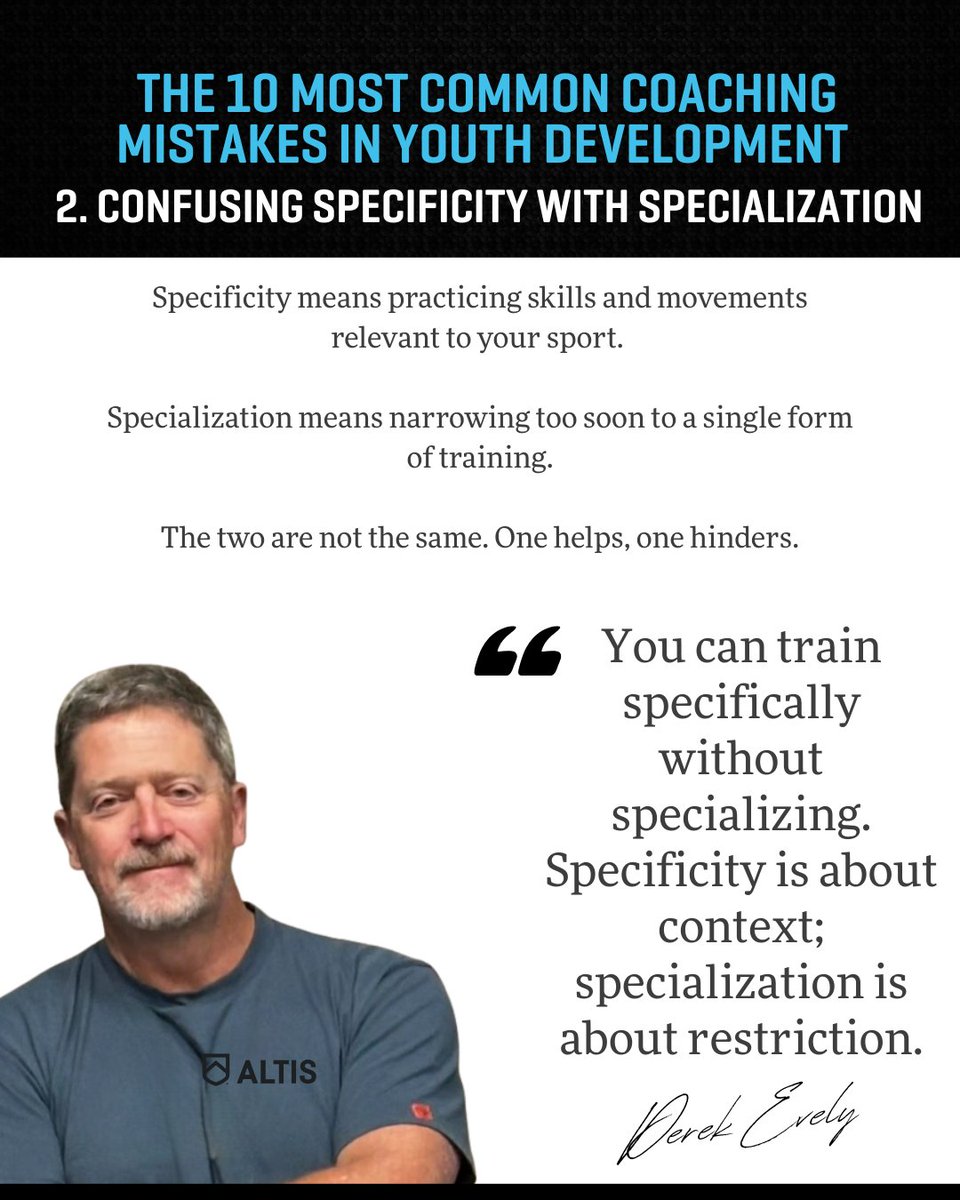
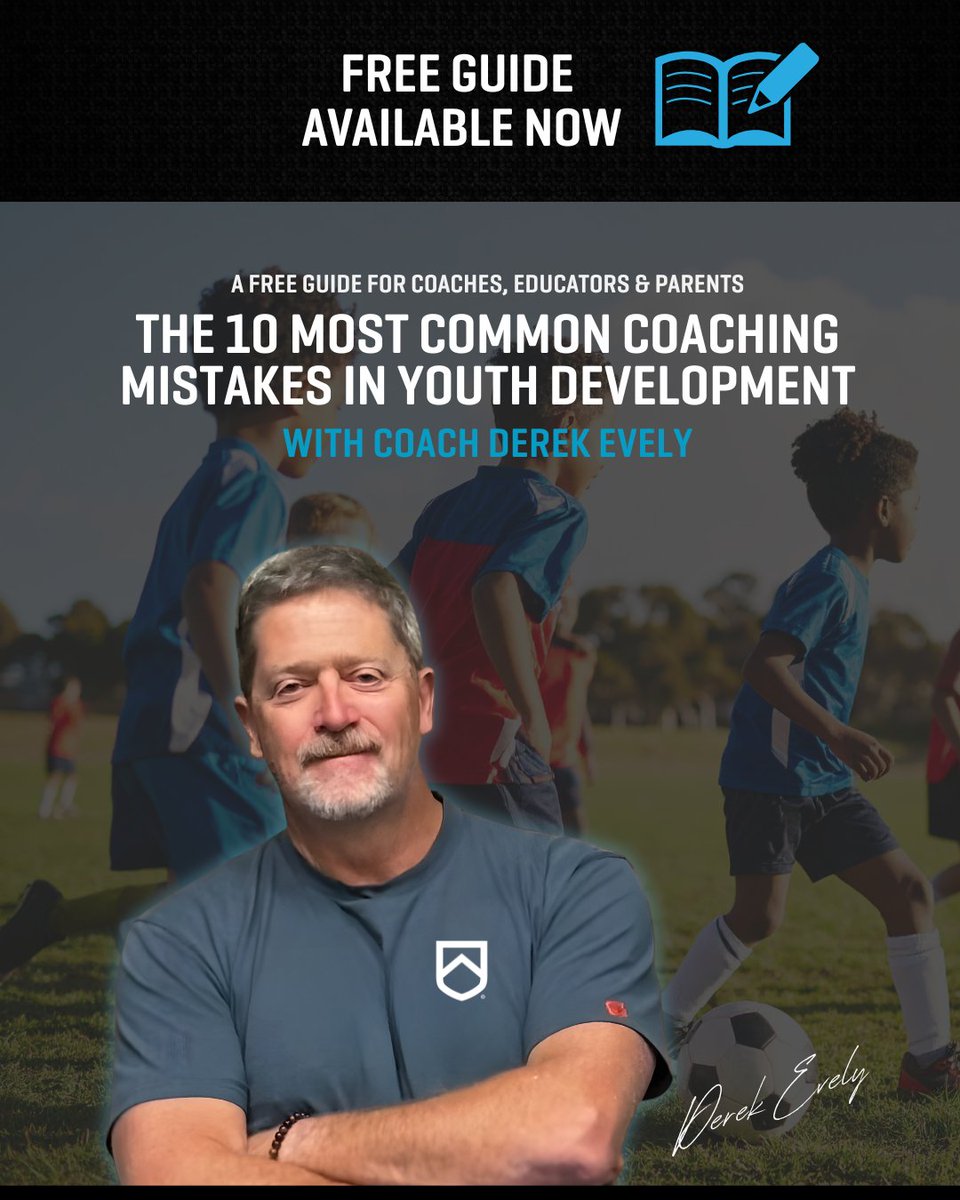
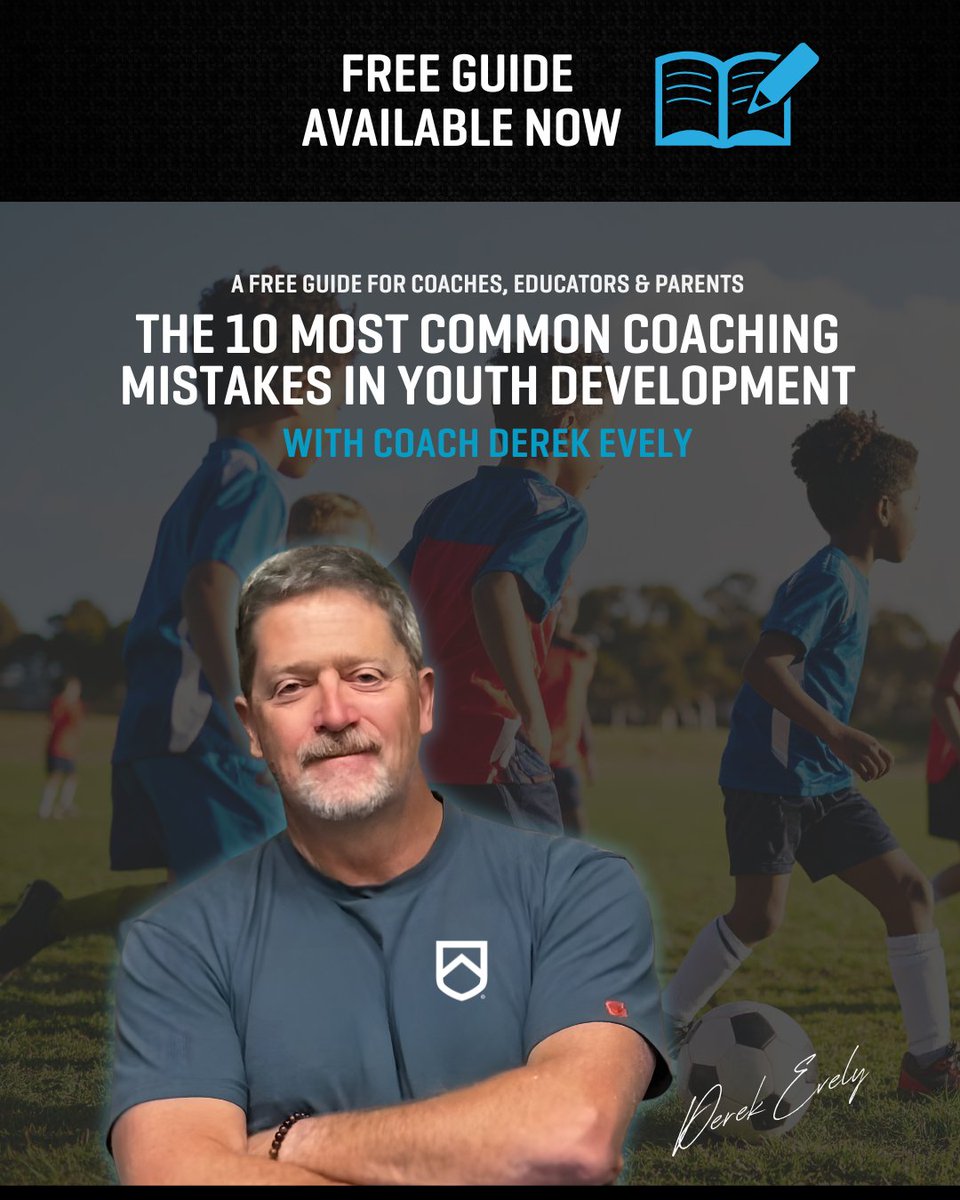
The 10 Most Common Coaching Mistakes in Youth Development Coaching young athletes means balancing growth, readiness, and patience. Yet even experienced coaches can fall into patterns that limit long-term potential. In this free guide, Derek Evely shares ten of the most common — and avoidable — mistakes in youth development, drawn from decades of experience in both high-performance and grassroots sport. ⚠️ Inside the guide: 🏁 Chasing early specialization 🎯 Confusing specificity with specialization 🏋️ Over-reliance on intensive loading 📈 Ignoring the principle of progression 🚀 Using high-performance methods with developmental athletes 🥇 Equating results with good coaching 🎮 Neglecting play and movement variability 📋 Over-controlling or over-structuring the environment 🧬 Failing to account for maturation and timing 🎯 Losing sight of the real goal Each mistake connects to key principles from Derek’s ALTIS Pocket Guide Course — From Play to Podium: A Theoretical Framework for Long-Term Youth Athlete Development. 📘 Download your free guide: 🔗 loom.ly/DhAlpqY
ALTIS tweet mediaALTIS tweet media
English
0
1
2
952
ALTIS
ALTIS@ALTIS·
The 10 Most Common Coaching Mistakes in Youth Development A free resource from ALTIS and Derek Evely “Developing athletes is about timing, not templates.” — Derek Evely Coaching young athletes means balancing growth, readiness, and patience. Yet even experienced coaches can fall into patterns that limit long-term potential. In this free guide, Derek Evely shares ten of the most common — and avoidable — mistakes in youth development, drawn from decades of experience in both high-performance and grassroots sport. ⚠️ Inside the guide: 🏁 Chasing early specialization 🎯 Confusing specificity with specialization 🏋️ Over-reliance on intensive loading 📈 Ignoring the principle of progression 🚀 Using high-performance methods with developmental athletes 🥇 Equating results with good coaching 🎮 Neglecting play and movement variability 📋 Over-controlling or over-structuring the environment 🧬 Failing to account for maturation and timing 🎯 Losing sight of the real goal Each mistake connects to key principles from Derek’s new ALTIS Pocket Guide Course — From Play to Podium: A Theoretical Framework for Long-Term Youth Athlete Development. 📘 Download your free guide: 🔗 loom.ly/DhAlpqY
ALTIS tweet mediaALTIS tweet media
English
0
2
1
831
ALTIS
ALTIS@ALTIS·
Last night inside Coaching Eye Live Immersion Session with Coach Pfaff 👁️ We opened the first cohort of 2026 by doing what the program is built for: watching athletes move, slowing things down, and learning how to make sense of what we’re actually seeing. Dan Pfaff led the group through acceleration and early sprint mechanics, starting with a clear technical model and then testing it across elite footage, developmental athletes, and real case studies submitted by coaches. What we worked through together: • How to evaluate acceleration quality using clear heuristics around stride length and frequency, ground contact and flight time, attack angles, and center of mass relationships • Why early race position can hide movement inefficiencies and rising injury risk • How over-rotation, reaching, and braking steps appear early and compound later • Using bandwidths rather than rigid rules when assessing movement • How to decide when to intervene, when to leave things alone, and how to nudge change responsibly • Why hardware issues across the foot, ankle, hip, pelvis, and trunk often drive compensations far from the site of pain • Applying the same lens across track, field, and court sport contexts We also unpacked Achilles injury patterns, shoe technology implications, treadmill analysis, and system-wide decision-making that holds up under fatigue and speed. This is Coaching Eye in action: shared language, real footage, thoughtful questions, and practical reasoning coaches can apply immediately. 👀Interested in the next cohort starting Spring 2026? 👉 Head here to learn more and register your interest: loom.ly/qtcqnio
English
0
0
1
1.1K
ALTIS
ALTIS@ALTIS·
“The mistake everyone makes early on is they try to jump too far, too high, too fast.” That’s Les Spellman speaking from inside a live Team Speed coaching session last year. The principle is simple and it applies at every level: Start small. Earn range. Progress with intent. In this clip, Les walks coaches through how plyometrics are actually built over time. Jumps become hops. Hops become bounds. Complexity expands only after the athlete owns the basics. The concept stays consistent. The expression evolves. What you’re seeing here was filmed live in Grand Cayman during Team Speed sessions with Stu McMillan, Les Spellman, Danny Foley, and Chris Guarin. Coaches were on the floor. Decisions were made in real time. Progressions unfolded across days, not isolated drills. This short clip comes from a free three-part video series filmed during that event. It offers a clear window into how speed work is taught, connected, and progressed in real environments. This footage is the entry point. ➡️ Launching this spring, the Team Speed Coach Certification takes the same coaching logic and develops it into a complete professional pathway for coaches working in team sport. When you register your interest, you’ll receive free access to the full three-part Team Speed Cayman video series, where you’ll see: • How warm-ups are organized around locomotion priorities • Why hip extension, foot–ground interaction, and spinal coordination anchor acceleration • How change of direction is coached through braking, vector change, and reacceleration • Why the first deceleration step shapes what follows • How weight room work reinforces the same movement themes trained on the field 🔗 Register your interest here: loom.ly/cZIwGjA #TeamSpeedCoachCertification #ALTIS #TeamSportCoaching #SpeedEducation
English
0
1
21
3.5K
ALTIS
ALTIS@ALTIS·
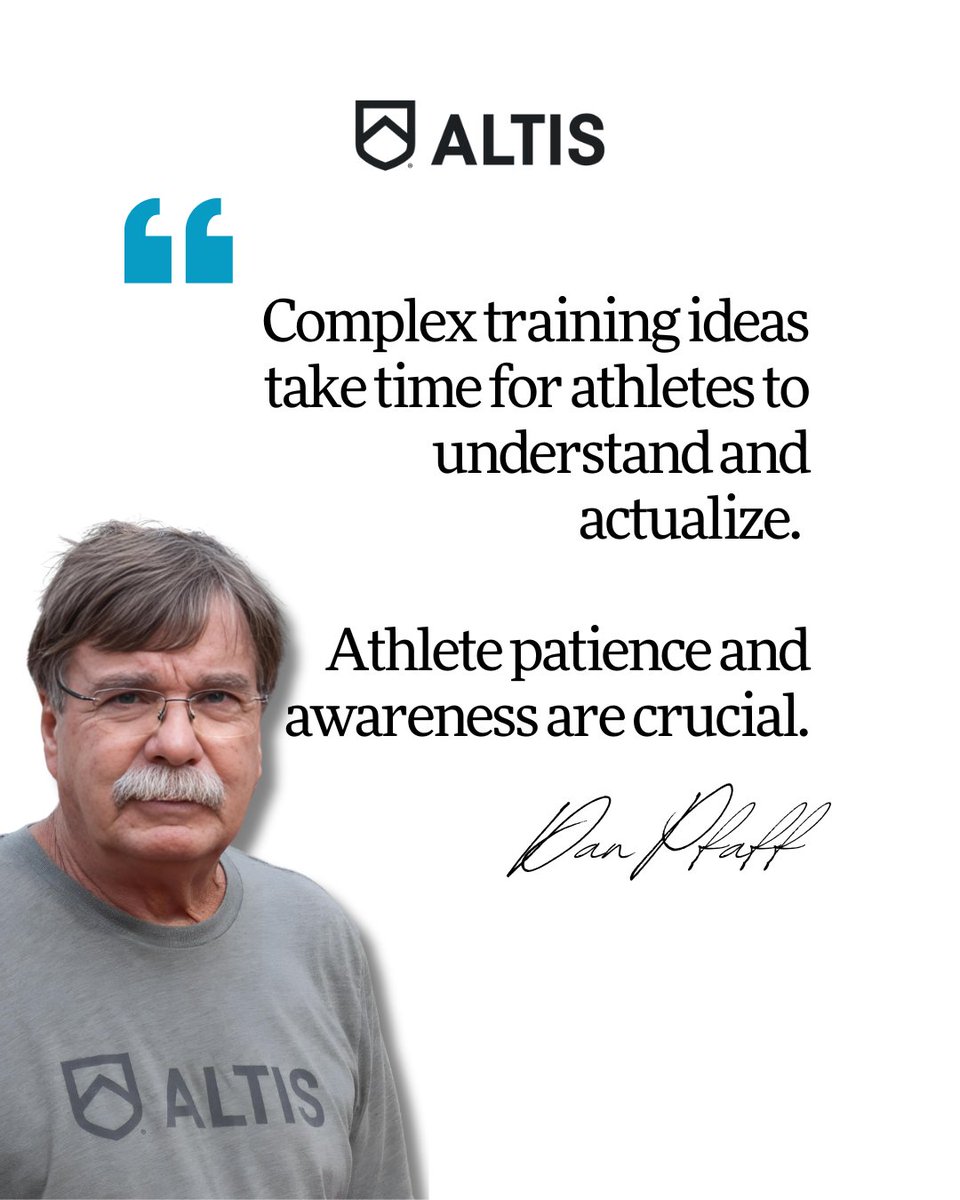
Complex training ideas take time to distill and land. Athletes need space to understand them. Coaches need patience to let them take hold. As Dan Pfaff puts it: “Complex training ideas take time for athletes to understand and actualize. Athlete patience and awareness are crucial.” This perspective runs through The Wisdom of Coach Pfaff, a free ebook built from Dan's decades of coaching, problem-solving, and real-world decision-making at the highest levels of sport. 🎓 Get your free ebook here: loom.ly/APOpdaI
ALTIS tweet media
English
0
1
6
895
ALTIS
ALTIS@ALTIS·
Join us in Phoenix for the 2026 Apprentice Coach Program, running in February and June. You’ll spend four days inside our daily training environment with Dan Pfaff, Stuart McMillan, Kevin Tyler, and Andreas Behm, along with a group of world-class athletes. What you can expect: 💥 Fly-on-the-wall access to live training 💬 Honest Poolside Chats with the staff 🌍 A community of coaches committed to getting better 👍 Top class guest presenters to add even more insight 👍 The ACP is an immersive experience built on real training, real coaching, and real conversations. Spots are limited for both 2026 cohorts. 👉 Reserve your place: loom.ly/osA7Ekg
English
0
0
3
1.5K
ALTIS
ALTIS@ALTIS·
The fastest way to get injured? Sprinting without a plan. Learn what to do instead, and unlock the freedom to move your body safely. After his appearances on the Huberman Lab and Rich Roll podcasts, world-renowned sprint coach Stu McMillan (80+ Olympians) created a free 3-part video series to help you rebuild speed—safely and effectively. 🎥 Part 1: Why You Should NOT Sprint (And What to Do Instead) 🎥 Part 2: Skipping—The Secret to Staying Athletic for Life 🎥 Part 3: The Warm-Up—More Than Just Preparation Sprinting is one of the most powerful tools for health and performance—but only if your body is prepared for it. This series shows you how to rebuild the rhythm, resilience, and coordination you need to move well—and move fast—without breaking down. If you’re ready to move better, feel stronger, and sprint safely, head here: loom.ly/EVR0xhg #Sprinting #SpeedTraining #HubermanLab #TrainSmart #ALTIS
English
0
1
17
2.8K