Alex Lupsasca

121 posts

Alex Lupsasca banner
Alex Lupsasca

Alex Lupsasca

@ALupsasca

Research Scientist @OpenAI & Assistant Professor @VanderbiltU. Black holes, photon rings, gravity & beyond. Formerly @Harvard and @Princeton.

San Francisco, CA Katılım Nisan 2020
126 Takip Edilen5.1K Takipçiler
Alex Lupsasca
Alex Lupsasca@ALupsasca·
I recently joined @latentspacepod to talk about AI for physics. We dug into recent work on scattering amplitudes with GPT, and what it suggests about how AI will accelerate theoretical discovery in a rapidly evolving field.
Latent.Space@latentspacepod

🔬Doing Vibe Physics The full story of how GPT‑5.x derived new results in theoretical physics and quantum gravity, live on our Science pod today! latent.space/p/lupsasca our conversation with @ALupsasca, an award winning theoretical physicist on his AGI-pilling journey applying GPT5 to physics problems (with a nudge from @markchen90)! Timestamps 0:00 Introduction to Al's impact on physics research 0:43 Guest introduction: Alex Luposka 2:49 Alex joining OpenAl and the shift in physics research 4:08 The release of GPT-5 and the shift in capabilities 10:05 Explaining Quantum Field Theory and amplitude calculations 14:20 Overview of gluons and the strong force 14:38 Discussing the first research paper on single-minus gluon tree amplitudes 20:56 How ChatGPT helped solve a year-long physics puzzle 23:02 Complexity of manual calculations in physics 26:12 The history and mechanics of Feynman diagrams 27:44 The Parke-Taylor formula and the quest for simplification 31:26 Using ChatGPT to find the simplification in the special phase space region 38:07 Proving the formula from scratch to ensure validity 41:00 Determining the scientific impact and future research 42:27 Introduction to the second paper on graviton amplitudes 45:41 | Defining particles, irreducible representations, and symmetry 47:46 How GPT Pro generalized the research to gravity 53:57 The epistemological shift: Is this a new way of doing physics? 59:27 The use of Al as a 'scout' for research directions 1:01:44 The role of 'taste' and collaboration with Al 1:10:23 Personal evolution from Al skeptic to resident scientist 1:12:46 Solving a black hole perturbation problem with GPT-5 1:16:34 Discussing whether Al can make original, conceptual leaps 1:20:09 Challenges of 'Al slop' and the future of academic publishing 1:23:13 The bottleneck of writing academic papers 1:30:19 Final takeaways and looking ahead to the next year
English
5
9
45
17.9K
Alex Lupsasca retweetledi
Timothy Gowers @wtgowers
Timothy Gowers @wtgowers@wtgowers·
I've recently got in on the act of getting AI to solve open problems in mathematics. More precisely, I gave some questions asked by Melvyn Nathanson to ChatGPT 5.5 Pro, to which I have been given access, and it answered them. 🧵
English
76
383
2K
639.6K
Alex Lupsasca retweetledi
Sebastien Bubeck
Sebastien Bubeck@SebastienBubeck·
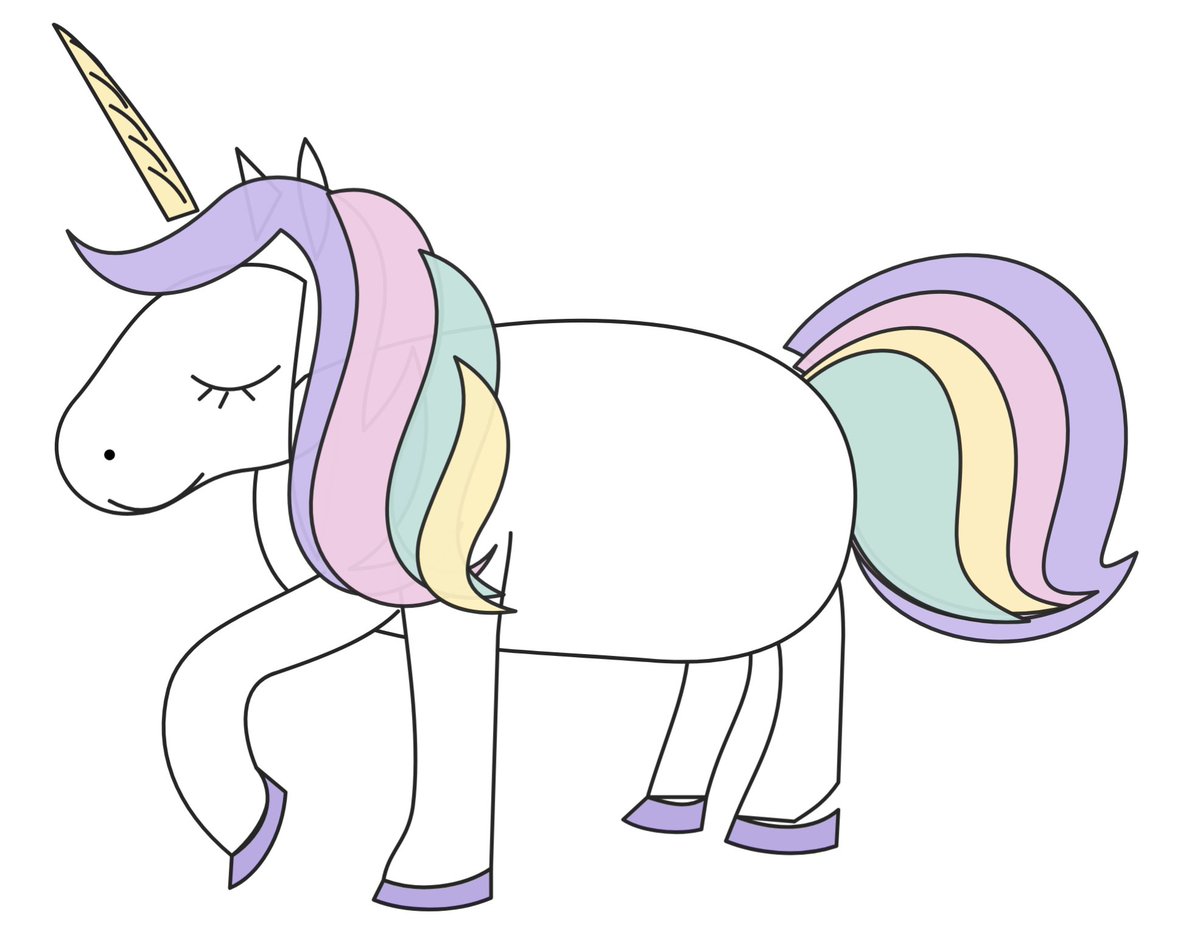
GPT-5.5, not fully saturating the TikZ unicorn test yet but getting awfully close ... (yes this is actual TikZ code, I personally find it so unbelievable that I'm putting the code below for anyone to verify for themself)
Sebastien Bubeck tweet media
English
50
60
876
334.5K
Alex Lupsasca retweetledi
Mehtaab Sawhney
Mehtaab Sawhney@mehtaab_sawhney·
We’ve just released another paper solving five further Erdős problems with an internal model at OpenAI: arxiv.org/abs/2604.06609. Several of the proofs were especially enjoyable to digest while writing the paper. My personal favorite was the solution to Erdős Problem 1091. The question asks: if a graph G has chromatic number 4, while every small subgraph has chromatic number at most 3, must it contain an odd cycle with many diagonals? The internal model gives a very enlightening counterexample to this conjecture, and the proof was a pleasure to understand. For those so inclined, a really fun exercise is to try to reconstruct the proof from Figure 5 of the paper, which was of course produced by Codex.
Mehtaab Sawhney tweet media
English
20
150
903
204.4K
Alex Lupsasca
Alex Lupsasca@ALupsasca·
@stringking42069 The single-minus graviton paper was done using the publicly available pro version of GPT. We shared one of the main prompts on the OpenAI website.
English
2
0
3
5.9K
Alex Lupsasca
Alex Lupsasca@ALupsasca·
Interested in the future of black hole imaging? I will be giving a public talk in NYC next week on Wednesday (3/18) about "The Black Hole Explorer: Tracing an Edge of the Visible Universe". This is part of the Simons Presidential Lecture series hosted by the Simons Foundation.
English
1
6
25
4.6K
Mark Goldstein
Mark Goldstein@marikgoldstein·
@ALupsasca I thought the takeaway is also about the graviton! looking forward to hearing about it if you discuss at your flatiron talk
English
1
0
0
94
Alex Lupsasca
Alex Lupsasca@ALupsasca·
We just posted a new preprint: “Single-minus graviton tree amplitudes are nonzero.” Yes: a helicity sector long assumed to vanish in quantum gravity can actually appear under well-defined kinematics. Preprint: cdn.openai.com/graviton/gravi…
English
9
31
196
71.4K
Alex Lupsasca retweetledi
Kevin Weil 🇺🇸
Kevin Weil 🇺🇸@kevinweil·
💥 AI accelerating high energy physics Just a few weeks after the gluon scattering paper, this morning we posted the more complicated graviton scattering analogue. See below for more from @ALupsasca 👇
Alex Lupsasca@ALupsasca

We just posted a new preprint: “Single-minus graviton tree amplitudes are nonzero.” Yes: a helicity sector long assumed to vanish in quantum gravity can actually appear under well-defined kinematics. Preprint: cdn.openai.com/graviton/gravi…

English
8
15
172
20.6K
Alex Lupsasca
Alex Lupsasca@ALupsasca·
Takeaway: this is strong evidence that AI can push the frontier of theoretical physics—and, even more importantly, that it compresses the discovery cycle by shifting effort toward checking and exposition! Lots more to come; feedback welcome in the meantime!
English
4
4
36
2.1K
David Louapre
David Louapre@dlouapre·
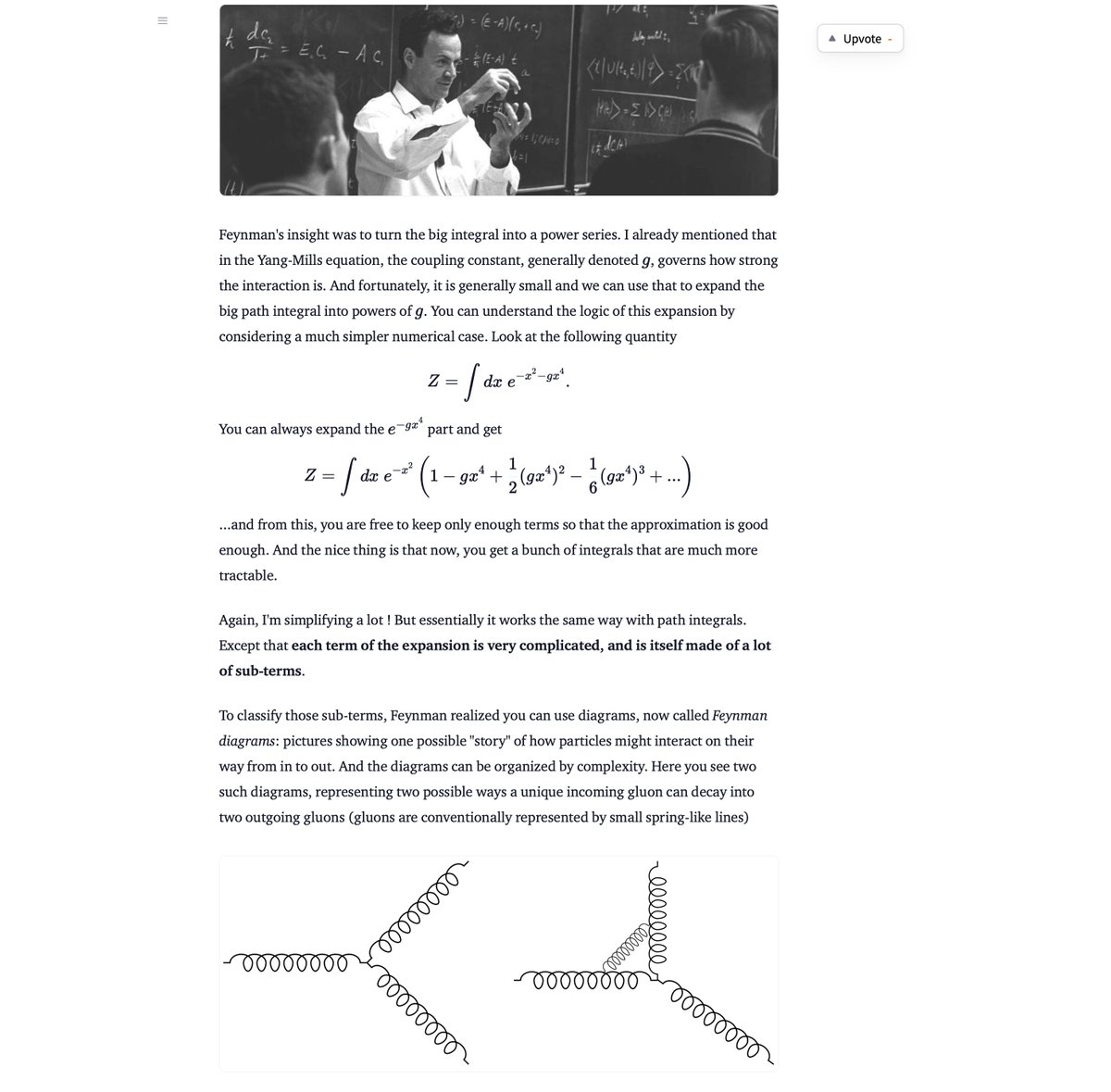
Link to the blog post where I will walk you through Yang-Mills theory, Feynman diagrams, perturbative expansion and single minus gluon scattering amplitudes ! huggingface.co/blog/dlouapre/…
English
10
13
121
18.2K
David Louapre
David Louapre@dlouapre·
OpenAI claims GPT-5.2 made a breakthrough in theoretical physics. Reactions ranged from "physics will never be the same" to "it's just a calculator" As a former theoretical physicist, I tried to understand what actually happened, and the physics relevance of the discovery⬇⬇
David Louapre tweet media
English
28
78
470
142.9K