Dr Adjanie Patabendige

247 posts

Dr Adjanie Patabendige

Dr Adjanie Patabendige

@APatabendige

Neuroscientist (group leader @Brain_Barriers) exploring brain barriers to understand neurological disease. #BBB #CSF #stroke #dementia #3Rs @KCLalumni 🇬🇧 🇦🇺

Liverpool, UK Katılım Temmuz 2012
463 Takip Edilen269 Takipçiler
Dr Adjanie Patabendige
Dr Adjanie Patabendige@APatabendige·
Thrilled to see our latest review out! @Brain_Barriers @BiologyEHU @LiverpoolCCS Congrats to my PhD student @CeinwynGrace for her 1st ever 1st author review 🎉 We discuss the therapeutic potential of using nanoparticles to deliver drugs across the #BBB in #dementia 🧠
John J. Foxe@JohnnyFoxe

OUT NOW in @EJNeuroscience Blood–brain barrier disruption in dementia: Nano‐solutions as new treatment options - Cooper, Adjanie Patabendige et al. @APatabendige @Brain_Barriers #BBB #CSF #stroke #dementia #3Rs onlinelibrary.wiley.com/doi/full/10.11…

English
1
3
13
2.8K
Dr Adjanie Patabendige
Dr Adjanie Patabendige@APatabendige·
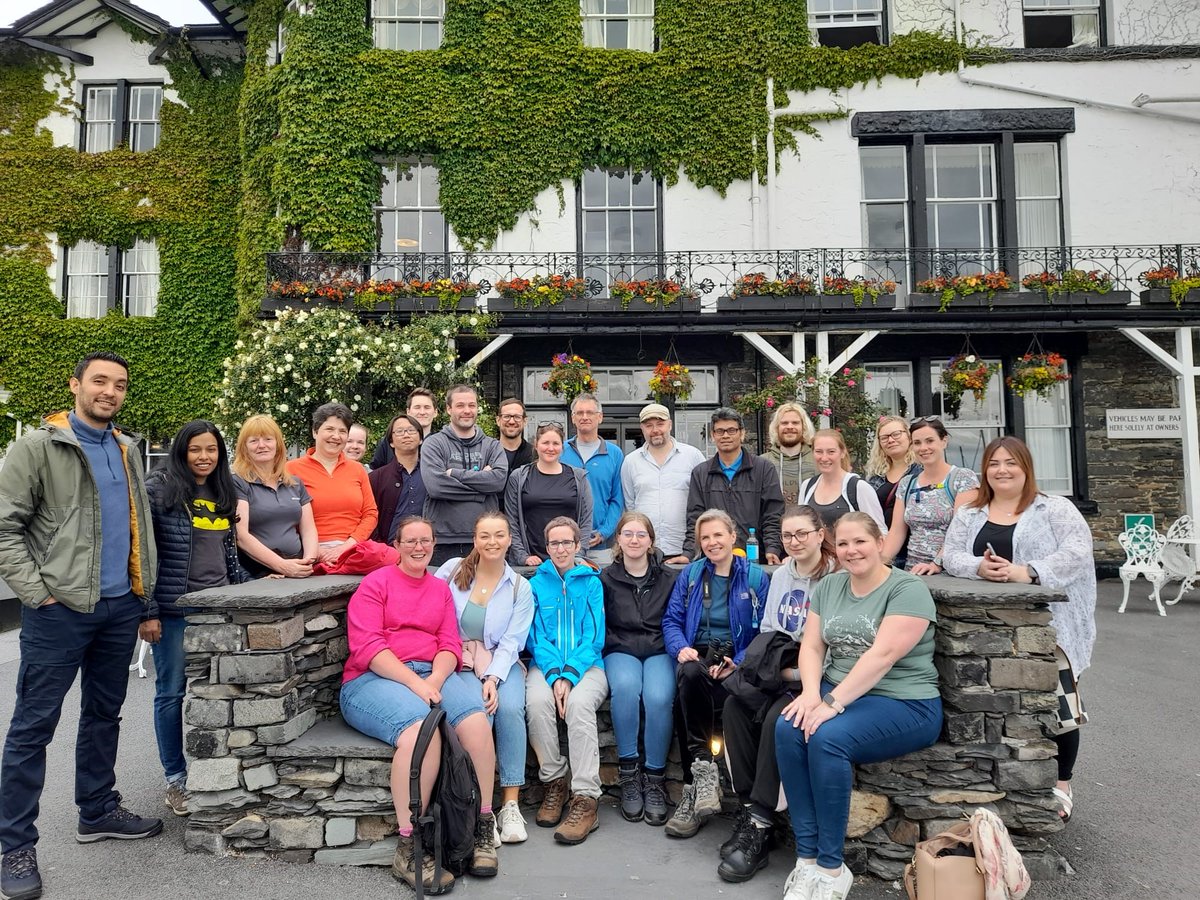
Patabendige & Tagalakis group joint Christmas lunch 🎄 An amazing group of colleagues, a pleasure to work with everyday. Great to end the year on a high 🍾 🥳 @Brain_Barriers @BiologyEHU
Dr Adjanie Patabendige tweet media
English
0
1
7
324
Dr Adjanie Patabendige retweetledi
Brain Barriers
Brain Barriers@Brain_Barriers·
Dr Rajiv Sankaranarayanan discussed 'Transforming Care in Heart Failure Patients using VIRTUAL WARDS' , concluding the @ehucardioresprc seminar series
Brain Barriers tweet media
Ormskirk, England 🇬🇧 English
1
1
3
172
Dr Adjanie Patabendige
Dr Adjanie Patabendige@APatabendige·
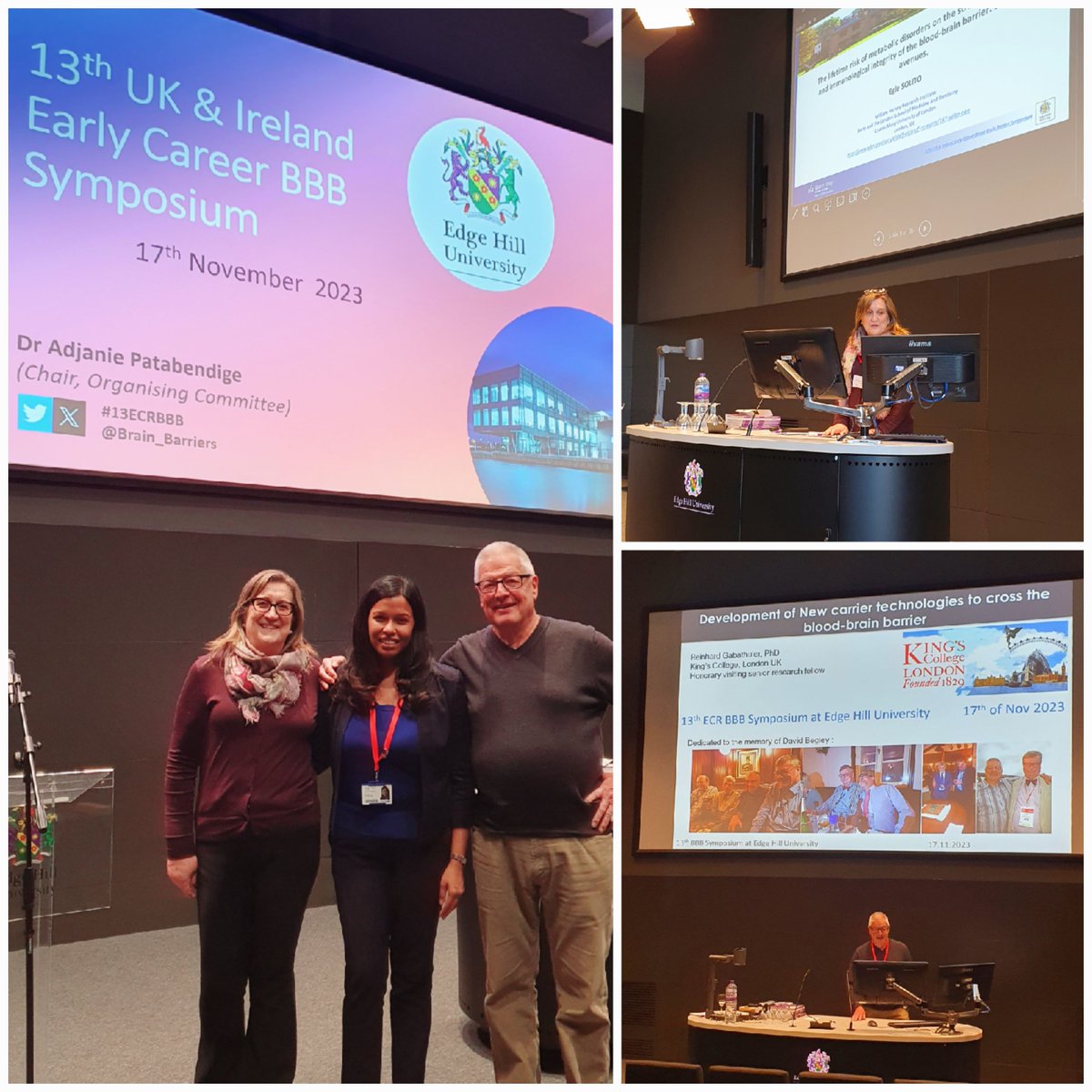
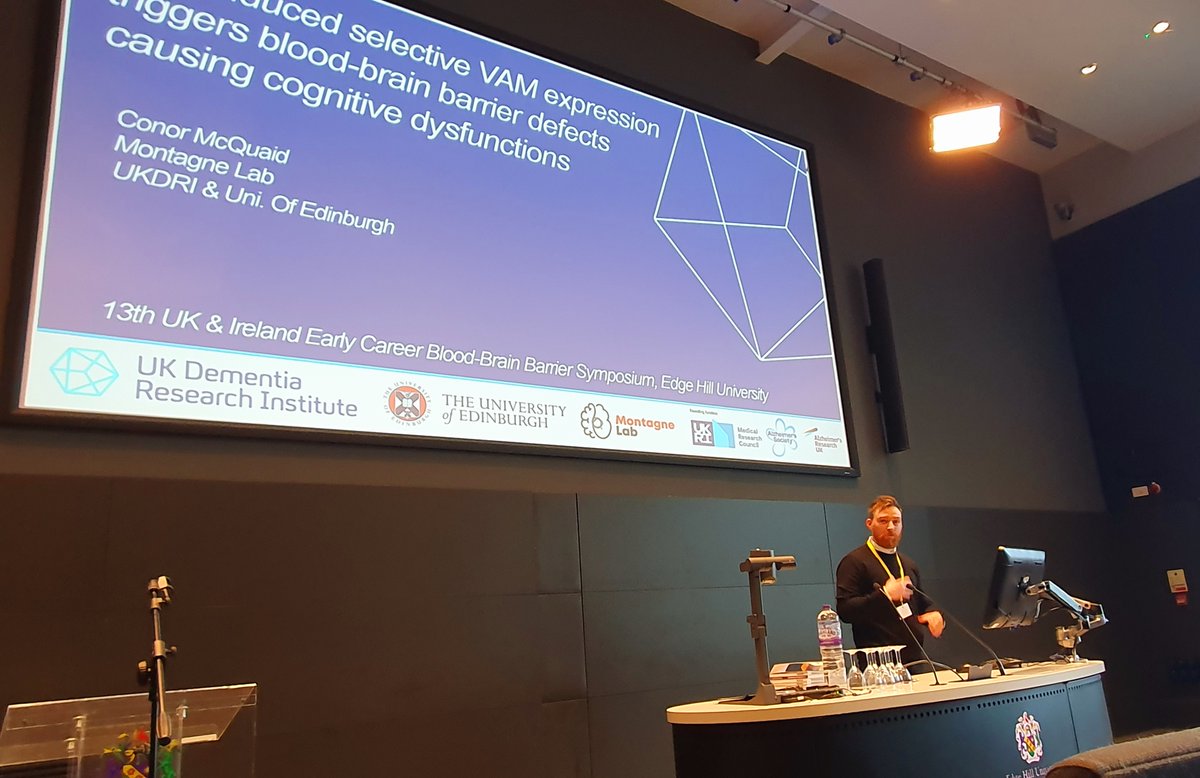
Many thanks to our keynote speakers Prof Egle Solito @esolitolab and Dr Reinhard Gabathuler for two very exciting and insightful presentations! Lovely to also see so many brilliant ECR presentations. The future of #BBB research is bright! 👏 🧠#13ECRBBB @EHU_Research @BiologyEHU
Dr Adjanie Patabendige tweet media
Brain Barriers@Brain_Barriers

A big day for us at Edge Hill! Hosting the 13th Early Career Research UK and Ireland Blood Brain Barrier Symposium @edgehill #13thECRBBB

English
0
1
14
1.7K
Dr Adjanie Patabendige
Dr Adjanie Patabendige@APatabendige·
Registration and abstract submission will close soon! Awards & prizes to be won, including the David Begley Excellence Award for Young BBB Researchers (sponsored by Pharmidex). Pls RT @LNeuroscience @BRUKresearch @BMVBSoc @EHU_Research
Brain Barriers@Brain_Barriers

Join us for the 13th UK & Ireland Early Career Blood-Brain Barrier Symposium on Friday 17th November here at Edge Hill University. Registration is open until 15th November. Please submit abstracts to Brain_Barriers@edgehill.ac.uk by 10th November. store.edgehill.ac.uk/conferences-an…

English
0
3
9
965
Dr Adjanie Patabendige
Dr Adjanie Patabendige@APatabendige·
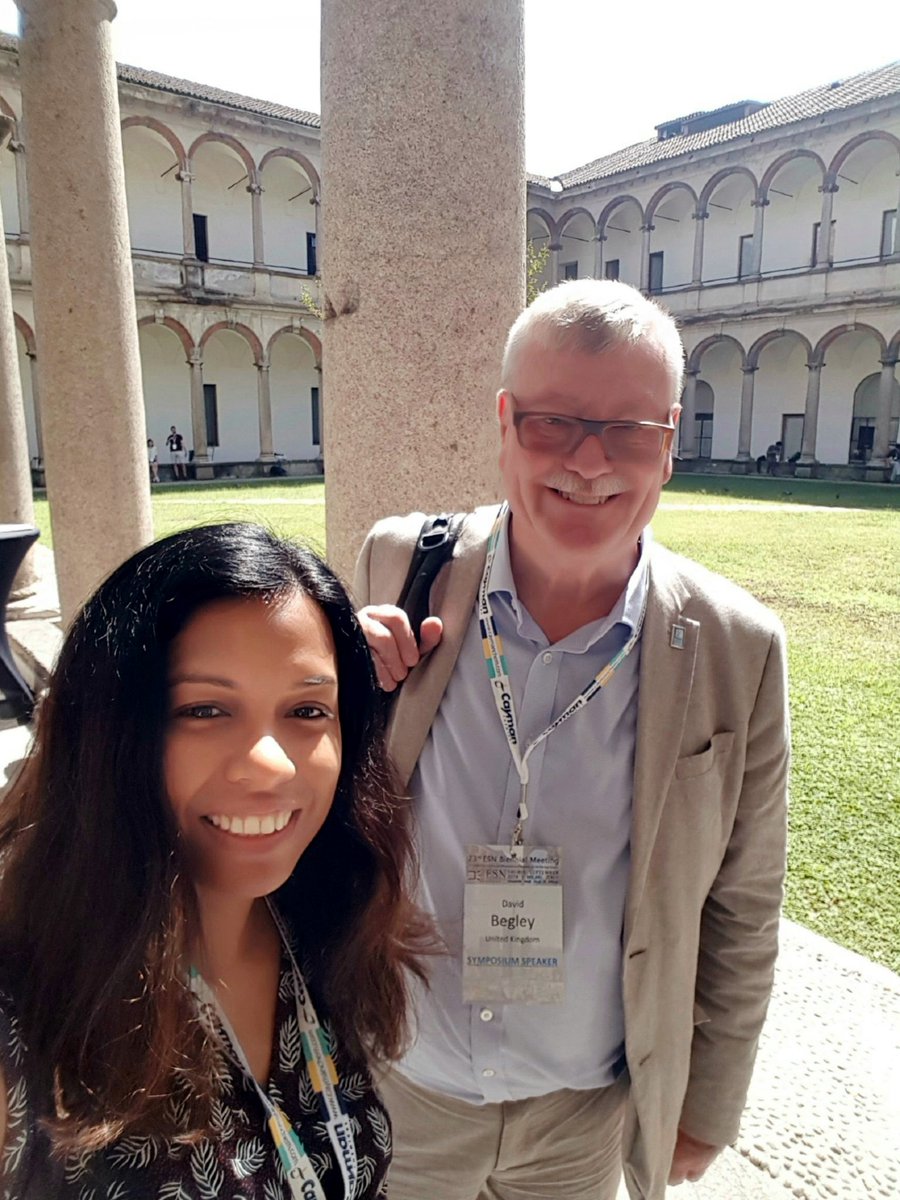
Very sad to hear the news of passing away of Dr David Begley, one of my PhD supervisors with Joan Abbott at BBB group at KCL @KclPhysiology. I was so lucky to have known him and learn from him. A genuine expert in BBB drug transport. Truly irreplaceable. RIP David 🙏
Dr Adjanie Patabendige tweet media
English
2
2
9
969
Dr Adjanie Patabendige retweetledi
Veera Rajagopal 
Veera Rajagopal @doctorveera·
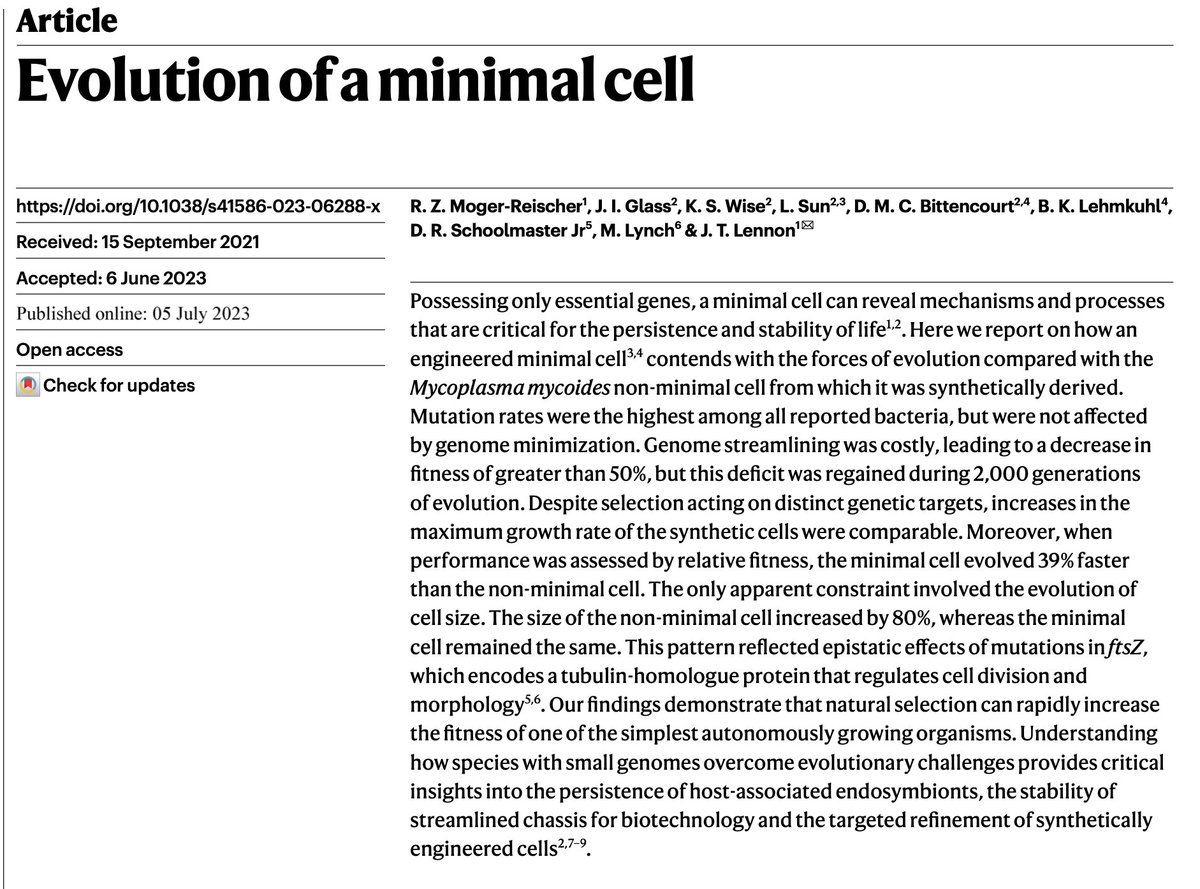
A mind-blowing paper has come out today in @Nature In 2016, JC Venter Institute scientists trimmed a bacterial genome to its barest minimum required for life to synthesize what they called a "minimal genome" (science.org/doi/10.1126/sc…). Today, a group of scientists from Indiana University reports how that minimal genome evolved over 2000 generations in comparison to the non-minimal genome. The authors found that even when you reduce a bacterial genome to its absolute minimum where every nucleotide matters, the genome undergoes mutational events generation after generation as much as the non-minimal genome. One simply cannot stop the evolution. Just over 300 days of evolution (equivalent to 40,000 years in humans) the minimal cell has gained everything it lacked in fitness on day one in comparison to the non-minimal cell. When comparing the evolved traits between the minimal and non-minimal cells, the scientists found something striking. The evolutionary process increased the cell size of non-minimal cells but not that of the minimal cell. But that is not the striking part. The scientists were able to identify the key mutation that resulted in cell size evolution. And it turned out that the mutation that helped the non-minimal cells to grow bigger is the same that helped the minimal cells to stay smaller. Growing bigger had a survival advantage for non-minimal cells and not growing bigger had a survival advantage for minimal cells. So, the mutation had a context-dependent effect. This just demonstrates that the evolutionary effects on traits have no absolute direction. All that matter is what is beneficial for the organism's survival. The conclusion of the paper is metaphorically a quote from the Jurassic Park movie: “Listen, if there’s one thing the history of evolution has taught us is that life will not be contained. Life breaks free. It expands to new territories, and it crashes through barriers painfully, maybe even dangerously, but . . . life finds a way". (scienmag.com/artificial-cel…) nature.com/articles/s4158…
Veera Rajagopal  tweet media
English
214
5.5K
20.4K
4.2M