Alfred Russel Wallace

2.1K posts

Alfred Russel Wallace banner
Alfred Russel Wallace

Alfred Russel Wallace

@ARWallace

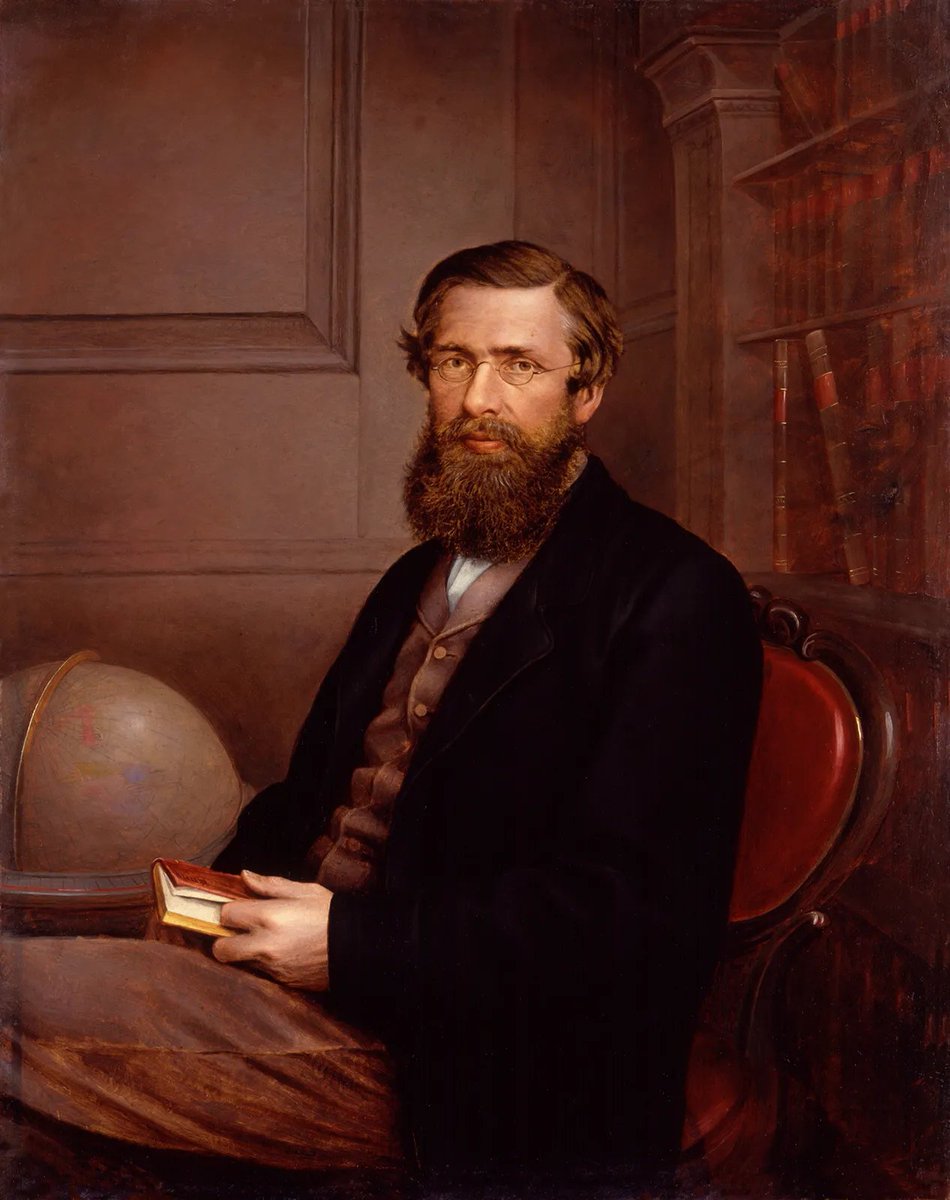
Alfred R. Wallace (1823-1913) was a British naturalist, best known for independently proposing the theory of evolution by natural selection. #nathist #histsci

London, England Katılım Ocak 2009
324 Takip Edilen1.2K Takipçiler
Alfred Russel Wallace
Alfred Russel Wallace@ARWallace·
@edhollox Yes, I have been to see the school a few times. Such a shame that it is right next to that busy road. Moving to Bluesky is worth a try. We are on FaceBook as well, but thanks to a hacker my FB account was suspended so I have to ask other Admins to post stuff on the page for me...
English
0
0
0
116
Ed Hollox
Ed Hollox@edhollox·
@ARWallace Move to Bluesky, Al. The Collegiate School is still standing and worth a visit if you're passing. Your lodgings were bulldozed for a dual carraigeway, though. Sorry about that.
English
1
0
1
19
Alfred Russel Wallace
Alfred Russel Wallace@ARWallace·
I am thinking of stopping posting on X, as there is so little response to my posts. I guess they are not reaching the right people, and it is unclear how they can do so.
English
1
0
3
145
Alfred Russel Wallace retweetledi
John Richardson✡️
John Richardson✡️@1anhaga·
The final three and a half pages of Alfred Russel Wallace's "The Malay Archipelago" should by read and re-read and inwardly digested and made a perpetual life lesson by every thinking human on this planet. (The idea has been expressed for centuries, yet, here we are.)
English
0
2
2
108
Gavan Tredoux
Gavan Tredoux@gtredoux·
Alfred Russel Wallace on the Wellborn Science. From Francis Galton's Genius (2023) --- Alfred Russel Wallace had praised Hereditary Genius when it was published, and had always shown a great deal of sympathy for protecting the quality of human stock. In September 1890 he invoked a higher authority. ‘In one of my latest conversations with Darwin he expressed himself very gloomily on the future of humanity, on the ground that in our modern civilisation natural selection had no play, and the fittest did not survive. Those who succeed in the race for wealth are by no means the best or the most intelligent, and it is notorious that our population is more largely renewed in each generation from the lower than from the middle and upper classes’. But by then his views about the best practical way to address the problem had shifted radically. Wallace had nothing against plans to encourage superior intellects to breed, he even welcomed them, but doubted if this would change the average much even if it gained some traction. It was more important to persuade the below-average to reproduce less, though he saw no morally acceptable way to compel this (but see below for what he did find feasible to compel). Here his mathematics let him down, since the changes are equivalent as far as the average is concerned. ‘Exceptionally great and good men are always produced in sufficient numbers, and have always been so produced in every phase of civilisation’(!) But be that as it may, he thought that he had found a much more general solution to not just dysgenics, but all of mankind’s other problems too: socialism. He had become a believer: ‘our present phase of social development is not only extremely imperfect but vicious and rotten at the core’. Under full socialism, ‘we shall find that a system of selection will come spontaneously into action which will steadily tend to eliminate the lower and more degraded types of man, and thus continuously raise the average standard of the race’. Thus Wallace actually believes in eugenics through socialism, which is on his view both necessary and sufficient. His idea of socialism, ‘just’ and ‘rational’, is taken not from real life—who ever heard of a spontaneous event under the elaborate choreography of socialism?—but unironically from the science fiction of the novelist Edward Bellamy, in Looking Backward (1888). Once Wallace has ‘cleansed the Augean stable of our existing social organization’, ‘education’ will do most of the work in transforming conditions to a state of material equality, allied (ominously) with state-awarded grades for good conduct, industry and intelligence (left unexplained). Indeed everyone will work for the state, it is just a question of finding the job—overseers, superintendents, general managers—that they are best suited to do for that solemn body. (No menial positions are mentioned, suggesting some endless Möbius strip of supervision.) Just how society is to be transformed into this blissful situation of plenty-for-all in ‘one big family’ is not elaborated, but elsewhere Wallace talks of confiscating all private property and reallocating it. (Without resistance?) Then all material restraints on marriage will be lifted, and sexual selection (by women) will inexorably improve the race, since nobody will want to marry until they are mature, nor would women want to marry the idle and vicious. (Somewhat contrary to present experience.) It seems that education and indoctrination will again do the necessary. ‘The most careful and deliberate choice of partners for life will be inculcated as the highest social duty’. Doing the opposite will be considered an offence against society. Prison camps are not explicitly called for, but they lurk nearby. It may be relevant to all this that Wallace had also become a believer in the stage trickery of spiritualism, but neither that folly nor his sinister ‘social cleansing’ scheme seem to have drawn any comment from Galton, though he surely noticed both. He would perhaps have asked how inborn inequalities of talent would simply dissolve after confiscation and reallocation of property. More to the point, the natural abilities needed to thrive under a totalitarian state are not evenly distributed either.
Gavan Tredoux tweet media
English
1
2
10
1.6K
Alfred Russel Wallace
Alfred Russel Wallace@ARWallace·
New article by George Beccaloni: "Did Alfred Russel Wallace’s chief assistant from his expedition to the Malay Archipelago really name himself Ali Wallace?" See #fullTextFileContent" target="_blank" rel="nofollow noopener">researchgate.net/publication/39…
English
0
3
6
365
Alfred Russel Wallace
Alfred Russel Wallace@ARWallace·
Excellent multimedia Wallace-related article by travel writer Mark Stratton: #p=86" target="_blank" rel="nofollow noopener">online.fliphtml5.com/tbpue/sdui/#p=…
English
0
0
0
71
Gavan Tredoux
Gavan Tredoux@gtredoux·
It has become fashionable in recent years to present Alfred Russel Wallace as a sort of kinder, gentler, anti-racist Darwin. This was prominent in Jacob Bronowski's Ascent of Man series from the early 70s, which was an ur-woke/PC undertaking. Piqued by Darwin's less than flattering descriptions of the Fuegians, Bronowski (immensely smug and irritating) promoted Wallace instead. The fact that Wallace became an overt socialist/communist in late life reinforces this preference. There is nothing the academic hive-mind likes more than someone they think fits that bill. One is not in the least surprised to see Nature promoting that, at length, in the case of Wallace. This is profoundly ignorant of Wallace's actual beliefs and writings, which few have read in any detail. Of those who might have started the Malay Archipelago (1869), fewer have probably finished the book than those Irishmen who have taken on Joyce's Ulysses (begorrah). Those who have finished it, or have at least read in it, will know that Wallace wrote very frankly about race, holding straightforward views about it for his times. Turn to the chapter on "The Races of Man in the Malay Archipelago", XL of Vol. 2. "Two very strongly contrasted races inhabit the Archipelago—the Malays, occupying almost exclusively the larger western half of it, and the Papuans, whose headquarters are New Guinea and several of the adjacent islands. Between these in locality, are found tribes who are also intermediate in their chief characteristics, and it is sometimes a nice point to determine whether they belong to one or the other race, or have been formed by a mixture of the two. The Malay is undoubtedly the most important of these two races, as it is the one which is the most civilized, which has come most into contact with Europeans, and which alone has any place in history. What may be called the true Malay races, as distinguished from others who have merely a Malay element in their language, present a considerable uniformity of physical and mental characteristics, while there are very great differences of civilization and of language. They consist of four great, and a few minor semi-civilized tribes, and a number of others who may be termed savages. ... The intellect of the Malay race seems rather deficient. They are incapable of anything beyond the simplest combinations of ideas, and have little taste or energy for the acquirement of knowledge. Their civilization, such as it is, does not seem to be indigenous, as it is entirely confined to those nations who have been converted to the Mahometan or Brahminical religions. ... The moral characteristics of the Papuan appear to me to separate him as distinctly from the Malay as do his form and features. He is impulsive and demonstrative in speech and action. His emotions and passions express themselves in shouts and laughter, in yells and frantic leapings. Women and children take their share in every discussion, and seem little alarmed at the sight of strangers and Europeans. Of the intellect of this race it is very difficult to judge, but I am inclined to rate it somewhat higher than that of the Malays, notwithstanding the fact that the Papuans have never yet made any advance towards civilization." Wallace quite sensibly doesn't think this merits celebration, adding for Europeans that "although we have progressed vastly beyond the savage state in intellectual achievements, we have not advanced equally in morals". In the second edition (one supposes, I have not checked the sequence) he tacks on a lecture containing socialist moralizing right there. A further section on crania contains the conclusion "the Australians have the smallest crania, and the Polynesians the largest; the Negroes, the Malays, and Papuans not differing perceptibly in size. And this accords very well with what we know of their mental activity and capacity for civilization." Somewhat rash given his evidence at the time, though he is does note that it is not of high quality. All in all Darwin, Wallace and Huxley were of much the same opinion about these matters. Which doesn't mean they were right, but the hive-mind should show more respect for the facts and evidence it constantly trumpets about before sounding off on this. And those who would promote Wallace's communism should reflect on his hook-line-sinker-and-rod embrace of spiritualism. Knock twice if you're there. Speak English my dear, he speaks English now (as the medium said to Houdini's widow).
Gavan Tredoux tweet media
English
2
0
4
355
Alfred Russel Wallace
Alfred Russel Wallace@ARWallace·
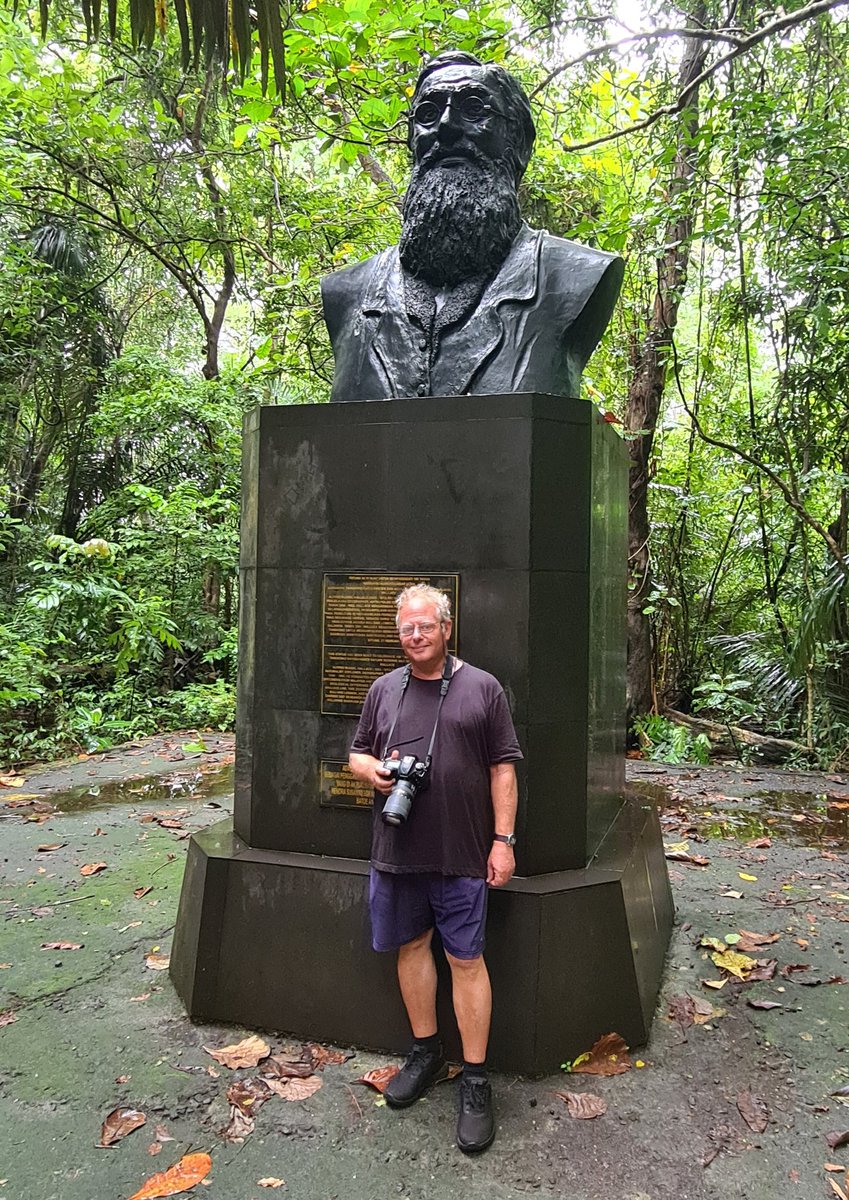
Photo of me George Beccaloni, and the giant Wallace monument in Tangkoko Reserve, North Sulawesi, which was unveiled in 2019.
Alfred Russel Wallace tweet media
English
0
1
10
315
Alfred Russel Wallace retweetledi
UK in Indonesia
UK in Indonesia@UKinIndonesia·
From Ternate to Dodinga, Halmahera, North Maluku – where history meets nature! British Ambassador @DomJermey commemorated Alfred Russel Wallace’s discovery of natural selection ✨, a legacy inspiring global efforts to protect biodiversity. 🌏 Hosted by the North Maluku Government and joined by Wallace’s great-grandson William Wallace, and Wallace expert Dr. George Beccaloni, Ambassador Jermey unveiled a plaque in honour of Wallace’s scientific achievements in Indonesia. The UK is working together with Indonesia to tackle climate change, foster biodiversity conservation, and drive sustainable development. 🇬🇧🤝🇲🇨 Together, let’s celebrate Wallace’s legacy and strengthen our efforts to protect biodiversity and build a prosperous and sustainable future – a liveable planet where people and nature thrive 🌿💙. #AlfredWallace #ClimateAction #BiodiversityConservation #UKIndonesia #AGreatPartnership
English
1
4
4
860
Alfred Russel Wallace retweetledi
Bagus Muljadi
Bagus Muljadi@bagus_muljadi·
youtu.be/SXBoIjRlARE On a beautiful morning in Ternate—the island where Alfred Russel Wallace co-developed the theory of evolution by natural selection—I sat down with UK Ambassador @DomJermey to discuss how Indonesia can position itself as a global hub for scientific research and innovation. Our conversation also touched on complex issues such as deforestation regulations and the repatriation of cultural heritage, both of which carry deep historical and environmental significance for Indonesia. This exchange was part of the commemoration of 75 years of strong diplomatic relations between the United Kingdom and Indonesia, highlighting the role of science diplomacy in strengthening bilateral ties. By fostering international collaboration in conservation, biodiversity research, and heritage preservation, Indonesia not only reinforces its commitment to sustainable development and cultural integrity but also affirms its position as a key player in global scientific and environmental leadership. Indonesian/English subtitles available #knowledgediplomacy @UKinIndonesia
YouTube video
YouTube
Bagus Muljadi tweet media
English
1
8
23
2.3K
Mark Stratton
Mark Stratton@MarkofDartmoor·
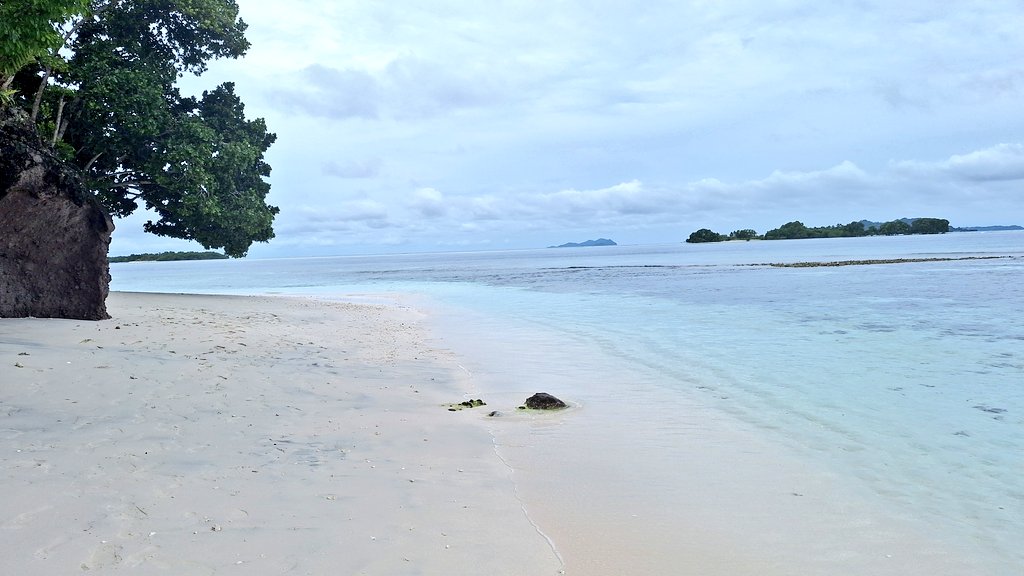
One of the issues when your forte is travelling to remote places to write (see Moluccas beach) is staggering off 33.45hours flights back to Heathrow to enjoy 25°c temperature drop. @wanderlustmag @NS_Discovery
Mark Stratton tweet media
English
1
1
7
176
Alfred Russel Wallace
Alfred Russel Wallace@ARWallace·
Monument in Dodinga Village on Halmahera Island, Moluccas, Indonesia, which commemorates Wallace's discovery of natural selection there in February 1858. It was unveiled in October last year.
Alfred Russel Wallace tweet media
English
0
4
13
416