Archaeological Survey of India

8.4K posts

Archaeological Survey of India banner
Archaeological Survey of India

Archaeological Survey of India

@ASIGoI

ASI under Ministry of Culture, Govt of India is the premier organization for the archaeological research and protection of the cultural heritage of the nation.

New Delhi, Delhi Katılım Haziran 2015
166 Takip Edilen147.4K Takipçiler
Archaeological Survey of India
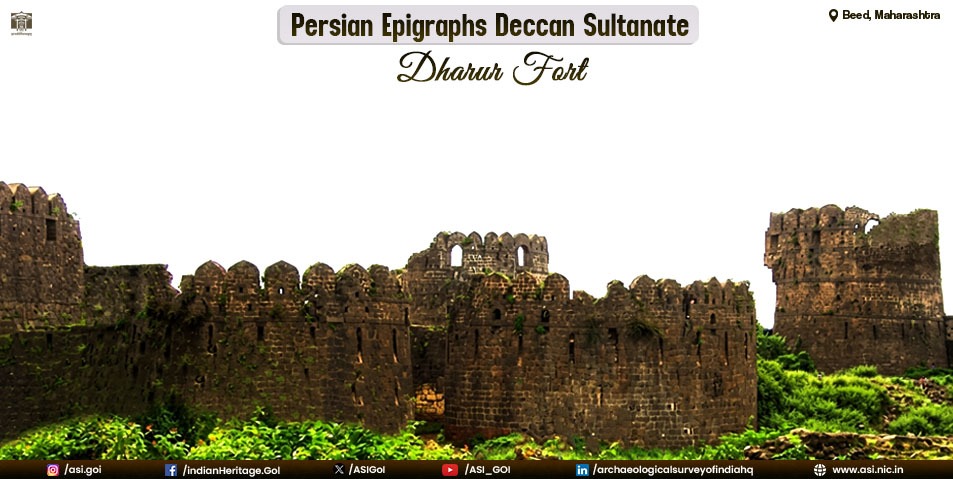
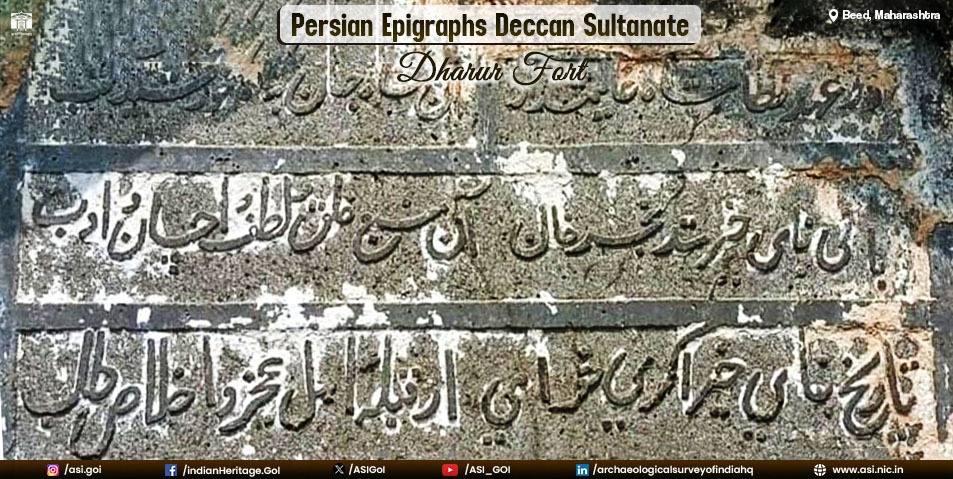
Inside Dharur Fort in Beed district is a ruined mosque that preserves a Persian inscription written in elegant Nastaʿliq calligraphy. The inscription records the construction of the mosque by Sanjar Khan, a noble of Deccan Sultan Murtaza Nizam Shah I, in 1573–74 CE. The chronogram within the inscription reflects the rich intellectual and artistic culture of the Deccan Sultanates, where Persian literary traditions, charitable patronage, and Shiʿite piety blended beautifully with Indo-Islamic architectural aesthetics. Dharur Fort was a strategically important hill fort that was often contested between the ʿAdil Shahis of Bijapur and the Nizam Shahis of Ahmadnagar. Originally an ancient structure, possibly linked to the Rashtrakuta-era Mahadurga, the fort was rebuilt in 1567–68 CE by Kishwar Khan Lari of Bijapur.
Archaeological Survey of India tweet mediaArchaeological Survey of India tweet media
English
1
4
26
1.4K
Archaeological Survey of India
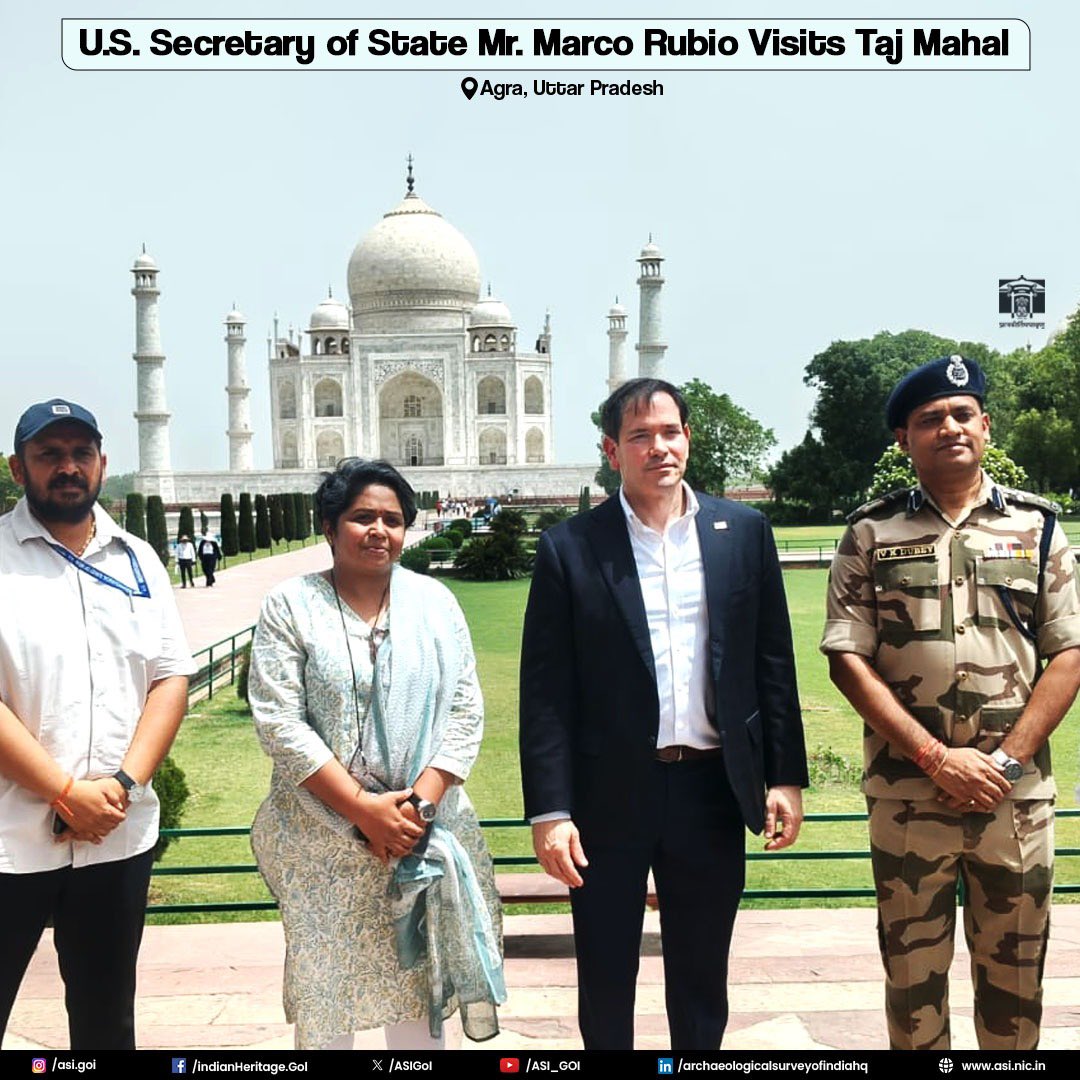
Hon’ble U.S. Secretary of State Mr. Marco Rubio visited the iconic Taj Mahal. During the visit, he appreciated the timeless architectural grandeur and enduring cultural legacy of one of India’s most renowned historical landmarks.
Archaeological Survey of India tweet mediaArchaeological Survey of India tweet media
English
8
23
356
15.9K
Archaeological Survey of India
The architecture of Narnala Fort reflects the strength and planning of medieval fort construction. Massive fortification walls, lofty arched gateways, bastions, guard chambers, palaces, mosques, and audience halls together create a remarkable architectural landscape across the hilltop. The fort also showcases advanced engineering through its reservoirs, artificial lakes, and water management system built by medieval engineers. Structures like Mahakali Gateway, Gajashala, Ambar Mahal, and the Navgaj Canon highlight the detailed craftsmanship and architectural excellence found throughout the fort.
English
1
10
49
2.1K
Archaeological Survey of India
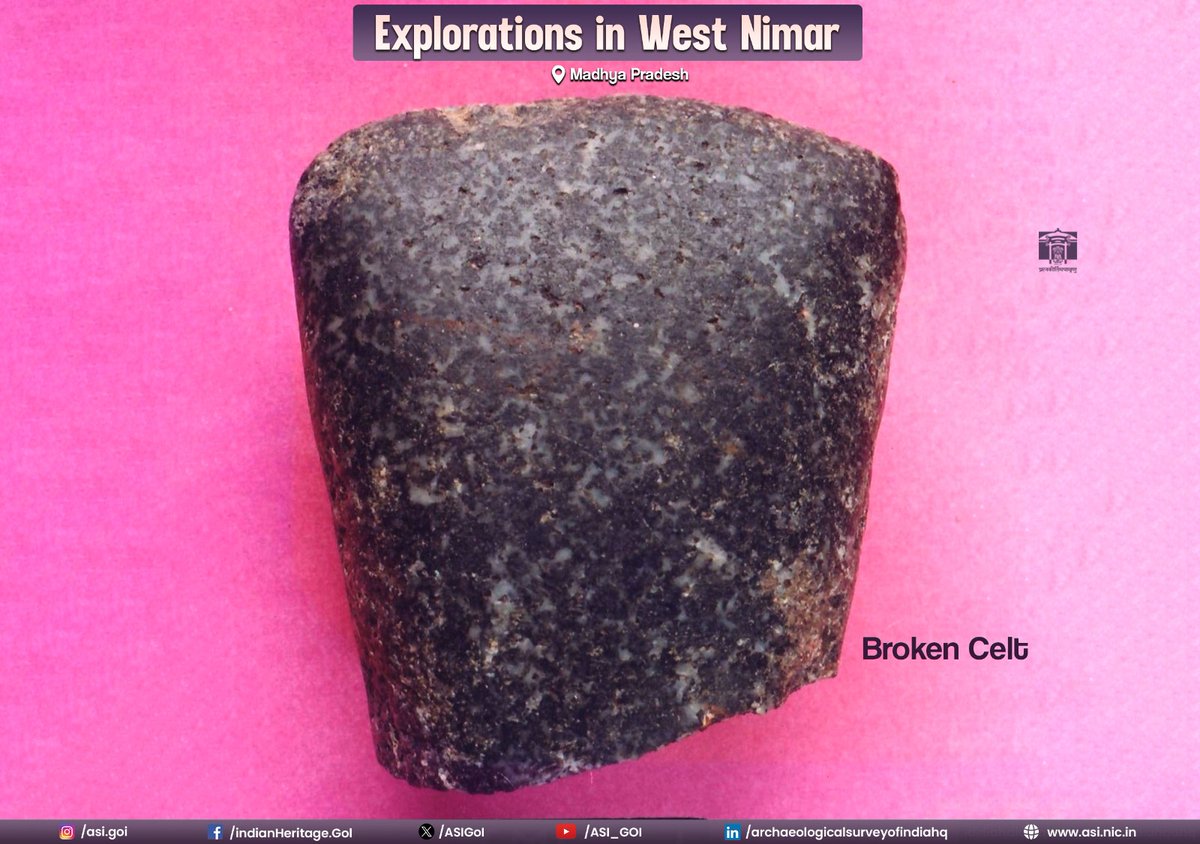
Explorations in the submergence area of the Sardar Sarovar Project in Thikri of West Nimar district led to the discovery of several important Prehistoric, Protohistoric, Historical, and Medieval sites. Sites explored along the left bank of the Narmada River included Kathora, Kirmohi, Pichauri, Dehdala, Ghatwarya, and Chichali, with significant surface discoveries reported from Chichali, Ghatwarya, and Pichauri. At Chichali, important finds included handaxes, microliths, and a fragment of a legged quern bearing Mauryan polish. A large quantity of painted pot-sherds were also recovered, including black-on-red ware, black-on-buff ware, black-on-dull red ware, and white-painted black-and-red ware. The ceramic assemblage is associated with the Malwa ware tradition, while some thick and sturdy fabrics show Late Harappan ceramic affinity. At Pichauri, thick and well-levigated deep red ware decorated with broad black painted bands was discovered, strongly indicating Late Harappan ceramic affinity. A few terracotta objects were also recovered from the site. One of the most notable discoveries came from Ghatwarya, where a broken ground and polished Neolithic basalt celt was found, indicating Neolithic cultural activity in the region. Collectively, these sites represent one Upper Palaeolithic, three Chalcolithic, one Early Historical, seven Historical, one Early Medieval, and one Medieval cultural phase.
Archaeological Survey of India tweet mediaArchaeological Survey of India tweet mediaArchaeological Survey of India tweet mediaArchaeological Survey of India tweet media
English
1
19
96
3.5K
Archaeological Survey of India
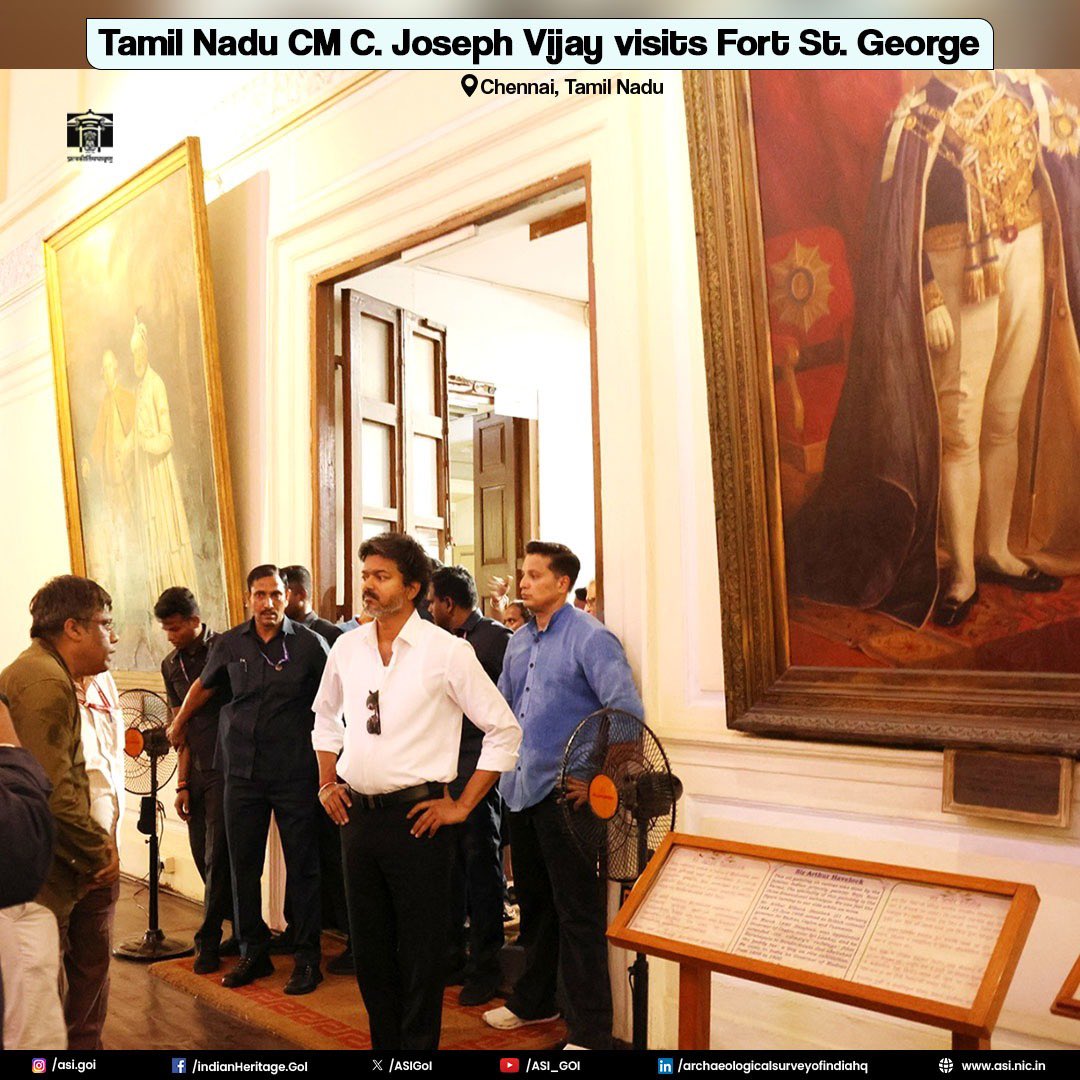
Hon’ble Chief Minister of Tamil Nadu, Shri C. Joseph Vijay, visited Fort St. George and explored several historically significant structures, including St. Mary’s Church, Clive Building, the Barrack area, George Gate, as well as the ASK Museum and National Flag gallery. Officials of the Archaeological Survey of India accompanied the Hon’ble Chief Minister and briefed him about the historical significance and architectural heritage of one of the earliest British fort complexes in India.
Archaeological Survey of India tweet mediaArchaeological Survey of India tweet media
English
63
265
1.2K
49.7K
Archaeological Survey of India
The Tomb of Shaikh Abdur Rahim at Lucknow, known as Nadan Mahal, who served as the Subedar (Governor) of Awadh during the reign of Mughal Emperor Akbar (1556–1605 CE). The monument was constructed in the Mughal architectural style using red sandstone and stands on a raised square-shaped platform. At the centre is a domed chamber surrounded by an open verandah on all four sides. Inside the main chamber are two marble graves inscribed with verses from the Quran, along with a red sandstone headstone. The chamber is enclosed by a twelve-pillared open pavilion. The walls are adorned with decorative panels and recessed designs, while stone jalis cover the openings on all sides except the southern entrance. The pillars feature floral carvings, and the parapet is decorated with blue glazed tiles with yellow centres. The octagonal base beneath the dome was originally embellished with green and blue tiles.
Archaeological Survey of India tweet mediaArchaeological Survey of India tweet mediaArchaeological Survey of India tweet media
English
3
8
91
4K
Archaeological Survey of India retweetledi
India at UNESCO
India at UNESCO@IndiaatUNESCO·
At #25COM of the ICPRCP under Agenda 12, Mr. Praveen Kumar Mishra, Joint Director General, ASI, thanked the ICPRCP Secretariat and experts for their valuable recommendations on the timely return and restitution of cultural property lost due to colonial or foreign occupation. India emphasized the importance of bilateral & multilateral cooperation, provenance research, capacity-building, and the facilitative role of the ICPRCP in advancing meaningful restitution efforts. 🇮🇳 @VishalVSharma7
English
1
6
9
1.4K
Archaeological Survey of India
The Rock-cut Bodhisattva Maitreya at Mulbekh, rising nearly fifty feet high, stands as a remarkable symbol of Ladakh’s early Buddhist heritage. Carved into a towering rock face, the colossal image represents Bodhisattva Maitreya, revered in Buddhist tradition as the Future Buddha. The sculpture displays rich iconographic detail - the principal right hand is shown in Varada Mudra, symbolising boon-giving, while the left hand holds a flask. The upper right hand carries a rosary, and the upper left hand holds a flower. Believed to date back to 9th century C.E., this magnificent rock-cut sculpture reflects the early spread of Buddhism across the trans-Himalayan region all the way to Central Asia, Far-east and continues to be an enduring testament to Ladakh’s cultural legacy.
Archaeological Survey of India tweet mediaArchaeological Survey of India tweet mediaArchaeological Survey of India tweet media
English
4
59
310
8.6K
Archaeological Survey of India
Archaeological Survey of India marks a significant milestone in India-Vietnam cultural cooperation as officials from ASI and Vietnam’s Ministry of Culture, Sports & Tourism discussed the next phase of conservation efforts at the UNESCO World Heritage Site of My Son.
India in Vietnam@AmbHanoi

Bảo tồn và cải tạo sự giao thoa các nền văn minh chính là dấu ấn đặc trưng cho mối quan hệ Đối tác Chiến lược Toàn diện Tăng cường (ECSP) giữa 🇮🇳 - 🇻🇳. Hôm nay, các cán bộ của Cơ quan Khảo sát Khảo cổ Ấn Độ @ASIGOI và Bộ Văn hóa, Thể thao và Du lịch Việt Nam đã thảo luận về các bước triển khai tiếp theo tại Khu Di sản Thế giới UNESCO Mỹ Sơn – nơi đại diện cho di sản văn hóa chung của 🇮🇳 🇻🇳. Ấn Độ sẽ thành lập một Trung tâm Thông tin tại Di sản văn hóa thế giới Mỹ Sơn. ~~~ Conservation and restoration of civilizational linkages are hallmark of the 🇮🇳-🇻🇳 Enhanced Comprehensive Strategic Partnership (ECSP). Officials from @ASIGOI and Ministry of Culture of Vietnam held discussions today on the next steps at the UNESCO World Heritage Site in My Son which represents our 🇮🇳 🇻🇳 cultural heritage. India will establish a Site Interpretation Centre at My Son.

English
1
5
22
2K
Archaeological Survey of India
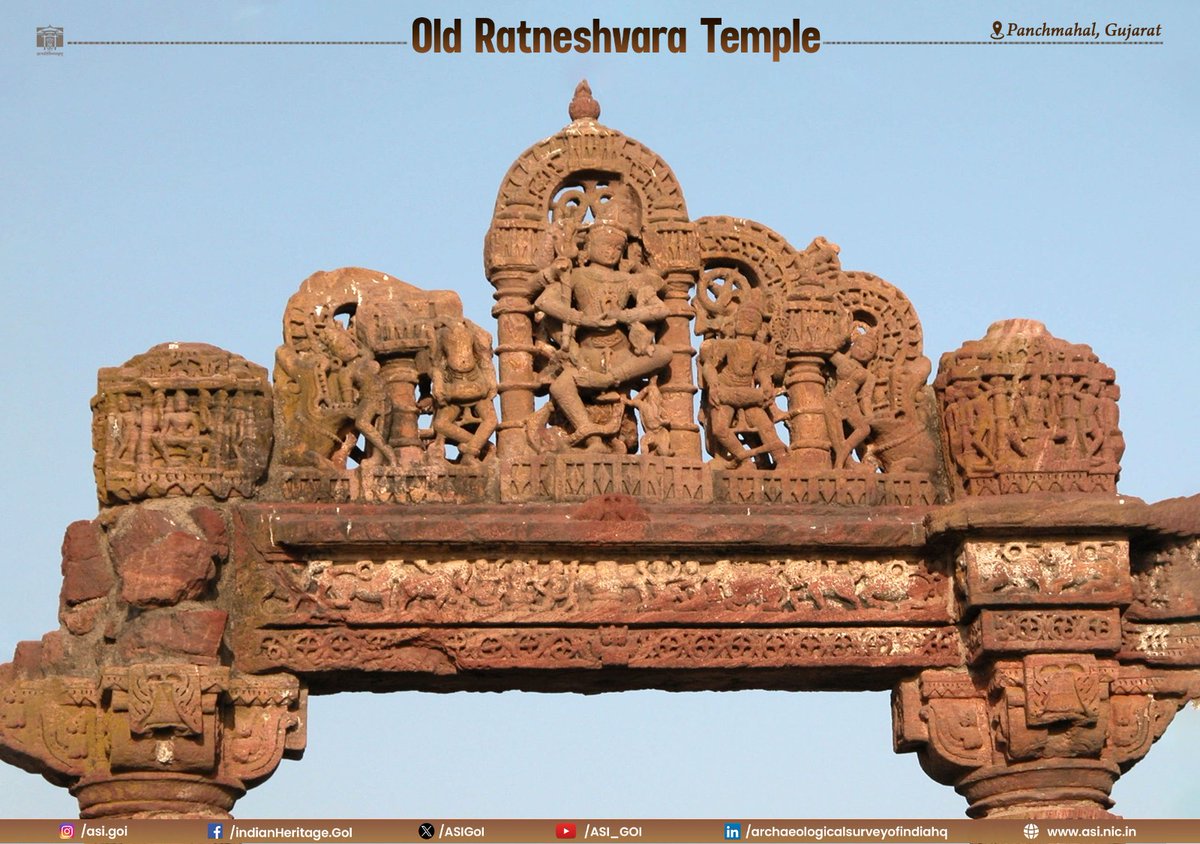
Built on a raised jagati, the temple features an ornate Torana at its entrance. At the centre of the Torana lies a striking image of Prabhu Shiva, flanked by attendants playing musical instruments, reflecting the rich artistic traditions of the period. The architectural layout of the temple comprises Mandapa, Antarala, and Garbhagriha. Although, due to the vagaries of the time, only the Garbhagriha and portions of the Mandapa survive today. Yet the temple stands as a significant example of sculptural excellence in Gujarat’s temple architecture. (2/2)
Archaeological Survey of India tweet mediaArchaeological Survey of India tweet mediaArchaeological Survey of India tweet mediaArchaeological Survey of India tweet media
English
1
1
11
1.4K
Archaeological Survey of India
The Old Ratneshvara Temple, located in Ratanpur village of Panchmahal district in Gujarat, is an exquisite Panchayatana Shaiva shrine. Stylistically dated to around the 12th century CE, it is a remarkable example of the Maru-Gurjara style of architecture. (1/2)
Archaeological Survey of India tweet mediaArchaeological Survey of India tweet mediaArchaeological Survey of India tweet mediaArchaeological Survey of India tweet media
English
2
48
223
6K
Archaeological Survey of India
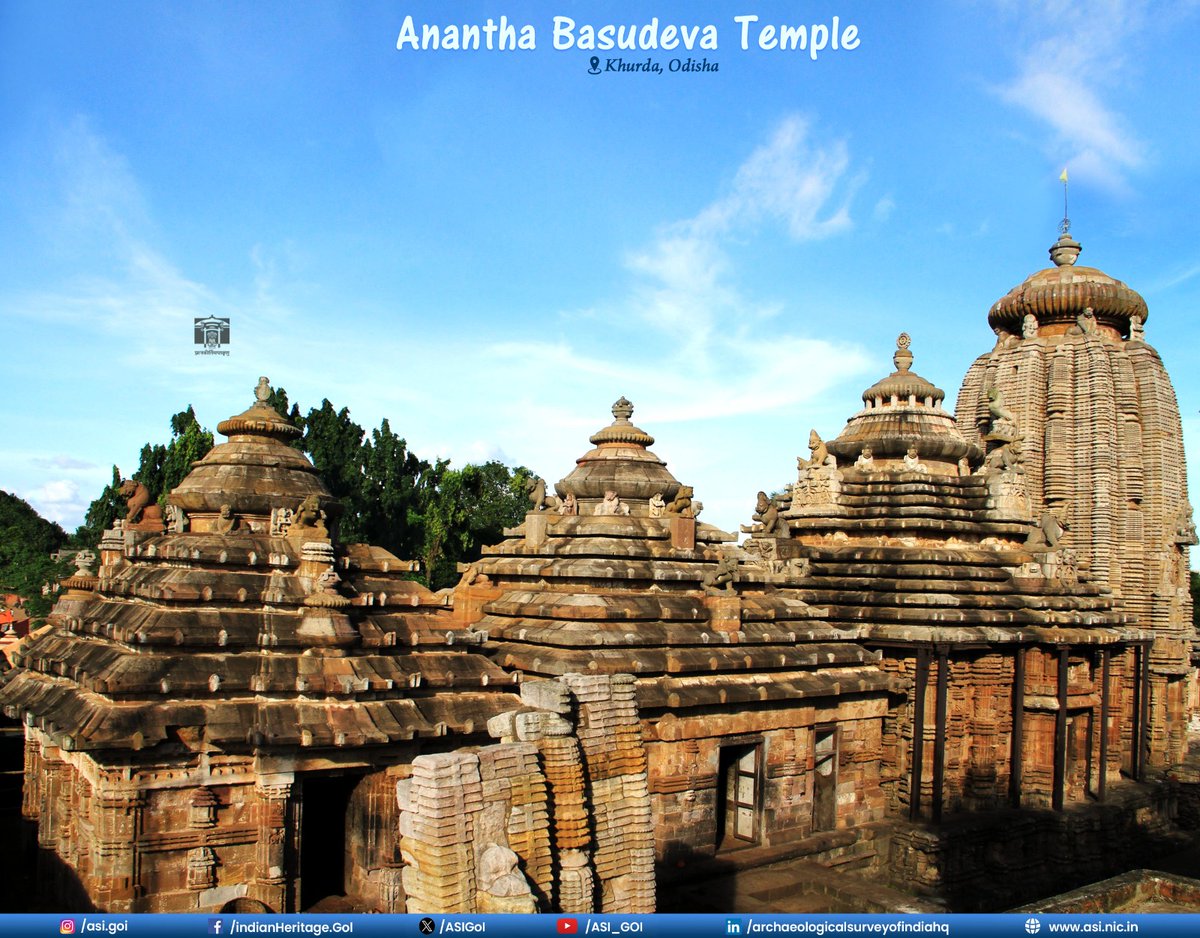
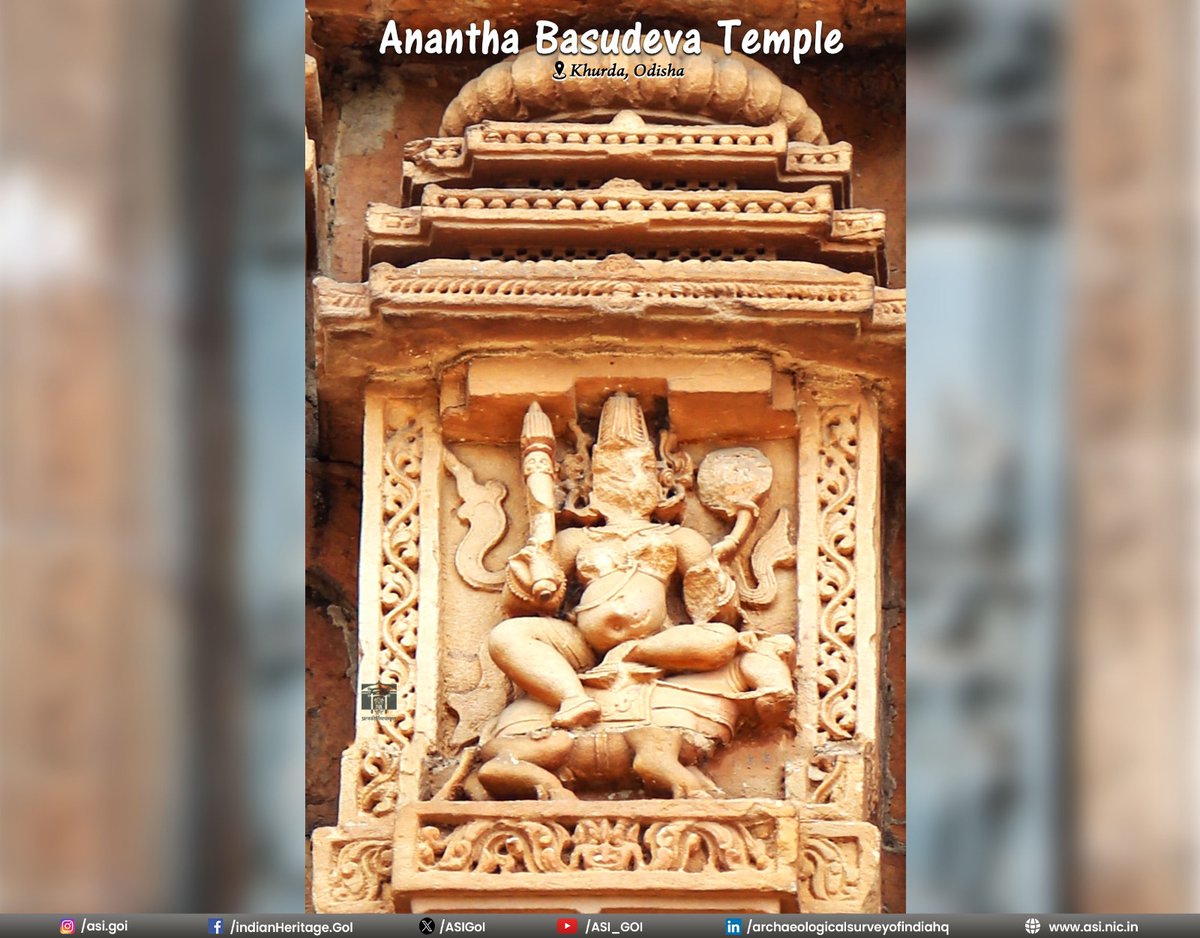
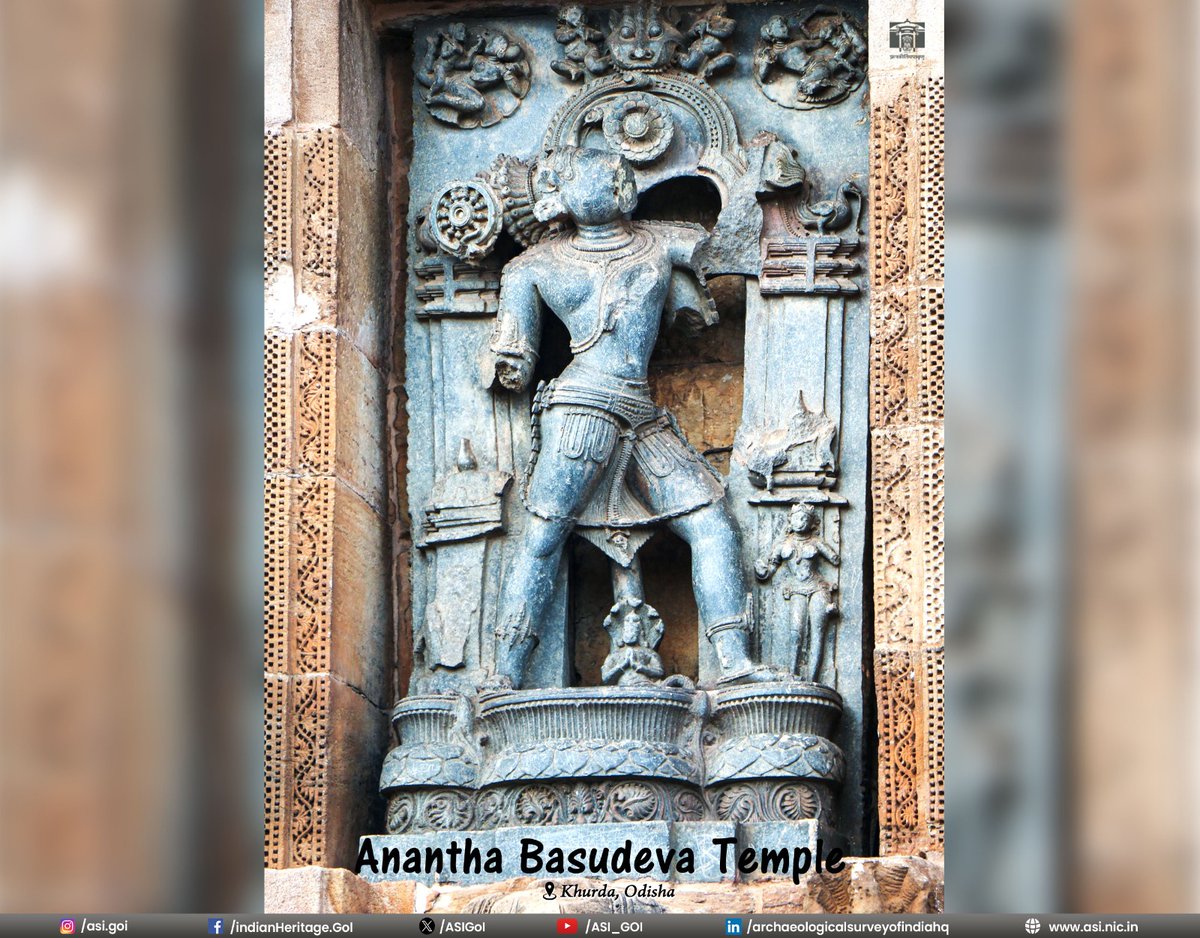
The Ananta Basudeva Temple, located on the eastern bank of Bindusagar, is the only major Vaishnava temple in Ekamra Kshetra. Built in 1278 CE during the reign of Bhanudeva I, the temple is a notable example of Kalinga architecture. Enclosed within a prakara wall, the complex includes the deul, jagamohana, nata-mandapa, and bhoga-mandapa aligned on a single axis. The temple stands on an ornately carved platform decorated with khakharamundis, naga/nagi columns, alasa-kanyas, and vidala motifs. The deul follows a saptaratha plan with richly sculpted janghas featuring dikpalas, deities, alasa-kanyas, and mithuna figures. Its gandi contains superimposed anga-sikharas, while the mastaka retains the Sudarshan chakra above the kalasa. Of the original subsidiary shrines, only the eastern shrine survives. The surviving parsva-devatas include images of Varaha and Tri-vikrama. The pyramidal jagamohana is especially known for its carved northern balustrade window depicting Prabhu Rama, Lakshmana, Mata Sita and Hanuman.
Archaeological Survey of India tweet mediaArchaeological Survey of India tweet mediaArchaeological Survey of India tweet mediaArchaeological Survey of India tweet media
English
5
60
264
6.2K
Archaeological Survey of India
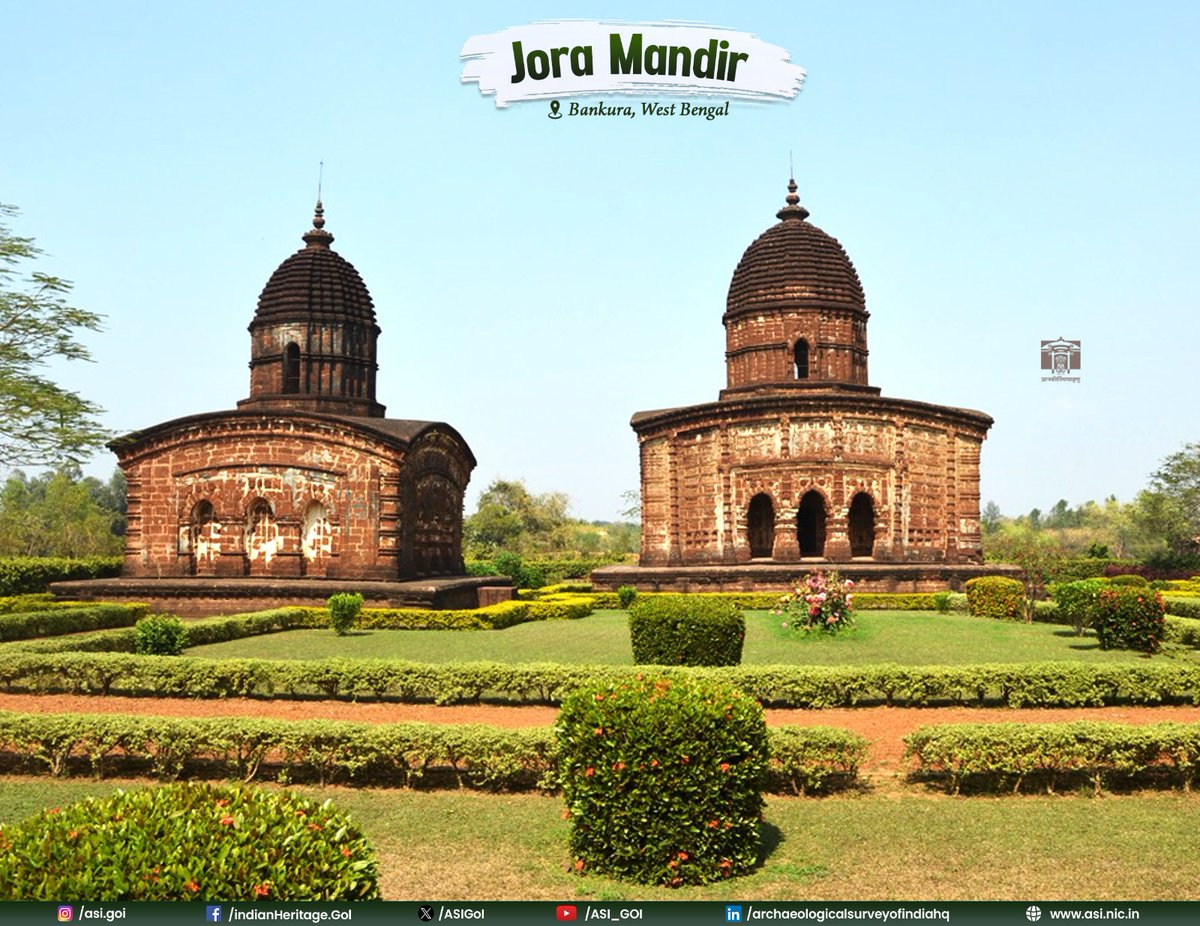
The Jora Mandir complex in Bishnupur is a remarkable example of laterite stone architecture. The complex consists of three shrines, with two located on the north and one on the south, while the largest shrine is situated at the center. Built in 1726 CE by Gopala Simha, the main structure follows a square plan with a subsidiary entrance on the east and triple-arched openings on all four sides. The southern facade is beautifully decorated with sculptures placed within square panels beside the entrance. Two horizontal decorative bands below the cornice and above the arches depict scenes of Krishna-lila, ascetics, gods and goddesses, dancers, musicians, and Krishna playing the flute, both alone and with Radha. The structure also includes mandapas on the south, east, and west sides, while the southern and eastern verandahs feature decorative details on the front walls and door-jambs. The sculptures are beautifully carved in laterite stone and adorned with stucco work.
Archaeological Survey of India tweet mediaArchaeological Survey of India tweet mediaArchaeological Survey of India tweet media
English
3
29
133
3.4K
Archaeological Survey of India
The Archaeological Museum, Nalanda is now open to visitors after renovation, inviting history enthusiasts and travellers to rediscover its remarkable collection and enduring legacy. Home to an exceptional range of stone sculptures, bronzes, stucco figures, terracotta artefacts, inscriptions, iron objects, ivory and bone artefacts, and ancient pottery, the museum offers a captivating glimpse into India’s rich cultural and historical heritage. @narendramodi @MinOfCultureGoI @gssjodhpur @Rao_InderjitS @tourismgoi @TourismBiharGov @MIB_India @PIB_India @incredibleindia @DDNewslive
English
9
31
110
4.6K
Archaeological Survey of India
On International Museum Day, we celebrate the museums of the Archaeological Survey of India that preserve and showcase the rich cultural and historical legacy of our nation. From invaluable antiquities to timeless narratives of the past, these museums continue to promote awareness, learning, and appreciation of India’s diverse heritage among visitors and future generations. Let us continue to recognise and support the role of museums in preserving our shared history and culture. @narendramodi @MinOfCultureGoI @gssjodhpur @Rao_InderjitS @tourismgoi @MIB_India @PIB_India @DDNewslive @incredibleindia @DDNewslive @mygovindia
English
1
16
53
2.4K
Archaeological Survey of India
The chariot originally consisted of a wooden framework adorned with copper sheets and intricate inlay work. Over time, most of the wooden components had transformed into soil-like material, while the copper surfaces showed severe corrosion, encrustations, and fragmentation. Prior to conservation, detailed documentation, including photography and condition mapping, were conducted to record the artefact’s original state. The cleaning process involved superficial cleaning using soft brushes to remove loose dust and dirt, followed by mechanical cleaning with wooden picks and fine tools to eliminate hardened deposits without damaging the artefact. Consolidants, adhesives, and preservatives applied during excavation were carefully removed using compatible chemical solutions and organic solvents such as toluene, acetone, isopropanol, and distilled water to clean the surface without affecting the integrity of the artefact. Corroded copper surfaces were treated using Benzotriazole (BTA), while weak and damaged sections were reinforced using mud composites, traditional adhesives, and stainless steel supports wherever necessary. Finally, a thin protective coating of Polyvinyl Acetate (PVA) was applied to safeguard the surface from moisture and oxygen. The conservation process successfully stabilized the chariot and preserved its historical authenticity for future generations. (2/2)
English
1
1
13
1.3K
Archaeological Survey of India
The Royal Chariot discovered at the Sinauli excavation site in Baghpat diatrict of Uttar Pradesh is one of the most remarkable archaeological finds of this century, assignable to the Bronze Age. The chariot was recovered in an extremely fragile condition after remaining buried for many millennia. The objective of the scientific preservation initiative was to stabilize the structure, treat corrosion, and conserve the artefact while ensuring minimal intervention and maximum retention of original material. (1/2)
English
5
45
137
4.5K
Archaeological Survey of India
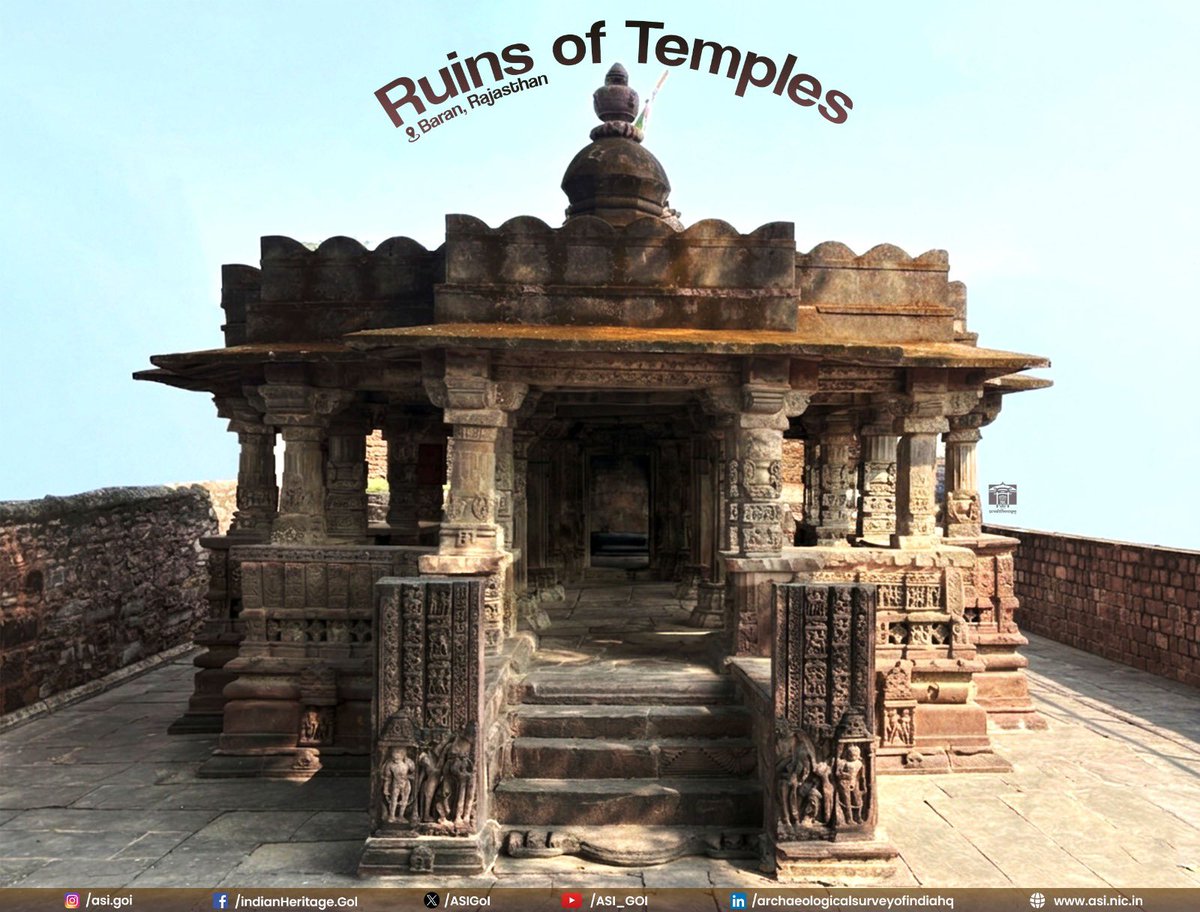
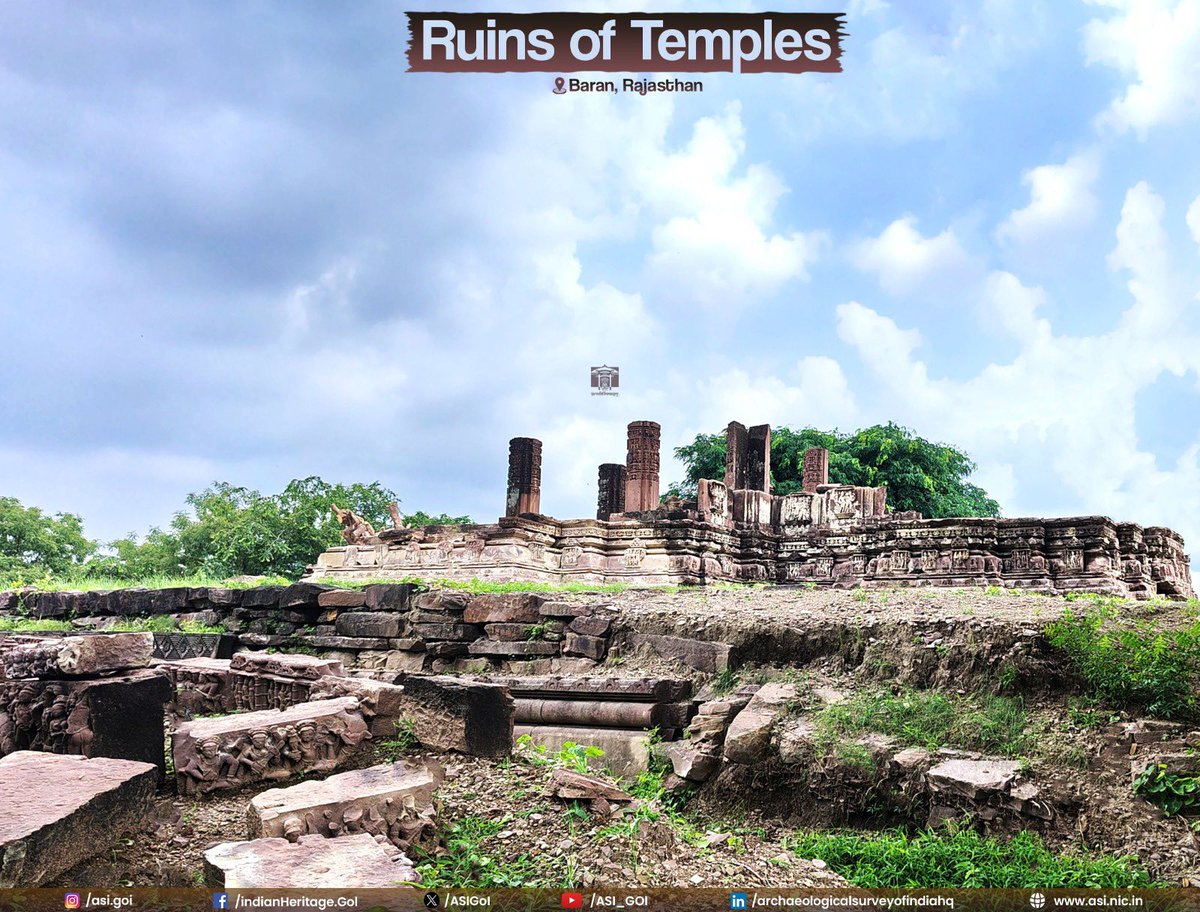
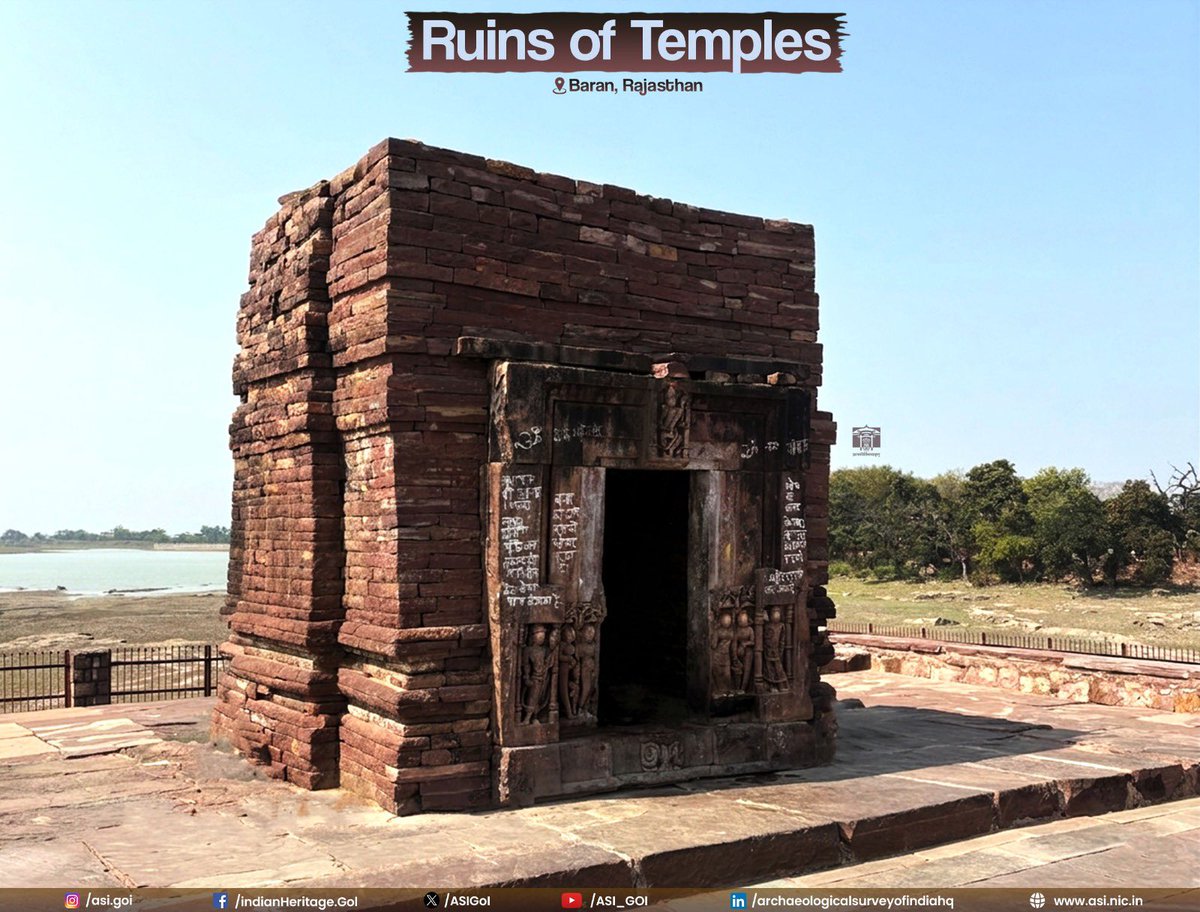
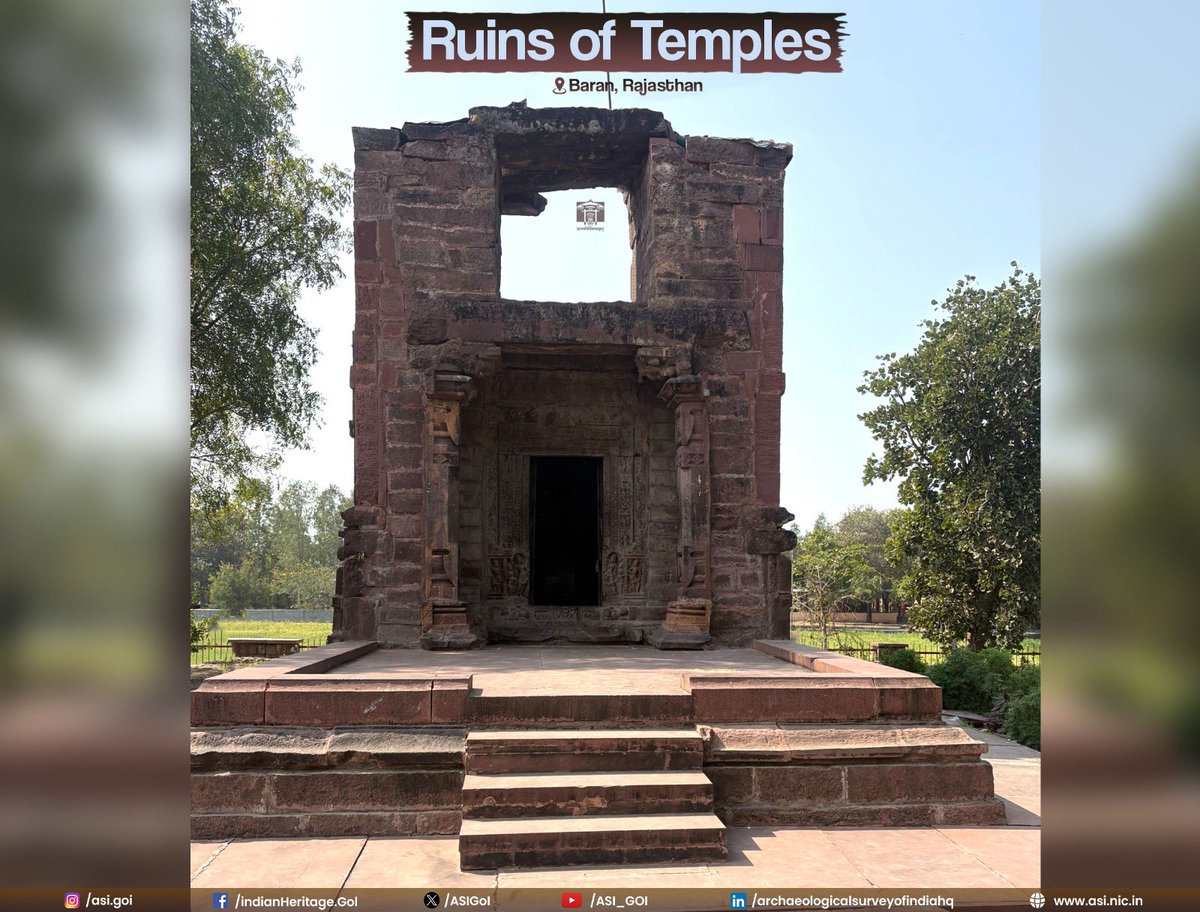
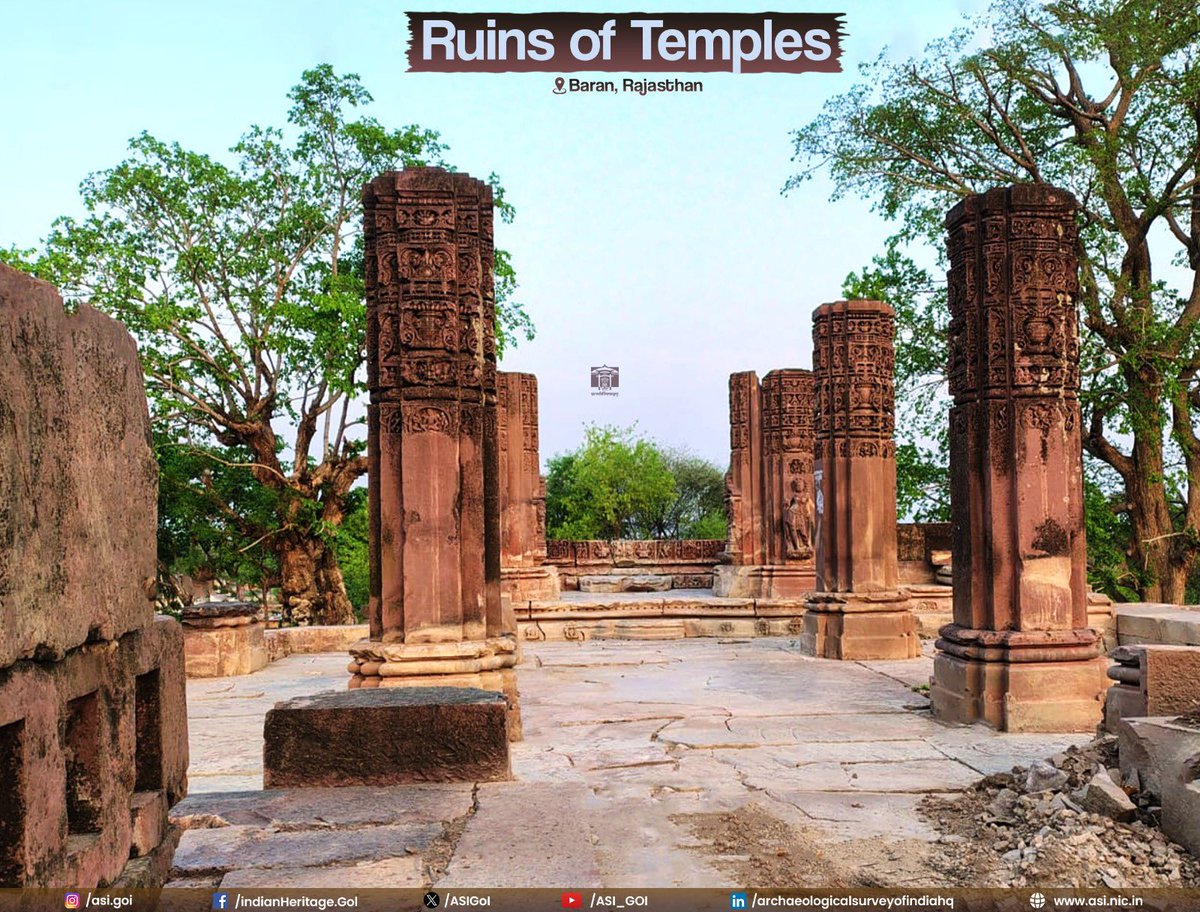
Among these remnants, the Gadgach Temple, dedicated to Shiva, remains the most prominently identifiable structure today. Originally comprising a sanctum, antarala, ardhamandapa, and porch, the temple preserves significant architectural and sculptural features that reflect the distinct stylistic influence of the Pratihara period. (2/2)
Archaeological Survey of India tweet mediaArchaeological Survey of India tweet media
English
1
5
46
1.7K
Archaeological Survey of India
The scattered remains of ancient temples at Atru and Ganesh Ganj stand as enduring markers of the region’s rich architectural legacy. Temples such as Panihari, Chanihari, Sardevmata, Gadia, and Phool Devra — dedicated to Shiva, Vishnu, and Mahishasuramardini — represent notable examples of Pratihara art, dating back to the 10th–11th century CE. (1/2)
Archaeological Survey of India tweet mediaArchaeological Survey of India tweet mediaArchaeological Survey of India tweet media
English
4
52
290
7.6K