

@bhavinj @CafeRoentgen Do yourself a favour in 2026 and get off as many platforms as you can.
English
Dr. Ameya Kawthalkar
1.7K posts
@ASK_MSK
Consultant MSK Radiologist @MWLNHS | Fellowship in MSK Radiology@ SMK Netherlands | MSK Radiologist @ Paris Olympics 2024




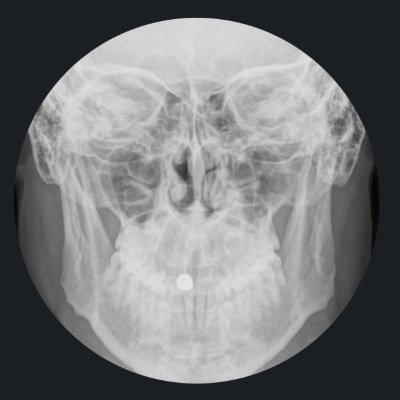




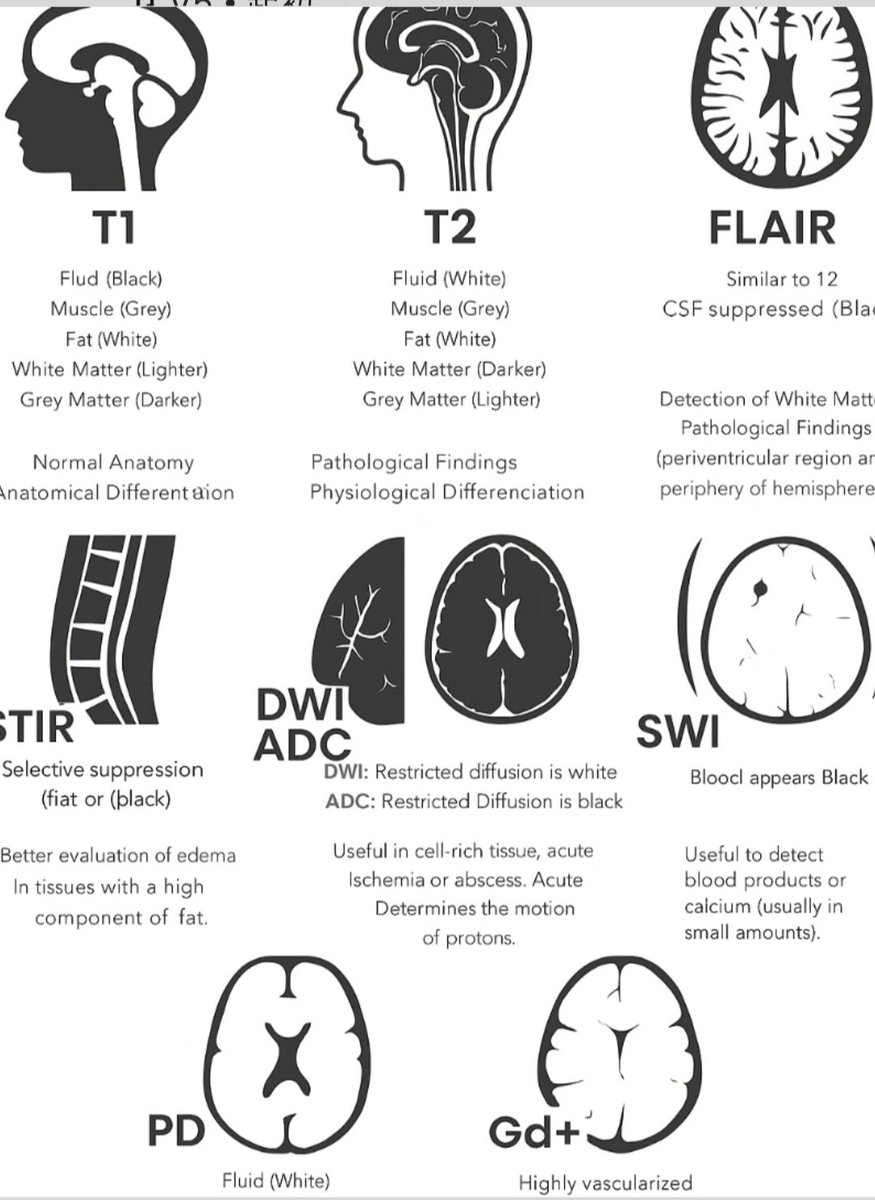


I have been testing Google's new image model nano banana and it is not working with medical images. It fails to annotate even simple structures on chest x-rays. The same with GPT5. This highlights a fundamental issue in AI for medical imaging and allow me to cut through the hype of "AI will soon replace radiologists." Those who have trained radiology AI models AND worked in a clinical setting understand this well. A very basic hurdle is the lack of adequate medical imaging data available to train these models. There are no adequate datasets online for most radiology reporting purposes, at the sizes required to train foundation models. You need a minimum of 5000 to 10,000 scans+reports for every single pathology which can be seen on that scan to adequately train an AI model. And for every single anatomical structure on that scan (they are in the hundreds), there are countless things which can go wrong. Neither anatomy nor disease reads textbooks and there are numerous variations of anatomy and diseases on imaging. This is multiplied 100x in histopathology, where the specialty is not even digitalized in most places worldwide so there is even scarce data for AI training. Histopathology image sizes could be in GBs and tissue variations are even larger and wilder for the same disease than for radiology. AI models trained on medical images from a certain scanner, patient demographic or country fail on images from different ones. Even an AI model trained on medical images from Liverpool will fail to perform well just a half hour drive away in a hospital in Manchester. PubMed and Radiopaedia are not enough at all to train an AI model to report in any clinical setting. This is on top of AI foundation model training being GPU heavy and requiring thousands of dollars to train one to be of any clinical use. Today with agentic workflows and RAG for vision language models (maybe with access to Radiopaedia and local reporting guidelines) it is possible to achieve an accuracy boost for radiology reporting, but still nowhere near as good to be clinically deployable. Big AI today is focused on optimizing LLMs for coding, in the hope of creating a superhuman coding model which writes its own code and recursively self improves, leading to a superintelligence. Such a superintelligence could theoretically be able to design new AI paradigms which do not require thousands of scans of degenerative lumbar spine MRs for training it, and could function well with few hundreds of them or even less. Removing AI bias might be possible, or not. Maybe we embrace bias in AI and fine tune AI models in each radiology department locally. Then again most hospitals worldwide don't have GPUs which each cost thousands of dollars, and are essential to train and run most AI models today. And most don't have the funds to invest in them for experimenting with new technologies which may or may not work. The way AI has evolved has led it to master language and code first. This has a direct impact on language based medical specialties whose work will be significantly augmented and improved by LLMs like all physician non-surgical, non medical imaging specialties such as GPs, cardiology, critical care, paediatrics and others. Until LLMs hallucinate or make errors they will not be given regulatory approvals to work in clinical settings independent of doctors. So till then they will not replace a single doctor. Same goes for medical imaging models. Whoever solves the fundamental roadblock of lack of diverse open access medical imaging datasets will accelerate medical imaging AI. Till then radiologists and pathologists are as safe or even safer than many other professionals, in medicine and in general. You are welcome to forward the above post to medical students considering a career in radiology or pathology and worried about 'AI replacement'.

In 2016 Geoffrey Hinton said “we should stop training radiologists now" since AI would soon be better at their jobs. He was right: models have outperformed radiologists on benchmarks for ~a decade. Yet radiology jobs are at record highs, with an average salary of $520k. Why?