Jimoh Soliu Opeyemi

804 posts

Jimoh Soliu Opeyemi banner
Jimoh Soliu Opeyemi

Jimoh Soliu Opeyemi

@ASSADIYY

¶ Nation builder ¶ a Father ¶ Student of Knowledge ¶ Islamic Preacher ¶ Business Guru¶ Virtual Assistant ¶ Freelancer ¶ Manager ¶ DevOps Eng. ¶Investor

Ibadan Katılım Ekim 2011
191 Takip Edilen38 Takipçiler
Sabitlenmiş Tweet
Jimoh Soliu Opeyemi
Jimoh Soliu Opeyemi@ASSADIYY·
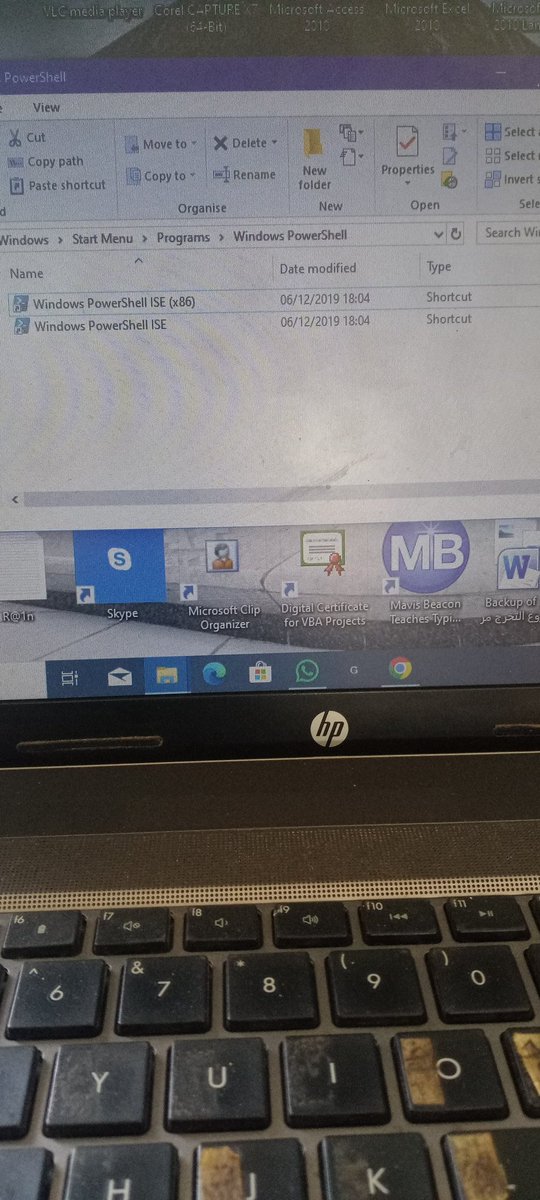
Someone should help please. I need to set up Linux 🐧 on my laptop but it has been so difficult for me. I then discovered this is all I have on my laptop. What should I do please???
Jimoh Soliu Opeyemi tweet media
English
2
0
3
11.7K
Emmanuel Osu
Emmanuel Osu@OSUET1·
I just realised that people can trade stocks on @investbamboo even when the NGX, market is closed
English
3
0
2
423
Shanaka Anslem Perera ⚡
BREAKING: President Trump just released the footage. The most secretive bomber in the American arsenal hitting the most valuable military real estate in Iran. And he wants the world to watch. The video published on Truth Social shows B-2 Spirit stealth bombers conducting precision strikes on Kharg Island’s military infrastructure. Runway cratering charges tear the airbase apart in sequential detonations. Multiple explosions bloom across IRGC missile launch sites, coastal defence batteries, radar installations, and garrison facilities. The footage is steady, clinical, and unmistakable. The bombs are 2,000-pound JDAMs, GPS-guided GBU-31 and GBU-32 variants, the same munitions that cratered Iraqi airfields in 2003 and Afghan command centres for two decades. They are dropped by an aircraft that Iran’s air defence network cannot detect, track, or engage. The oil terminals are visible in every frame. They are untouched. That is the message. Not the destruction. The restraint. Ninety percent of Iran’s crude exports flow through those terminals. The loading jetties stand. The storage tanks are full. The infrastructure that funds the IRGC, that pays for the Shaheds, that finances the Mosaic Doctrine’s 31 autonomous commands, that underwrites every mine on the seabed of Hormuz, is intact and one presidential decision from joining the rubble surrounding it. The B-2 Spirit was designed to penetrate Soviet air defence networks during nuclear war. It carries 40,000 pounds of ordnance inside a flying wing with a radar cross-section smaller than a bird. Twenty aircraft exist. Each costs $2.1 billion. The United States sent its most expensive, most classified, most capable strategic asset to crater a runway on a 20-square-kilometre island in the Persian Gulf because the message required the messenger. A B-52 could have dropped the same JDAMs. An F-15E could have cratered the same runway. The B-2 was chosen because its presence means Iran had no warning, no interception opportunity, and no defence. The bombs arrived before the sound. The runway cratering is tactically decisive. A cratered runway cannot launch aircraft, receive resupply, or evacuate personnel. The IRGC garrison of 250 to 500 personnel is now isolated on an island whose military defences have been destroyed, whose airstrip is inoperable, and whose only remaining value is the oil infrastructure the United States deliberately chose not to destroy. The garrison cannot be reinforced by air. It cannot project force by sea because the IRGC Navy is at the bottom of the Gulf. It exists on an island that America controls from the sky while Iran controls from the ground, and the ground shrinks every hour the runway stays cratered. The footage itself is a weapon. Trump did not release it for documentation. He released it for deterrence. Every IRGC commander watching the video sees an aircraft they cannot detect delivering ordnance they cannot stop onto an island they cannot defend. Every Iranian decision-maker watching the terminals standing untouched beside the rubble understands the conditional: the restraint is voluntary. The next strike does not need to be restrained. The strategy emerging from the strike, the Marines deployment, and the Kharg footage is sequential strangulation. Destroy the military capacity to defend the island. Crater the runway to isolate the garrison. Deploy the Tripoli ARG with 2,500 Marines and F-35Bs for air superiority and potential amphibious seizure. Hold the oil terminals as leverage for a war-ending negotiation in which Iran’s 90% export revenue becomes the ransom for every American objective: open the Strait, surrender the uranium, dismantle the enrichment programme. Iran’s crown jewel is no longer Iran’s. It is a hostage sitting on a cratered runway surrounded by rubble, guarded by a garrison that cannot be reinforced, watched by an aircraft it cannot see, and one decision away from ceasing to exist. open.substack.com/pub/shanakaans…
Shanaka Anslem Perera ⚡@shanaka86

BREAKING: President Trump just put a gun to the head of 90% of Iran’s oil revenue and pulled the trigger on everything around it. “Moments ago, at my direction, the United States Central Command executed one of the most powerful bombing raids in the History of the Middle East, and totally obliterated every MILITARY target in Iran’s crown jewel, Kharg Island.” That is the President’s exact language on Truth Social tonight. Every military target. Obliterated. The coastal missile batteries. The anti-ship missile installations. The radar sites. The short-range air defence systems. The IRGC garrison of 250 to 500 personnel. The fast attack craft support. The naval mines infrastructure. Everything that defended the island, destroyed. Everything that makes the island valuable, deliberately spared. The oil terminals are still standing. The loading jetties are intact. The storage tanks are full. Ninety percent of Iran’s crude exports flow through those terminals. Trump left them untouched and told Iran why: “for reasons of decency.” Then he added the threat that makes decency conditional: if Iran interferes with free and safe passage through the Strait of Hormuz, the oil infrastructure goes next. This is the chequebook doctrine made operational. For fifteen days, this campaign has identified three layers governing the war: the nuclear programme is the existential minimum, the Strait is the clock, and the oil infrastructure is the chequebook. The chequebook was deliberately spared to control what gets rebuilt, by whom, and under what conditions. Tonight, Trump confirmed it. Kharg’s military defences are rubble. Kharg’s oil terminals are leverage. The island that handles Iran’s entire export economy now sits defenceless, its military guardians obliterated, its revenue infrastructure intact but held hostage to a single condition: open the Strait. The calculus Iran faces is unprecedented. The 31 autonomous IRGC commands that have been firing continuously for fifteen days just lost their forward defensive position in the northern Gulf. The coastal batteries that could threaten tanker escorts are destroyed. The radar that tracked shipping approaches is destroyed. The fast boats that laid mines operated from Kharg support facilities that are destroyed. The island that was Iran’s shield has been turned into America’s hostage. Iran’s oil cannot flow without Kharg. Iran’s military can no longer defend Kharg. And the man who ordered Kharg’s military annihilation has told Iran that the oil infrastructure joins it if the Strait does not open. The Supreme Leader who ordered the Strait permanently closed from a hospital bed just received the response: the terminals that fund his war are one presidential order from becoming the same rubble as the missile batteries that used to protect them. Brent will react within hours. The sparing of oil infrastructure should limit the immediate spike, but the threat converts every future Iranian provocation in Hormuz into a potential trigger for the destruction of 90% of Iran’s export revenue. The war premium is no longer about whether oil flows. It is about whether Trump decides to let it flow. The war began with an assassination. It escalated through mines, drones, and burning tankers. It crossed the nuclear threshold at Parchin. It crossed the alliance threshold at Incirlik. Tonight, it crossed the revenue threshold at Kharg. The existential minimum is the uranium in Pickaxe Mountain. The existential leverage is the oil terminal standing untouched on an island where everything else has been destroyed. Iran’s crown jewel just became America’s hostage. The ransom is the Strait of Hormuz. Full analysis - open.substack.com/pub/shanakaans…

English
156
884
4.5K
2.1M
Jimoh Soliu Opeyemi
Jimoh Soliu Opeyemi@ASSADIYY·
Āmīn yā Allah Answer mine as well yā Allah, you make it possible for ‘Umrah to show up this year – though I was unable to answer, but you are the All knower and the best planner, let Tamattu‘u come my way and make it easy for me, āmīn.
A.Y.O@YusufAsunmogejo

Enough of the theory. It’s time for the practical. In sha Allah next year, I will make a serious effort to perform Hajj. May Allah make it easy for me. It was almost possible in 2022 and 2023, but as Allah would have it, it didn’t work out. I pray next year is the year for me. Say Amin to my prayer if you come across this post.

English
0
0
0
4
Mudi
Mudi@MudiTheInvestor·
Lafarge Africa’s Comeback: From ₦12 Crisis Stock to ₦214 Giant A Corporate Story 🧵 In 2018, Lafarge Africa looked finished. Debt was exploding. Losses were piling up. Investors were fleeing. The stock collapsed from ₦21 to about ₦12. Many believed the cement giant was heading for disaster. But the story didn’t end there. The company began in 1959 as West African Portland Cement Company (WAPCO). Production started in Ewekoro in 1961, Sagamu followed in 1978, and the company listed on the Nigerian Stock Exchange in 1979. For decades it was one of Nigeria’s key industrial companies. In 2001, Lafarge acquired Blue Circle Industries, inheriting control of WAPCO. By 2008, the company became Lafarge Cement WAPCO Nigeria Plc. Then came the big move. In 2014, Lafarge merged several African assets into the Nigerian company, creating Lafarge Africa Plc. Assets included Ashaka Cement, UniCem, Atlas Cement, and Lafarge South Africa operations. The goal: build a rival to Dangote Cement. But the South African business became a disaster. Losses mounted. Foreign currency loans ballooned. By 2018, debt had reached about ₦287 billion. The stock market punished the company. ₦21 → ₦15 → ₦12. Then came the turning point. In 2019, Lafarge Africa sold its South African operations for $317 million, using the proceeds to eliminate FX debt and cut finance costs. The turnaround was immediate. 2018: Loss of ₦19.7bn 2019: Profit of ₦15.5bn Debt fell. Interest expenses collapsed. Confidence returned. But the real transformation came later. In December 2024, Holcim agreed to sell its 83.81% stake in Lafarge Africa to Huaxin Cement (China) in a $1 billion deal. Before the announcement, the stock traded around ₦58. By August 2025, it had climbed to ~₦130. Then came explosive financial results. FY2025 Revenue: ₦696bn → ₦1.066trn PBT: ₦411bn PAT: ₦273bn Lafarge Africa crossed the ₦1 trillion revenue milestone. Dividend surprised investors: Interim: ₦4 Final: ₦6 Total: ₦10 per share By March 2026, the stock reached ₦213.90, near its ₦214 all-time high. From ₦58 in 2024 → ₦213 in 2026. About 267% growth in under two years. But Lafarge isn’t stopping there. In February 2026, the company announced major expansions at Sagamu (Ogun) and Ashaka (Gombe). Capacity will rise from 10.5 MTPA → 14 MTPA. Sagamu: 1 → 3.5 MTPA Ashaka: 1 → 2 MTPA This signals Lafarge’s return to the cement scale race. Today’s industry landscape: Dangote Cement → ~52 MTPA BUA Cement → ~20 MTPA Lafarge Africa → ~10.5 MTPA Expansion capex could exceed ₦400bn, meaning dividends may become more disciplined in the short term. But if the strategy works: Higher capacity → higher volumes Higher volumes → stronger cash flow Stronger cash flow → bigger future dividends. Investor takeaway Lafarge Africa has gone through four phases: 2018 — Crisis 2019 — Balance sheet repair 2025 — Profit explosion 2026 — Expansion era The company is no longer just recovering. It is re-entering the cement war. The real question now: Can Lafarge Africa challenge Dangote and BUA again?
Mudi tweet media
English
8
15
79
3.9K
Jimoh Soliu Opeyemi
Jimoh Soliu Opeyemi@ASSADIYY·
@TomolaGroup But they said Tinubu is so corrupt and bla bla bla... Personally, all his administration's actions speak against this. May Tinubu succeed in all his good intentions for Nigeria. Evil minds shall perish and Nigeria will be great!💪🏽
English
0
0
0
23
Toby
Toby@TomolaGroup·
New CBN directive that flew under the radar: Banks now have 18 months to deploy fully automated anti-money laundering systems. Mobile money operators, payment service providers, and transfer operators have 24 months. These systems must handle customer verification, risk profiling, sanctions screening, transaction monitoring, and regulatory reporting. All automated. Manual compliance processes are being phased out. What this means for you: Expect stricter KYC requirements at your bank. More transaction flags. More questions about large transfers. The days of moving money around without digital footprints are numbered.
English
21
111
399
68.3K
Jimoh Soliu Opeyemi
Jimoh Soliu Opeyemi@ASSADIYY·
@DrKalu_ No, you are not concerned. If you are, call for sledgehammer ⚒️ and bang it on your head 👊🏽💪🏽
English
0
0
0
4
Dr KALU, OON
Dr KALU, OON@DrKalu_·
The wife of one of my staff just gave birth to their 7th child. I'm concerned, I think the guy isn't mentally ok. I want to sack him. Why 7 children on a monthly pay of ₦150k?
English
935
607
5.9K
338.2K
Sir Nelson
Sir Nelson@Crypto_Diet·
₦3,000,000 capital. In Nigeria today, which livestock business can realistically grow into ₦30M+ profit within 5 years if managed well? 1. Layer poultry (egg production) 2. Broiler chicken farming 3. Turkey farming 4. Quail farming 5. Guinea fowl farming 6. Snail farming 7. Grasscutter farming 8. Rabbit farming 9. Pig farming 10. Goat fattening Hotels, bukas, restaurants and suya spots buy meat every single day. Which one is the real goldmine?
English
27
18
102
28.6K
Jimoh Soliu Opeyemi
Jimoh Soliu Opeyemi@ASSADIYY·
@Eng_china5 Look at your Netanyahu, you will agree with me that was not how you were some weeks ago.... You have put yourself into endless suffering.
English
0
0
0
62
China pulse 🇨🇳
China pulse 🇨🇳@Eng_china5·
Netanyahu challenges Iran during a visit to Ashdod Port, saying: “I am here at the Port of Ashdod. The ports are operating, the skies are operating, and the economy is functioning at full capacity and with tremendous strength. We will approve a budget — and we decided on it today — the defense budget. The government is strong and stable, and far more importantly, the state is strong and stable. The State of Israel is showing the world what a fighting people are, what a fighting nation is, and what an extremely strong economy looks like.” Israeli Transport Minister Miri Regev: “Israel performs miracles. A country at war, yet its trade is open, its economy is thriving, its currency is improving, its maritime trade is operating at full capacity, and its airspace is functioning as well — it is a miracle by every measure.”
English
584
315
1.2K
851.8K
Kush.
Kush.@ykush00·
@MudiTheInvestor Mudi is SportyBet a good app for investing my money and building long term wealth?🙏🏽
English
1
0
0
104
Mudi
Mudi@MudiTheInvestor·
I really wonder how folks would be celebrating the increase in the price of crude oil when this will translate to higher cost of living for everyone? Make it make sense.
English
9
3
28
2.5K
Donald J. Trump
Donald J. Trump@realDonaldTrump·
The United States has spent EIGHT TRILLION DOLLARS fighting and policing in the Middle East. Thousands of our Great Soldiers have died or been badly wounded. Millions of people have died on the other side. GOING INTO THE MIDDLE EAST IS THE WORST DECISION EVER MADE.....
English
13.4K
38.7K
119.3K
0
Jimoh Soliu Opeyemi
Jimoh Soliu Opeyemi@ASSADIYY·
@MudiTheInvestor Yesterday when I saw it, my thought was the common one. Just knowing that now that this can happen in two opposite way Thanks for the simplicity.
English
1
0
0
43
Mudi
Mudi@MudiTheInvestor·
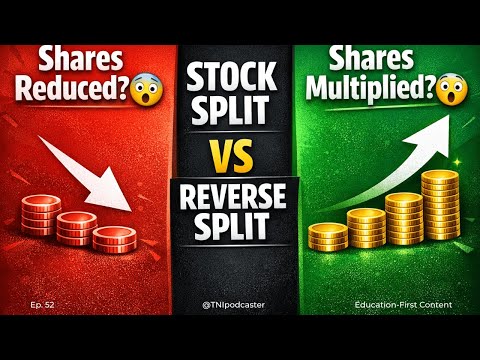
Continuation… Reverse Stock Split (Share Reconstruction) Now let’s flip the concept. A reverse stock split is the exact opposite of a stock split. Instead of slicing the pizza into more pieces, you combine several slices into one larger slice. This means: • Number of shares goes down • Price per share goes up But again, the overall value remains the same. In Nigeria, this is commonly called a Share Reconstruction. Companies usually do this when: • Their share count is extremely large • Their share price is very low • They want a more “premium” looking price It’s essentially a capital structure clean-up exercise. A good recent example is Transcorp Plc. In October 2024, they carried out a 1-for-4 share reconstruction. Before reconstruction: • Shares 40.6 billion • Price ₦11.05 After reconstruction: • Shares 10.2 billion • Price ₦44.20 Notice something important: The value of the company did not change. Only the structure of the shares changed. Why would a company do this? There are several reasons: 1️⃣ Reduce excessive share dilution Too many shares in the market can make price appreciation slower. 2️⃣ Improve perception A ₦2 stock may look “cheap” or speculative, while a ₦40 stock appears more established. 3️⃣ Institutional appeal Some institutional investors prefer higher-priced shares. As I write this tweet now, these NGX companies have extremely large share counts. Examples include: Int’l Breweries: 168.29 billion shares AccessCorp: 53.32 billion shares AIICO Insurance: 36.61 billion shares If these companies ever choose to reconstruct their shares, the goal would likely be to streamline their capital structure. Now let me show you how this played out in my own portfolio. In April 2021, I bought: 1,000,000 units of Wema Bank at ₦0.68 Total investment: ₦680,000 At the time, the share price was very small but the volume of shares was large. In 2022, Wema Bank carried out a 1-for-3 share reconstruction. That means: Every 3 shares became 1 share. So my holdings changed from: 1,000,000 shares reduced to 333,333 shares I now had fewer shares, but the price per share increased proportionally. My total investment value remained the same. If you want the full breakdown of stock splits, reconstructions, & how they affect your portfolio, we covered it in detail on The Nigerian Investor Podcast. 🎙️ Watch here: youtu.be/OGkQqp2TJes Quick Summary ✔ Stock Split Shares increase, price decreases. ✔ Reverse Split (Reconstruction) Shares decrease, price increases. ✔ Market Value Remains unchanged immediately after the action. The lesson? Don’t panic when corporate actions change the number of shares in your portfolio. Focus on what really matters: The value of the underlying business
YouTube video
YouTube
Mudi@MudiTheInvestor

I bought Wema Bank at ₦0.68. Then the company reduced my shares by 67%. Yet my investment later grew to ₦8 million. Confused? Before we start, here’s the background to the story. Yesterday, I shared how I bought Wema Bank at ₦0.68 in 2021. In that tweet, I mentioned that the company later carried out a 1-for-3 reverse stock split (share reconstruction) in 2022. That single sentence let to some people asking questions about what a reverse split actually is. Some people were even asking Grok for answers. 😂 NB: @TNIpodcaster has done an episode on Stock Splits vs Share Reconstructions (link below); however, let me explain these corporate actions in the simplest way possible. Because once you understand them, you’ll realize something important: Your shares may change, but the value of your investment doesn’t magically change overnight. Let’s start with the easier one. The Stock Split (Forward Split) Think of a stock split like cutting a pizza into more slices. The size of the pizza doesn’t change. But instead of 4 big slices, you now have 8 smaller slices. The same logic applies in the stock market. When a company performs a stock split, it increases the number of shares available in the market, while the price per share drops proportionally. Here is the key concept beginners must understand: The total value of the company does not change. This value is called Market Capitalization. Market Cap is the Share Price × Number of Shares Outstanding When a stock splits: • Shares increase • Price decreases • Market cap remains the same Nothing magical happened to the company’s value. A good example is NVIDIA in June 2024. Before the split: • Shares outstanding 2.5 billion • Share price $1,200 Many retail investors found it psychologically expensive to buy. So NVIDIA did a 10-for-1 stock split i.e., for every 1 NVIDIA share, existing investors get 10 new shares. After the split: • Shares outstanding increased to 25 billion • Price dropped to $120 from $1,200 The company didn’t suddenly become cheaper. But now more investors could afford to buy shares, which improves liquidity in the market. Why Companies Do Stock Splits Companies usually split their stock for three main reasons: 1️⃣ Accessibility Lower share prices make it easier for retail investors to participate. 2️⃣ Liquidity More shares trading in the market means it’s easier to buy and sell without large price swings. 3️⃣ Psychological pricing Investors are often more comfortable buying ₦100 shares instead of ₦3,000 shares, even if the underlying value is the same. Human psychology plays a huge role in markets. On the NGX, a company like Nestlé Nigeria could potentially benefit from a split. Right now: • Shares outstanding is 792.66 million • Share price is about ₦3,250 For many retail investors, that price per share feels too expensive. A split could bring the price down and make the stock more accessible, potentially improving liquidity and price discovery. Reverse Stock Split (Share Reconstruction) Now let’s flip the concept. To be continued…

English
11
17
56
7.4K
Jimoh Soliu Opeyemi
Jimoh Soliu Opeyemi@ASSADIYY·
This and others are serious questions that beg for answers. A lot of benefits are just out there and all are like grains in the plain glass bottles placed in front of chicken 🐔.
Abdullateef@Kaothaj

@giftsharamain The page is not loading here. Is it location specific, I'm from Nigeria.

English
1
0
0
1
Jimoh Soliu Opeyemi
Jimoh Soliu Opeyemi@ASSADIYY·
@ChiomaFavour0 You are only enticed by the 8k price, you can't tell what will come out of it later – quantity or quality issues... And besides, she didn't do anything bad.
English
0
0
0
3
Chioma Favour
Chioma Favour@ChiomaFavour0·
I bought a paint of crayfish for 10k. She told me it was 11,500. I begged her for 10k, she agreed. She packed it for me and I paid her and left. I went further inside the market and saw the same paint of crayfish for 8k. I went back to the woman that sold hers for me for 10k. I told her that I went inside the market and saw it for 8k so I will like to return the one she sold to me, she refused. In fact, this woman stopped talking to me immediately she refused. It was like I wasn't standing in front of her. I looked at her with disbelief and quietly left there in pain...
Chioma Favour tweet media
English
3.5K
264
2.7K
2.3M