Andrzej Wolniewicz

7.1K posts

Andrzej Wolniewicz banner
Andrzej Wolniewicz

Andrzej Wolniewicz

@ASWolniewicz

Palaeontologist 🦕 | Triassic marine reptiles 🦎➡️🐬 | Asst Prof at @IPaleoPAN 🇵🇱🇪🇺

Warsaw, Poland Katılım Şubat 2015
1.8K Takip Edilen1.9K Takipçiler
Andrzej Wolniewicz retweetledi
パンテオン
パンテオン@pantheo27705718·
スヴァールバル諸島、ビヨルン島、三畳紀中期の地層から産出した、巨大なプラギオサウルス科(分椎類)新種 Arctobatrachus urdensis 属名:北極圏と、より具体的にはギリシャ語で「熊」を意味するビヨルン島(クマ島)を指す+(ギ βάτραχος )カエル、両生類 種小名:北欧神話に登場する運命の三女神ウルド、ヴェルダンディ、スクルド(運命の三姉妹)の一人にちなんで名付けられたミゼリフィエル山の最高峰に由来する。PMO 201.958は、ウルド山の南斜面で発見された この標本は四肢および腰帯部分を除く関節した骨格で、推定全長2.7m 1948年に最初に発見されたが、標本が大きすぎてその場で回収できず、1985年に発掘されたが、極地特有の激しい風化により骨がかなりバラバラに風化していた。記載にあたっては1948年当時に撮影された標本写真も参照されている Arctobatrachus urdensis 発見の特徴とその意義 既知で最大のプラギオサウルス科: 全長は2.7メートルを超えると推定され、これまで知られていたプラギオサウルス科の中で圧倒的に最大の種である 系統樹の基底部に位置: 系統解析の結果、プラギオサウルス科の最も初期に分岐した、基盤的なメンバーであることが判明した 独特な頭蓋の形状: 頭蓋の輪郭はほぼ完全な半円形を成し、顎の関節(方骨顆)が後頭顆よりもはるかに後方に位置するため、頭蓋後縁が深く凹んでいる 初の最上位捕食者(トップ・プレデター): 巨大な体躯と大きく開く口、そして強力な歯列を備えており、この仲間で初めて確認された生態系の頂点に立つ捕食者である 原始的形質と派生的形質の混在: 菱形の間鎖骨や細長い上鎖骨といった原始的な特徴と、巨大化した肩帯や特殊化した頭蓋といった派生的な特徴を併せ持っている 脊椎進化のミッシングリンク: カピトサウルス類に似た円盤状の椎体を持っており、プラギオサウルス科特有の「円筒形の椎体」がいかに進化したかを解明する重要な証拠となった 皮骨装甲の欠如: 他の多くのプラギオサウルス科に見られるような、体を覆う皮骨(骨質の板)や腹鱗が一切存在しないという特異な性質を持つ 海洋への適応と拡散の証明: 浅い海の堆積物から発見されたことは、この仲間が塩分への耐性(広塩性)を持ち、海を渡ることで三畳紀の地球上に広く拡散できたという説を裏付けている 画像は論文から 論文OA Rainer R. Schoch, Sanjukta Chakravorti, Florian Witzmann & Franz-Josef Lindemann (2026) A giant plagiosaurid temnospondyl from Bjørnøya (Svalbard, Norway) and the origin of the plagiosaurid body plan Papers in Palaeontology 12(4): e70115 doi: doi.org/10.1002/spp2.7…
パンテオン tweet media
日本語
0
10
38
1.6K
Andrzej Wolniewicz retweetledi
American Museum of Natural History
Meet Eryops megacephalus. Evidence including strong limbs and trackways that may have been made by this critter suggest it was one of the most terrestrial early tetrapods. It lived ~280 mya during the Early Permian.
American Museum of Natural History tweet media
English
3
55
313
12.9K
Andrzej Wolniewicz retweetledi
Juan L. Cantalapiedra
Juan L. Cantalapiedra@singerstone·
1/7 🦏🐘 Our latest paper just dropped in @NatureComms! A surprising discovery about the decline of Africa's megaherbivores. Why did the continent lose most of these giants? The answer isn't what most people assumed. [all photos my own] Thread 🧵👇 🔗 doi.org/10.1038/s41467…
Juan L. Cantalapiedra tweet media
English
3
20
31
1.8K
Andrzej Wolniewicz retweetledi
Science Advances
Science Advances@ScienceAdvances·
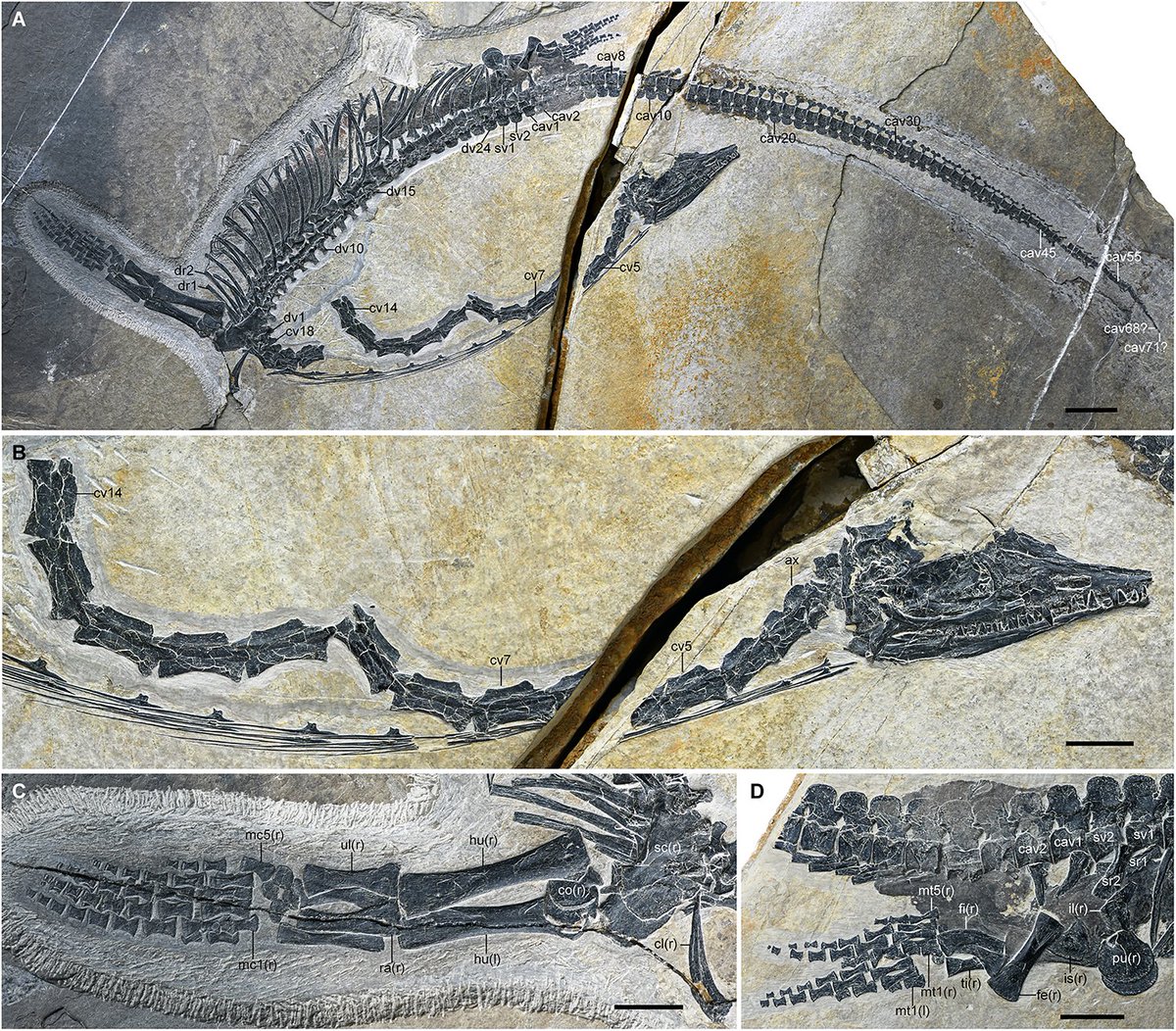
A complete skeleton of the archosaur Austronaga minuta, recovered in Early Triassic deposits from southwest China, has several specialized features indicative of an aquatic lifestyle, according to new research. scim.ag/4x5z4BV
Science Advances tweet media
English
0
7
13
2.3K
Andrzej Wolniewicz retweetledi
New Scientist
New Scientist@newscientist·
A stunningly intact marine reptile named Austronaga minuta that lived around 245 million years ago may have looked like a miniature version of more famous later ocean predators, like plesiosaurs #Echobox=1785445266" target="_blank" rel="nofollow noopener">newscientist.com/article/258213…
English

2
6
27
11.3K
Andrzej Wolniewicz retweetledi
New Scientist
New Scientist@newscientist·
The remains of an orca-sized ichthyosaur include evidence of what it ate – before it too got eaten by an even bigger marine predator #Echobox=1785419523" target="_blank" rel="nofollow noopener">newscientist.com/article/258212…
English
2
24
68
21.6K
Andrzej Wolniewicz retweetledi
Olivier Blanchard
Olivier Blanchard@ojblanchard1·
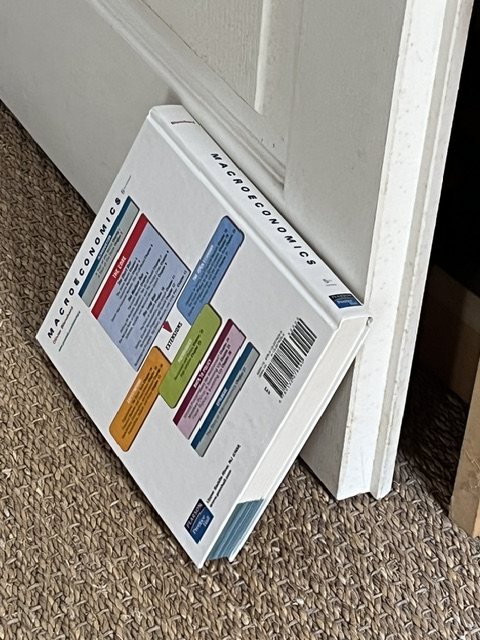
who says my work is not useful? >>
Olivier Blanchard tweet media
English

34
175
1.8K
79.6K
Andrzej Wolniewicz retweetledi
Science Magazine
Science Magazine@ScienceMagazine·
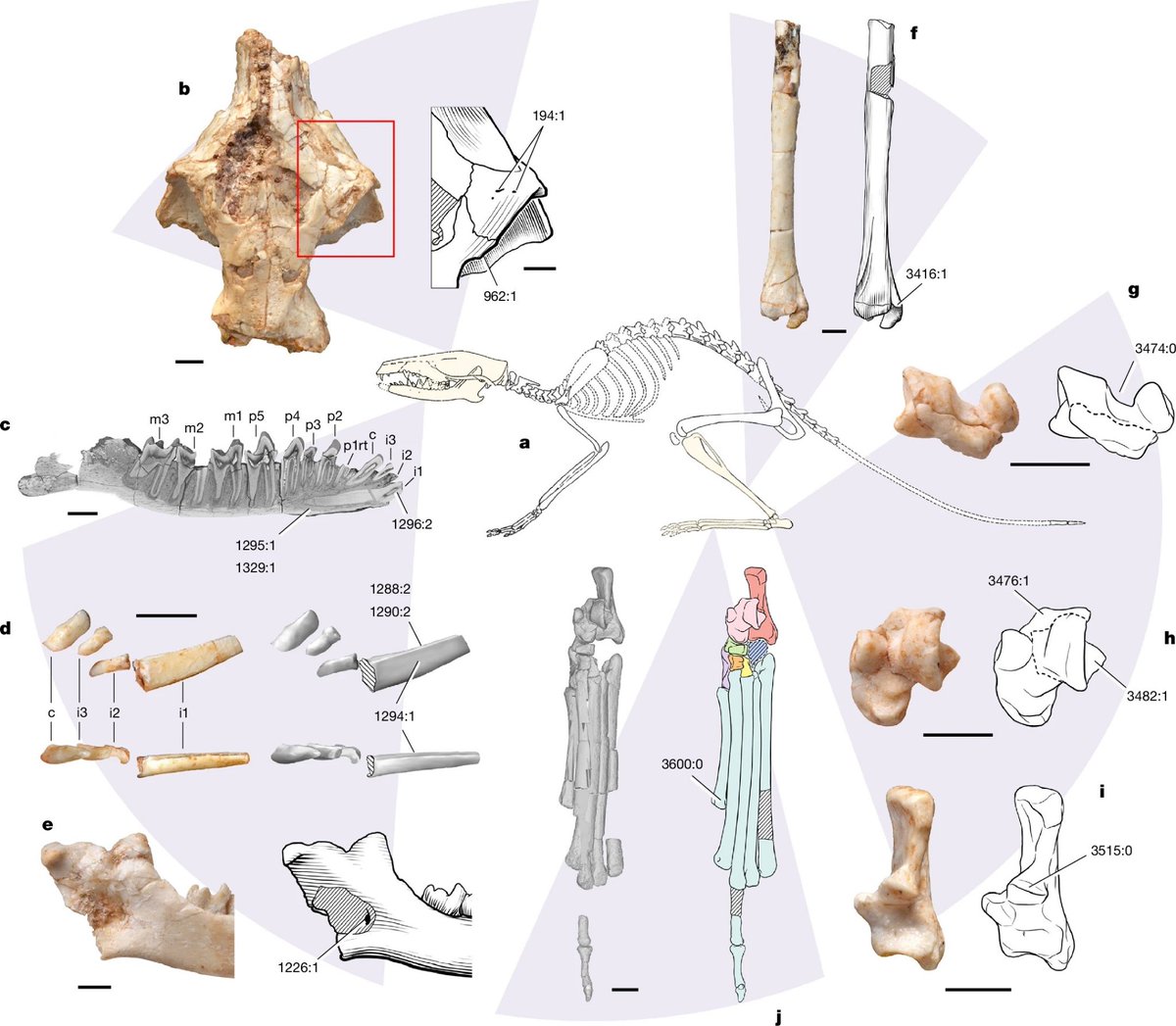
Research on the fossil record of mammals in Mexico suggests that the geographic region acted as a biodiversity “holding pen” for 10 million years, buffering the pace of both northward and southward movements of mammal species leading up to the Great American Biotic Interchange. Learn more this week in Science: scim.ag/4hFfKH3
Science Magazine tweet media
English
5
60
210
27.7K
Andrzej Wolniewicz retweetledi
Science Magazine
Science Magazine@ScienceMagazine·
An analysis of fossil mammals suggests that Mexico served as a long-term evolutionary “holding pen” where North American species adapted and diversified for millions of years before sweeping into South America 2.8 million years ago. The findings in Science clarify the timing of one of Earth's most consequential migrations and may help explain why North American mammals were more successful migrants than those from South America. scim.ag/4fKB0ZF
Science Magazine tweet media
English
8
80
286
40.9K
Andrzej Wolniewicz retweetledi
Gabriel N. U.
Gabriel N. U.@SerpenIllus·
Please say hello to Austronaga, an aquatic trachelosaurid from Triassic Asia. In a new OA paper published yesterday in Science Advances, Wang and colleagues presented a description of a COMPLETE Austronaga, which preserves the oldest complete digestive tract of any reptile!
Gabriel N. U. tweet media
English
5
254
1.2K
13.4K
Andrzej Wolniewicz retweetledi
パンテオン
パンテオン@pantheo27705718·
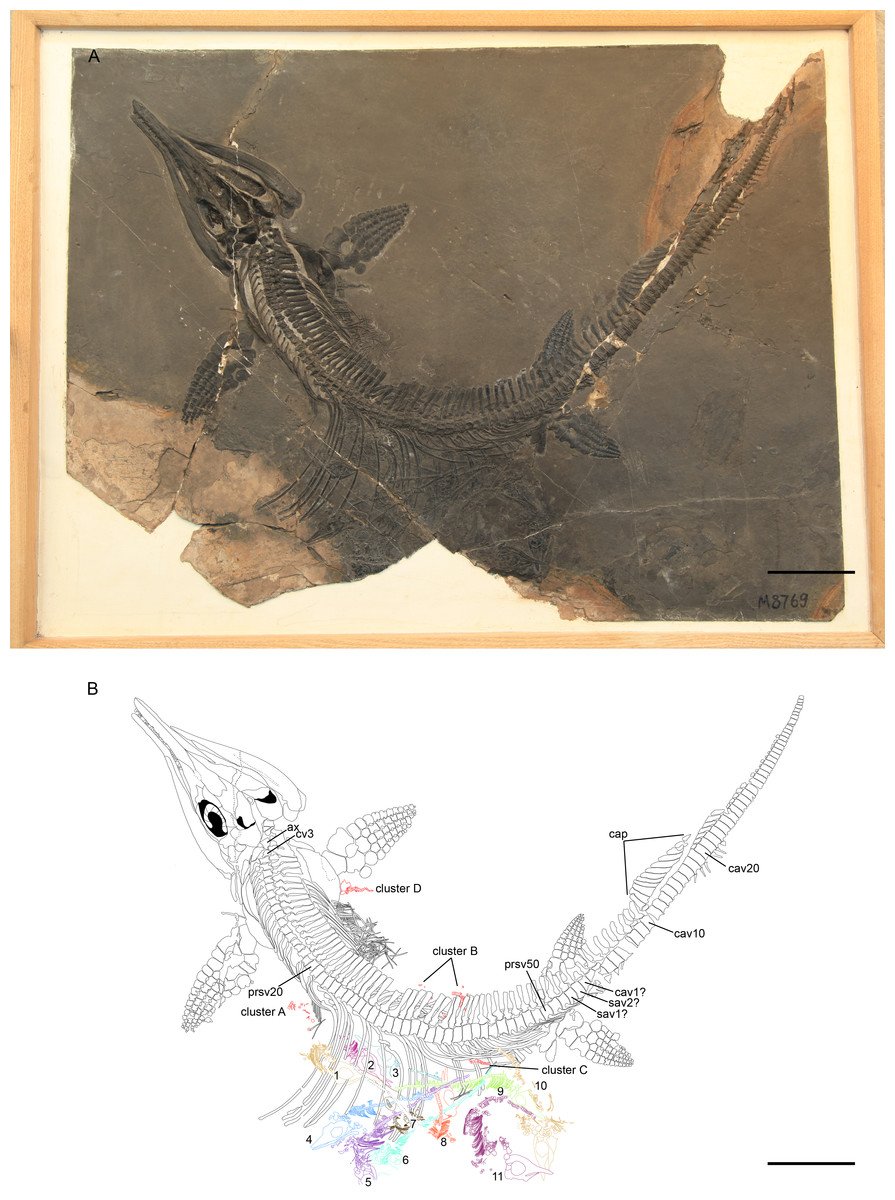
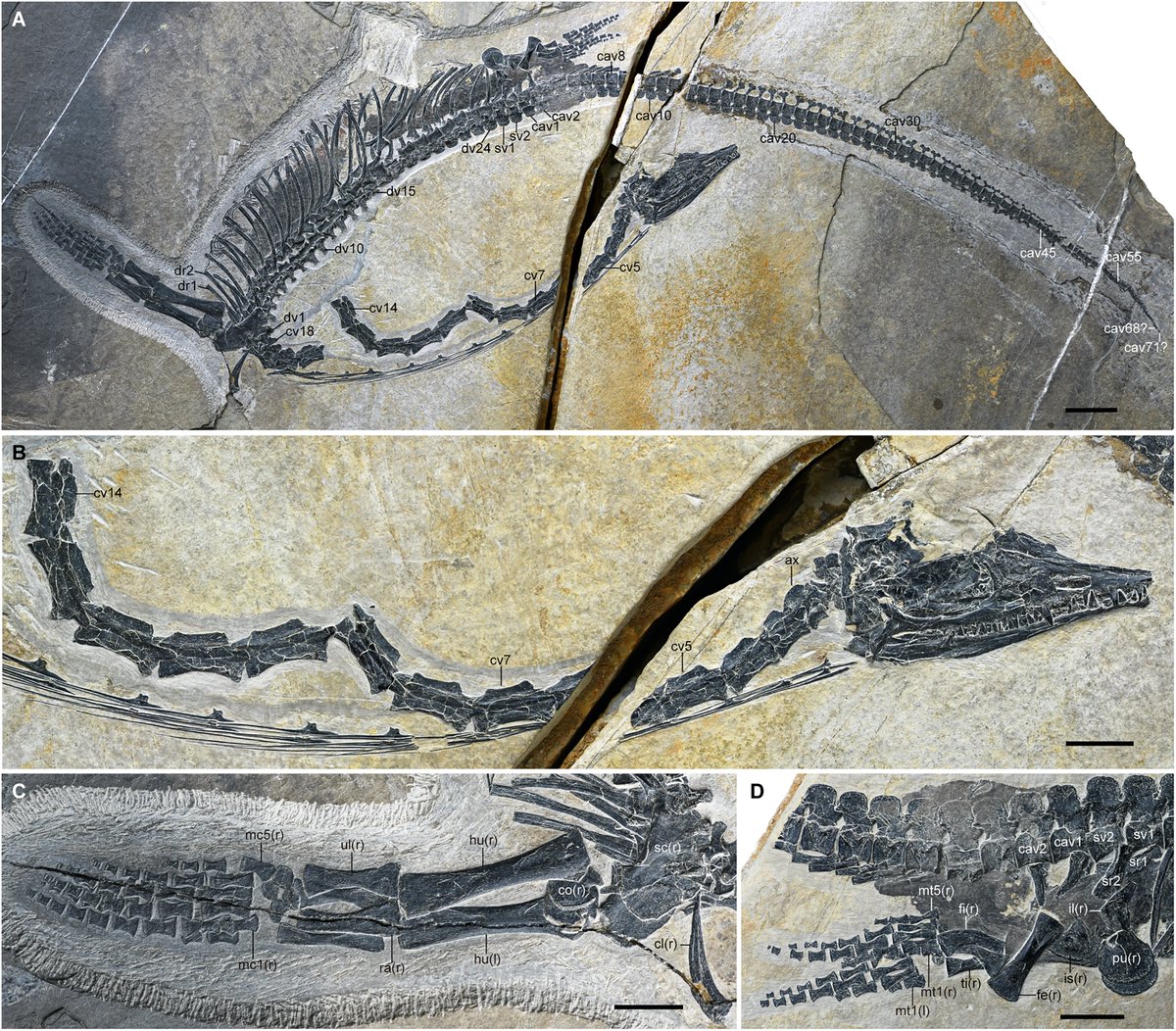
雲南省羅平県、三畳紀中期の地層から産出した(羅平生物群)、主竜形類、タニサウルス類、トラケロサウルス科 Austronaga minuta 内臓軟組織が保存された完全な骨格標本 爬虫類において知られている中で最も古い胃、肝臓、腸の保存状態を示している タニサウルス類には陸生・半水生・水生種を全て含む唯一の系統だが、本種は完全に水生 全長60cmだが、首と尾が非常に長い 前肢が後肢より明らかに長く、上腕骨対大腿骨の長さ比は2.19に達する。これは既知のあらゆる海洋四肢動物の中で最高値 手(manus)の指骨式は1:7:6:5:3であり、主竜形類として初めて多指骨性が確認された 末節骨の爪形態は消失し、軟骨性の遠位端を持つパドル状の鰭を形成 消化器 胃内部にガノイド鱗や未消化の魚→魚食性の裏付け 肝臓から高濃度の鉄成分が検出された 現生のオオトカゲ類に似た比較的短く単純な腸で、急速な消化プロセスを示唆 Austronaga の発見は、主竜類ステムグループによる海洋進出が従来の認識よりも早期かつ広範に行われていたことを実証した 論文OA science.org/doi/10.1126/sc…
パンテオン tweet media
日本語
1
20
88
3.4K
Andrzej Wolniewicz retweetledi
NHMdinolab
NHMdinolab@NHMdinolab·
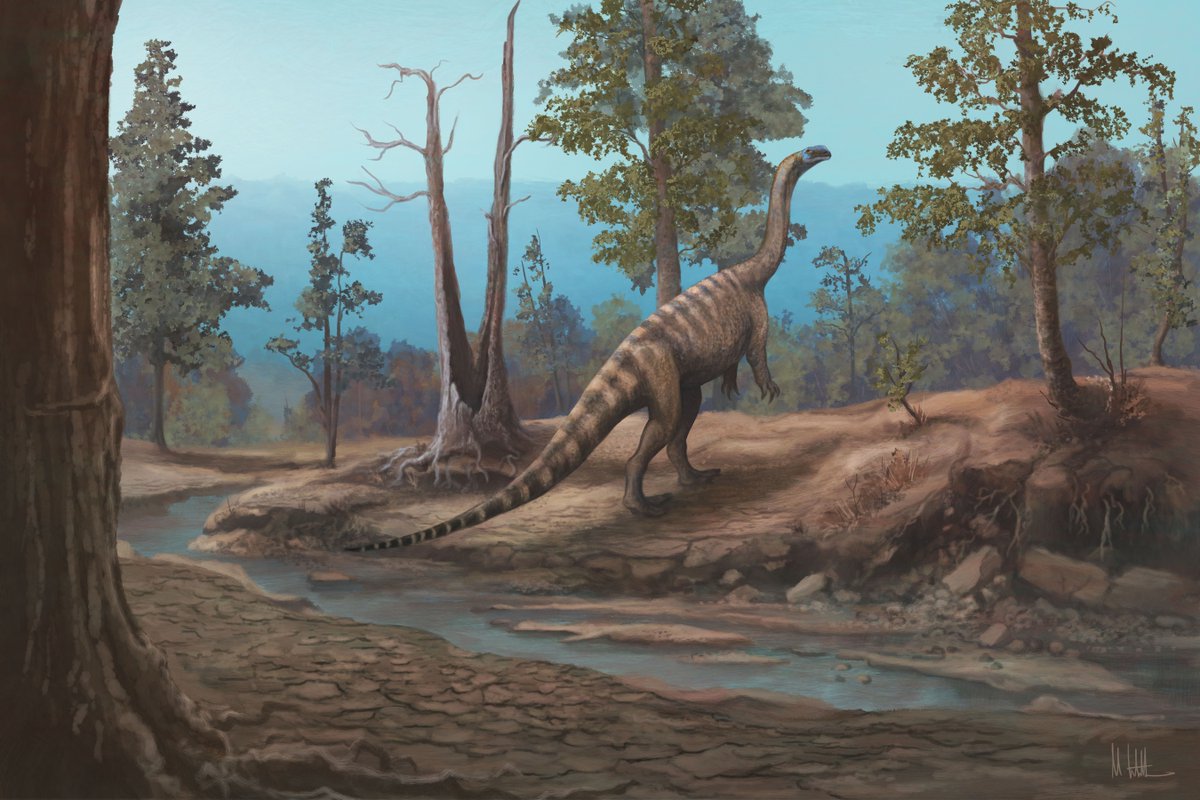
Introducing Musango matusadonaensis, a new unaysaurid sauropodomorph from the Upper Triassic Pebbly Arkose Formation of Zimbabwe which we collected from the shores of Lake Kariba in 2018: thanks to @MarkWitton for this lovely reconstruction (1/3)
NHMdinolab tweet media
English
2
78
339
7.1K
Andrzej Wolniewicz retweetledi
nature
nature@Nature·
Book review 📚 A celebration of Ernst Haeckel’s sketches of life forms, from microscopic to majestic go.nature.com/4h0uH6w
English
4
48
181
32.3K