Ahmad Sofi-Mahmudi

2.7K posts

Ahmad Sofi-Mahmudi banner
Ahmad Sofi-Mahmudi

Ahmad Sofi-Mahmudi

@ASofiMahmudi

Statistician @thermofisher • ex-Dentist • HRM MSc @HEI_mcmaster • @CochraneECP • @BioMedCentral Editor • @TEDxSBMU • #RStats • #OpenScience • #GNU • #Kurdistan

Toronto, Ontario Katılım Aralık 2017
520 Takip Edilen875 Takipçiler
Ahmad Sofi-Mahmudi
Ahmad Sofi-Mahmudi@ASofiMahmudi·
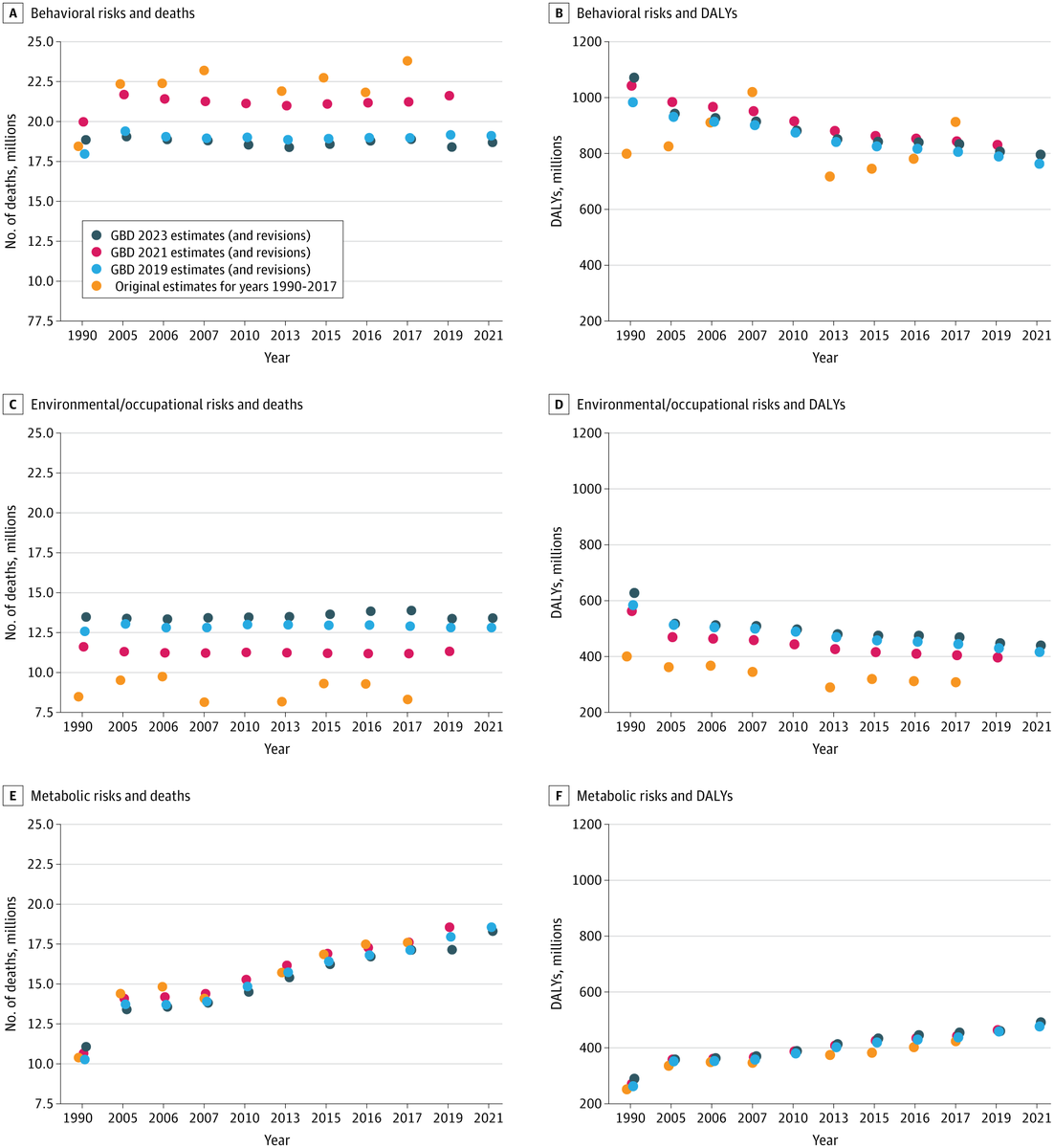
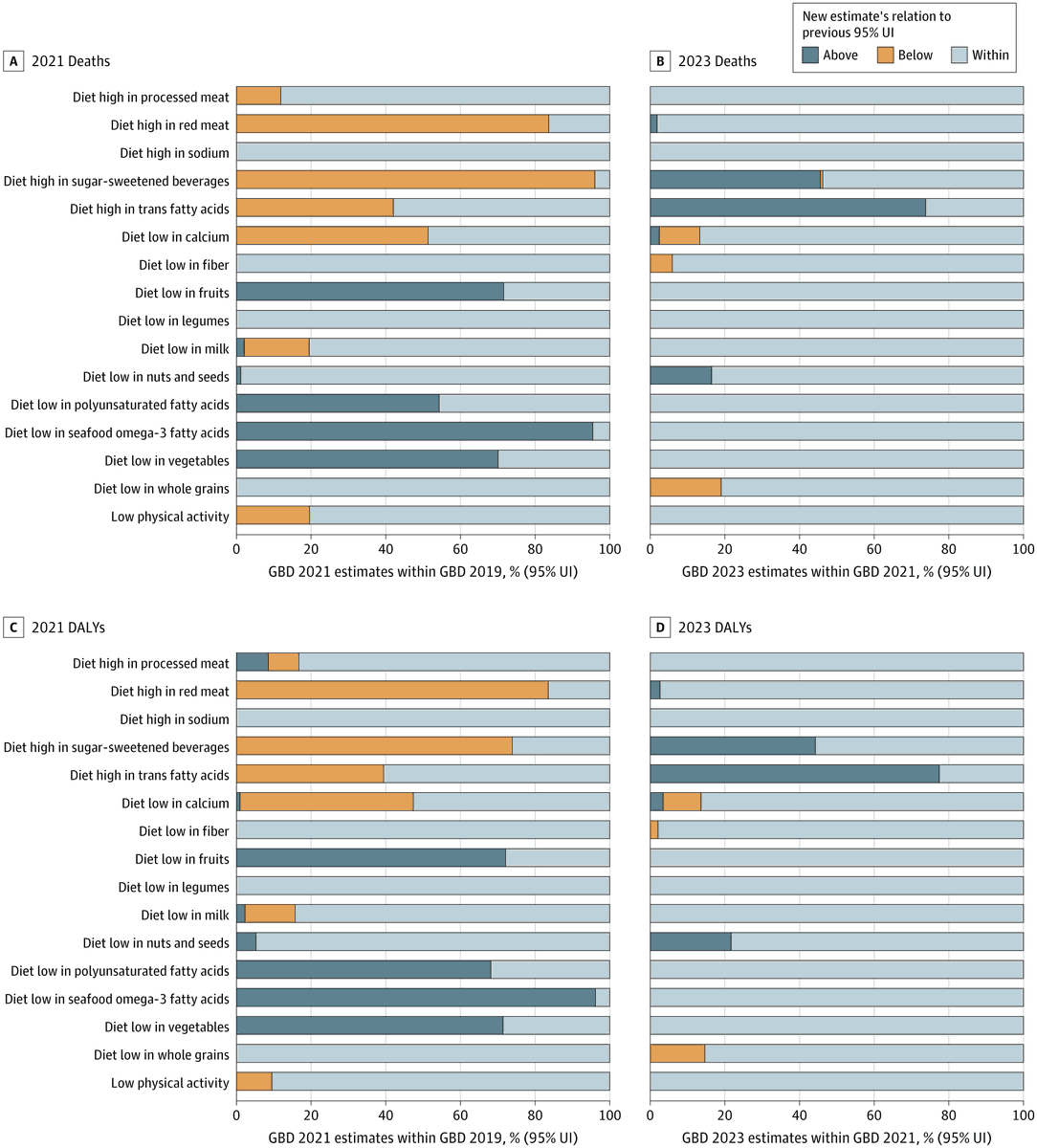
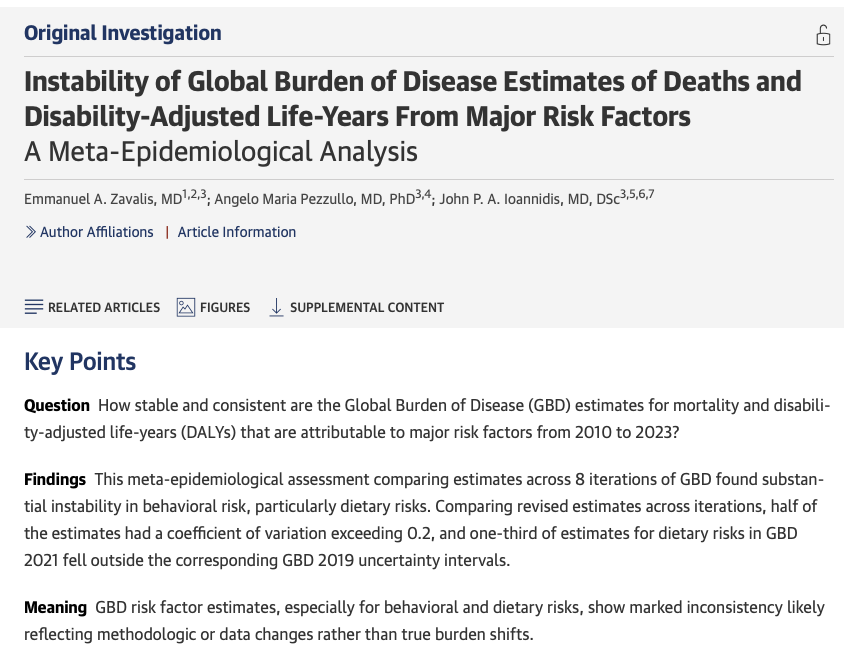
Someone finally did the study. A paper just published in JAMA Health Forum said something many of us who work with Global Burden of Disease (GBD) data have quietly wondered: how stable are these estimates, really? Zavalis et al. (2026) compared GBD risk factor estimates across 8 iterations from 2010 to 2023 and found substantial instability (particularly for behavioral and dietary risks). Half of the death estimates had a coefficient of variation exceeding 0.2, and for some dietary risks, 70–96% of GBD 2021 point estimates fell outside the GBD 2019 uncertainty intervals. That's not noise, that's a signal worth taking seriously. As someone who has published multiple Quality of Care Index (QCI) papers using GBD data (covering oral disorders, lip and oral cavity cancer, and orofacial clefts), I think this paper deserves an honest read from anyone in our field. To be clear: GBD remains one of the most ambitious and valuable epidemiological projects ever undertaken. The team should be credited for continuously updating and improving their methods, and for making the data publicly available in a way that enables studies like this one. But this analysis is a useful reminder that GBD-derived indices, including QCI, reflect the data and methodology of a specific iteration. When the underlying estimates shift substantially between versions, our conclusions may shift too, even without a single new patient being diagnosed or treated. What does this mean in practice? — Interpret QCI trends with appropriate caution — Be explicit about which GBD iteration you used — Treat uncertainty intervals as a floor, not a ceiling — Consider sensitivity analyses across iterations where feasible I'm glad someone finally did this study systematically. It doesn't invalidate GBD-based research, but it sharpens the conversation about what we can and cannot confidently conclude from it. jamanetwork.com/journals/jama-…
Ahmad Sofi-Mahmudi tweet mediaAhmad Sofi-Mahmudi tweet mediaAhmad Sofi-Mahmudi tweet media
English
0
0
0
29
Ahmad Sofi-Mahmudi
Ahmad Sofi-Mahmudi@ASofiMahmudi·
@WHO Hey WHO, do you care about public health massacares in Iran and Rojava or you make statements whenever your funds are being cut?
English
0
0
0
156
Ahmad Sofi-Mahmudi
Ahmad Sofi-Mahmudi@ASofiMahmudi·
Whereas retractions usually expose scandals in science, citations to retracted articles are a bigger scandal, especially when they are post-retraction. Based on my analyses of the @RetractionWatch Database and citation data from @opencitations and @OpenAlex_org, I found out that of one-third of citations to ~63K retracted articles occurred post-retraction. Precisely, 261,380 post-retraction citations. "Visfatin: a protein secreted by visceral fat that mimics the effects of insulin", published in Science in 2005 and retracted in October 2007, has the highest number of post-retraction citations, 1,321 out of 1,595 (~ 83%). The latest citation was from an article published in March 2025. This unfortunate phenomenon has largely been due to a lack of connection between retraction data and reference managers. Zotero and Mendeley launched this initiative long ago, and fortunately, in July 2025, EndNote joined as well. XeraRetractions web app: openscience.xera.ac/retractions
Ahmad Sofi-Mahmudi tweet media
English
0
0
2
135
Ahmad Sofi-Mahmudi
Ahmad Sofi-Mahmudi@ASofiMahmudi·
Estimating Deaths in the 2026 Iran Protests Using Quantitative Bias Analysis With Iran under a complete internet blackout since January 8, 2026, accurate death tolls from the ongoing protests are nearly impossible to verify. Iran International reports 12,000 deaths, but how reliable is this figure? Based on my lived experience in Iran and the news and videos, I thought it's too conservative. Therefore, I built an interactive tool (link in the first comment) that estimates true mortality using Quantitative Bias Analysis (QBA), a systematic method for adjusting epidemiological estimates when data sources have known/unknown biases. The anchor point: Ghafari et al. (2021) analyzed Iranian civil registration data and found 6,040 excess deaths (95% CI: 3,480–8,600) during the November 2019 protests. This was 4x higher than Reuters' estimate of 1,500, meaning media reporting captured only ~25% of actual deaths even before the current blackout. The model: Estimated Deaths = Baseline × Geographic Factor × Duration Factor × Intensity - Baseline uncertainty: Sampled from truncated normal distribution using Ghafari's 95% CI - Intensity multiplier: Triangular distribution (min=0.5, mode=2.0, max=10.0) reflecting uncertainty about violence severity relative to 2019  - Reporting sensitivity: Trapezoidal distribution (10%–35%)—the flat region (15%–25%) represents equally plausible values, with linear tails capturing extreme scenarios Why these distributions? Triangular is ideal when you have a most likely value but uncertain bounds. Trapezoidal allows a range of equally likely values rather than a single mode, more realistic when we genuinely don't know if sensitivity is 15% or 25%. Results: 10,000 Monte Carlo iterations propagate uncertainty through all parameters. At moderate intensity (2x 2019), the median estimate is ~77,000 deaths (95% CrI: ~20,000–300,000). The wide interval reflects genuine uncertainty, not imprecision. Interpreting the 12,000 figure: If reporting sensitivity is 10–25%, the true death toll implied by Iran International's count is 48,000–120,000. Limitations: Linear scaling assumptions, geographic homogeneity, and subjective priors. This demonstrates QBA methodology applied to crisis estimation, not a definitive count. Link to the app: iran-protests.vercel.app #Iran #HumanRights #Epidemiology #QuantitativeBiasAnalysis #QBA #MonteCarlo #BayesianInference #IranDigitalBlackout
Ahmad Sofi-Mahmudi tweet media
English
2
11
23
3.2K
Ahmad Sofi-Mahmudi
Ahmad Sofi-Mahmudi@ASofiMahmudi·
Evidence from just one morgue in Tehran: at least 250 people were murdured only on Friday January 9, 2026.
Ahmad Sofi-Mahmudi tweet media
English
1
0
2
70
Ahmad Sofi-Mahmudi
Ahmad Sofi-Mahmudi@ASofiMahmudi·
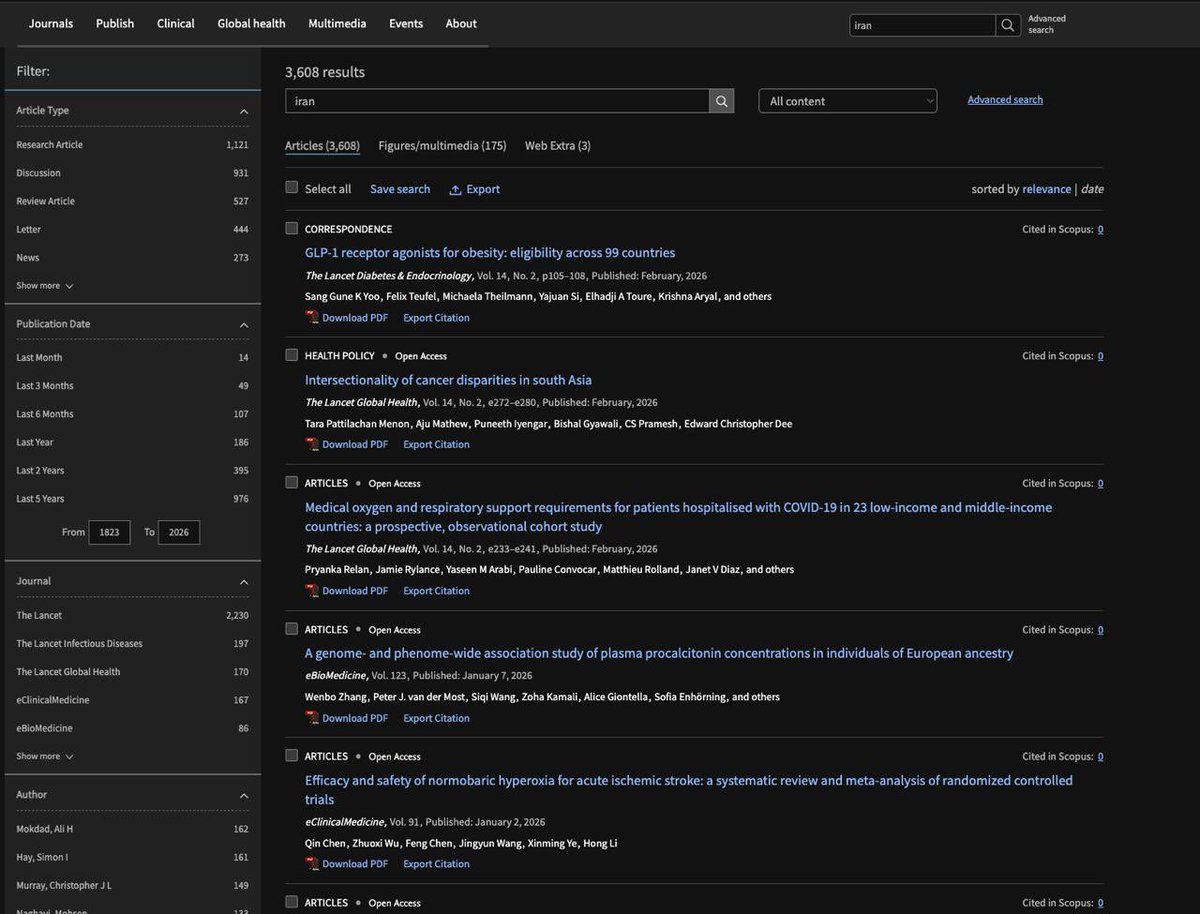
It's been more than two weeks since the start of the protests in Iran and more than 3 days since complete internet blockout. Reports confirm murdering of thousands of Iranians which is a public health crisis, yet the mainstream medical journals are in complete silence. In comparison to Gaza which has been the main topic of @TheLancet for a long time (1,027 articles to date, with the EiC as the main contributor with 40 articles), there is no single article on Iran's situation as of this moment. Two years ago, I shared a post on my blog about this bias among top medical journals indicating some lives are more equal than the others. choxos.com/research-top-m…
Ahmad Sofi-Mahmudi tweet mediaAhmad Sofi-Mahmudi tweet mediaAhmad Sofi-Mahmudi tweet media
English
1
1
3
141
Thariq
Thariq@trq212·
Anyone build something cool with Claude Code over the holidays? I wanna see 👀
English
722
43
1.2K
179.7K
Ahmad Sofi-Mahmudi
Ahmad Sofi-Mahmudi@ASofiMahmudi·
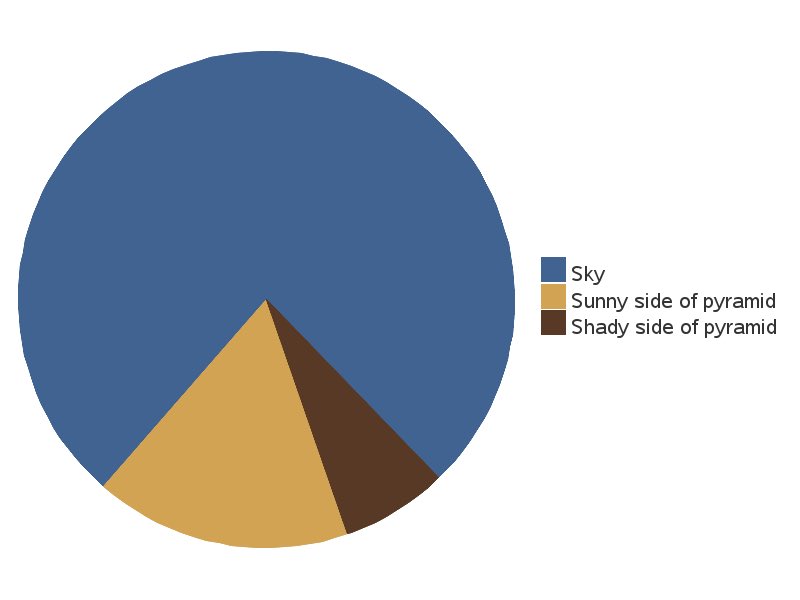
This should be the only use case of pie charts.
Ahmad Sofi-Mahmudi tweet media
English
0
0
1
66
Ahmad Sofi-Mahmudi
Ahmad Sofi-Mahmudi@ASofiMahmudi·
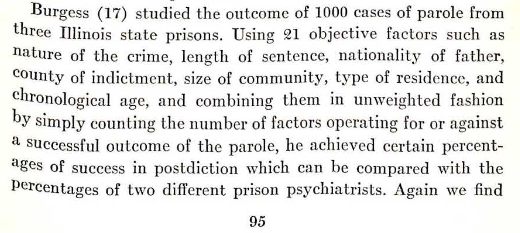
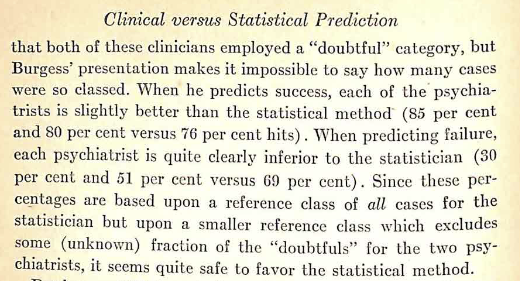
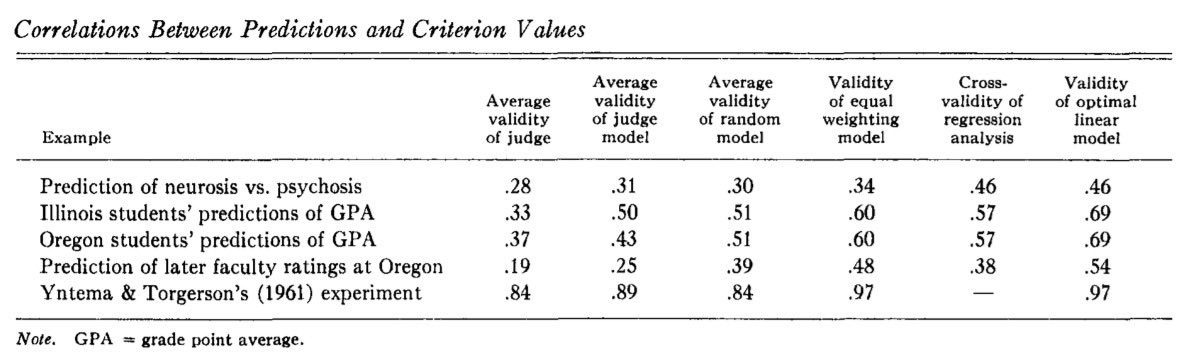
@alexolegimas The statistical prediction factors were found to be superior to the predictions of two prison psychiatrists.
English
0
0
0
8
Ahmad Sofi-Mahmudi
Ahmad Sofi-Mahmudi@ASofiMahmudi·
@alexolegimas The oldest of which is the 1928 study by Burgess titled "Factors Determining Success or Failure on Parole".
Ahmad Sofi-Mahmudi tweet mediaAhmad Sofi-Mahmudi tweet media
English
1
0
0
21
Ahmad Sofi-Mahmudi
Ahmad Sofi-Mahmudi@ASofiMahmudi·
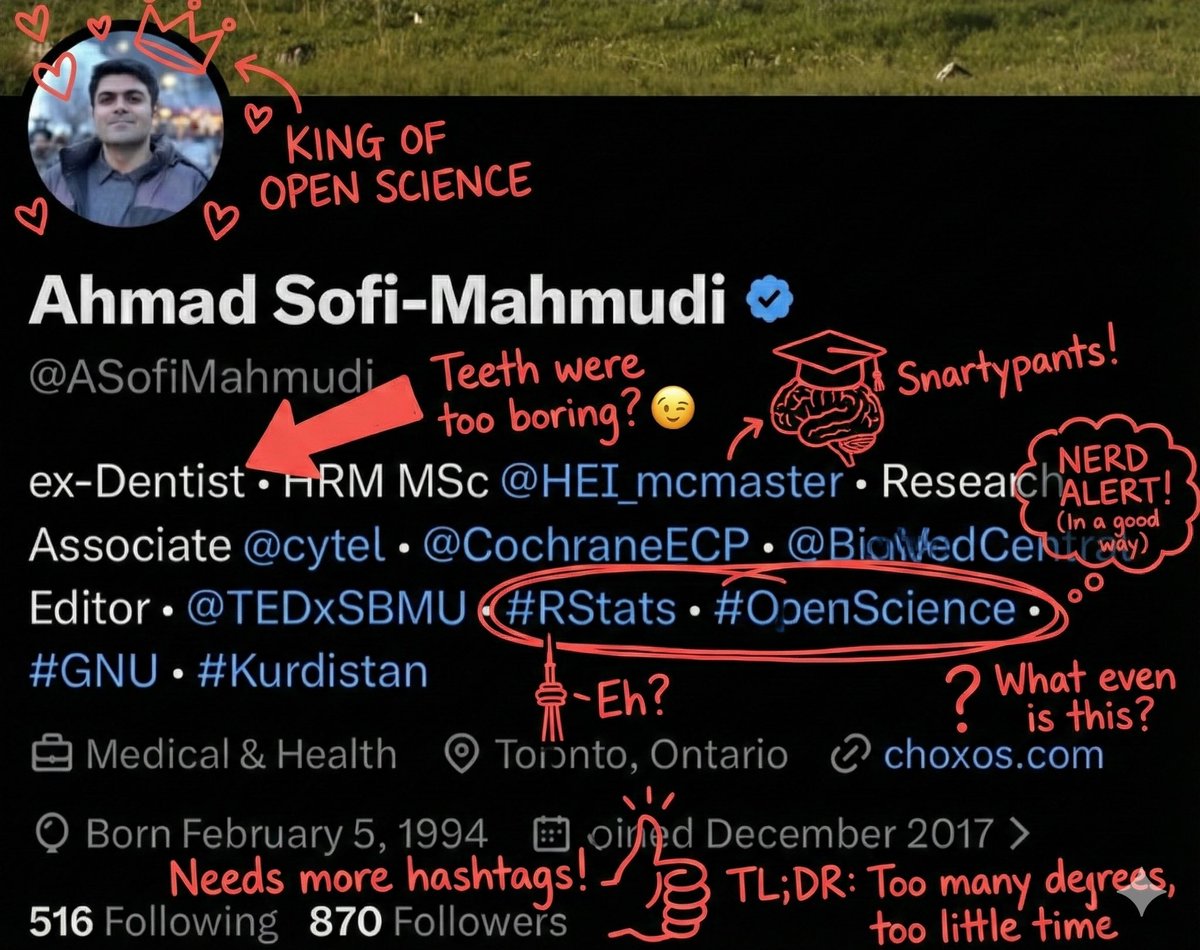
Try this prompt in Nano Banana Pro: Overlay this with funny comments, red ink, doodles, remarks, comments in [language]
Ahmad Sofi-Mahmudi tweet media
English
0
0
1
264
Ahmad Sofi-Mahmudi
Ahmad Sofi-Mahmudi@ASofiMahmudi·
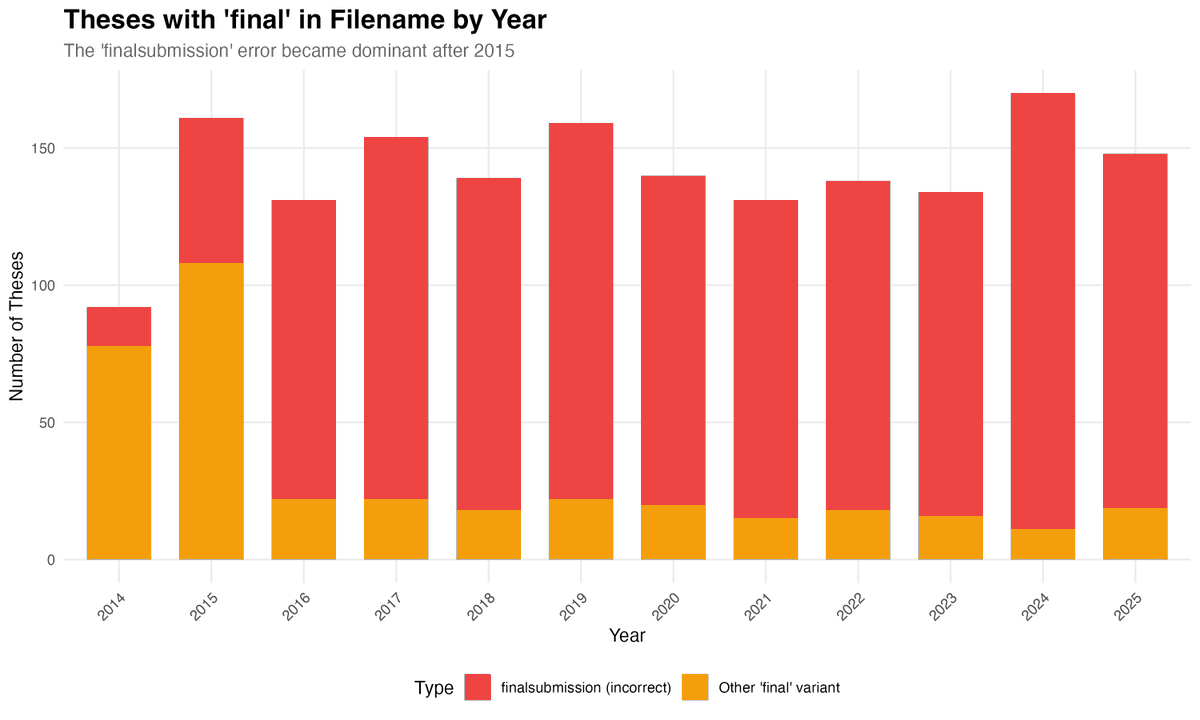
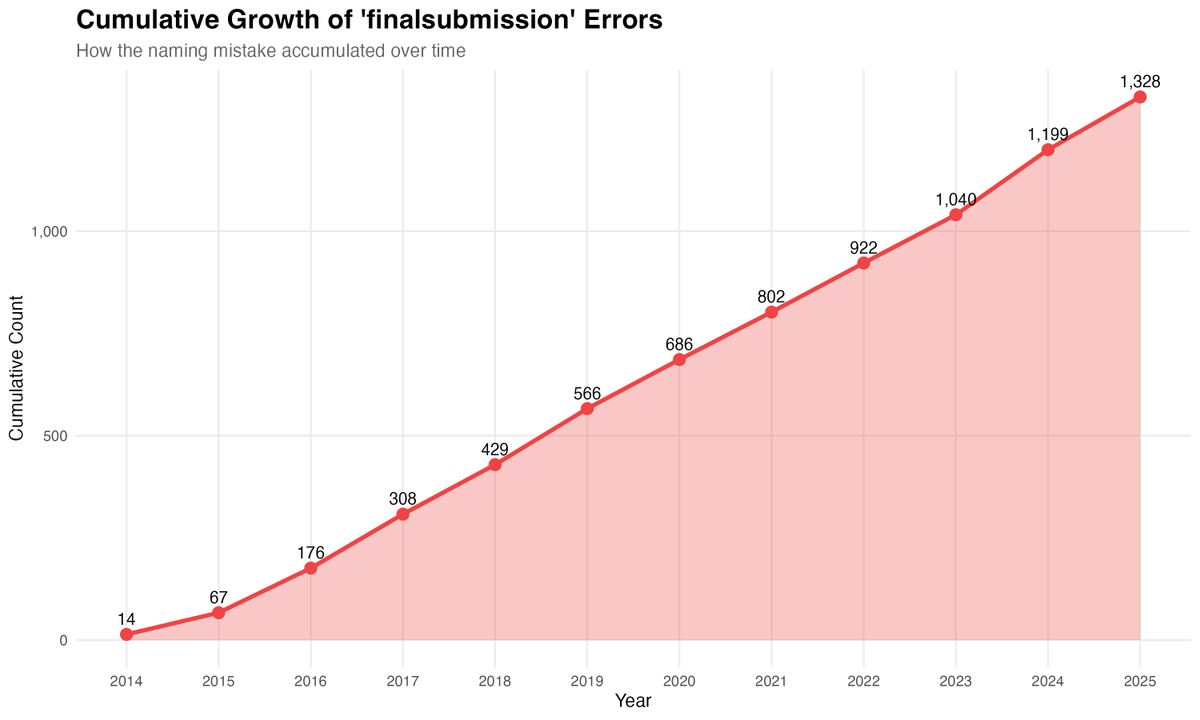
The trend shows the problem has been consistent through the years.
Ahmad Sofi-Mahmudi tweet mediaAhmad Sofi-Mahmudi tweet media
English
0
0
0
29
Ahmad Sofi-Mahmudi
Ahmad Sofi-Mahmudi@ASofiMahmudi·
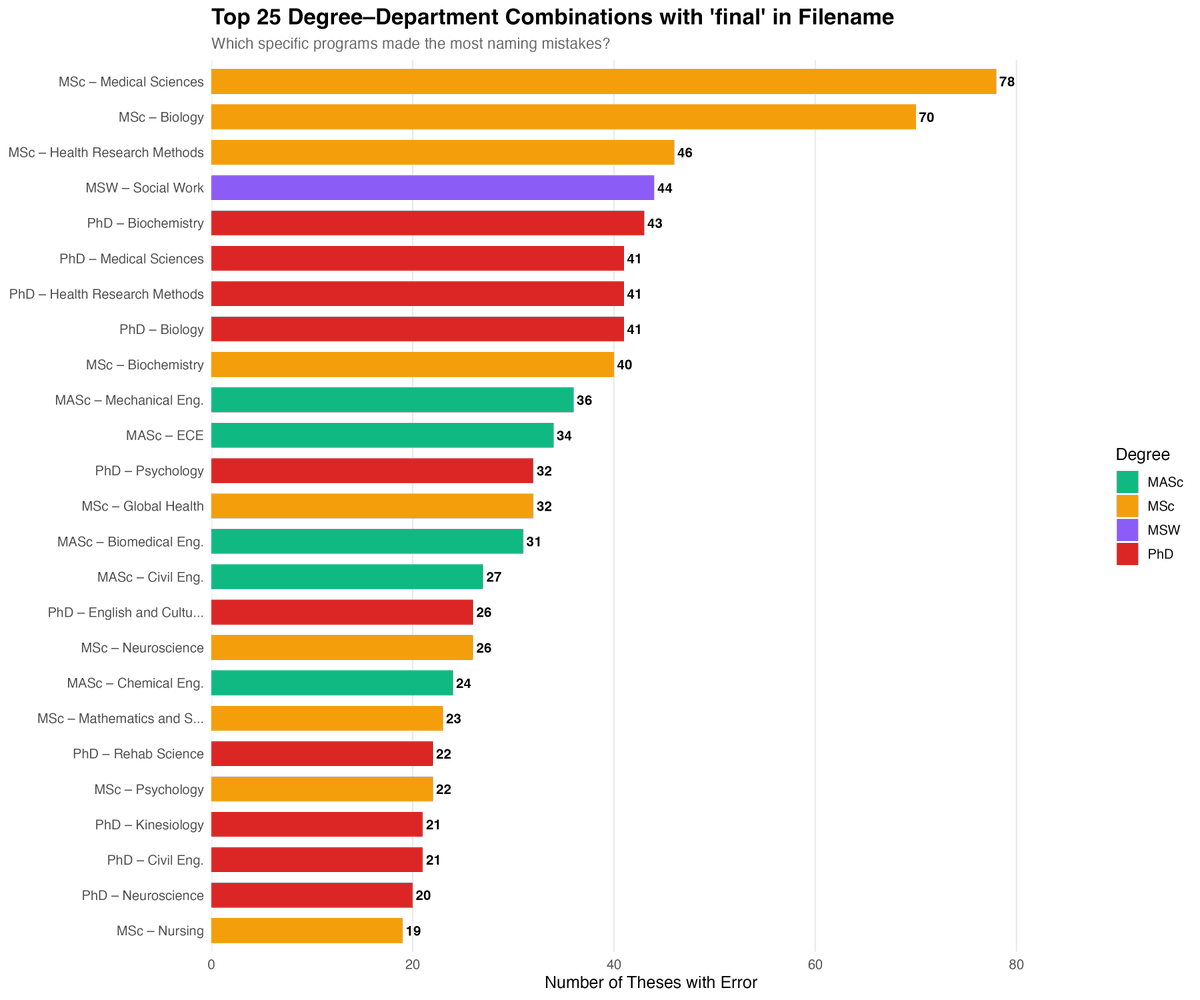
However, the top is MSc in Health Sciences (n=78), followed by MSc in Biology (n=70). MSc in HRM is the third (n=46). The top PhDs are Biochemistry (n=43), Medical Sciences (n=41), and HRM (n=41).
Ahmad Sofi-Mahmudi tweet media
English
1
0
0
87
Ahmad Sofi-Mahmudi
Ahmad Sofi-Mahmudi@ASofiMahmudi·
Only 9.9% of McMaster theses are "final" I analyzed 17,501 theses in McMaster's repository and found that 1,343 grad students literally typed "finalsubmission" in their filename (out of 1,729 with "final").
English
1
0
0
50
Ahmad Sofi-Mahmudi
Ahmad Sofi-Mahmudi@ASofiMahmudi·
Open science is also about coding in statistical software that is available to everyone.
English
0
0
1
88
Ahmad Sofi-Mahmudi
Ahmad Sofi-Mahmudi@ASofiMahmudi·
This study has received several comments on PubPeer. Comments are based on analysis of trial’s published data. Just imagine how many questionable trial results out there that have remained hidden due to not sharing their data. #0" target="_blank" rel="nofollow noopener">pubpeer.com/publications/C…
Ahmad Sofi-Mahmudi tweet mediaAhmad Sofi-Mahmudi tweet mediaAhmad Sofi-Mahmudi tweet media
The BMJ@bmj_latest

New BMJ Research: Intracoronary infusion of stem cells within 3-7 days after acute myocardial infarction reduced the incidence of heart failure and its related hospital admission, finds clinical trial. Includes a visual abstract summarising the study bmj.com/content/391/bm…

English
0
0
1
183