Advice To A Scientist

625 posts

Advice To A Scientist banner
Advice To A Scientist

Advice To A Scientist

@ATAScientist

We curate resources written by scientists for (current & future) scientists. Check out our website 👇🏼

Katılım Eylül 2020
239 Takip Edilen392 Takipçiler
Sabitlenmiş Tweet
Advice To A Scientist
Advice To A Scientist@ATAScientist·
AdviceToAScientist.com is LIVE! 🚀 Go check out our review-style articles with resources to guide you through your journey in STEM. Pls share w all your academic friends 🙏 Shoutout to our team (esp webmaster @KiaShakiba!) & contributors for making this initiative happen! 🙌
English

3
6
15
0
Advice To A Scientist retweetledi
Anna Clemens, PhD
Anna Clemens, PhD@scientistswrite·
As an academic writing coach, here are the 5 most common mistakes I see researchers make when they write their Discussion sections. A thread. 🧵 #PIchat #newPI #ECRchat — Mistake #1: Providing paragraphs of background information 📝 The Introduction section is meant for context. In the Discussion section, any mentioned background info needs to be *discussed* together with your own findings. — Mistake #2: Expecting the reader to have read all previous sections 💡 Tell the whole story by restating the problem you are solving with your study so that readers understand the motivation for your research. — Mistake #3: Describing the purpose and result of each experiment 🔬 This should be provided in the Results section. The Discussion is for actually *discussing* your findings, i.e. how your study has changed the state of the art and what the potential implications are. — Mistake #4: Too general implication statements 🌍 Avoid too broad statements that could mean everything and nothing. Be specific when you describe the potential implication of your findings even when some of them are speculative. — Mistake #5: Skipping the discussion altogether 🚫 Discussion sections are helpful for fellow researchers, journal editors and also journalists! If you have a combined Results & Discussion section, don't forget to include the discussion part! — TL;DR: The 5 most common mistakes in the Discussion section: #1: Providing too much background info #2: Not restating the motivation of your study #3: Describing the purpose of each experiment #4: Too general implication statements #5: Skipping the discussion altogether
English
10
178
591
129.7K
Advice To A Scientist retweetledi
The PhD Place
The PhD Place@ThePhDPlace·
10 tips for starting your PhD program: 1. Manage your time well 2. Your literature review is important 3. Learn new skills More below 👇 Read this PhD Story, sponsored by @paperpile thephdplace.com/10-things-i-wi…
English

0
12
82
15.5K
Advice To A Scientist retweetledi
Ethan Mollick
Ethan Mollick@emollick·
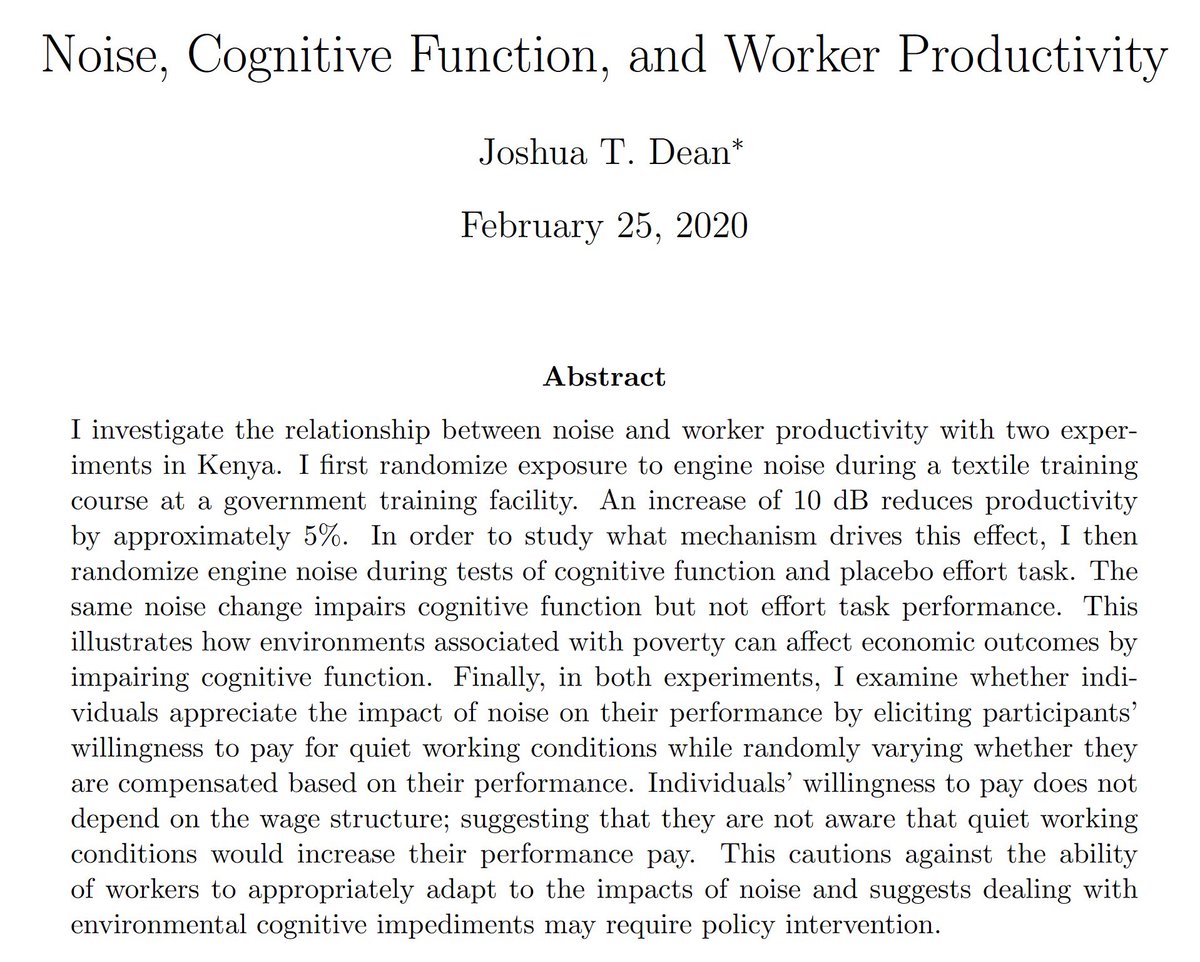
Noise is a secret destroyer of productivity. It is secret because it impacts cognition, not effort, so we don’t notice, but a 10db noise increase (from a dishwasher to a vacuum) lowers productivity by 5%. Noise is also greater in poorer neighborhoods... joshuatdean.com/wp-content/upl…
Ethan Mollick tweet mediaEthan Mollick tweet media
English
346
5.3K
23.9K
5M
Advice To A Scientist retweetledi
The PhD Place
The PhD Place@ThePhDPlace·
Doing A PhD Can Be A Lonely Journey. Starting A Support Group Will Make Your Life So Much Better. @AndreaPerino1 shares the benefits: ✍️ Celebrate your wins ✨ Create a safe space 📚 Empower each other Read this PhD Story, sponsored by @paperpile thephdplace.com/starting-a-sup…
English
3
18
92
31.6K
Advice To A Scientist retweetledi
PhD_Genie
PhD_Genie@PhD_Genie·
Any good tips on how to reduce significantly the word count? (Need to downsize from 25,000 to less than 15,000)
English
59
7
45
57.2K
Advice To A Scientist retweetledi
Rob Riker
Rob Riker@robertgriker·
How to eliminate anxiety: - Sleep - Hydrate - Exercise - Meditate - Pray to God - Get sunlight - Eat healthily - Journal daily - Keep learning - Deep breathing - Express gratitude - Do things you love - Avoid toxic people - Moderate caffeine intake - Work toward your purpose
English
838
1.5K
10.1K
0
Advice To A Scientist retweetledi
Ivan Alcantara
Ivan Alcantara@ivancalcantara·
Hi science twitter - any tips on presenting a poster? I’m going to a conference soon and the last time I presented a poster was in 2016 during my senior year of college 😳😬
English
60
29
280
179.1K
Advice To A Scientist retweetledi
Jennifer Polk, PhD (she, her)
Jennifer Polk, PhD (she, her)@FromPhDtoLife·
Want to know what to emphasize in your job application? Use your judgment here, judgment you've developed with learning about the organization/business, field, and general industry via informational interviews and other kinds of research. But also: ChatGPT! Get ideas in seconds.
English
0
4
13
9.6K
Advice To A Scientist retweetledi
Academic Chatter™
Academic Chatter™@AcademicChatter·
Anonymous Question "I'm an international student who's feeling isolated and homesick. How can I build a support network and find a sense of community?"
English
40
21
118
93.8K
Advice To A Scientist retweetledi
Claudia Gonzaga-Jauregui
Claudia Gonzaga-Jauregui@cgonzagaj·
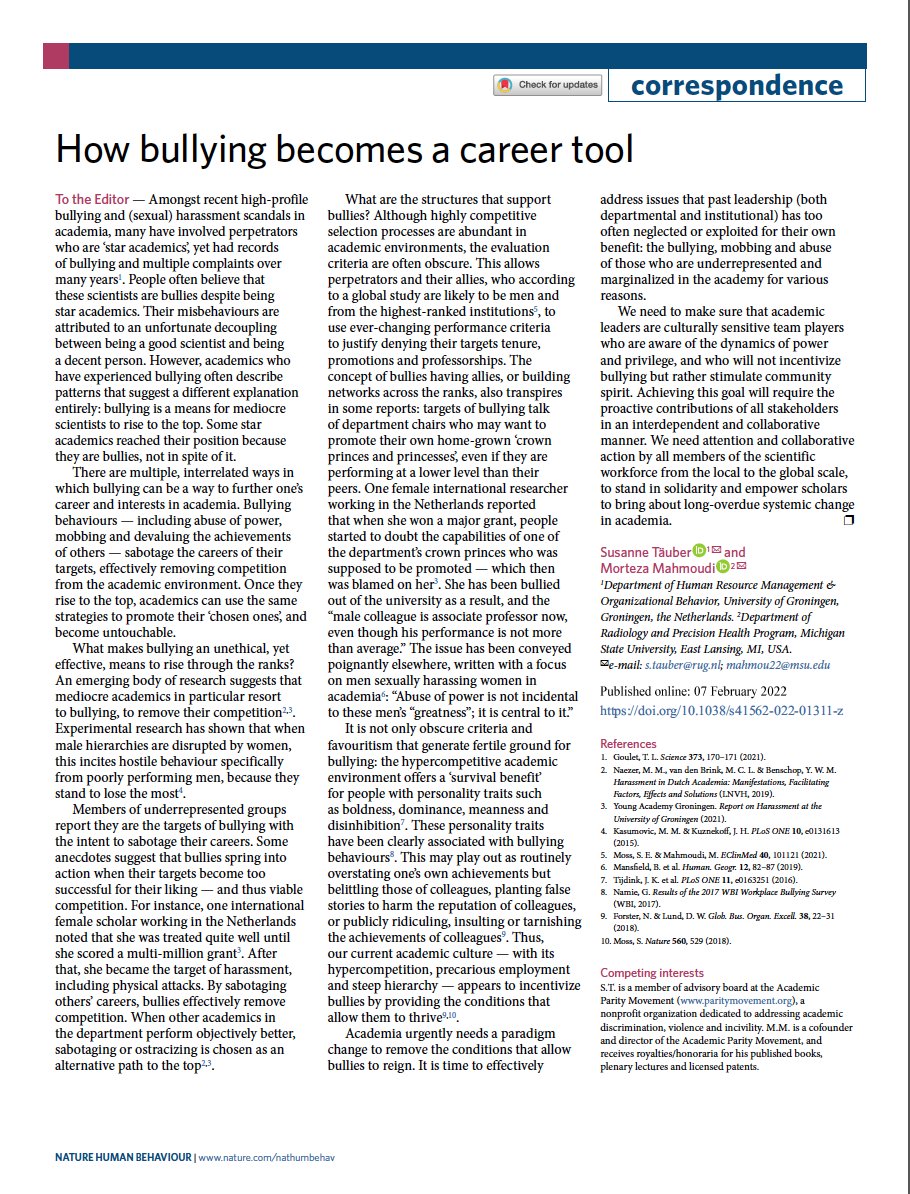
"Bullying is a means for mediocre scientists to rise to the top. Some star academics reached their position because they are bullies, not in spite of it." - Excellent piece about bullying in academia (and really any other professional environment). nature.com/articles/s4156…
Claudia Gonzaga-Jauregui tweet media
English
105
1.9K
5.2K
1.6M
Advice To A Scientist retweetledi
PhD_Genie
PhD_Genie@PhD_Genie·
What parts of academia will never be replaced by AI?
English
164
36
188
603.2K
Advice To A Scientist retweetledi
Academic Exit
Academic Exit@academic_exit·
5 reasons that job-searching as a PhD is hard (and at least 1 solution): a 🧵
English
2
4
43
22.5K
Advice To A Scientist retweetledi
Swati Kumari
Swati Kumari@Swati0741998·
Looking to pursue a Ph.D. degree? Let me help you find the right opportunity! Share your research interests with me, and I'll provide you with relevant vacancies. lest help each other! #PhD #research #hiring #education @PhDVoice
Swati Kumari tweet media
English
31
5
46
12.1K