Ammar
6.3K posts

Ammar
@AZBuildingGames
Building Video Games, play War of Nova and others
Katılım Mayıs 2010
2.4K Takip Edilen259.1K Takipçiler
Sabitlenmiş Tweet

Web3 vs Web3 Gaming (this was not written or edited by AI)
Reflecting in the shortest way possible after being humbled and deeply thinking about fundamentally growing back our business which will take a lot of effort, persistence and survival skills in this tough market.
Early crypto cycles were dominated by store of value, which was mostly just Bitcoin.
When Ethereum opened the door to applications, the narrative shifted. The cycle became about speculating on who would build something valuable on-chain.
In reality, the biggest winners ended up being exchanges, DEXs, and trading infrastructure, or what some would call sophisticated gambling rails via perps etc.
Then a new class of instant token launch platforms made it incredibly easy for anyone to spin up a token. The boring truth liquidity fragmented and most of the energy moved toward the attention economy. Everyone was addicted to gambling.
Why? We have all the tools and content creating abilities for short term attention but we forget it’s extremely hard to keep up with that without real fundamentals growth underneath, attention fades quickly.
This cycle, Web3 gaming wasn’t just competing with other games. It was competing directly with the new wave of attention economy. Thousands of tokens launched daily, which were listed first and preferred by the vast majority due to an indirect addiction to gambling (that is another topic).
I agree, and have been humbled by the reality: attention-driven products move fast, teams stay lean, and treat marketing as the main lever for growth.
Games are very different. They have always been extremely capital-intensive businesses that require persistence, long development cycles, and the ability to survive mistakes till you make it (most gaming companies or teams have to work together for years till the deliver a hit).
When you are competing with products that can pivot overnight and flood the market with content, winning in the short term becomes extremely difficult.
So what could change this dynamic for Web3 gaming?
Beyond market cycles, something very very boring as it’s talked about every day but it is true: it is called AI.
In just the last 45 days, the pace of AI development for production ready code has massively increased execution capability of teams that have deep dived. It may sound boring, but the productivity multiplier is starting to become mind boggling, and this is only the beginning. Keep in mind, it’s still not there but keeping the growth K factor on how AI is moving I won’t be surprised in 2-3 quarters we would be developing at unbelievable speed.
I was proud of having a large quality team with a good culture in the past (150+>, however now after making some painful cuts, restructuring development processes under extreme pressure, we see this might be a blessing but a lot needs to be happen before we can declare any sort of big victory.
In a nutshell AI keeps reducing the cost of building, iterating, smaller teams may finally get the leverage they need to compete with projects that currently win purely because they have massive war chest to deploy to take over your screens.
English
Ammar retweetledi

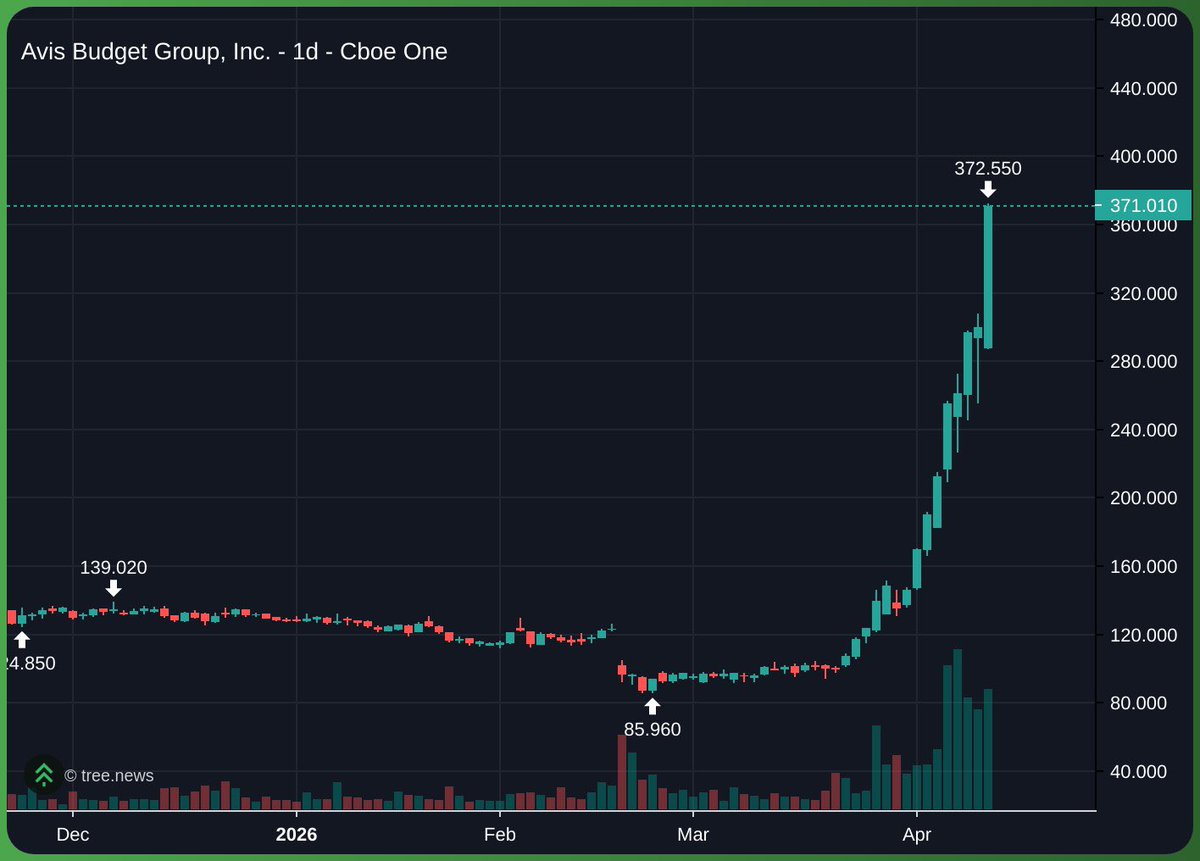
@wizardofsoho I think it’s the most shorted stock in the market right now
English
Ammar retweetledi
Ammar retweetledi
Ammar retweetledi

#306 Revolving Games 🙌🏻
2026 Forbes:
forbes.com/lists/americas…
English
Ammar retweetledi

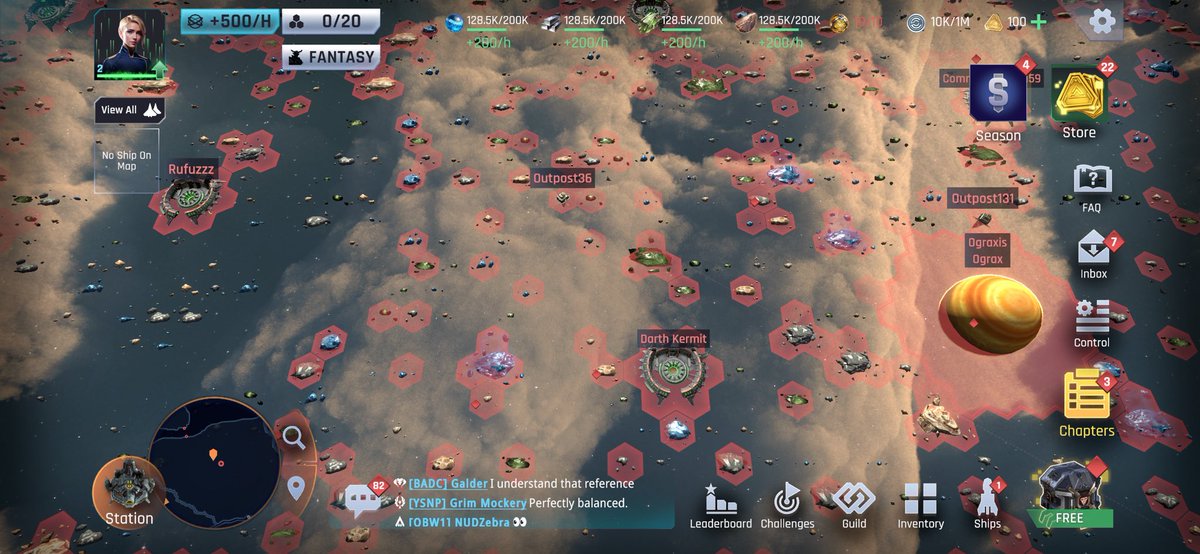
Hex by hex, the galaxy chooses its ruler
The greatest battles have not been fought yet in @WarofNova

English

Excited to see deeper features to be able to achieve long term retention, growth and ROAS based marketing
War of Nova@warofnova
Fantasy Mode is solid!
English
Ammar retweetledi
Ammar retweetledi
Ammar retweetledi

Ammar retweetledi

There have recently been some discussions on the ongoing role of L2s in the Ethereum ecosystem, especially in the face of two facts:
* L2s' progress to stage 2 (and, secondarily, on interop) has been far slower and more difficult than originally expected
* L1 itself is scaling, fees are very low, and gaslimits are projected to increase greatly in 2026
Both of these facts, for their own separate reasons, mean that the original vision of L2s and their role in Ethereum no longer makes sense, and we need a new path.
First, let us recap the original vision. Ethereum needs to scale. The definition of "Ethereum scaling" is the existence of large quantities of block space that is backed by the full faith and credit of Ethereum - that is, block space where, if you do things (including with ETH) inside that block space, your activities are guaranteed to be valid, uncensored, unreverted, untouched, as long as Ethereum itself functions. If you create a 10000 TPS EVM where its connection to L1 is mediated by a multisig bridge, then you are not scaling Ethereum.
This vision no longer makes sense. L1 does not need L2s to be "branded shards", because L1 is itself scaling. And L2s are not able or willing to satisfy the properties that a true "branded shard" would require. I've even seen at least one explicitly saying that they may never want to go beyond stage 1, not just for technical reasons around ZK-EVM safety, but also because their customers' regulatory needs require them to have ultimate control. This may be doing the right thing for your customers. But it should be obvious that if you are doing this, then you are not "scaling Ethereum" in the sense meant by the rollup-centric roadmap. But that's fine! it's fine because Ethereum itself is now scaling directly on L1, with large planned increases to its gas limit this year and the years ahead.
We should stop thinking about L2s as literally being "branded shards" of Ethereum, with the social status and responsibilities that this entails. Instead, we can think of L2s as being a full spectrum, which includes both chains backed by the full faith and credit of Ethereum with various unique properties (eg. not just EVM), as well as a whole array of options at different levels of connection to Ethereum, that each person (or bot) is free to care about or not care about depending on their needs.
What would I do today if I were an L2?
* Identify a value add other than "scaling". Examples: (i) non-EVM specialized features/VMs around privacy, (ii) efficiency specialized around a particular application, (iii) truly extreme levels of scaling that even a greatly expanded L1 will not do, (iv) a totally different design for non-financial applications, eg. social, identity, AI, (v) ultra-low-latency and other sequencing properties, (vi) maybe built-in oracles or decentralized dispute resolution or other "non-computationally-verifiable" features
* Be stage 1 at the minimum (otherwise you really are just a separate L1 with a bridge, and you should just call yourself that) if you're doing things with ETH or other ethereum-issued assets
* Support maximum interoperability with Ethereum, though this will differ for each one (eg. what if you're not EVM, or even not financial?)
From Ethereum's side, over the past few months I've become more convinced of the value of the native rollup precompile, particuarly once we have enshrined ZK-EVM proofs that we need anyway to scale L1. This is a precompile that verifies a ZK-EVM proof, and it's "part of Ethereum", so (i) it auto-upgrades along with Ethereum, and (ii) if the precompile has a bug, Ethereum will hard-fork to fix the bug.
The native rollup precompile would make full, security-council-free, EVM verification accessible. We should spend much more time working out how to design it in such a way that if your L2 is "EVM plus other stuff", then the native rollup precompile would verify the EVM, and you only have to bring your own prover for the "other stuff" (eg. Stylus). This might involve a canonical way of exposing a lookup table between contract call inputs and outputs, and letting you provide your own values to the lookup table (that you would prove separately).
This would make it easy to have safe, strong, trustless interoperability with Ethereum. It also enables synchronous composability (see: ethresear.ch/t/combining-pr… and ethresear.ch/t/synchronous-… ). And from there, it's each L2's choice exactly what they want to build. Don't just "extend L1", figure out something new to add.
This of course means that some will add things that are trust-dependent, or backdoored, or otherwise insecure; this is unavoidable in a permissionless ecosystem where developers have freedom. Our job should make to make it clear to users what guarantees they have, and to build up the strongest Ethereum that we can.
English
Ammar retweetledi
Ammar retweetledi
Ammar retweetledi
Ammar retweetledi
Ammar retweetledi

@ammarzaeem When will we be able to pass in the light with our car? We keep waiting in the red.
English