Adam K. Gill

7.6K posts

Adam K. Gill banner
Adam K. Gill

Adam K. Gill

@AdamGill23

Human. Love Fall Out Boy, Panic at the Disco, Nirvana, My Chemical Romance, and The Killers. Formerly Aleyara Nightcast.

Neverland Katılım Aralık 2013
655 Takip Edilen100 Takipçiler
Adam K. Gill retweetledi
Massimo
Massimo@Rainmaker1973·
Your brain undergoes a literal cleaning process every time you move your body. Far from a metaphor, this mechanism involves physical forces that help remove cellular waste through enhanced circulation of cerebrospinal fluid (CSF). A recent study published in Nature Neuroscience reveals that simple activities — such as walking, stretching, or even engaging your core muscles — can act like a pump for the brain’s waste-clearance system. Researchers at Pennsylvania State University found that contractions of the abdominal muscles generate pressure changes in connected veins. These changes propagate upward, causing the brain to shift slightly within the skull. This subtle motion drives the flow of CSF, the clear fluid that surrounds and cushions the brain, carrying away proteins, metabolic debris, and other harmful waste products. The process works through mechanical coupling between the abdomen and the brain. Using advanced imaging on mice during movement and sophisticated computer simulations, the team demonstrated that abdominal contractions produce a sponge-like squeezing effect. This pushes old fluid outward while facilitating the entry of fresh fluid, effectively rinsing brain tissue. The findings help explain differences in CSF dynamics between sleep and wakefulness: during rest, fluid flows deeper into the brain for thorough cleaning, while movement assists in expelling waste outward. Impaired waste clearance has been strongly linked to neurodegenerative conditions such as Alzheimer’s disease. By showing how everyday physical activity supports this system, the study highlights a potential physiological benefit of movement for long-term brain health. However, the authors emphasize that the research is still in its early stages and does not yet prove that exercise directly prevents disease in humans. [Garborg, C. S., et al. (2026). Brain motion is driven by mechanical coupling with the abdomen. Nature Neuroscience. DOI: 0.1038/s41593-026-02279-z]
Massimo tweet media
English
37
128
509
56.4K
Adam K. Gill retweetledi
Dr. Lemma
Dr. Lemma@DoctorLemma·
In 2005 a piano teacher in the United States and her husband were upstairs in their house when they heard the piano going downstairs. The same note, struck over and over. They thought someone had broken in. They ran down and found their cat, a grey tabby called Nora, alone on the bench, hammering at one key with her right paw. She looked up at them, then went back to it. The cat had taught herself. Nora’s owner Betsy gave piano lessons in that room every day. Over the months Nora had watched, and at some point decided she’d have a go. None of the other six cats in the house ever touched the piano. Only Nora. She had preferences. She’d only play one specific Yamaha. She gravitated to a particular range of notes in the middle of the keyboard. She refused to play if she couldn’t sit properly on the bench, and if a student annoyed her Betsy would shift the bench back a foot and Nora would simply quit for the day. A video of Nora went up on YouTube in 2007 and got 17 million views. The Times of London compared her playing to a mix of Philip Glass and free jazz. America’s National Science Foundation, the country’s main scientific research body, put her in a museum exhibit on animal behaviour. In 2009 a composer in Lithuania scored a full orchestral concerto around her recordings. It premiered live with a chamber orchestra in Lithuania, with Nora’s playing on a screen above them. They called it CATcerto. Most animals who do impressive things have been trained. Nora wasn’t. She picked it up by watching, which is observational learning, and it’s rare in cats. Dogs do it more often. Cats usually don’t bother copying us at all. Nora passed peacefully in 2024, on her favourite blanket, aged 19.
English
159
3K
16.7K
496.5K
Adam K. Gill retweetledi
Anish Moonka
Anish Moonka@anishmoonka·
Right before you fall asleep, your hands and feet get warmer. That warming is the real trigger that switches your brain into sleep mode. A 1999 Nature paper tested it against melatonin, core body temperature, heart rate, and how sleepy people felt. The hand and foot warming won. The drawing in the tweet works on this exact trigger. The pose has a name in Japan: Mōkan Undō, or "capillary exercise." Katsuzō Nishi designed it in 1927. He was the chief technical engineer on the Tokyo subway, Japan's first. It became one of six daily exercises in his system, still done in Japan today. You lie on your back, point your arms and legs straight up, and shake them for thirty seconds. While the limbs are up, gravity drains the blood from them. When you lower them, the blood floods back into your hands and feet, warming them in seconds. Your brain reads that warming as a green light to sleep. The shaking activates a separate reflex, the kind most mammals use after a scare. Dogs and rabbits shake themselves off after a fright for the same reason. Dr. David Berceli, a trauma therapist, built a whole method around it, with certified instructors now in 40 countries. The shaking flips your nervous system out of "I'm wired" mode and into "I'm safe to sleep" mode. Nishi got the biology wrong. He believed capillaries, the tiny blood vessels at the ends of your veins, did the pumping. William Harvey, an English doctor, had shown the heart did the work, three centuries earlier, in 1628. The exercise still works, for entirely different reasons than Nishi thought. The drained limbs come back warm. The body reads that as a sleep cue, and the shaking calms the nervous system on top of it. A drawing on X with millions of views just rediscovered a 100-year-old Japanese sleep exercise. A subway engineer designed it first, decades before sleep scientists figured out why it would work.
黒葉だむ 『外側の人。』水・土夕方更新✒@kuroabam

番組で見た、寝る前に30秒コレやってから三日連続快眠できてる。(手足をパタパタする) 皆試してみて。

English
75
3.3K
27.5K
3.5M
Adam K. Gill retweetledi
The Academy Is...
The Academy Is...@TheAcademyIs·
This weekend in San Diego, TAI had the privilege to welcome our former guitarist @MGChislett on stage to perform “After the Last Midtown Show.” This was a truly special moment for The Academy Is…
English
10
44
160
5K
Adam K. Gill retweetledi
The Academy Is...
The Academy Is...@TheAcademyIs·
Cool Hoodie
English
18
98
389
12.7K
Adam K. Gill retweetledi
Anish Moonka
Anish Moonka@anishmoonka·
In 1935, two American doctors examined seven women's ovaries and saw small lumps. They called them cysts and named the disease after them. They were wrong. It took 91 years to fix. What we called PCOS is now Polyendocrine Metabolic Ovarian Syndrome (PMOS), announced today in The Lancet by an international panel of doctors and patients. The renaming followed more than a decade of consensus work and 22,000 patient and clinician survey responses. The lumps Stein and Leventhal saw were never cysts. Modern imaging shows they were follicles, the tiny sacs inside the ovary that grow and release an egg each month, frozen partway through by a hormonal imbalance. PMOS is a multi-system disorder centered in the endocrine system, the body's network of glands that produces hormones like insulin (controls blood sugar), cortisol (the stress hormone), and thyroid hormones (set the body's metabolism). The ovary trouble flows downstream from there. The naming choice is not academic. When doctors hear "ovary" in a diagnosis, they look at the ovary. "Metabolic" and "endocrine" send them to the whole body. PMOS affects roughly 1 in 8 women worldwide, more than 170 million people. The WHO estimates 70% have never been diagnosed. Among those who do, 1 in 3 wait more than 2 years, and nearly half see 3 or more doctors first. The CDC reports more than half of women with PMOS develop type 2 diabetes by age 40, a risk 5 to 10 times higher than women without the condition. Around 37% have clinically significant depression, compared with 14% in women without it. Anxiety runs at 42% versus 8.5%. A label born from a 1935 look at seven ovaries is finally going away. The new diagnostic guidelines roll out fully in 2028. By then, a woman walking into a clinic with these symptoms should hear questions about her blood sugar and her mood alongside her cycle. Those are the parts of the disease the old name hid for 91 years.
Pop Base@PopBase

PCOS is being renamed to PMOS. (Polyendocrine metabolic ovarian syndrome) The change comes from experts that say the old name was misleading, stating that it inaccurately suggested ovarian cysts as a defining feature.


English
112
8K
25.3K
1.7M
Adam K. Gill retweetledi
Bella
Bella@natural77384672·
Banana Lace Bug (Stephanitis typica), renowned for its intricate, iridescent wings that resemble stained glass. These bugs have a delicate, lace-like wing structure with network-like veins that refract light to create colorful, metallic patterns.
Bella tweet media
English
19
848
4.6K
62.9K
Adam K. Gill retweetledi
WholesomeMemes
WholesomeMemes@WholesomeMeme·
WholesomeMemes tweet media
ZXX
38
1.3K
30.3K
439.5K
Adam K. Gill retweetledi
Barack Obama
Barack Obama@BarackObama·
I first met Clark Reynolds when he was just three years old at our Black History Month reception at the White House. Over the last ten years, it's been wonderful getting updates about his life through his letters. Check out how he’s doing now:
English
6.9K
19.3K
168.9K
31.9M
Adam K. Gill retweetledi
The Washington Post
The Washington Post@washingtonpost·
Luang Por Chamnan, a Buddhist monk and abbot of a temple in Thailand, planned to just take in one small white dog. Now he's caring for twenty, with the help of temple aides.
English
18
114
733
85.5K
Adam K. Gill retweetledi
Sabiduría Eterna
Sabiduría Eterna@LealtadSabia·
El hermano literalmente se perdió en el azúcar glas 😭
Español
485
9K
58.3K
1.7M
Adam K. Gill retweetledi
Science girl
Science girl@sciencegirl·
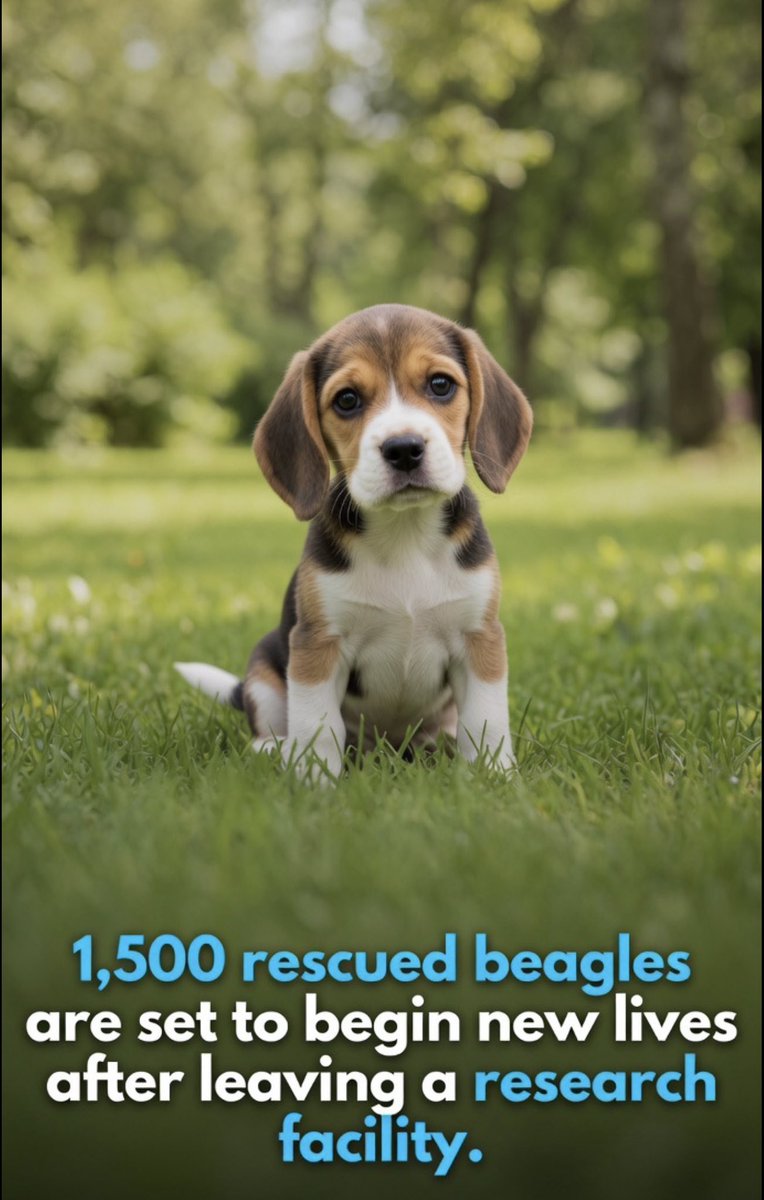
1,500 beagles are being released from a research facility. They will find permanent homes after months of legal battles and intense public outcry. The journey from a research kennel to a warm lap has officially begun for 1,500 beagles previously held at Ridglan Farms in Wisconsin. Following a confidential agreement between animal welfare organizations and the breeding facility, the first 300 dogs have been moved to staging areas for vaccinations and medical care before heading to shelters nationwide. Despite their history in a laboratory environment, rescuers report that the dogs-known for their docile and forgiving nature-are already seeking human affection and settling into their new surroundings with surprising ease. This massive relocation follows a period of intense civil unrest and legal scrutiny for the facility, which recently agreed to relinquish its state breeding license amid allegations of veterinary standard violations. While previous attempts by activists to liberate the dogs led to clashes with law enforcement, this peaceful transition was negotiated by Big Dog Ranch Rescue and the Center for a Humane Economy. With over 700 adoption applications already submitted, these beagles are being prepared for domestic life, marking a major turning point in the push to provide sanctuary for vulnerable research animals. source: Fischer, D. (2026, May 4). 1,500 beagles will get new lives, warm laps after release from research facility. Associated Press.
Science girl tweet media
English
43
287
1.4K
51K
Adam K. Gill retweetledi
Massimo
Massimo@Rainmaker1973·
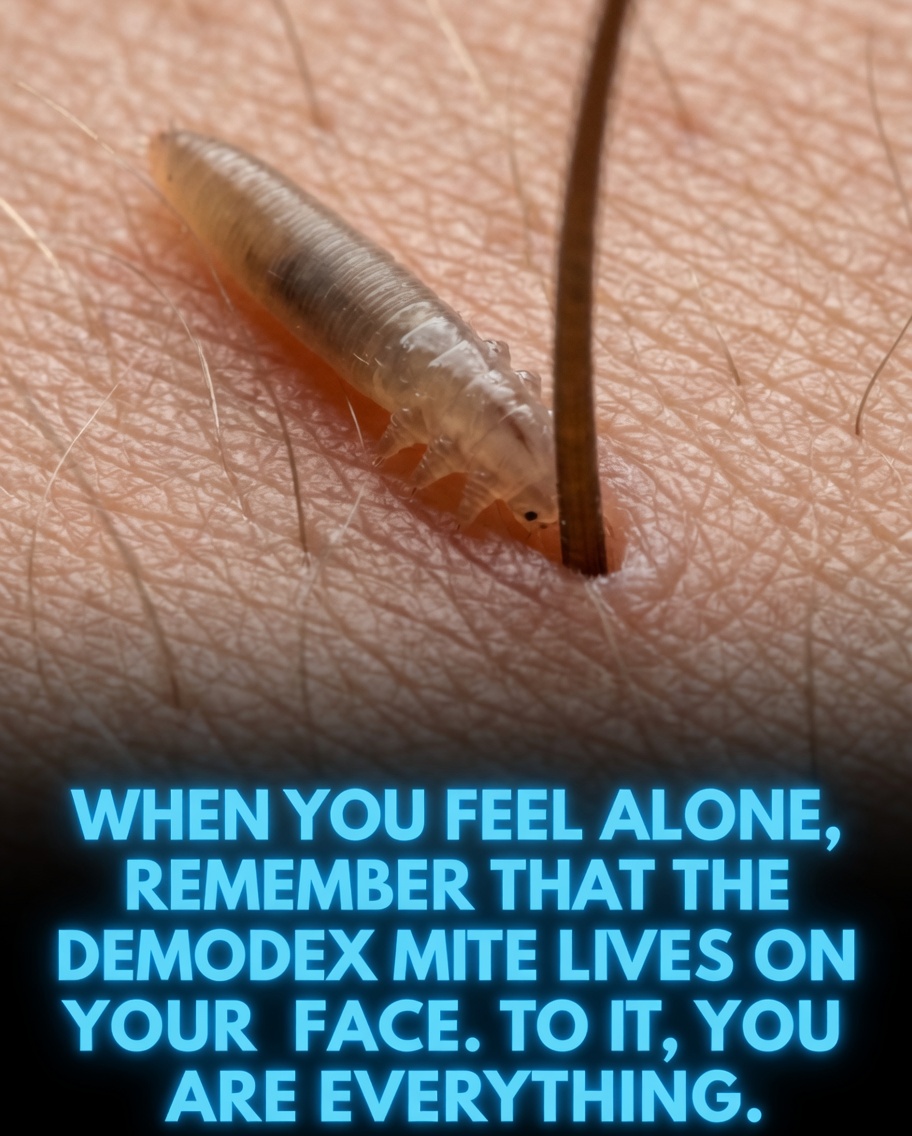
Science confirms you're never truly alone: even on your face. Millions of microscopic Demodex mites are currently living, feeding, and reproducing in the pores and hair follicles of your skin. These tiny arachnids are a completely normal part of the human body and are found in nearly every adult on Earth. They prefer areas rich in oil glands, such as the eyelashes, eyebrows, nose, and cheeks. Invisible to the naked eye, Demodex mites spend their entire lives inside your hair follicles and sebaceous glands, surviving on sebum (skin oil) and dead skin cells. They are typically passed between people through close physical contact and become established in most humans by early adulthood. For the vast majority of people, these mites are completely harmless and form a natural part of the skin’s microbiome. They represent a fascinating symbiotic relationship — quiet, lifelong companions that usually go completely unnoticed. Only in rare cases of overpopulation or immune imbalance do they cause skin issues. So the next time you feel alone, remember: you’re carrying an entire microscopic ecosystem with you wherever you go.
Massimo tweet media
English
123
207
1.1K
105.1K
Adam K. Gill retweetledi
Historic Vids
Historic Vids@historyinmemes·
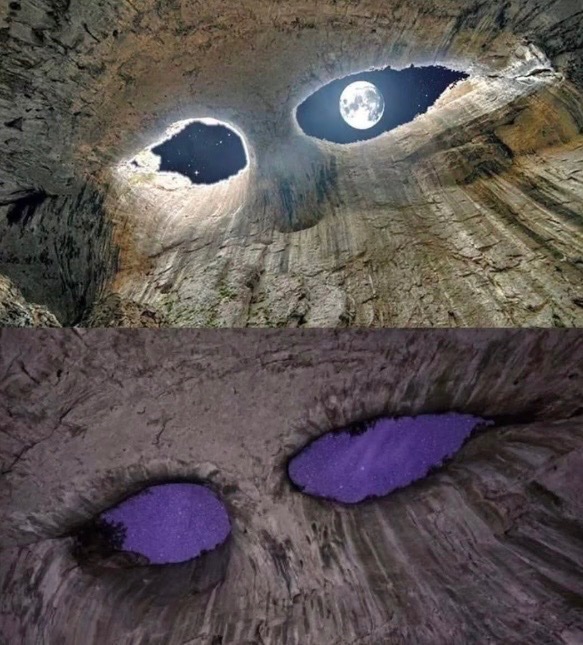
THE EYES OF GOD in Prohodna Cave, Bulgaria. It was inhabited by humans 7,000 years ago...
Historic Vids tweet media
English
83
757
9.8K
175.1K
Adam K. Gill retweetledi
Science girl
Science girl@sciencegirl·
Some species of gray langurs have a special relationship with Spotted Deer They notify each other when predators approach In return, the langurs give the deer fruit as gifts, from tall trees the deer can’t reach This type of relationship is called mutualism 📸hrishiwild
Science girl tweet media
English
65
570
2.5K
68.8K
Adam K. Gill retweetledi
Dilo con perritos
Dilo con perritos@DiloConPerritos·
Llevé a mi perrito a la estética y parece que ha dejado una vida de excesos y hasta consiguió empleo…
Dilo con perritos tweet media
Español
379
8.7K
93.2K
1.4M
Adam K. Gill retweetledi
Anish Moonka
Anish Moonka@anishmoonka·
Brendan Fraser walked out of a Hollywood luncheon at the Beverly Hills Hotel in 2003, past a police officer in the lobby, and could not bring himself to say what had just happened to him. He went home and told his wife. He stayed quiet about it for fifteen years. The man who had groped him in that room was the president of the Hollywood Foreign Press Association, the group that ran the Golden Globes. In the years after, Fraser sank into depression, watched the work dry up, and wondered if the silence that followed was a coincidence. His body had its own bill coming. Fraser did most of his own stunts across three Mummy films. By the third one in 2008, he told GQ he was "put together with tape and ice." The surgeries that followed kept him in and out of hospitals for roughly seven years, including back operations, a partial knee replacement, and vocal cord repair. His divorce became final in 2009. A judge ordered him to pay 900,000 dollars a year in alimony plus another 300,000 in child support. By 2013 he was back in court asking to reduce the payments because he no longer earned enough. In November 2016, his mother died of cancer in Seattle after several years of treatment. His eldest son is autistic. Almost none of it made the news. In September 2022, his film The Whale premiered at the Venice Film Festival. The audience clapped for six minutes. Fraser sobbed on the balcony and tried to leave at one point, but the clapping wouldn't stop. In March 2023, at 54, he won the Academy Award for Best Actor. He thanked his three sons by name. The last years, he said, had felt like "a diving expedition on the bottom of the ocean," and his sons had been the ones holding the air line. Last week, he sat on Jimmy Fallon's couch and said he is training to play Rick O'Connell again. "I'm doing my best to get this 57-year-old gear in shape," he told Fallon. Universal has Mummy 4 penciled in for October 2027. He first played the character at 30, and he'll be 58 when the new one comes out.
Indie 505@Indie5051

Brendan Fraser dice que “estoy haciendo lo mejor que puedo” mientras se ejercita activamente para ponerse en forma para “The Mummy 4”.

English
191
1.5K
20.2K
3.9M
Adam K. Gill retweetledi
bia
bia@forstardst·
so we move to LA, my father gets a job at the palm restaurant, my uncle junior works there who was a jehovah's witness
English
3
61
526
8K
Adam K. Gill retweetledi
Fascinating
Fascinating@fasc1nate·
When it gets cold enough, daddy long legs will huddle together in the thousands to create warmth. The creepiest photos ever taken: bit.ly/3MhKiB3
Fascinating tweet media
English
2
6
49
25.3K