李其 Lizzi@wstv_lizzi
Sharing a new article in @ForeignAffairs by Jing Qian and me, where we offer some thoughts on how Beijing is trying to revive entrepreneurial dynamism (critical to its tech ambitions!) after several years of chill in the business community (regulatory overreach, post-COVID sentiments malaise, etc.) while simultaneously TIGHTENING the party-state’s political grip.
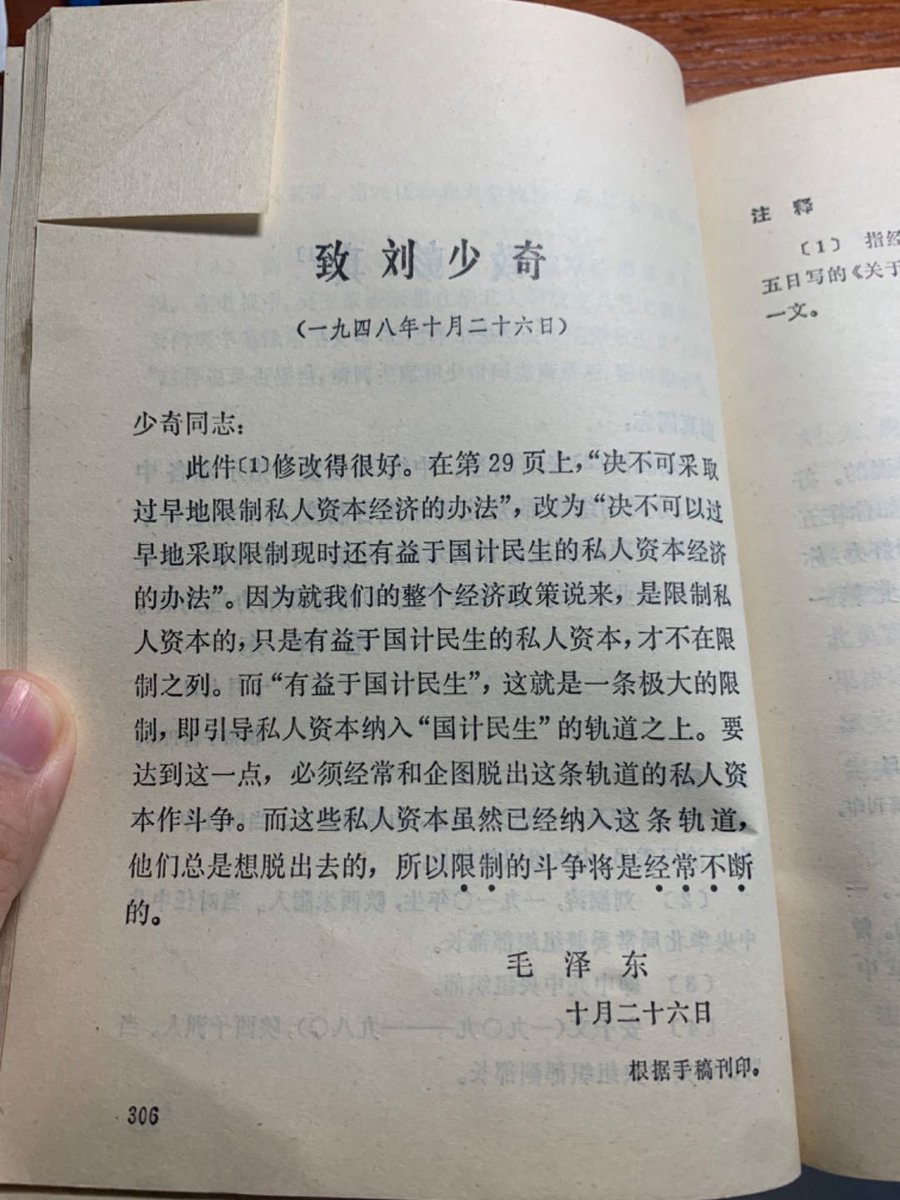
We argue that this goes beyond the old shou-fang cycle of loosening and tightening. What we are seeing is not a simple swing of the pendulum, but a recalibration toward a new equilibrium in party-state-private-sector relationship.
What is emerging is a new compact: clearer regulatory boundaries, backed by an expanded toolkit of legal, administrative, and national security instruments, alongside more institutionalized protections for private entrepreneurs. At the same time, expectations are more explicitly defined—firms are encouraged to grow, but in alignment with national strategic priorities. Think of it as a circle: the boundaries are more clearly drawn and the overall space somewhat tighter, but within those lines the rules are more predictable and the room for private dynamism is restored and unleashed. This has reduced some of the policy whiplash that defined the earlier crackdown period.
This new model is also more granular and fine-tuned than the old shou-fang cycles, varying by sector and by China’s strategic priorities. In areas like biotech, where Chinese innovation depends on deep global collaboration, the tension between security and openness is the sharpest. In “tough tech” sectors for China such as advanced semi equipment, Beijing is shifting away from blunt prioritization of SOEs as in Big Fund 1.0 and 2.0 toward state-coordinated ecosystem building—supporting infrastructure, IPO channels, and supply chain integration, without attempting to carry out the innovation itself, as in Big Fund 3.0.
Alibaba’s AI-era renaissance best captures this pivot, as we discuss in the article. Once emblematic of the excesses of the platform expansion era when its fintech dominance was perceived as challenging state banks’ monopoly over finance, it has drastically streamlined its sprawling footprints and reinvented itself around AI + cloud infrastructure, aligning closely with new state priorities.
The larger question is whether this hybrid model (stronger party-state authority combined with stronger entrepreneurial vitality) can sustain continuous innovation over the long term. We are cautious here. Rebuilding trust among entrepreneurs and investors will take time.Yet Xi has a few things in his favor. Geopolitical constraints are narrowing Chinese firms’ options abroad, pushing them to look inward out of necessity. At the same time, a new generation of young entrepreneurs has emerged—relatively unbruised by past regulatory chill, many with engineering- and tech-centric mindsets, personally embraced by Xi, and convinced that the policy tailwinds are in their favor.
The bottom line: Xi has come to recognize that the private sector is, after all, his golden goose. The pivot now underway is an attempt to bring it back into the fold, encouraging it to lay more eggs, but firmly on terms set by the party-state.