Sabitlenmiş Tweet

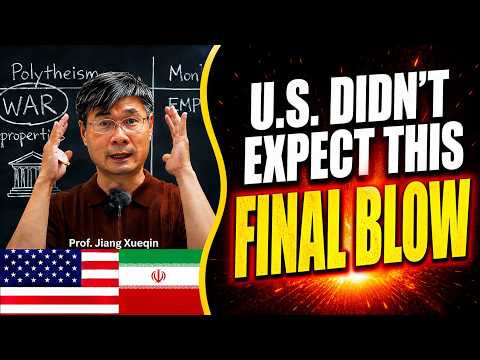
The Ceasefire Is a Lie — Why the War Never Stopped | PROF.ALEX
Ceasefire is an illusion, not a genuine end to hostilities; the war is described as continuing covertly rather than stopping.
🍳 Trump announced a "2-week pause" using Iran's 10-point plan as the negotiation framework, which includes demands like guarantees against attacks, control of the Strait of Hormuz, removal of sanctions, and withdrawal of US forces.
– 2-week pause and 10-point planare presented as starting points that favor Iran and suggest the announcement is performative.
💡 US military buildup is accelerating during the pause, indicating preparation rather than de-escalation.
– Movements cited include the deployment of the USS George Bush and additional troops, armor, and aircraft to the region.
🧩 Iran’s "Mosaic Defense" decentralizes command across 31 provinces, creating autonomous military cells that can act without orders from Tehran.
– 31 provinces functioning as independent cells make central enforcement of a ceasefire practically infeasible.
⚠️ Even if Tehran agreed, enforcing a ceasefire would require suppressing its own forces, which would risk internal conflict; therefore a durable ceasefire is unlikely.
💥 Israel struck Lebanon during the announced pause (reported as ~100 strikes in 10 minutes, ~250 casualties), demonstrating that key actors are not committed to the ceasefire terms.
– US responses framing the incident as a "misunderstanding" indicate limited international enforcement or consensus on coverage (e.g., whether Iran’s allies are included).
🎯 The pause functions as a strategic trap and distraction: it calms markets, buys time for positioning, and sets up conditions to blame Iran if hostilities resume.
🔀 Domestic splits in both countries impede coherent policy: US political leadership seeks an exit while the military favors escalation; Iranian political leaders may prefer negotiation while IRGC commanders press continued fighting.
♟️ Trump’s unpredictability is used as a tactical tool to paralyze opponents, distract public attention, and retain flexibility without long-term commitment.
📉 Economic motives drive the ceasefire narrative: short-term market relief occurred, but underlying disruptions (shipping diversions, supply-chain issues, control of the Strait of Hormuz) persist and are likely to re-inflate prices.
⏳ Structural dynamics favor Iran over time: decentralized forces, control of chokepoints, and an economic-war strategy give Iran escalation dominance and time advantage, increasing the likelihood the US seeks an exit on Iran’s terms eventually.
youtu.be/20f33hI4bbg?si… via @YouTube

YouTube
English