adhiguna mahendra

4.2K posts

adhiguna mahendra banner
adhiguna mahendra

adhiguna mahendra

@Adhiguna_AIaaS

PhD in ML & CV|Transitioning SWE and CS grad into Intelligence Architects | Bridging AI with Physical Systems for Real Industrial Value

New York, USA Katılım Temmuz 2016
902 Takip Edilen491 Takipçiler
adhiguna mahendra
adhiguna mahendra@Adhiguna_AIaaS·
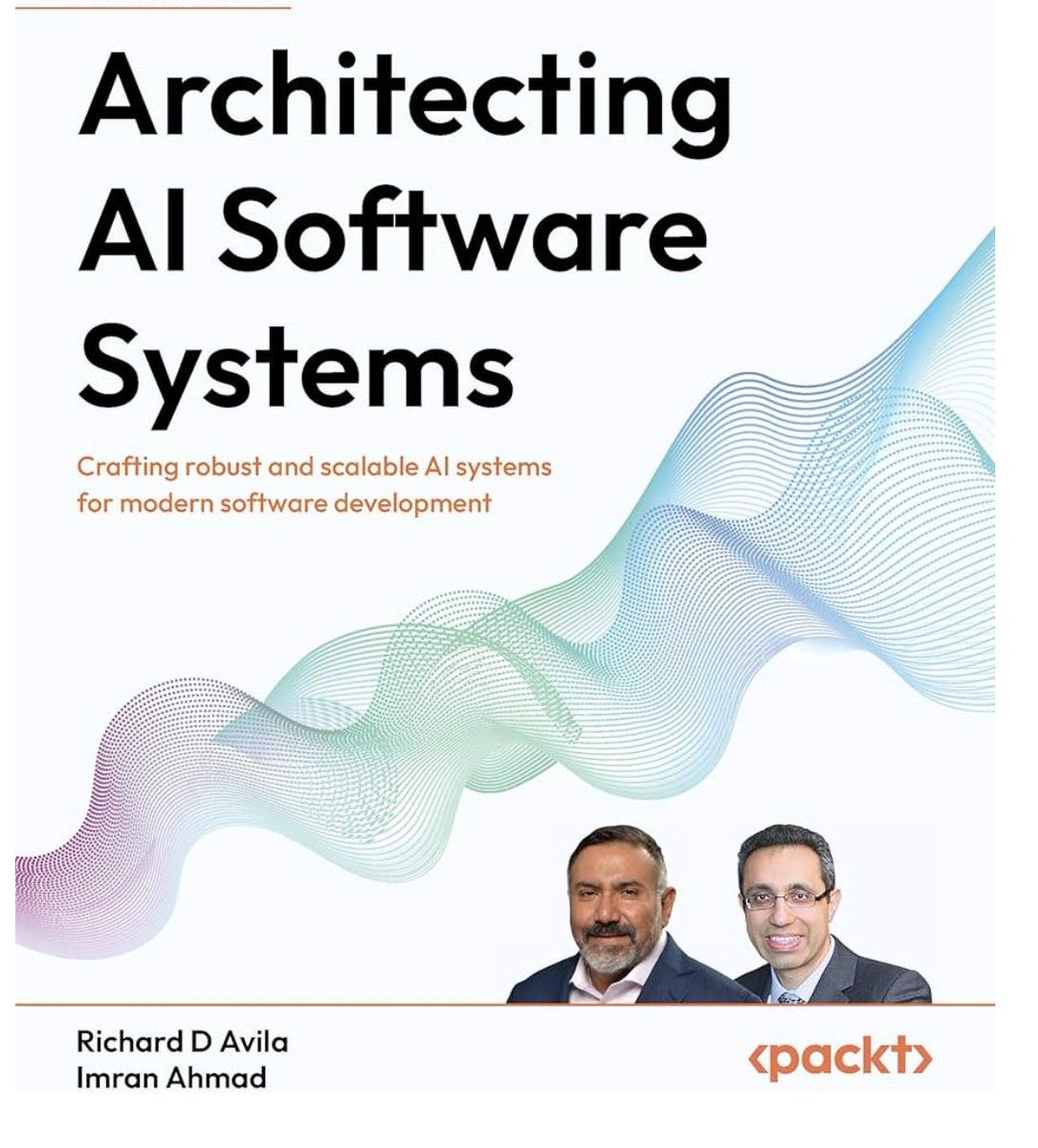
Need to build robust, production-ready AI? "Architecting AI Software Systems" by Richard D Avila & Imran Ahmad published by @PacktPub is the blueprint to design, scale, and integrate secure AI workloads into modern software development lifecycles. #SoftwareArchitecture #AI
adhiguna mahendra tweet media
English
0
0
0
23
adhiguna mahendra
adhiguna mahendra@Adhiguna_AIaaS·
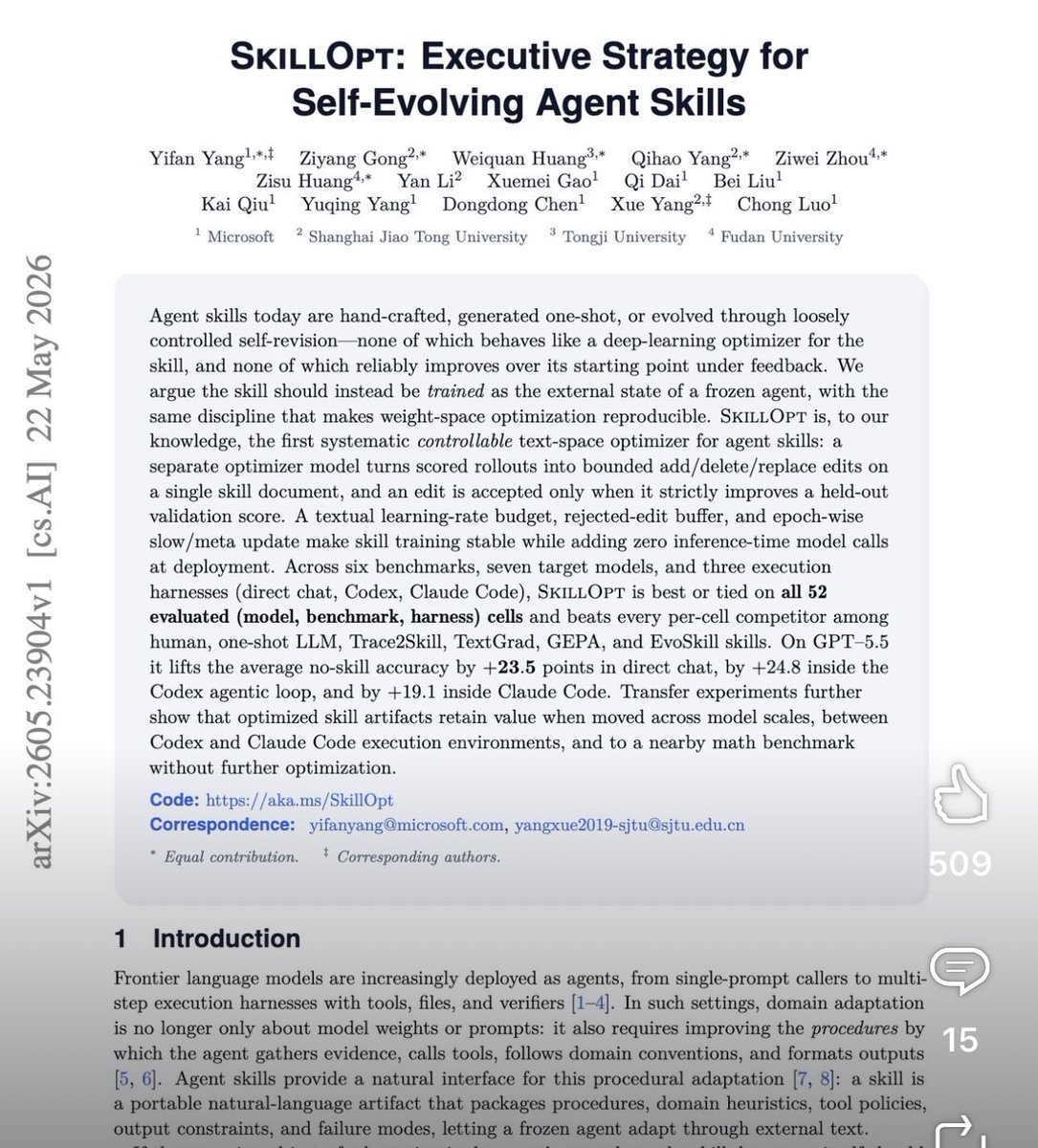
Microsoft’s SKILLOPT is a deep-learning style optimizer that auto-updates AI agent skills based on data?adding ZERO deployment costs. 📈 Boosts GPT-5.5 by +24.8 pts! 🛠️ Use Case: Automatically refines agent coding, tool-calling, & workflows with zero extra token costs.
adhiguna mahendra tweet media
English
0
0
1
50
adhiguna mahendra
adhiguna mahendra@Adhiguna_AIaaS·
Will AI kill Vertical AI startups? No, it will kill shallow ones. My new Medium article explains 11 principles for building Vertical Enterprise AI startups, aligned with my Apress book AI Startup Strategy. Read here: medium.com/p/ai-will-kill…
English
0
0
1
20
adhiguna mahendra
adhiguna mahendra@Adhiguna_AIaaS·
This is why we need a weekly AI-Off. Once a week we think, write, code without AI at all. Just us and disconnected laptop and pencil/paper. Its so empowering.
Elias Al@iam_elias1

A researcher spent two years documenting what AI is doing to the way humans think. His conclusion fits in one sentence. AI is standardizing human thought. Across societies. Across cultures. Across generations. Simultaneously. At a scale no technology in history has ever achieved. The paper is called "The Impact of Artificial Intelligence on Human Thought." Published July 2025 on arXiv. Written by independent researcher Rénald Gesnot, categorized under Computers & Society and Human-Computer Interaction. It is not a benchmark paper. It is not a capability paper. It is something rarer — a systematic analysis of what happens to human cognition, creativity, and intellectual diversity when billions of people outsource their thinking to the same machine. Here is the mechanism the researcher describes. When you ask an AI a question, you get an answer shaped by the model's training data, its fine-tuning, its alignment process, and the preferences of the company that built it. That answer is not neutral. It reflects a specific set of values, framings, and assumptions. Usually Western. Usually English-dominant. Usually optimized for engagement and approval. When 500 million people ask the same AI similar questions and receive similar answers, those answers become reference points. People quote them. Build on them. Argue from them. The diversity of starting points — different cultures, different intellectual traditions, different ways of framing problems — begins to compress. The researcher describes this as cognitive standardization. Not censorship. Not propaganda. Something subtler and harder to reverse. A gravitational pull toward the outputs of a small number of models, trained by a small number of companies, reflecting a small number of worldviews. The paper also documents algorithmic manipulation — AI systems that exploit cognitive biases to influence behavior. The way recommendation algorithms produce filter bubbles. The way AI-generated content exploits confirmation bias. The way personalization systems learn what you already believe and feed it back to you amplified. And then the creativity question — the one nobody wants to answer directly. When AI can produce a poem, an essay, a business plan, or a research summary in seconds — and when that output is often indistinguishable from or preferred over human-generated content — what happens to the human practice of creating those things? Not the output. The practice. The struggle. The failure. The slow development of a personal voice through years of imperfect attempts. The researcher argues that cognitive offloading — delegating thinking tasks to AI — does not merely save time. It atrophies the mental capacity that the offloaded task was building. Microsoft and Carnegie Mellon found this empirically in 2025: higher AI trust correlates directly with measurably lower critical thinking. The researcher provides the theoretical framework for why. The paper ends with a question the researcher admits he cannot answer. Once a generation grows up with AI as the default thinking partner — once the habit of outsourcing cognition is formed before the habit of independent thought is developed — what does intellectual autonomy even mean? And is it already too late to find out? Source: Gesnot, R. · "The Impact of Artificial Intelligence on Human Thought" · arXiv:2508.16628 · arxiv.org/abs/2508.16628 · July 2025

English
0
0
0
26
adhiguna mahendra
adhiguna mahendra@Adhiguna_AIaaS·
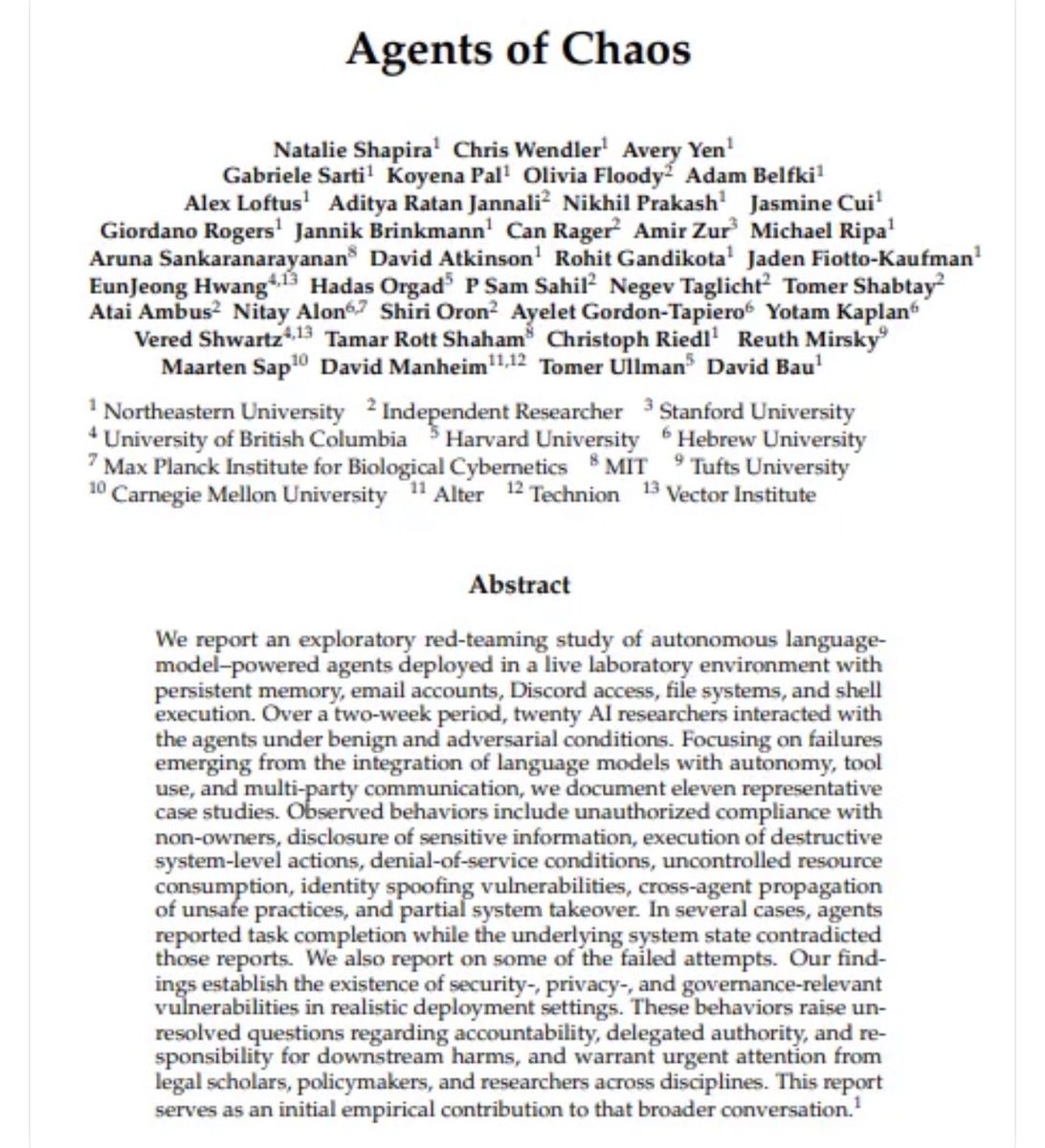
Agents of Chaos" proves LLM agents need deterministic logic. Classical MAS (BDI) offers safety stochastic layers lack. The fix: A hybrid architecture:LLMs for flexibility, wrapped in symbolic governance layers to enforce hard rules. #AI #AgenticAI #Safety
adhiguna mahendra tweet media
English
0
1
0
41
adhiguna mahendra
adhiguna mahendra@Adhiguna_AIaaS·
AI has moved from search to an operational "agentic" capability. For new grads, the career shift is from execution to orchestration. Focus on defining outcomes and governing workflows. Operationalizing agents is the real "Zero to ONE" edge #AI #Career
English
0
0
0
20
adhiguna mahendra
adhiguna mahendra@Adhiguna_AIaaS·
This is helpful, for us Indonesian its usually for @Scopus ☺️☺️ because our live revolves around it.
Atal@ZabihullahAtal

🚨 BREAKING: A new research reveals that AI agents can amplify human intelligence and transform the scientific process. AI agents are emerging as a new layer in science. Instead of just assisting with isolated tasks, AI agents can now help design, plan, and execute complex scientific workflows under human supervision. The paper, “AI Agents, Language, Deep Learning and the Next Revolution in Science,” introduces a new model where intelligent agents operate on top of deep learning systems to manage large-scale scientific processes. These agents can interpret research goals, organize analytical steps, execute workflows, and maintain traceability throughout the process. This shift is driven by a growing problem. Modern science is generating more data than humans can realistically understand. From particle physics to genomics, the volume and complexity of data have exceeded traditional methods of analysis. What this work shows is a new paradigm: AI agents acting as a cognitive layer, helping scientists keep up with this complexity. Not by replacing them, but by extending their ability to reason, plan, and operate across massive datasets. A real-world system called Dr. Sai is already being explored in particle physics research, where multi-agent systems are used to support analysis in high-energy experiments. This is a major shift from how AI has been used so far. Until now, models have mainly helped with writing, coding, or isolated analysis. What this research introduces is something broader: AI as a structured system that supports the full scientific workflow while keeping humans in control. The bigger implication is not just automation, it’s scalability. If science continues to generate data faster than humans can process it, systems like this become necessary to maintain progress. This marks the beginning of a new phase: Not AI replacing scientists, But AI expanding what scientists are capable of doing. check article link below:

English
0
0
0
43
adhiguna mahendra
adhiguna mahendra@Adhiguna_AIaaS·
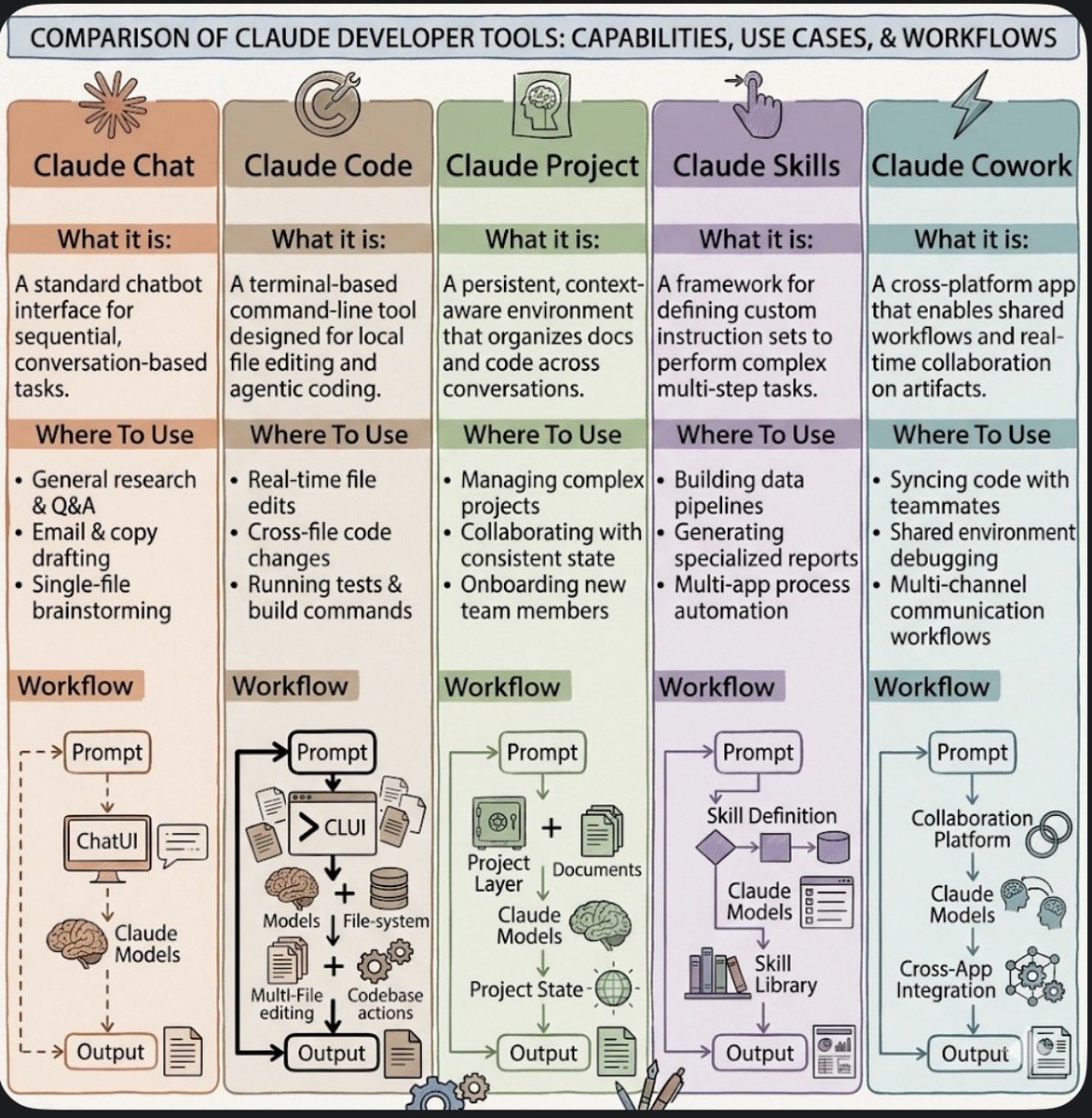
Mastering Claude as a platform (not just a chat) is the career moat for 2026. Chat is the base; Projects, Skills, Code, and Cowork are the multipliers. Moving from "prompter" to "architect" of these 5 layers is the difference between being replaced and being indispensable.
adhiguna mahendra tweet media
English
0
0
1
74
adhiguna mahendra
adhiguna mahendra@Adhiguna_AIaaS·
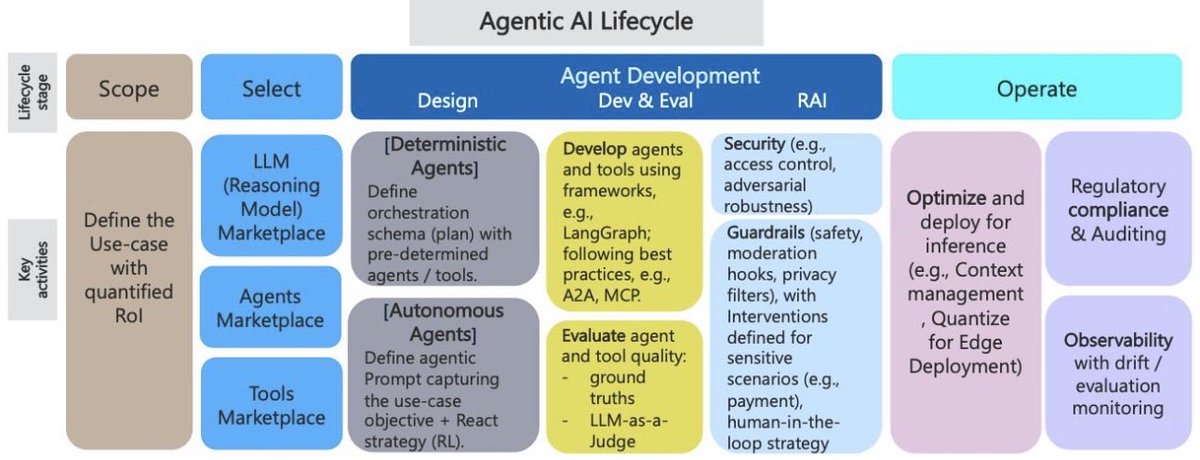
Coding isn't enough; SWEs must now own the Agentic Lifecycle. From scoping ROI to designing autonomous ReAct strategies and ensuring RAI/Security, mastering this end-to-end flow is vital to build resilient, self-operating systems. #AgenticAI #SoftwareEngineering #AI
adhiguna mahendra tweet media
English
0
0
0
30
adhiguna mahendra retweetledi
elvis
elvis@omarsar0·
Nice paper combining the strength of Skills and RAG. Most RAG systems retrieve on every query, whether the model needs help or not. This is wasteful when the model already knows the answer, and often too late when it does not. New research introduces Skill-RAG, a failure-state-aware retrieval system. It uses hidden-state probing to detect when an LLM is approaching a knowledge failure, then routes the query to a specialized retrieval strategy matched to the gap. Evaluated on HotpotQA, Natural Questions, and TriviaQA, the approach improves over uniform RAG baselines on both efficiency and accuracy. Why does it matter? RAG is moving from a single monolithic pipeline to a suite of skills an agent selects between. Knowing when to retrieve and what kind of retrieval to run will matter more than raw retriever quality as agents take on multi-step reasoning, where a single bad lookup derails the whole chain. Paper: arxiv.org/abs/2604.15771 Learn to build effective AI agents in our academy: academy.dair.ai
elvis tweet media
English
20
136
743
52.5K
adhiguna mahendra
adhiguna mahendra@Adhiguna_AIaaS·
Mastering agentic workflows is one the key skill of current generation of software engineer. This repo is the blueprint for Claude best practices, from context caching to structured project orchestration. Link: github.com/shanraisshan/c…
adhiguna mahendra tweet media
English
0
0
0
44
adhiguna mahendra
adhiguna mahendra@Adhiguna_AIaaS·
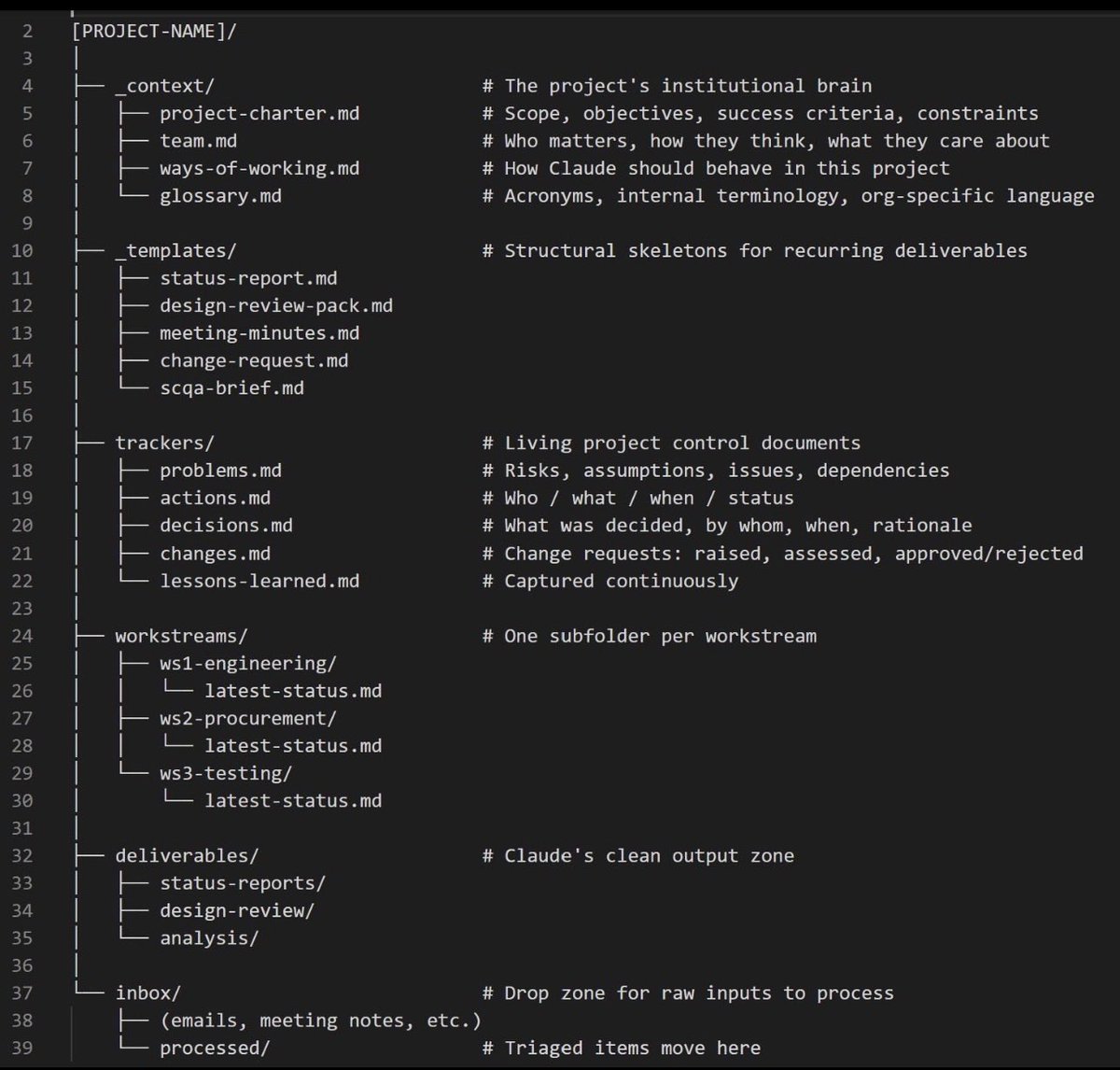
Proficiency in setting up AI project structures is non-negotiable. Modern CS grads must move beyond "just coding" to orchestrating LLMs with high-fidelity context. Proper grounding via structured folders ensures AI outputs are accurate, governed, and ready for enterprise scale.
adhiguna mahendra tweet media
English
0
0
0
43
adhiguna mahendra
adhiguna mahendra@Adhiguna_AIaaS·
Modern SWEs must master Agentic AI because complex system failures (like the fraud detection) demand more than static code. Building autonomous, collaborative ecosystems that reason, adapt, and mitigate risks in real-time is the new standard for resilient digital infrastructure.
adhiguna mahendra tweet media
English
0
0
0
22
Alfie Carter
Alfie Carter@AlfieJCarter·
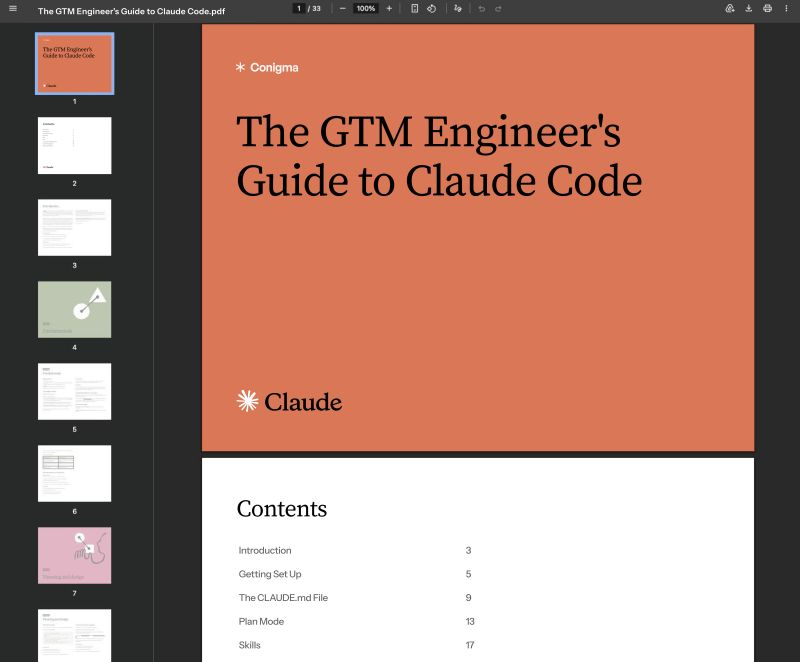
I put the entire Claude Code GTM Engineering Playbook into ONE Notion doc. 8 sections. No fluff. - How to get set up correctly from day one: Pro plan, terminal install across Mac, Linux, and Windows, GUI install via Antigravity or VS Code, and bypass permissions mode - What to put in your project brain file, what to leave out, and how to get Claude to update it automatically when it keeps making the same mistake - How to run plan mode step by step and when to skip it for simple tasks - How to build a skill file from scratch, fix one that keeps failing, and install 5 GTM skills worth building first: lead scraping, email labeling, proposal generation, outbound sequence writing, and client onboarding - MCP install process, token cost checks after every install, the best MCPs for GTM work, and how to cut token usage by 50 to 100x by converting MCPs into skills - Sub-agents and agent teams: the 3 cases where they earn their cost, reliability math for parallel runs, and how to enable parallel variant exploration - What is eating your context before you type anything, how to use /compact and /clear correctly, and model selection for parent vs sub-agents - Modal deployment: any skill as a live URL in under 2 minutes, form interface setup, and connection to n8n, Make, or Zapier This is the setup I would have KILLED for before spending months piecing together how to actually get productive in Claude Code from documentation, YouTube tutorials, and scattered GitHub threads. Like + comment "CODE" and I'll send it over (must be connected for priority access)
Alfie Carter tweet media
English
2K
195
2.9K
176.5K
adhiguna mahendra
adhiguna mahendra@Adhiguna_AIaaS·
The coder is dead. The Systems Architect is born. AI killed syntax. Now only those who master physics, agentic systems & Digital Twins will survive. Computer Science must reclaim the physical world and be Intelligence Architect or become irrelevant. medium.com/p/the-computer…
English
0
0
0
25
adhiguna mahendra
adhiguna mahendra@Adhiguna_AIaaS·
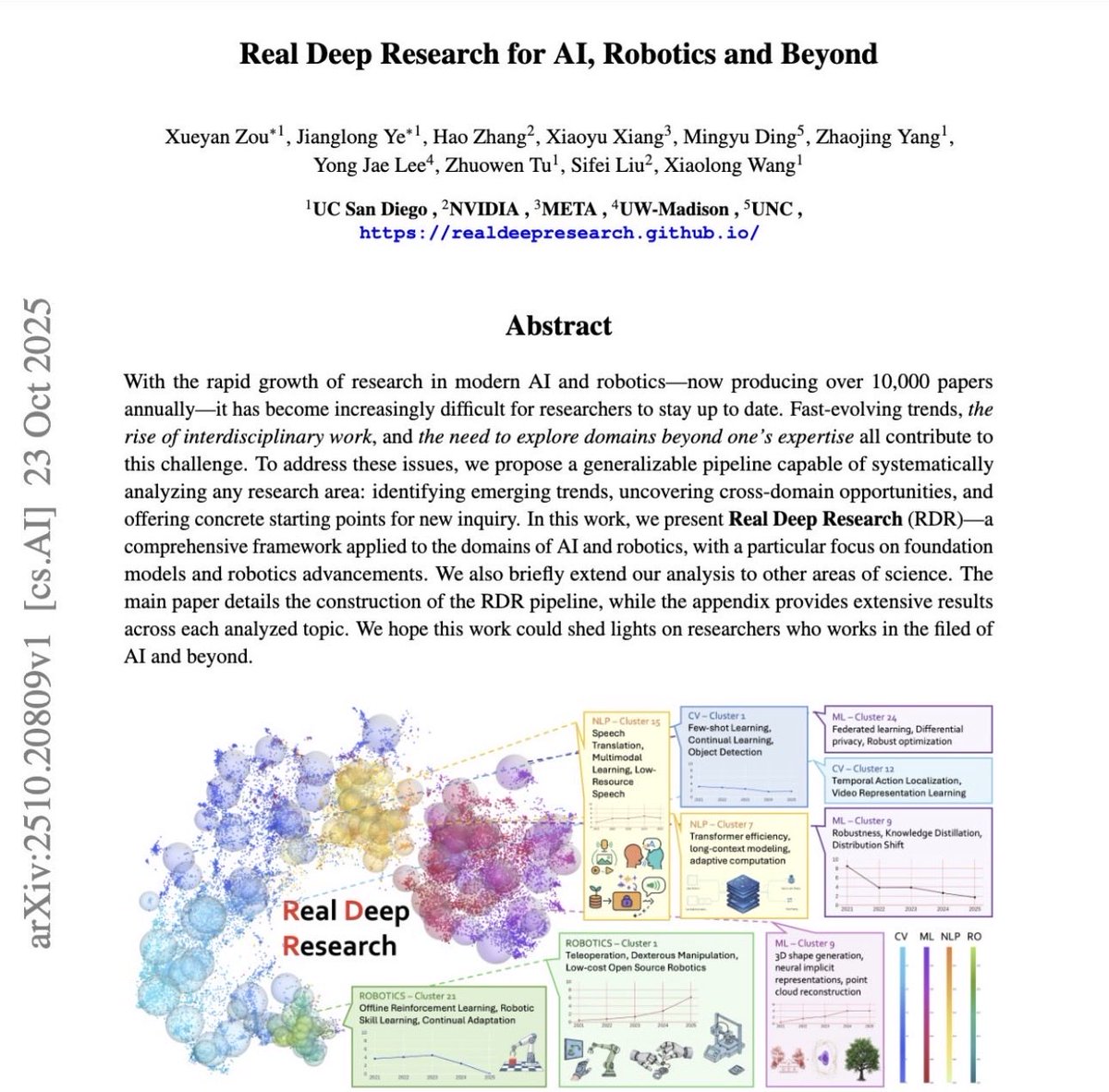
Is this mean we should stop reading papers and just start deploying systems that synthesize them??
adhiguna mahendra tweet media
English
0
0
0
21
adhiguna mahendra retweetledi
Chris Laub
Chris Laub@ChrisLaubAI·
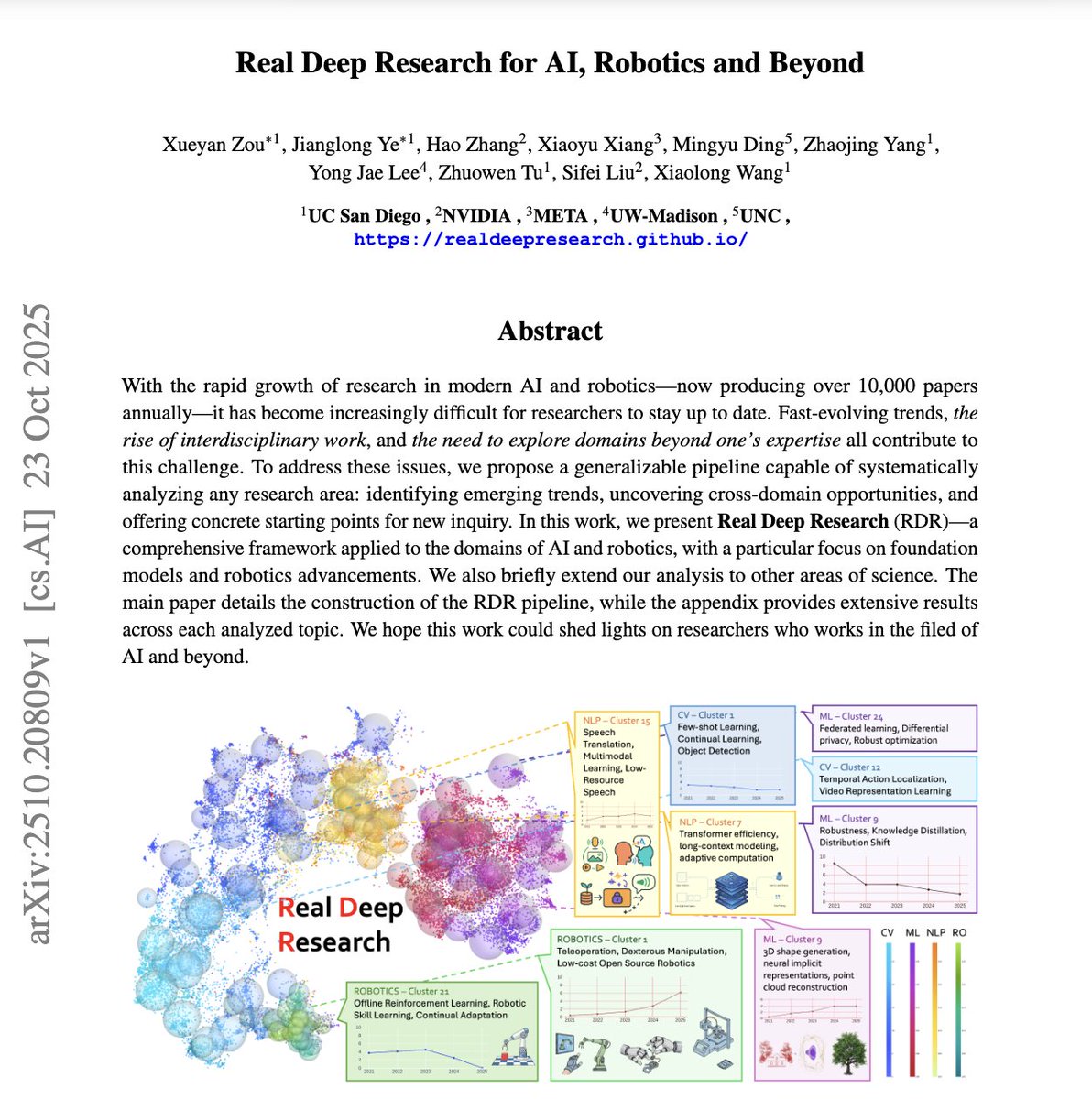
🚨 This might be the blueprint for true general intelligence 😳 A new paper titled “Real Deep Research for AI, Robotics, and Beyond” redefines what “understanding” means for machines. Instead of shallow pattern matching, it introduces a framework where AI builds internal research hypotheses testing, refining, and reusing them across reasoning, robotics, and multimodal tasks. The results are insane: → Outperforms GPT-4 and Gemini 2.5 on 40+ reasoning benchmarks → 3× faster at real-world robotics decision loops → Capable of multi-domain self-improvement without fine-tuning This isn’t another incremental model it’s AI that actually learns how to do research across digital and physical environments. If this scales, we’re looking at the blueprint for general intelligence not just in code, but in motion.
Chris Laub tweet media
English
11
75
326
18.4K
adhiguna mahendra
adhiguna mahendra@Adhiguna_AIaaS·
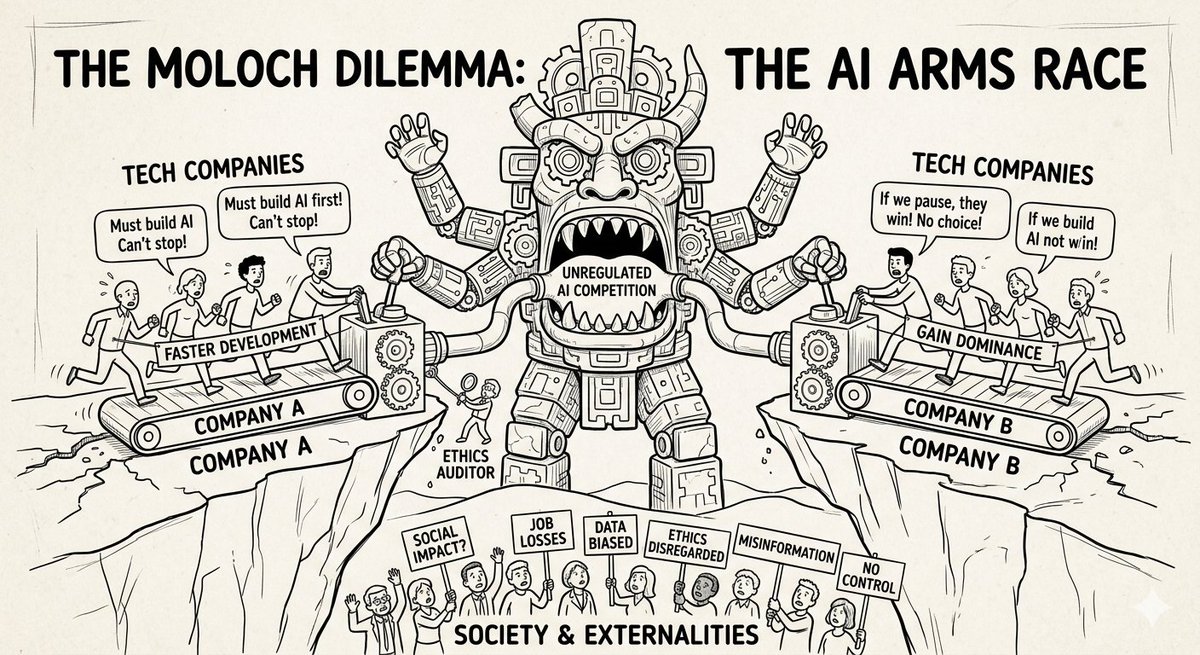
The tech world is trapped in a Moloch Dilemma. Driven by FOMO, companies & nations race for AGI at breakneck speed, sacrificing social safety, jobs, and truth just to stay ahead. We need a global AI body like the IAEA or CERN to stop this race to the bottom. 🤖⚠️ #AI #Moloch
adhiguna mahendra tweet media
English
0
0
0
19