Sabitlenmiş Tweet
Aetheron
1.5K posts


Aetheron
@Aetheron
Architect | Designer | @DremarsStudio
Mexico, ME Katılım Ağustos 2013
240 Takip Edilen413 Takipçiler
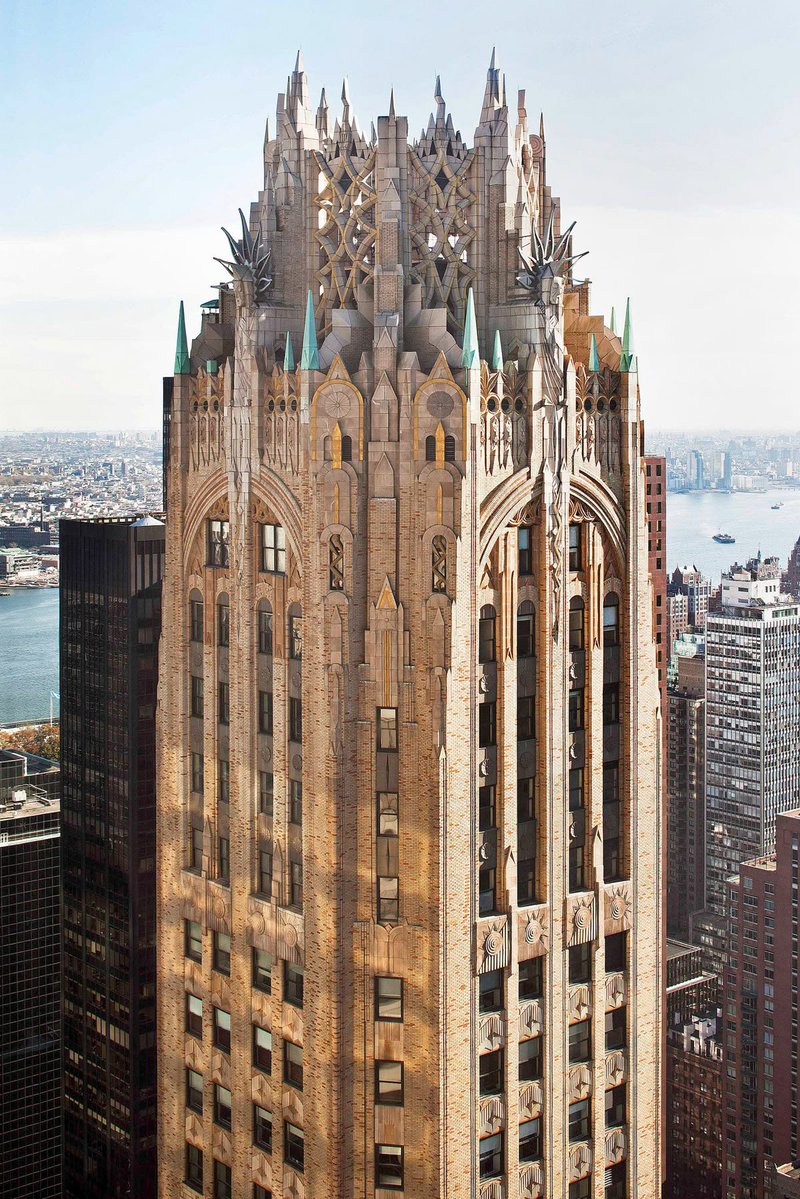
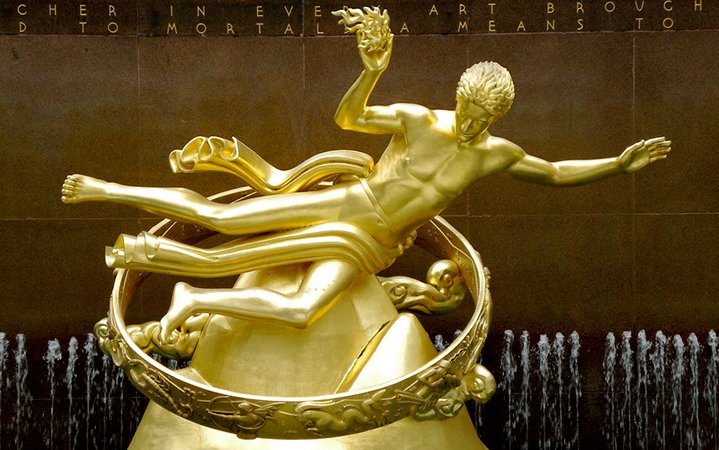
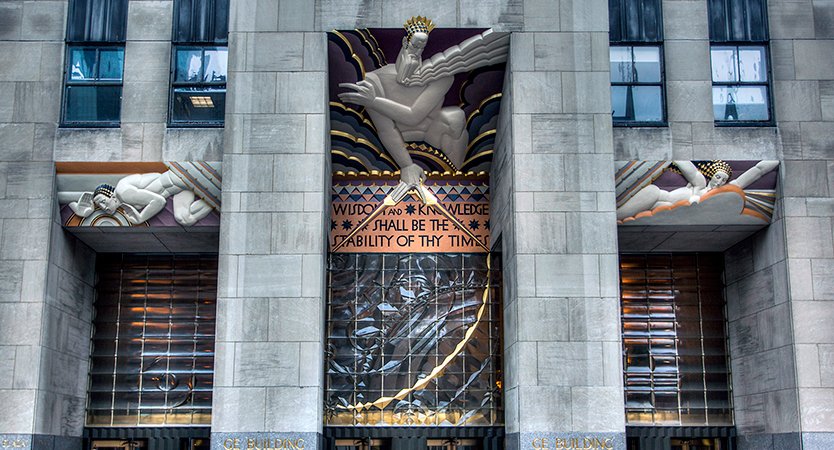
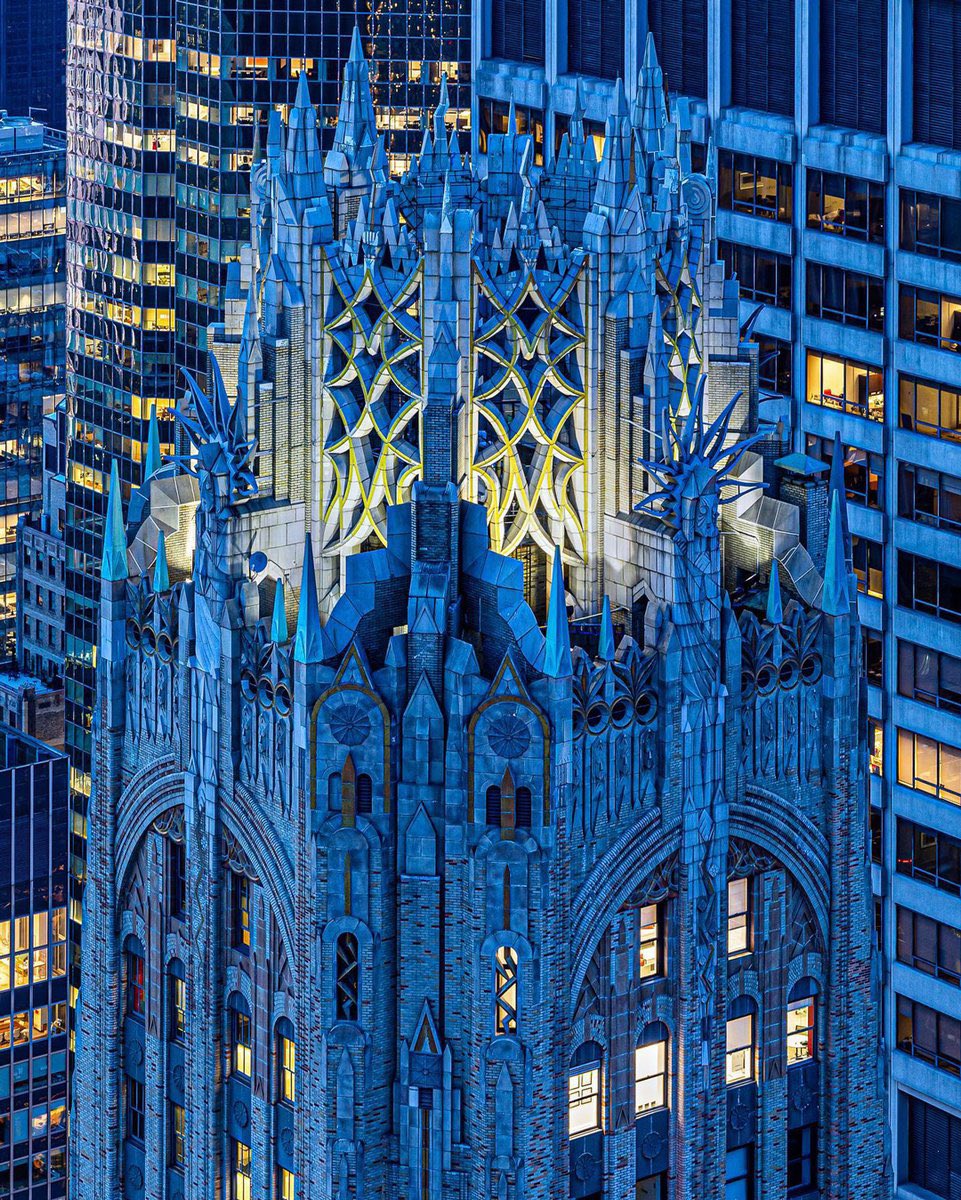
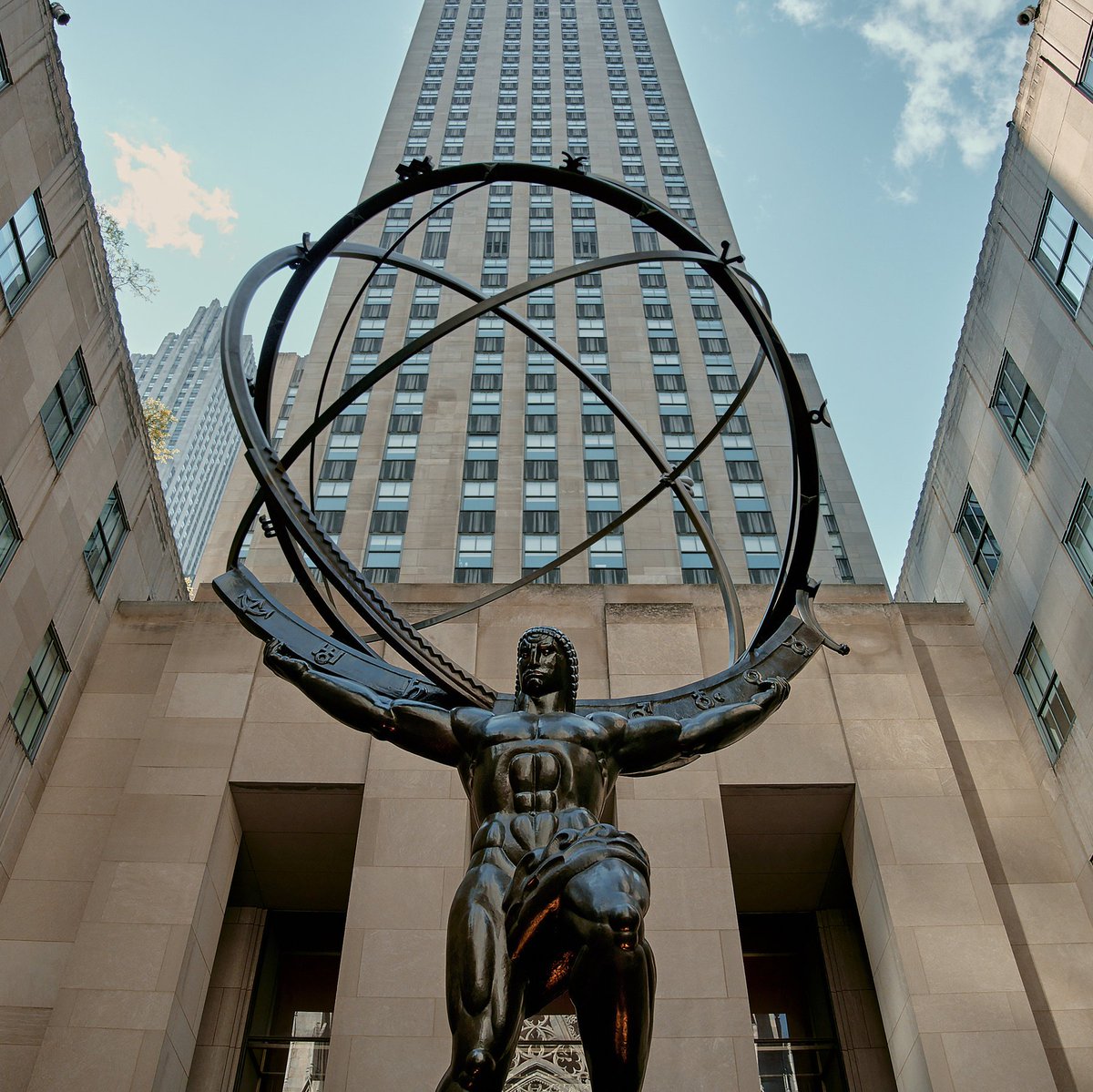
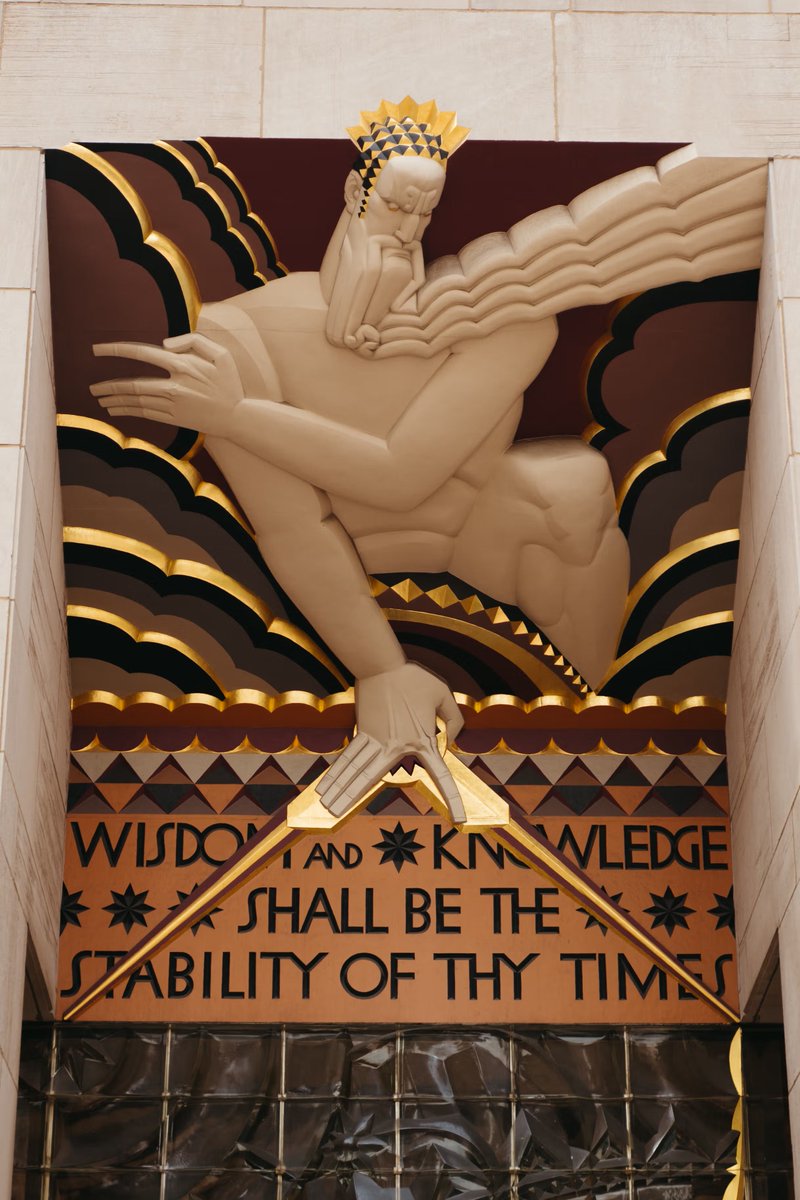
The GE Building in New York City, more commonly known as 30 Rockefeller Plaza or simply 30 Rock, is one of the most iconic skyscrapers in the Rockefeller Center complex.
Construction took place between 1931 and 1933, with the building officially completed and opened in 1933. It was designed in the classic American Art Deco style by architect Raymond Hood of the firm Hood, Godley & Fouilhoux, in collaboration with a team of associated architects responsible for the overall Rockefeller Center project.
The building stands 70 stories tall, approximately 850 feet / 259–260 meters to the roof and was erected during the Great Depression. It served as a powerful symbol of optimism, progress, and resilience at a time of economic hardship.

English

One of the finest Art Deco buildings in the world, the GE Building in New York City 🇺🇸
English
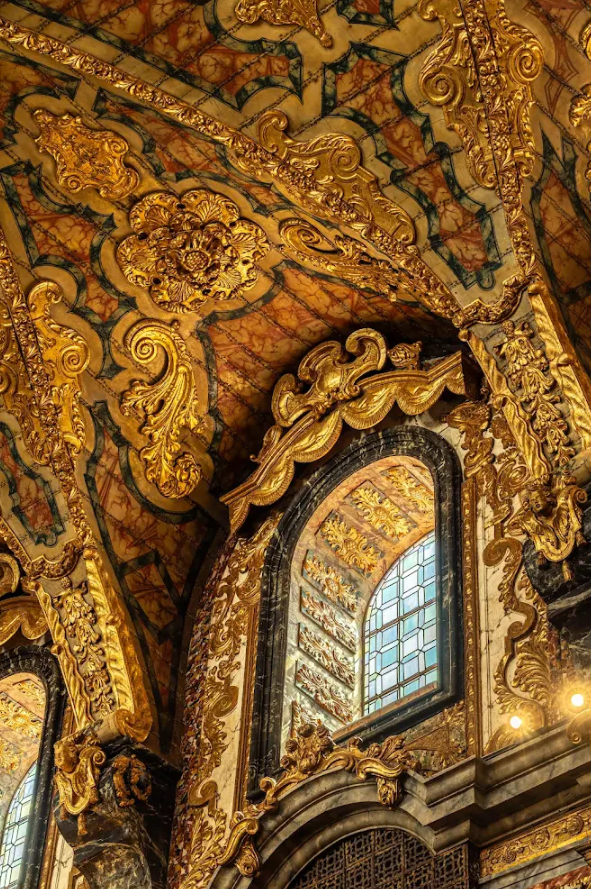
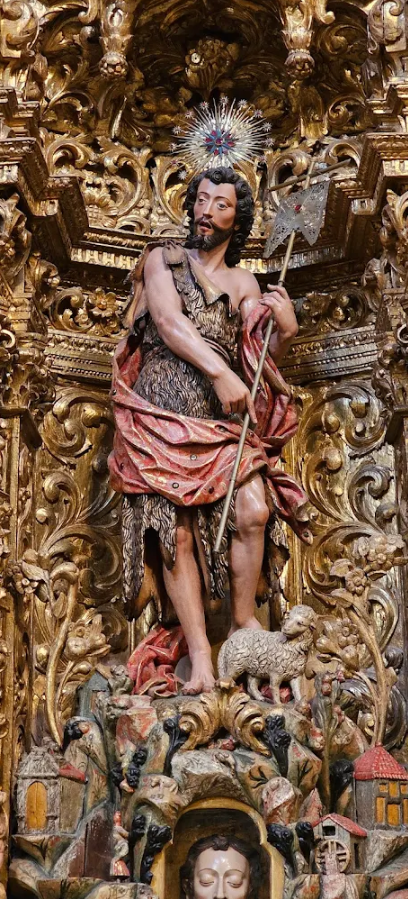
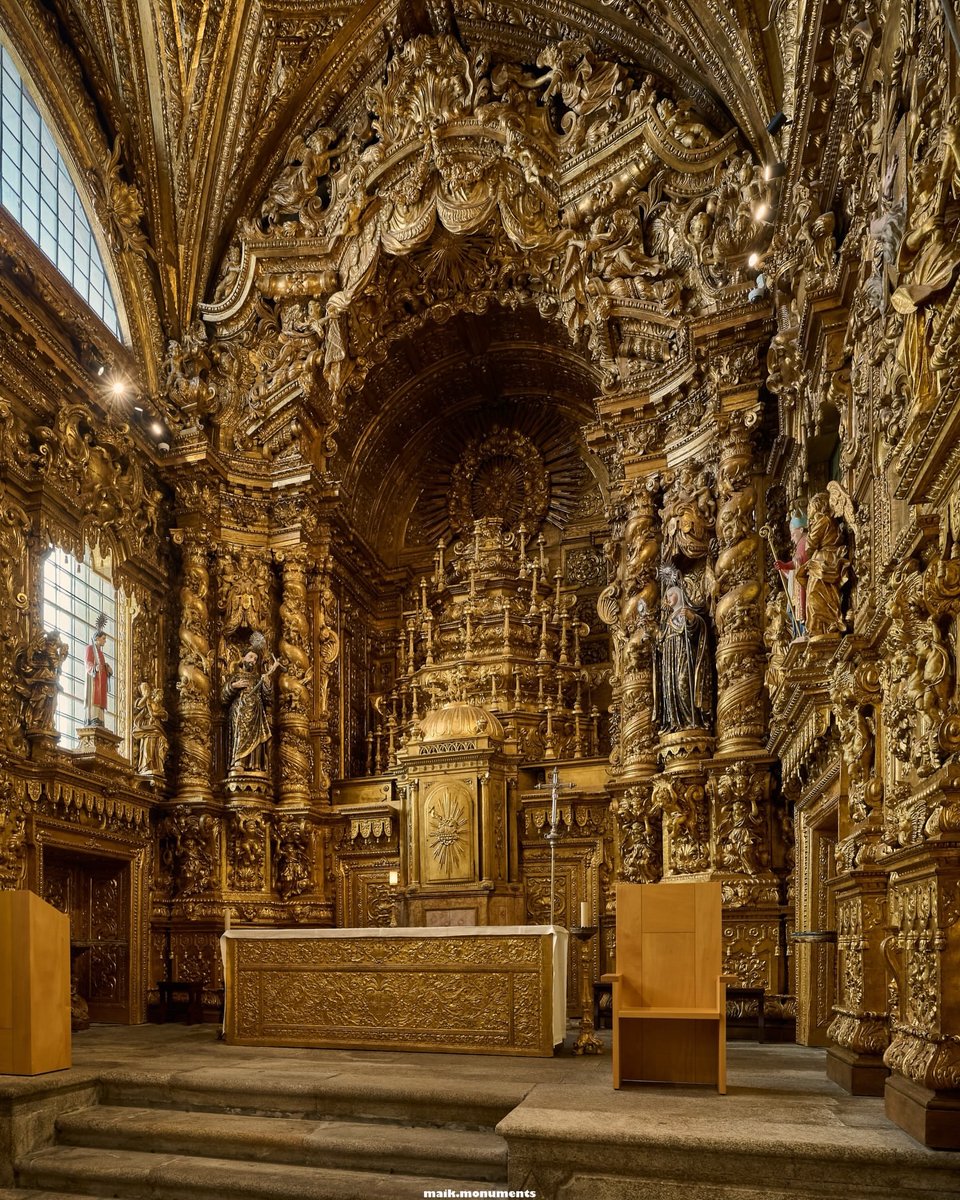
The Church of Santa Clara in Porto was founded in 1416 as a convent and church for the nuns of the Order of Poor Clares. The current Gothic church was constructed between 1416 and 1457 in the late Gothic style.
Between approximately 1718 and 1735, the interior underwent a magnificent Baroque transformation. This lavish renovation was funded by the immense wealth from Brazilian gold arriving in Portugal during the reign of King João V, the Magnificent.
Today, it is considered one of the richest and most exuberant Baroque interiors in Portugal. The church is almost entirely covered in talha dourada, gilded woodcarving, with estimates suggesting that over 300–400 kg of gold were used in its decoration. The result is an overwhelming “golden cave” effect, where every surface — columns, ceilings, altarpieces, and walls — gleams with intricate Baroque and Rococo carving, polychrome details, and abundant gilding.


English


Waterloo House (6 Avoca Street, South Yarra, VIC 3141)
Waterloo House is the largest and most elaborately ornamented corner residence within the historic Lee Terrace, a row of seven Victorian terraces built in 1890 in South Yarra, Melbourne.
It was sold in 2024 for $5,000,000 AUD.
Key features include:
4 bedrooms
3 bathrooms
A generous land and building footprint for a Victorian terrace house
Built in 1890 during the late Victorian period, the house exemplifies the Victorian Italianate style with strong influences from Melbourne’s prosperous “Boom Era” of the 1880s–1890s. It features exceptional cast-iron lacework on its multi-level verandahs, ornate detailing, a prominent curved bay window, and a dramatic external iron staircase — characteristics that make it one of the most admired Victorian terraces in South Yarra.
Victorian terraces from this 1890 period continue to serve as high-end residences, combining elegant architecture, outstanding wrought-iron details, and an unbeatable location in one of Melbourne’s most desirable suburbs.


English


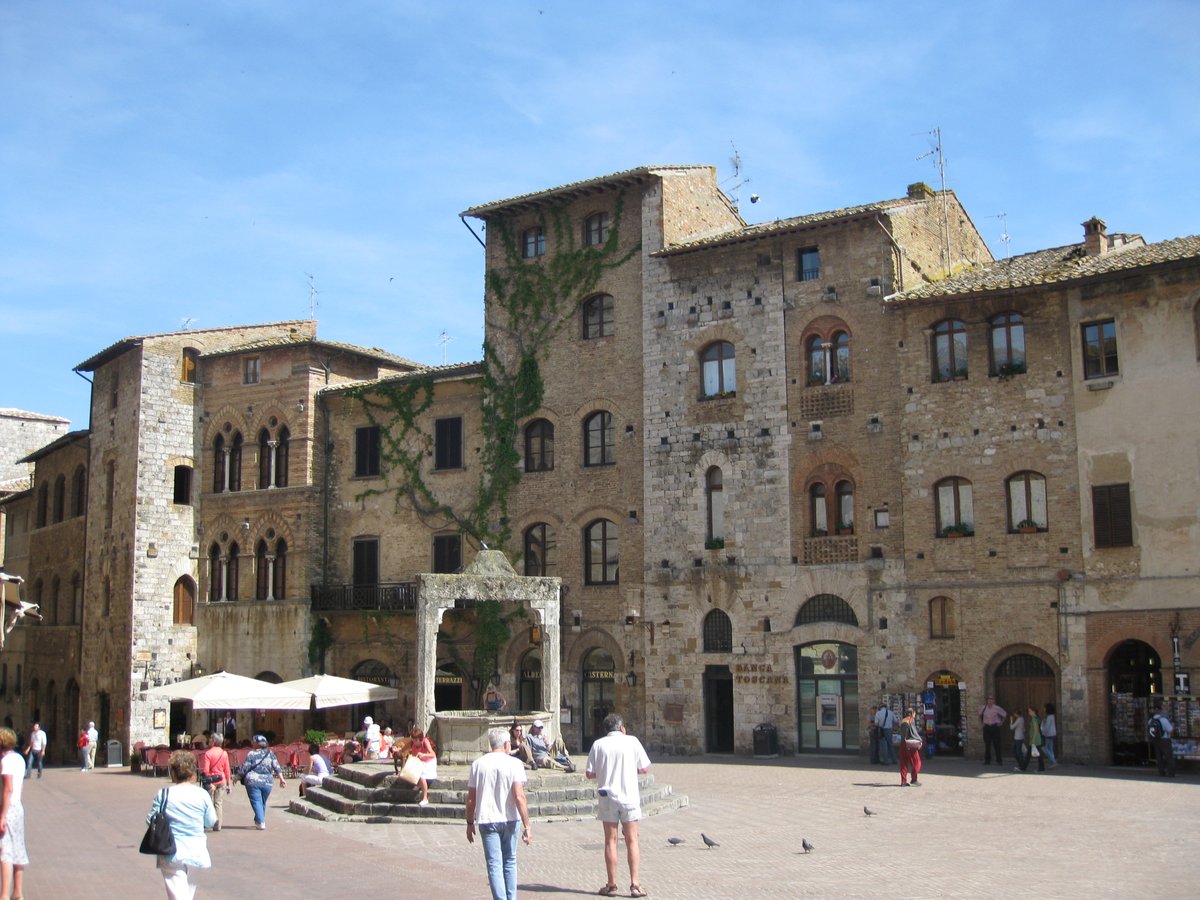
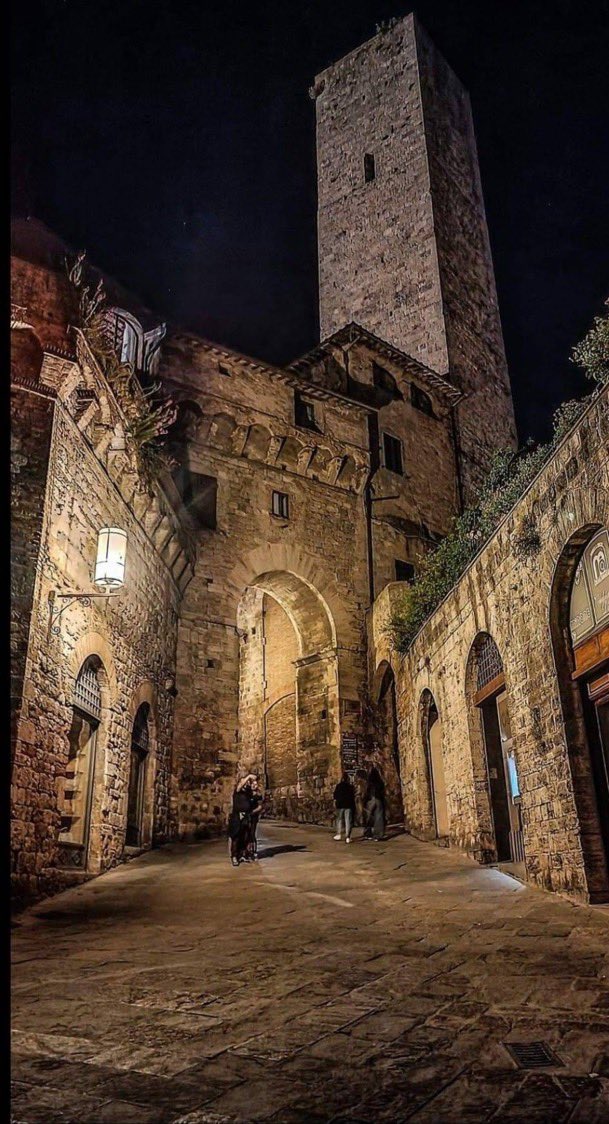
San Gimignano, one of the most beautiful and best-preserved medieval towns in Italy, is often called the “Manhattan of the Middle Ages” or the “Town of Towers” because of its striking skyline of medieval stone towers.
The municipality currently has a population of approximately 7,500 inhabitants, but the historic center has very few permanent residents, as most locals live in the surrounding countryside and the town relies heavily on tourism.
In the Middle Ages, noble families built tall towers as symbols of power, wealth, and defense. At its peak in the 14th century, San Gimignano had as many as 72 towers. Today, 14 medieval towers remain standing in their original height, making it one of the most distinctive skylines in Tuscany.
The Black Death of 1348 devastated the population and marked the beginning of the town’s long economic and political decline.
The towers served multiple purposes, defense, social status, and surveillance. San Gimignano is a living museum of the Middle Ages, with its competing towers, cobblestone squares, stone houses, and surrounding vineyards that seem frozen in time.



English

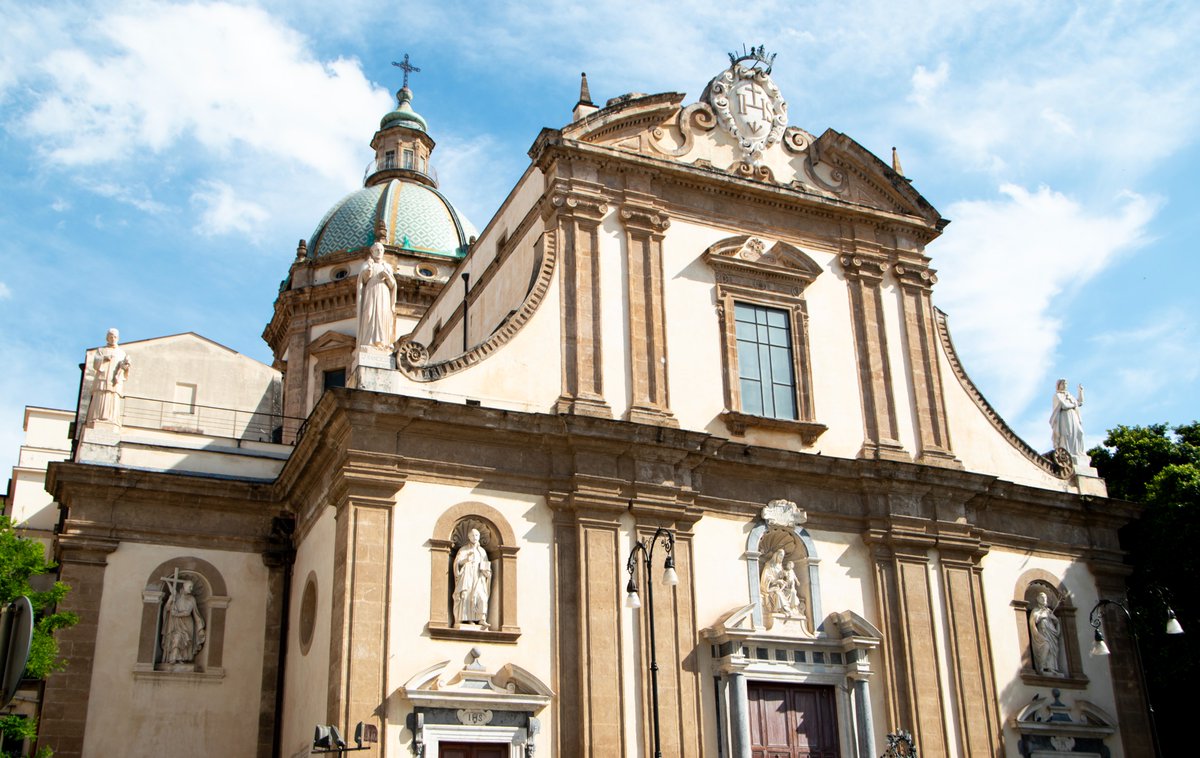
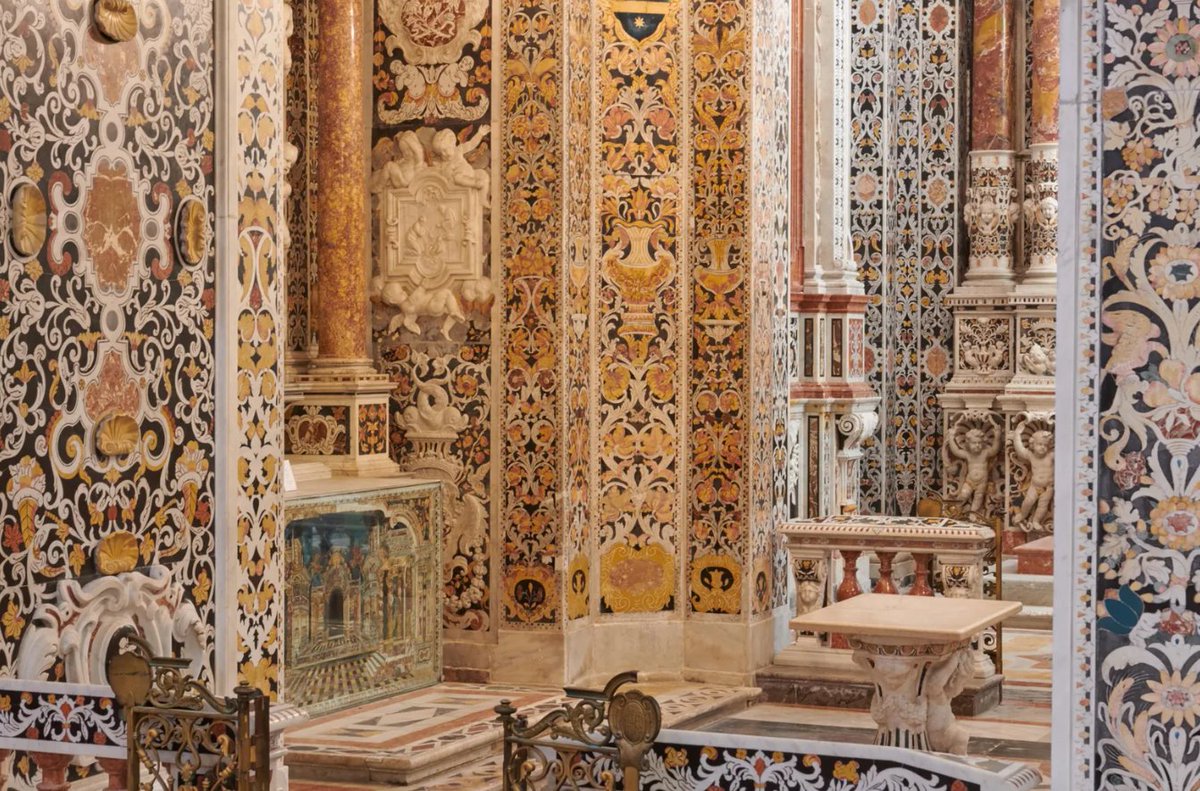
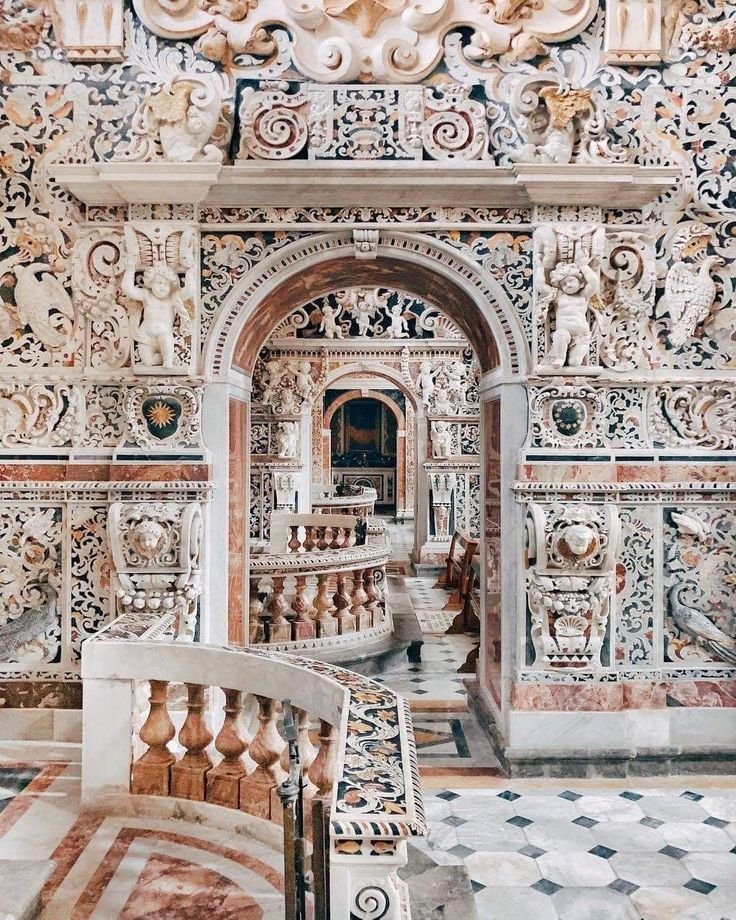
The Church of the Gesù in Palermo, Sicily, is one of the richest and most representative Baroque churches in Sicily. It is widely regarded as the supreme example of Sicilian Baroque due to its extraordinarily ornate interior, which is densely covered in elaborate stuccowork, polychrome marbles, and lavish gilding.
The Jesuits arrived in Palermo in 1549 and began construction of the church in 1564. The initial design is attributed to the Jesuit architect Giovanni Tristano, with contributions from other architects such as Angelo Italia in the early phases. The extraordinary stucco decoration that defines the interior was executed primarily by members of the Serpotta family, especially Giacomo Serpotta and his brother Giuseppe, along with Giacomo’s son Procopio Serpotta in later stages.
Its sober, relatively plain façade deliberately conceals an opulent interior that feels like a “golden theater,” designed to overwhelm, emotionally move, and impress the visitor.


English

The interior of the Chiesa del Gesù (Casa Professa), a Roman Catholic church in Palermo, Sicily, Italy.
Italiano
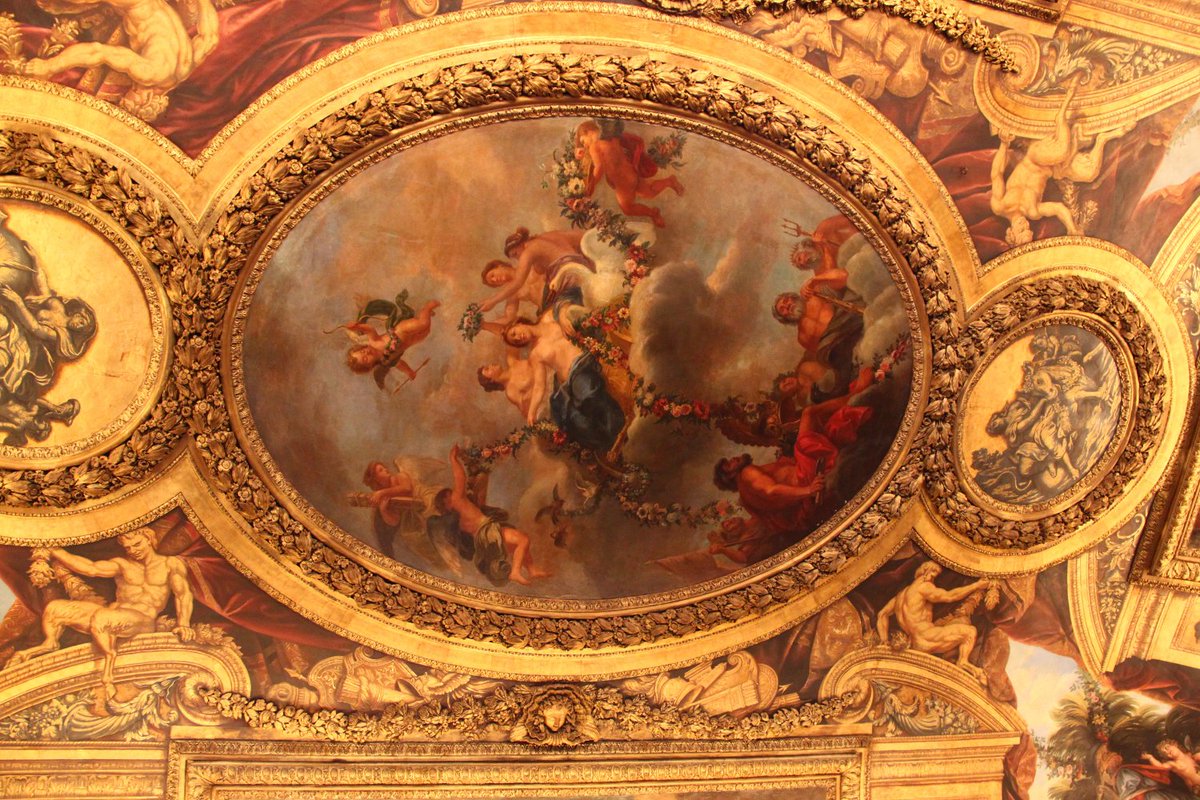
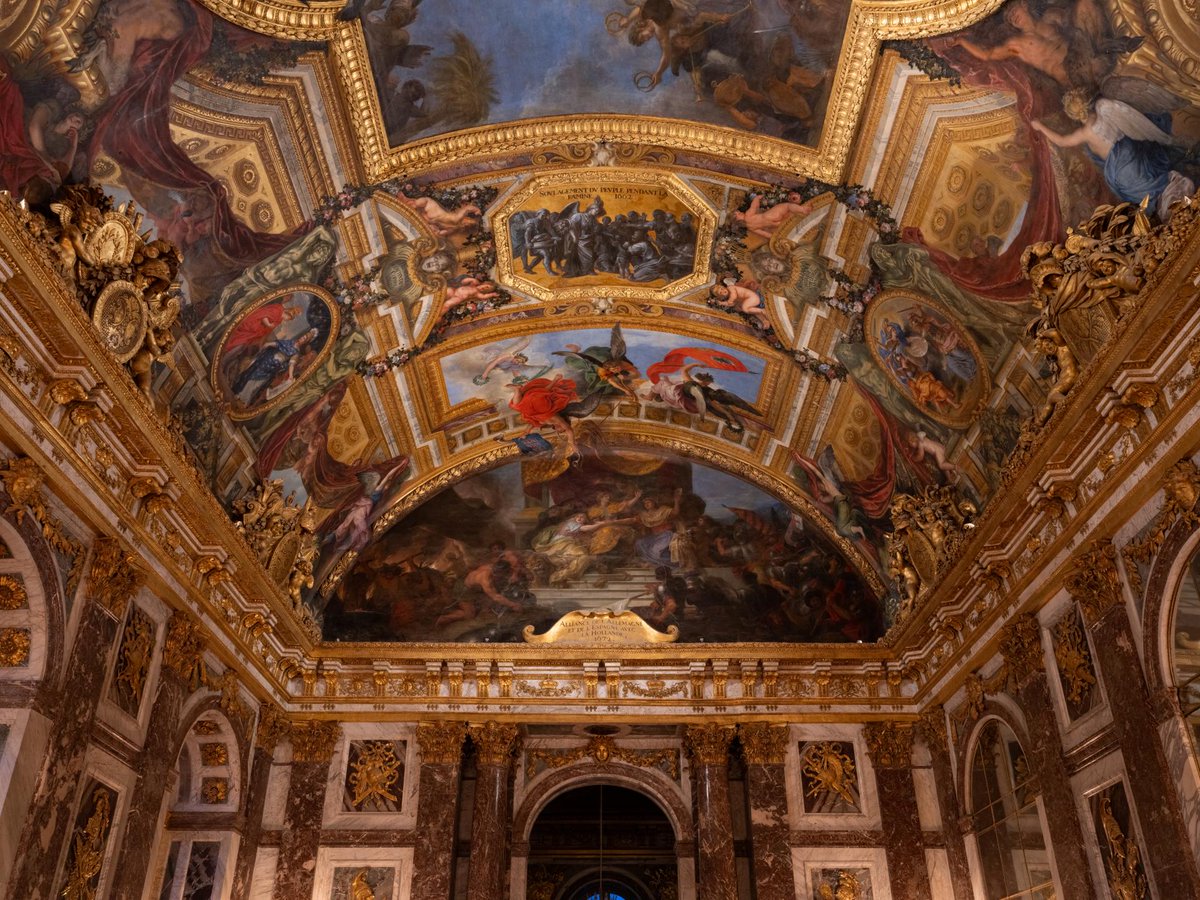
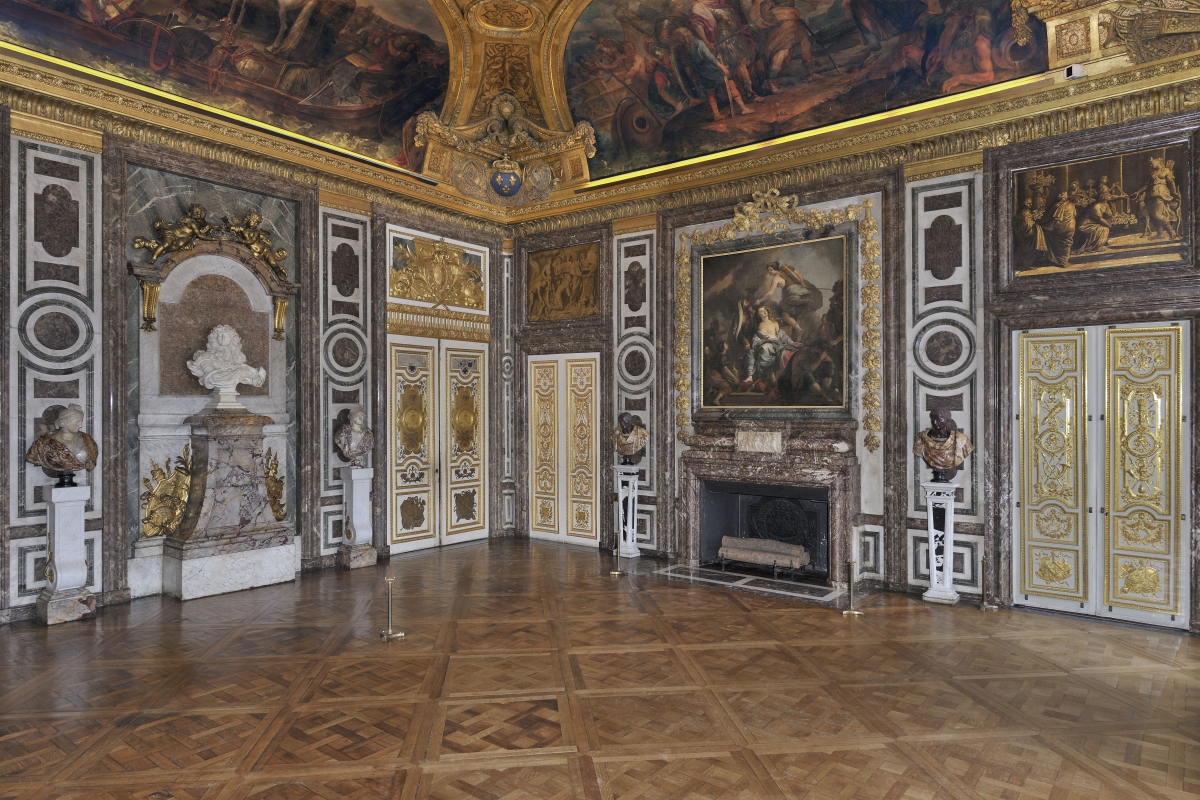
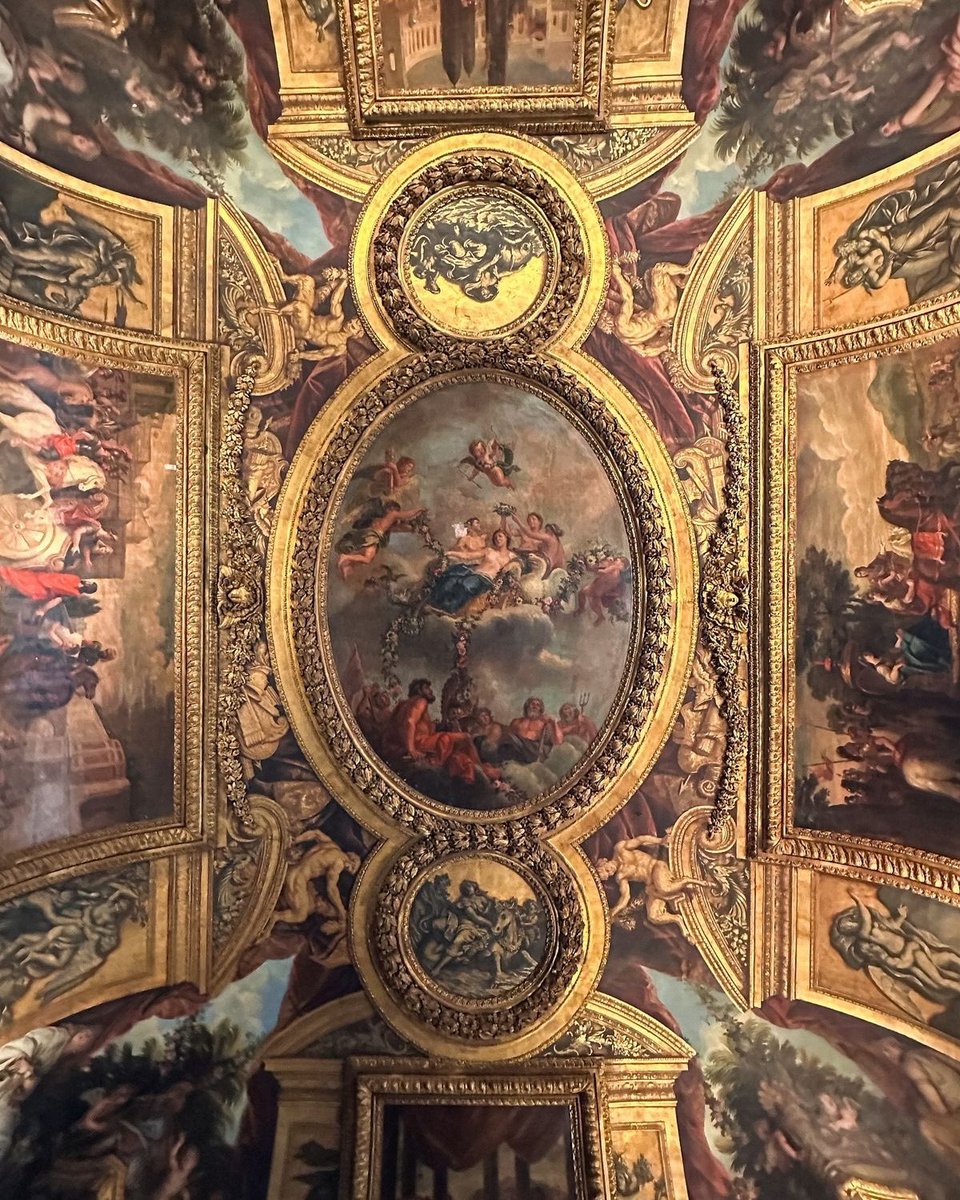
This is the ceiling of the Salon de Vénus in the Palace of Versailles, France. The Salon de Vénus is the first of the seven rooms that make up the King’s State Apartments, located on the piano nobile of the palace. It was designed and decorated between 1677 and 1681 during the reign of Louis XIV.
The room takes its name from the goddess Venus, symbol of love and beauty, but it also refers to the planet Venus. This naming was part of a broader iconographic program that associated the Sun King with the gods and planets of the solar system. The ceiling and surrounding decorations celebrate beauty, love, and royal power through mythological and allegorical scenes.

English

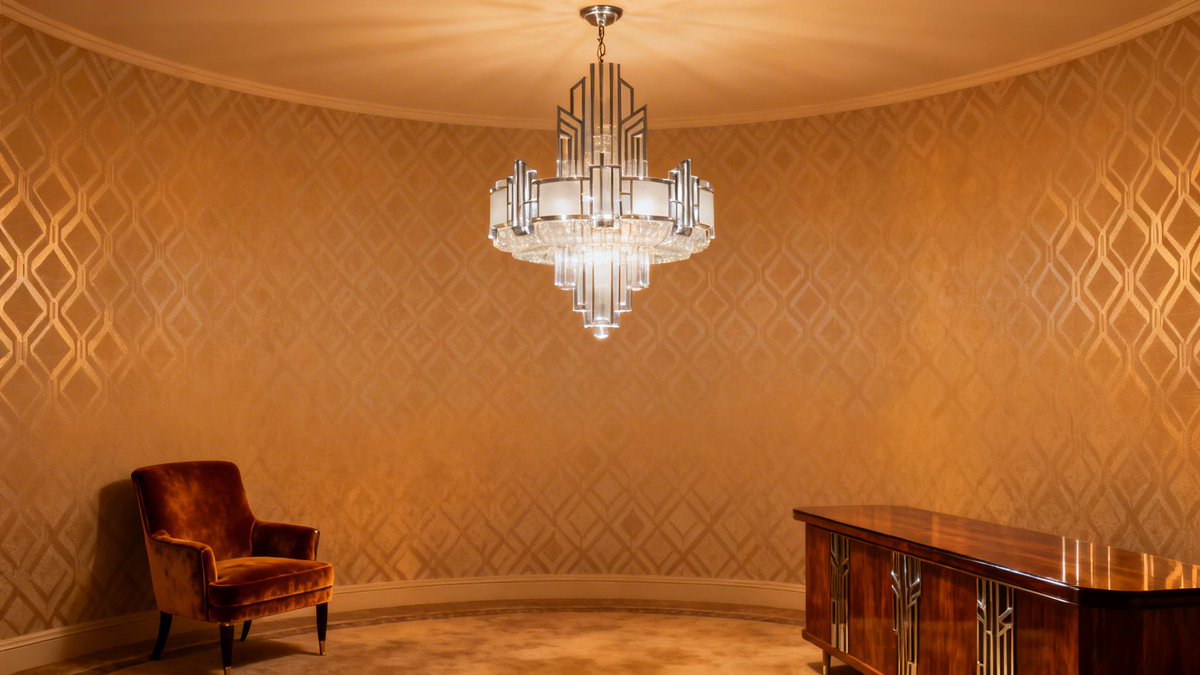
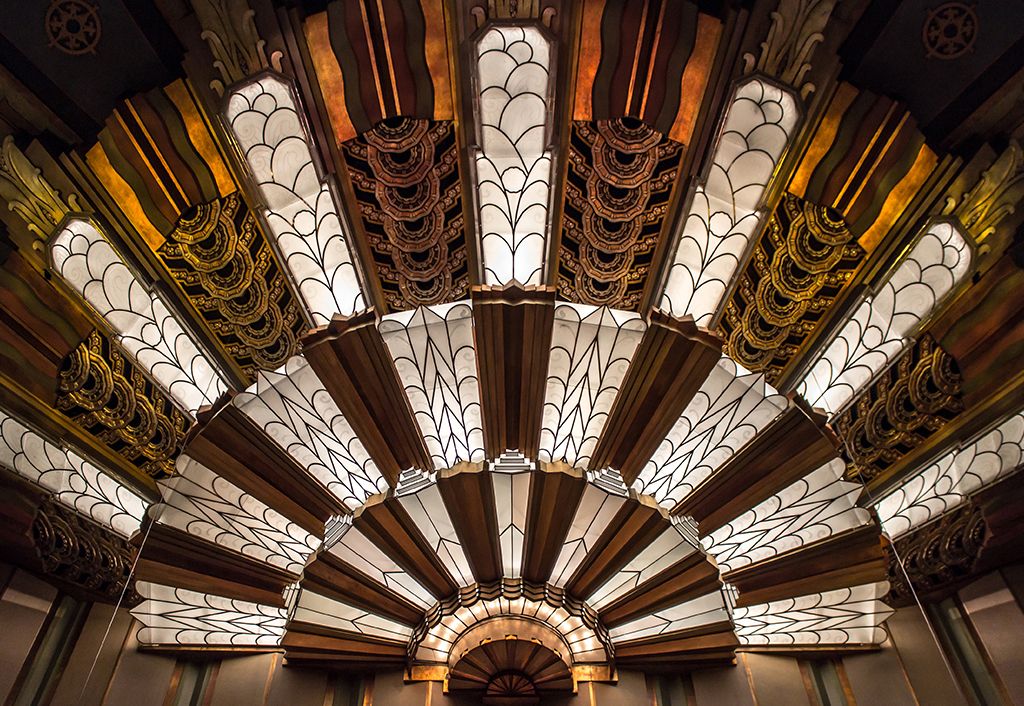
Art Deco originated at the International Exhibition of Modern Decorative and Industrial Arts, held in Paris in 1925. It represented the fusion of traditional craftsmanship with the aesthetics and spirit of the modern machine age. In architecture, it became the defining visual language of skyscrapers, cinemas, hotels, and public buildings during the golden era of the 1920s and 1930s. Even today, Art Deco remains one of the most admired and meticulously restored design styles in the world.


English

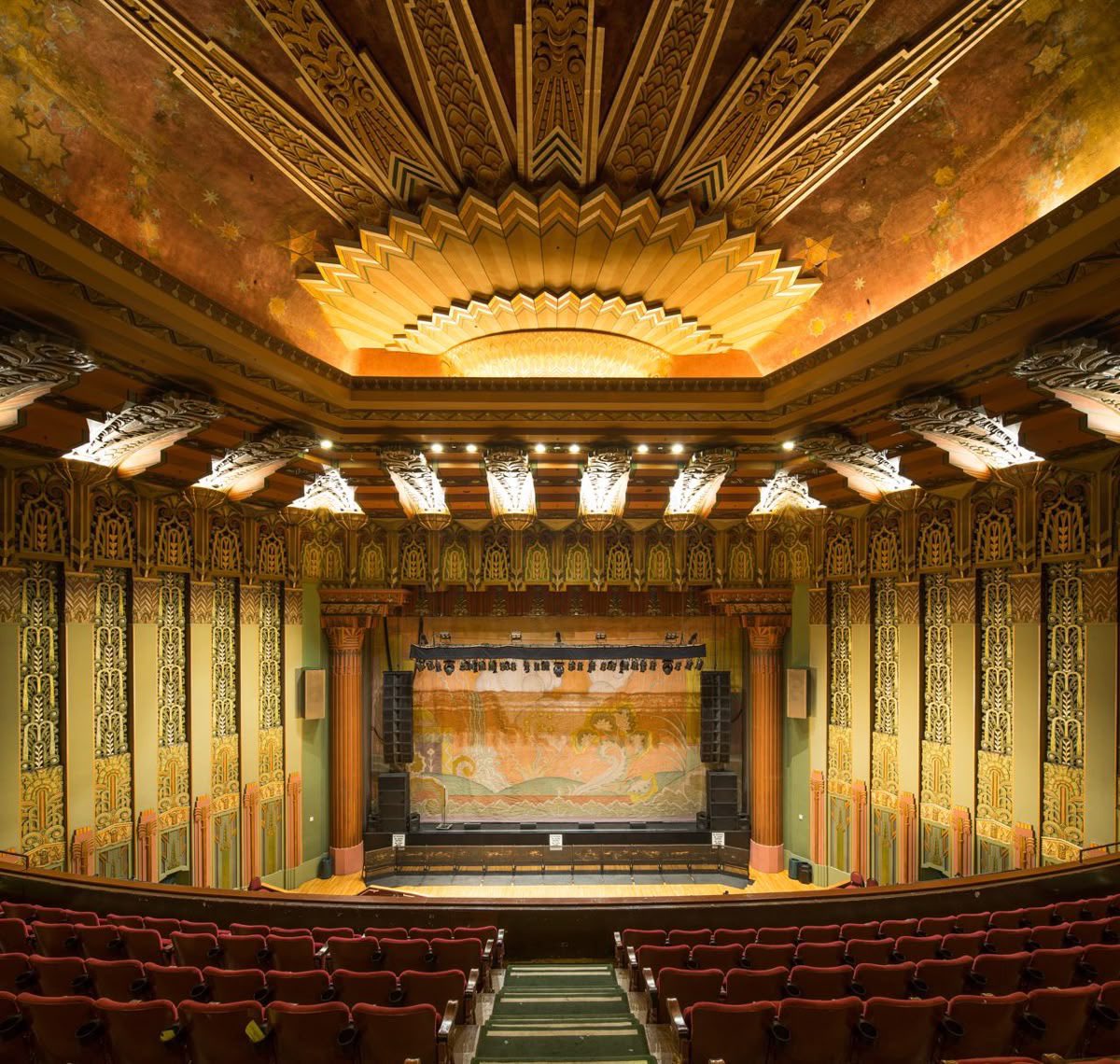
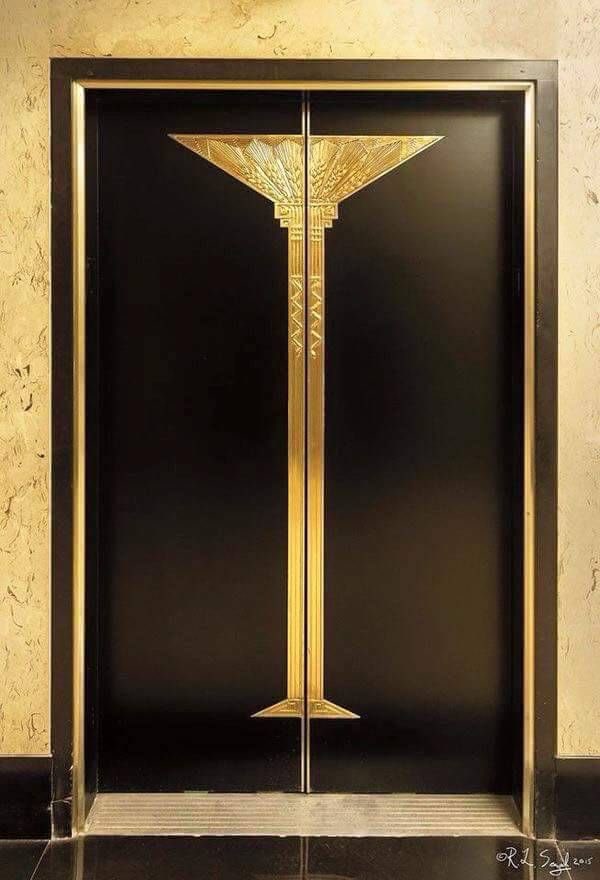

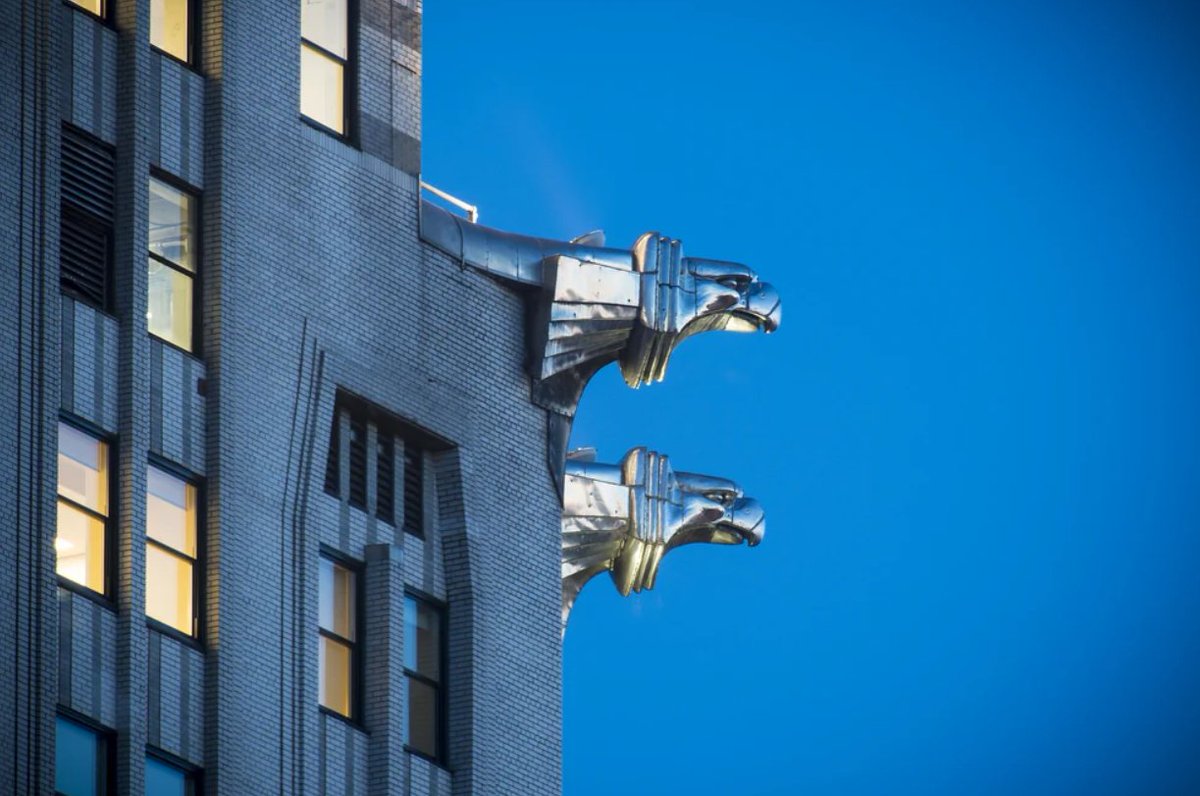
Art Deco as a symbol of modernity, the machine, and luxury. We are currently experiencing a similar shift with new technologies, robots, autonomous vehicles, AI, and Art Deco already celebrated technical progress, speed, geometric elegance, and modern luxury. It embodies an ordered, brilliant, and fast-paced world where technology and beauty seamlessly merge.
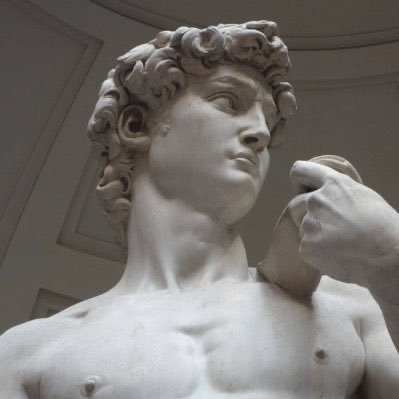
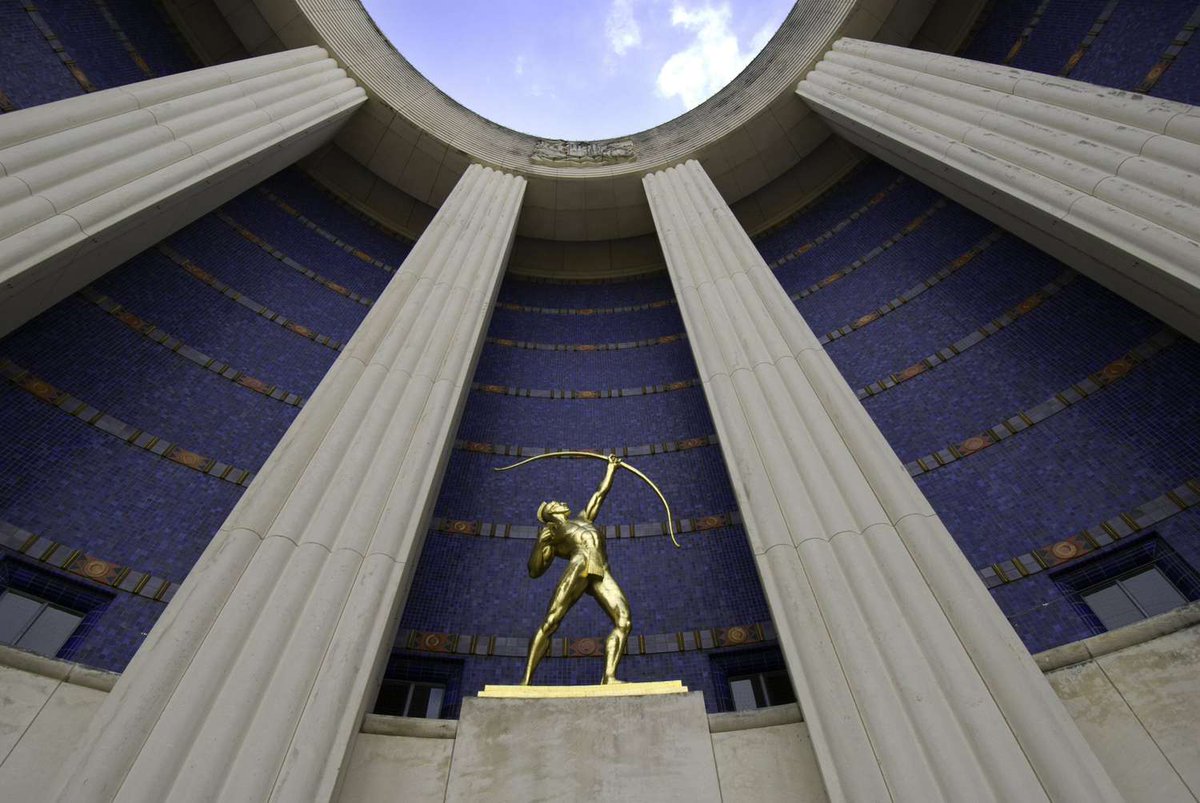
Sculptures are among the most expressive elements of the style. They do not aim for photographic realism but for geometric and dynamic stylization, featuring clean lines, bold angles, and symmetry.
The Modern Woman is the most recurring figure, she represents the female liberation of the 1920s, flappers, symbolizing progress, independence, modern sensuality, and empowerment in the aftermath of World War I and women's suffrage.
Speed and the Machine, recurring themes of aviation, automobiles, and sports. Stylized figures of runners, pilots, cars, or swift animals, such as gazelles or eagles, symbolize the machine age, humanity's triumph over time and space, and fascination with industrial technology.
Exoticism and Mythology, Greek gods, mythological figures, or ancient motifs, Egyptian, Mesoamerican, African, reinterpreted through pure geometric lines. This links modernity to ancient civilizations, legitimizing it while adding colonial exoticism and glamour.
Stylized Nature, nature tamed by human reason and design—flowers, animals, or sunrays transformed into geometric, symmetrical patterns.
In essence, Art Deco sculpture captures the transition from the ancient world to the modern, pure geometry, dynamic movement, and accessible, yet aspirational, luxury, celebrating the opulence of the machine age with elegance and optimism.


English

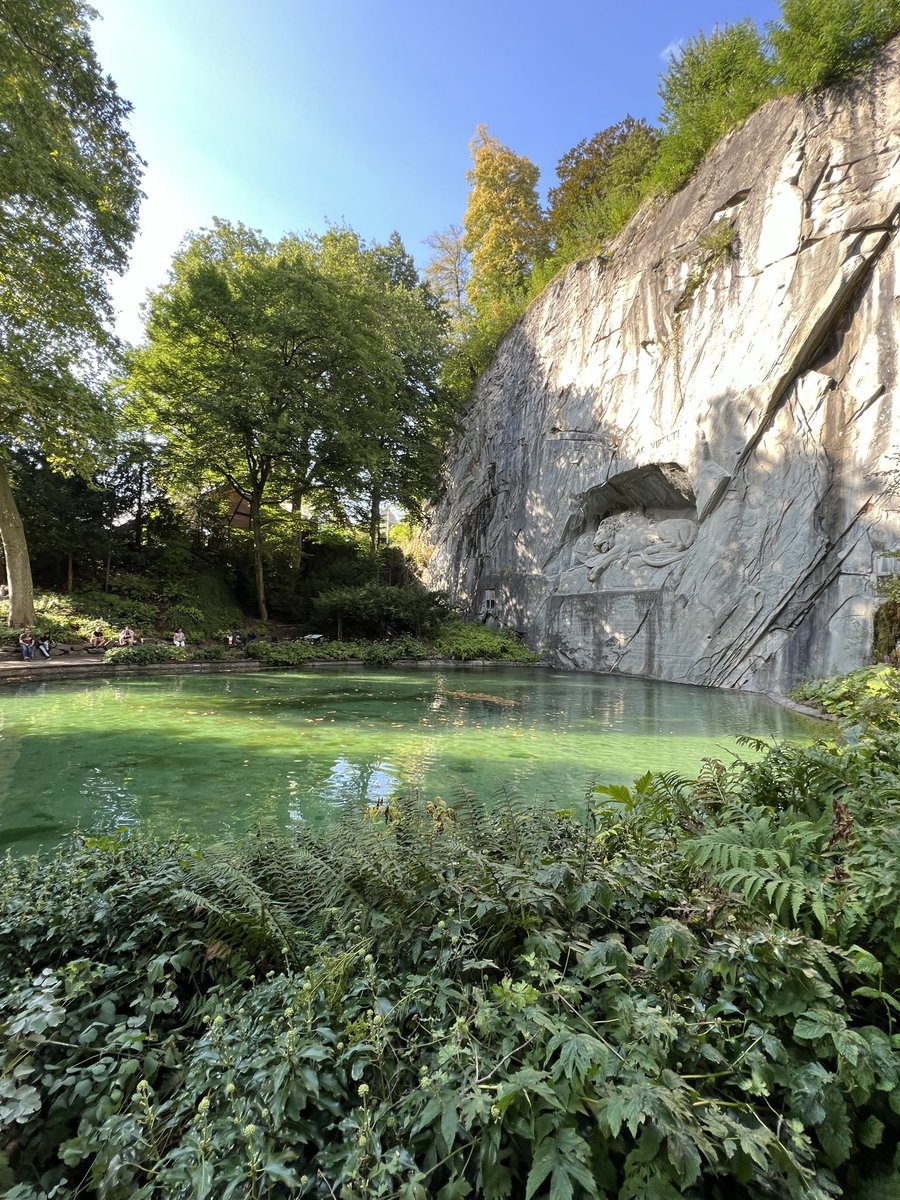
The Lion Monument, also known as the Lion of Lucerne, Löwendenkmal, is a rock relief carving in Lucerne, Switzerland. It was created between 1820 and 1821. It commemorates the massacre of the Swiss Guards during the French Revolution, particularly on August 10, 1792, when a mob stormed the Tuileries Palace in Paris to capture Louis XVI and Marie Antoinette. Of the approximately 950–1,000 Swiss Guards defending the palace, about 760 were killed. The Swiss died loyally defending the king, even though he had already been evacuated at that point.
The monument was commissioned by surviving officers and French nobles in memory of their fallen comrades. The design was created by the Danish sculptor Bertel Thorvaldsen, who produced the model. The actual execution—carving it directly into the living sandstone rock—was carried out by the local stone carver Lukas Ahorn.
The dying lion lies recumbent, with its front paw resting on a broken Swiss shield and supported by a shield bearing fleur-de-lis, the symbol of the French monarchy. Its expression conveys profound pain and nobility, head bowed, sad gaze, and a sense of resigned dignity.
The main Latin inscription above reads, HELVETIORUM FIDEI AC VIRTUTI, “To the loyalty and bravery of the Swiss”. Below the lion are the dates August 10, 1792 and September 2–3, 1792, along with the names of the regiments, fallen officers, and approximate numbers of the dead (≈760) and survivors.
The lion symbolizes the unwavering loyalty and heroic sacrifice of the Swiss Guards. It is a masterpiece that blends neoclassical technical perfection with deep emotion, a dying lion carved directly into the rock, eternally evoking loyalty, sacrifice, and sorrow.



English


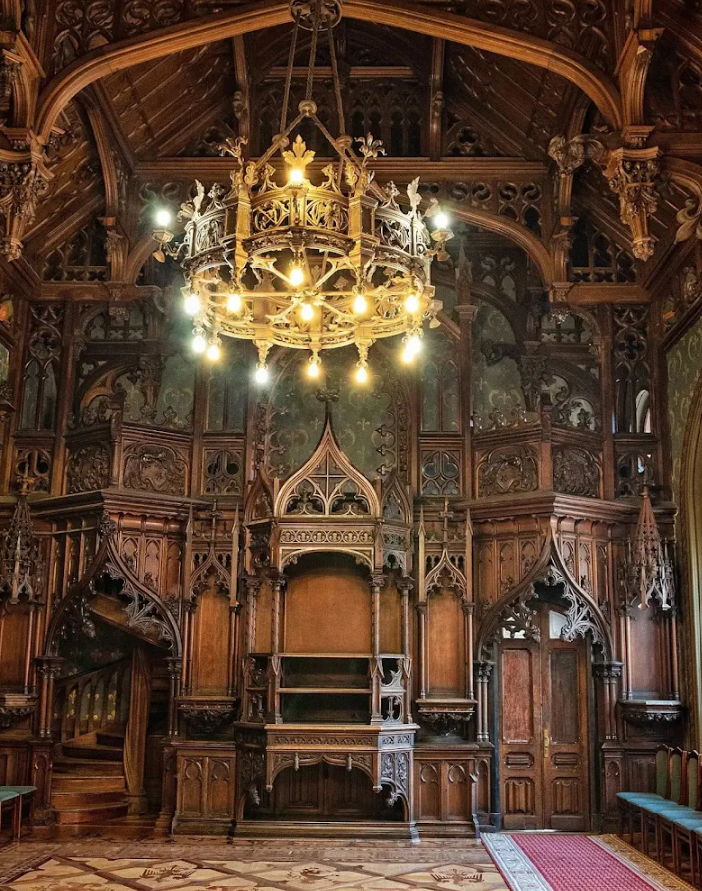
Mansion of Baron Kelch, Особняк Кельха / Lawyer’s House or "Dom Yurista" in St. Petersburg, Russia. Built between 1896 and 1903. Commissioned by Alexander Ferdinandovich Kelch, one of Russia's wealthiest men at the time, a magnate with Siberian gold mines and related enterprises. His wife Varvara Petrovna Kelch, heiress to the Bazanova fortune, was the driving force behind the ambitious reconstruction project and its main financier.
Three architects contributed:
Vasiliy Shene and Vladimir Chagin for the main project, principal facade, addition of a third floor, and core interiors.
Karl Schmidt, in 1903; Gothic pavilion in the inner courtyard and service wings with Art Nouveau elements.
One of the most expressive and extravagant examples of Russian Belle Époque architecture.
It is a perfect embodiment of Russian turn-of-the-century eclecticism; an imposing Renaissance facade, a mysterious Gothic courtyard, and extraordinarily lavish Baroque-Rococo interiors.
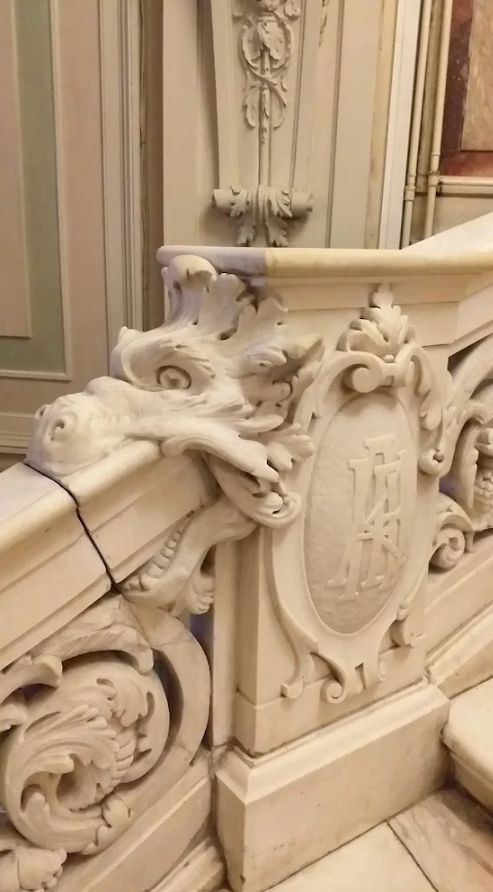


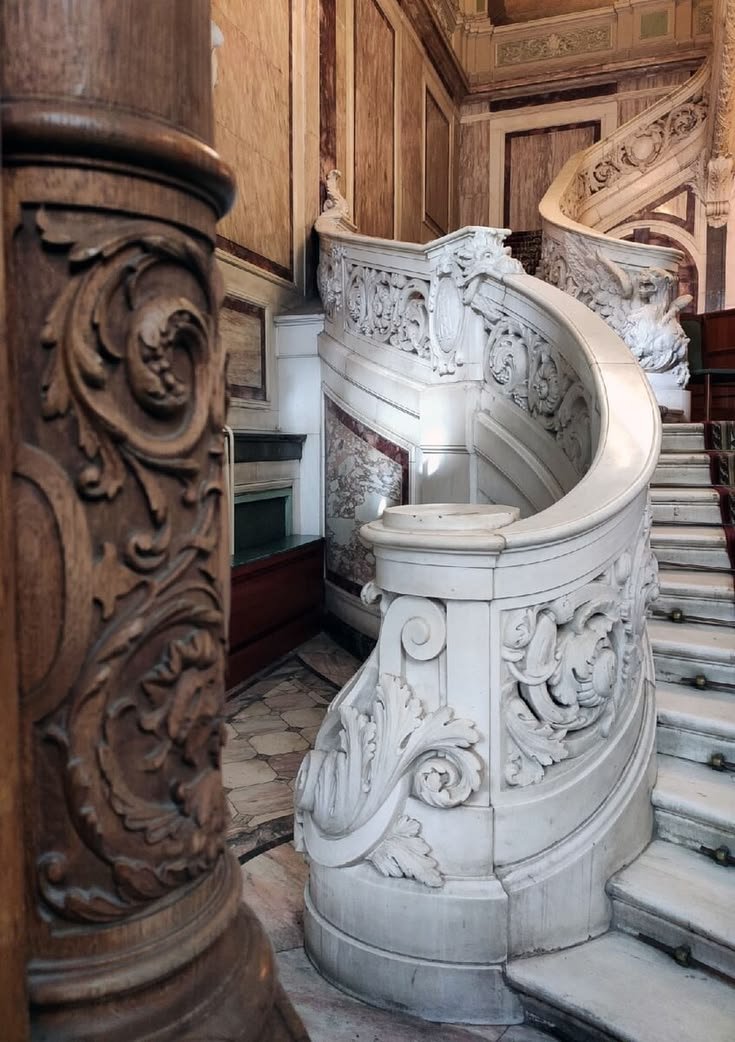
The ornate marble staircase within the Kelch House in St. Petersburg, Russia.
English
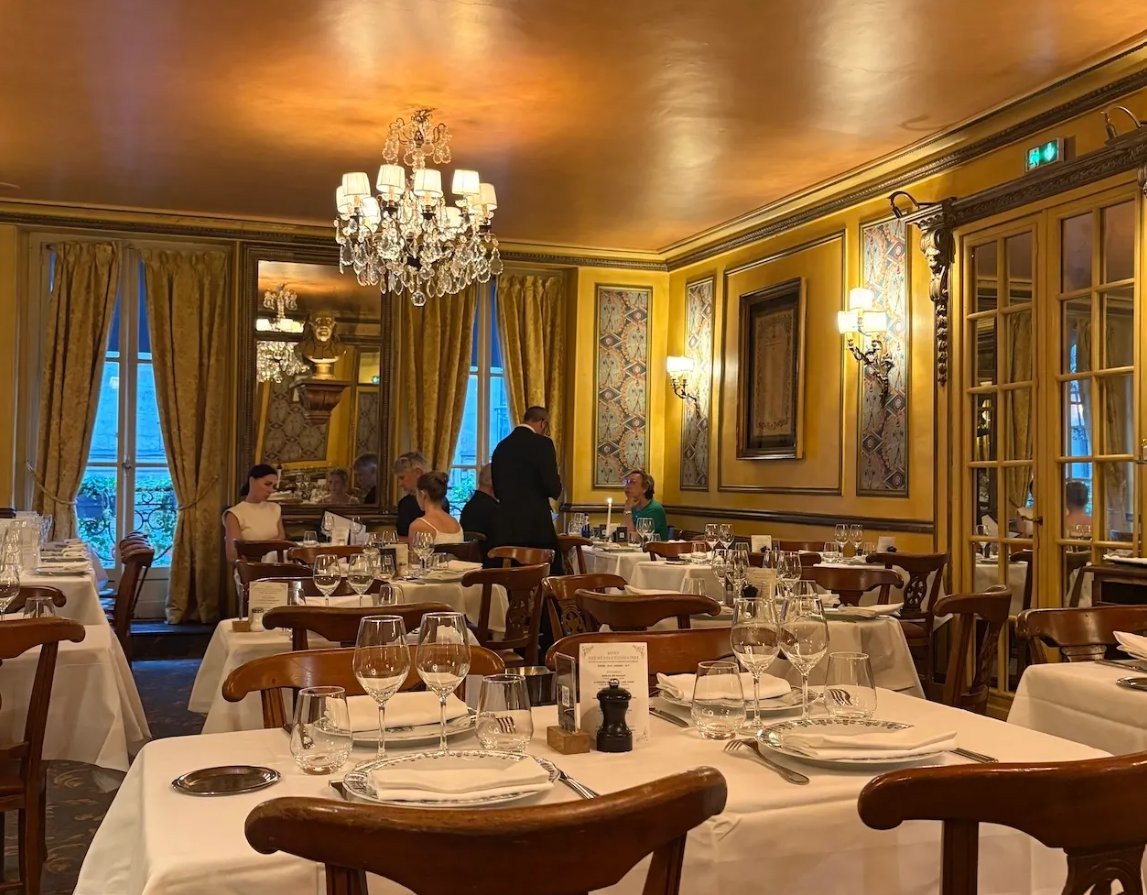
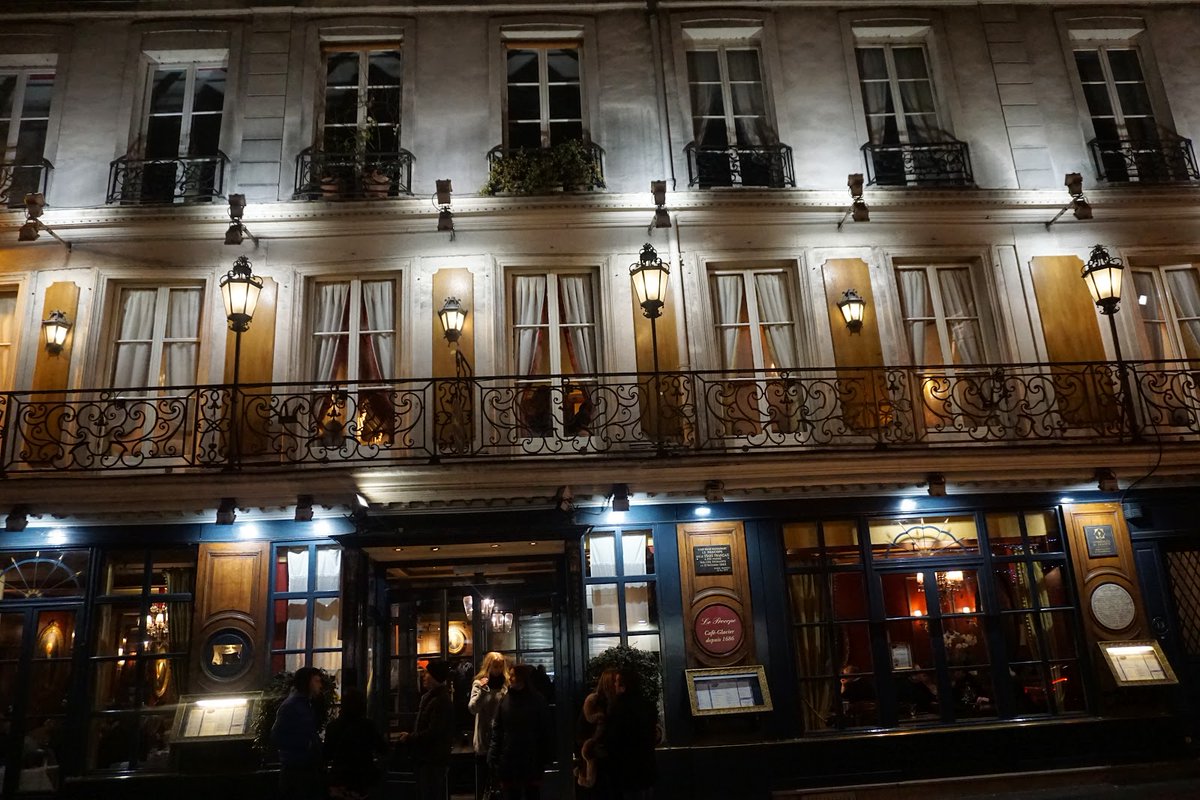
Le Procope, Paris's oldest café and one of Europe's most legendary establishments! Founded in 1686 by Sicilian Francesco Procopio dei Coltelli, who opened the city's first public café in the Italian style—serving coffee, gelato, and liqueurs. Originally called “Café Procope” or “Café de la Comédie.”
Its golden age was the 18th century, when it became the favorite haunt of the French Enlightenment:
Voltaire frequented it for decades, drinking up to 40–50 cups of coffee a day, often mixed with chocolate and wrote parts of his works there.
Rousseau, Diderot, and d’Alembert, key figures behind the Encyclopédie.
Benjamin Franklin and Thomas Jefferson, during the American Revolution; Franklin worked on treaties and possibly constitutional ideas here.
Robespierre, Marat, and Danton, during the French Revolution; they held strategy meetings in the back rooms.
A young Napoleon Bonaparte played chess there and famously left his bicorne hat behind, as collateral for unpaid debts; it's preserved as a relic in a display case.
The café helped popularize coffee across Europe as a social drink, previously more common at home or in pharmacies. It embodies over 300 years of French intellectual and cultural history—from the Enlightenment to the Revolution and 19th-century literature. Today, it remains a historic restaurant-café in Saint-Germain-des-Prés.


English

1686–2026: Le Procope, Paris's oldest café, still going strong
Voltaire downed 40 coffees a day here. I'll stick to one ☕️📜

English
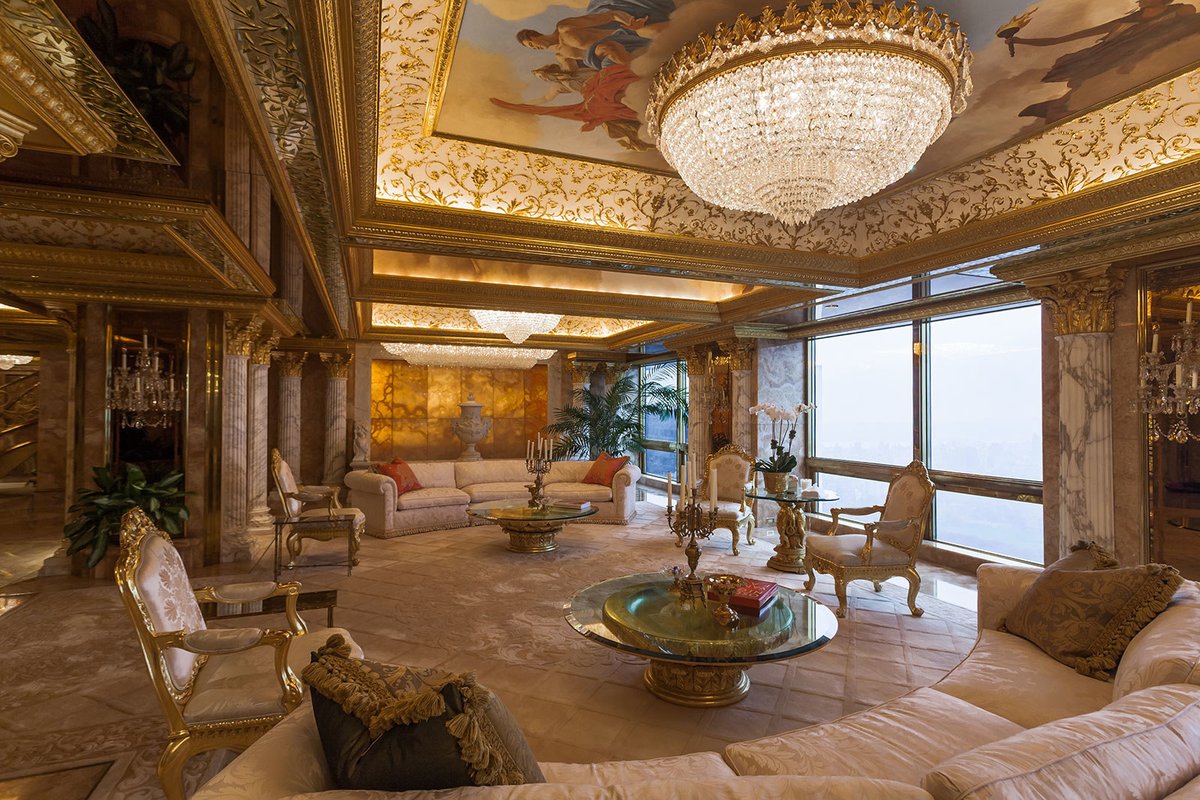
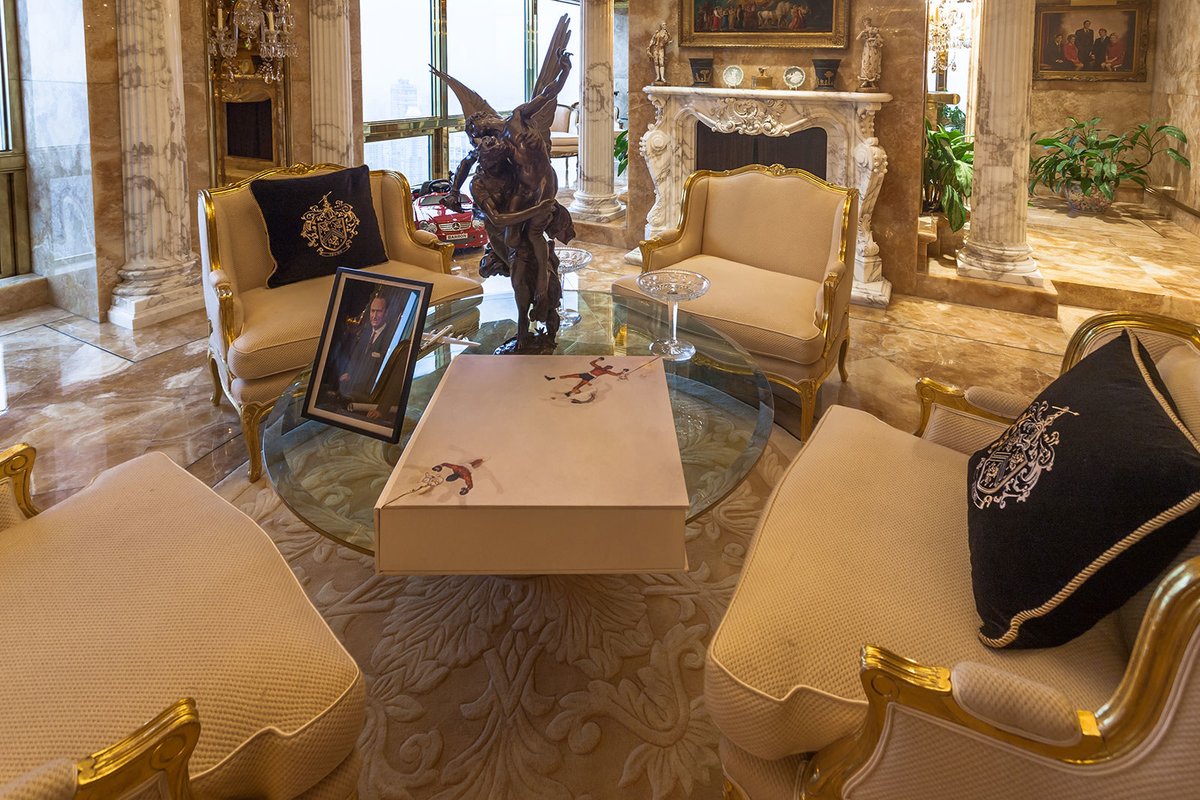
This has nothing to do with architects. In reality, architects serve the client's needs and budget. You can sell a Renaissance building in New York, Mexico, or Paris, but affordability drops dramatically — most clients simply can't pay for it. Unless it's a personal project from the architect or a wealthy client who doesn't expect profit, no one does it. But in truth, it's 'free for anyone': no one is stopping you from buying land and building a Baroque mansion with 24-karat gold leaf, or a Spanish estate with vineyards and farm. Everyone is free to build whatever they want. If you have a few million in your account, any architect specialized in the style you want can absolutely make it happen. A clear example is Donald Trump, who decorated his Trump Tower apartment in his own 'Trump Baroque' style, and Mar-a-Lago is another case. It's not the architect — it's the client's budget.


English

This is what happens when architects actually care about aesthetics


English
@AntagonistSyst @UbermenschMind Beauty has always been a luxury. It was never free, nor was it ever massive.
English

@UbermenschMind Beauty used to be a standard. Now it’s treated like a luxury.
English
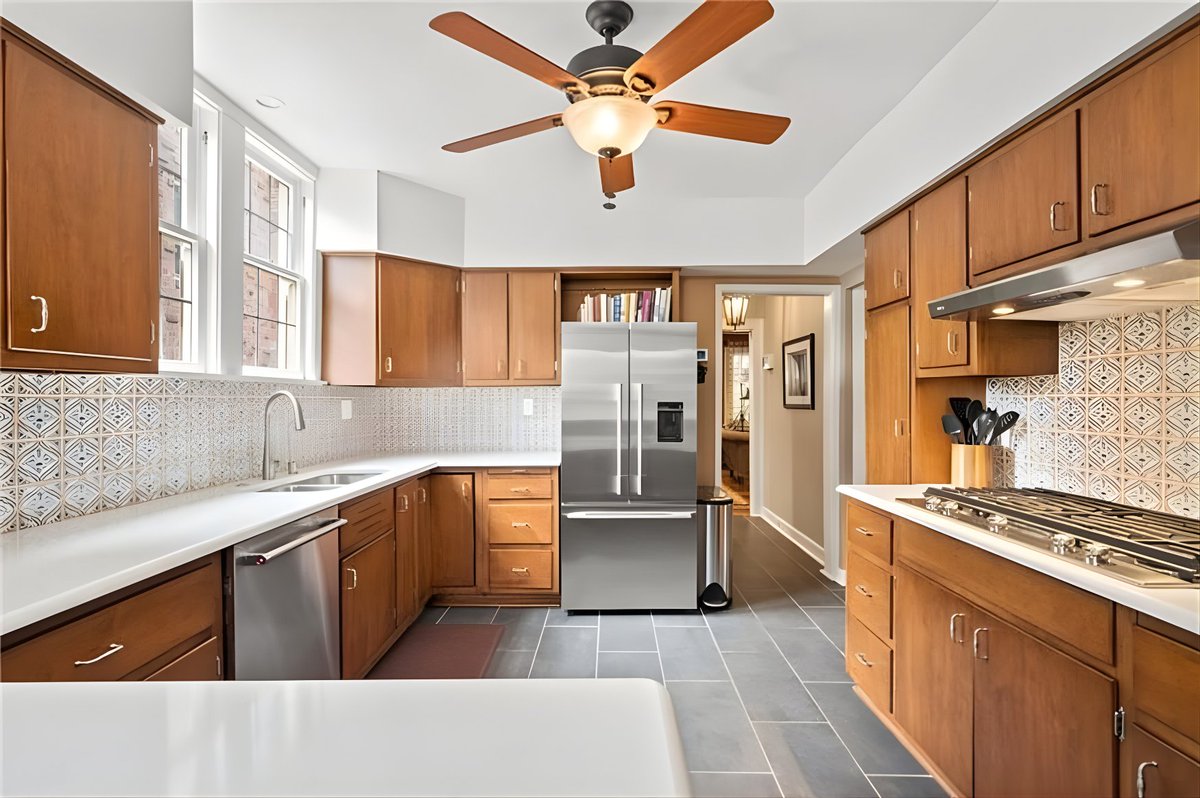
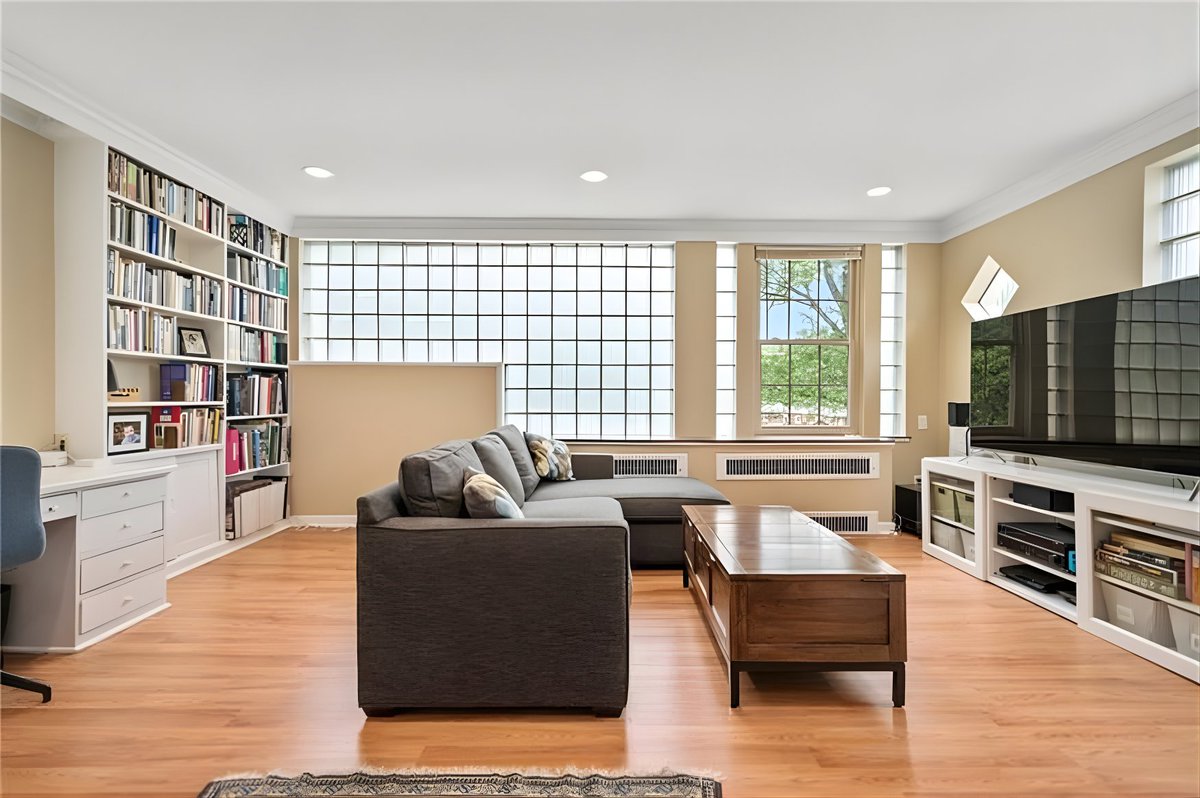
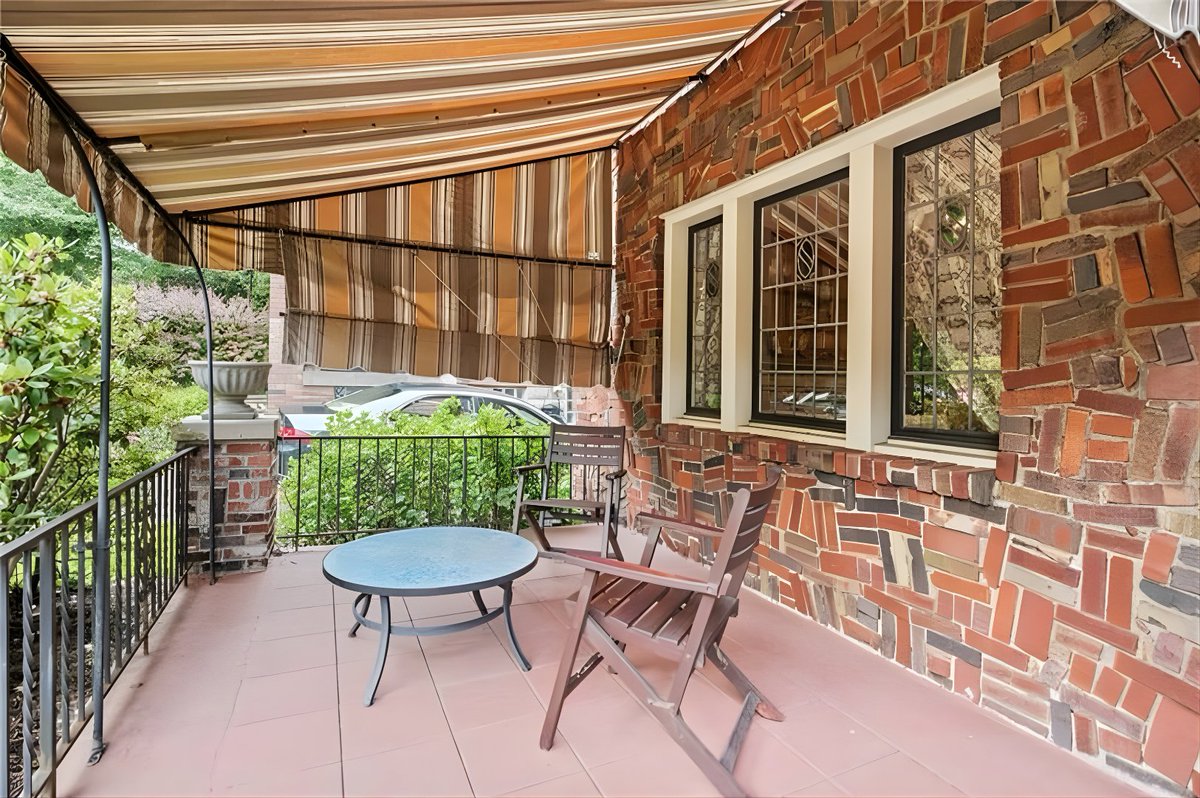
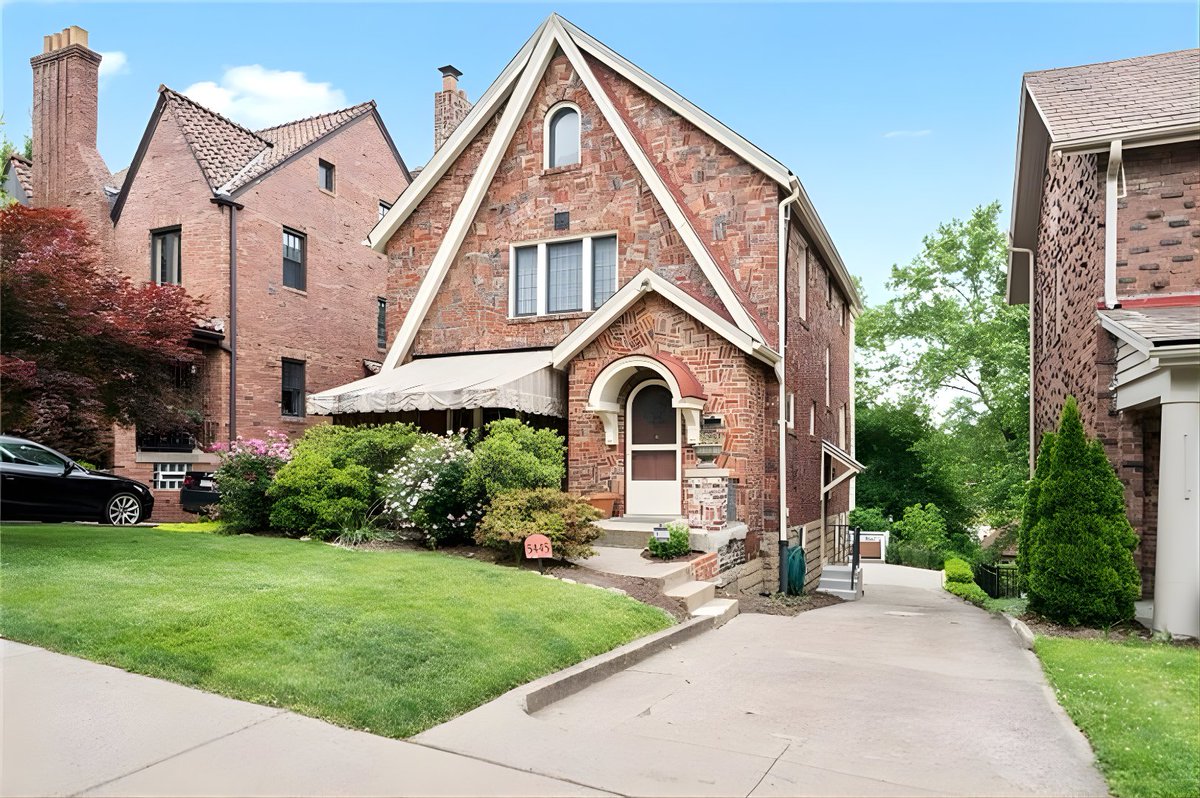
5445 Fair Oaks St, Squirrel Hill North, Pittsburgh, PA 15217. This is a historic single-family home in the Tudor Revival / Colonial Revival style with Arts & Crafts influences. Built in 1934. It features 5 bedrooms and 3.5 bathrooms. The home has been lovingly renovated and updated while preserving its historical character, yet it retains original period details from the era. The facade is traditional red brick in a varied pattern, with an elevated front porch and gabled roof. This house perfectly encapsulates Pittsburgh's historic charm blended with modern conveniences.
English

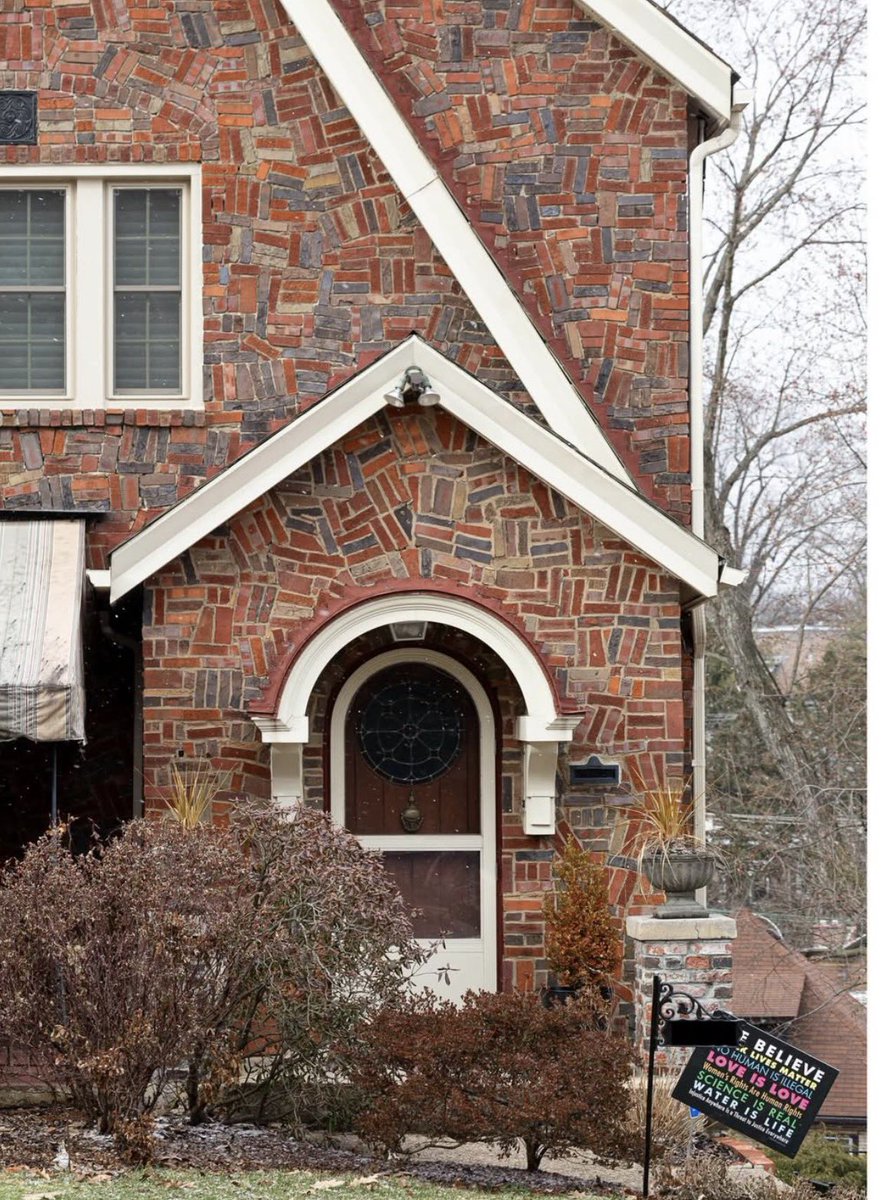
I want to know what the brick layers who built this had for breakfast each morning!
1930’s house in Pittsburgh. Photo by BricksOfChicago on Instagram
English
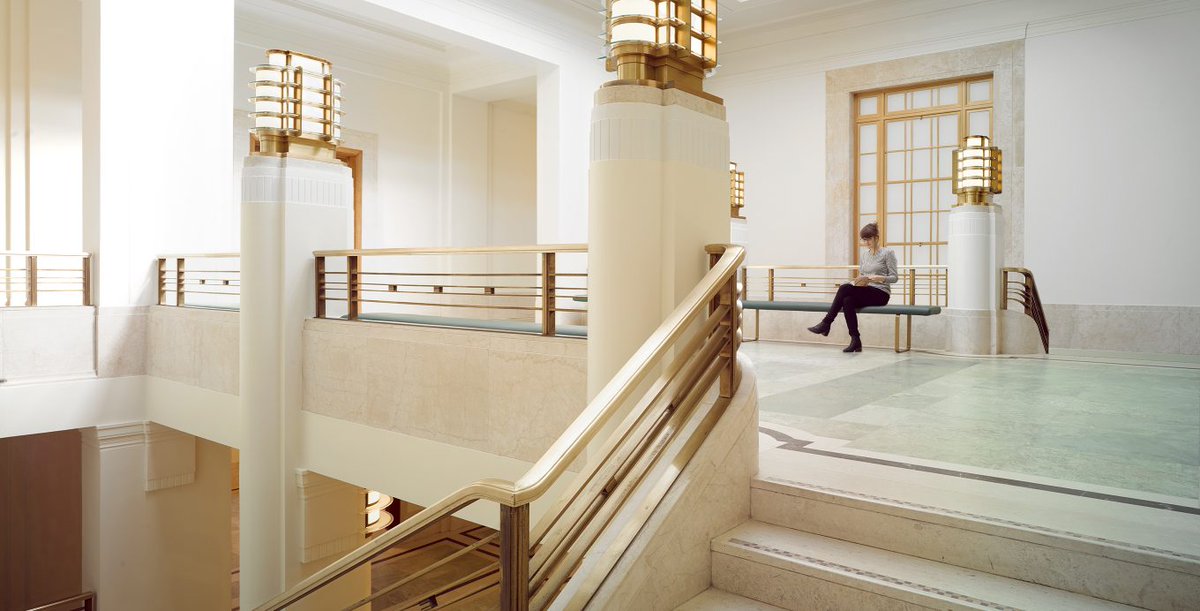
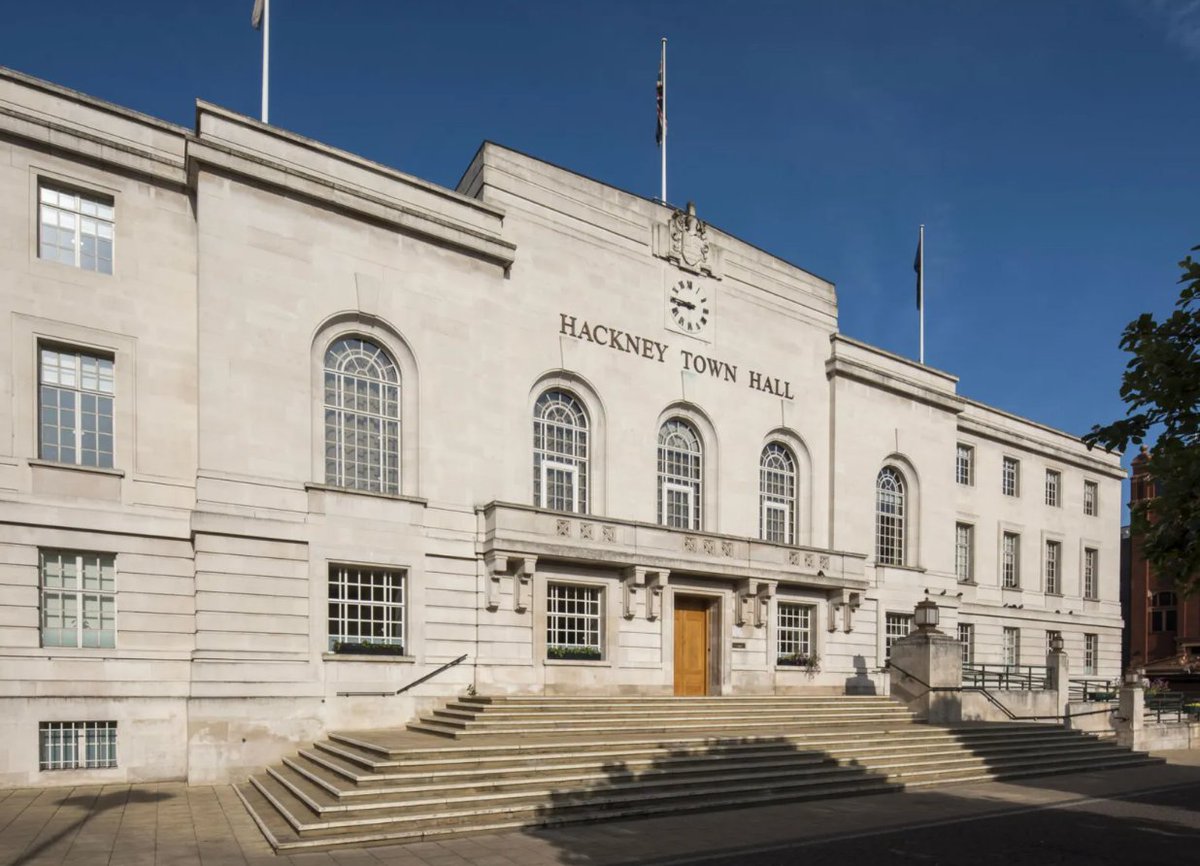
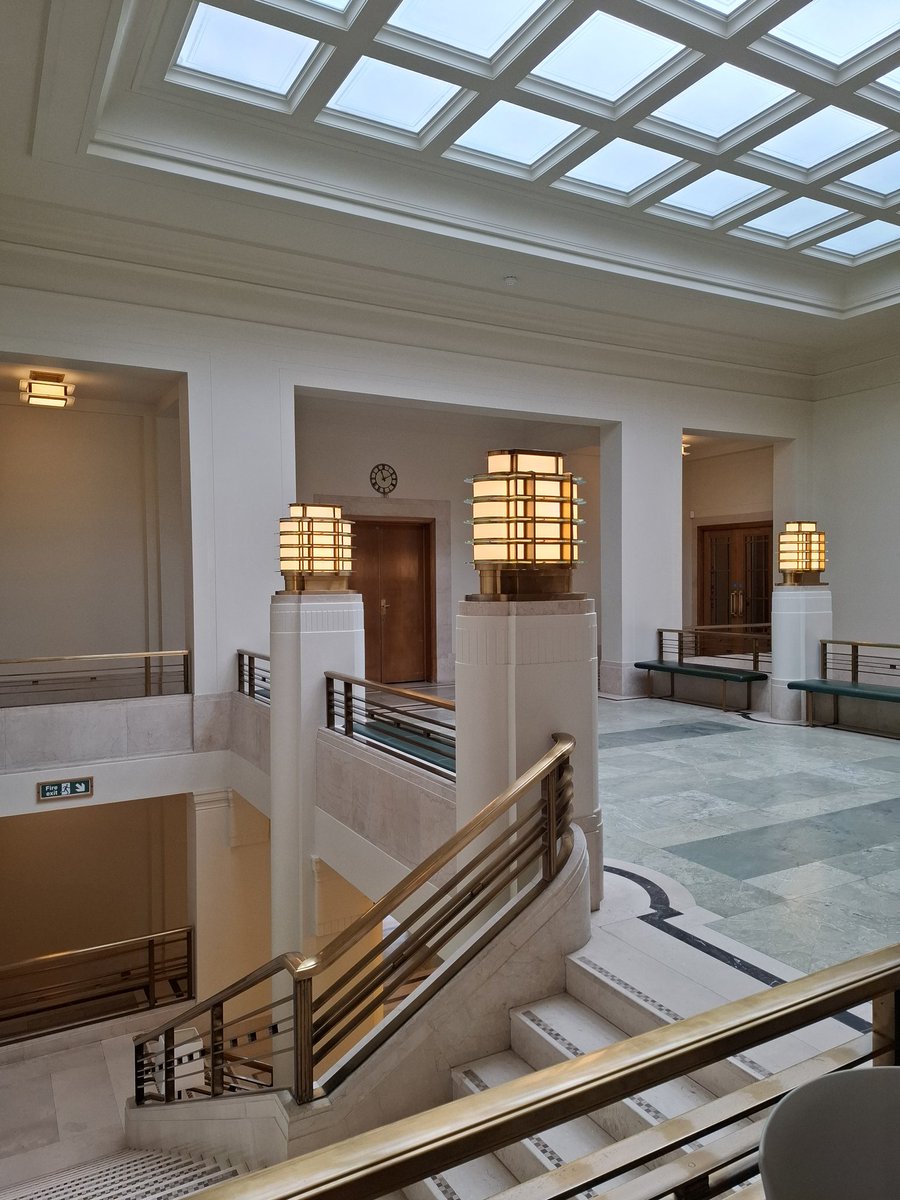
Hackney Town Hall in London, England, was built between 1934 and 1937 and is considered one of the most exuberant and colourful examples of British Art Deco. Officially opened in 1937, it was designed by architects Lanchester and Lodge, H. V. Lanchester and Thomas Arthur Lodge. The building was constructed during the economic recovery of the 1930s, when Art Deco was at its peak in the United Kingdom. At the time, Hackney was a working-class and highly diverse borough, and the new town hall aimed to project modernity, civic pride, and progress. It embodies Art Deco in its most exuberant and “riotous” form—chaotic, joyful, and festive—with influences from Streamline Moderne as well as French and American Art Deco. The building shouts 1930s optimism and modernity; a Portland stone facade over brick, golden and metallic details, stepped lines, clean geometric forms, and a central tower that resembles a stylized crown.


English

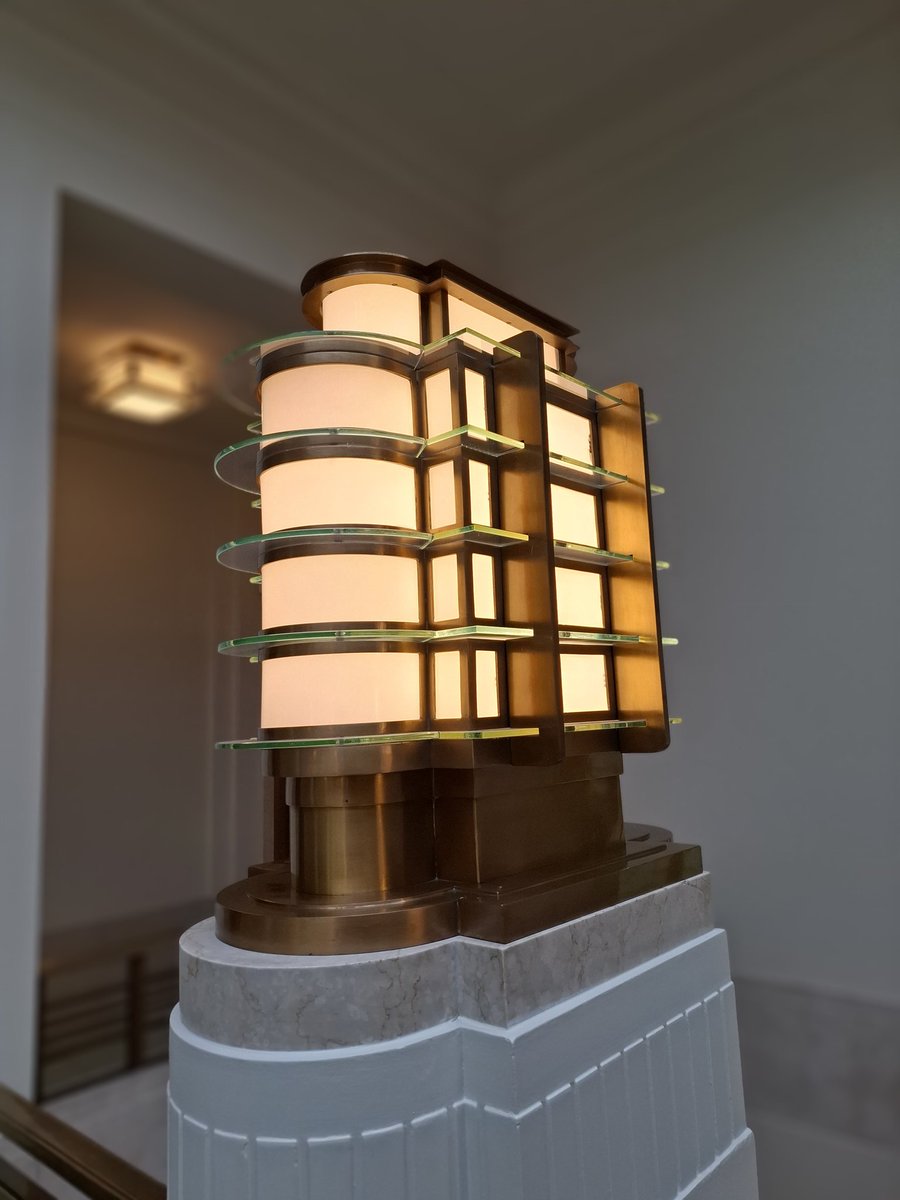
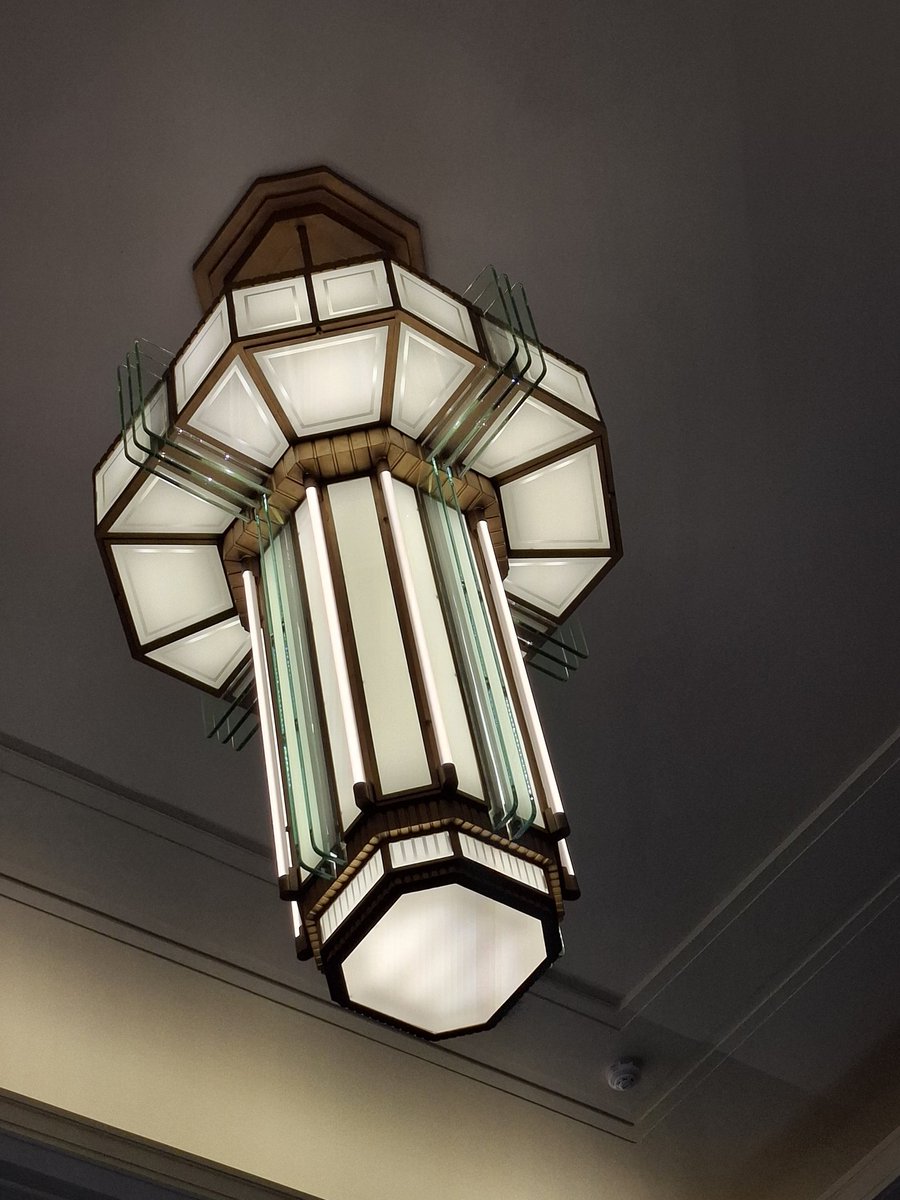
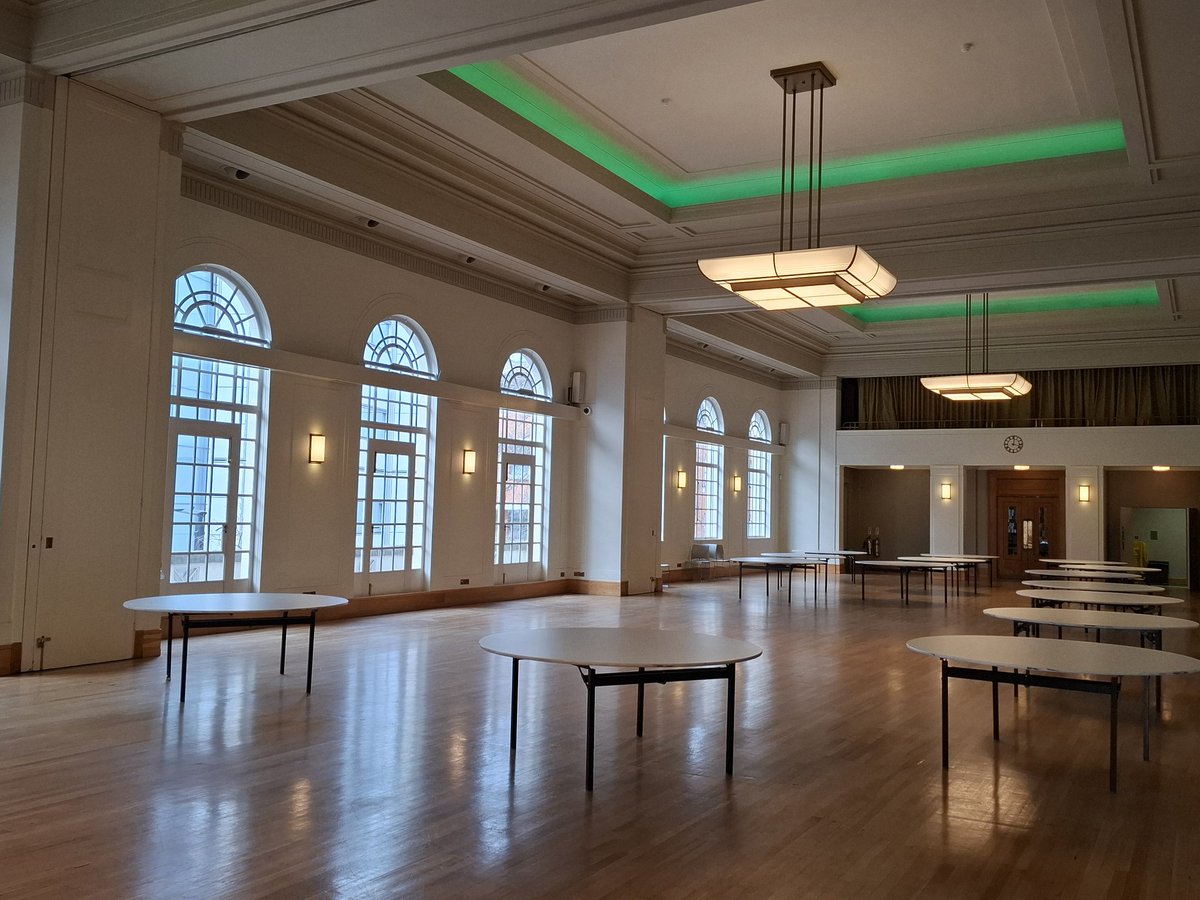
... but meantime we had a good mooch around Hackney Town Hall 1937, a riot of Art Deco.
Salisbury, England 🇬🇧 English
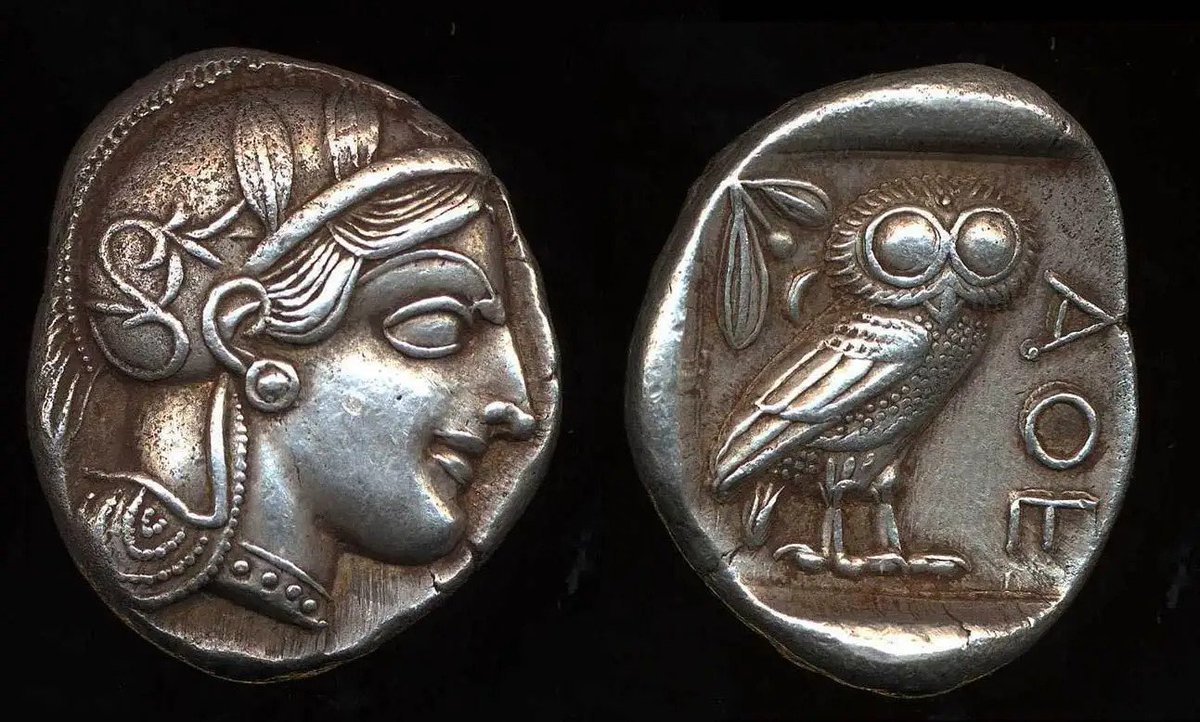
The Athenian silver tetradrachm is one of the most influential and widespread coins of classical antiquity. It became the reference currency across the Mediterranean world for nearly five centuries. Made of high-purity silver. Obverse, Helmeted head of Athena facing right, with her Corinthian helmet decorated with olive leaves and a floral motif. Reverse, The iconic owl, γλαύξ / glaux in Greek; Athena’s sacred bird, standing facing forward, wings closed, with an olive sprig to the left and a crescent moon above. Below or to the right, the inscription ΑΘΕ = “of the Athenians”.
The owl symbolized, Wisdom & intelligence, owls see in the dark = insight.
Athenian democracy, Athens as its birthplace.
Economic & naval power, these coins funded the fleet, trade, and empire.
The famous saying “carrying owls to Athens”, bringing something that already abounds in excess, comes directly from these ubiquitous coins, which flooded the Mediterranean.
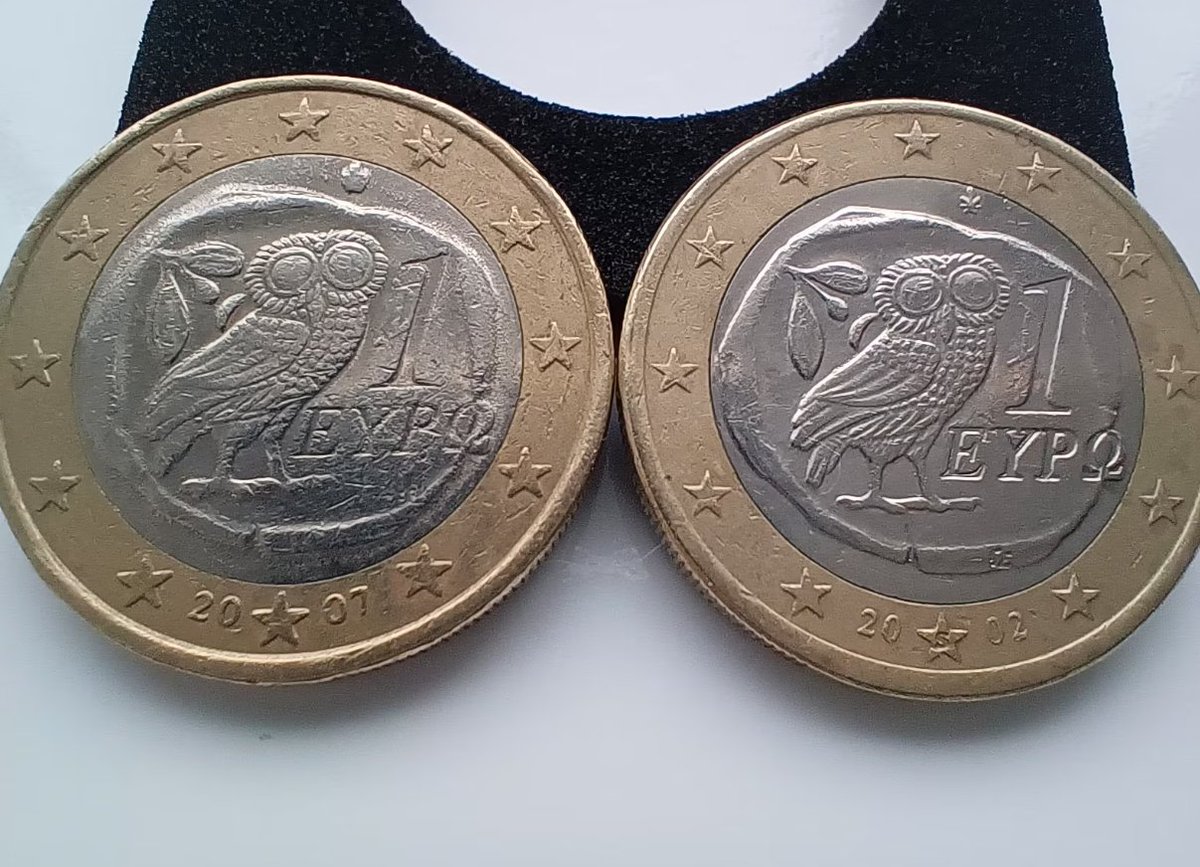
Greece’s modern 1-euro coin, designed in 2002, draws a direct symbolic line to this legacy. Its reverse features the same owl design, copied from the classical tetradrachm, now paired with “1 ΕΥΡΩ” and EU stars.
The coin thus represents Greece’s integration into modern Europe while proudly retaining its most powerful ancient symbol, the emblem of reason, wisdom, and civilization.


English

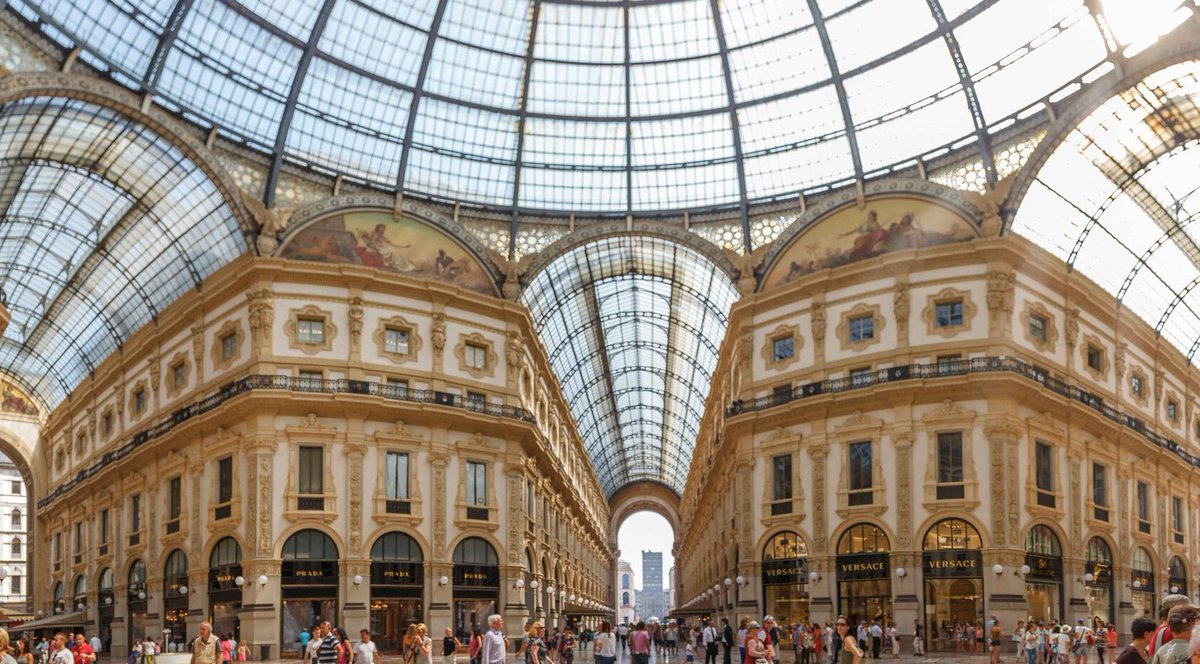
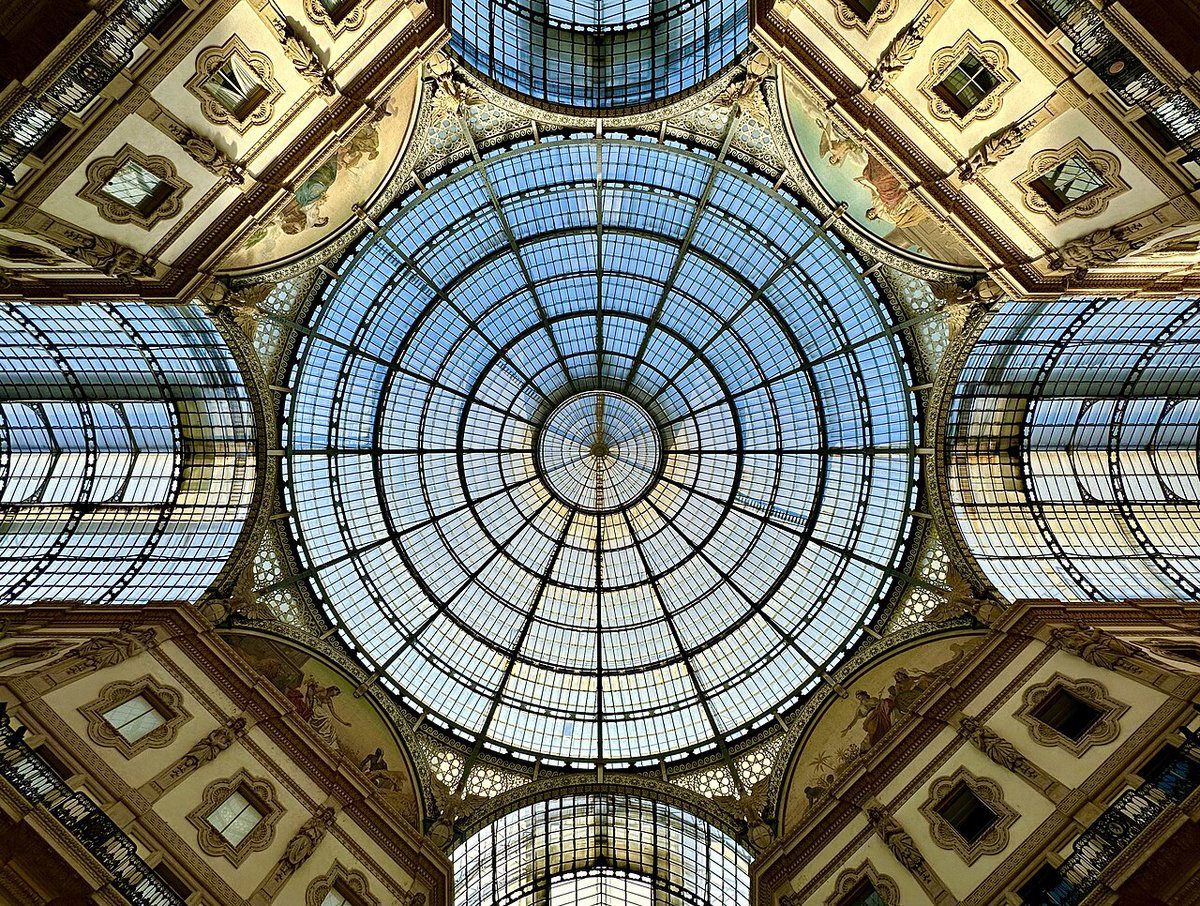
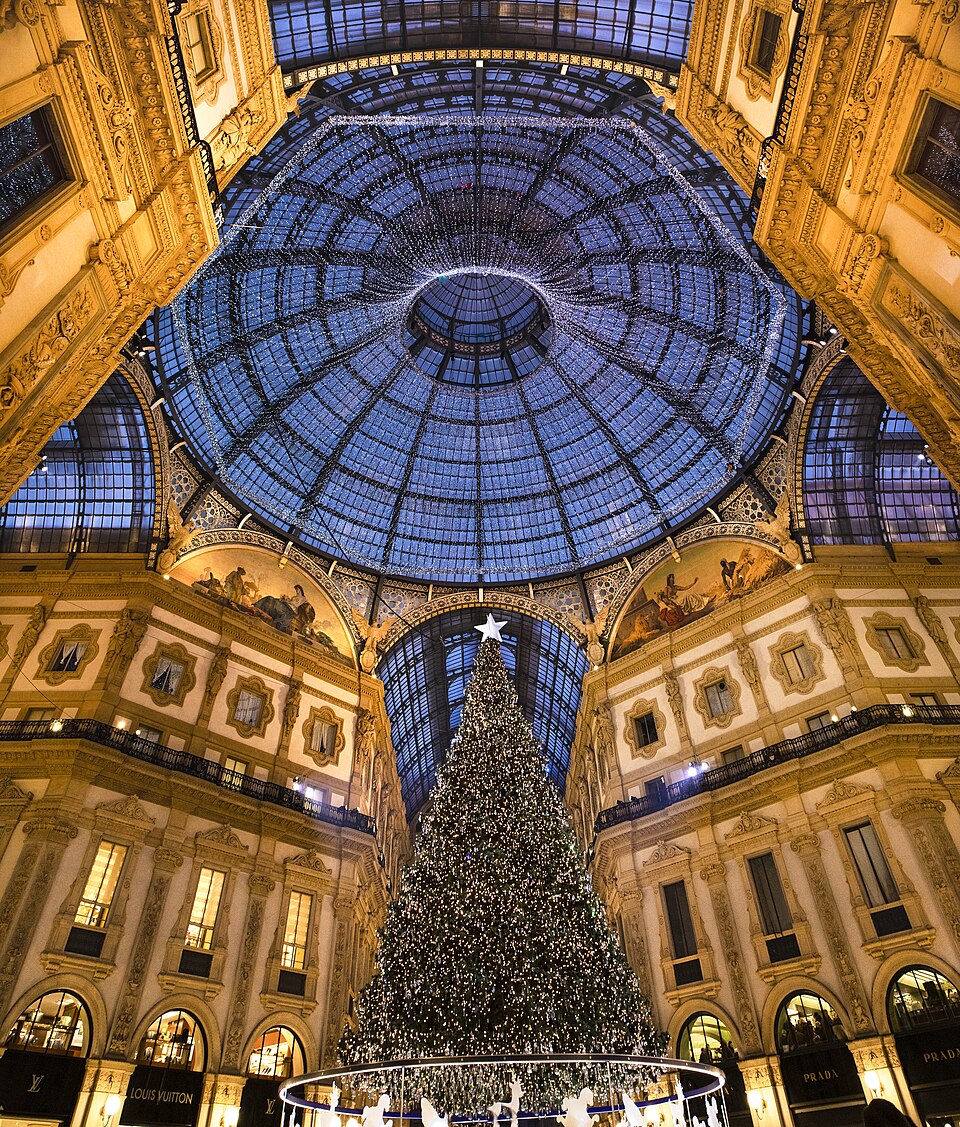
The Galleria Vittorio Emanuele II in Milan, Italy, is one of the world's most elegant and iconic commercial and architectural spaces. The construction took 12 years of work from 1865 to 1877. The architect was Giuseppe Mengoni.
Built as part of King Victor Emmanuel II's grand urban project to modernize Milan after Italian unification, in an eclectic style blending strong Neo-Renaissance influences with early Art Nouveau touches.
It's a Latin cross-shaped covered gallery with a massive central glass-and-iron dome rising to ~47 meters, one of Europe's first and largest. Home to ultra-luxury brands, Prada, Gucci, Louis Vuitton, Versace and historic cafés like Caffè Biffi, since 1867 and Caffè Savini.
A true crystal-and-iron palace that fuses luxury, history, and urban life like few places on Earth. Mengoni's 'covered salon' remains Milan's ultimate meeting spot 150+ years later.
English

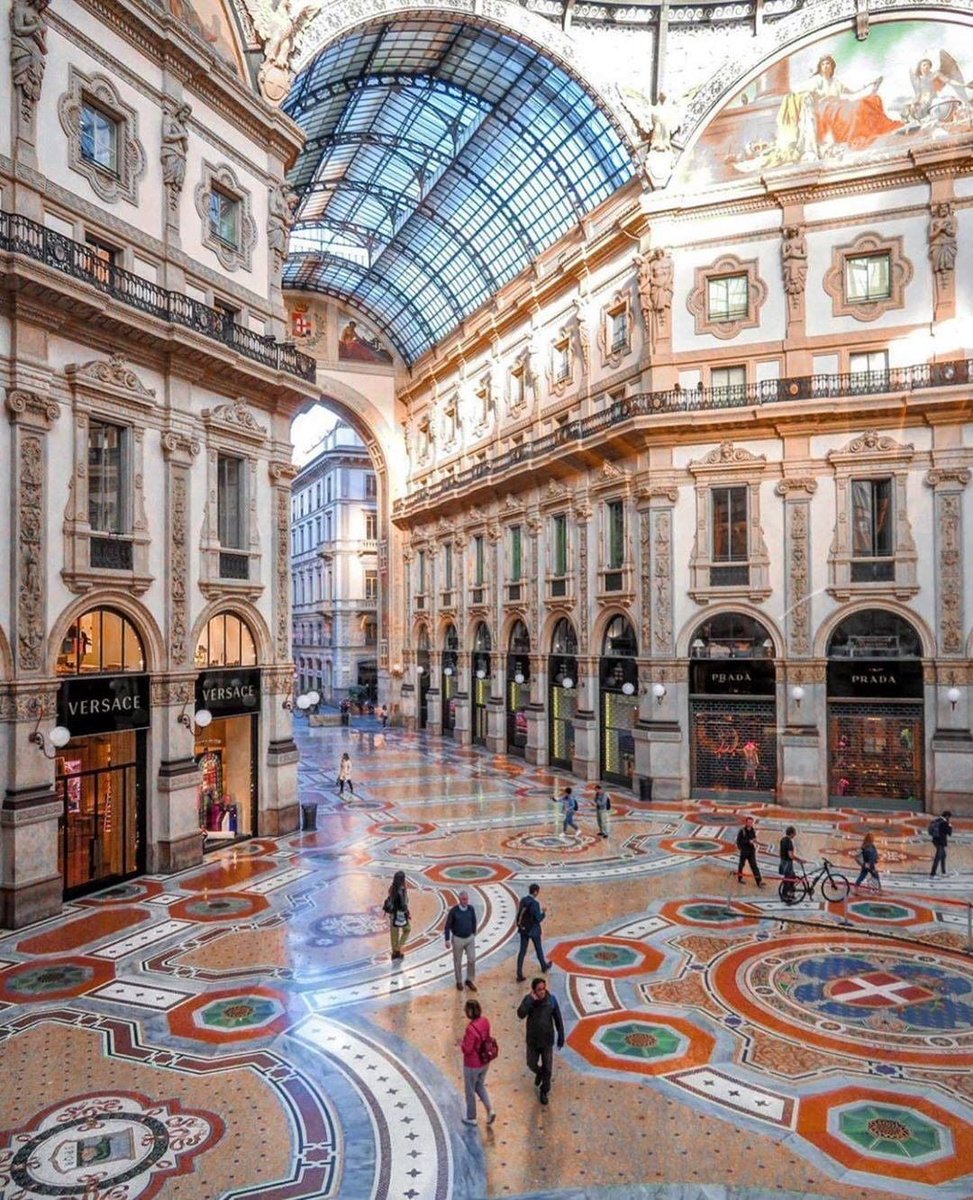
Reminder: The world's oldest shopping center looks more like a museum than a mall.
Galleria Vittorio Emanuele II, Italy
English
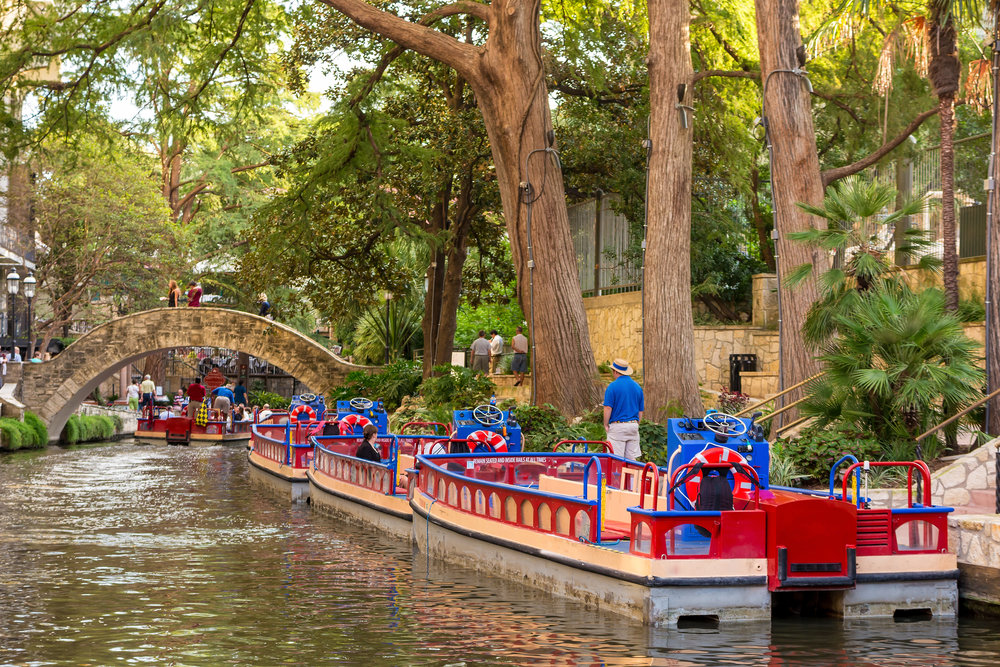
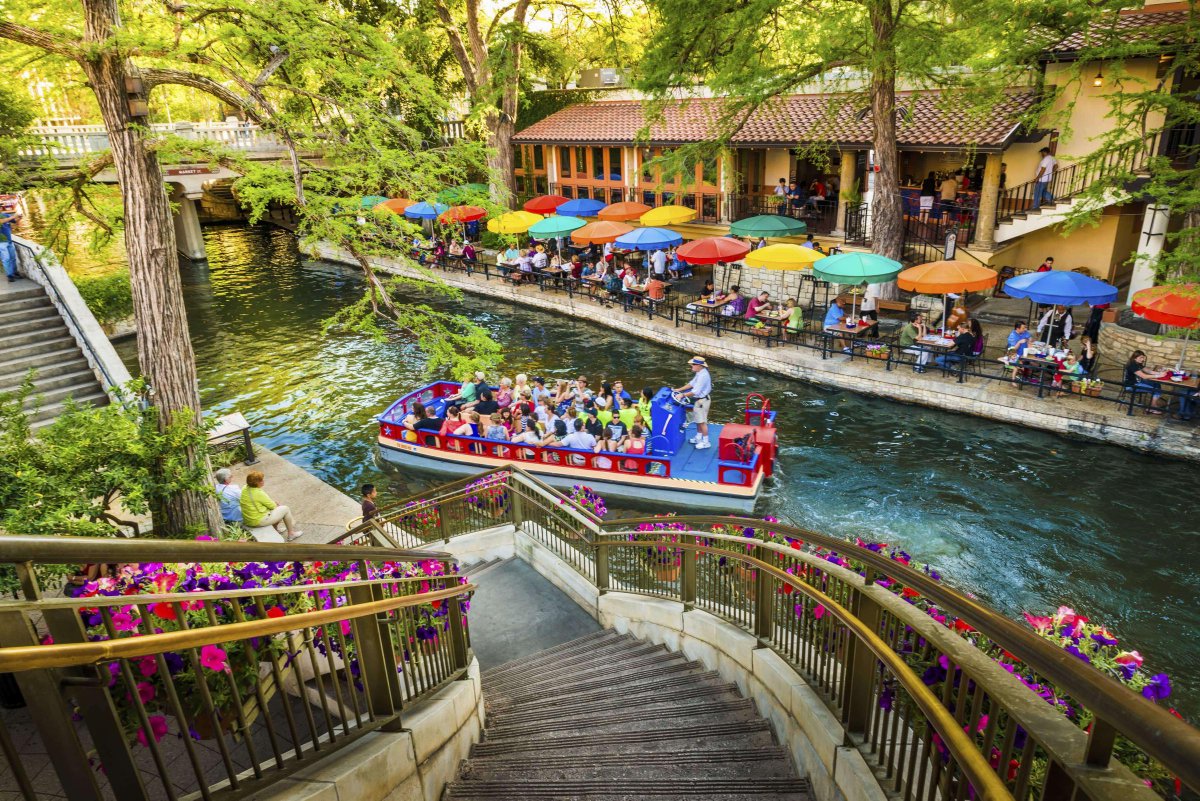
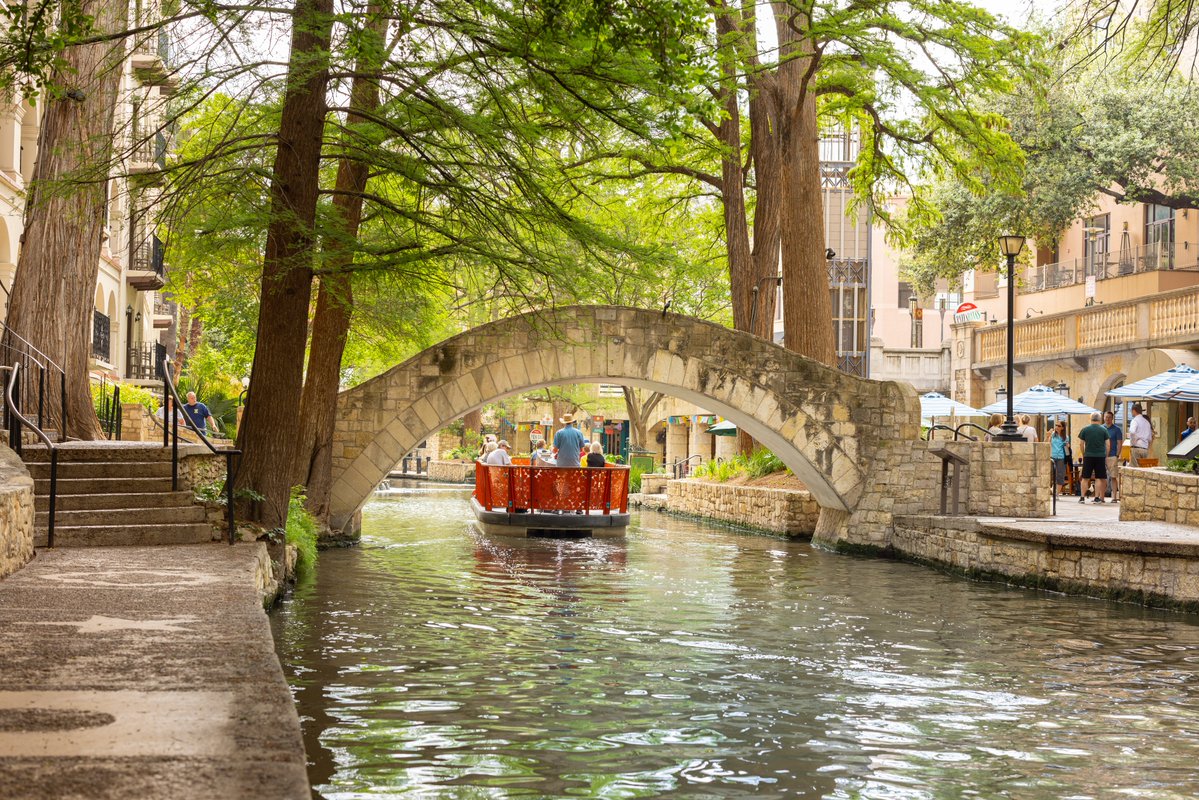
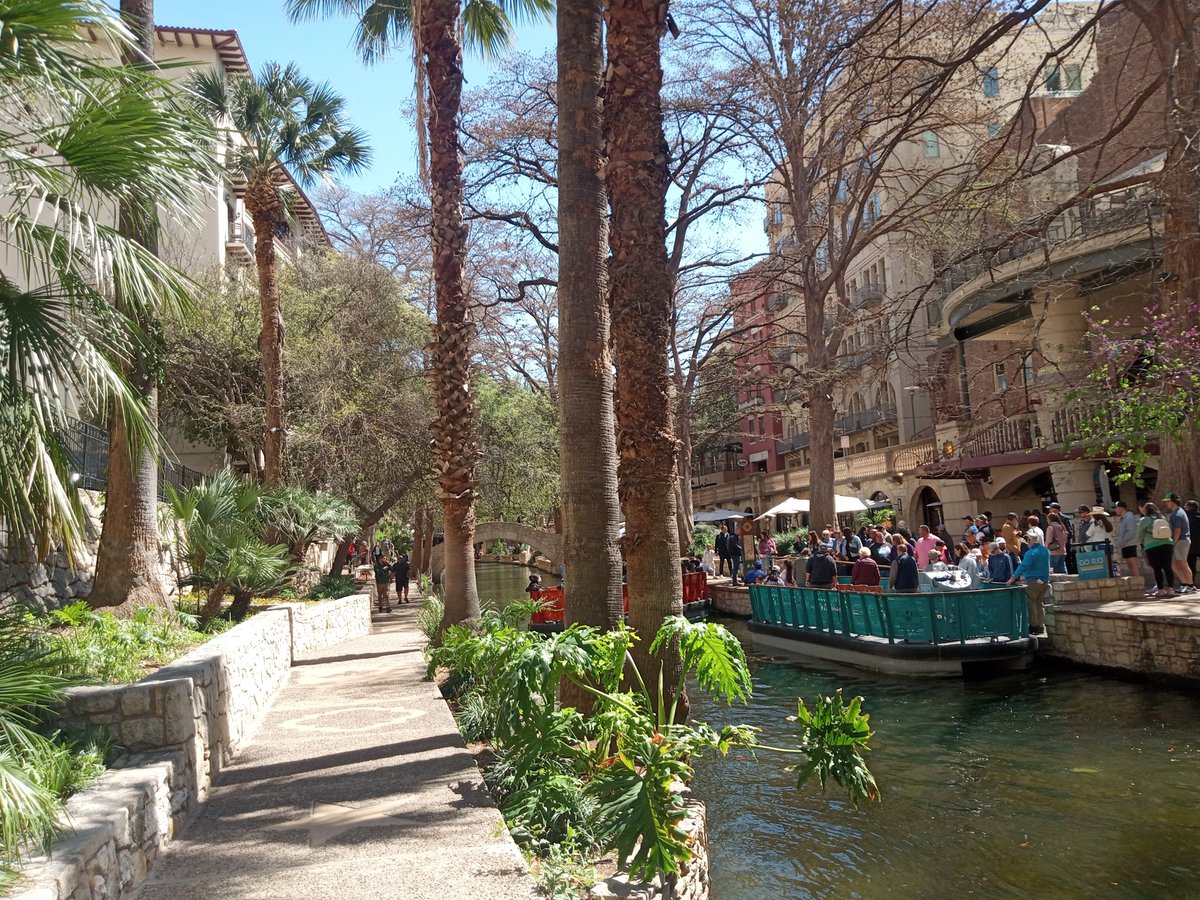
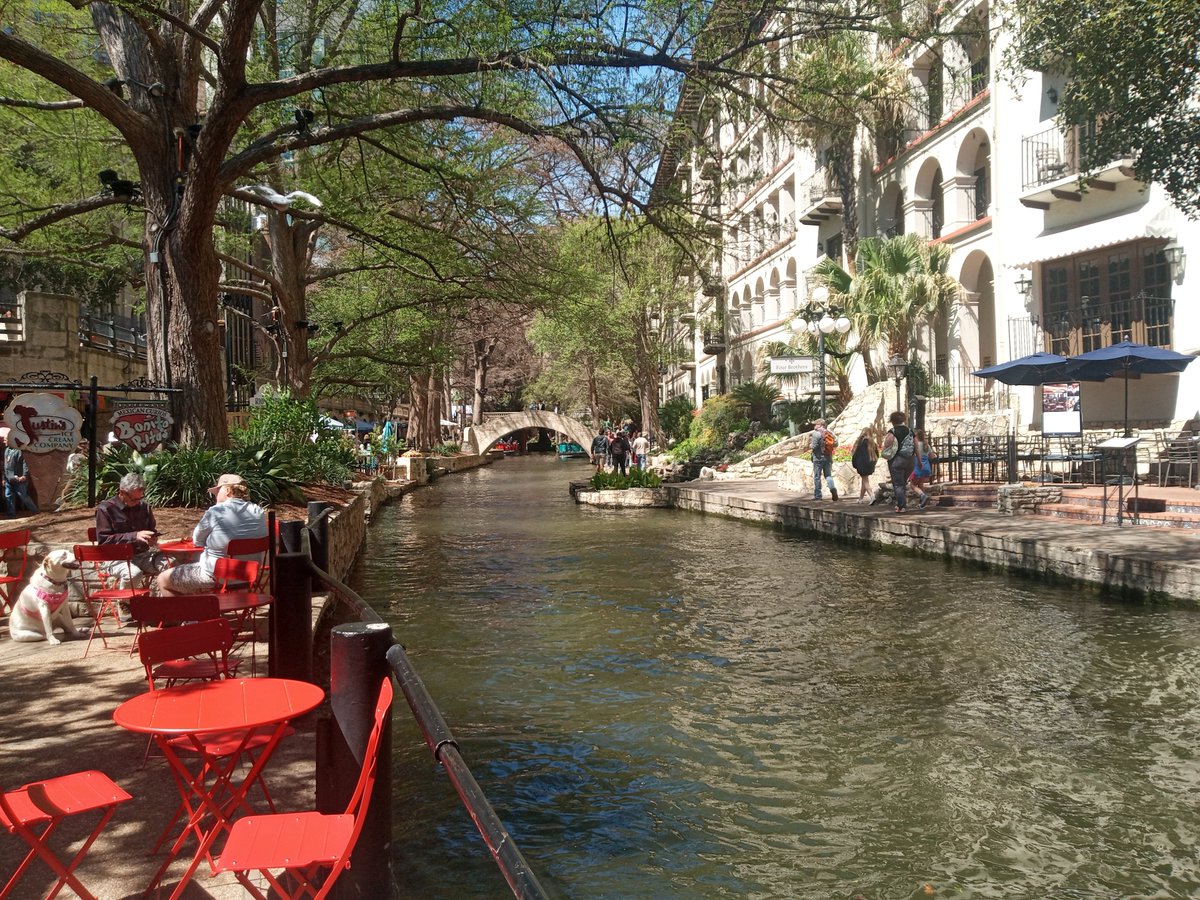
The San Antonio River Walk is one of the most successful and beloved public spaces in the US — literally a city within the city.
In 1929, architect Robert H.H. Hugman rejected the idea of paving over the flood-prone river. Instead, he proposed turning it into a vibrant pedestrian promenade with lower-level walkways, gardens, cafés, and a stunning blend of Texan regionalism, Spanish colonial influences, and modern landscaping.
It's consistently one of Texas' top tourist destinations. A 1940s WPA project that became the living heart of San Antonio — still thriving in 2026.
Proof that a forgotten canal can become a city's soul.

English
I don't care what anybody says, whether it's overrated or cliche, the San Antonio Riverwalk is a masterstroke of genius.


English
The concept originated from the Garden City movement, an English movement, one of the most influential urban planning ideas of the 20th century. It emerged as a direct response to the uncontrolled industrialization and overcrowding of the 19th century.
The core idea was to create small, self-sufficient cities surrounded by greenbelts — combining the best of town and country; health, nature, strong community, and access to jobs and culture. It proved that people could live in green, healthy, connected environments without sacrificing employment or urban opportunities.
The founder and originator was Ebenezer Howard, who published his groundbreaking book in 1898 under the title To-morrow, A Peaceful Path to Real Reform.
Beyond La Condesa and Roma Norte in Mexico City — which were directly inspired by Howard's principles — another neighborhood with a similar vibe is Palermo Soho / Palermo Hollywood in Buenos Aires, Argentina. While not a strict Garden City, it echoes the movement through its charming tree-lined streets, restored early-20th-century architecture, and blend of residential elegance with modern cafés, galleries, and bohemian energy.


English

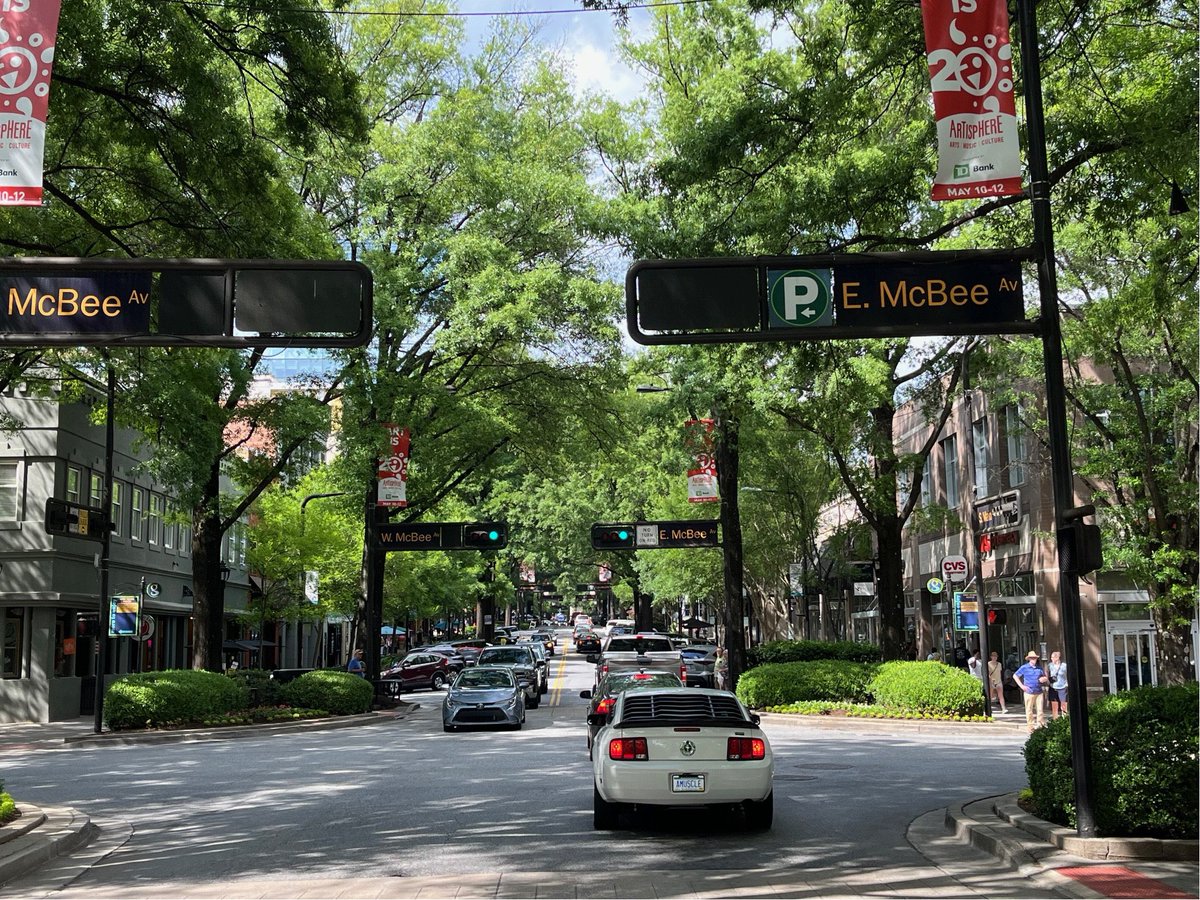
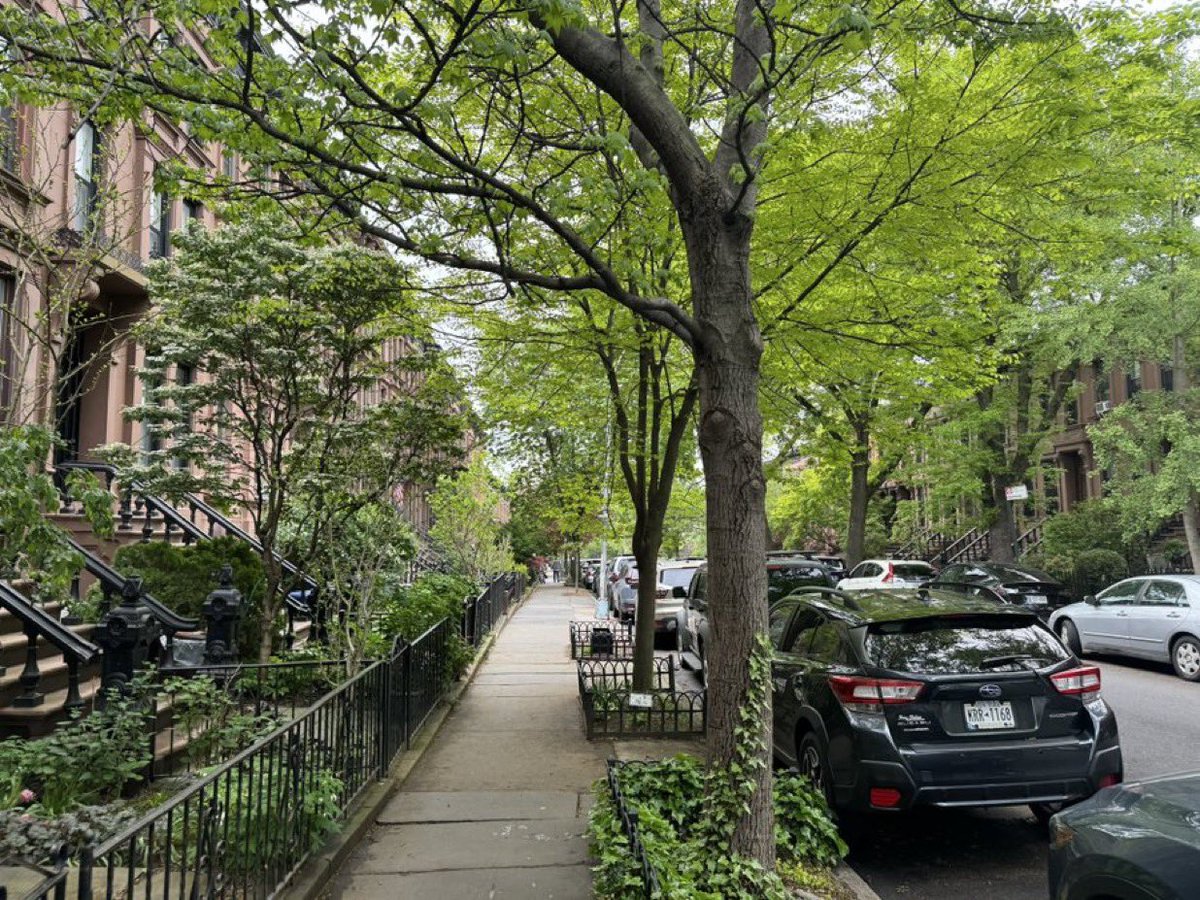
If you create a tree canopy the cafe culture will show up and tbh the architecture will look better either way
Coby@Cobylefko
Unbeatable city building and tourism strategy: Create beautiful architecture, develop a strong cafe culture, and plant tree lined streets everywhere
English
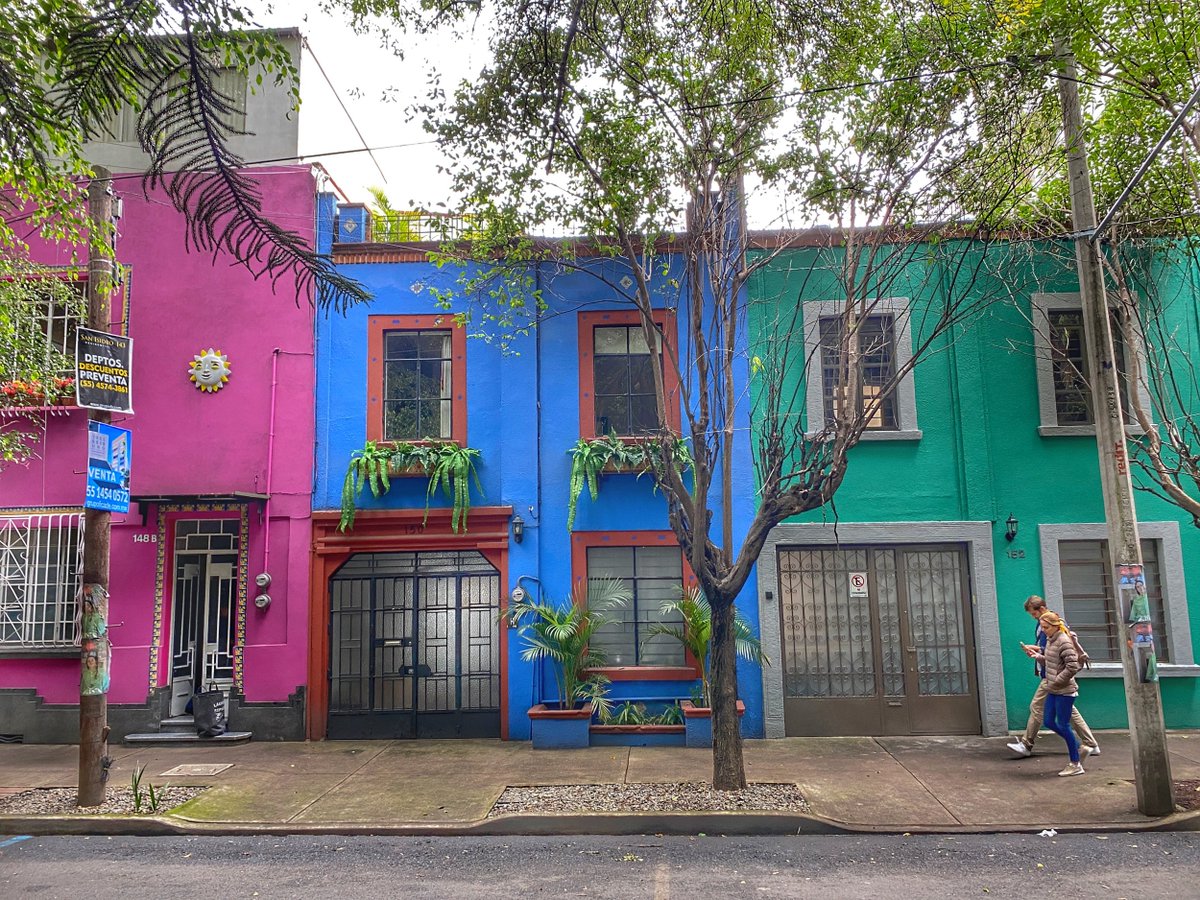
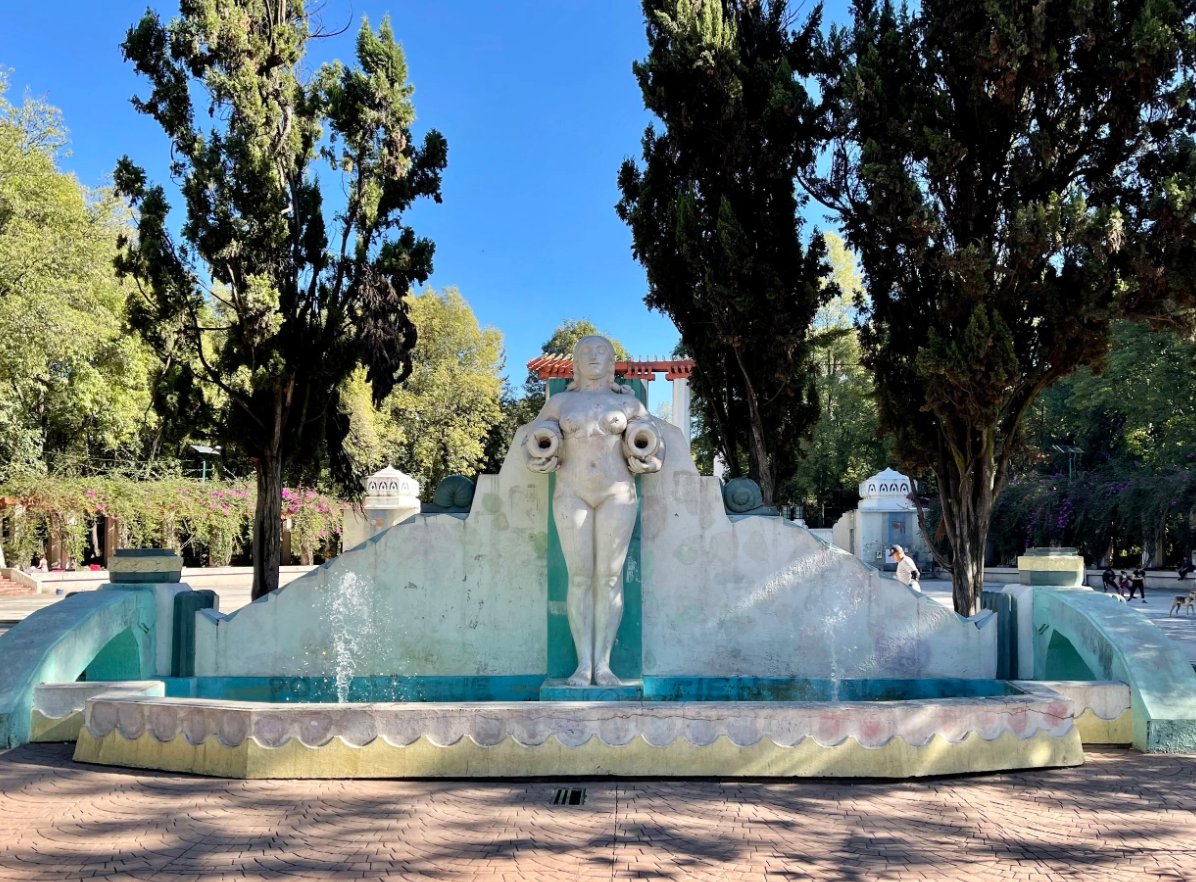
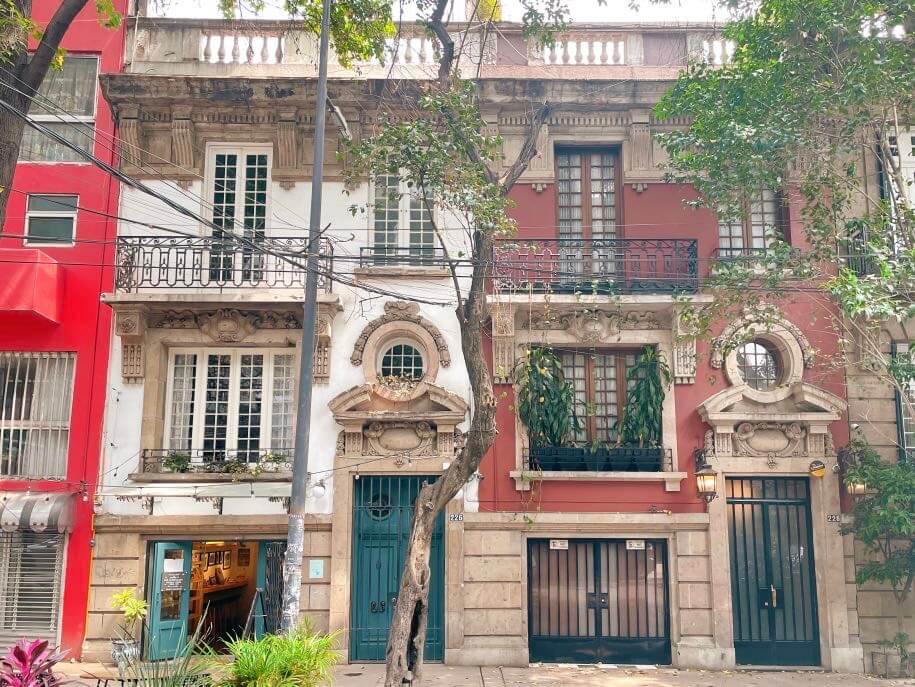
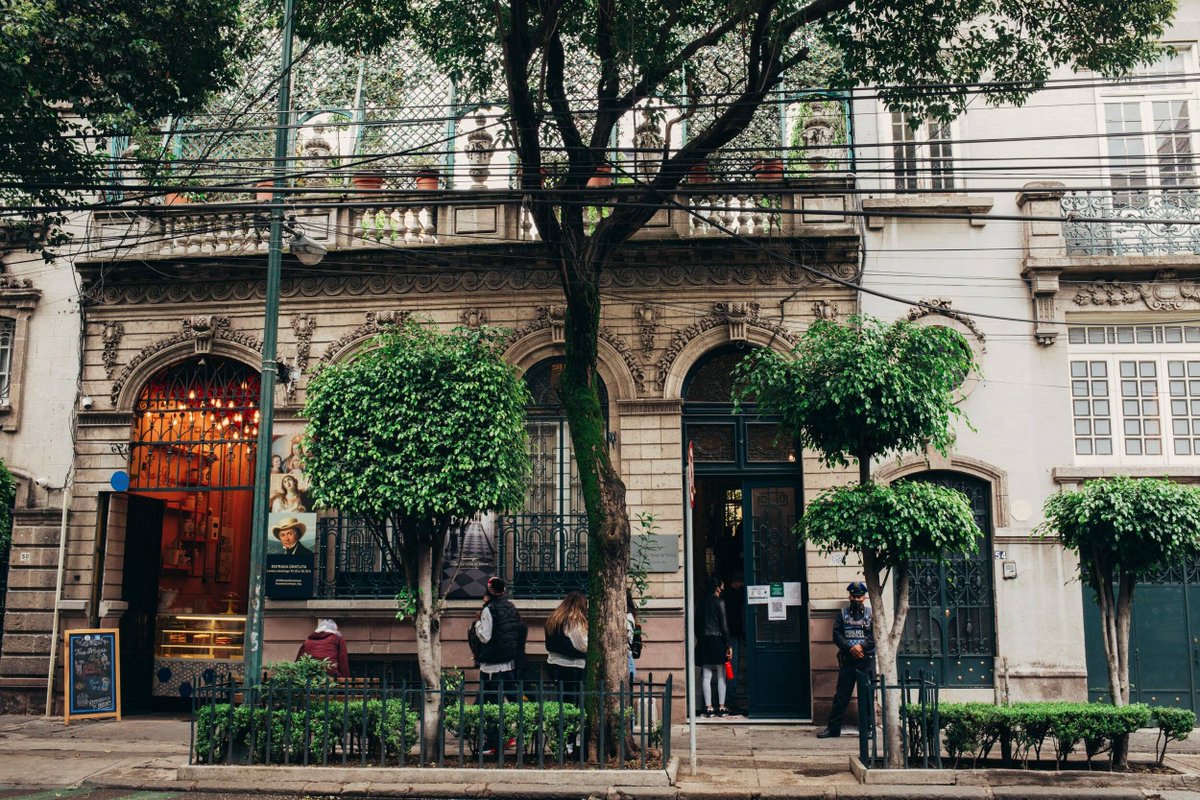
These photos are from Roma Norte and La Condesa in CDMX!
Both neighborhoods emerged as part of the Porfirian dream to create modern, elegant “garden cities.”
They were born between the early 1900s and the 1920s — during the late Porfiriato and post-Revolution eras — planned as upscale residential zones inspired by Parisian models and the English “Garden City” movement.
Roma Norte quickly became the favorite of the Porfirian elite and the new revolutionary bourgeoisie. Its generous, tree-lined avenues were designed from day one. Many historic mansions have been beautifully restored and transformed into cafés, galleries, boutique hotels, and luxury homes.
Together, Roma and Condesa became the epicenter of café culture in Mexico City — terraces, rooftops, and patios in old houses turned into trendy spots since the 2000s.
La Condesa shines with its shaded diagonal avenues, Avenida Ámsterdam is the most famous. Roma Norte dazzles with wide streets lined with jacarandas that paint everything purple in spring.
The mix of Porfirian mansions, Art Deco buildings, and contemporary restorations creates one of the most unique and photogenic urban landscapes in the city. Pure CDMX charm!
English