Afifah Hamilton

22.1K posts

Afifah Hamilton banner
Afifah Hamilton

Afifah Hamilton

@AfifahHamilton

Medical Herbalist & Nutritionist

England Katılım Temmuz 2013
907 Takip Edilen1.1K Takipçiler
Afifah Hamilton retweetledi
Sama Hoole
Sama Hoole@SamaHoole·
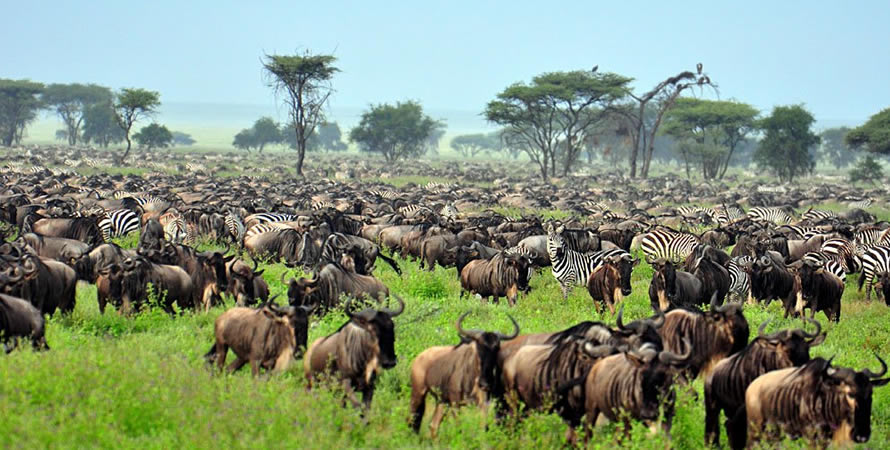
1890: rinderpest arrives in East Africa. The Serengeti wildebeest collapse from over a million to 200,000. Ecologists expect the grassland to flourish. Fewer mouths, more grass. Obvious. The grassland goes backwards. 1960s: vaccination clears rinderpest from cattle. The wild herds recover. Ecologists brace for overgrazing. The wildebeest rebuild to 1.5 million. Largest herbivore population on earth. The grassland gets greener. More soil carbon. Lower fire frequency. More tree cover than in 1900. The landscape gets more complex, not less. The papers have been sitting in prestigious journals for decades. The campaigners continue to argue that grazers destroy ecosystems. The largest natural experiment on earth says the opposite and it cannot be cited, because it does not say the right thing. It just sits there. Getting greener.
Sama Hoole tweet media
English
116
3.1K
11K
166.9K
Afifah Hamilton retweetledi
Valerie Anne Smith
Valerie Anne Smith@ValerieAnne1970·
We once considered a Cholesterol Level of 350 perfectly normal & healthy. Then it was lowered to 300. Then to 240. Then to 190. Now doctors want your levels as low as statins can force them — no matter what. Every single time the “safe” number drops, millions more healthy people are suddenly labeled as needing medication. This isn’t medicine. It’s a business model. Statins generate over $22 billion every year. The truth is, the cholesterol hypothesis has been heavily questioned for decades. The famous Framingham Heart Study that helped launch the fear actually showed that for every 1 mg/dL drop in cholesterol per year, there was an 11% increase in both coronary and total mortality. Large reviews of elderly populations (over 68,000 people) found that those with the highest LDL cholesterol lived the longest. Yet studies on statins show they extend average life expectancy by only about 3.2 days. Lowering cholesterol harms the body because cholesterol is essential. It forms every cell membrane, protects your brain, produces hormones, and helps repair arteries. **Statins come with a long list of serious side effects, including:** - Liver inflammation & damage - New-onset Type 2 diabetes - Heart failure & cardiomyopathy - Vertigo, dizziness, cognitive impairment - ALS, aphasia, dementia & Alzheimer’s - Cancer - Pancreatitis - Parkinson’s - Muscle tearing & rhabdomyolysis - Fatigue, weakness & neuropathy - Hormone deficiency - MS, epilepsy & clinical depression **Real culprits behind heart disease:** chronic inflammation, seed oils, excess sugar, and processed carbohydrates — not cholesterol itself. Your body makes most of its cholesterol for good reason. Forcing it dangerously low can create more problems than it solves. Share this with anyone being pushed toward statins. Higher LDL in the elderly is linked to longer life in multiple studies. The constant lowering of “normal” cholesterol numbers benefits drug sales far more than patients. Food is medicine. Real healing starts with what you eat.
Valerie Anne Smith tweet media
English
114
1.9K
3.4K
108.1K
Afifah Hamilton retweetledi
Sama Hoole
Sama Hoole@SamaHoole·
Blake Donaldson graduated from medical school in 1911 and spent the next 50 years practising internal medicine at 121 East 60th Street, New York. In 1919, fresh back from serving in World War One, he took a position at a cardiac clinic under Dr. Robert Halsey, whose speciality was trying to keep children with heart conditions alive into adulthood. Donaldson noticed something that most of his colleagues seemed content to miss: the dietary advice then standard, involving caloric restriction, reduced fat and increased cereal grains, was not working. His patients were getting sicker, not better. He began reading anthropology. He visited the American Museum of Natural History. He spoke to archaeologists studying the dentition of Inuit skulls and Neolithic Europeans. He became convinced, by the time he was in his thirties, that human beings had evolved on fatty meat, and that returning his patients to that food was probably safer than anything else on the menu. His prescription, which he refined over the following four decades and applied to a documented total of roughly 17,000 obese and cardiac patients in private practice: Half a pound of fresh, fatty meat, three times a day. Roughly a 3 to 1 ratio of lean to visible fat. Beef or lamb. No pork, no chicken, no fish, no eggs, no dairy. Six glasses of water, none after 5 pm. A thirty-minute walk before breakfast. One demitasse of black coffee per meal permitted. Nothing else. No bread, no sugar, no cracker, no fruit, no biscuit, no soda. The results, as he documented in his book Strong Medicine in 1961: His obese patients lost, on average, around three pounds per week. They kept losing until they reached a stable weight and then stopped losing. His cardiac patients showed measurable improvements in angina, blood pressure, and exercise tolerance. His diabetic patients reduced or eliminated their insulin requirements. His gallstone patients stopped having attacks. His allergy patients saw symptoms resolve. The book was dismissed by the American Medical Association's journal as unscientific. The reviewer was Morris Fishbein, the AMA editor, who called Donaldson's work something forgotten in old age. Donaldson was 68 when the review appeared and had been practising for 50 years. Donaldson continued treating patients until 1966 when he died at the age of 73. In the same year, the first edition of Dietary Goals for the United States was being drafted by the staff of the McGovern Senate Committee, which would recommend eating less saturated fat and more carbohydrate. In 1961 when Donaldson's book was published, obesity affected roughly 13% of American adults. In 2024, obesity affects 42% of American adults. Strong Medicine is currently out of print. Ozempic had its first billion-dollar quarter in 2023. We are spending hundreds of billions of dollars to pharmaceutically replicate what Donaldson achieved in 17,000 consecutive patients with half a pound of chuck steak and a walk before breakfast.
Sama Hoole tweet media
English
27
297
878
22.7K
Afifah Hamilton retweetledi
Sama Hoole
Sama Hoole@SamaHoole·
Dr Atkins died of a heart attack. He didn't. He slipped on ice outside his clinic in New York and died of a brain injury nine days later in hospital. He was 72. His heart, by all accounts, was fine. The rumour started because it was useful. A convenient narrative for people who needed the diet to be dangerous. "The man who invented the diet died of the very thing he said it prevented" is a much better story than "he fell over on a slippery pavement in February." It's also completely false. His medical records showed a healthy cardiovascular system. The weight he gained in hospital was oedema from the brain injury. This detail was leaked to the press, stripped of context, and served as evidence of obesity. The man was unconscious in an ICU. The myth persists because people repeat things that confirm what they already believe. Nobody fact-checks a good villain's death. The diet works. The story was made up. Both of these things are true simultaneously and the second one doesn't affect the first.
English
62
482
2.9K
61.9K
Afifah Hamilton retweetledi
Sama Hoole
Sama Hoole@SamaHoole·
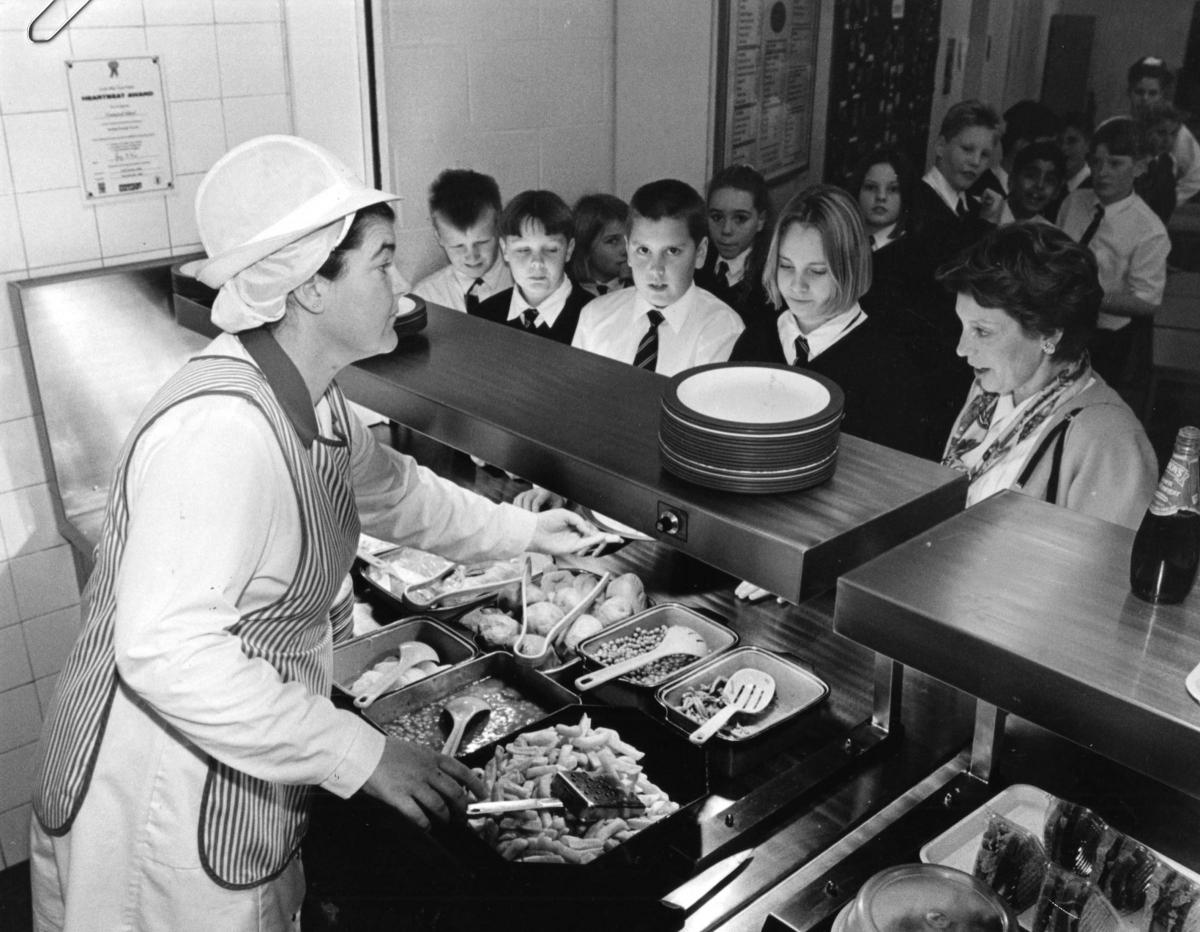
A British school dinner in 1975 was cooked on-site, from whole ingredients, by a dinner lady who knew, without consulting a nutritional database, what a growing child needed to eat. The dinner was: roast beef, gravy from the drippings, boiled potatoes, cabbage, and sponge pudding with custard made from eggs and milk. Or shepherd's pie from real mince. Or liver and onions. Or fish on Friday, battered and fried in beef dripping. In a single sitting: haem iron from the meat, calcium from the custard, B12 from the liver, vitamin A from the gravy fat, vitamin D from the eggs, zinc from the beef, omega-3 from the fish, collagen from the gravy, complete protein from every component, and roughly 800 calories dense enough to carry a child through an afternoon of running around a playground in January. Then the system changed. In the 1980s and 1990s, local authority catering was outsourced. On-site kitchens closed. Dinner ladies were made redundant. Central production kitchens began manufacturing meals reheated in convection ovens. The roast beef became a turkey twizzler. The shepherd's pie became a pre-formed disc of processed potato and reconstituted meat product. The liver disappeared entirely. The fish was coated in breadcrumbs and fried in vegetable oil. The custard was made from powder, water, and yellow colouring. The sponge pudding was replaced by a yoghurt tube. Jamie Oliver's 2005 campaign filmed children who could not identify a tomato. Kitchens where the only equipment was a deep fryer and a microwave. Menus that contained less nutritional value in a full week than the 1975 dinner contained in a single sitting. The government pledged reform. But the on-site kitchen did not come back. The dinner lady did not come back. The roast beef and the liver and the custard made from eggs did not come back. The 1975 dinner lady, who had no nutritional qualification and had never heard of a DIAAS score, was producing, at approximately 30p per serving, a meal that contained more bioavailable nutrition than anything the modern system produces at three times the cost. She has been replaced by a supply chain. The supply chain is more expensive. The children are less well fed. The dinner lady knew what she was doing. Nobody asked her.
Sama Hoole tweet media
English
914
4K
14.6K
421.4K
Afifah Hamilton retweetledi
Nicolas Hulscher, MPH
Nicolas Hulscher, MPH@NicHulscher·
The CIA CLASSIFIED a 1950s study showing anti-parasitics disrupt cancer growth—and kept it BURIED for over HALF A CENTURY. Millions of cancer victims have paid the price as this vital line of research was set back DECADES.
Nicolas Hulscher, MPH@NicHulscher

The single LARGEST human study of ivermectin and mebendazole in cancer patients found that the VAST MAJORITY (84.4%) declared CANCER DISAPPEARANCE, TUMOR SHRINKAGE, or CANCER STABILIZATION.

English
108
5.8K
11.7K
314.8K
Afifah Hamilton
Afifah Hamilton@AfifahHamilton·
@GodPlaysCards I believe Poland has recently designed and produced a new fighter jet, called 'Hussar'. Am I correct?
English
0
0
0
10
Afifah Hamilton retweetledi
Cards of History
Cards of History@GodPlaysCards·
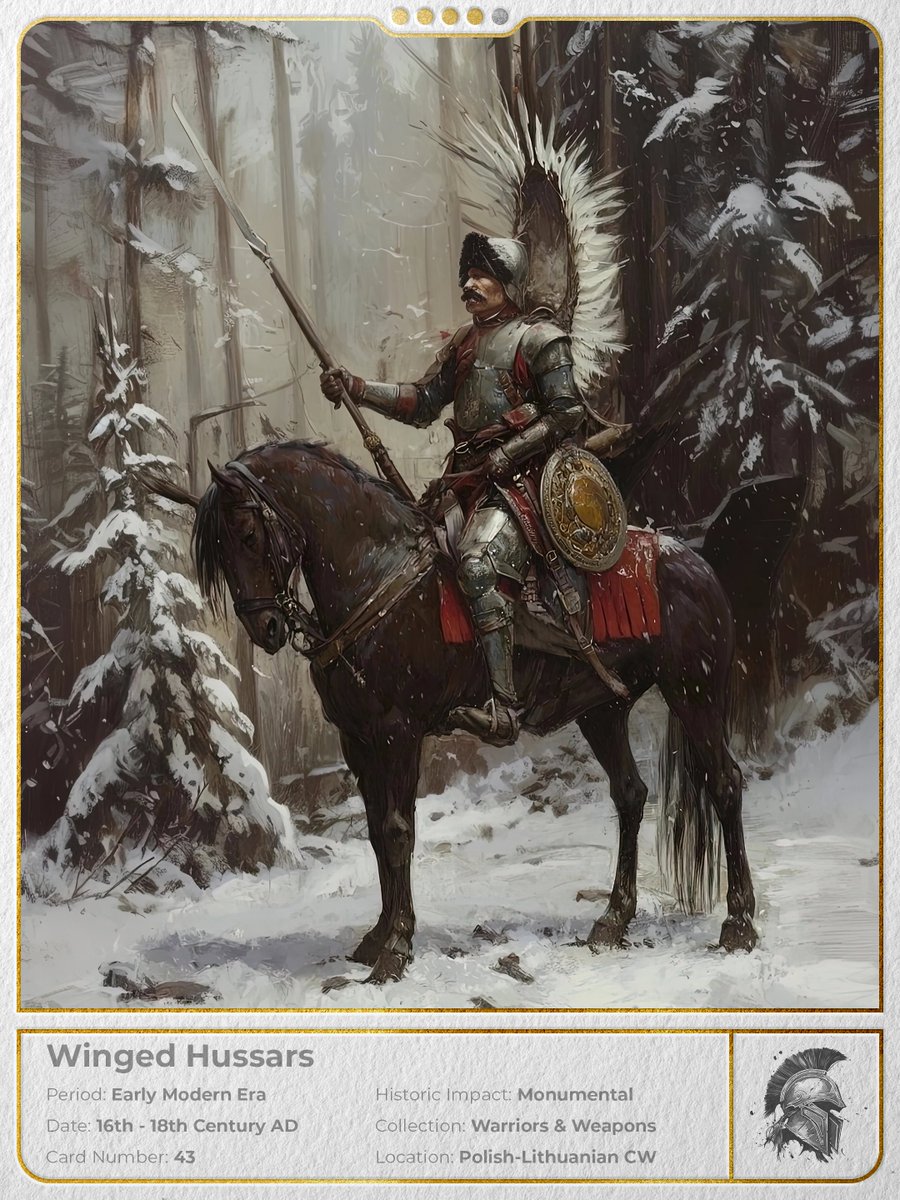
For two centuries, the Ottoman Empire had pushed westward, swallowing kingdoms whole. Vienna was on the brink of collapse, the gate to all of Europe was about to fall open. Then, over the ridge of the Kahlenberg hill, came the largest cavalry charge in recorded history. 🔸By 1683, the Ottoman Empire was the most powerful military force on earth. Grand Vizier Kara Mustafa marched with more than 150,000 soldiers toward Vienna, pulling with him over 300 cannons and a supply chain that stretched back to Constantinople. 🔸On July 14th, the Ottomans surrounded Vienna and began digging. They ran tunnels beneath the city walls, packed them with gunpowder, and detonated them one by one. The city's 12,000 - 15,000 defenders watched their walls crumble from the inside out. 🔸After two months under siege, Vienna was dying. Food had run out, disease was spreading through the streets, and the garrison had lost a third of its men. The city's commander, Ernst Rüdiger von Starhemberg, sent desperate messengers through enemy lines begging for relief. 🔸Holy Roman Emperor Leopold I had spent weeks negotiating one of the most unlikely alliances in European history. Catholic Austria, Protestant German princes, and the Polish-Lithuanian Commonwealth agreed to set aside their rivalries and march together. King Jan III Sobieski of Poland would lead them. 🔸Jan Sobieski was already a legend before Vienna. He had spent his career fighting the Ottomans on Poland's eastern frontier, and the Turks called him the "Lion of Lechistan." When the Pope personally wrote to him asking for help, Sobieski mobilized 74,000 men and began the march south. 🔸On the evening of September 11th, the allied commanders gathered on the Kahlenberg hill overlooking Vienna. Below them, the Ottoman camp stretched across the plain like a city of its own, with silk tents, horse herds, and cooking fires as far as the eye could see. Sobieski turned to his son and said: "Tomorrow we fight." 🔸The battle opened at dawn on September 12th with infantry clashing in the woods and ravines below the hill. For eight hours the fighting ground on, neither side breaking. Then, at around four in the afternoon, Sobieski ordered his cavalry to the ridge. 🔸The Polish Winged Hussars were the most feared heavy cavalry in the world. They rode massive warhorses, carried 16-foot lances, and wore wooden frames on their backs that held enormous eagle and ostrich feathers. At full gallop, the wings created a roaring sound that witnesses said was unlike anything they had ever heard. 🔸18,000 horsemen crested the hill and began riding downhill toward the Ottoman camp. Sobieski led from the front with 3,000 of his Polish Winged Hussars. The ground shook. The Ottoman lines, which had held all day, looked up to see a wall of horses, lances, and screaming wings descending on them at full speed. The formation collapsed almost immediately. 🔸The battle raged for 15 hours after which the Ottoman army was in full retreat. Kara Mustafa abandoned his command tent, his treasury, his artillery, and the green banner of the Prophet Muhammad. The Poles captured so much coffee from the Ottoman camp that it is credited with introducing the coffeehouse culture to Vienna. 🔸Kara Mustafa fled to Belgrade, where he was executed by order of the Sultan three months later. The Ottoman Empire never again threatened central Europe with the same force. The siege of Vienna is now considered the high-water mark of Ottoman expansion into the West. 🔸On the evening of the victory, Sobieski wrote a letter to the Pope. In it, he borrowed the words of Julius Caesar and wrote: "I came, I saw, God conquered." He had just saved Western Europe. He sent the letter before the bodies were even cleared from the field. 🔸The Winged Hussars charged for the last time at Vienna, and they won the most consequential cavalry battle in modern history. Within a generation, the age of mounted shock warfare would be over forever. Most people have never heard of the Battle of Vienna or of Jan Sobieski (he will receive his own card in due time). I believe it is vital you are now part of the group that does. History has a way of burying the moments that changed everything. Europe was about to fall. These men ensured it didn't. Thanks for sticking with me. Tomorrow I've got another fantastic story lined up for you.
Cards of History tweet media
English
234
1.8K
7.5K
271.6K
Afifah Hamilton
Afifah Hamilton@AfifahHamilton·
@GodPlaysCards When I have deliveries from Poles or Lithuanians I always, literally, thank them for their ancestors' dedication, for the Winged Hussars, for deciding they would prevail. They are surprised at the acknowledgement.
English
1
0
2
104
Afifah Hamilton retweetledi
Sama Hoole
Sama Hoole@SamaHoole·
Here is what one beef steer actually is, in pounds of food: Mince / ground beef: 165 lbs Chuck roast and shoulder: 120 lbs Silverside and topside (round): 110 lbs Sirloin steaks: 45 lbs Brisket: 35 lbs Ribeye steaks: 35 lbs Short ribs: 35 lbs Flank and skirt steak: 30 lbs Shank and ossobuco: 30 lbs T-bone and porterhouse: 28 lbs Liver, kidneys, heart, tongue: 25 lbs Fillet / tenderloin: 12 lbs Total: roughly 680 pounds of food from one animal. At one pound a day, that is 680 days. Nearly two years of beef from a single cow. The murder rate is considerably lower than advertised.
English
42
406
1.9K
36.9K
Afifah Hamilton
Afifah Hamilton@AfifahHamilton·
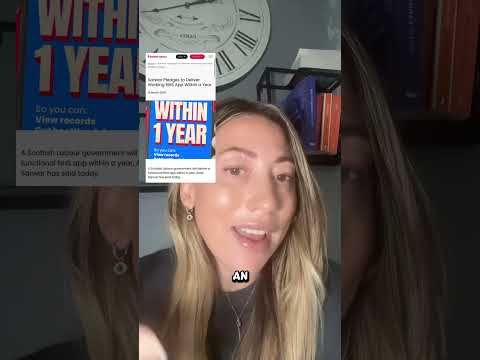
PALANTIR NHS DEBATE USED TO CAMPAIGN FOR A SCOTTISH ELECTION youtube.com/shorts/awl4NGU… via @YouTube This woman is superb. Must follow. She's on the case of the takeover of the NHS and all your data. DEFINITELY ONE TO KEEP A CLOSE EYE ON!!
YouTube video
YouTube
English
0
0
0
27
Afifah Hamilton retweetledi
Sama Hoole
Sama Hoole@SamaHoole·
A cow, given grass and rain, produces: Meat. Complete protein, top of the bioavailability table. Milk. So nutritionally complete we feed it to our young. Leather. Ten thousand years of footwear. Composts when you're done. Tallow. Stable cooking fat, soap, candles. Currently being sold back to us as skincare at eight times the butcher's price. Bones. Broth, tools, fertiliser. Organs. The most nutrient-dense food on earth, ignored by the culture that buys three supplements to replace them. Manure. Grows the grass. The cycle runs again. Try to engineer that. A machine that takes rain and a patch of grass and produces six complete products while improving the soil and reproducing itself. You can't. We haven't. We're being told to eliminate them. While flying almonds in from California.
Sama Hoole tweet media
English
207
4K
10.8K
102.1K
Afifah Hamilton retweetledi
Larry Cook
Larry Cook@stopvaccinating·
This question will stump pro vaxxers…
Larry Cook tweet media
English
189
1.4K
6.6K
74.2K
Afifah Hamilton retweetledi
Nicolas Hulscher, MPH
Nicolas Hulscher, MPH@NicHulscher·
🔥Dr. John Campbell SHOCKED after reading our ivermectin cancer study: “We could be CURING, potentially … your wife’s cancer, your husband’s cancer, your mother’s cancer, your father’s cancer, your son’s cancer, your daughter’s cancer, with ivermectin and mebendazole.”
Nicolas Hulscher, MPH@NicHulscher

🚨BREAKING: Largest Real-World Study of Ivermectin + Mebendazole in Cancer Patients Shows 84.4% Clinical Benefit — Nearly HALF Report Cancer Disappearance or Tumor Regression After just 6 months, 48.4% of cancer patients taking ivermectin and mebendazole reported NO EVIDENCE OF DISEASE (32.8%) or tumor regression (15.6%), while 36.1% reported disease stabilization⬇️ We have completed the largest real-world human analysis to date evaluating ivermectin and mebendazole in cancer patients—and the results represent one of the most compelling clinical signals ever documented for repurposed anti-parasitic therapies in oncology. The groundbreaking analysis was made possible through a unique collaboration between The Wellness Company, the McCullough Foundation, and the Chairman of the President’s Cancer Panel (Dr. Harvey Risch)—uniting real-world clinical data, frontline medical experience, and high-level epidemiologic expertise to deliver urgently needed insights in oncology. This was a real-world prospective clinical program evaluation of 197 cancer patients, with 122 completing a follow-up survey at about six months (61.9% response rate). Cancer patients were prescribed compounded ivermectin–mebendazole, with each capsule containing 25 mg ivermectin and 250 mg mebendazole—most commonly taken at 1–2 capsules per day. The cohort represented a clinically relevant population, including a wide variety cancer types, with 37.1% of patients reporting actively progressing disease at baseline and many having already undergone chemotherapy, radiation, and surgery. At six months, 84.4% of cancer patients reported clinical benefit (Clinical Benefit Ratio: 84.4% [95% CI: 77.0–89.8%]): ✅ 32.8% reported no evidence of disease (95% CI: 25.1–41.5%) ✅ 15.6% reported tumor regression (95% CI: 10.2–23.0%) ✅ 36.1% reported stable disease (95% CI: 28.1–44.9%) Treatment adherence was high, with 86.9% completing the full protocol and 66.4% remaining on therapy at six months. The regimen was well tolerated, with 25.4% reporting side effects, primarily mild and gastrointestinal, and over 93% continuing treatment despite these events. Patients were treated in real-world conditions alongside concurrent therapies, including chemotherapy (27.9%), radiation (21.3%), surgery (19.7%), supplements (49.2%), and dietary modification (37.7%), supporting use as an adjunctive approach. Together, these findings represent a large, internally consistent real-world clinical signal that supports URGENT further investigation of ivermectin and mebendazole as low-toxicity, adjunctive cancer therapies. Given the strength of the signal observed here, advancing this line of investigation is no longer optional—it is necessary. This is NOT the end. We will continue advancing this work with larger datasets to further define and validate the role of anti-parasitics in cancer outcomes. The manuscript is now available as a preprint on the Zenodo research repository, operated by the European Organization for Nuclear Research, while undergoing peer review at leading oncology journals: “Real-World Clinical Outcomes of Ivermectin and Mebendazole in Cancer Patients: Results from a Prospective Observational Cohort.” @twc_health @McCulloughFund @P_McCulloughMD @DrHarveyRisch @DrKellyVictory @jathorpmfm @drdrew @PeterGillooly @FosterCoulson


English
113
3.7K
8.5K
359.7K
Afifah Hamilton retweetledi
Athenaeum Book Club
Athenaeum Book Club@athenaeumbc·
Never forget: once your culture is gone, it's gone forever. Government education has failed to teach the great books of the West for decades. Deliberately failed. That's why we started an independent group to study the Western canon, ourselves. Together, we are reading the books that form the mind and shape the spirit. The books our ancestors read. Western Civilization has given us the greatest works ever known — but it takes effort and an open mind to read them. Homer, Augustine, Dante, and Shakespeare are not just names in a syllabus, but guides to a deeper and more ordered life. If this sounds like something you'd like to be part of, please join our group. We read a new classic every month, and meet biweekly to discuss. We are about to start Dostoevsky's Crime and Punishment. If you want to support our efforts, please consider a paid subscription. It makes a huge difference to the time and resources we can dedicate to this. We are funded ENTIRELY by the members of this community who wish to keep our efforts going — to spread the lessons and virtues contained in the Western canon. Join us! Paid members get: - Live book club discussions (biweekly) - Essays to guide you through the books we're reading - The full archive of essays and podcasts - Access to the community chat room - Ability to vote on what we read next This is not school. There are no grades, no credentials, and definitely no status games. Just a community of readers serious about recovering what's been lost, and using it to build something better. Welcome.
English
92
1.4K
8.4K
661.9K
Afifah Hamilton retweetledi
Andrew Bridgen
Andrew Bridgen@ABridgen·
Dr. Robert Becker nominated for the Nobel Prize twice, proved that the human body heals through electrical signals He warned the world that electromagnetic pollution was disrupting the body's natural healing system. His funding was cut. His lab was closed. His career was ended.
Andrew Bridgen tweet media
English
99
2.4K
4.4K
56.2K
Afifah Hamilton retweetledi
Aaron Siri
Aaron Siri@AaronSiriSG·
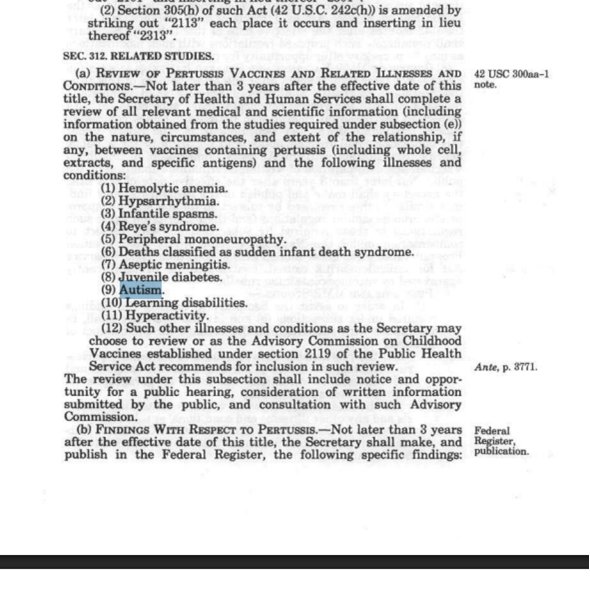
The "idea vaccines cause autism" was not "invented by Andrew Wakefield in 1998." In 1986, over a decade prior, due to widespread parental claims that pertussis vaccine (injected 3x in the first 6 months of life) caused their child’s autism, Congress required HHS (as part of the National Childhood Vaccine Injury Act of 1986) to review the extent of the relationship between pertussis-containing vaccines and autism. In fact, autism was one of only 11 conditions it asked HHS to review. See the original text from the 1986 Act below.* Btw, more recently, the Institute of Medicine (IOM) could only identify one study that assessed whether pertussis-containing vaccines are related to autism, and that study found there was a relationship, but the IOM threw out the study because it "lacked an unvaccinated comparison population."** *govinfo.gov/content/pkg/ST… at p. 37 **#545" target="_blank" rel="nofollow noopener">nationalacademies.org/read/13164/cha…
Aaron Siri tweet media
Neil Stone@DrNeilStone

The idea vaccines cause autism was invented by Andrew Wakefield in 1998 and was so thoroughly debunked he lost his license for gross malpractice And here we are 27 years later RFK Jr and his fans dredging up the same nonsense Such a tiresome waste of time

English
78
1K
2.8K
66.1K
Afifah Hamilton retweetledi
Sama Hoole
Sama Hoole@SamaHoole·
The year is 1950. Your doctor lights a cigarette and tells you smoking is fine. He read it in a study. He is telling the truth about having read it. He does not know, or is not saying, that the study was funded by the tobacco industry. The year is 1958. Your doctor tells you to eat less fat. The evidence is contested. The contestation is not in the public messaging. The food industry has been helpful in clarifying which findings deserve attention. Some researchers who published contradictory data have been quietly defunded. Ancel Keys is on the cover of Time magazine. The year is 1962. Your doctor prescribes thalidomide to your pregnant wife for morning sickness. It has been approved. The FDA gave it the green light in Europe. Twelve thousand children will be born with severe limb malformations before anyone in an official capacity acknowledges the problem. The families are told the drug was safe. The drug was approved. Both of these things remain true. The year is 1972. Your doctor prescribes Valium. Britain is in the grip of a benzodiazepine wave that will last two decades. The dependency risk is known internally. It is not shared. Your doctor is not lying to you. He was not told either. The year is 1999. Your doctor prescribes Vioxx for your arthritis. It is newer than ibuprofen, well-tolerated, and Merck has a study showing it works. Merck also has internal data suggesting it roughly doubles the risk of heart attack. This data will not reach your doctor for four more years. Fifty thousand people are estimated to have died in the interim. Merck eventually settles for 4.85 billion dollars. No criminal charges are brought. The year is 2002. Your doctor prescribes OxyContin. Purdue Pharma trained its sales representatives to tell doctors the addiction risk was less than one percent. That figure came from a letter, not a study. The letter was about patients with terminal cancer on short-term doses in hospital settings. Your doctor is a GP with a patient who has a bad back. Nobody draws a distinction. Nobody is required to. The year is 2008. Your doctor checks your cholesterol. Your LDL is elevated. You are prescribed a statin. Nobody mentions that the number needed to treat for primary prevention is approximately 250. Nobody mentions that the muscle deterioration you'll notice over the next two years is listed as a rare side effect rather than a documented pattern affecting a meaningful percentage of patients. The trial that informed the prescription was funded by the manufacturer. Now it is today. Your doctor has new guidelines. New studies. New consensus. He is confident. He has always been confident. The confidence has never been the problem. The confidence is, in fact, precisely the problem.
Sama Hoole tweet media
English
1K
11.5K
33.5K
2M
Afifah Hamilton retweetledi
Sama Hoole
Sama Hoole@SamaHoole·
There is a small Suffolk village called Lavenham. Population approximately 1,700. It contains one of the most extraordinary parish churches in England: a tower 141 feet high, fan vaulting, carved stone screens, the kind of medieval splendour you would expect to find in a cathedral city. In 1525, Lavenham was the fourteenth wealthiest town in England. It was wealthy because of wool. Between 1250 and 1500, the English wool trade was the backbone of the entire national economy. Edward I financed his wars with it. Edward III built his Hundred Years' War on it. The Lord High Chancellor still sits on a sack of wool in the House of Lords because the wool was so important that the symbol of state authority is, literally, a bag of it. Yorkshire abbeys ran herds of 14,000, 18,000 sheep. The Cotswolds, the Lakes, the South Downs, East Anglia: every region with grass and a hill became wool country. The fleeces went to Flanders and Italy where they were woven into the finest cloth in Europe. The money came back in cartloads. And the men who made the money built churches. Lavenham, Long Melford, Northleach, Cirencester, Chipping Campden. Stone the local economy could not possibly have afforded under any other industry. "I praise God and ever shall," reads the inscription a wool merchant had carved on his window. "It is the sheep hath paid for all." Then it ended. Spanish merino arrived in the sixteenth century. The Industrial Revolution moved value into finished cloth rather than raw wool. New Zealand and Australia, with vastly cheaper land, undercut British producers. And then synthetic fibres arrived. Nylon in 1935. Polyester in 1941. Acrylic in 1950. By the 1970s, your jumper was no longer made from a sheep that had eaten grass on a Yorkshire fell. It was made from petroleum that had been refined in a chemical plant, extruded into thread, and dyed with industrial pigments that would persist in the environment indefinitely. The replacement was, by every measure that mattered to a wool merchant of 1500, a downgrade. Synthetic fibres do not breathe. They do not insulate when wet. They build static electricity. They shed microplastics into the wash water. They cannot be composted. They will outlive the wearer by approximately five hundred years. They are, however, cheap. And the Yorkshire mills closed. The Cotswold villages emptied of weavers. British wool, which had built more cathedrals than any other industry in English history, became, by the 2010s, worth less per kilogram than the cost of shearing the sheep. Farmers were burning fleeces because nobody would pay for them. You can still see what wool built. Walk into Lavenham church. Stand under the tower. Then look at the polyester fleece you are wearing. That is what came after.
Sama Hoole tweet media
English
69
633
3K
56.7K