AgroBioDiverse
123.2K posts

AgroBioDiverse
@AgroBioDiverse
Luigi Guarino & Jeremy Cherfas on crops, livestock, bugs, food, drink... See also Agricultural Biodiversity Weblog ☕️🍺🍠🍌🥑🍆🌶️🌽 🌻🍏 Views our own
Rome & Bonn, also Nairobi Katılım Nisan 2008
1.3K Takip Edilen11.2K Takipçiler
AgroBioDiverse retweetledi

Hybrid origin of domesticated peanut: onlinelibrary.wiley.com/doi/10.1111/tp…
When we learn a crop started from a recent hybrid between 2 ancestral species, it gives us the opportunity to intentionally recreate that hybrid & thus bring in wider genetics for disease resistance and other traits.
English
AgroBioDiverse retweetledi

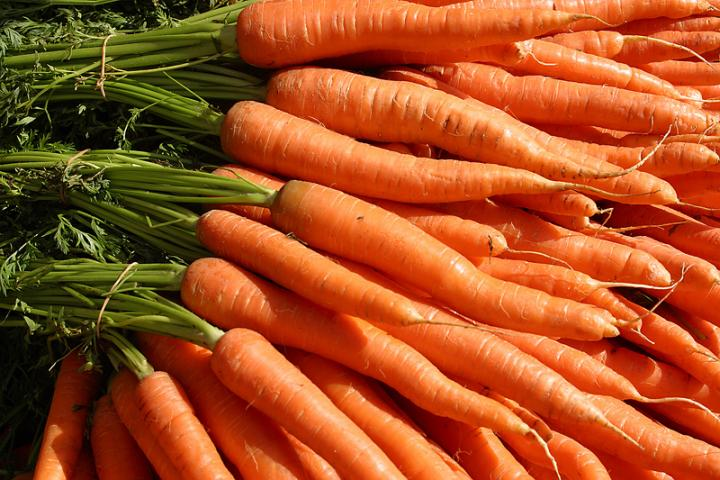
You associate carrots with their orange colour because Dutch farmers decided it should be
Before the 16th century, carrots were black, purple, white, red, and yellow
Farmers in Hoorn found a mutant orange strain and bred it into consistency through selective hybridisation
They made orange the default
Then exported it to every kitchen on earth
The Dutch didn't conquer with armies
They also decided what your carrots look like


English
AgroBioDiverse retweetledi

In Bolivia, Indigenous communities are protecting forests & boosting incomes with a sustainable value chain.
With @FAO support, they are turning local knowledge into green livelihoods & preserving their resources for future generations.
🔗 bit.ly/4hp5kYA
#ForestDay

English

Also provided the plot of Jaws
Prof. Frank McDonough@FXMC1957
20 March 1828. Playwright and poet Henrik Ibsen was born in Skien, Norway. His major works include Peer Gynt, An Enemy of the People, A Doll’s House and Hedda Gabler. His plays are the 2nd most frequently performed in the world after Shakespeare.
English

@HelenHet20 @freddiesayers Wouldn't starting a shooting war with Iran under false pretences in order in reality to "shut" Hormuz and hurt China be, well, a war crime?
English

I talked yesterday to @freddiesayers about why we are well beyond the point of no return in the Persian Gulf and why energy disruption might serve the Trump administration's geopolitical ambitions.
UnHerd@unherd
“Normality can’t come back… this is a play to change the strategic energy calculus.” In the latest UnHerd interview, @HelenHet20 says the US is using the Iran war to reshape energy flows through the Strait of Hormuz, with major implications for China.
English
AgroBioDiverse retweetledi

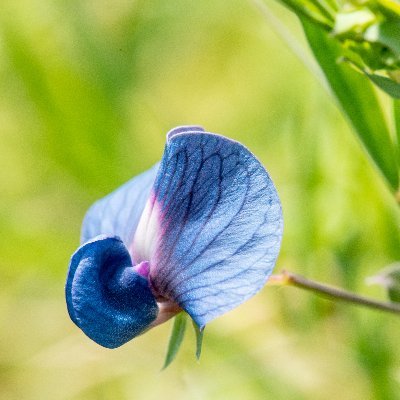
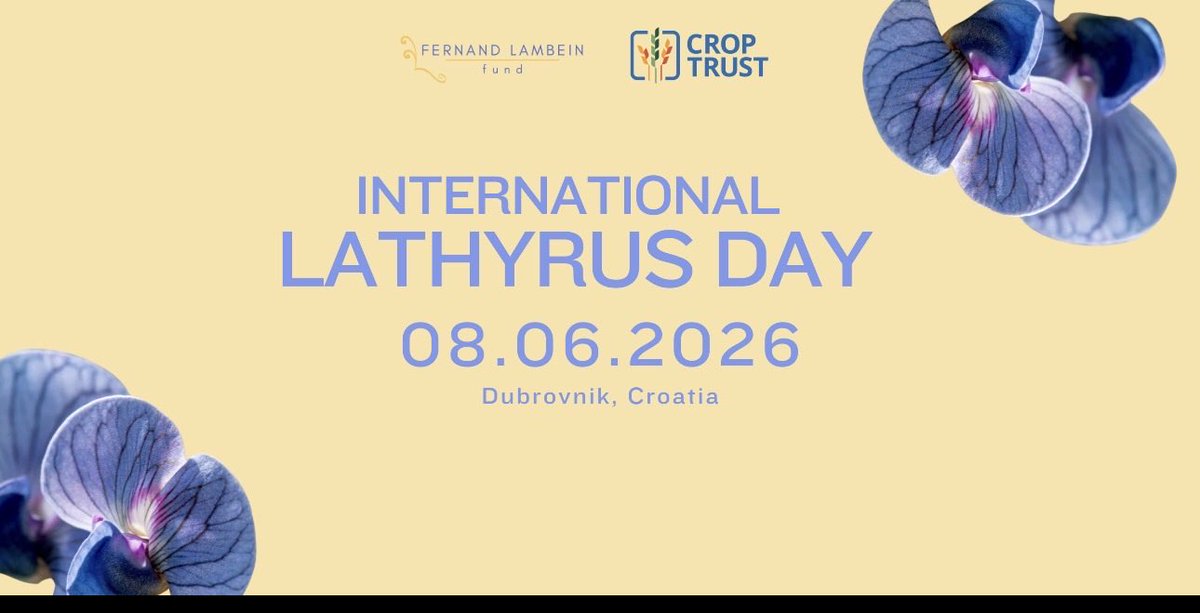
🌱 In 2024, 1st #InternationalLathyrusDay began in Ghent bringing together a global community around @grasspeanet & the legacy of Prof Fernand Lambein.
On 8 June 2026, the journey continues 👇
📍 Dubrovnik 🇭🇷
✨ Join us
🔗 ils5.info/workshops/2nd-…
📖 lambeinfund.org

English
AgroBioDiverse retweetledi

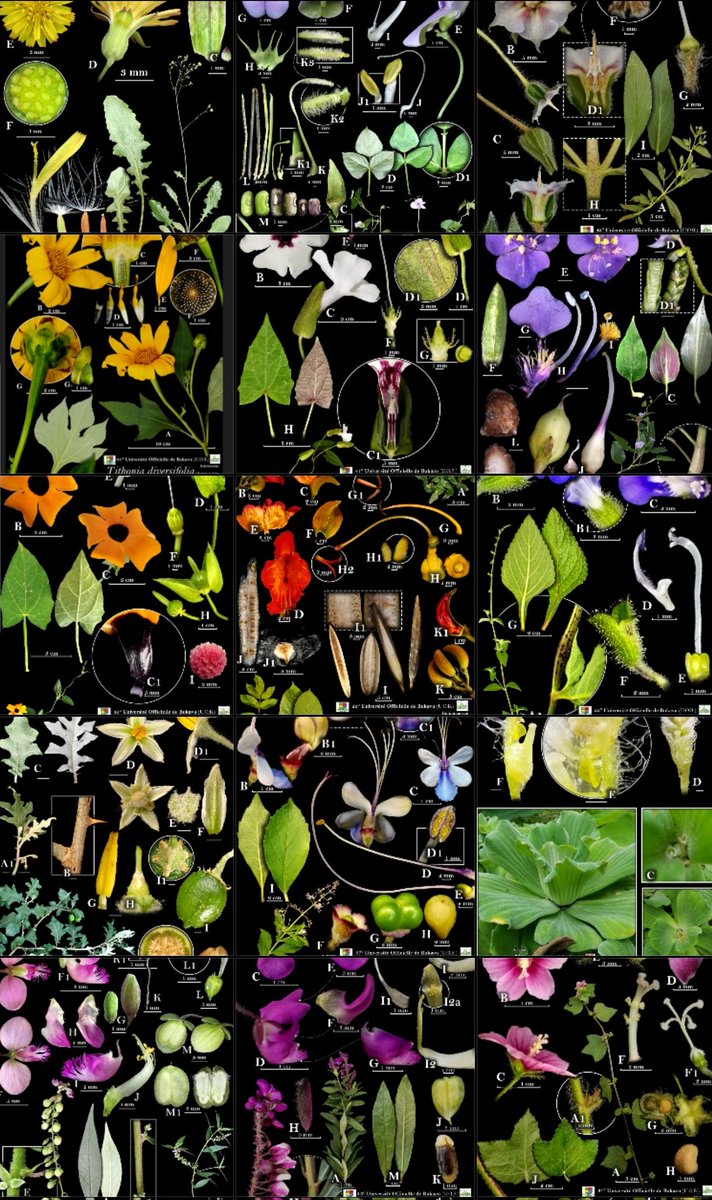
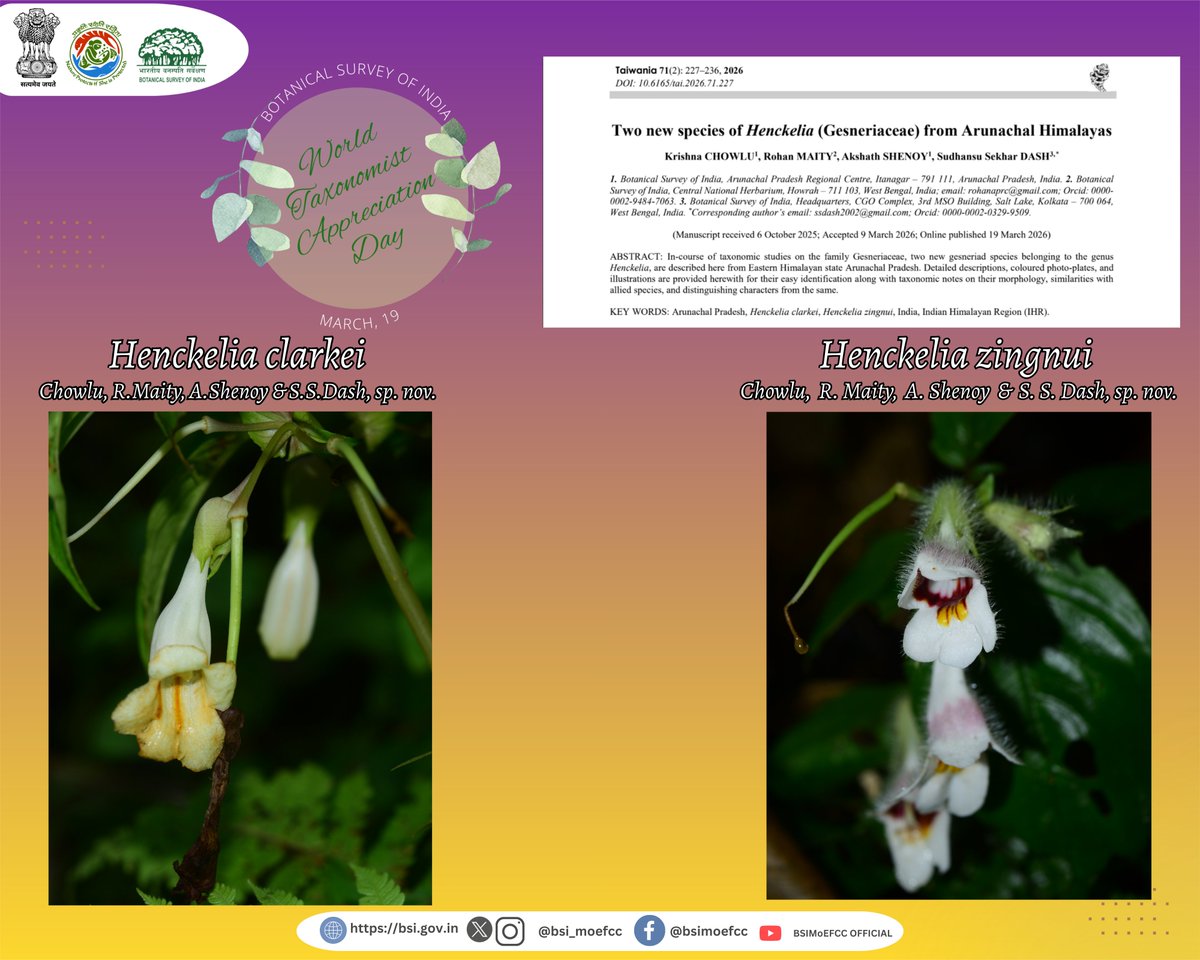
🌿Celebrating World Taxonomist Appreciation Day 🌿
On this special occasion, the Botanical Survey of India proudly highlights a significant scientific milestone—the discovery of two new species of Henckelia published in the prestigious journal Taiwania.
Through extensive field surveys and rigorous taxonomic analysis, these species—Henckelia clarkei and Henckelia zingnui—have been discovered and described from Arunachal Pradesh, a key region within the Eastern Himalaya and a global biodiversity hotspot.
The genus Henckelia (family Gesneriaceae) now comprises ~83 species globally, with 49 species reported from India, largely concentrated in the Himalayan and Northeast regions.
🌿Henckelia clarkei is characterized by its erect habit, anisophyllous opposite leaves, and distinctive urceolate calyx, along with a white corolla tinged with yellow-orange. The species is named to honor distinguished taxonomist & botanist Charles Baron Clarke for his immense contributions to the taxonomy of family Gesneriaceae.
🌱Henckelia zingnui stands out due to its smaller leaves, white corolla with maroon-purple blotches, and unique filament structure, making it easily distinguishable within the “urticifolia group”. This species is named after the Chau Zingnu Namchoom, an eminent youth leader from Namsai district of Arunachal Pradesh.
🌏Notably, both species are currently known only from their type localities with very limited populations (≈12–18 individuals) and are categorized as Data Deficient (DD) under IUCN criteria.
🌏These discoveries reaffirm that Arunachal Pradesh—situated at the confluence of the Himalayan and Indo-Burma biodiversity hotspots—remains a treasure trove of unexplored plant diversity.
🌏This discovery was made by Dr. Krishna Chowlu, Scientitst-D and Head, Arunachal Pradesh Regional Centre (APRC), Itanagar, Dr. S. S. Dash, Scientist-F and in-charge, Technical Section, BSI Headquarters, Kolkata, Mr. Rohan Maity, Senior Preservation Assistant, Central National Herbarium, Howrah and Mr. Akshath Shenoy, Senior Preservation Assistant, BSI-APRC Itanagar.
👏We extend our heartfelt congratulations to the team for their outstanding contribution. Their work exemplifies the importance of taxonomy in understanding, documenting, and conserving our natural heritage.
Click for more- doi.org/10.6165/tai.20…
#NewDiscovery #ScientificDiscovery #Research #ScienceNews #BreakingScience #NewSpecies #SpeciesDiscovery #BiodiversityDiscovery #ScienceCommunity #InnovationInScience #ExploreNature #EasternHimalaya #ArunachalPradesh #NortheastIndia

English
AgroBioDiverse retweetledi

Post Doc in soybean breeding & genetics
-focuses on identifying & characterizing wild soybean germplasm w/ stress-tolerance traits relevant to resilient crop development
-use sequencing information & evidence-based analytical workflows
@plantpostdocs
zintellect.com/Opportunity/De…
English
AgroBioDiverse retweetledi

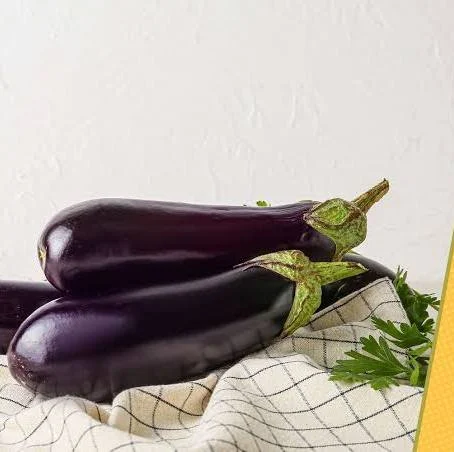
I only realized eggplant(which I used to call Brinjal/Bhanta Baingan only) is called aubergine after I started my corporate life, during 1 of those business lunch meetings a few yrs ago. As usual, I went down the rabbit hole and here is what I found:
The name Aubergine has a secret trail that leads directly back to Ancient Sanskrit.
The Sanskrit word was Vatingana (the plant that cures wind/flatulence).
The Trail: Sanskrit (Vatingana) → Persian (Badingan) → Arabic (al-badinjan) → Spanish (Alberengena) → French (Aubergine).
Ancient Indian botanical knowledge literally provided the vocabulary for Europe to understand the Nightshade family.

English
AgroBioDiverse retweetledi

Globally, most public support for agriculture still favors a handful of commodities. It’s time to shift toward investments that encourage innovation, diversification, and higher value jobs in the agriculture and food sector.
wrld.bg/t6WP50YaVUw
English
AgroBioDiverse retweetledi

Traditional satellites only check in every 16 days, and in agriculture that’s not enough time for proper monitoring.
With our daily imagery, @ICRISAT is able to map crops with high accuracy where other data may fail. 👉 Watch the full video here: youtube.com/watch?v=Zp6UxM…

YouTube
English
AgroBioDiverse retweetledi

Healthier lettuce! ARS researchers in Salinas, CA, have developed “USDA NutriHi,” a leaf lettuce variety that has up to 107% more vitamin A and vitamin C -- and up to 158% more minerals than other lettuce varieties. scientificdiscoveries.ars.usda.gov/explore-our-di…

English
AgroBioDiverse retweetledi

In case you missed it, learn how ARS scientists are working to create new varieties of crops with greater ability to withstand salinity. Their research will dramatically expand the type and amount of land and irrigation that can support agriculture.
Learn more at: ars.usda.gov/oc/dof/pass-th…
#NationalAgWeek

English
AgroBioDiverse retweetledi

This animated globe by @tylermorganwall gives us a rather immersive view of global population. I particularly love how clear the "empty hemisphere" appears.
English
AgroBioDiverse retweetledi

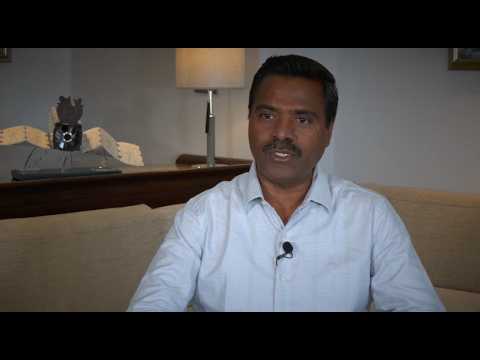
#Throwback ➡️ GB-11.
Delegates from around the world gathered to advance the Conservation & Sustainable Use of plant genetic resources, Farmers' Rights, Capacity Development & the global exchange of plant genetic material through the Treaty's Multilateral System.
@FAO
English