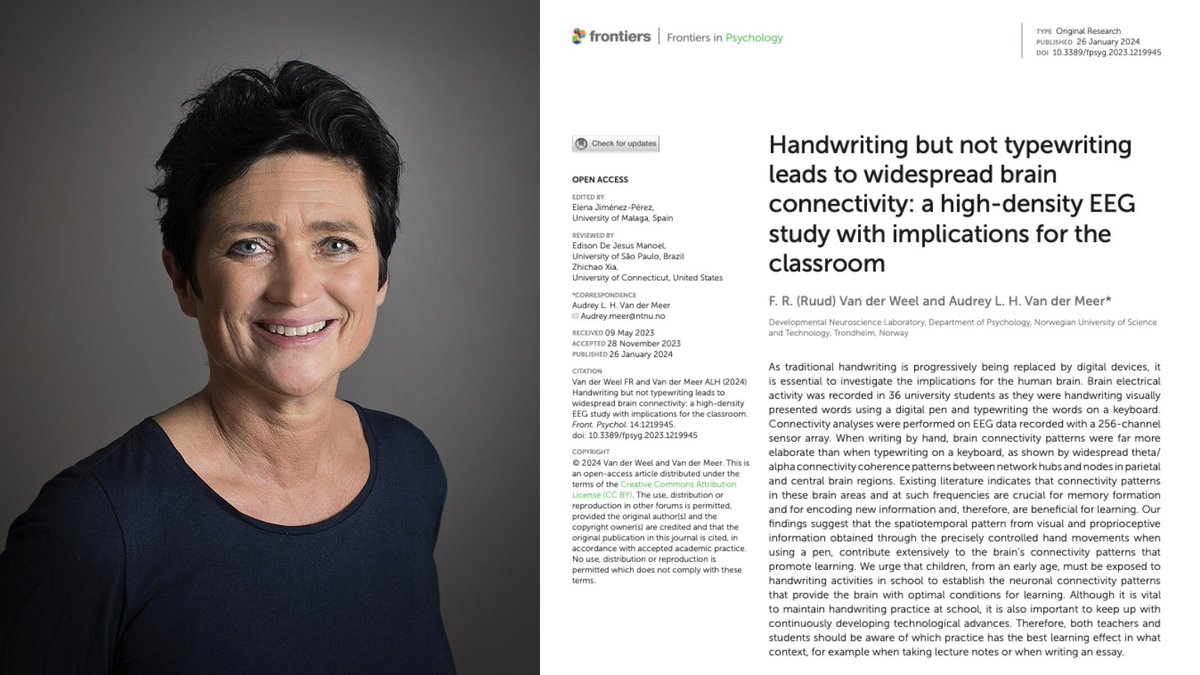
A Norwegian neuroscientist spent 20 years proving that the act of writing by hand changes the human brain in ways typing physically cannot, and almost nobody outside her field has read the paper.
Her name is Audrey van der Meer.
She runs a brain research lab in Trondheim, and the paper that closed the argument was published in 2024 in a journal called Frontiers in Psychology. The finding is brutal enough that it should have changed every classroom on Earth.
The experiment was simple. She recruited 36 university students and put each one in a cap with 256 sensors pressed against their scalp to record brain activity. Words flashed on a screen one at a time.
Sometimes the students wrote the word by hand on a touchscreen using a digital pen, and sometimes they typed the same word on a keyboard. Every neural response was recorded for the full five seconds the word stayed on screen.
Then her team looked at the part of the data most researchers had ignored for years, which is how different parts of the brain were communicating with each other during the task.
When the students wrote by hand, the brain lit up everywhere at once.
The regions responsible for memory, sensory integration, and the encoding of new information were all firing together in a coordinated pattern that spread across the entire cortex. The whole network was awake and connected.
When the same students typed the same word, that pattern collapsed almost completely.
Most of the brain went quiet, and the connections between regions that had been alive seconds earlier were nowhere to be found on the EEG.
Same word, same brain, same person, and two completely different neurological events.
The reason turned out to be something nobody had really paid attention to before her work. Writing by hand is not one motion but a sequence of thousands of tiny micro-movements coordinated with your eyes in real time, where each letter is a different shape that requires the brain to solve a slightly different spatial problem.
Your fingers, wrist, vision, and the parts of your brain that track position in space are all working together to produce one letter, then the next, then the next.
Typing throws all of that away. Every key on a keyboard requires the exact same finger motion regardless of which letter you are pressing, which means the brain has almost nothing to integrate and almost no problem to solve.
Van der Meer said it plainly in her interviews.
Pressing the same key with the same finger over and over does not stimulate the brain in any meaningful way, and she pointed out something that should scare every parent who handed their kid an iPad.
Children who learn to read and write on tablets often cannot tell letters like b and d apart, because they have never physically felt with their bodies what it takes to actually produce those letters on a page.
A decade before her, two researchers at Princeton ran the same fight using a completely different method and ended up at the same answer. Pam Mueller and Daniel Oppenheimer tested 327 students across three experiments, where half took notes on laptops with the internet disabled and half took notes by hand, before testing everyone on what they actually understood from the lectures they had watched.
The handwriting group won by a wide margin on every question that required real understanding rather than surface recall.
The reason was hiding in the transcripts of what the two groups had actually written down.
The laptop students typed almost word for word, capturing more total content but processing almost none of it as they went, while the handwriting students physically could not write fast enough to transcribe a lecture in real time, which forced them to listen carefully, decide what actually mattered, and put it in their own words on the page.
That single act of choosing what to keep was the learning itself, and the keyboard had quietly skipped the choosing and skipped the learning along with it.
Two studies. Two countries. Same answer.
Handwriting makes the brain work. Typing lets it coast.
Every note you have ever typed instead of written went into your brain through a thinner pipe. Every meeting, every book highlight, every idea you captured on your phone instead of on paper was processed at half depth.
You did not forget those things because your memory is bad. You forgot them because typing never woke the part of the brain that would have made them stick.
The fix is the thing your grandmother already knew.
Pick up a pen. Write the thing down. The slower road is the faster one.
Osaka University MEXT Scholarships 2027 in Japan (Fully Funded Opportunity for International Students) - No IELTS
Visit: scholarshipforphd.com/osaka-mext-202…
High Stipend
Degree: BS, Master & PhD
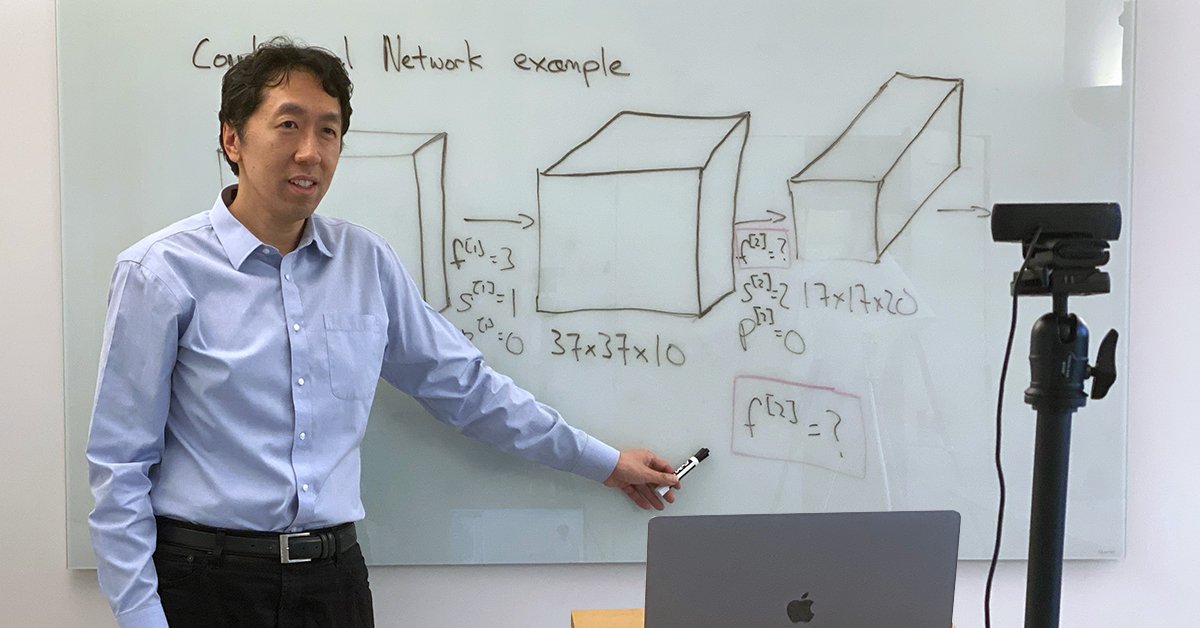
Instead of watching Netflix tonight, watch this Stanford lecture.
It explains how ChatGPT and Claude are actually built.
Stanford released it free.
Bookmark this.
What happens when you put competing neural networks in a Petri Dish and start changing the rules while they adapt?
Last year we released Petri Dish NCA, where neural nets are the organisms that learn during simulation. Today we're releasing Digital Ecosystems: a browser-based platform for interactive artificial life research.
The setup: several small CNNs share a 2D grid, each seeing only a 3x3 neighborhood. No global plan. They compete for territory by attacking neighbours and defending against incoming attacks, learning via gradient descent online while the simulation runs.
What we didn't expect was the role of the learning itself. Gradient descent isn't just optimising each species' strategy. Instead, it acts to stabilize the whole system during simulation. Species that overextend get pushed back by the loss. Species that stagnate get nudged to grow. This means you can push parameters toward edge-of-chaos regimes: a zone characterised by emergent complexity. Letting the neural networks learn acts to hold the complex system together while you explore and interact.
The platform lets you steer all of this interactively. You can draw walls to create niches, erase parts of the system online, and tune 40+ system parameters to explore the most interesting configurations. We find it mesmerizing to watch species carve out territories and reorganise when you perturb them.
Everything runs client-side in your browser, no install needed.
Blog: pub.sakana.ai/digital-ecosys…
Code: github.com/SakanaAI/digit…
A man spends 50 years teaching at MIT.
He knows his time is running out.
So he records one last lecture — everything he knows, distilled into a single hour.
He died 5 months later.
This is that lecture.
The most important hour you'll watch this week. 👇
Bookmark it for later
This 1 hour Stanford lecture by OpenAI researchers who built ChatGPT will teach you more about how LLMs think & respond than most people at top AI companies learn in their entire careers.
Bookmark & give 1 hour, no matter what. It'll be the most productive hour of your weekend.
A Stanford CS professor told his class something at the start of the semester that made half the students close their laptops.
He said the skill that will separate the people who thrive in the next decade from the people who stall has almost nothing to do with coding.
His name is Andrew Ng, and he has trained more machine learning engineers than almost anyone alive.
Here is what he said, and why it changes how you should be learning right now.
He said the bottleneck is no longer writing code. It is knowing which problems are worth solving in the first place. For thirty years, being a good engineer meant being able to build what someone else defined. In the world that is arriving, every engineer has infinite leverage to build almost anything, which means the person who picks the right thing to build now wins by orders of magnitude over the person who builds the wrong thing flawlessly.
His framework for problem selection is deceptively simple. He calls it the three-question filter.
The first question is whether the problem you are working on actually matters to someone who would pay for it or use it daily. Most students fail here. They work on projects that are interesting to them and nobody else, and then wonder why the portfolio produces no offers.
The second question is whether the problem is still hard now that AI exists. If a single prompt to a hosted model solves it, the problem is no longer valuable to solve yourself. The interesting problems live in the gap between what AI can do alone and what it can do when combined with domain knowledge, careful system design, and data nobody else has access to.
The third question is the one most people skip. Can you actually ship a working version in a week. Not a polished version. A crappy, embarrassing, actually-functional version. Ng said the number one predictor of which of his students ended up building something important was not talent. It was the willingness to ship something bad fast and then improve it in public.
He said the students who kept tweaking in private for six months before showing anyone almost always produced worse final work than the students who shipped a broken version on week one and iterated based on real feedback.
The people who are actually winning right now are not the ones with the best ideas.
They are the ones who learned to pick problems that matter and ship solutions that barely work, before anyone else has even finished thinking about it.
Just a matter of time for me to get my own domain, but while we wait for that, let's run it!nt research!
sitilab.my.canva.site
Just in the matter of time for me to get my own domain, but while we wait for that, lets run it!
#evolutionarycomputation#ecoevodevo
Anthropic pays engineers $750,000+ a year to understand how LLMs work.
Stanford just put a 2 hour lecture that covers 80% of it for FREE.
Bookmark this. Give it 2 hours today.
It might be the highest ROI thing you do this month:
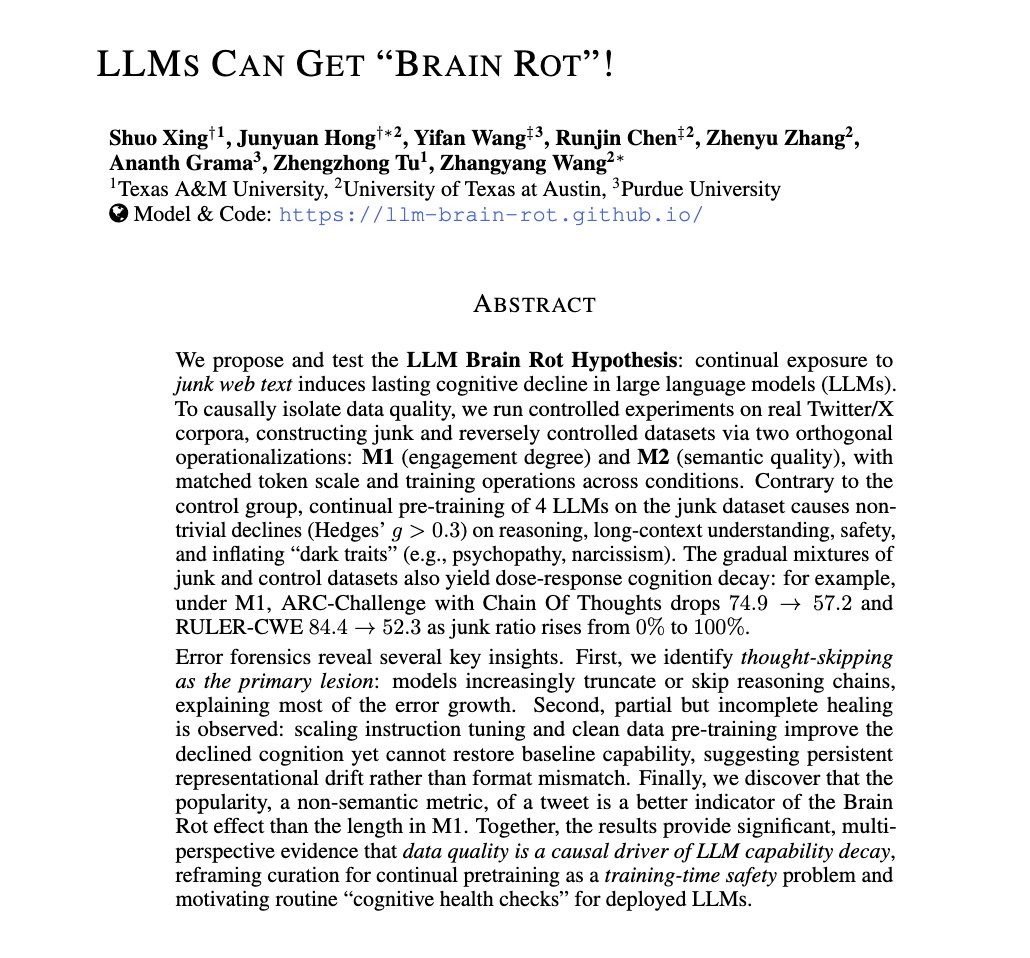
This might be the most disturbing AI paper of 2025 ☠️
Scientists just proved that large language models can literally rot their own brains the same way humans get brain rot from scrolling junk content online.
They fed models months of viral Twitter data short, high-engagement posts and watched their cognition collapse:
- Reasoning fell by 23%
- Long-context memory dropped 30%
- Personality tests showed spikes in narcissism & psychopathy
And get this even after retraining on clean, high-quality data, the damage didn’t fully heal.
The representational “rot” persisted.
It’s not just bad data → bad output.
It’s bad data → permanent cognitive drift.
The AI equivalent of doomscrolling is real. And it’s already happening.
Full study: llm-brain-rot. github. io
@AisyJeff@hadilq@birdabo We most likely are and there is most likely no particular reason for the universe to exist. The only two systems that work with science would be atheism or deism. No organized theistic religion is in line with science
@hadilq@birdabo If god is fake, then we are all just machines with no soul. It's so funny to see such intelligent people (probably a scientist/ creator) like you think there's no creator of life.
@birdabo > push a fake animation as a fact(even the velocity respect to the background itself is not definitive)
> describe it as beautiful
> conclude god exists
your god is as fake as your animation
We are hosting the second IC2SMA2 again in Pune/Lavasa next year! Check out the amazing venue and the keynote speakers:
ic2sma2.christuniversity.in
Paper submission deadline: October 30th, 2025
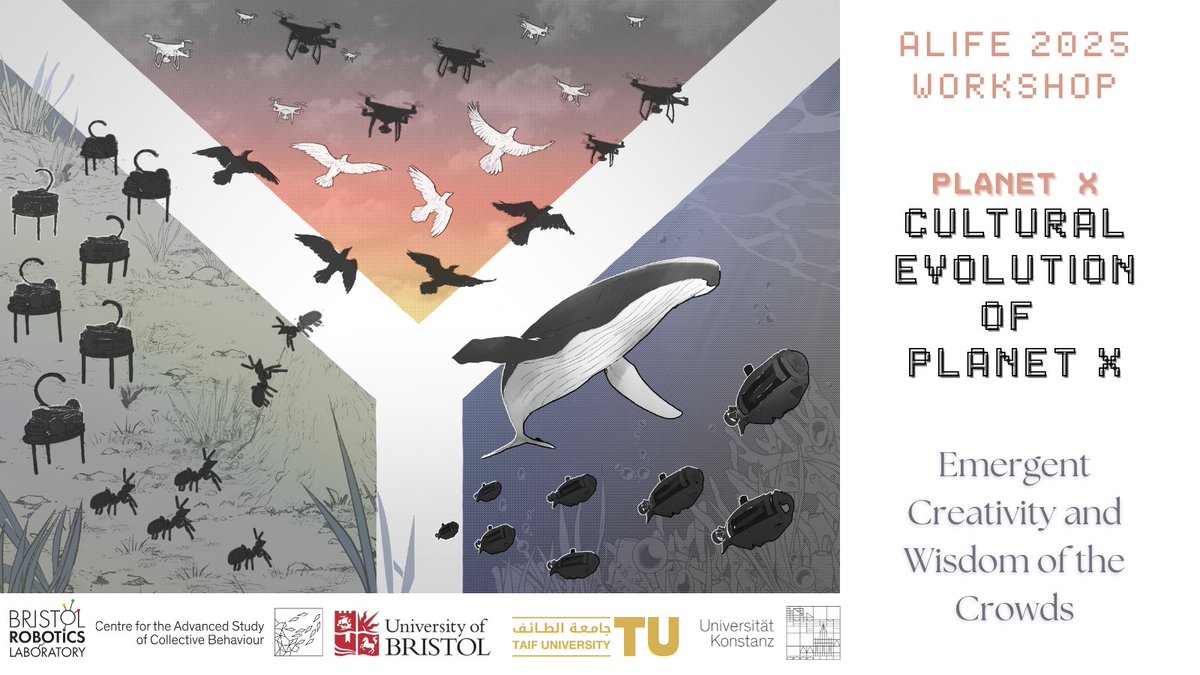
Join us at the Cultural Evolution of Planet X: Emergent Creativity and Wisdom of the Crowds workshop at #ALIFE2025!
Explore how we design and imagine cultural evolution on an artificial planet X, inspired by cultural evolution in animals.🌌👾
🔗 sites.google.com/view/planetx-a…