
Akanksha Goel
10.5K posts

Akanksha Goel
@AkankshaGoel
Made in 🇮🇳 & 🇸🇬 Founded @SocializeAgency in 🇦🇪 Partner @WeAreSocial @PlusCompany_ Jury @DandAD Built brands. Now exploring what builds 𝒖𝒔 ✨


Skyrocketing food prices and fuel costs. Blocked raw materials and essential supplies. Billions of people around the world are paying more for basic commodities due to Iran’s illegal actions. Now is the time for international action to protect freedom of navigation in the Strait of Hormuz. The UAE urges the UNSC to adopt the “Open the Strait” resolution and end Iran’s attacks and threats to the global economy. Watch live⬇️ webtv.un.org/en/asset/k1z/k… 📅 7 April 2026 ⏰ 11:00 AM (Eastern Standard Time)


This wasn’t just praise… it was a real observation. A resident seeing a country where 90% are expats, yet the ones standing guard—fasting—are the sons of the UAE Protecting the skies… and everyone who calls it home 🇦🇪🦅

BREAKING: The United States says it has taken out Iran’s facilities threatening the Strait of Hormuz. CENTCOM released video of 5,000-pound bunker-buster penetrators hitting hardened coastal missile sites along Iran’s southern shoreline. Sixteen mine-laying vessels have been destroyed. Underground launch bunkers along the Gulf islands have been cratered. Anti-ship missile batteries that could target commercial tankers have been neutralised. The Pentagon says the threats to international shipping have been eliminated. And the strait is still closed. Shipping traffic through Hormuz has dropped 97 percent. The threats are gone. The closure is not. That gap between the military claim and the commercial reality is the story. The US destroyed the weapons that could sink a tanker. It did not destroy the reason no tanker will transit. Iran laid mines. The mines are still there. Iran declared a toll system requiring $2 million per passage through IRGC-controlled channels. The toll system is still operational. Iran fired on commercial vessels that attempted transit without payment. The precedent is still set. The coastal missile sites are rubble. The insurance premiums that prevent shipowners from entering the strait are not. A tanker captain does not check CENTCOM’s battle damage assessment before deciding whether to sail. He checks Lloyd’s of London. And Lloyd’s has not reclassified the strait. CENTCOM’s strikes were precise and devastating. The video shows penetrator munitions entering hardened bunkers and detonating underground, collapsing reinforced launch positions that took Iran years to build. The 16 mine-laying vessels include both active platforms and dormant hulls that could have been reactivated. Naval support facilities on Iran’s Gulf coast and islands have been systematically degraded alongside the 7,800 broader targets struck since February 28. This is not a symbolic campaign. It is the most thorough destruction of a nation’s coastal defence architecture since the 1991 Gulf War. But Hormuz is not a military problem with a military solution. It is an insurance problem, a mine-clearance problem, a trust problem, and a commercial confidence problem. The US can destroy every missile launcher on Iran’s coast and the strait remains closed until mine-clearance operations certify safe passage, until Lloyd’s lifts the war-risk exclusion zone, until protection and indemnity clubs agree to cover hulls transiting the waterway, and until shipowners calculate that the revenue from a loaded passage exceeds the risk of hitting an uncleared mine in a 21-mile channel that Iran has had three weeks to seed. The oil terminals on Kharg Island remain untouched. Trump said he spared them out of decency. Iran said touching them triggers the destruction of every allied energy facility in the Gulf. The US destroyed everything on Kharg that defends the oil and left everything that loads it. The coastal threats to Hormuz are gone. The structural threats to reopening it are not. The mines do not require a command structure. They do not require Mojtaba Khamenei to issue an order from a bunker nobody can locate. They sit on the seabed and wait. Trump told Europe, Japan, Korea and China to get involved. Twenty-three nations signed a statement pledging readiness. Greece fired a Patriot over Yanbu. But nobody has sent a mine countermeasure vessel into the strait. The threats CENTCOM destroyed were the threats that shoot. The threats that remain are the threats that float, drift, and detonate on contact. Those require not bombers but sweepers, not sorties but patience, and not 5,000-pound penetrators but the slowest, most tedious, most unglamorous naval operation in military history. The missiles are destroyed. The strait is closed. The mines are waiting. open.substack.com/pub/shanakaans…

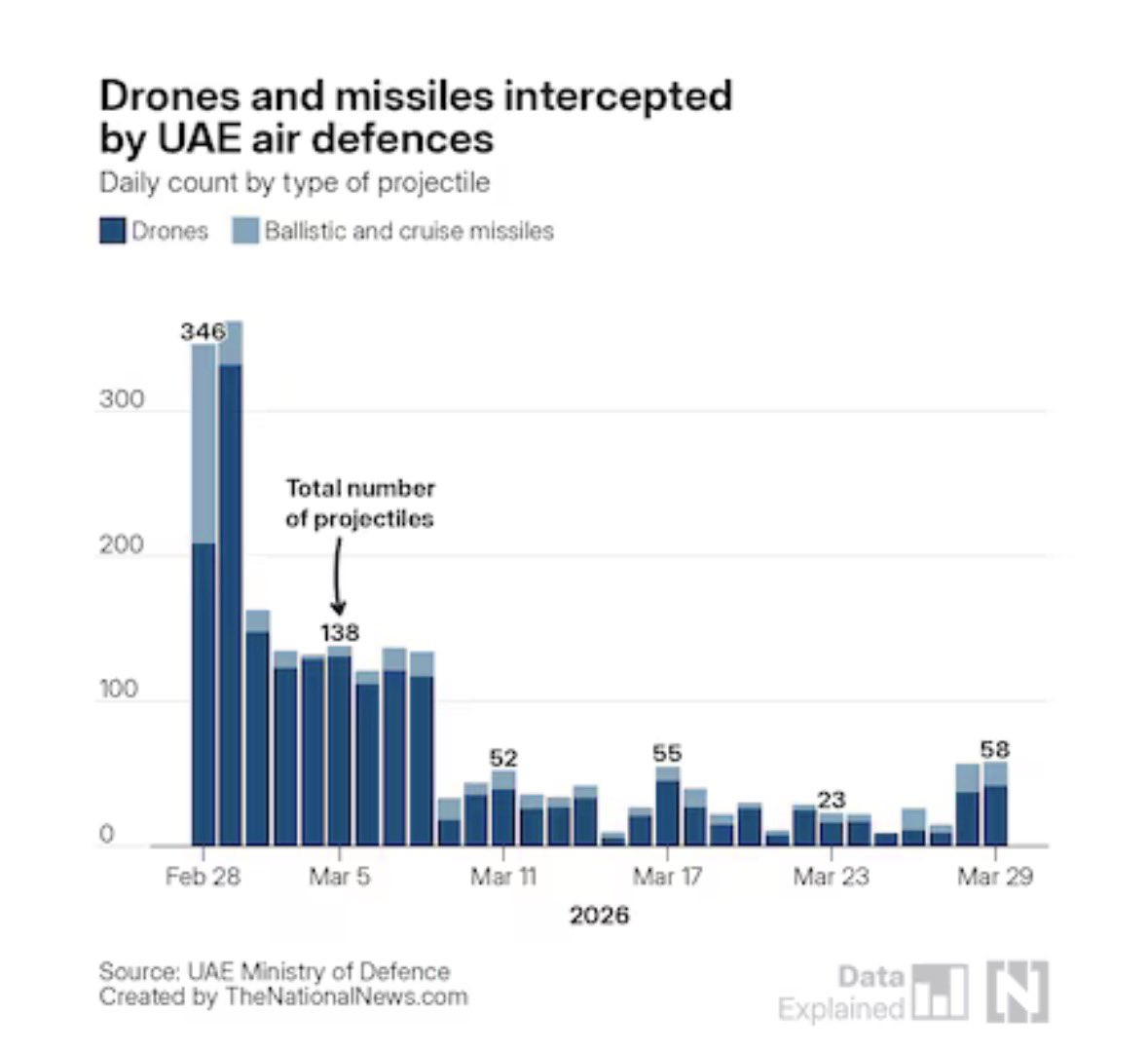
Gulf Countries Intercept Drones and Missiles as Ramadan Ends wsj.com/livecoverage/i…