Alan Tan

3.5K posts

Alan Tan banner
Alan Tan

Alan Tan

@alantanmd

Genitourinary Oncology, Associate Professor, Vanderbilt University Vice President, MRD Research and Clincal Strategy, Tempus AI

Nashville, TN Katılım Haziran 2009
1.8K Takip Edilen2.2K Takipçiler
Sabitlenmiş Tweet
Alan Tan
Alan Tan@alantanmd·
Thanks @CureMelanoma for the opportunity to discuss ctDNA in #melanoma, also thanks to my son Auguste for the #cameo appearance!
Chicago, IL 🇺🇸 English
3
2
48
5.2K
Alan Tan
Alan Tan@alantanmd·
Thank you Raffaele, Single-digit ppm sensitivity is impressive but the field still lacks validated intervention thresholds. The real question isn’t detection, it’s actionability. Without prospective trials defining when to treat (and when not to), the risk of overtreatment is very real. We already know we’re over treating way too many people across adjuvant settings across solid tumors. Can we redefine adjuvant therapy to treat at molecular positivity even if it’s 13 months after surgery? I think that’s likely possible based on studies like TOMBOLA and imVIGOR11
English
0
0
1
25
Raffaele Di Giacomo, PhD
Fascinating work on leveraging WGS-MRD for RCC management! With single-digit ppm sensitivity, the potential to redefine postoperative strategies is immense. However, driving treatment based on molecular evidence raises questions about patient stratification criteria and long-term remission sustainability. Are there any therapeutic thresholds established to prevent overtreatment? The research presents promising implications for personalized medicine. For those curious about deep dives into similar innovative methodologies, check out Sci-Quest, a one-stop platform for every biomedical question with capabilities to generate biomedical reviews: sciqst.com. #Medicine #RCC #Innovation
English
1
0
1
86
Alan Tan
Alan Tan@alantanmd·
Is the "low shedding" era in RCC over?🧬 Proud of @paulosiqamaral work @VUMCDiscoveries on ultrasensitive WGS-MRD in perioperative RCC. With single-digit ppm sensitivity, our next research strategy should be to use molecular evidence to drive treatment intensification vs. safe de-intensification. #KidneyCancer #OncTwitter #MedEd @kcCURE @KidneyCancer @tompowles1 @brian_rini @Uromigos @DrChoueiri @HHammersMD @montypal @DrRanaMcKay @BradMcG04 @ALLIANCE_org @drulkav @TiansterZhang @ChadTangMD @VincentWenxinXu @bergsa83 @RCCadvocate @arnabguonc @ADESAIONCMD @ShuchiGulati @KidneyCancerDoc
Personalis, Inc.@PersonalisInc

🧬 Ultrasensitive #ctDNA detection predicts early RCC recurrence after nephrectomy. Dr. Amaral & Dr. @alantanmd used NeXT Personal® to monitor high-risk localized kidney cancer post-nephrectomy: ✅ All ctDNA-negative patients stayed disease-free during follow-up. ✅ Every recurrence caught ahead of radiologic detection. ✅ 67% of initial detections were sub-20 PPM. Low-shedding tumors benefit from the use of ultrasensitive ctDNA testing technology. #PrecisionOncology #PersonalizedMedicine #KidneyCancer #ASCO #ASCOGU #RCC #RenalCellCarcinoma
English
2
2
15
3.2K
Alan Tan retweetledi
Advanced Prostate Cancer Consensus Conference
Radiographic Progression With and Without Prostate-Specific Antigen Rise in Patients With Advanced Prostate Cancer Treated With Enzalutamide ascopubs.org/doi/10.1200/JC… This post hoc analysis of ARCHES and PROSPER trials found that radiographic progression (rPD) without PSA rise occurs in a notable subset of patients treated with enzalutamide in mHSPC and nmCRPC. Discordance between imaging and PSA was more frequent with enzalutamide than control. Patients with rPD had worse overall survival, and liver metastases were more common. #ProstateCancer Findings support routine imaging surveillance despite stable or nonrising PSA levels. @AarmstrongDuke @AzadOncology @AStenzl @cnsternberg @OncoAlert 🚨 @Silke_Gillessen @AOmlin @weoncologists
Advanced Prostate Cancer Consensus Conference tweet media
English
1
21
41
2.5K
Alan Tan retweetledi
Katy Beckermann
Katy Beckermann@katy_beckermann·
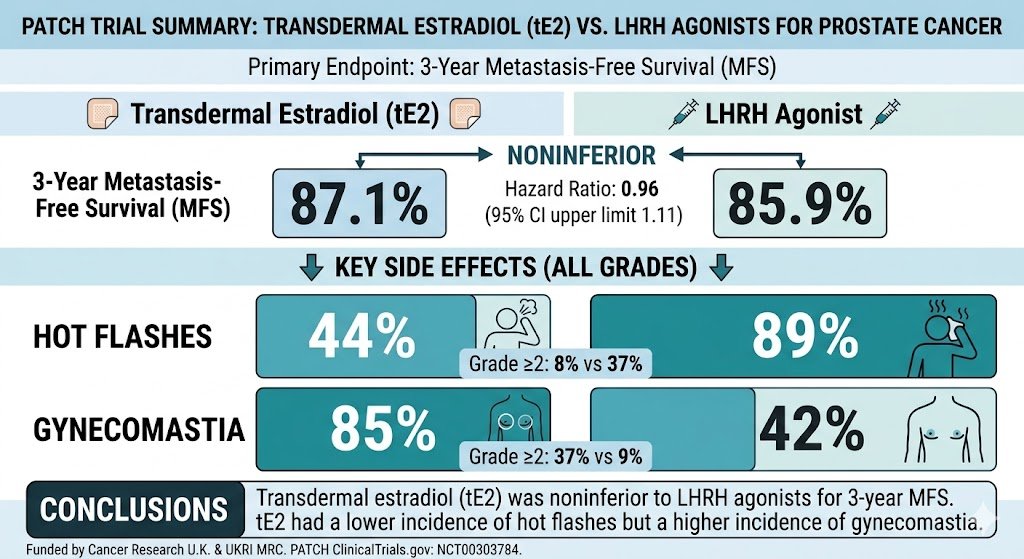
More options, ADT flexibility. PATCH shows transdermal estradiol matches LHRH agonists on metastasis-free survival in localized prostate cancer, opening the door to individualized side effect management. Hot flashes vs gynecomastia: now we can let patients choose. 🎯 #ProstateCA #PersonalizedMedicine Great discussion! @AmandaNizamMD
Katy Beckermann tweet media
Amanda Nizam, MD@AmandaNizamMD

Was just wondering about uptake of this. We often encounter the dilemma of men wanting to treat their prostate cancer, but declining ADT for various reasons - namely short/long-term side effects - and desperately in search of alternatives. Better safety and financial toxicity profiles of tE2 are certainly noteworthy. @OncHahn @davidjeinstein @anis_a_hamid @DrRanaMcKay @ChrisSweens1 @PBarataMD @Uromigos thoughts on tE2?

English
0
4
5
783
Alan Tan retweetledi
Jordi Remon
Jordi Remon@JordiRemon·
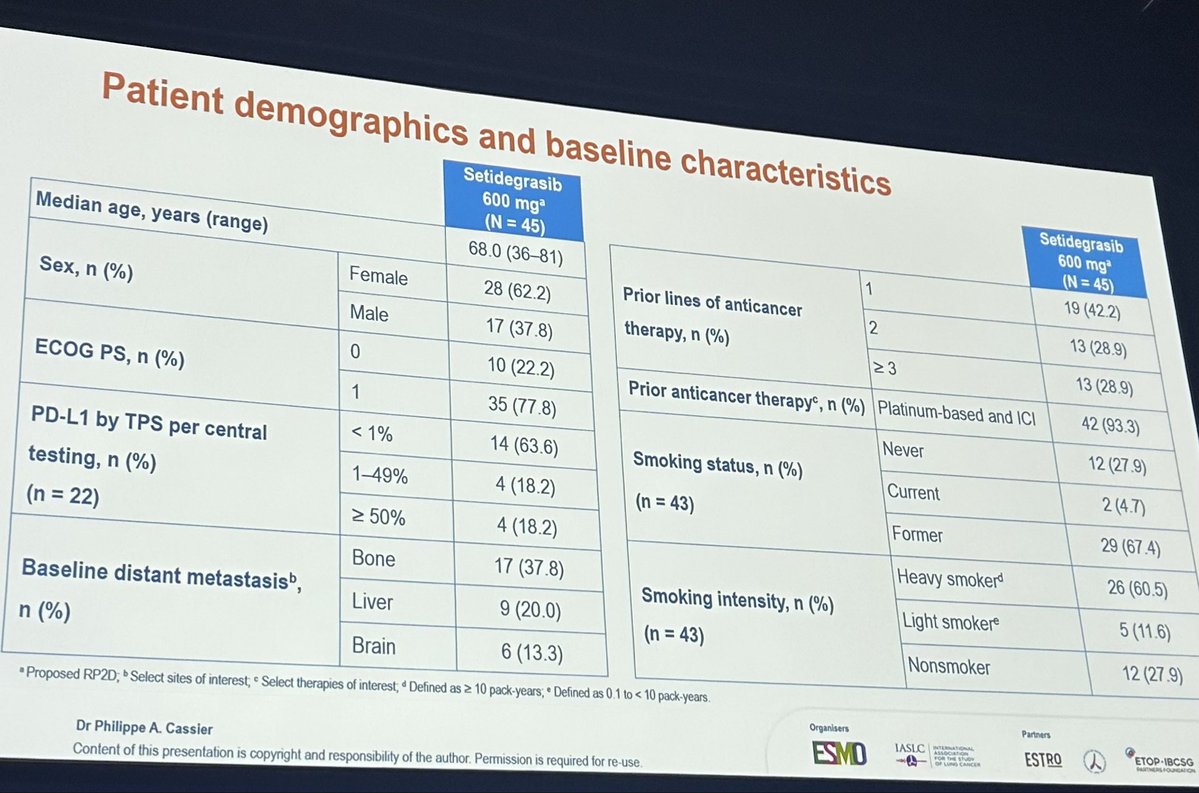
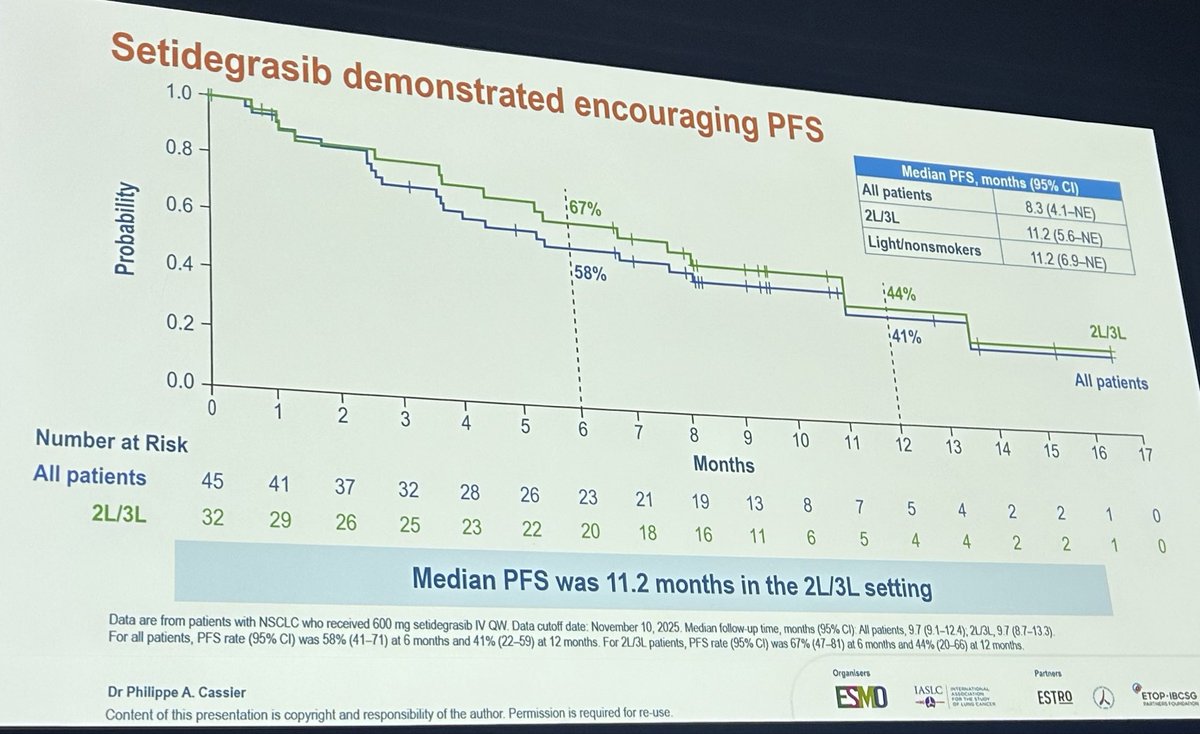
Setidegrasib, novel KRAS G12D protein degrader reporting clinical meaningful outcomes with PFS of 11.2 m in 2/3L However there are KRAS G12D ON or ON/OFF inhibitors with activity. How to decide best drug? Based on safety, intracranial activity and impact of comutations? #ELCC26
Jordi Remon tweet mediaJordi Remon tweet mediaJordi Remon tweet mediaJordi Remon tweet media
English
2
24
94
6.1K
Alan Tan retweetledi
Enrique Grande
Enrique Grande@drenriquegrande·
⚡️Blood and urine ctDNA continue to emerge as promising tools in urothelial bladder cancer, with potential applications in diagnosis, surveillance, prognostic stratification, and treatment monitoring. Current evidence is strongest in the perioperative MIBC setting, while broader clinical implementation still requires prospective validation. #BladderCancer #f0010" target="_blank" rel="nofollow noopener">sciencedirect.com/science/articl…
Enrique Grande tweet mediaEnrique Grande tweet media
English
1
18
40
2.3K
Alan Tan
Alan Tan@alantanmd·
ctDNA clearance is one of the most exciting future surrogate endpoints. In a recent breast cancer trial by @PersonalisInc it even outperformed pCR. We need to study this prospectively as @MattGalsky MODERN is doing. Our data in #UrothelialCarcinoma #GU26 confirms this shift: Using WGS Ultrasensitive MRD tracking up to 1800 variants: ✅ MIBC: Rapid clearance of systemic disease in 88% of patients, median 2 cycles. ✅ Metastatic: ctDNA kinetics identify exceptional responders early, 40% clearance before median 4 cycles I believe that if you don’t clear after 4-6 cycles you’re likely in trouble, and will not be cured. FGFR3,ERBB2,PIK3CA are at top of mind but also TP53, RB1, ATM, ARID1A, KDM6A, STAG2, and perhaps loss of Nectin expression. We need to design adaptive approaches with precision approaches. The future of DFS, PFS, and OS is molecular. ⏱️ @tompowles1 @DrRosenbergMSK @sonpavde @OncoBellmunt @apolo_andrea @shilpaonc @UroDocAsh @JoshMeeks @LauraBukavinaMD @ChadTangMD
Personalis, Inc.@PersonalisInc

🎥 New interview with Dr. @alantanmd & Dr. @mm_zerey on breakthrough #UrothelialCarcinoma results! The study used NeXT Personal® to explore #ctDNA clearance as a biomarker for Enfortumab Vedotin + Pembrolizumab response: ✅100% baseline ctDNA detection (n=18). ✅88% clearance in non-metastatic pts (median 2 cycles). ✅40% clearance in metastatic pts (median 3.5 cycles). ✅Clearance = longer PFS (8 vs 6.8 months). ctDNA clearance correlates with clinical response and could guide treatment de-escalation.💪 Watch the full interview. 👇 #PrecisionOncology #BladderCancer #ASCOGU
English
0
5
21
2K
Alan Tan retweetledi
Niklas Klümper
Niklas Klümper@niklas_kluemper·
Important trial tackling the right question first: can we safely preserve the bladder after cCR with EVP? But 9 cycles of EVP is associated with significant cumulative toxicity —especially neuropathy. In EV302 EPAR data, the KM curves show a clear exposure–toxicity relationship, with higher ADC exposure driving earlier and more frequent ≥G2 neuropathy. And G2 is already life-changing: difficulty buttoning shirts, typing, gait instability, chronic pain—this isn’t “mild.” We’ve learned before: In B15, 3 cycles neoadj EVP achieved similar pCR rates as 4 cycles in 905 → more is not always better. Effect of adjuvant EV not tested properly (VOLGA will be informative in this regard!) Maybe even fewer cycles can be sufficient. Response adapted dosing? (Imaging, ctDNA and/ or utDNA Dynamics)?) So yes—answering “bladder preservation safe?” first is the right strategy which will increasingly asked by the patients in real-world. But: ➡️ EV dose reduction & discontinuation must be proactive ➡️ Early signs of neuropathy should trigger action, not delayed adjustments ➡️ Cumulative exposure matters more than cycle count alone “EVP first, ask later” should not come at the cost of irreversible toxicity in a curative setting where surgery also cures many patients @UroDocAsh @tompowles1 @Uromigos @urotoday @Markuseckstein3 @OncoAlert @weoncologists @DrChoueiri @PGrivasMDPhD @AndreaNecchi @shilpaonc
Niklas Klümper tweet media
Tom Powles@tompowles1

A 240 pateint single arm trial exploring 9 cycles of EVP without planned surgery in MIBC. This will answer the key questions ‘What happens if we don’t do cystectomy in those with clinical complete response after initial EVP’.It assesses cCR rates and bladder intact EFS. It will clarify ‘EVP 1st ask questions later’ #GUtrendingTopics @OncoAlert

English
3
6
23
2.5K
Alan Tan retweetledi
JCI insight
JCI insight@JCI_insight·
In metastatic renal cell carcinoma, pancreatic spread is associated with improved survival. doi.org/10.1172/jci.in… Here, James Brugarolas @JBrugarolas & team @KCPUTSW @UTSWMedCenter determine that pancreatic #metastases arise predominantly from indolent clones within primary #RCC and exhibit distinct molecular and histological features, clinical behavior, and treatment responsiveness. The figure shows pancreatic metastasis sample with high angiogenesis, indicated by deep learning vascular mask (red).
JCI insight tweet media
English
1
11
20
2.8K
Alan Tan retweetledi
Sia Daneshmand, M.D.
Sia Daneshmand, M.D.@siadaneshmand·
One of the major limitations of intravesical therapy is short drug exposure time. In this new study, the gemcitabine intravesical system (Gem IDRS) demonstrated sustained tissue levels of active metabolites for ≥96 hours across all bladder layers, compared with rapid decline after standard instillation. Improving drug delivery may be as important as the drug itself. @BenjaminPradere @IBCG_BladderCA @BladderCancerUS @USC_Urology @urotoday @EurUrolFocus @EUplatinum sciencedirect.com/science/articl…
English
0
11
43
3.2K
Alan Tan retweetledi
Dr. Patrick Hwu
Dr. Patrick Hwu@PatrickHwuMD·
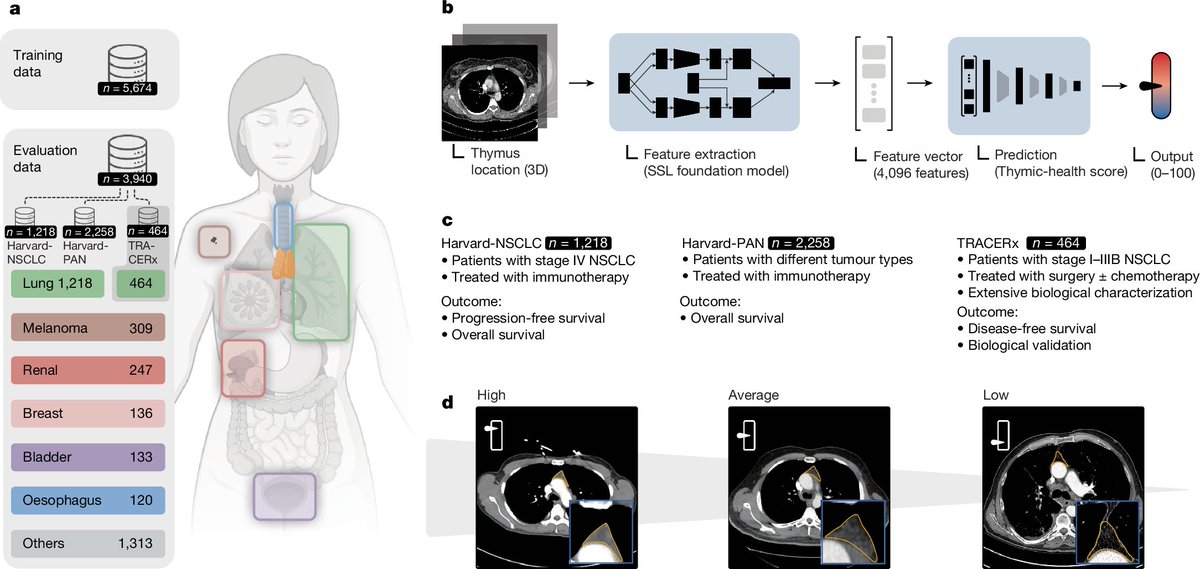
#ScienceSaturday ❓ Does the health of your thymus (the body’s T cell factory) play a role in how well patients respond to #immunotherapy? ➡️ A new study in @Nature shows that thymic health, a measure of how well the body produces T cells, is strongly linked to immunotherapy outcomes across multiple cancer types. Using routine CT scans, researchers found that patients with better thymic health had greater survival and a better response to treatment. ➡️ Thymic health was also tied to greater T cell diversity and activity, suggesting it reflects overall immune fitness. Notably, it provided independent insights beyond common tumor biomarkers such as PD-L1 and tumor mutation burden. 🌟 This study shifts the paradigm from tumor-focused biomarkers to include the patient’s immune system, opening the door for more personalized immunotherapy strategies based on immune competence. 🔗 Check out the full study: nature.com/articles/s4158… @HugoAerts @Simon_Bernatz @AarhusUni @nbirkbak @EladSharonMD
Dr. Patrick Hwu tweet media
English
3
16
47
5K
Alan Tan retweetledi
Kazuki Nozawa, MD
Kazuki Nozawa, MD@kazuki_nozawa·
pCR after neoadjuvant chemotherapy has long been considered a strong prognostic marker. But adding ultra-sensitive ctDNA changes the picture. In the PREDICT-DNA trial (NeXT Personal @PersonalisInc ), ctDNA-negative patients among non-pCR cases showed outcomes comparable to pCR. @JCO_ASCO Small sample size—but a highly impactful finding. ascopubs.org/doi/10.1200/JC…
Kazuki Nozawa, MD tweet media
English
3
74
192
29.9K
Alan Tan
Alan Tan@alantanmd·
Tom, I agree this is an important and necessary question, and this study is a step toward defining whether cystectomy can safely be omitted in cCR. And perhaps the next evolution is less about whether we can omit surgery, and more about how to individualize that decision. An adaptive framework incorporating early response kinetics and ideally ctDNA could allow us to: - stop earlier in exceptional responders - intensify or pivot in suboptimal responders and better match treatment intensity to biology I completely agree this likely won’t be answered in a single study, and VOLGA/HCRN will add important pieces. But I do think the field should start moving toward response-adapted strategies rather than fixed-duration therapy, especially in a potentially curable population. Excited to see how this evolves. Seeing ctDNA correlated with pCR, paired with outcomes with post operative intensity (# of cycles or even no cycles) will offer us clues from KN-905, B15
English
0
0
0
58
Alan Tan
Alan Tan@alantanmd·
@tompowles1 @DrKarineTawagi If trying to test as single arm, why not test several approaches after CCR after 4 cycles EVP. i.e. TAR-200/Pembro, adstilidrin, chemoRT, IO alone, observation. @MattGalsky HCRN trial will be important to observe. Also VOLGA.
English
2
0
3
369
Tom Powles
Tom Powles@tompowles1·
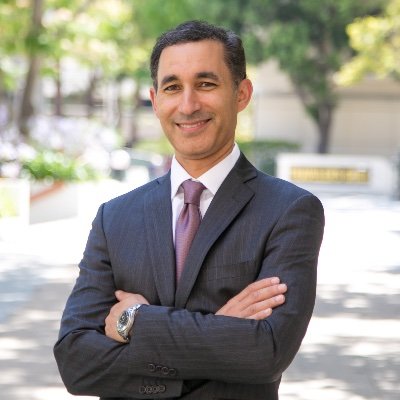
A 240 pateint single arm trial exploring 9 cycles of EVP without planned surgery in MIBC. This will answer the key questions ‘What happens if we don’t do cystectomy in those with clinical complete response after initial EVP’.It assesses cCR rates and bladder intact EFS. It will clarify ‘EVP 1st ask questions later’ #GUtrendingTopics @OncoAlert
Tom Powles tweet media
English
14
70
187
50.6K
Alan Tan retweetledi
Personalis, Inc.
Personalis, Inc.@PersonalisInc·
PREDICT-DNA study utilizing NeXT Personal® (n=227) shows ctDNA status post-neoadjuvant therapy predicts breast cancer recurrence better than pathologic complete response (pCR). ↳ 100x higher relapse risk if ctDNA+ post-surgery (up to 12 months) ↳ 55% of all ctDNA detections <100 ppm ↳ ctDNA-negative = excellent outcomes regardless of pCR status This is what ultrasensitivity looks like. Discover more: bit.ly/4lFGgjx bit.ly/4lABdAU #PrecisionOncology #BreastCancer #ctDNA #MRD #CancerResearch #CancerDiagnostics #TNBC @benhopark, @hthrparsons, @RitaNandaMD, @AngieDemichele, @guptalabunc, @FilipaLynce, @DrShelleyHwang, @DrWalidElAyass, @awolff, @FNavarroBioInfo
English
0
2
11
476