
Albulipe
663 posts


Good thread. Lots of development economists study growth policies. The problem is that evidence for any of them is very shaky. The people who say "Let's focus on the big questions" actually just want big sweeping theories that no one can prove or disprove.

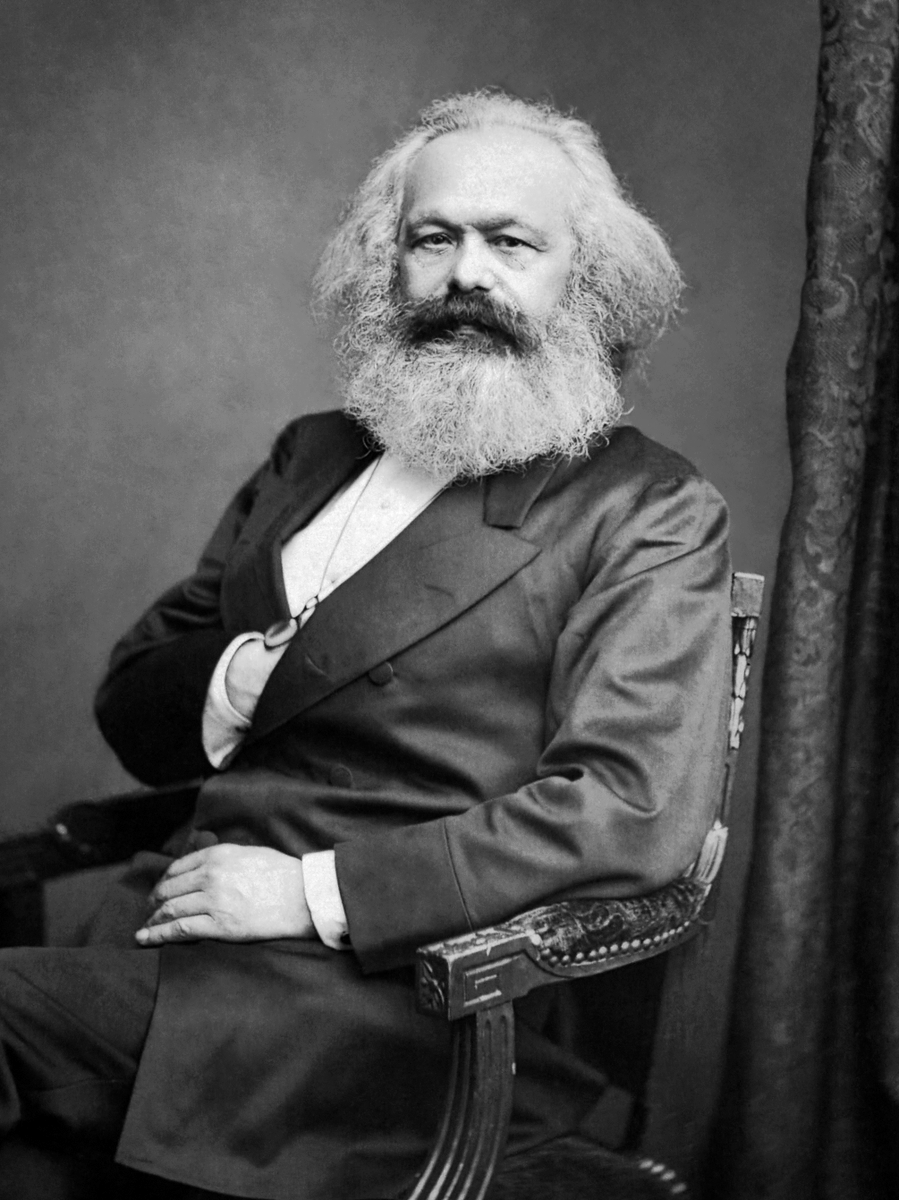
Since I have posted so much on Marx vs. Weber, modernity, and development over the last few weeks, I have posted an updated slide deck of my lectures on Karl Marx and the Marxian Tradition (together with @ferarteaga) here: sas.upenn.edu/~jesusfv/ET_3_… This is a long deck: 437 slides in the last compilation! (It also takes a few seconds to upload.) If I were to teach it carefully, with plenty of class discussion, I would require a whole semester. Even then, some topics (e.g., the Frankfurt School) receive only a cursory treatment because I focus more on economics and political economy, broadly construed. I hope to extend the discussion of those someday. However, I cover topics rarely seen in these courses, such as Hans-Georg Backhaus and the Neue Marx-Lektüre, because most of the work is not translated into English and must be read in the original German. I don’t have an equivalent slide deck on Max Weber, as I haven’t lectured on him. Hopefully, one day I will. Comments and feedback are very welcome.



Since today is May Day, it would be fun to show how modernity and capitalism are related yet distinct by analyzing the video of the Soviet Anthem that was broadcast twice a day on Soviet State TV around 1984. I do this exercise with my students at UPenn when we cover the economic history of the Soviet Union (yes, I spent too much time covering it every semester), and they always enjoy it quite a bit. youtube.com/watch?v=rHomET… The video loops twice over the Anthem, once with subtitles in Russian and English and once with subtitles in Russian and Spanish. We open with a shot of the Kremlin in Moscow, and we are told that we have “An unbreakable union of free republics, The Great Rus’ has sealed forever.” There you have it: right off the bat, nationalism, a fundamental aspect of modernity. Yes, we are free republics, but the Russians are really in charge. If you are Georgian or Latvian, smile and accept your destiny. If the 20th century taught us anything, it is that Marx got it wrong: religion is not the opium of the masses; nationalism is the crack cocaine, much more powerful and addictive. Then we switch to the ultimate symbols of modernity: a rocket about to launch (yes, a bit of a phallic symbol right there), a gigantic steelworks (nothing a good communist loves more than steel) with a manly man working on it (gendered forms of labor), and oil drills (fossil capital and CO2 emissions all around; wasn’t capitalism supposed to be about fossil fuels? Well, never mind). We continue with more manly men, dirty from hard but very manly work, building pipelines, big dams that dominate nature, trains, and nuclear power plants. No tree-hugging here: socialism is about exploiting nature, and you should get the point! Now that we have established that this business of the Soviet Union is a creation of the Russians to quickly industrialize the land and dominate nature, we move on to show what we get out of it. First, a hospital that gives strength to the people (picking a child delivery is not casual either), a cosmonaut, and the rocket, finally firing off! We are achieving, people! A good moment to loop back into history: the October Revolution (shots from Eisenstein’s movie), our holy father, Lenin, and how he led to more factories, more dams, and our ultimate legitimizing instrument: victory over fascism in World War II. This seems a good moment to pivot to the modern Soviet armed forces: jets, a Victor-class nuclear submarine, paratroopers, and frontier guards (do not think about leaving without a permit! The home of the free is, more than anything, home). Well, it is time to go back to the farmers now. We start with a handsome Russian farmer, and then we have a couple of Central Asians (not many minorities so far in the video, so we need some diversity casting) with cotton and grain from the big plains of Asia (talking about ecological degradation, nothing beats what the Soviet Union did with cotton). Next, some miscellaneous accomplishments: a nuclear icebreaker (I believe it is from the Arktika class; yes, a true communist loves nuclear power; renewables are for petit bourgeois professors of English in California who believe in silly “degrowth” ideas), health and education services for minorities, and rail tracks. Time to return to manly men building manly things like trucks and ships, to introduce Andropov, addressing all of us under Lenin’s statue (a fantastic shot), and to the May Day parade (this is why I am showing this video today), with a final close-up of the Lenin banner. We wrap by returning to the very beginning: the Kremlin. As a piece of propaganda, this is magnificent work. The music by Alexander Vasilyevich Alexandrov is moving, classical but not stuffy; the lyrics (1977 version) get all the messages across, and the selection of visual themes has been curated with incredible care. I like to show propaganda videos of regimes (including those from other totalitarian regimes) because they document how the regime wanted to be seen. I am not the one selecting the message; the Soviet Union leadership is. And it is selecting a message of modernity: big factories, rockets, hospitals, nuclear power, and oil wells. If your analytic framework cannot distinguish between modernity and capitalism, as most social theory cannot today, you are at a deep loss when trying to understand the Soviet Union. You are even more at a loss to understand why socialism was so attractive in the 20th century. Socialism promised underdeveloped countries a faster route to modernity. If you were a young Honduran in 1960 or a young Egyptian in 1962, you fell in love with socialism because you thought it could deliver modernity faster and better. Socialism was the ultimate engine of modernity. “Degrowth” is only for sociology lecturers with bad hairdos. Nobody with half a brain takes it seriously. But most contemporary social theorists, which are activists, not scholars any longer, are only interested in criticizing capitalism, so they pile onto it a list of flaws, including nationalism, fossil fuel consumption, the use of nuclear power, the gendered division of labor, bureaucratic gigantism, inequality of income, wealth, and power, and many other phenomena that, at their very core, are about modernity, not about capitalism per se. Their own ideological narrowness leads to a lack of nuance and theoretical blind alleys that are driving most of social theory to absolute irrelevance. It is a pity, because we need social theory more than ever.






Schafft Milei die Deindustrialisierung Argentiniens?