Alex Asher

10K posts

Alex Asher

Alex Asher

@AlexAsherLIT

Representing and financially resourcing indigenous missionaries (pastors, church planters, disciple makers) in over 100 countries with Advancing Native Missions

Fort Worth, TX Katılım Temmuz 2016
965 Takip Edilen679 Takipçiler
Alex Asher retweetledi
Lauren Chen
Lauren Chen@TheLaurenChen·
The Christian in-fighting is so tiresome. When I was in Japan, we found an English-speaking Church that presented as generically Protestant. It was very small, maybe 40 people at each service. We started talking to the Pastor and asked him about denomination. He just shrugged and said "We don't focus on that too much. There really aren't many Christians here." In a Christian country where there are Catholic and Orthodox and Baptist and Presbyterian Churches on every corner, denominational differences seem profound. And don't get me wrong, there are meaningful schisms that we shouldn't shy away from debating. But ultimately, the majority of the world rejects Christ. As Christians, we are the minority. And many Christians around the world are still persecuted for their faith. There is so much work that needs to be done for Christ, and I strongly believe that Christians are more equipped to do it when we all work together.
9mmSMG@9mmsmg

I've posted this before and I will again. Protestants and Catholics spend too much time infighting while we live in an evil society. Every time I post this the Catholics get enraged and list everything the Protestants say about them and vice versa. Everyone ignores the message entirely.

English
212
137
2.1K
108.7K
Alex Asher
Alex Asher@AlexAsherLIT·
@ClayTravis 6 basketball championships in 50 years isn’t exactly dominant.
English
0
0
0
78
Clay Travis
Clay Travis@ClayTravis·
The Big Ten now owns college sports. Three straight college football titles and the trifecta this year: a football title and men’s and women’s titles too. This is the first Big Ten men’s title since 2000, it has been a long time in the title wilderness.
English
195
126
2.6K
154.3K
Alex Asher
Alex Asher@AlexAsherLIT·
Great take.
Scott Roberts@ScottRoberts

This sentiment sounds bold, but it collapses pretty quickly once you actually open the Bible and read it in context. First, Christianity is not an economic system. It is the Gospel. It is about reconciliation with God through Jesus Christ, not the restructuring of society through a man-made framework. When people try to force Christianity into "capitalism" or "socialism," they are importing categories that Scripture itself never uses as controlling lenses. Jesus didn’t come preaching wealth redistribution or free markets. He came preaching repentance and the kingdom of God. Second, the passages people usually point to, like Acts 2:44-45, describe voluntary generosity, not forced redistribution. The early believers "had all things in common," but no one was compelled by the state. In fact, Acts 5 makes this crystal clear. Peter tells Ananias that the property “remained your own” and after it was sold, the money was still under his control. The sin was not withholding wealth from a collective. The sin was lying to God. That only makes sense if private ownership was still recognized. Third, Scripture consistently affirms personal responsibility and stewardship. 2 Thessalonians 3:10 says plainly, "If anyone is not willing to work, let him not eat." That cuts directly against the idea that Christianity mandates a system where provision is detached from responsibility. The Bible commands generosity, yes, but it also commands diligence, ownership, and accountability. Fourth, biblical giving is always from the heart, not under compulsion. 2 Corinthians 9:7 says each one must give as he has decided in his heart, not reluctantly or under compulsion, for God loves a cheerful giver. That one verse alone dismantles the idea that Christianity at its core is about enforced economic equality. The entire ethic is inward transformation that produces outward generosity. Finally, the deeper issue is this: socialism tries to solve human inequality externally, but the Bible diagnoses the real problem as sin in the human heart. Greed, envy, oppression, laziness, pride. You can change systems all day long, but if the heart remains unchanged, the same sins will simply show up in new forms. Christianity goes after the root. A new heart in Christ produces generosity, justice, and care for the poor, not because a system demands it, but because God has changed the person. So no, Christianity is not socialism at its core. It produces radically generous people, which can look superficially similar in small snapshots, but the source, the method, and the goal are completely different.

English
0
0
0
2
Alex Asher retweetledi
Rome2Reformed
Rome2Reformed@rickbrennanjr·
I am often asked why I left the Catholic faith at the age of nineteen. The answer unfolds over many years. What follows is only one part of that story. As a child, I experienced many of the classic symptoms often described as “Catholic guilt.” I was deeply aware of my sinful nature and of the sobering reality that I could never be holy enough to stand before a just God (Rom 3:10, 23). That awareness was not misplaced: it was real, and in many ways biblically grounded. But what I lacked was a clear understanding of how that problem is actually resolved in Christ. Then, in my late teens, I began to read Scripture more carefully. In Ephesians 2:8–10, I saw with clarity that salvation is by grace through faith, not as a result of works, so that no one may boast. Good works were not the basis of my acceptance before God, but the fruit of a salvation already secured in Christ. In Romans 3:21–28, I encountered Paul’s argument that a righteousness from God has been manifested apart from the law: received through faith in Jesus Christ for all who believe. Justification was not something gradually achieved; it was something declared by God. And in 1 John 1:7–9, I read that “the blood of Jesus his Son cleanses us from all sin,” and that if we confess our sins, he is faithful and just to forgive us and to cleanse us from all unrighteousness. Forgiveness was not mediated through an ongoing sacramental system in order to maintain a state of grace, it was grounded in the finished work of Christ and received by faith. As I continued reading, I began to see a contrast that I could not ignore. The sacramental system as I had experienced it seemed to keep me in a cycle. I was always returning, always uncertain, always wondering if I had done enough. Yet the Apostle Paul spoke of something different: freedom. “For freedom Christ has set us free” (Gal 5:1). He spoke of peace with God (Rom 5:1), of no condemnation for those who are in Christ Jesus (Rom 8:1), and of the love of God from which we can never be separated (Rom 8:38–39). The book of Hebrews deepened this even further. There I encountered the language of completion and rest. Christ offered himself “once for all” (Heb 10:10), and by a single offering he has perfected for all time those who are being sanctified (Heb 10:14). Because of this, believers are invited to “draw near with a true heart in full assurance of faith” (Heb 10:22). And in Hebrews 4:9–10, I saw that there remains a Sabbath rest for the people of God: a true rest that could not be achieved through striving, but one that is entered into through faith in the finished work of Christ. The more I immersed myself in Scripture, the more I began to see that the issue was not my awareness of sin because that was accurate. But the problem was the the solution within the sacramental system I had been given. What I had known was a system that continually reminded me of sin but never fully grounded me in the sufficiency of Christ’s atonement as a completed and final work (Heb 10:1–4). Over time, the guilt and uncertainty that marked my youth gave way to something profoundly different: peace with God (Rom 5:1), assurance of salvation (1 John 5:13), and a growing confidence in the love of Christ. This was not a careless freedom that allowed me to live in sin, but a settled freedom: the kind that produces gratitude, obedience, growth and joy. Today, as a Baptist shaped by Evangelical Reformed theology, I do not rest in my performance, but in Christ’s finished work. The burden of trying to become acceptable to God has been replaced by the assurance that, in Christ, I already am accepted (Eph 1:6). And from that place of grace, I now seek to live in faithful obedience, not to earn salvation, but because I have received it.
Rome2Reformed tweet media
English
97
49
287
13.8K
GodLogic_GL
GodLogic_GL@GodLogic_GL·
The more they threaten us, the more often they'll be hearing their Muslim brothers and sisters renouncing Islam live on air. God vindicates.
English
96
347
1.8K
18.4K
Alex Asher
Alex Asher@AlexAsherLIT·
@swamthetiber25 Can you share your thoughts on how later in John 6 He says “the flesh profits nothing the words I speak are spirit?”
English
2
0
3
1.4K
Jessica
Jessica@swamthetiber25·
As a Protestant I asked why this passage was taken literally and not “I am the door”, the usual evangelical retort. I wished someone would have answered me like this: After multiplying loaves for the crowd, Jesus makes a shocking claim: “The bread that I will give is my flesh (sarx) for the life of the world.” (John 6:51) The Greek word sarx, meaning literal, physical flesh, is rarely, if ever, used metaphorically in Scripture. Even many Protestant scholars acknowledge that this language is unusually graphic and difficult to read symbolically. The crowd is immediately disturbed: “How can this man give us his flesh to eat?” (John 6:52) If they had misunderstood Him, this was the moment to explain. Jesus often corrected misunderstandings, like when Nicodemus thought being “born again” meant re-entering the womb (John 3), or when the disciples thought He spoke of literal bread in Matthew 16. But here, Jesus does the opposite. He repeats and intensifies the teaching. “Truly, truly, I say to you, unless you eat the flesh of the Son of Man and drink His blood, you have no life in you.” (John 6:53) In fact, He repeats this teaching six times in just ten verses, each time making it more explicit and direct. This repetition signals the importance of His words and indicates that He intends them to be understood literally rather than metaphorically. The Greek word for “eat” shifts to trogein, which means “gnaw” or “chew,” a term that implies a physical, bodily act. This Greek term is used nowhere else in Scripture metaphorically, further emphasizing the literal nature of His command. For a Jewish audience, consuming flesh and blood would have been scandalous, which underscores the radical nature of Jesus’ teaching. Remarkably, this is the first instance recorded in Scripture where a crowd walks away because of a teaching, highlighting the difficulty and gravity of His words. The result? Many of His disciples are scandalized: “This is a hard saying; who can listen to it?” (John 6:60) “Many of His disciples turned back and no longer walked with Him.” (John 6:66) Rather than back down, Jesus lets them leave. If He had merely meant a symbol, He had every opportunity to explain it away or soften His language. But He doesn’t. Instead, He turns to the Twelve and asks: “Do you also want to leave?” (John 6:67) Peter’s response is telling: “Lord, to whom shall we go? You have the words of eternal life.” (John 6:68) Peter affirms the reality of Jesus’ words. The disciples understood exactly what Jesus was saying: He wasn’t offering a symbol of His body and blood; He was offering His actual body and blood, and they were ready to receive it.
Jessica tweet media
English
121
298
1.5K
57.9K
Alex Asher retweetledi
Smash Baals
Smash Baals@smashbaals·
Boy do I have some good news for you!
Smash Baals tweet media
English
142
1.6K
48.5K
1.5M
Alex Asher retweetledi
Bear Grylls OBE
Bear Grylls OBE@BearGrylls·
It is a sign of great strength to acknowledge a need for Jesus in your life. Not weakness. Strength.
English
111
786
12.4K
123.9K
Alex Asher
Alex Asher@AlexAsherLIT·
Hallelujah! MUST READ.
Faithfulness Okom@AttorneyF_

I went back to read the resurrection accounts of Matthew and John this morning and noticed something interesting. The first words out of Jesus’ mouth after the resurrection were “go tell my brothers.” And it brought me to tears. Matthew 28:10. Read it slowly. The stone has just rolled back. Death has just been defeated for the first time in human history. The most consequential moment in the cosmos has just occurred. And the risen King opens his mouth and calls us brothers. But Matthew alone might not stop you. So go to John 20:17, where he tells Mary what to tell them: “I am ascending to my Father and your Father, to my God and your God.” He does not say “the Father.” He does not say “God.” He says MY Father is now YOUR Father. MY God is now YOUR God. He rises and the first thing he does is redistribute the inheritance. This is where most people misread the resurrection. They treat it as a power demonstration. Jesus proved he was God. Jesus showed death who was boss. And those things are true but they are not the point. The point is what he did with the power once he had it. Because what I have learned in my few years on earth is that when men have power, the immediate instinct is to reclassify. The people who were their peers become subordinates. The people who called you brother now call you sir. We have seen it in offices, in governments, in churches. Elevation changes vocabulary. The higher a man rises the lonelier the pronoun “we” becomes. Jesus rose to the highest position in the universe and his vocabulary did not change. He came back and said brothers. He said your Father. He said our God. He reclassified upward. He used his exaltation not to press us into subjects but to pull us into sons. This is the actual consequence of the resurrection: ADOPTION. A dead savior cannot make you a son. A dead elder brother cannot bring you into the family. He had to conquer death because brothers share in each other’s life and he could not give us what he had not first secured himself. Romans 8:29 calls him the firstborn among many brothers. Firstborn means there are others coming. You are not a spectator of his resurrection. You are its intended outcome. The crowned King looked across the infinite chasm between his holiness and your humanity and the word he chose was not “subject.” It was not “servant.” It was not even “beloved.” He said brother. On the other side of death, with all authority in heaven and earth, he said brother. So celebrate today for everything it is. Celebrate the empty tomb, celebrate the vindication of a man the world tried, condemned, and buried, and whom heaven refused to leave in the ground. Celebrate the sins that are gone and the immeasurable, uncontainable, universe-rearranging power of God on full display. But do not miss the most beautiful thing. He did not just cancel your debt. He gave you a name. He did not just acquit you. He adopted you. Forgiveness would have been everything. Sonship is more than everything. And he gave us both. The risen King called us brothers. That means the Father he returned to is the Father we are returning to. That means the glory he walked into is the glory we are walking toward. That means Easter is not just the day Jesus won. It is the day you inherited everything he won it for. Hallelujah! He is risen.

Eesti
0
1
4
203
Alex Asher retweetledi
Giga Based Dad
Giga Based Dad@GigaBasedDad·
🔥
Giga Based Dad tweet media
QME
31
373
4.6K
31.5K
Alex Asher retweetledi
L O V E R 💕
L O V E R 💕@LolzPat·
I’m starting to see that the gospel isn’t about forcing yourself to stop sinning, but about loving God so deeply that sin loses its appeal.
English
236
2.9K
15.4K
171.3K
AlphaFox
AlphaFox@alphafox·
In Angangueo, Michoacán, Mexico, hundreds of devoted participants carry heavy nopales and cacti on their backs during the Procesión del Nopal — a powerful Holy Week tradition held on Good Friday. As an act of penance and sacrifice, they endure the painful spines digging into their skin to commemorate the suffering and death of Christ, seeking spiritual purification and redemption. ✝️
English
124
614
5.2K
341.6K
Alex Asher retweetledi
James A. Furey
James A. Furey@JamesAFurey·
After 30 years of being an Atheist, tonight I will be baptized, confirmed, and reconciled to God. I cannot stop thinking about it.
English
5.8K
9.8K
119.9K
1.2M
Danny
Danny@Truth_matters20·
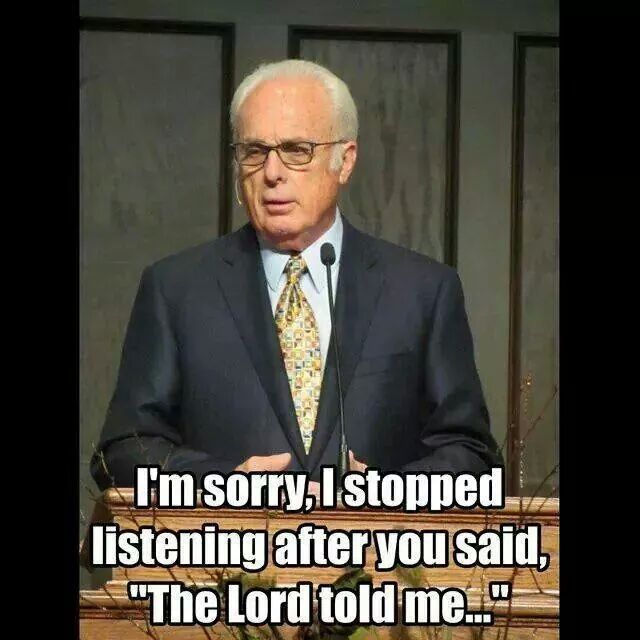
Be very careful listening to anyone who claims the Lord told them something. We already have God's word. It is sufficient.
Danny tweet media
English
46
63
376
7.6K
Alex Asher retweetledi
Serf
Serf@TheRoyalSerf·
College is now when you spend $100,000 to write papers with AI so your professor can grade them with AI and then you get a piece of paper at the end that says you’re allowed to have a job and then they don’t call you back for interviews
English
308
2.5K
23.8K
465.4K
Professor Rania
Professor Rania@Proffessorq0n·
let’s apply your same logic to Jesus Christ The Bible says God supports and protects His chosen. Yet Jesus was arrested, beaten, and crucified on the stick and could not save himself from himself . By your logic, that would mean God didn’t protect him so does that make him false? You see the problem?You’re selectively interpreting texts to reach a conclusion you already believe. That’s not logic , that’s confirmation bias. Also, saying it feels like my aorta is being cut” is not the same as it actually happening. People use expressions like that all the time. There’s no evidence his aorta was literally severed ,that would cause instant death, not a delayed illness
Professor Rania tweet media
English
41
4
44
10.2K
Alex Asher
Alex Asher@AlexAsherLIT·
@GodLogic_GL Yes said “nobody takes my life from me, I lay it down.”
English
0
0
4
680