
Alexandre Nunes
624 posts
When I hear Physio’s saying that S&C and resistance training is a ‘trend’… 😖🤮
GIF
English
English

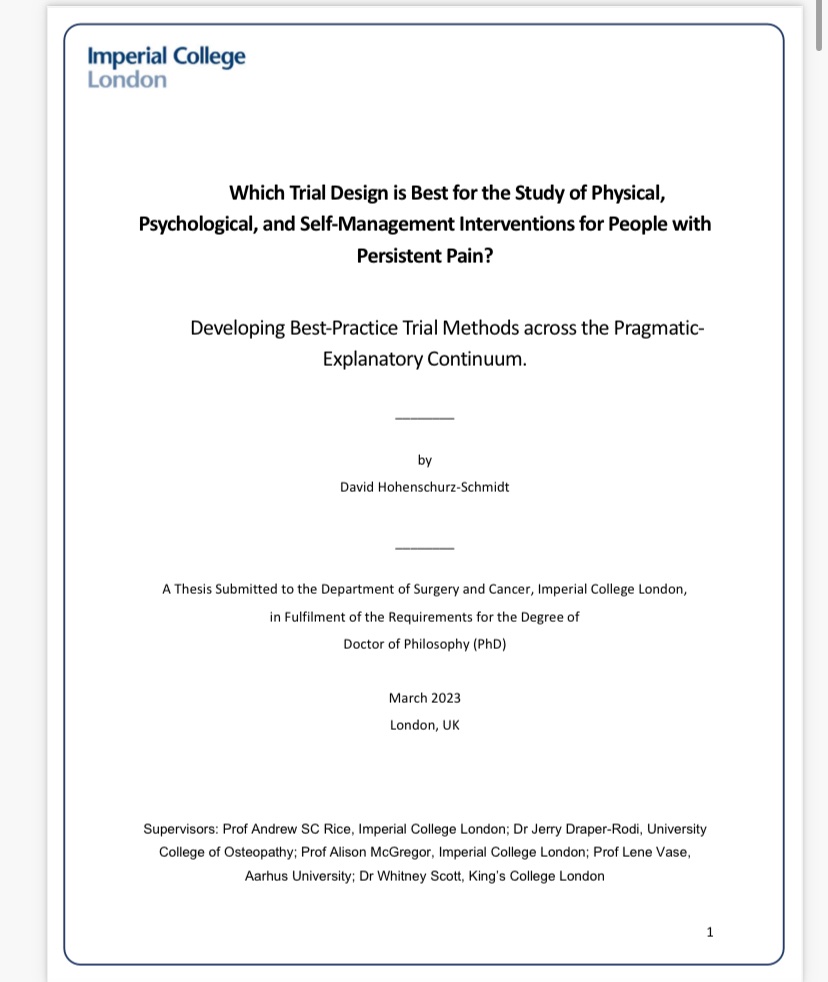
I’m truly humbled by this award and deeply grateful to the many many people who’ve contributed to the research and supported me in the last few years.
Big shout-out to @JerryDraperRodi, Prof Rice, and the teams at @ImperialSandC pain group and @UCODVC_Research ❤️
IASP@IASPpain
We are honored to announce David Hohenschurz-Schmidt as the recipient of the Ronald Dubner Research Prize. Learn about this prestigious prize and Dr Hohenschurz-Schmidt's work: bit.ly/4cffedS
English
English

Reflexive Performance Reset (RPR) is a must add for athlete performance. During their day-to-day life, athletes are already on sympathetic nervous system overdrive. Being in that state constantly is not good for general life or performance. Sooner or later things go wrong as the body cannot get to a high performance state.
As the athlete still needs to perform, the body’s priority on energy efficiency over joint stability and force output creates a down regulation of the prime movers to conserve energy, while demanding secondary movers pick up the slack. These compensation patterns might not be negative in the moment, but the body will not tolerate that forever. Something needs to happen neurologically to fix it.
By adding in RPR during a warm-up, this acts as throwing the brakes on for the SNS by putting the body in a brief state of parasympathetic nervous system activation. Post-RPR, the athlete is more likely to see a slower rise in heart rate while performing and also display greater rates of symmetry between limbs.
All of this doesn’t mean it’s guaranteed to work, especially if the athlete isn’t handling their business off the field, but compare your team’s quad/hip flexor/hamstring numbers pre-RPR & post-RPR and you’re very likely to see a decrease in the total number of those injuries and a decrease in the severity of those injuries.
Cal Dietz, Christian Korfist, JL Holdsworth, and Tyrel Detweiler have put out a crazy and in-depth amount of material on the subject if you want to Google and learn more, but this is a basic summary of their material.
Fatigue at a slower rate✅
Compensate less✅
Decrease odds of injury✅
Perform better✅
English
What was the distal PPT point?
Sinéad Holden@Sinead_Holden
Osgood schlatter - a simple overuse loading related injury of the apophysis during maturation? Or is there evidence of nociplastic pain? Does severity matter? Check out our new paper in @_JSAMS led by @kristianlyng_ with @MichaelRathleff @LineBaySrensen1. doi.org/10.1016/j.jsam…
English
IBM Plans to Replace 7,800 Jobs With AI pcmag.com/news/ibm-plans… #PCMag
English


People with pain report great perception of stiffness without changee in tissues stiffness measurement (Stanton et al 2017)
The Sp⚽️rts Physio@AdamMeakins
Now I love stiffness when it’s needed… (insert rude joke here) but we have got to stop assuming that spinal stiffness is the cure for all back problems in all people!
English
@albaafisio Please the name of the app in the 1 exercise? Thanks
English

O IASP recomenda manipulação osteopatica como tratamento para dor cervical e lombar iasp-pain.org/resources/topi…
Português
Alexandre Nunes retweetledi
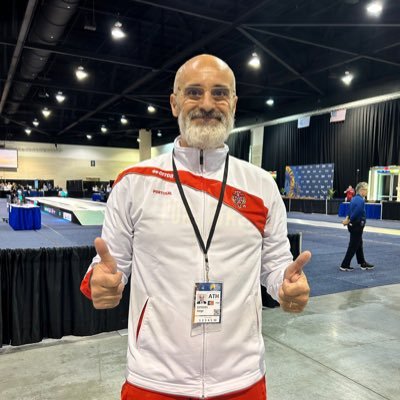
A lot of work is needed to change attitudes and beliefs! Our research @Alexnunes79 shows that Portuguese osteopaths have very strong biomedical-biomechanical beliefs. journalofosteopathicmedicine.com/article/S1746-…
English
The Portuguese Osteopathic Practitioners Estimates and RAtes (OPERA): A cross-sectional survey authors.elsevier.com/c/1ezic6D0fPsM…
English
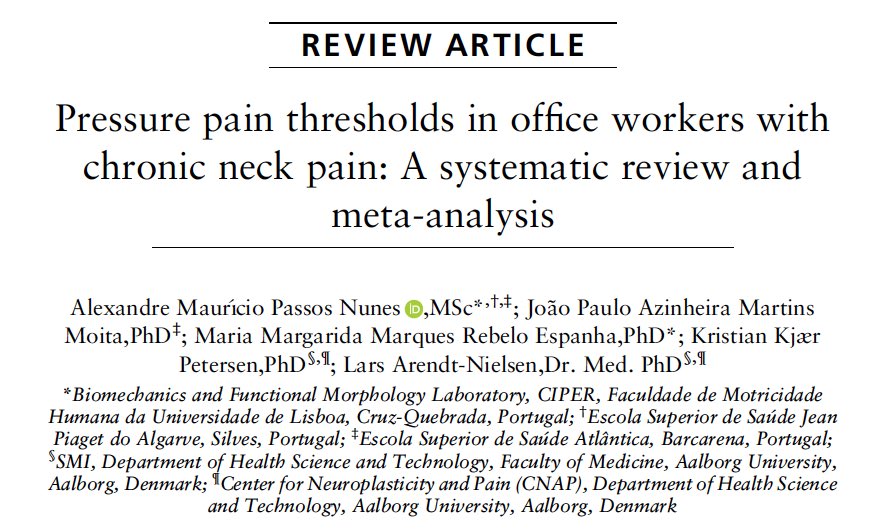
dralexandrenunes.com/post/recomenda… Recomendações baseadas na evidência para dor cervical e lombar na Europa
Português
My research is available on @ResearchGate: researchgate.net/publication/34…
English
dralexandrenunes.com/post/estudo-re… Portugal tem que refletir nestes números.
É urgente criar opções de tratamento integradas no local de trabalho.
Português