"Given Missouri’s prominent role in AGS epidemiology and the demonstrated feasibility of telemedicine approaches, a comprehensive evaluation of digital health applications for this condition is warranted to inform clinical practice and healthcare policy in the region."
2/2
"Overall, this research supports that screening of wild boar sera for anti-α-GAL antibodies could serve as a broadspectrum indicator for pathogen exposure, supporting its potential inclusion in integrated monitoring schemes, complementing traditional pathogen screening approaches."
2/2
Nothing to do with alpha-gal syndrome, but an interesting use of alpha-gal as a biomarker for monitoring wildlife for pathogen exposure:
Biomarkers of pathogen exposure in wild boar for integrated wildlife monitoring
1/
sciencedirect.com/science/articl…
"While considered negative and of unknown clinical significance, alpha-gal IgE levels between 0.02-0.09 kU/L may reflect prior immune priming. This could be a risk factor for future conversion to clinically relevant levels and in some cases be explained by exposure to ticks other than lone stars."
2/2
"Mammalian meat allergy was reported by 11 subjects (total prevalence of 12%), and their levels trended higher compared to the sensitized subjects who did not report meat allergy (median 4.1 IU/mL vs 0.88 IU/mL, P=0.077)."
3/3
"To date, the cohort includes 94 adults with a mean age of 56.5 years and 66 (70%) females. Alpha-gal IgE (≥ 0.1 IU/mL) was detected in 58 (62%). Sensitized subjects were older, had higher total IgE, greater itch duration for the most recent bite, and more tick bites in the past year."
2/
Symptom onset ranged from 10 min to 8 h post-ingestion, with most reactions delayed (2 – 8 h) One patient consistently reacted within 30 min, while another reported variable onset times depending on the type of meat.
4/4
"Although cetuximab is most commonly associated with immediate, α-gal-mediated hypersensitivity reactions, this case illustrates that T-cell-mediated type IV drug eruptions can also occur."
2/2
I come across studies like this--about development of therapies designed to capitalize on the alpha-gal immune response--all the time, and I applaud them. But I hope that their use in areas with a high-prevalence for sensitization to alpha-gal is approached with caution!
pubmed.ncbi.nlm.nih.gov/41616936/
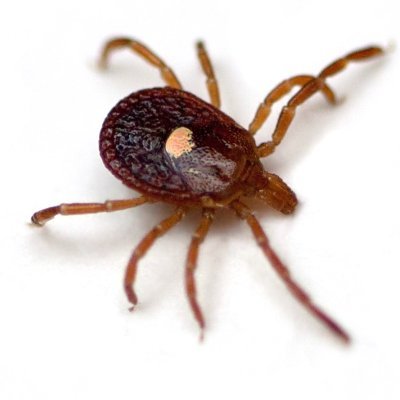
'In this tropical setting, tick bites, especially from the more anthropophilic Amblyomma cajennense sensu stricto, appear to be a major risk factor for AGS, along with forest-related occupational exposure. These findings support the assumption that ticks are probably at least the main vector of symptomatic sensitization to α-Gal in French Guiana."
2/2