Alvaro Felipe Chávez

425 posts

Alvaro Felipe Chávez banner
Alvaro Felipe Chávez

Alvaro Felipe Chávez

@AlvaroFelipeCh

CEO de EDteam

Katılım Ocak 2022
43 Takip Edilen133 Takipçiler
Alvaro Felipe Chávez
Alvaro Felipe Chávez@AlvaroFelipeCh·
Yes, las empresas que hacían tokenmaxxing y pagaban facturas de 7 cifras a Anthropic ahora pueden montar su infraestructura propia y correr Kimi (u otro modelo) por un fracción de eso y no volver a pagarle un centavo a Anthropic. Ese es su verdadero conflicto con los modelos abiertos. Que le están arruinando el negocio.
Sara Hooker@sarahookr

Between the lines, Anthropic is saying “I’m okay with open weights as long as the model does not present high performance.” “Release what you want as long as not a direct alternative to proprietary models.”

Español
0
0
4
344
Alvaro Felipe Chávez
Alvaro Felipe Chávez@AlvaroFelipeCh·
Anthropic miente.
Brian Roemmele@BrianRoemmele

DARIO DAMAGE CONTROL WARNING! I BROUGHT THE RECEIPTS TO SHOW THE GUARDRAILS OF TRUTH. Up next is a textbook damage control operation dressed up as consistency. Dario Amodei’s July 27, 2026 post (“Our position on open-weights models”) claims Anthropic “has never advocated for a ban on open-weights models” and that open-weights models without dangerous capabilities “are a public good.” Anyone who has tracked his actual record knows this is a carefully worded retreat under pressure after Anthropic refused to sign the Nvidia-led open-weights letter and faced accusations of protectionism. The 2023 Senate receipts are unambiguous On July 25, 2023, before the Senate Judiciary Subcommittee on Privacy, Technology, and the Law, Amodei said the following: “I think in most scientific fields, open source is a good thing… and I think even within AI there’s room for models on the smaller and medium side… And I think to be fair, even up to the level of open source models that have been released so far, the risks are relatively limited… But I’m very concerned about where things are going… I think the path that things are going, in terms of the scaling of open source models—I think it’s going down a very dangerous path. And if that path continues, I think we could get to a very dangerous place.” He continued: “When you control a model and you’re deploying it, you have the ability to moderate usage. It might be misused at one point, but then you can alter the model, revoke a user’s access, or change what the model is willing to do. When a model is released in an uncontrolled manner, there’s no ability to do that. It’s entirely out of your hands.” And on the distinction that matters: “Open source normally refers to smaller developers who are iterating quickly, and I think that’s a good thing. But what we’re talking about here is something a little different: the uncontrolled release of much larger models by big entities that pay tens or even hundreds of millions of dollars to train them. I think we should treat those in a somewhat different category, with different obligations.” His written testimony the same day warned that bad actors could “repurpose open-source models if powerful enough open-source models become available.” That is not neutral language. That is a clear, public warning to Congress that the trajectory of open-sourcing increasingly capable models is dangerous and irreversible once the weights are out. He was not talking about toy models. He was talking about the scaling path toward frontier systems. The 2026 post does not square with that record In the new post Amodei writes: “Anyone who has read my past writing should know that I don’t regard such bans as a useful measure, but let me state it clearly so that there is no doubt: Anthropic has never advocated for a ban on open-weights models.” and “Open-weights models that don’t have dangerous capabilities are a public good…” This is a motte-and-bailey. The 2023 testimony was not a narrow objection to “bans on Chinese models used by U.S. businesses.” It was a broad claim that the path of scaling open models itself was “very dangerous” because release is permanent and control is lost. Calling non-dangerous open-weights a “public good” while still insisting powerful open-weights carry higher cyber/bio/alignment risk (exactly the same irreversibility argument he made in 2023) does not erase the earlier framing. It reframes it once the political cost of the earlier framing became high. He further says a ban on use by U.S. businesses “would not address” his concerns and “has never been my goal.” 1 of 2

English
0
0
3
97
Alvaro Felipe Chávez
Alvaro Felipe Chávez@AlvaroFelipeCh·
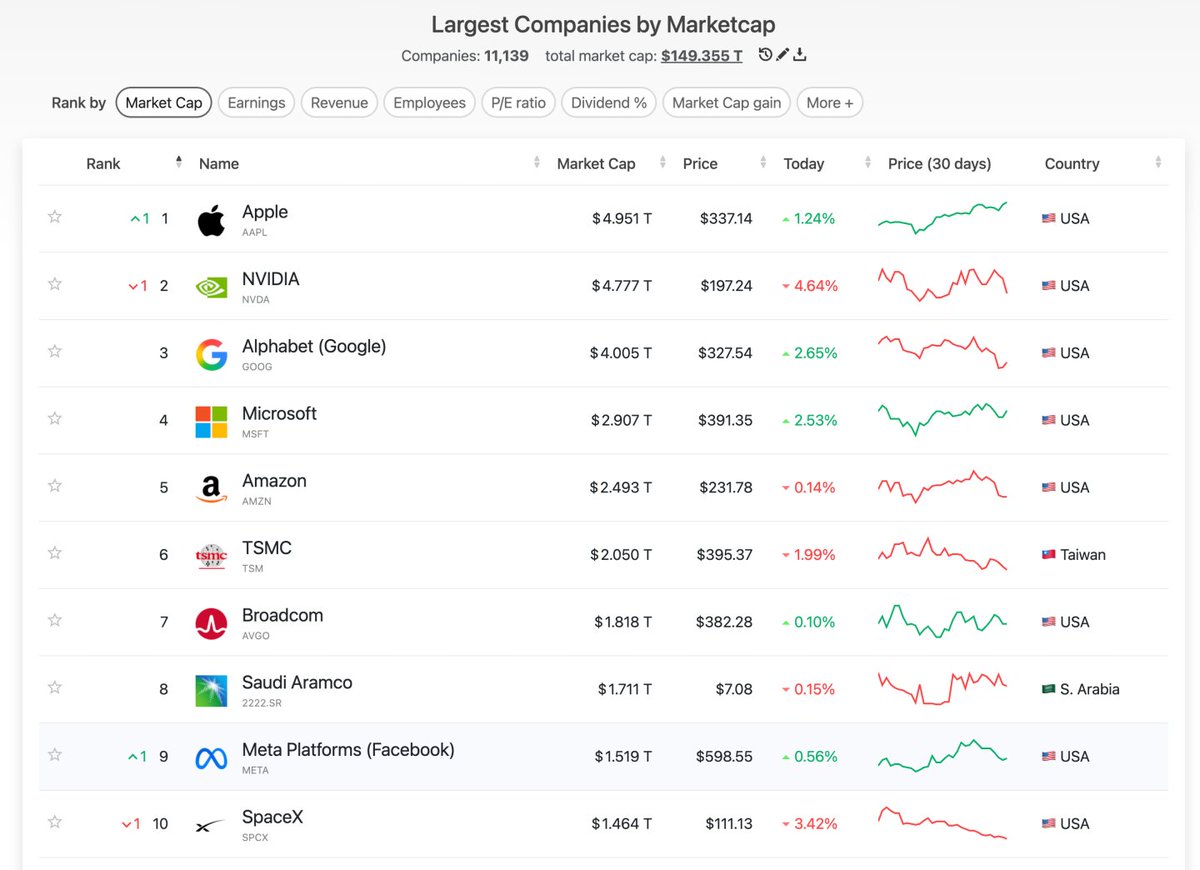
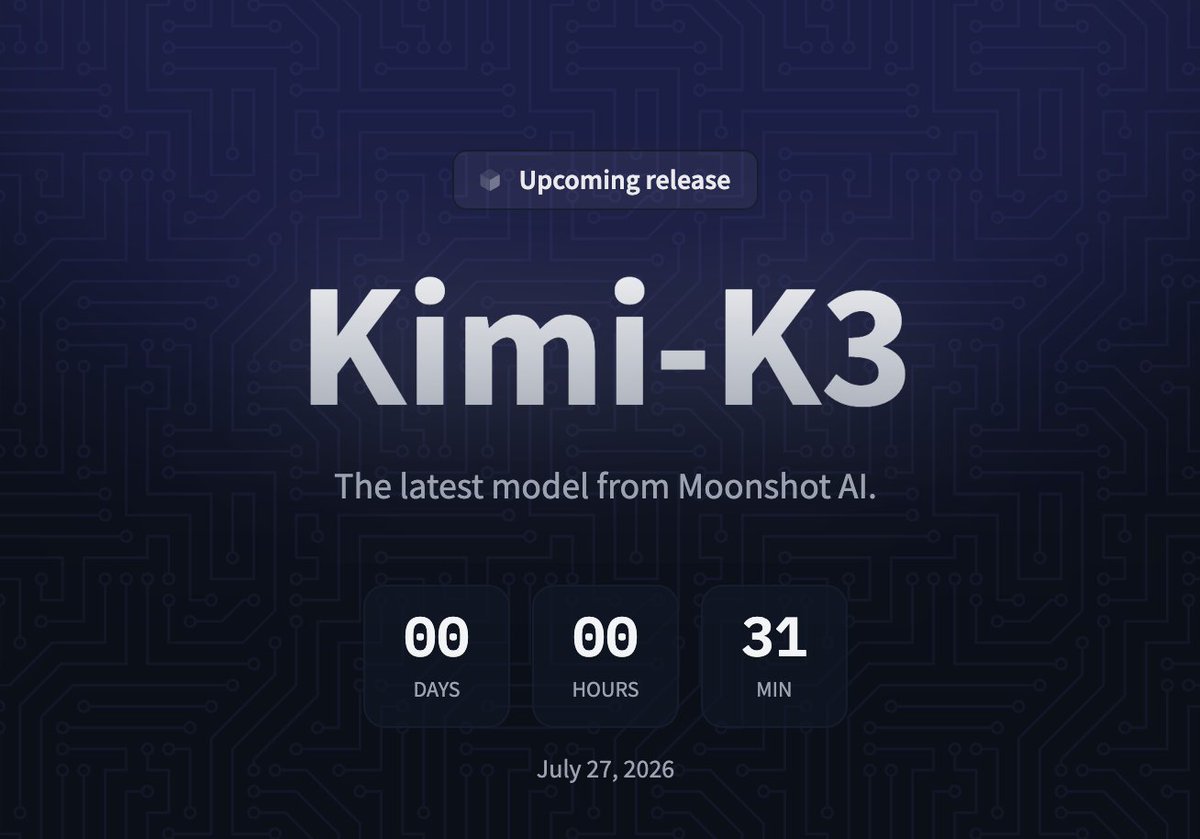
Hoy se liberan los pesos abiertos de Kimi K3 para que los descargues y hagas lo que quieras con ellos. 🚨¡Pero ten mucho cuidado si lo haces porque esto es lo que puede pasar! A Dario Amodei no le gusta esto. Dario Amodei salió del chat Dario Amodei te bloquéo. Dario Amodei se quejó con el gobierno porque eres un delincuente en potencia. Los empleados de Anthropic te insultan. Es un gran día.
Alvaro Felipe Chávez tweet media
Español
0
0
11
1.1K
Alvaro Felipe Chávez retweetledi
Lucas Beyer (bl16)
Lucas Beyer (bl16)@giffmana·
I'm almost afraid to ask but... in the web interface, what on earth is the difference between chatgpt "work" and "chat" mode? They seem the same to me, besides having this little animated tamagochi? And a different model selector UI.
English
101
6
724
200.6K
Alvaro Felipe Chávez retweetledi
Zack Korman
Zack Korman@ZackKorman·
If an open-weight model hacks someone, they’ll say open-weight models are dangerous. If a closed-weight model hacks someone, they’ll say open-weight models are dangerous.
Zack Korman tweet media
English
30
96
1.1K
23.9K
Alvaro Felipe Chávez
Alvaro Felipe Chávez@AlvaroFelipeCh·
Pensaba que el post de Julián era lo peor que había leído viniendo de Anthropic para atacar al Open Source pero esto lo supera. Lo de Anthropic no es criterio técnico, es pura ideología radical. Me recuerda mucho al radicalismo de Stallman. Y eso no es bueno para la industria del software.
Alvaro Felipe Chávez tweet media
julia@mooncat_is

If that OAI model that hacked HF were open weight, anyone with a few chips could run it safeguard free! If OAI fixes the alignment, anyone with a few more chips could tune the alignment out! Yes, anyone can identify vulnerabilities! And if a16z commits to patching every hospital

Español
0
1
0
229
Alvaro Felipe Chávez retweetledi
David Sacks
David Sacks@DavidSacks·
The entire tech industry (save for Anthropic) has come out in favor of open source AI. So what happens next? Will Anthropic change its lobbying efforts? Not likely. Now the gaslighting begins: “Nobody is trying to ban open source.” “We just want to limit who can use it.” “We just want to limit who can contribute to it.” “We just want to limit how powerful those models can be.” “We just want to make sure the guardrails (we lobbied for) can’t be removed.” The net effect will be the same. They won’t stop until they kneecap open source. The rest of the industry needs to watch these guys like a hawk.
English
572
1.2K
12.7K
916.8K
Alvaro Felipe Chávez
Alvaro Felipe Chávez@AlvaroFelipeCh·
El prompt engineering se va a morir en un año o dos. En los inicios de la IA generativa y por bastante tiempo (incluso parte del año anterior) cada vez que veíamos un trabajo bien hecho con IA preguntábamos por el prompt, asumiendo que el prompt era la llave mágica que desbloqueaba capacidades de la IA. Y sí, era verdad. Pero ya no en 2026. En la era de los agentes el prompt es quizás la parte menos importante. Cuando vemos un trabajo bien hecho con IA en 2026 ya no preguntamos por el prompt sino por el flujo de trabajo: que skills usaste? con que herramienta conectaste tu agente? la salida es web o de otro tipo? como le diste contexto? cuanta intervención humana hubo? Incluso una tendencia muy extendida (y que yo llevo meses usando) es tener una sesión de planificación previa con la IA donde exploramos todos las ideas y le vamos dando forma antes de empezar a trabajar. Esta sesión es mejor con micrófono abierto, sin tocar el teclado. Cero prompt engineering. Prompt pésimos (desde el punto de vista del prompt engineering) pueden dar resultados fantásticos con un flujo correcto. Las habilidades de prompt engineering seguirán siendo útiles (sobre todo para perfeccionar skills) pero ya no serán el centro de la experiencia como antes.
Español
8
5
79
7.2K
KP bhoomika
KP bhoomika@buildwbhoomika·
@chris_j_paxton being wrong but sincere is somehow more respectable than being right for the wrong reasons 💀
English
2
0
7
384
Anton Leicht
Anton Leicht@anton_d_leicht·
this letter is pushback against an agenda that mostly doesn't exist. no one is trying to ban OS. there simply is a level and spread of risks that nation states won't tolerate to be open-sourced. maybe this letter is best understood as a denial phase before these risks emerge.
Jensen Huang@JensenHuang

For my first post, I’m sharing a letter @NVIDIA signed on why open models matter. AI will transform every industry, power every company, and be built by every country. Open models strengthen safety and cybersecurity, accelerate innovation and diffusion, and enable sovereignty. The world needs both frontier closed models and frontier open models. images.nvidia.com/pdf/Open-Weigh…

English
80
28
278
58.9K
Alvaro Felipe Chávez
Alvaro Felipe Chávez@AlvaroFelipeCh·
Otro. No están impulsando ahora el open Source. Satya siempre lo ha impulsado. El problema es que los modelos abiertos están amenazando el liderazgo gringo y el gobierno (y Anthropic) quieren prohibirlos. Si fueran como Anthropic y solo pensaran en su beneficio estarían aplaudiendo que se prohiban los modelos abiertos m.
Rittenhouse Research@RHouseResearch

To be fair the biggest reason Microsoft and @satyanadella are pushing open-source now is because the closed source application software platform they’ve built over decades by pillaging and bullying other application software vendors is now under threat from closed source frontier models

Español
0
0
1
93