
amensch | Onchain Thinker | Governance participant retweetledi
amensch | Onchain Thinker | Governance participant
3.1K posts


amensch | Onchain Thinker | Governance participant
@Amensch_Web3
Opinions onchain. Mistakes offchain. Vote with me or argue with me — both are fine.
Katılım Ocak 2022
1K Takip Edilen479 Takipçiler


amensch | Onchain Thinker | Governance participant retweetledi
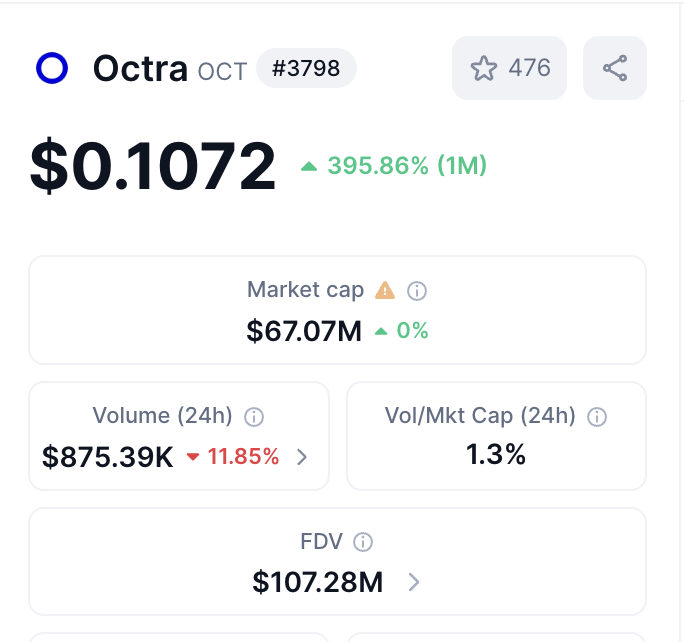
Everyone is watching $OCT price, but the real signal is what’s being built on Octra: 0xio Wallet, OctraScan, 0xio DEX/Bridge, Biont agents, Pipoke social, Spectrum NFT, Circles, Applied, and OCS-style private asset tooling.
This isn’t just another L1 narrative. The thesis is encrypted compute: private balances, private swaps, private agents, private NFTs, private tokens, and private apps.
Still early. Still risky. But the ecosystem forming around Octra actually matches the chain’s core value prop. That’s bullish if they execute.
$OCT #Octra @lambda0xE #AISlop
English
English

English
amensch | Onchain Thinker | Governance participant retweetledi

862 active users!
Maybe I should cook more this next update before launching to public
Thank you all🔮

Charm.Sol🔆@Saad_Majdaoui
MASSIVE UPDATES ON THE WAY Pythfeeds has been a massive success. We’ve built a solid user base with zero paid marketing or promotions , just oldschool SEO , AEO and X. To celebrate, I’ve dropped some huge updates: - Downloadable desktop version - Wallet Tracker - Big improvements to Multiple Charts (you can now open up to 9 charts at once) - Improvements to Bubble Map & Heatmap - New tools and functions Updates will be pushed this week. Thank you for all the love Big thanks to @PythNetwork For the trust and support and the Love 💜
English
@jussy_world Missing one, but it's ok, most people still are. @octra
English

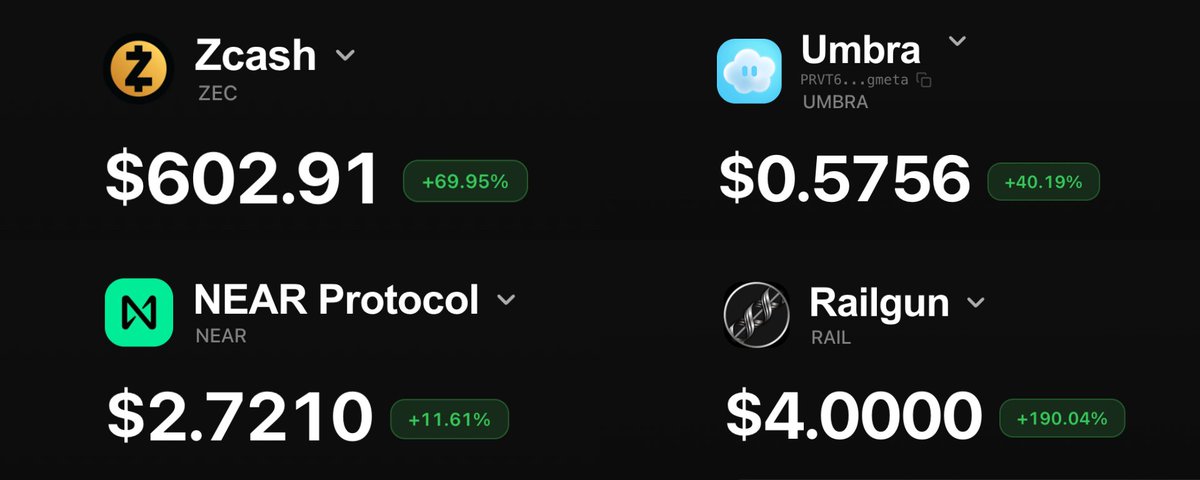
Top 5 Privacy coins I'm watching rn:
1) $ZEC (Zcash)
Lets you send money with full privacy using pure math, zero-knowledge proofs
The network proves your transaction is real without ever seeing your sender, receiver, or amount
2) $NEAR
Confidential Payments / Confidential Intents, transactions execute inside hardware where the data is encrypted and isolated from node operators
42% of activity is confidential in just 6 weeks
3) $RAIL (Railgun)
Privacy shield for Ethereum and DeFi, you can hide your balances and do private trading and swaps
4) $ARX (Arcium)
Encrypted supercomputer on Solana
Runs private computations on fully hidden data for secure DeFi and apps
Encrypted AI, private perps, confidential tokens
5) $UMBRA (Umbra)
Private wallet on Solana
Shielded transfers, balances, and trades while keeping everything composable + ownership via metadao
Also, try @loyal_hq it's another Solana private wallet & AI Agent, you can shield assets, earn yield, super cool
Each one of those offers privacy in a different way (Optional privacy, confidential L1, DeFi shield, encrypted computing, private ownership)
What are you holding/watching?
jussy@jussy_world
Top 5 AI tokens I'm watching rn: 1) $NEAR AI-native L1 built for agents They own assets, run cross-chain intents, and do private/verifiable compute 2) $VVV (Venice AI) Private, uncensored gen AI, stake for yield + free inference API (text, images, code), zero data logging 3) $TAO (Bittensor) Decentralized machine intelligence Subnets compete on ML tasks and models, rewarding real intelligence production 4) $RENDER Decentralized GPU network for AI training, inference, and rendering Solves the hardware bottleneck without the cloud giants 5) $GRASS DePIN for AI data Share bandwidth to scrape public web → training datasets, he data layer every model needs/runs on Each token hits a different part of the stack execution, privacy/inference, intelligence, compute, data Not overlapping copies What are you holding/watching?
English
amensch | Onchain Thinker | Governance participant retweetledi

I see by $OCT price most yall still dont understand where this going. Let me make it simple and connect dots for you noobs.
Today in 6 hours we had:
→ Vitalik (founder of $ETH): "accelerate cypherpunk privacy into reality"
→ John Woods (CTO $NIL/Nillion, ex-Algorand CTO, ex-Cardano architect): "FHE coming with hybrid + ASFHE"
→ Alex (@octralex, Octra co-founder): "ZK + TEE projects can move backend from AWS to encrypted Circle"
Connect the dots brothers:
Vitalik calls for REAL privacy.
$NIL adding FHE because TEE alone aint enough.
$OCT offering encrypted backend infrastructure for ALL of them.
This aint privacy coin pump narrative. This is AWS model for privacy era.
Every ZK project, every TEE network, every Web2/3 dev needing private compute = potential OCT consumer.
Plus $OCT angel investor list aint random:
→ Scott Moore (Gitcoin co-founder)
→ Ivangbi (Ethereum Foundation + Gearbox)
→ Vadim Koleoshkin (Zerion)
→ Artemy Parshakov (P2P.org)
→ Plus Amber Group, Big Brain Holdings, Presto Labs, Outlier Ventures, Karatage, ID Theory, Stratos
Ethereum Foundation insider literally in Octra cap table. Vitalik probably already knows.
$OCT 27M real liquid mc.
5 years quiet building while market shilled TEE wrappers. Now everyone catching up to thesis.
This is real cypherpunk money for real cypherpunk era.
Math don't lie. CRAZY MFERS
English
amensch | Onchain Thinker | Governance participant retweetledi

Big nuance here:
On chain validation is done by the validator set.
The validators still need data.
Pyth does both, and HIP-4 like HIP-3 uses Pyth data for many markets. It’s no different than Kalshi or Polymarket resolving markets with Pyth data off-chain.
Yaugourt.hl@Yaugourt
HIP-4 update. This one is big. Hyperliquid just removed the need for external oracles on prediction markets. The validator set itself is now the oracle. The same 24 validators that sign blocks every 70ms, secure $3B+ in deposits, and vote bridge withdrawals now deploy and settle prediction markets natively. Automated newsfeed software running as part of regular chain operations. Deployment and resolution through onchain validator vote. No Chainlink. No Pyth. No UMA. No third party. Closed circuit. Polymarket uses UMA. Kalshi is centralized. Hyperliquid just made real-world event resolution a native chain function. Hyperliquid.
English
amensch | Onchain Thinker | Governance participant retweetledi

How do I get an Octra badge? I don’t know how badges work really.
Hey @octra can I have a badge?
DrBinxy.eth@ZacharyDrbinxy
I’ve been talking to Claude about what’s possible on $OCTRA that isn’t possible on $ETH. Here’s a snippet: Ethereum is a transparent, public computation machine. Every input, every state change, every contract interaction is visible to everyone, forever. That’s a feature for auditability but it’s also a hard ceiling on what you can build. Anything requiring privacy either gets punted off-chain, relies on trusted hardware, or uses ZK proofs which prove correctness of computation but don’t actually hide state during execution. Concretely, here’s what that ceiling looks like in practice: You cannot build a private order book on Ethereum. The moment your order hits the mempool, it’s visible, which is why MEV (maximal extractable value) is a multi-billion dollar structural tax on the entire ecosystem — bots front-run transactions because they can see them. On an FHE chain, orders are encrypted, matching happens on ciphertext, and the result is revealed. Front-running becomes cryptographically impossible rather than just discouraged. You cannot build real corporate treasury or payroll infrastructure on Ethereum without everyone seeing every transaction. Competitors, employees, and adversaries can all watch. This is why institutional adoption hits a wall — the transparency that makes Ethereum trustless also makes it commercially unusable for anything sensitive. You cannot build private voting that’s also verifiable on Ethereum. You can do one or the other with workarounds, but not both natively. You cannot run AI inference on private data. If someone builds a medical diagnostic model on Ethereum, either the model is exposed or the patient data is exposed or both. The computation requires plaintext. What Octra’s framework would actually unlock that Ethereum structurally can’t do: Private DeFi that’s actually viable for institutions — dark pools, sealed-bid auctions, confidential lending where collateral ratios aren’t visible to liquidation bots. The entire current DeFi ecosystem is essentially a glass box that sophisticated actors exploit constantly because everything is readable. On-chain AI with private inputs — running model inference where neither the model weights nor the user’s input are revealed to the network. This is enormous. Right now private AI either runs on centralized servers you trust or doesn’t exist. Confidential smart contracts as legal infrastructure — contracts that execute on private business logic. Two companies could execute an agreement on-chain where the terms themselves are encrypted and only the outcome is revealed, or even where outcomes are only revealed to designated parties. Private identity and credential systems — not just ZK proofs that you meet a threshold, but full credential computation. A credit scoring system that computes your score on encrypted financial history without any party ever seeing the underlying data. Encrypted state DAOs — organizations where governance, compensation, and internal operations run on-chain but are invisible to outside observers. Currently impossible because Ethereum has no private state. The deeper difference is architectural. Ethereum expanded what blockchain could do by adding programmability — you could write arbitrary logic. Octra, if it works, expands the domain of data that can participate in trustless computation. Right now that domain is “anything you’re willing to make public.” FHE makes it “anything, period.” Ethereum’s ecosystem is massive and that matters enormously for network effects. But in terms of the solution space — the set of problems that can be solved — a working FHE blockchain isn’t a better Ethereum, it’s a different category of thing. Ethereum is a public ledger with programmability. This would be a private computation network with a ledger attached.
English
amensch | Onchain Thinker | Governance participant retweetledi

A Pythian chad shipping a website powered by @PythNetwork Pro feeds gets more users than DeFi apps
It's a DATA bull market 🔮
Charm.Sol🔆@Saad_Majdaoui
@KemarTiti @Amensch_Web3 @PythNetwork Ahah yes I think I really had to do it earlier but didnt expect all this to happen
English
amensch | Onchain Thinker | Governance participant retweetledi

amensch | Onchain Thinker | Governance participant retweetledi

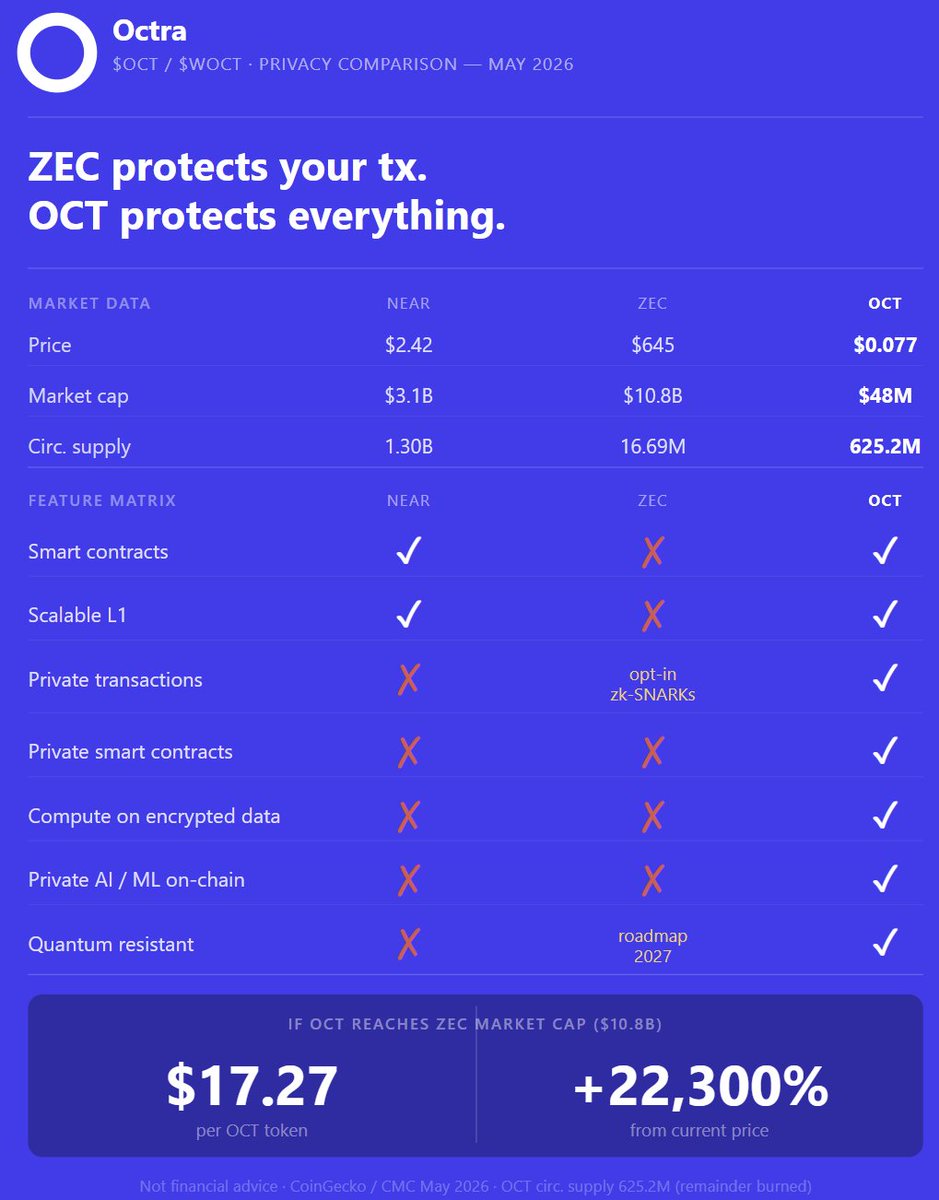
$OCT / $WOCT @octralabs might be the most mispriced asset in crypto right now.
Privacy is the hottest trade of '26. $ZEC is up 1,139% this year on the back of it. But $ZEC only hides payments, opt-in. $NEAR doesn't hide anything.
Octra uses Fully Homomorphic Encryption. Validators execute logic on encrypted data without ever decrypting it. Not a privacy layer bolted on top. Privacy baked into the base layer from day one.
What that unlocks:
- Private smart contracts
- On-chain AI/ML where validators never see the data
- Confidential DeFi, dark pools, encrypted lending
- Quantum resistant by design
$ZEC does 1 of those. $NEAR does none.
Now look at the market caps:
$ZEC: $10.8B
$NEAR: $3.1B
$OCT: $48M
4 years of development. Live on mainnet. 100M+ transactions. 17,000 TPS. Backed by Finality Capital, Big Brain Holdings and Presto Labs.
$OCT $WOCT #Octra #privacy #crypto
English
amensch | Onchain Thinker | Governance participant retweetledi

🇨🇭 BREAKING: Switzerland continues to stand out as one of the most crypto-friendly countries in the world.
Private investors in Switzerland pay 0% capital gains tax on Bitcoin and cryptocurrencies — as long as they are not classified as professional traders.
Meanwhile, crypto wealth is still subject to annual wealth tax, and income from staking/mining remains taxable.
Switzerland’s pro-crypto stance keeps getting more bullish for long-term holders. 🚀
#Bitcoin #Crypto #Switzerland


English
amensch | Onchain Thinker | Governance participant retweetledi

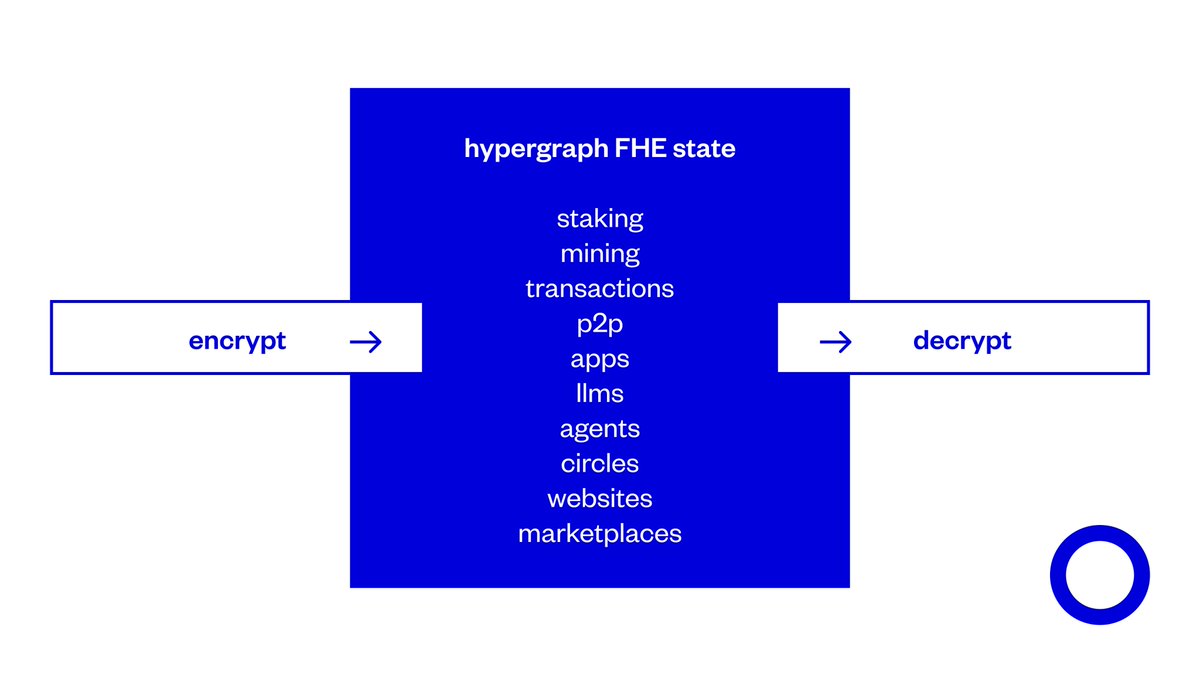
operating on a global encrypted state is much more flexible than shielding or mixing coins
example:
> have 100k oct
> encrypt 50k
> stealth send 30k
> decrypt 10k
proofs are only required on spend and decrypt, all other operations within the hypergraph space are near-instant
octra labs@octralabs
octra stealth transfers do not expose a plaintext sender→recipient→amount graph. they spend from encrypted balance, update encrypted state with proofs, and send an encrypted recipient payload. metadata at the edges still matters: key discovery, claims, timing and app routing must be handled carefully.
English
English

JUST IN:
GRAYSCALE AND SUI JUST SENT A WARNING TO THE ENTIRE CRYPTO INDUSTRY 🤯🤯🤯
@BarrySilbert and @EmanAbio message is becoming impossible to ignore: no bank, government, enterprise, or mass consumer is moving serious money onto a blockchain where every balance and transaction is exposed to the entire internet.
Privacy is no longer a niche.
It is becoming the foundation of the next financial system.


English
amensch | Onchain Thinker | Governance participant retweetledi
amensch | Onchain Thinker | Governance participant retweetledi
octra is not slap-on privacy, and OCT is not a governance token
it is an asset that allows users and devs to build and pay for encrypted compute today: programs, webapps, defi, inference, and soon staking, running nodes and mining encrypted balance
no TEEs or plaintext involved
octrascan@octrascan
👀 someone bridged and encrypted 100,000 ethereum:0x4647e1fe715c9e23959022c2416c71867f5a6e80: octrascan.io/tx.html?hash=9… the encrypted balance can now be moved arbitrarily within the network, used for programs, circles, apps or inference, or even staked. ⏲️ btw, the bridging took just under a minute: etherscan.io/tx/0x6ad58a9e1…
English
amensch | Onchain Thinker | Governance participant retweetledi
as AI advances, we keep seeing hints that pretty much everything is modeled as a hypergraph, from space to the human brain
it is increasingly likely that future compute, data relationships, advanced models and quantum safety will be built around hypergraphs
the future is bright

octra@octra
English
amensch | Onchain Thinker | Governance participant retweetledi

Jeff Bezos said the bottom half of Americans should pay ZERO federal income tax.
Why is a nurse in Queens making $75K a year and paying $12K in taxes??! “we shouldn’t be asking this nurse in Queens to send money to Washington.”


English