Analyse Podcast

55.6K posts

Analyse Podcast banner
Analyse Podcast

Analyse Podcast

@analyseasia

The official X account of Analyse Podcast — the global weekly show dissecting the pulse of #business, #technology & #media, hosted by @bernardleong

Asia Pacific Region Katılım Eylül 2014
577 Takip Edilen3.1K Takipçiler
Sabitlenmiş Tweet
Analyse Podcast
Analyse Podcast@analyseasia·
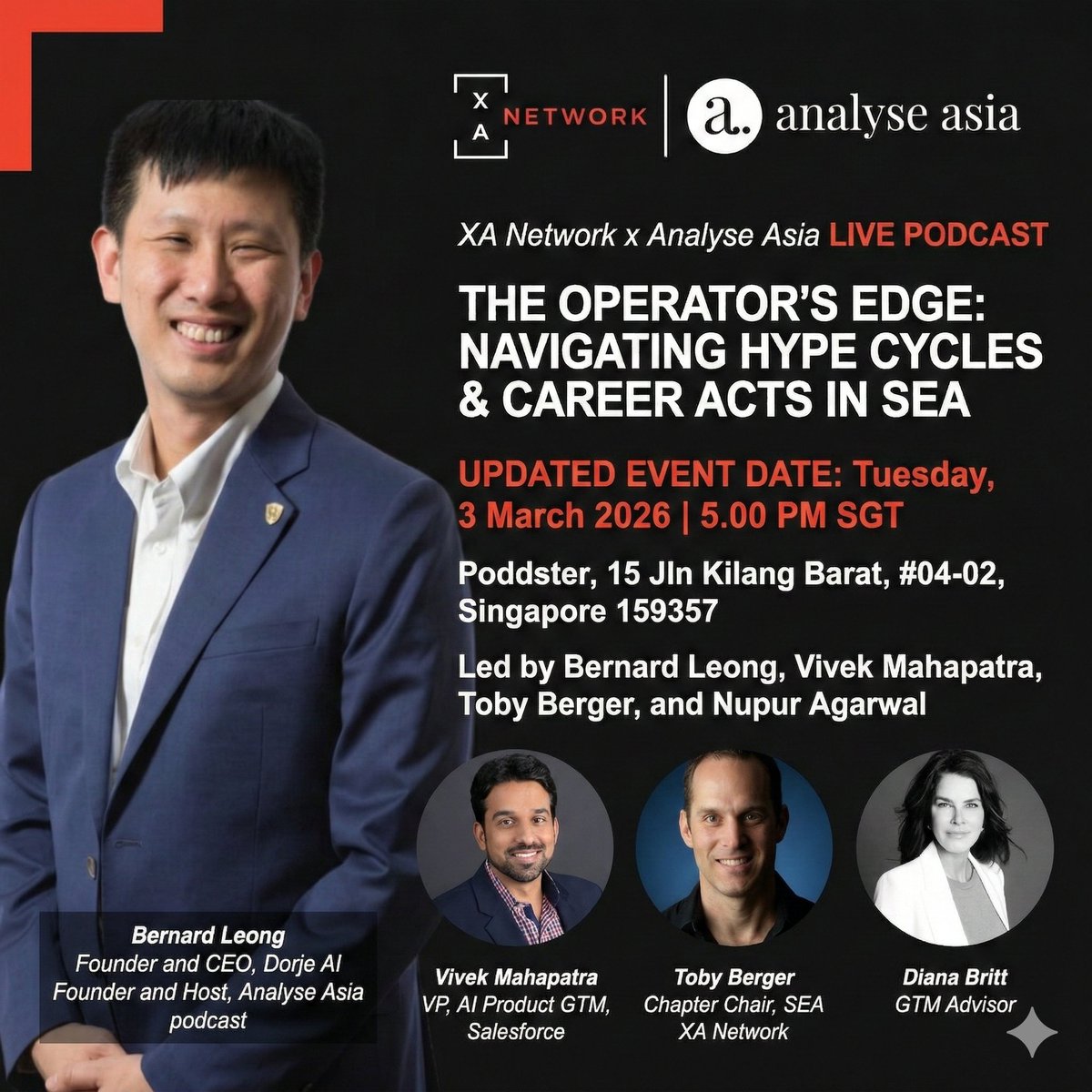
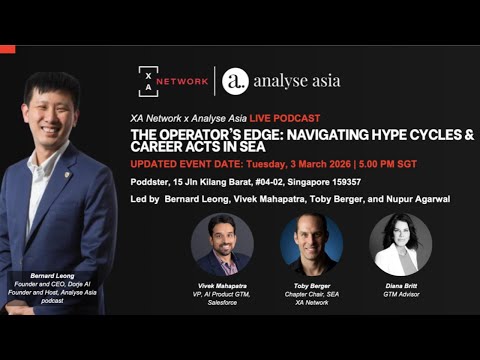
Operators, investors, and founders gathered to decode the #AI hype cycle. Last night we hosted @NetworkXa XA Network x Analyse Podcast Live in Singapore. youtube.com/live/YyPuDJ2gi… The conversation: “The Operator’s Edge: Navigating the Hype Cycle.” Together with our panel, we explored the realities behind today’s AI and startup narratives — from capital cycles to career reinvention. A huge thank you to our incredible panellists: Tobias 'Toby' Berger, Diana Kane Britt and Vivek Mahapatra! They shared candid insights on: - How operators survive and thrive through technology hype cycles - What enterprises actually expect when they say they want “AI” - The fragmented nature of the Southeast Asian market - the human side of leadership and career “second acts” We are also deeply grateful to Borko Kovacevic, Ben Draycott-Jones and the great team in @poddster_ Singapore for hosting the live recording and providing such a great venue for the community to gather. Finally, thank you to everyone who attended and made the evening so lively — from the thoughtful questions to the networking event afterwards! #leadership #southeastasia
YouTube video
YouTube
English
0
3
5
171
Analyse Podcast
Analyse Podcast@analyseasia·
As we celebrate the joy and peace of Eid, the Analyse Podcast team wishes you and your loved ones a blessed and happy Eid Mubarak! 🌙 May this festival bring prosperity, peace & well-being to all. In the spirit of the season, let’s reflect on our progress and look forward to new beginnings. #EidMubarak
Analyse Podcast tweet media
English
0
1
2
82
Analyse Podcast
Analyse Podcast@analyseasia·
For years we’ve been hearing the same story: Technology is destroying our attention. Social media is addictive. AI will make us stop thinking. In other words, we’re not checking our devices because they call us. We’re checking them because we’re trying to escape a feeling. That insight made me rethink how we talk about technology today — especially AI. Every generation believes its new technology will ruin society. Socrates once warned that writing things down would weaken people’s minds. Radio, television, video games, social media — each triggered a moral panic. Now it’s AI. But perhaps the real question isn’t whether technology is good or bad. The better question is: Are we using technology with intention? Don't miss our latest episode with @nireyal, author of his new book, "Beyond Belief" Watch the full episode on Spotify: open.spotify.com/episode/4irQZ9…
English
0
2
4
100
Analyse Podcast retweetledi
BernardLeong.eth
BernardLeong.eth@bernardleong·
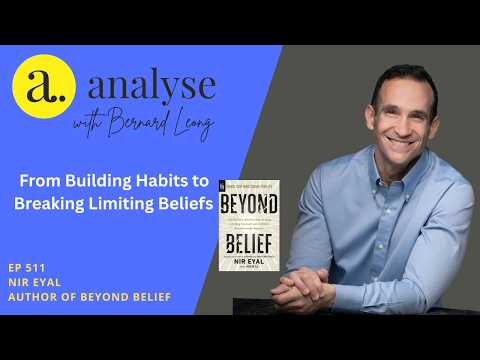
Beliefs are tools — not truths via @analyseasia #podcast youtu.be/syWQpIA2H8s That single line reframes how we think about motivation, success, and even our own limitations. Many of us assume that progress is simply about knowing what to do. But Nir Eyal @nireyal argues that knowledge is rarely the problem. Most of the time, the real barrier is belief. Here are three insights from our conversation about his new book, "Beyond Belief" (and I received my digital copy this morning) that I found deeply thought-provoking. 1️⃣ Motivation requires belief, not just effort. We often think motivation works like this: Do the work → get the reward. But Nir explains motivation is actually a triangle: a/ Behavior — what you do, b/ Benefit — why you do it and c/ Belief — whether you think it will work. Without belief, even the best advice doesn’t translate into action. That explains why we often know what to do… yet still don’t do it. 2️⃣ Many of our limits come from beliefs we cannot see. The most dangerous limiting beliefs are not the ones we articulate. They are the ones that operate quietly in the background: “I’m too late.”, “I’m too old.”, “This won’t work for someone like me.” What struck me in the conversation is that even highly successful people carry limiting beliefs in different areas of their lives. Recognizing them is the first step to changing them. 3️⃣ The real question is not whether a belief is true. The real question is: Is this belief serving me — or am I serving the belief? There are many decisions in life where there will never be perfect certainty: Starting a company, Taking a career risk or Building something new. At some point, belief becomes the catalyst that turns possibility into reality. As Nir put it during our conversation: Everything worth having in life is on the other side of discomfort. And sometimes the first step through that discomfort is simply changing the belief we hold about what is possible. 🎧 I really enjoyed this conversation with Nir Eyal on the @analyseasia Podcast. If you are building something, leading a team, or simply trying to improve yourself, this episode will make you rethink the beliefs that shape your decisions.
YouTube video
YouTube
English
1
3
6
143
Analyse Podcast
Analyse Podcast@analyseasia·
Many people think motivation is simple. Do the work → get the reward. youtu.be/syWQpIA2H8s But bestselling author of #BeyondBelief, Hooked & Indistractable, Nir Eyal @nireyal argues that something critical is missing from that equation. Here are 3 key takeaways from the conversation: 1️⃣ Motivation is a triangle — not a straight line. Most people think motivation comes from behavior and reward. But Nir explains that motivation actually requires three elements: • Behavior — What you do • Benefit — Why you do it • Belief — Whether you think it will work Without belief, even the best advice goes “in one ear and out the other.” 2️⃣ The opposite of distraction isn’t focus — it’s traction. Traction means taking actions aligned with your values and what you intended to do. Distraction happens when something pulls you away from those commitments. The real challenge isn’t eliminating technology — it’s designing our lives and tools to create traction. 3️⃣ Beliefs are tools — not truths. One of the most powerful ideas from Beyond Belief is that beliefs should be treated as tools we evaluate, not absolute truths we defend. The real question becomes: 👉 Is this belief serving me, or am I serving the belief? This shift in thinking can change how we approach business, leadership, habits, and even relationships. We’d love to hear from the community: What belief has shaped your career the most? Watch the full spotify video: open.spotify.com/episode/4irQZ9… #HumanBehavior #Leadership #ProductThinking #BeyondBelief #NirEyal
YouTube video
YouTube
English
0
1
4
87
Analyse Podcast
Analyse Podcast@analyseasia·
This Motivation Framework Changes How You Think About Success via @nireyal, author of his upcoming book "Beyond Belief" (See his website: nirandfar.com) "Motivation is a triangle. It requires: Behavior: What am I going to do? Benefit: Why am I going to do it? Belief. If you don’t have those three areas of your life in concert, all the advice in the world is going to go in one ear and out the other. Beliefs are tools, not truths. The majority of our problems today—cultural, geopolitical, personal—come from the fact that we think our faith is fact, and we confuse facts for what are beliefs. Everything worth having in life is on the other side of discomfort. So if you can learn to manage discomfort through the power of belief, what couldn't you accomplish? Everything." - Nir Eyal, author of "Beyond Belief" Our full episode drops tomorrow and check out our YouTube website: @AnalyseAsia" target="_blank" rel="nofollow noopener">youtube.com/@AnalyseAsia #beyondbelief #nireyal
English
0
2
8
173
Analyse Podcast
Analyse Podcast@analyseasia·
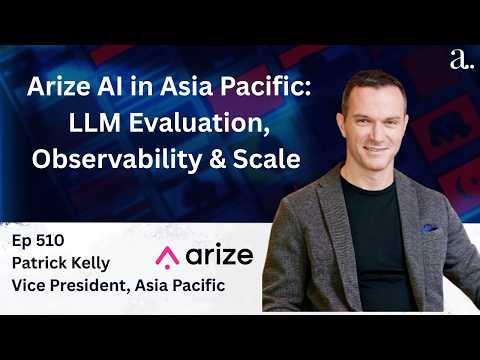
Don't miss our recent episode with Patrick Kelly, Vice President from Asia Pacific on Arize AI and how evaluation, observability and execution can help businesses to build their AI agents to be robust and resilient: open.spotify.com/episode/1eU10c…
English
0
0
3
56
Analyse Podcast
Analyse Podcast@analyseasia·
Stop Jugging Vendors: The All-In-One Solution for SMEs - Ralph Haupter from @Microsoft youtube.com/shorts/-j0VKZp… "I'm deeply convinced it’s actually an advantage, especially in small, medium enterprises, is the fact that we—I call it a platform company at its finest. So we have the full assortment from a productivity world, to an infrastructure world, the security world, to an application world. And if you're a small, medium enterprise, the least you want is spending four meetings with four people, four different types of coffees you need to serve to four different vendors because you want to have a full stack portfolio as your company. This is where I think we play very unique and we really are focused on bringing these components of the stack also together in one experience. It is actually very complete as well, because at different stages of digital maturity as the company grows, there is—there is a solution, at least from your stack, they can actually—they can fulfill for them. And I would say where I try to really—not bragging too much, but build a level of confidence also with our customers, is that if they see that all of the products have core AI integration. So all engineering leads took immediately when—when we started going into the Gen AI initiative and the engineering initiative, that there is an AI experience. Like you described in Word. So there is now deep, even in Word, an AI experience. Excel as well. Security stack has an AI experience. So you get your security better because there's AI integration there. The CRM application is best because AI is integrated there. The stack is there. So that's just what people need to kind of see through—where we make the difference and why it is beneficial to bring it together." #Microsoft #smallbusiness #SMEs #AI
YouTube video
YouTube
English
0
1
6
92
Analyse Podcast
Analyse Podcast@analyseasia·
AI Agents, Silent Failures & the Infrastructure We’re Not Talking About Enough. youtu.be/f1yHV2yWuqg If 2023–2024 was the era of experimenting with LLMs, then 2025–2026 is the era of making them actually work in production. In our latest episode of Analyse Podcast, Patrick Kelly, VP Asia-Pacific at @arizeai Arize AI, breaks down something most builders underestimate: 👉 50% of AI agents fail quietly in production — not because the models are bad, but because teams can’t see what’s going on. Patrick explains the new reality of AI engineering in APAC: 🔹 Evals are now the core of AI reliability — offline AND online 🔹 Sessions matter — we must evaluate entire chains of LLM calls, API calls, retrieval steps 🔹 Agentic systems demand observability — tracing every decision, context window, and output 🔹 Risk management is now a first-class engineering discipline, especially in banking, telco & regulated sectors 🔹 Open standards (OpenTelemetry + OpenInference) are becoming the backbone of LLM infra 🔹 AI PMs & domain SMEs are emerging as critical partners, not optional stakeholders 🔹 And yes — AI needs to run on cloud, on-prem, and air-gapped systems, depending on the enterprise reality Our favourite takeaway? 🟦 “Building agents is hard. Shipping them is harder.” For anyone building serious AI systems — APAC or global — this conversation is a must-listen with our host Bernard Leong diving deep into the realm of AI Evaluations and what it means for agentic AI YouTube: youtu.be/f1yHV2yWuqg Spotify: open.spotify.com/episode/1eU10c…
YouTube video
YouTube
English
0
2
4
200
Analyse Podcast
Analyse Podcast@analyseasia·
Our Team in Analyse Podcast wishes everyone a Happy Chinese New Year 2026. May the year of the galloping horse bring peace, prosperity and great health to our audience, our partners and our guests all over the world! We will be back in early March 2026 with a new season of interviews! Note: Video generated by @grok Imagine. We tested all the LLMs and found this to be the best!
English
0
2
6
199
Analyse Podcast retweetledi
BernardLeong.eth
BernardLeong.eth@bernardleong·
Most leaders are mapping AI to tools. The real leverage comes from mapping AI to problems. Everyone is asking: “What can Claude do?”, “What skills should we build?” “Which agent framework should we use?” That’s backwards. The real question is: What recurring business problems do we want solved flawlessly, every time? The Counter-Intuitive Insight: A Claude skill is not a feature. It’s not a plugin. It’s not just instructions. It’s a codified business workflow — packaged once, reusable forever. That is how our team at Dorje AI think about our customers' financial workflow problems every day. According to The Complete Guide to Building Skills for Claude, a skill is simply a folder with structured instructions (SKILL.md), optional scripts, references, and assets. Skills is now an open source framework which work across other platforms. The business owner will need to provide context for the engineers to put the skills to reality. That sounds technical. It’s not. It’s strategic. #AgenticAI #AIWorkflows #GenerativeAI Reference: The Complete Guide to Building Skills for Claude resources.anthropic.com/hubfs/The-Comp…
English
1
1
5
207
Analyse Podcast retweetledi
BernardLeong.eth
BernardLeong.eth@bernardleong·
Claude Code + Open Sec with Opus 4.6 is a great combo. I can plan software build, make sure that I set stringent rules on what can or cannot be allowed. Amazing that 2 day coding project become 6 hours of check and editing for me.
English
0
1
4
176
Analyse Podcast retweetledi
BernardLeong.eth
BernardLeong.eth@bernardleong·
In our latest This Week in Asia episode on @analyseasia Podcast with @cerventus and @dreampipe, one line stuck with me: “If you don’t think we’re going to get there, you should get out of tech – because we are going to get there.” youtu.be/wI1I9oldCHI “There” is a world where: 1/ Agents handle 90% of your admin and you just say yes or no: 2 Your phone quietly fills in school forms, renews passports, books studios and meetings 3/ Health, finance and work flows are stitched together behind the scenes Today, we barely have the horsepower to keep Google Docs running smoothly. That tells you how early we still are. A few takeaways from the conversation: 1/ Yes, there’s an AI bubble – and that’s normal. Every major infrastructure cycle had one: railroads, fiber, the early internet. Bubbles are how societies “over-invest” in the rails we later take for granted. The question isn’t if it pops, but what remains useful after the correction. 2/ Compute is the real chokepoint. If you want to be the next hyperscaler, you’re not just building models – you’re competing in data centres, networking and distribution. That’s why even the biggest tech firms are now borrowing to build out AI infrastructure instead of funding it just from cashflow. 3/ We’re still in the “rock-paper-scissors” era of AI. Our phones are insanely powerful, but they do almost nothing on our behalf. The gap between what’s technically possible and what’s shipped into everyday life is still huge. Southeast Asia is more ready than people think. Singapore is already a top market for AI tools on a per-capita basis, and the region’s digital economy has quietly crossed the US$300B mark. The narratives are often behind the reality on the ground. For founders, operators and policymakers in Asia, I think the right question is no longer “Is AI a bubble?” but: What do you want to exist after the bubble? What infrastructure, workflows and institutions do you want to be left standing when the dust settles? That’s where I’m putting my time and energy with Dorje AI.
YouTube video
YouTube
English
1
1
8
285
Analyse Podcast
Analyse Podcast@analyseasia·
Is Southeast Asia really ready for AI – or are we just repeating old narratives with new buzzwords? In the latest episode of This Week in Asia, @cerventus, @dreampipe and our host, @bernardleong dug into what’s actually changing underneath the AI headline noise. youtu.be/wI1I9oldCHI A few non-obvious takeaways: 1/ India is cashing in, Southeast Asia is still searching for exits: Indian tech IPOs are on a tear – Groww, Pine Labs & LensKart – while several Southeast Asia–linked companies are redomiciling just to list in India. It’s great news for India, but a reminder that true local exits in Southeast Asia are still rare. 2/ The region’s digital fundamentals are quietly compounding. According to the latest Google–Temasek–Bain report, Southeast Asia has already reached US$300B in digital economy GMV, ahead of earlier forecasts. Digital payments penetration has crossed ~60%, yet only about 3 in 5 people have bought something online – which means there is still a lot of headroom. 3/ SMEs and “unsexy” businesses are where AI might matter most. Millions of jobs in Malaysia and Singapore are powered by SMEs and family-run firms that have barely been touched by modern tooling, let alone AI. For search funds and operators, the opportunity is not another shiny app, but buying and modernising these cash-flow-positive, under-digitised businesses. At Analyse Podcast, our view is simple: The most interesting AI stories in Asia won’t come from the next foundation model. They’ll come from boring businesses that quietly become AI-native. If you’re: A founder trying to decide your GTM, An investor thinking about post-bubble value, or An operator considering a move into SMEs or search funds, this episode is for you. 🎧 Episode: This Week in Asia: Is the AI Bubble About to Pop? Guests: Daniel Cerventus & Michael Smith Jr 🎙️ Show: Analyse Podcast What’s one under-the-radar area in Southeast Asia where you think AI could create real, not speculative, value? Share it below Listen or Watch it on Spotify: open.spotify.com/episode/12rGe1…
YouTube video
YouTube
English
0
1
4
191
Analyse Podcast
Analyse Podcast@analyseasia·
In our latest episode with Jay Parikh @jayparikh, Executive Vice President, Core AI from @Microsoft reframed how we should think about the next phase of AI-enabled software youtu.be/EZVgf2RHTcQ Speaking to our host, Bernard Leong @bernardleong, he shared how Microsoft enable and challenges startup founders and developers to think bigger in building with AI. Here are our three strategic takeaways for leaders and builders for those who want to raise their AI ambitions 1. Software development is becoming parallel by default: AI agents collapse timelines by running multiple tasks simultaneously — coding, testing, refactoring, research. This breaks traditional planning models built around linear human throughput. 2. Model choice is a portfolio decision, not a belief system: Open vs closed isn’t ideology — it’s architecture. Different agents, workflows, and cost constraints require different models. Future-proof products assume multi-model orchestration from day one. 3. Responsible AI must live in the platform, not policy decks: Security, identity, observability, and red-teaming only scale when embedded directly into developer workflows. Governance that relies on after-the-fact review will not survive autonomous agents. The next AI advantage won’t come from smarter models alone. It will come from organizations designed to learn, adapt, and delegate faster.
YouTube video
YouTube
English
0
1
4
118