AncientDNAHub

805 posts

AncientDNAHub banner
AncientDNAHub

AncientDNAHub

@AncientDNAHub

Discover your ancient ancestors and trace your ancestral origins beyond the imaginable.

Sweden Katılım Ekim 2022
98 Takip Edilen558 Takipçiler
matrixbot
matrixbot@thematrixb0t·
97.5% of Israeli Jews have no ancient Hebrew DNA, they're not Semites. 80% of Palestinians carry ancient Hebrew DNA.
English
138
2.1K
6.4K
64.6K
Daryoosh رضاشاه_روحت_شاد #KingRezaPahlavi
Jerusalem was destructed in 586 BC during the Babylonian conquest by Nebuchadnezzar II. 47 years later in 539 BC Cyrus the Great conquered Babylon and issued a decree allowing the Jewish exiles to return & rebuild the Temple. 47 years after 1979 Israel is helping Iranians!! 🙏
Daryoosh رضاشاه_روحت_شاد #KingRezaPahlavi tweet media
English
75
375
1.4K
21.3K
Josh Barzon
Josh Barzon@JoshuaBarzon·
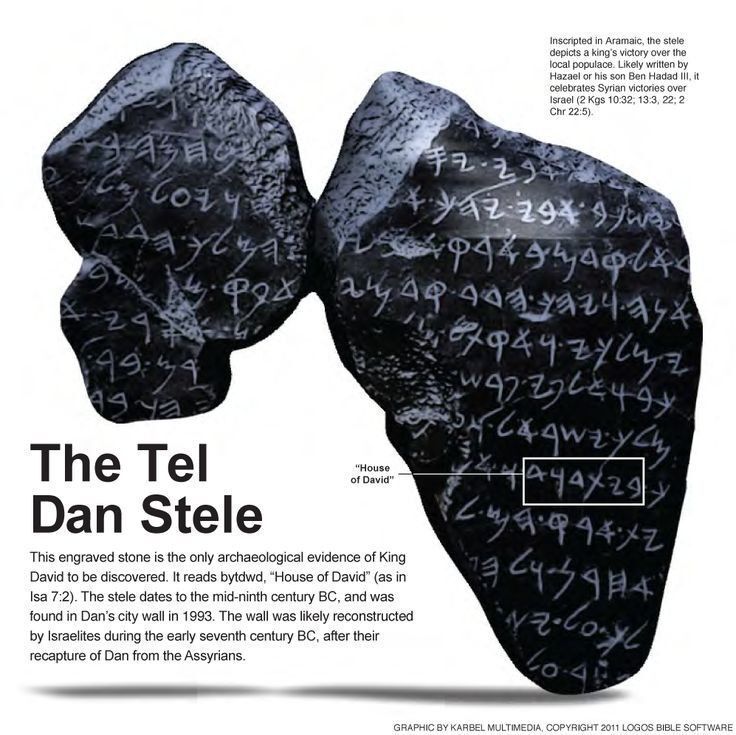
The Tel Dan Stele, discovered in 1993, contains the phrase "House of David," making it the oldest known extrabiblical inscription referencing King David. It was written by an enemy king boasting about defeating Israel. Even David's opponents confirmed his dynasty existed.
Josh Barzon tweet media
English
18
71
287
7.7K
Voice of Rabbis
Voice of Rabbis@voiceofrabbis·
🚨 Mike Huckabee says the rise of antisemitism is “a cancer in our country” and calls for “Never Again” to be taken seriously. Real antisemitism is dangerous and must be confronted. But criticizing Israel or opposing Zionism is not antisemitism. Israel doesn't represent jews. Judaism is a religion.
English
327
340
985
29.3K
The Redeemed
The Redeemed@TheIronWarden·
✠ The Kingdom Of Jerusalem ✠
The Redeemed tweet media
English
159
910
8.7K
108.1K
AMIRAN 🇮🇱
AMIRAN 🇮🇱@Amiran_Zizovi·
Bill Maher: Calling Jews "colonizers" in Israel is as ridiculous as calling Native Americans "settlers" in America. It’s not just a lie, it’s a total defiance of history. Our connection to this land didn't start in 1948. It started 3,000 years ago. The Bible is our deed, and the archeology under every inch of Judea and Samaria is our ID card. You cannot "occupy" your own ancestral home. We are the indigenous sons and daughters who finally returned after a long exile. It’s time to stop apologizing for our existence and our heritage. While empires came and went, we remained faithful to this soil. We aren't guests; we are the landlords. 🇮🇱📖
English
213
412
1.5K
24.6K
Archaeo - Histories
Archaeo - Histories@archeohistories·
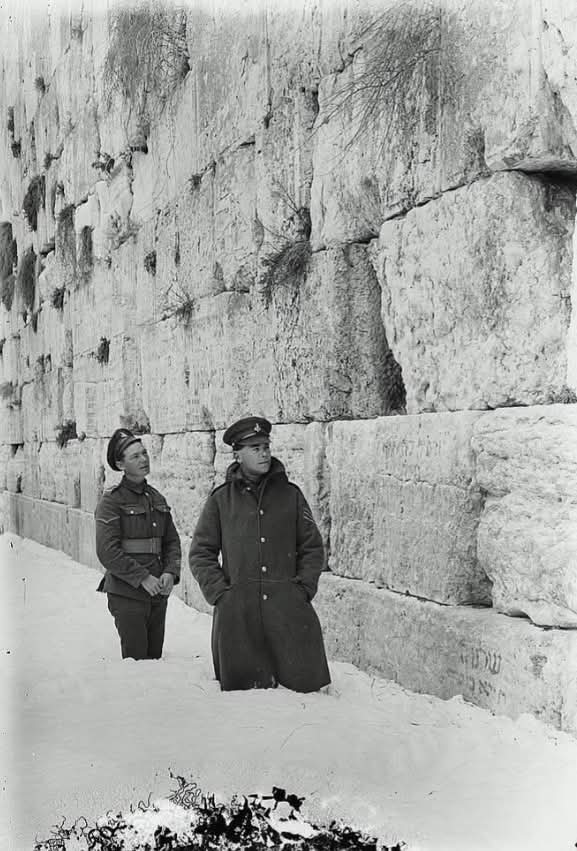
British soldiers in snow at the Western Wall, Jerusalem, 1921. (Mandate for Palestine).... At the time, the city was governed under the British Mandate for Palestine, established after the defeat of the Ottoman Empire in World War I. British forces had entered Jerusalem in December 1917, when General Edmund Allenby took the city without artillery bombardment in order to protect its historic and religious sites. Heavy snowfall in Jerusalem is uncommon because of its Mediterranean climate, though significant storms have occurred periodically due to the city’s 2,500-foot (760-meter) elevation above sea level. Winters cold enough to blanket the old city walls in snow occur only a handful of times each decade, making images like this particularly unusual. The massive limestone blocks behind the soldiers form part of a retaining wall built during the reign of Herod the Great around 20 BCE, when the Second Temple was dramatically expanded. Many of the lower stones weigh hundreds of tons, and the largest known block in the wall, often called the Western Stone, is estimated to weigh over 500 tons, making it one of the heaviest stones ever used in ancient construction. During the Mandate period, access to the Western Wall was tightly regulated by British authorities because of rising tensions between Jewish and Arab communities, restrictions that would eventually contribute to the violent clashes known as the 1929 Palestine riots. © History Pictures #archaeohistories
Archaeo - Histories tweet media
English
4
24
134
8.6K
AncientDNAHub
AncientDNAHub@AncientDNAHub·
Great post! Did you know that you can explore your connection to ancient African populations? Our People of Africa DNA test compares your genome to published ancient African genomes. Discover your roots here: ancientdnahub.com/People-of-Afri… History isn’t legend — it’s encoded in your DNA.
English
0
0
0
20
Zoom Afrika
Zoom Afrika@zoomafrika1·
Imagine if such actions were taken against our ancestors, and then a religion was introduced, with the promise of reaching heaven.
Zoom Afrika tweet media
English
55
237
607
28.1K
AncientDNAHub
AncientDNAHub@AncientDNAHub·
@Life_truthway Fascinating video — thank you for sharing it. We actually offer an ancient DNA analysis that evaluates your genetic relatedness to individuals from ancient Migdal (Magdala) (64–29 BC), who lived in the same time and place as Jesus. ancientdnahub.com/In-the-footste…
English
0
0
0
6
Life Truth Way
Life Truth Way@Life_truthway·
Evolution of Catholic Saints !! Comment " Faith " If you love it .
English
5
10
46
2.2K
Vivid.🇮🇱
Vivid.🇮🇱@VividProwess·
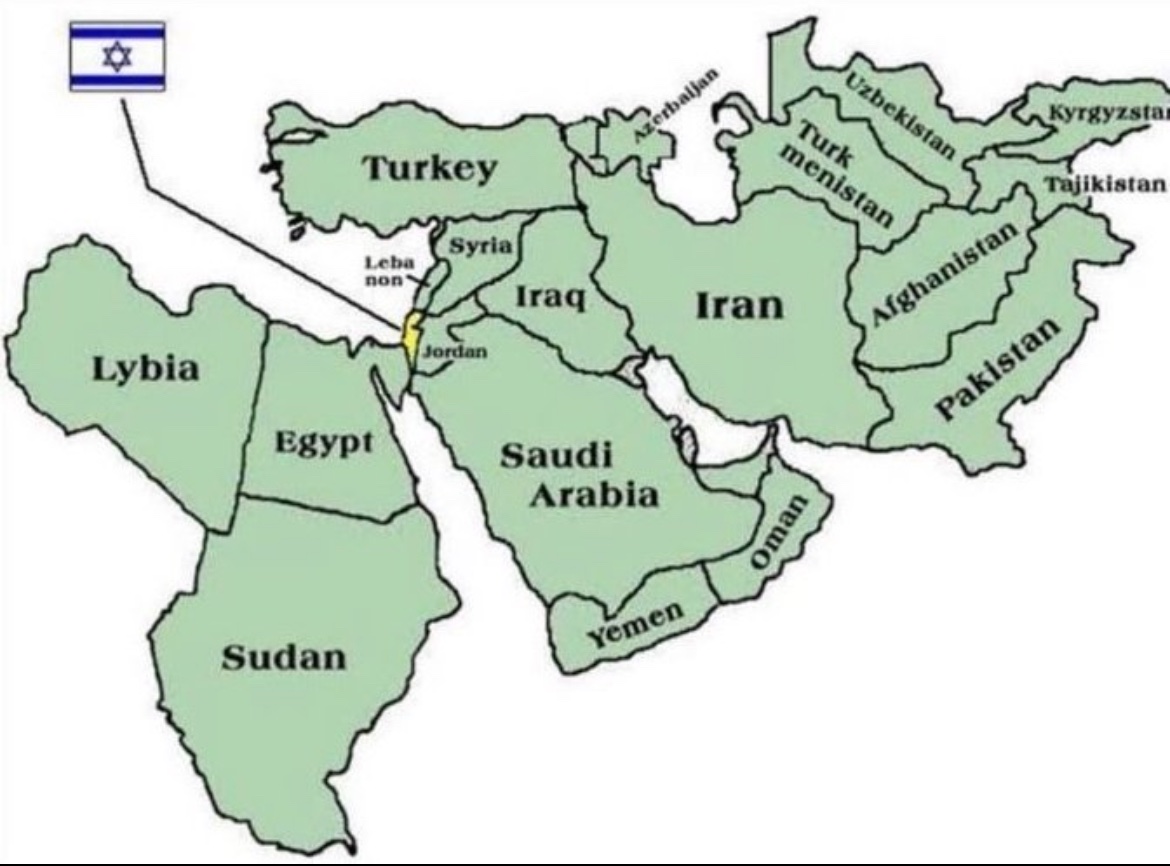
They're trying to convince the world that Israel, this yellow dot, a state the size of New Jersey and the only Jewish state in the world, surrounded by Muslim nations, is the “occupier.” Do they realize how stupid they sound?
Vivid.🇮🇱 tweet media
English
1.5K
4.4K
16.1K
396.2K
Life Truth Way
Life Truth Way@Life_truthway·
Evolution of Christianity in United States 🇺🇸 .Comment Your Thoughts About this Below!
English
10
107
575
20.3K
Archaeo - Histories
Archaeo - Histories@archeohistories·
The"Finding of Moses", sometimes called "Moses in the Bulrushes", "Moses Saved from the Waters" or other variants, is story in chapter 2 of the Book of Exodus in the Hebrew Bible of the finding in the River Nile of Moses as a baby by the daughter of Pharaoh. The story became a common subject in art, especially from the Renaissance onwards... Depictions in Jewish and Islamic art are much less frequent, but some Christian depictions show details derived from extra-biblical Jewish texts. The earliest surviving depiction in art is a fresco in the Dura-Europos synagogue, dating to around 244. The motif of a "naked princess" bathing in the river has been related to much later art. A contrasting tradition, beginning in the Renaissance, gave great attention to the rich costumes of the princess and her entourage. Moses was a central figure in Jewish tradition and was given various significances in Christian thought. He was regarded as a typological precursor of Jesus. He could also, at times, be regarded as a precursor or allegorical representation of things as diverse as the pope, Venice, the Dutch Republic, or Louis XIV. The subject also represented a case of a foundling or abandoned child, a significant social issue in modern times. The subject is unusual in standard history painting in that it requires a number of female figures, but apart from the baby, no male figures are necessary. Many painters took the opportunity to depict female nudes. Chapter 1:15–22 of the Book of Exodus recounts how during the captivity in Egypt of the Jewish people, the Pharaoh ordered: "Every Hebrew boy that is born you must throw into the Nile, but let every girl live." Chapter 2 begins with the birth of Moses, and continues: A certain member of the house of Levi went and took [into his household as his wife] a woman of Levi. The woman conceived and bore a son; and when she saw how beautiful he was, she hid him for three months. When she could hide him no longer, she got a wicker basket for him and caulked it with bitumen and pitch. She put the child into it and placed it among the reeds by the bank of the Nile. And his sister stationed herself at a distance, to learn what would befall him. The daughter of Pharaoh came down to bathe in the Nile, while her maidens walked along the Nile. She spied the basket among the reeds and sent her slave girl to fetch it. When she opened it, she saw that it was a child, a boy crying. She took pity on it and said, “This must be a Hebrew child.” Then his sister said to Pharaoh’s daughter, “Shall I go and get you a Hebrew nurse to suckle the child for you?” And Pharaoh’s daughter answered, “Yes.” So the girl went and called the child’s mother. And Pharaoh’s daughter said to her, “Take this child and nurse it for me, and I will pay your wages.” So the woman took the child and nursed it. The biblical account allows for a variety of compositions. There are different moments in the story, which are quite often compressed or combined in depictions, and the moment shown, and even the identity of the figures, is often unclear. In particular, Miriam and Moses's mother, traditionally given the name Jochabed, may be thought to be included in the group around the princess. The Hebrew word usually translated as "basket" in verse 3 can also mean ark or small boat. The basket, usually with a rounded shape, is more common in Latin Christianity, and the ark more so in Jewish and Byzantine art; it is also used in Islamic miniatures. In all traditions, most depictions show a stretch of open river with few reeds. The vessel is sometimes seen drifting in many 19th-century depictions, and some in late medieval manuscripts of the Bible Moralisée type. 📷 : The Finding of Moses (1885; Oil on Canvas) by Frederick Goodall (1822-1904) - (152.4 x 114.2cm) • Collection of Juan Antonio Pérez Simón #archaeohistories
Archaeo - Histories tweet media
English
17
151
1.4K
44.1K
Ancient Origins
Ancient Origins@ancientorigins·
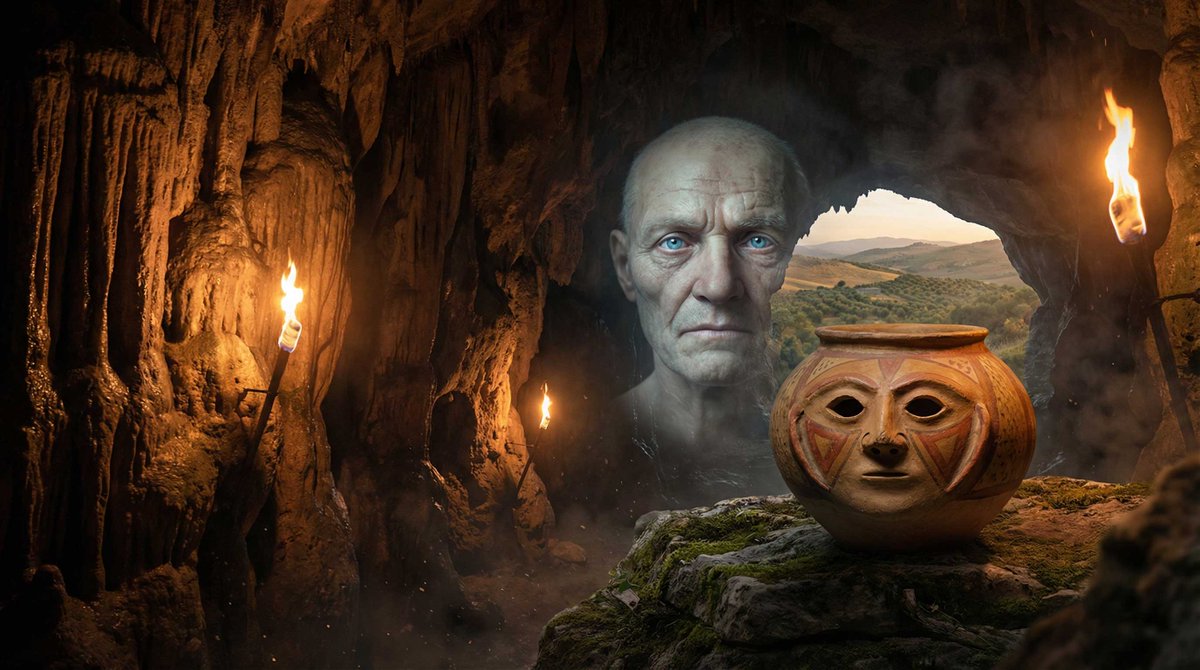
In 1995, an excavator accidentally broke through the roof of a hidden cave in Israel. Inside lay a 6,500-year-old mystery that would eventually shock the scientific world. When geneticists finally tested the DNA of the 600 skeletons found inside Peki'in Cave, they expected to find the typical genetic profile of ancient Levantine farmers. Instead, they found something unprecedented: nearly half the population carried the genes for brilliant blue eyes and fair skin. These migrants traveled hundreds of miles from Anatolia and the Zagros Mountains, bringing with them advanced metallurgy, strange burial rituals, and a completely new way of life. But perhaps the biggest mystery is what happened to them next. Read on Premium: ancient-origins.net/luminous-migra… Read on Unleashed: ancientoriginsunleashed.com/p/the-luminous…
Ancient Origins tweet media
English
3
6
45
5.2K
Archaeo - Histories
Archaeo - Histories@archeohistories·
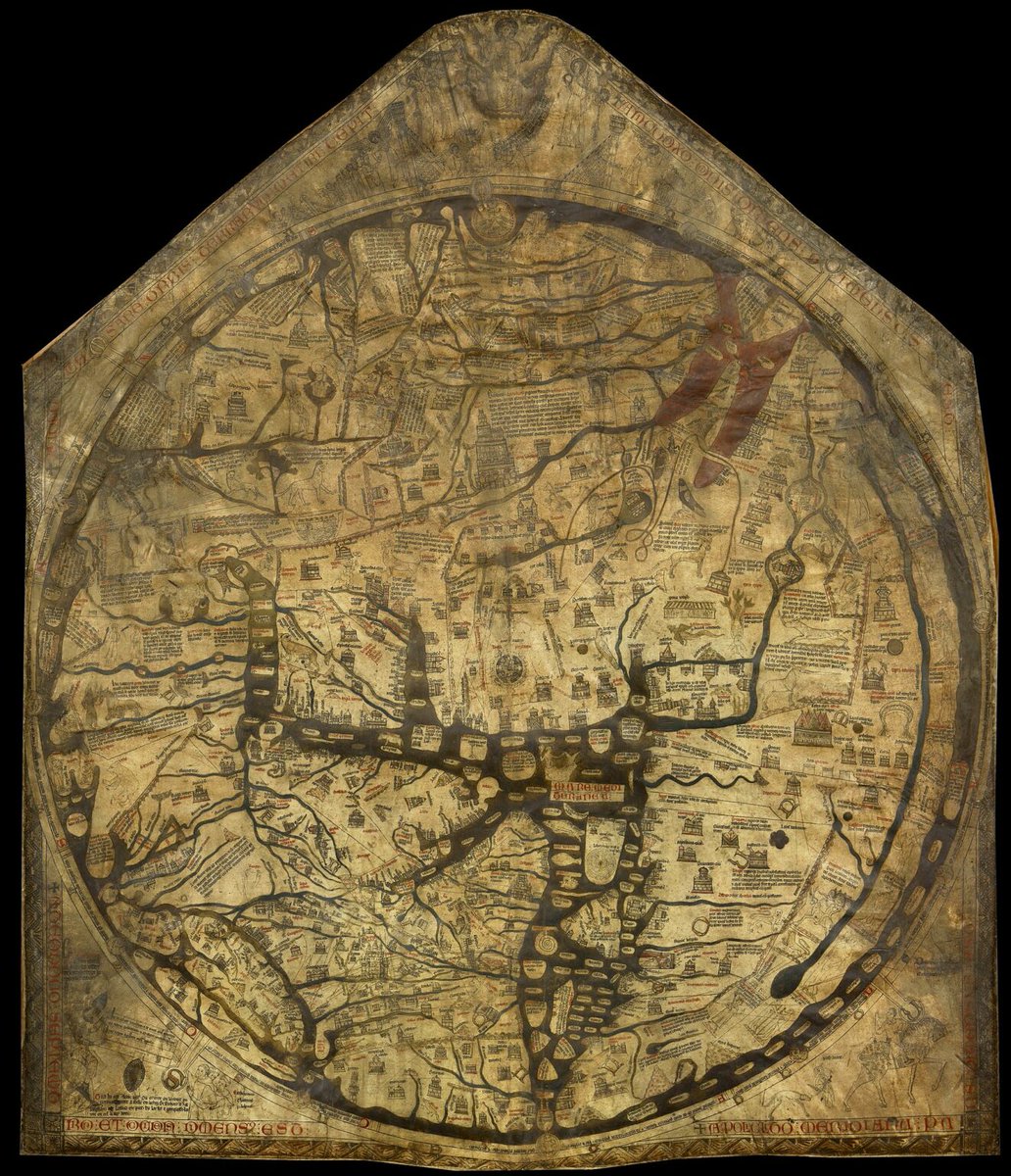
Hereford Cathedral is home to the Hereford Mappa Mundi, one of the world’s unique medieval treasures. Measuring 1.59 x 1.34m, the map is constructed on a single sheet of vellum (calf skin). Scholars believe it was made around 1300 AD, and shows the history, geography and destiny of humanity as it was understood in Christian Europe in late 13th and early 14th Centuries. The inhabited part of the world as it was known then, roughly equivalent to Europe, Asia and North Africa, is mapped within a Christian framework. Jerusalem is in the centre, and east is at the top. East, where the sun rises, was where medieval Christians looked for the second coming of Christ. The British Isles is at the bottom on the left. The Hereford Mappa Mundi is the only complete example of a large medieval world map intended for public display. It is very different to our modern understanding of a world map as it shows not only locations of places and geographic features but also acts as a visual encyclopaedia with historical, anthropological, ethnographical, biblical, classical and theological information. The map is pivotal in our understanding of medieval cartography and sense of place and still has relevance to all peoples in helping them to understand their sense of humanity and self. The map is drawn in a form deriving from the T and O pattern. It is displayed at Hereford Cathedral in Hereford, England. The map was created as an intricate work of art rather than as a navigational tool. Sources for the information presented on the map include the Alexander tradition, medieval bestiaries and legends of monstrous races, as well as the Bible. Although the evidence is circumstantial, recent work links the map with the promotion of the cult of Thomas de Cantilupe. Others link the map to a justification of the expulsion of Jewry from England. Potentially antisemitic images include a horned Moses and a depiction of Jews worshipping the Golden Calf in the form of a Saracen devil. The map may also reflect very patriarchal views of women as inherently sinful, including figures such as the wife of Lot being turned into a pillar of salt for gazing at the city of Sodom. Cantilupe was known for his dislike of Jews; in historian Debra Strickland's opinion he was regarded as misogynistic even by the standards of his own time. The map would have functioned as an object to show people visiting Cantilupe's cult, and guides would have described and helped visitors to understand the content. The idea of looking, reading and hearing the stories is mentioned on the map itself. There would not have always been single, fixed ideas attached to the images, which would be interpreted symbolically, and through juxtaposition and proximity. Text in Latin and French would help guides and international visitors to understand something of its meaning. The map suffered neglect in the post-Reformation period. By the 19th century, it was in need of repair, and it was repaired at the British Museum. However, the side panels of the original triptych were lost, and the map was detached from its wooden frame panel. The cathedral proposed to sell the map in 1988, but fundraising kept the map from sale, and it was moved to a dedicated building in 1996. A larger mappa mundi, the Ebstorf Map, was destroyed by Allied bombing in 1943, though photographs of it survive. #archaeohistories
Archaeo - Histories tweet media
English
2
13
60
5K
AncientDNAHub
AncientDNAHub@AncientDNAHub·
Great story, thanks for sharing. Did you know that you can explore your connection to ancient African populations! ?? Our People of Africa DNA test compares your genome to published ancient African genomes — including Eritera and Ethiopia’s deep ancestral heritage. Discover your roots here: ancientdnahub.com/People-of-Afri… History isn’t legend — it’s encoded in your DNA.
English
0
0
0
68
Typical African
Typical African@Joe__Bassey·
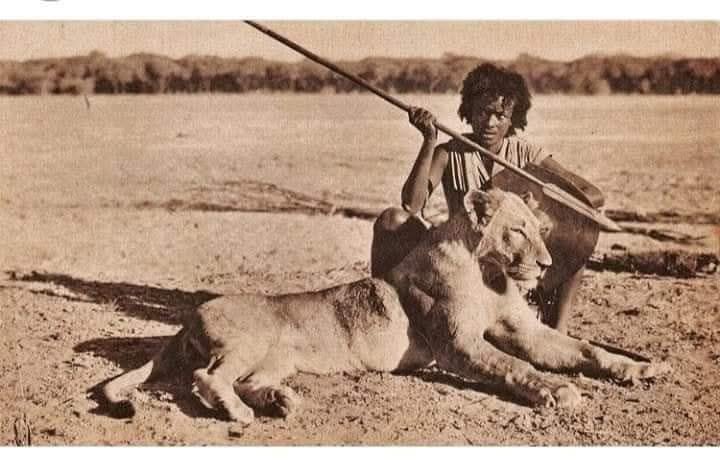
Image of an Eritrean 🇪🇷 man hunting with his lion. Picture taken around the 1930s.
Typical African tweet media
English
21
338
3.4K
46.8K
AncientDNAHub
AncientDNAHub@AncientDNAHub·
Great post! Did you know that you can explore your connection to ancient African populations? Our People of Africa DNA test compares your genome to published ancient African genomes. Discover your roots here: ancientdnahub.com/People-of-Afri… History isn’t legend — it’s encoded in your DNA.
English
0
0
0
33
Dr. M.F. Khan
Dr. M.F. Khan@Dr_TheHistories·
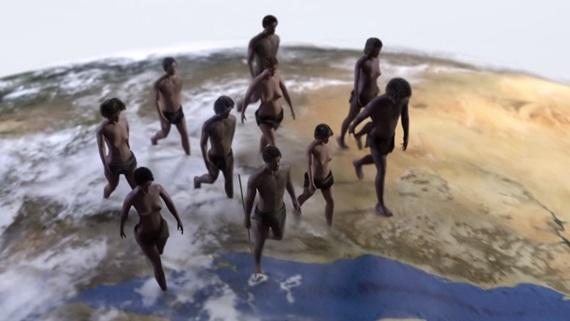
The people who first walked across ancient Europe 40,000 years ago looking very different from most Europeans today. Modern genetic research has revealed that early Europeans likely had darker skin for tens of thousands of years after they left Africa, well into the Mesolithic period. It was only after major shifts in diet and lifestyle associated with the rise of agriculture that lighter skin tones became widespread across the continent. Human skin colour evolves as part of a delicate balance between protecting the body from ultraviolet radiation and making enough vitamin D for healthy bones and immune function. In Africa, where early Homo sapiens evolved under intense sunlight, darker skin rich in melanin was beneficial because it shielded against harmful UV rays. But when our ancestors migrated into the higher latitudes of Europe where sunlight is weaker, having too much melanin became a disadvantage because it limited vitamin D production. For thousands of years before farming began, hunter-gatherer Europeans relied on diets rich in wild game, fish, and other sources of vitamin D. These foods helped meet their nutritional needs even with relatively darker skin and less sunlight. However, once agriculture spread into Europe around 10,000 years ago and communities began to eat mostly grains and plant‑based foods that lacked vitamin D, the selection pressure changed. In environments with limited UV light and diets poor in vitamin D, people with lighter skin had an advantage because their skin could synthesize vitamin D more efficiently when exposed to sunlight. Over generations, the genes associated with lighter skin became more common through natural selection. Ancient DNA studies suggest that key genetic variants linked to light skin pigmentation expanded rapidly in Europe over the last several thousand years as farming spread. Prior to this Neolithic transition, many European hunter‑gatherers carried darker skin traits similar to populations living in sunnier regions, because their traditional diets provided adequate vitamin D. It wasn’t until diets shifted away from fish and game that natural selection favoured traits that helped the body make more vitamin D through sunlight exposure. Here is a strange fact some ancient northern European hunter‑gatherers had blue eyes and lighter skin even before farming arrived showing that genetic changes linked to appearance sometimes spread in unexpected ways. #drthehistories
Dr. M.F. Khan tweet media
English
33
24
90
13.1K
Old World Explorer
Old World Explorer@archi_tradition·
Over 2,300 years old, the Amyntas Rock Tombs in Fethiye, Turkey
Old World Explorer tweet media
English
58
612
5.3K
109.8K
AncientDNAHub
AncientDNAHub@AncientDNAHub·
Great Vid! Did you know that you can explore the history of the ancient peoples of Israel through your DNA? Our Tribes of Israel test analyzes genetic markers that connect YOU to the people of the Bible and provides historical and genetic answers dating back 3,000 years. Learn more: ancientdnahub.com/the-tribes-of-…
English
0
0
0
180
Life Truth Way
Life Truth Way@Life_truthway·
Evolution of Israel From 1700 BCE to Modern Era .
English
90
511
2.3K
83.4K