Andrew Feldman

1.5K posts

Andrew Feldman banner
Andrew Feldman

Andrew Feldman

@andrewdfeldman

CEO and Founder @Cerebras (NASDAQ: CBRS) where we build the fastest AI infrastructure in the world.

Los Altos, CA Katılım Aralık 2015
213 Takip Edilen26.9K Takipçiler
Sabitlenmiş Tweet
Andrew Feldman
Andrew Feldman@andrewdfeldman·
@OpenAI and @Cerebras have signed a multi-year agreement to deploy 750 megawatts of Cerebras wafer-scale systems to serve OpenAI customers. This has been a decade in the making. Deployment begins in early 2026, and when fully rolled out, it will be the largest high-speed AI inference deployment in the world. OpenAI and Cerebras were both founded in 2015 with radically ambitious goals. OpenAI set out to build the software that would push AI toward general intelligence. Cerebras set out to rethink computing hardware from first principles. Our teams met as far back as 2017. We shared ideas, early work, and a common belief: there would come a point when model scale and hardware architecture would have to converge. That point has arrived. ChatGPT set the direction for the entire industry. It showed the world what AI could be. Now we’re in the next phase - not proving capability, but delivering it at global scale. The history of technology is clear on one thing: speed drives adoption. The PC industry didn’t operate at kilohertz. The internet didn’t change the world on dial-up. AI is no different. As models grow more capable, speed becomes the bottleneck. Slow systems limit what users can do, how often they engage, and whether AI becomes infrastructure or remains a novelty. Cerebras was built for this moment. By keeping computation and memory on a single wafer-scale processor, we eliminate the data-movement penalties that dominate GPU systems. The result is up to 15× faster inference, without sacrificing model size or accuracy. That speed changes product design, user behavior, and ultimately productivity. For consumers, it means AI that feels instantaneous. For the economy, it means agents that can finally drive serious productivity growth. For Cerebras, 2026 will be a defining year. With this collaboration with OpenAI, Cerebras’ wafer-scale technology will reach hundreds of millions - and eventually billions - of users. We’re proud to work alongside OpenAI to bring fast, frontier AI to people around the world. This is what a decade of long-term thinking looks like.
Andrew Feldman tweet media
English
58
72
546
192.4K
Andrew Feldman
Andrew Feldman@andrewdfeldman·
For years, every major AI launch told the same story. A new model, smarter than the last. Google I/O was different. The lead model wasn't the smartest one. It was their fastest inference model - Gemini 3.5 Flash. Sundar spent the keynote describing how they tuned it for speed. When the largest AI company on earth makes speed the headline, you know it matters. We agree. Inference speed drives adoption. If it's fast, you use it more often, you stay on it longer, and you use it for more interesting problems. That's been true in every technology wave. It was true of search, it was true of the internet, and it's true of AI. And in the agentic era, it compounds. Speed moves from a nice-to-have to a necessity. Yesterday we brought Kimi K2.6, a trillion-parameter open-weight model, into enterprise trials. Artificial Analysis measured us at 981 tokens per second - 6.7x faster than the next-fastest GPU cloud, 23x faster than the median provider. Front-end iteration feels instant. Hard refactors finish in a fraction of the time. Google made fast inference the headline. And @cerebras delivers it. The fastest inference in the world.
Andrew Feldman tweet media
English
18
13
129
10K
Paul Graham
Paul Graham@paulg·
It's a fallacy to think you should drop out of college because you have an idea that has to be implemented right now, or it will be too late. If you stay in school you'll have other and better ideas.
English
310
277
4.7K
444K
Andrew Feldman
Andrew Feldman@andrewdfeldman·
.@cerebras is now running Kimi K2.6 - the leading trillion parameter open source model - at ~1000 tokens per second in enterprise trials. 6.7x faster than the next-fastest GPU cloud. 10x faster than Claude Opus. 3x faster than Gemini Flash 3.5 (Google’s latest fast model). A coding task that typically takes 3 minutes finishes in under 6 seconds on Cerebras. This is what wafer scale was built for.
Andrew Feldman tweet media
English
51
52
677
50.4K
Andrew Feldman
Andrew Feldman@andrewdfeldman·
This week, @cerebras IPO'd in one of the largest technology IPOs in history. We didn't get here alone. There are many people and companies to thank. To our families. It is not easy to be married to someone trying to build a company. The hours are long and so are the years. Their patience knew no bounds. To our team. They bet big chunks of their careers on 5 guys who said we could solve a problem nobody had solved in 75 years. There were 18 months between 2017 and 2019 when we couldn't make a single chip work. We were burning $8M a month. Every six weeks we'd sit with our board and say: not yet. Not yet. Not yet. The team stayed steady. They solved problems nobody else could. When our first wafer worked in August 2019, the technology was solved. But it was still 2019. OpenAI was nascent. There was no Anthropic. AI was still a parlor trick. Then the models got good enough to be useful. In some areas, necessary. And when something becomes useful, speed is everything. Our business exploded. To our early investors - @benchmark, @FoundationCap, @EclipseVentures, @coatuemgmt, @AltimeterCap and many more - whose support never wavered through years of challenges. To TSMC, who agreed to work with us when we were a 40-person team with big ideas. To our earliest customers - Argonne, Sandia, GSK - who bet on us when the product was raw and the roadmap unproven. To Peng at G42, their Chairman, and the leadership of the UAE, who believed in us when many people were afraid. And to many others not mentioned who contributed in ways large and small. We say thank you. Today starts a new chapter for us. But it is still, just the beginning. Photo Credit: @Nasdaq / Vanja Savic
Andrew Feldman tweet media
English
12
23
292
13.1K
Andrew Feldman
Andrew Feldman@andrewdfeldman·
👀
Julie Shin Choi (she/her)@juliechoi

.@cerebras just had the biggest tech IPO since 2020. And the reason goes far beyond market momentum. Our ability to run inference on the world’s largest AI models at unmatched speed is at the core of our value. This includes trillion-parameter models and beyond. The smartest models have always been bigger, and the future of AI won’t be defined by who can stack the most GPUs. It will be defined by who can deliver real-time intelligence at scale. Our CFO @BobKomin spoke with @dee_bosa on @CNBC on the day of our IPO on this topic.

ART
3
1
56
19.8K
Andrew Feldman
Andrew Feldman@andrewdfeldman·
We founded @cerebras with a vision to forever change AI compute. Yesterday we went public on the @Nasdaq, an important step towards that goal. Today our AI super computer solution was the centerpiece of a collaboration between the Governments of the UAE and India. We are honored and humbled.
Andrew Feldman tweet media
English
44
81
1.1K
85.6K
Andrew Feldman
Andrew Feldman@andrewdfeldman·
Today @cerebras went public. We are traded on the @Nasdaq. Our ticker CBRS. I could not be more proud:
English
114
69
1.5K
117.3K
Andrew Feldman
Andrew Feldman@andrewdfeldman·
Some simple habits that exceptional contributors seem to share: 1. They migrate to the hardest problems. 2. They fix the whole problem. Not just part. 3. They finish things. And the things they finish, stay finished. 4. They communicate clearly - Short, sharp emails and Slack messages. - Lists in descending order of importance. - Charts that are easy to read, with labeled axes and a description of what's being shown. - Their power point is direct and to the point, with actions and owners. 5. They are respectful of their colleagues' time. 6. They arrive at 1:1's with a list of things to share and decisions to be made. 7. They are reachable. Hard to have a monster contribution if you are not reachable. Obviously, this isn't everything. But if you do these things, you stand out.
English
6
10
81
6K
Andrew Feldman
Andrew Feldman@andrewdfeldman·
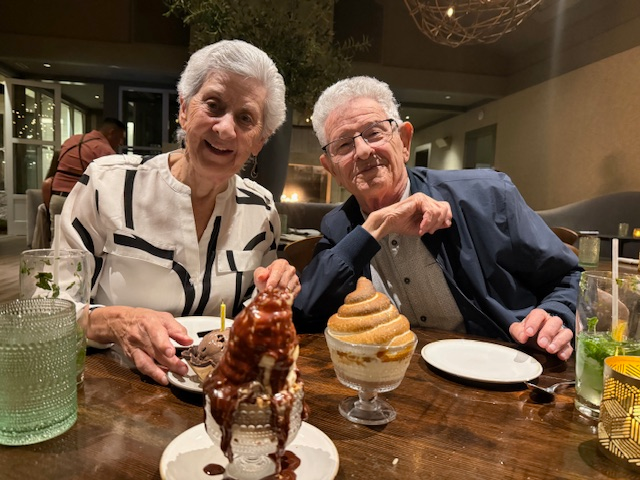
My mom hates jargon. She was a professor at Stanford. She had and to this day has no patience for buzzwords, convoluted explanations, people who use big words to mask simple ideas or to make themselves look smarter. This was true in her field. And in general. She has the kind of mind that can take messy, overcomplicated subjects and turn them into clean, precise, easy to follow sentences. Growing up, I’d watch her listen to someone talk in circles and then say, “Perhaps we can summarize as…” And she’d nail it in 15 words. I didn’t realize how valuable that skill was until I started leading a large company. Inside most organizations, the biggest communication problems come from a lack of clarity. Long signal gets lost over distance. Short signal travels further. In Silicon Valley, people hide behind jargon and complexity, often using 200 words when 20 would do. I was taught the opposite. I was taught that if you truly understand something, you should be able to explain it simply. And that simplicity is a sign of mastery. Mom, thank you for that lesson. Happy Mother's Day.
Andrew Feldman tweet media
English
12
6
255
29.6K
Andrew Feldman
Andrew Feldman@andrewdfeldman·
Behind the @cerebras office, we keep two big smokers. Long before I was CEO, I was obsessed with BBQ. I used to fire up a smoker behind @FoundationCap's office while we incubated Cerebras and I smoked brisket for our company picnics when we had hundred of people. We have family events four times a year. And among other things we smoke meat. This was at our most recent company party, we did 200 pounds of ribs and 300 chicken thighs. Your company's culture should look like you. It's part of who we are. If you're a sailor, take your team out on a boat. If you love skiing, take them skiing. Include who you are in the company you build.
Andrew Feldman tweet media
English
45
19
586
110.2K
Andrew Feldman
Andrew Feldman@andrewdfeldman·
@ericvishria @chetanp You are exceptional board member. Cerebras has benefited greatly from having you on our board. Thank you.
English
0
0
19
2.6K
Eric Vishria
Eric Vishria@ericvishria·
Today marks the 4th board I’ve served on for 10+ years — Confluent, Amplitude, Cerebras, and Contentful. 4 of my first 5. Venture is a loooong, non-linear game.
English
19
9
355
58.2K
Andrew Feldman
Andrew Feldman@andrewdfeldman·
Most interview questions are useless. I’ve hired thousands of engineers. I’ve found only 1 reliable indicator of software engineering skill: Were you writing code in middle school? I ask every engineering candidate the same question: "Tell me about the first program you were proud of." Here is the best answer I’ve ever gotten. The candidate told me that he was 11 when he coded his first app: The school bus was usually late, and his mother was always upset because she was kept waiting. So he wrote a little program that used his phone's GPS to ping her when the bus was 4 stops from his home. As a result, his mother didn’t need to wait. Just from that story I knew he was someone who solved real life problems with code. That's what I look for. I hired him on the spot.
English
11
2
123
13.6K
Andrew Feldman
Andrew Feldman@andrewdfeldman·
Do not become a manager if you are a world class engineer. 20 years ago, we had a world-class ASIC engineer. For years, he wanted to be a manager. So we made him one, because he was extraordinary. He did a great job. But he hated it. His heart wanted to write RTL (code). It brought him real happiness. But he always assumed that he would be a Manager, Director, and then a VP. He equated this with career progress. It was a battle between his heart and his ego. Please don’t engage in this fight. Managing is a completely different role and uses profoundly different skills: Writing code is a technical job. Managing people is a people job. Is your superpower coding or EQ? Worrying about other people’s deliveries is a manager’s job. Recruiting is a managers job. Doing reviews is a managers job. The more people you manage, the larger your team, the less you do any technical work yourself. The bigger the company gets, the further away you are from the technology. We got bigger. And he hated worrying about other people's work. He hated being responsible for their deliverables. So one day I told him: We are going to pay you the same, go be an individual contributor. You are a dazzling engineer. Do what you love. He said ok. And has been very happy ever since. This is our 4th company together. We need more world class ICs. And likely, your superpower is the work you love. Not the title you think you should chase.
English
22
18
232
41.2K
Andrew Feldman
Andrew Feldman@andrewdfeldman·
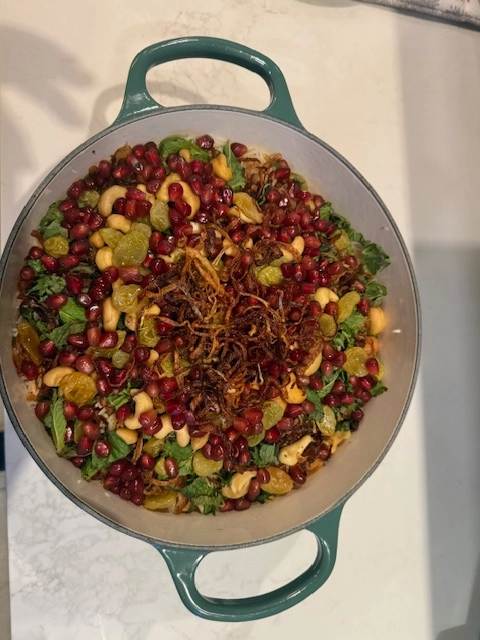
My colleague Anis brought me Biryani to celebrate Eid. (His wife Nikki makes truly amazing Hyderabad Biryani) Anis is Muslim. I'm Jewish. This is why I love Silicon Valley. Anis and I have worked together for 20 years across three companies. Our teams have always looked the same: We are Americans, Indians, Chinese, Israelis, Lebanese, Persians, Jews, Muslims, Christians, Hindus, Sikhs, and atheists and we are all moving together in the same direction. It’s one of the wonderful things about Silicon Valley. All we care about is: Can you write code? Can you build? Can you do the job? Can you finish? Nobody asks what you believe or which god you worship. No one cares where you're from or who you love. This how we make peace in the world. We build cool stuff together.
Andrew Feldman tweet media
English
5
0
58
4.7K
Ananth Rupanagudi
Ananth Rupanagudi@Ananth_IRAS·
Worth a read! 😍 My mom wanted to send me homemade pickles. But I said ‘no’. I was 27, living in New York, working on Wall Street. I didn't need pickles shipped across the world. The shipping would cost more than buying them here. Three years later, I read the psychologist take on what I'd actually done. When you reject someone's offer to help, you're not just declining assistance. You're declining their need to matter to you! Benjamin Franklin figured this out in 1736. He had a rival in the Pennsylvania legislature who hated him. Instead of trying to win him over with favors, Franklin asked the rival to lend him a rare book. The rival agreed. They became lifelong friends. It's called the Ben Franklin effect.When people do something for you, they convince themselves they must like you. Otherwise, why would they help? My mom didn't want to send pickles because I needed them. She wanted to send them because SHE needed to feel useful to me. To feel like despite the ocean between us, she still had a role in my life. Every time I said "I'll manage," I was taking that away from her. Here's what I learned after a decade of living away from home: → Accepting small favors isn't about you needing help. It's about letting people you love feel needed. Your dad wants to transfer ₹5000 even though you earn well? Let him. Your friend wants to pick you up from the airport even though Uber exists? Say yes. Your partner wants to make you tea even though you can make it yourself? Accept it. The people who love you don't want to solve your big problems. They want to matter in your small moments. Let them. #lifelesson
English
155
1.3K
5.6K
228.2K
Andrew Feldman
Andrew Feldman@andrewdfeldman·
Tokens are how we convert compute into intelligence. At @cerebras we make very very fast tokens. 2 years ago nobody cared. 2 years ago, inference was simple. You asked a question. You got an answer. That's single-shot inference. Call it 1x compute. Then came reasoning. The model stopped just answering. Instead it makes a plan. Breaks the problem into parts. Solves each one. Reassembles the answer. That's 10-100x more tokens per query. Slow tokens frustrate users. In 2025 Paul Graham wrote: "I'd use Google half as much if ChatGPT weren't so slow." Sam Altman jumped on within minutes. Then Elon. Three tweets described the entire cost of being slow. Your customers leave you. Your competitors use it against you. Now we're in the agentic era. Multiple models talking to each other. Running reasoning chains over and over. Vastly more tokens consumed before you see a single word of output. Each stage compounded. Each stage gave better answers. But at the cost of more compute used, more tokens generated. And each stage speed more important. This is why we built @Cerebras the way we did. Wafer scale. Fast memory on-chip. No bottleneck between memory and compute. That's how we provide the fastest AI inference in production.
English
6
18
111
11.7K
Andrew Feldman
Andrew Feldman@andrewdfeldman·
Your board doesn't want you to do what they say. Many first-time CEOs don't understand this. Sometimes we should do what they recommend. Other times we shouldn’t. Our job is to think extremely carefully about what the board says. To use their advice to improve our decisions. It is unusual for a board member to know your business better than you - you and your team think about it every waking minute. Over my career, I’ve been lucky to have some great board members. Pierre Lamond and Mark Leslie come to mind. As well as those who have been with @cerebras for its entire 10 year journey, including @ericvishria, of Benchmark, Lior Susan of Eclipse, @vassallo from Foundation Capital. Between them, they have seen hundreds of companies across many industries. They have contributed their wisdom, ideas, views on best practices, relationships advice and much more. I think about their advice. I learn from it. I make better decisions because of it Even when I don’t take it. As a CEO, our obligation is to wrestle with their guidance and then use our best judgement. Here are some things not to do: Don’t be defensive. Nothing kills trust like defensiveness. Don’t immediately follow their advice, or immediately dismiss it. Both are wrong. Chew on their advice. If their idea is better than the status quo, or better than your current plan, do it. If not, don’t. But in any case, Tell them you considered it. Tell them what it changed in your thinking. Tell them where you landed and how you got there. The board’s role is governance and counsel. Your role is leadership.
English
2
3
48
4.9K
Andrew Feldman
Andrew Feldman@andrewdfeldman·
Another weekend. Another airport. With the world's fastest inference.
Andrew Feldman tweet media
English
4
3
69
4.3K