Sebastian Bürgel@SCBuergel
Since there's a bit of hype around $HOPR let me give you my max bullish thesis for @hoprnet
To be clear, I'm not focused on price, but privacy. I hear people say "why does the founder of a token project that I hold not care about price action?!". Because in all sustainably successful projects, like Ethereum for example, price follows utility - never the other way around.
What we build at HOPR is of fundamental value for all of humanity, it's not even just web3, it's about ALL digital communication, data exchange and messaging.
The internet as we know it today, was originally neither secure nor private. Over the past decades, cryptographers and engineers came up with ways to make it more secure. For example, they made web browsers communicate with web servers over secure HTTPS.
But the internet still doesn't have privacy and that's ridiculous. Whenever you open a website from your browser, when a mobile app loads data or when your crypto wallet sends a transaction, there's a server on the other end that sees WHAT you are doing and also sees WHERE you are. It sees your IP address, which is your unique home address on the internet.
This is what we call metadata and it contains highly personal information, even if it doesn't feel that way. Think about it:
There's server operators who can connect all that information. They know your name and they can link it to your financial activities because you're a crypto nerd. They can connect it to your travel history because you plan your journeys online. They can map out your friendships, dates, doctors and naughty desires because they see everything you connect to online.
That information is typically logged, stored - and currently made accessible via AI tools that can make sense of this huge pile of data for the very first time. Your most personal secrets aren't secret for much longer and that's a disaster.
This problem isn't new, but the best solutions that we have today, VPNs and Tor, are not very private and centralized. That means you trust a few big players to not spy on you. Which is the very thing you wanted to avoid in the first place. That's why VPNs or Tor are not the answer.
To fix this problem that's deeply embedded in the internet and all that's running on top of it - web3 and web2 in the same fashion - we built the HOPR network. HOPR brings privacy to the internet, for any application and any service.
HOPR provides privacy for any sort of data exchange, not on-chain transactions but privacy when you send data from A to B. It achieves that by relaying data packets via intermediate nodes, that are run by the HOPR community. So while data packets are "hopping" around the network, they obfuscate where data came from and where data goes to.
All of that is coordinated by the $HOPR token. Node operators need to stake the $HOPR token in payment channels that signal where they are willing to relay traffic. Users (typically companies who want to provide privacy respecting services for their users) pay for accessing the HOPR network in $HOPR token.
Now if the HOPR ecosystem only manages to onboard a tiny part of the wider internet and deliver privacy, the demand for the $HOPR token, that's tightly coupled to usages of the HOPR network, will certainly be significant. As I said initially, price follows utility. My job is to drive not just development of the HOPR network but also its utility. Making the HOPR network be used.
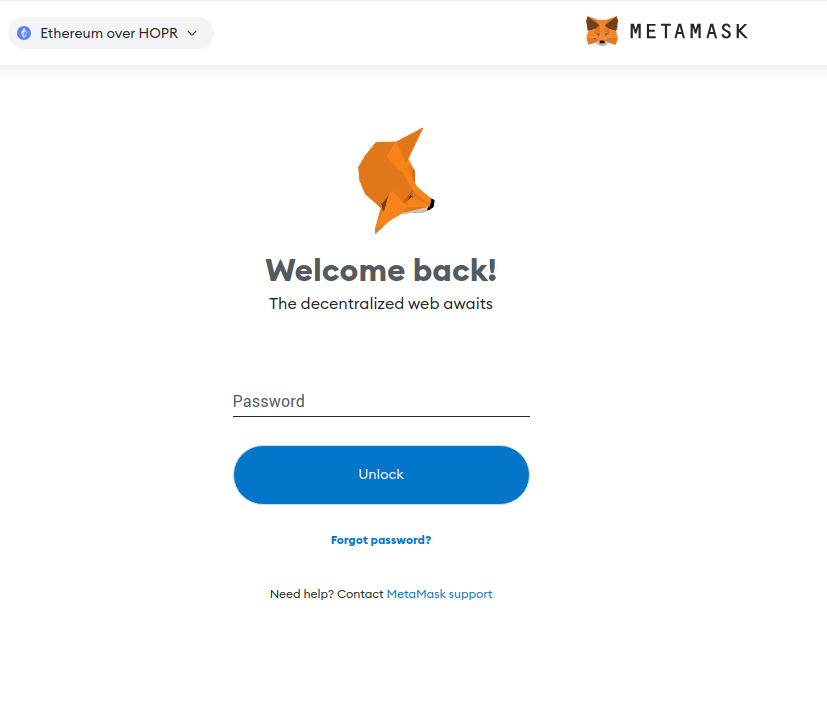
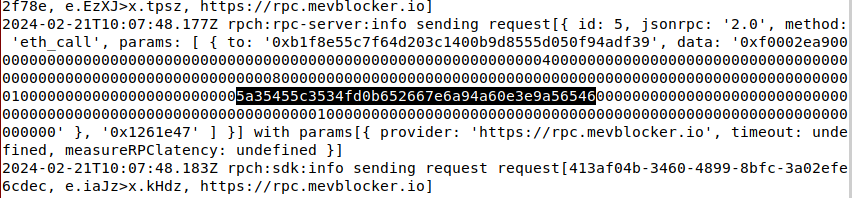
The first use case that the brave and somewhat technical users can try out today is RPC-over-HOPR. It brings privacy to crypto wallets and you can try it out by visiting
degen.RPCh.net
(DM me for free voucher code)
If you want to read more on actual problems with your crypto wallet not being private, keep reading here:
x.com/scbuergel/stat…
If you want to read about the bigger picture why the web3 is broken without privacy, you can read & watch my talk here:
x.com/scbuergel/stat…
If you just want to talk about privacy, reply here :)