

larry
83.7K posts
larry
@AngelMan1993
Hey i am #AngelMan1993 is the year we launch this oh so #1 & only non floral fragrance.....ANGEL! followed by Innocent & AMen! A CLASSIC all on its own!💙
Dallas, TX Katılım Nisan 2017
5K Takip Edilen2.5K Takipçiler
larry retweetledi

2 Corinthians 12:9 NIV
[9] But he said to me, “My grace is sufficient for you, for my power is made perfect in weakness.” Therefore I will boast all the more gladly about my weaknesses, so that Christ’s power may rest on me.
bible.com/bible/111/2co.…
English
larry retweetledi

[NEWS] Happy June, ARMY! 💜 #BTS Month has officially begun and the countdown to BTS FESTA 2026 is on! 🎉
#BTSFESTA2026 #BTSMonth


English

Have a beautiful time! @KendallJenner 🙏❤️👍✈️
21@21metgala
Kendall Jenner and Jacob Elordi in Japan.
English
@VictoriaOsteen Our world is a much better place because of a Mother's love! My Mother was a true gift from God! She is in Heaven today with Jesus! ❤️
English

Whether you are a mother or not, you can have a mother’s heart that encourages, inspires, and invests in the lives of the people around you. The heart of a mother is one that nurtures and influences people with love and tenderness.
English
Congratulations to both of you! 💐👍🙏
World Music Awards@WORLDMUSICAWARD
#DuaLipa & #CallumTurner get married at Old Marylebone Town Hall in London with close friends and family, ahead of a reported 2nd luxurious 3-day wedding in Palmero, Italy, with an extensive celebrity guest list, and a potential Elton John performance! 👏👰🏻♀️🤵🏻💍💐🇬🇧🔥👑👑🤍
English
Have a beautiful year Latoya Jackson! 🙏👍🎂💐
La Toya Jackson@latoyajackson
I wish to thank you all for the lovely birthday greetings. How sweet, how kind, how thoughtful! I am very grateful for every last one of you! I thank you for thinking of me and sharing your support, it means a lot to me. Many blessings to you all!💖💕💖😘 #latoyajackson
English


larry retweetledi

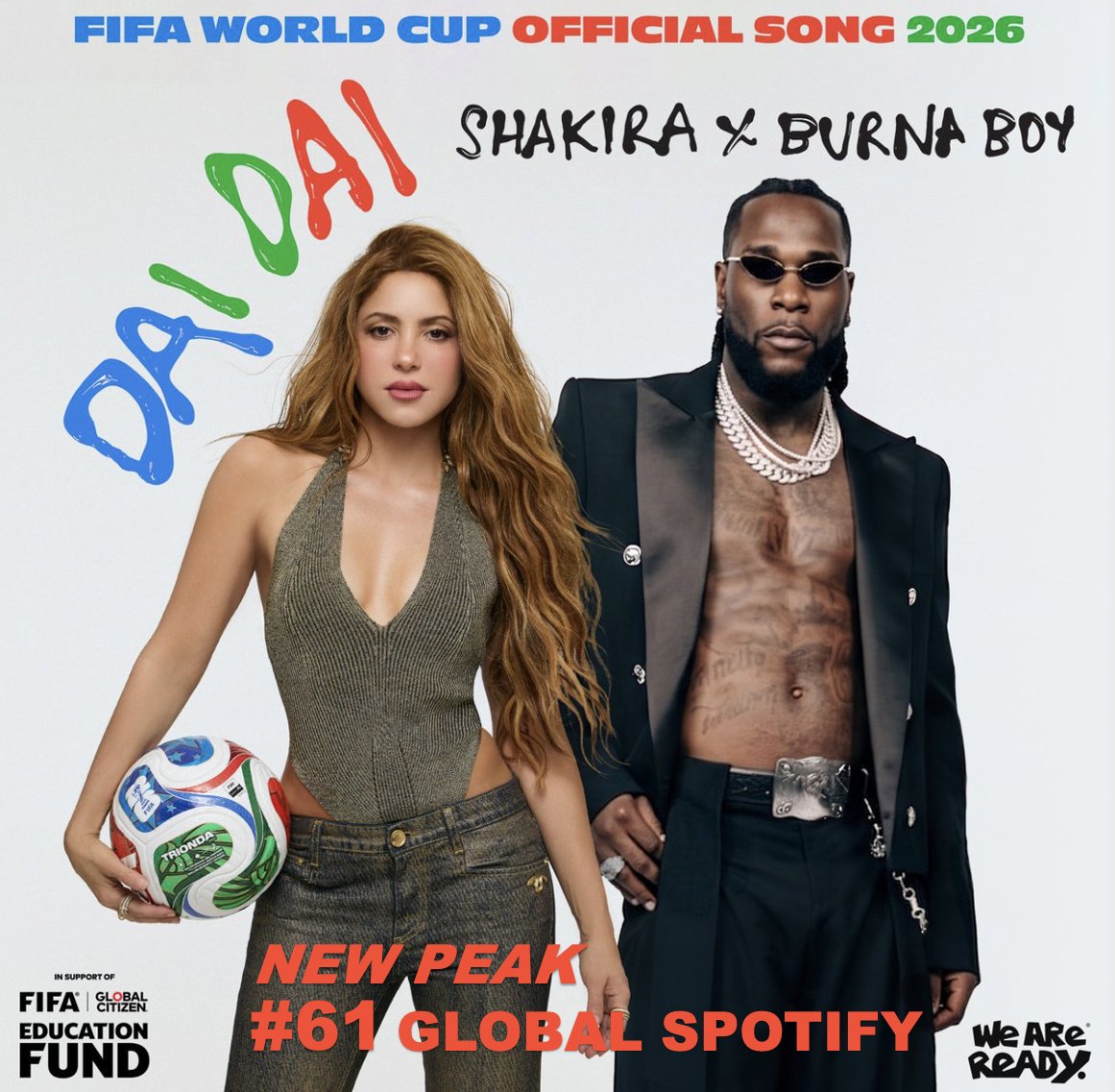
#Shakira and #BurnaBoy's sizzling new World Cup Anthem "Dai Dai" lifts to a new peak of #61 (+8) on the Global Spotify chart with 1.875 Million streams! 💪💃🕺🏾🔥🌎⚽️🏆🎶🆕📈6⃣1⃣🌎🟢ᯤ👑👑❤️🔥
STREAM:open.spotify.com/playlist/2PlJz…
English
I'm sorry to hear about your dog. God be with you always! ❤️🙏
Jasmina@Jassmini2
My Ricky passed away this morning Only someone heartless wouldn't say RIP 🥲
English
larry retweetledi


larry retweetledi
