Sabitlenmiş Tweet

This is the most logical take on NIFTY you will read on X. I don't operate on optimism or pessimism, but on logic & rationale. If you are an active investor, trader or do Mutual Fund SIPs, don't skip - Bookmark it if you must.
NIFTY IS NOT CROSSING 27K for the next 2-3 years.
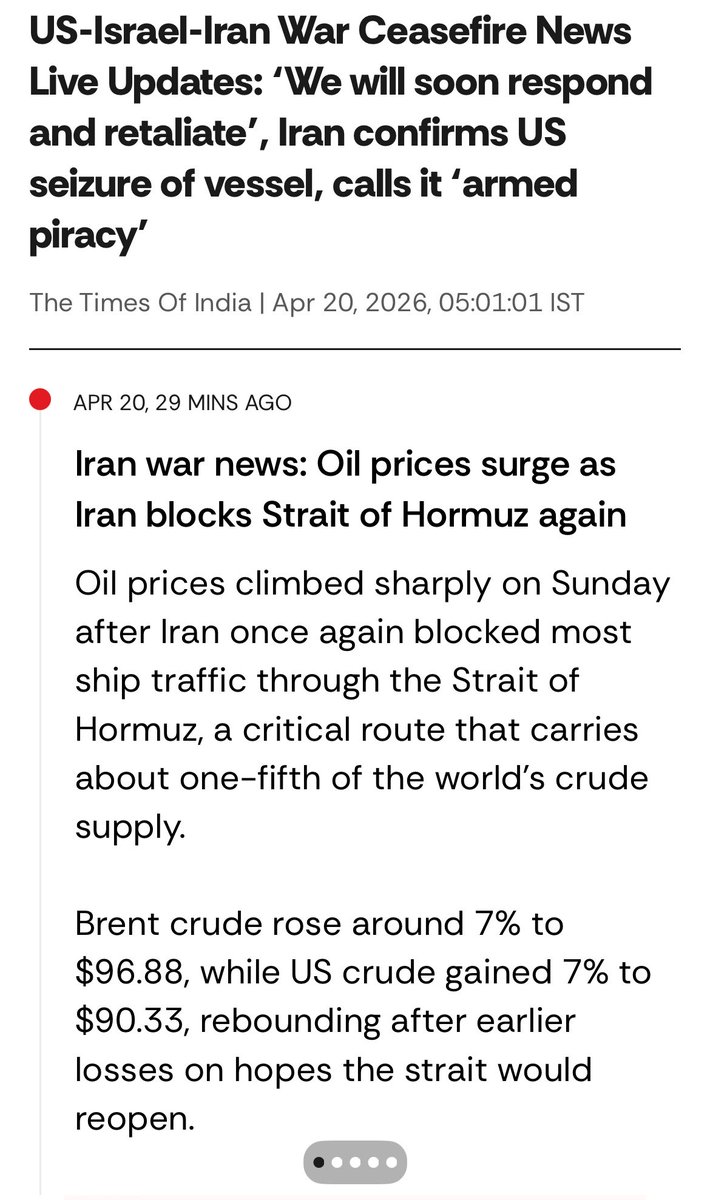
Everyone is waiting for the US-Iran ceasefire to send Nifty to the moon. They think the geopolitical conflict crashed the market. THAT IS A LIE. The war is just the cover story institutional investors needed to execute a massive, pre-planned sell-off. The real rot is underneath the daily noise, and nobody is looking at it because the headlines are too distracting.
Historical patterns tell a lot more than the news cycle ever will. The chart is currently locked in a massive, inescapable Fibonacci grid. Support sits firmly at the 23,000, 22,500, and 21,800 levels. And the ceiling is absolute: 24,250, 24,500, and 24,750 (the 0.618 golden ratio).
If the war ends tomorrow, market sentiment will temporarily spike, but it will face brutal rejection at 24,750. For the remainder of 2026, Nifty is destined to oscillate between 22,500 and 24,750. If you are praying for a 26,000+ breakout and a new all-time high, you are trading on hope, not math.
Why is the ceiling so hard? Because the Indian market is entering a prolonged, multi-year "Time Correction." Here is the concrete, data-backed evidence of the ticking time bomb:
1. The FII Exodus & The Emerging Market Rotation
Foreign Institutional Investors (FIIs) aren't "spooked" by a sudden war - they have been exiting for months. Throughout 2025 and early 2026, FIIs withdrew over ₹2.20 lakh crore from Indian equities. Why? Because the "India premium" is dead. Valuations are brutally high, and there are no real AI/Auto/EV/Renewable Energy plays here. Raw material availability is constrained, and semi-urban & rural demand has slowed. The smart money has already rotated capital to cheaper markets like China, Taiwan, Korea and Japan. They are leaving through the back door before the fire alarm even goes off.
2. The Cracking Domestic Shield (Retail Exhaustion)
For two years, Retail SIPs and Domestic Institutional Investors (DIIs) propped up this market. But the reservoir is running dry. Recent AMFI data shows monthly SIP inflows dipping from their ₹31,000 crore peaks down to ₹29,845 crore. More terrifying is the "SIP Stoppage Ratio," which has spiked to over 75.6%. Retail investors are exhausted, and DIIs are quietly de-growing their risky microfinance portfolios to sit on cash. They cannot hold the glass floor forever.
3. The Unemployment & Earnings Doom Loop
The broader midcap and smallcap markets were priced for absolute economic perfection, but earnings are shrinking. The Index underlying EPS (Earnings Per Share) growth has crashed to a miserable 1.4% YoY. Institutional research desks are actively preparing for severe downgrades. You can trace this directly to the streets: the overall unemployment rate is hovering near 5%, but youth unemployment is staggering at roughly 14% to 16%. With the Labour Force Participation Rate barely crossing 55%, true income generation is stalling. When people don't have jobs, consumer spending dies. When spending dies, corporate earnings crash.
4. The Credit Card Economy (The Unseen Debt Trap)
If incomes are down, how is the economy still running? On the fumes of unsecured retail debt. Getting a loan today takes exactly three taps on a smartphone, and millions are falling into the trap to maintain their lifestyles. Credit card NPAs (defaults) have surged massively - jumping by 73% in FY22 and another 28% in FY24. We are facing a severe household debt crisis, forcing the RBI to sound the alarm and increase risk weights on unsecured loans. The "growth" you see isn't real wealth; it is just high-interest borrowed money waiting to default.
Amateurs trade the news. Systems thinkers track liquidity, debt, and valuations. Nifty will not see massive upside until corporate earnings actually catch up with these bloated valuations.
=> The Survival Checklist (How to Invest for the Next 4-5 Years)
So, how do you survive a half-decade time correction? You stop fighting the flow and adapt your system. Here is your playbook:
• Treat SIPs as a 5-Year Reservoir: Do not stop your SIPs, but completely reset your expectations. Stop looking for overnight multi-baggers. This is an accumulation phase, not a harvesting phase. You are buying units at a discount, not for immediate returns.
• Eradicate Unsecured Debt: Before you buy another stock, clear your high-interest personal loans and credit card debt. In a sideways, liquidity-drained market, paying off a 36% APR credit card is the highest guaranteed return you will ever get.
• Embrace the Range (F&O): If the market is oscillating between 22,500 and 24,750, directional long-term plays will bleed you dry. Exploit the high-volatility days through strategic options trading. Trade the range, not the dream.
• Accumulate at Deep Support Only: Do not catch falling knives. Wait for fundamentally strong, high-cash-flow companies to hit those deep Fibonacci support levels (22,500 / 21,800 / 21000) before deploying heavy capital.
• Hoard Cash: Cash is an active position. Maintain a 20-30% cash allocation so you have the firepower to buy when institutional panic creates irrational, localised discounts.
The market doesn't care about your portfolio. Survive the grind, accumulate the assets, and let the amateurs get shaken out.
Disclaimer: What I have analysed might be proven wrong. Nobody can predict anything with 100% accuracy. But I have a high level of confidence in what I wrote because there is more than enough data to support it. And it will need major governance policies and initiatives to change this data into favourable. Without any intervention or policy change, this is how it is.
#stocknews #stockmarkettrader #MarketInsights #buildinpublic
English