Animal signal
2.6K posts

Beautifully written. Balram’s story is a reminder that true greatness in the wild is not just about size, strength, or fame—it’s about resilience. In a landscape as competitive as Tadoba, surviving year after year against powerful rivals is an extraordinary achievement. Every scar he carries reflects a battle fought and a territory defended. Balram stands as a symbol of endurance, proving that longevity in a tiger’s world is often the greatest victory of all.
English
Animal signal retweetledi
Balram is one of the most respected male tigers in Tadoba, not because he is the largest or the most famous, but because he has survived in one of the most fiercely contested tiger landscapes on Earth. In a forest where territorial wars never truly end and dominant males can lose everything overnight, Balram has managed to hold his ground for years.
What immediately sets Balram apart is his incredible physique. Broad shoulders, massive forelimbs, and a heavily built front half give him the appearance of a heavyweight fighter rather than a wild tiger. Many tiger enthusiasts in India consider him one of the most powerfully built males ever seen in Tadoba.
The life of a male tiger is not measured by age, but by the number of battles he survives. Throughout his adult life, Balram has faced constant challenges from rival males seeking to take over his territory. In a reserve with one of the highest tiger densities in India, maintaining dominance for years is an achievement in itself.
Balram's strength is evident not only in territorial conflicts but also in his hunting ability. Sightings of him dragging the carcass of a fully grown sambar deer through the forest have become a testament to the raw power he possesses. Every scar, every hunt, and every confrontation has shaped him into the tiger he is today.
What makes Balram truly remarkable is not that he has ruled uncontested, but that he continues to endure in a world where another tigers are constantly replaced.
English
Khali — the giant legend of Corbett.
Born around 2000, Khali grew into one of the most massive Bengal tigers ever seen in Jim Corbett National Park. With his enormous head, thick neck, and heavily built shoulders, he earned the nickname "Khali" after the famous wrestler The Great Khali. To many wildlife enthusiasts, he was the very image of what a dominant male tiger should look like.
By the late 2000s, Khali had become one of Corbett's most iconic tigers. He ruled a vast territory around Dhikala and was the tiger every photographer hoped to encounter. For many visitors, a safari felt complete only if they caught a glimpse of the giant male emerging from the grasslands.
Then, in late 2010, at around 10 years old, Khali suddenly vanished.
Weeks turned into months with no sightings. No photographs. No confirmed tracks. As concern spread through the wildlife community, many feared the old king was gone. Rumors of his death quickly followed, and for a time, most people believed they would never see him again.
But Khali wasn't finished.
After months of absence, he reappeared, stunning everyone who had written him off. Older, yet still imposing, he continued to roam Corbett. Some of the most famous photographs of Khali were taken between 2012 and 2014, showing a tiger past his prime but still carrying the immense presence that made him legendary.
Those would become the last years in which he was regularly photographed.
After 2014, sightings became increasingly rare. No official report ever confirmed his death, and no one knows exactly when the giant of Corbett disappeared for the final time.
Today, many refer to him as "The Late Great Khali."
Yet for those who admire wild tigers, Khali was more than just an exceptionally large male. He was a symbol of Corbett itself—a ruler of the grasslands, a survivor who returned when everyone thought he was gone, and a legend whose story still lives on long after his tracks faded from the forest.
English
Animal signal retweetledi
On March 29, 2026, in Yakovlevsky District, Primorsky Krai, Russia, the Amur Tiger Center captured a large male Amur tiger weighing around 210 kg after it had spent months sneaking into the village of Mineralnoye to prey on livestock.
What makes this case particularly interesting is that the tiger appeared to be in excellent physical condition and will most likely be released back into the wild after being fitted with a tracking collar.
A weight of 210 kg is certainly impressive. However, a single individual is not enough to suggest that modern Amur tigers have increased their average body weight from around 180 kg to over 200 kg. Such a claim would require data from dozens of similarly large individuals.
The more important question is this: why was such a large, healthy male tiger relying on livestock around a village in the first place?
The optimistic scenario: tiger numbers have recovered to the point where territorial competition is intense, pushing some individuals into marginal areas.
The pessimistic scenario: habitat degradation and declining prey populations have become severe enough that even strong, healthy tigers are being forced closer to human settlements in search of food.
Reports on the capture and condition of the tiger were published by local media outlets in Primorsky Krai in late March 2026.
English


Animal signal retweetledi
Chakradhara tigress of Bandhavgarh with 5 cubs from 2 different litters.
The 2 massive males are her older sons from a previous litter, while the 3 smaller ones are her current cubs.
Tigers are solitary, but not completely antisocial. They still keep moderate social bonds, especially with close relatives. Mother-son relationships are often the calmest, with grown sons sometimes returning to their mother like oversized cubs.
Normally tiger cubs leave at 18–24 months. If they stay too long, both parents will eventually drive them away to avoid inbreeding and territorial competition. Sons often inherit territories from fathers, daughters from mothers.
Their father Bajrang is currently busy dealing with rivals like the huge young male Samrat, so the older sons are still tolerated around the family. They even help guard their mother and younger siblings, forming an unusually strong family unit for tigers.
English


Bro to Bro, even if you have 10 followers,
Just say "Hi" let's follow you.

English
@sciencegirl I do it differently, keep the bones of my pets (after cremation) when they pass away
English

Artist Builds Touching Memorial to His Dog With Driftwood They Collected Together
For years, Taiwanese artist Liang Renchuan collected driftwood from local beaches alongside his rescued dog, Hachiko. He adopted Hachiko 14 years ago after the dog appeared at his father’s funeral and became part of the family. After Hachiko’s passing, Renchuan created a heartfelt driftwood sculpture in his memory, saying, “Now I can only use driftwood to get you back again.”


English
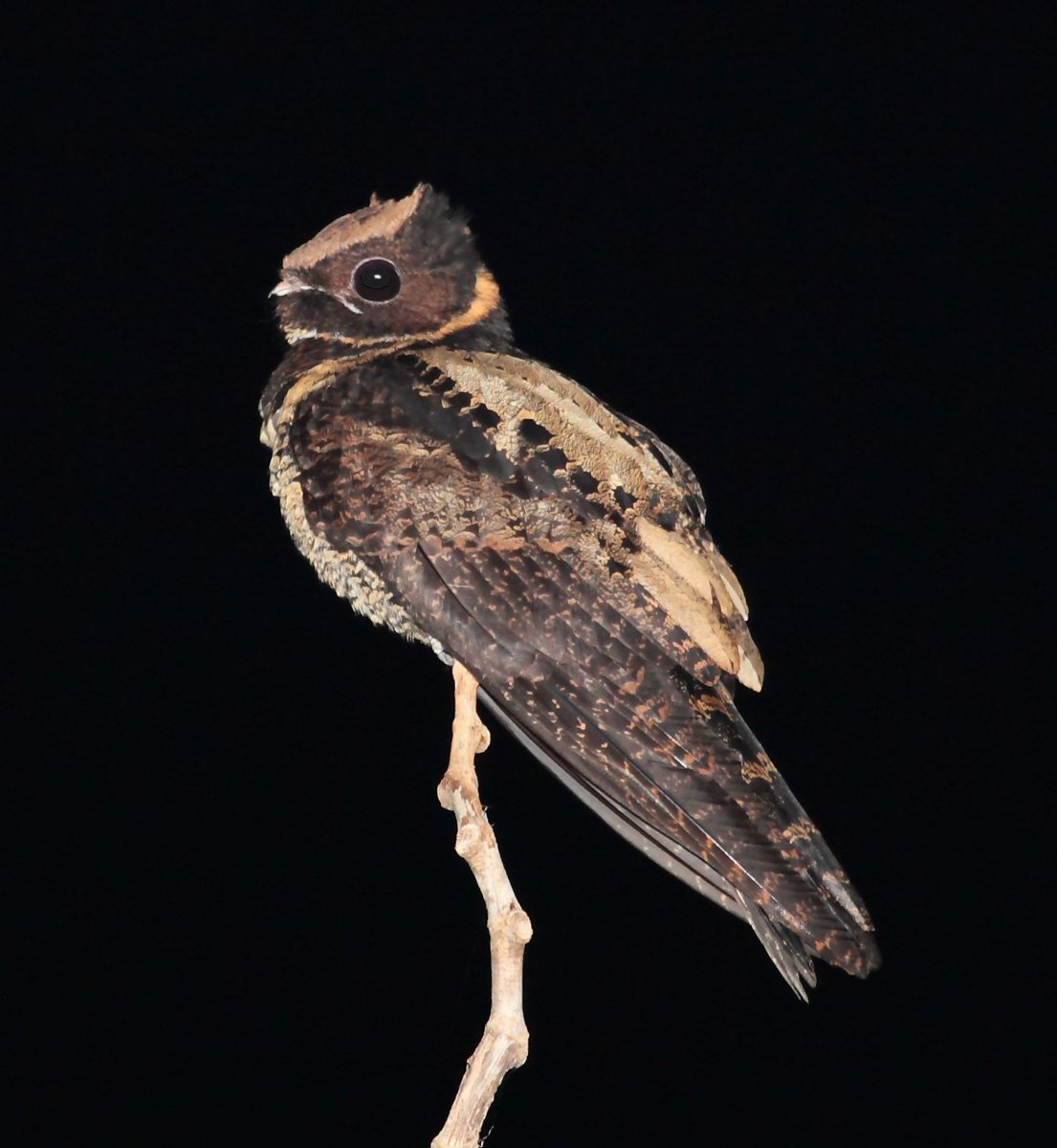
Physical Profile: It is the largest species in the nightjar family (Caprimulgidae) by length, measuring up to 16 inches (40 cm). It features a wingspan of over 28 inches.
Dragon-like Aesthetics: It possesses distinct, tufted ear feathers that it can raise or flatten, a tiny, short beak almost hidden by plumage, and massive dark eyes adapted for night vision.
Camouflage Master: Its intricately patterned brown, grey, and buff plumage mimics tree bark and dry leaves, allowing it to completely blend into branches or forest floors during the day.
English

Visualize the differences between a Siberian tiger and a Bengal tiger.
English
@rameshpandeyifs It's hard to sleep when the weather is so hot in summer 😆
English

Summer peaks, rocky streams are left with intermittent cesspools, peafowls shriek, chital herds, and the jungle bares its soul.
It’s time when tigers lazily spent their time drowsing and rationing their energy carefully.
PC: Prashasti Pandey

English
@Rainmaker1973 It will gradually get used to it. Its instincts will soon teach it how to adapt.
English
The jewel held in the mouth of some Komainu is called Hōju (宝珠), or the "wish-fulfilling jewel." In Japanese tradition and Buddhism, it symbolizes wisdom, divine protection, good fortune, and prosperity. The jewel represents the spiritual power that Komainu use to guard shrines against evil spirits and negative forces.

English

@AMAZlNGNATURE I don't live in the US, but I wonder why he didn't go to an animal shelter and adopt a cat instead of becoming a thief.
English
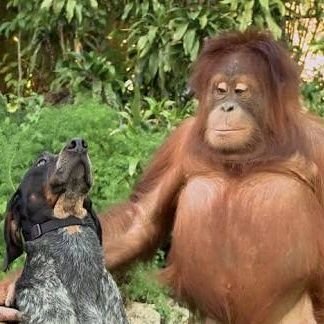
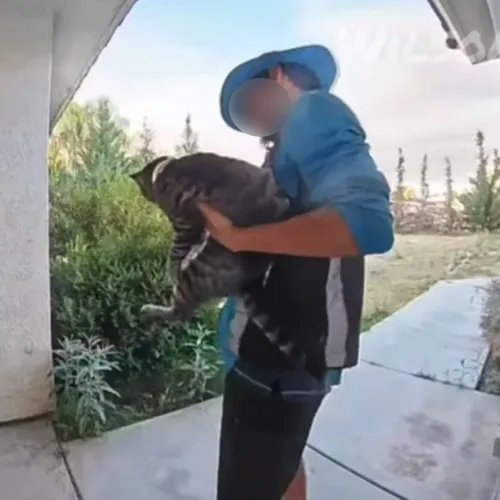
Amazon driver allegedly caught on camera taking family cat
Brenda Wilson is pleading for the return of her cat, Junie, after security footage reportedly showed an Amazon delivery driver picking her up and placing her in a van. Authorities are investigating the incident.

English

@liiliith0 This farming method restricts the animals' movement, causing them to accumulate more fat to meet human demands
English